Management of upper limb pain in stroke survivors: The current practice of occupational therapists in South Africa
Abstract
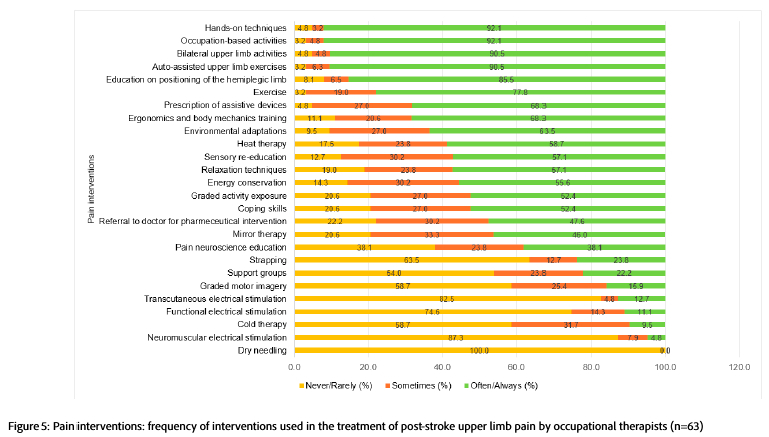
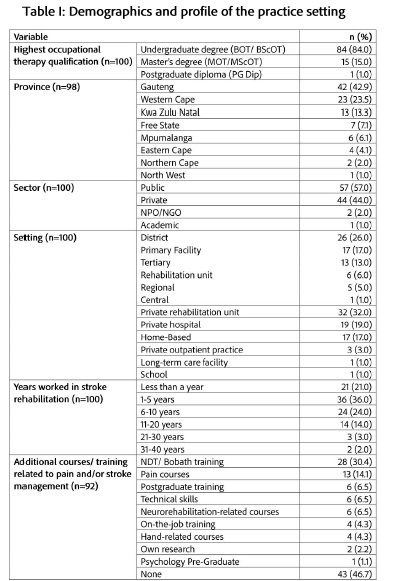
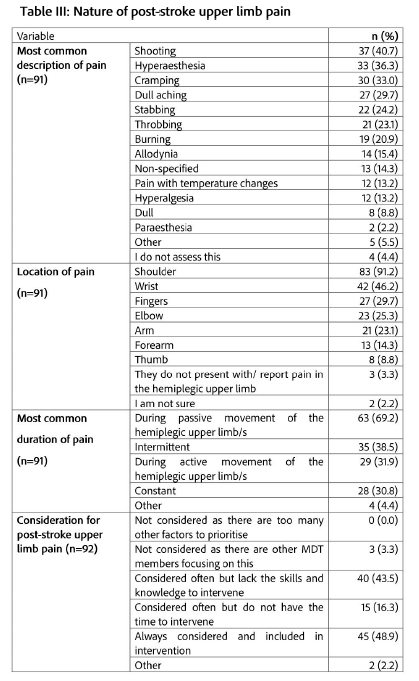
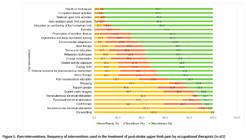
INTRODUCTION: Stroke is a leading cause of adult disability and mortality in South Africa. Post-stroke upper limb pain affects various functions, hindering activities and participation. Occupational therapists play a crucial role in pain management and enabling occupational performance. This study aimed to describe occupational therapists' practices in managing upper limb pain post-stroke in South Africa. METHODOLOGY: A quantitative descriptive cross-sectional study surveyed occupational therapists who routinely treat stroke survivors. Data were analysed using descriptive statistics and content analysis. RESULTS: One hundred responses were included in analysis. Most (96.7%) participants recognise pain as an issue for stroke survivors, and around half (48.9%) always include pain management. A sizeable group (43.5%) consider pain but lack intervention skills with time constraints reported by some. Occupational therapists focus primarily on neuromusculoskeletal and movement-related functions in pain management. CONCLUSION: The study highlighted a significant burden of post-stroke upper limb pain in South Africa. In this study, post-stroke upper limb pain is frequently encountered by occupational therapists in South Africa. Mobilisation of the hémiplégie upper limb is common practice and should possibly be supplemented with the prescription of tray tables, subluxation slings and electrical stimulation. An evidence-practice gap exists in the evaluation and treatment of cognitive and psychological factors by occupational therapists. The rising prevalence of stroke highlights the urgency for occupational therapists to improve their knowledge and interprofessional skills in pain management. IMPLICATIONS FOR PRACTICE • Highlights the significant prevalence and complexity of post-stroke upper limb pain. • Occupational therapists should continue to mobilise the upper limb to prevent the development of post-stroke pain syndromes. • Prescription of wheelchair tray tables, subluxation slings and electrical stimulation should supplement current pain prevention practices. • Occupational therapists should refer clients for pharmacological interventions, especially for focal spasticity or suspected neuropathic pain. • Occupational therapists have the capacity to make valuable contributions to the multidisciplinary team by using psychosocial interventions.
stroke rehabilitation; pain management; subluxation; spasticity; psychosocial intervention; good health and well - being; CRPS; CPSP; HSP; SHS
 Thumbnail
 Thumbnail
 Thumbnail
 Thumbnail
 Thumbnail