Management of upper limb pain in stroke survivors: The current practice of occupational therapists in South Africa
Abstract
INTRODUCTION: Stroke is a leading cause of adult disability and mortality in South Africa. Post-stroke upper limb pain affects various functions, hindering activities and participation. Occupational therapists play a crucial role in pain management and enabling occupational performance. This study aimed to describe occupational therapists' practices in managing upper limb pain post-stroke in South Africa. METHODOLOGY: A quantitative descriptive cross-sectional study surveyed occupational therapists who routinely treat stroke survivors. Data were analysed using descriptive statistics and content analysis. RESULTS: One hundred responses were included in analysis. Most (96.7%) participants recognise pain as an issue for stroke survivors, and around half (48.9%) always include pain management. A sizeable group (43.5%) consider pain but lack intervention skills with time constraints reported by some. Occupational therapists focus primarily on neuromusculoskeletal and movement-related functions in pain management. CONCLUSION: The study highlighted a significant burden of post-stroke upper limb pain in South Africa. In this study, post-stroke upper limb pain is frequently encountered by occupational therapists in South Africa. Mobilisation of the hémiplégie upper limb is common practice and should possibly be supplemented with the prescription of tray tables, subluxation slings and electrical stimulation. An evidence-practice gap exists in the evaluation and treatment of cognitive and psychological factors by occupational therapists. The rising prevalence of stroke highlights the urgency for occupational therapists to improve their knowledge and interprofessional skills in pain management. IMPLICATIONS FOR PRACTICE • Highlights the significant prevalence and complexity of post-stroke upper limb pain. • Occupational therapists should continue to mobilise the upper limb to prevent the development of post-stroke pain syndromes. • Prescription of wheelchair tray tables, subluxation slings and electrical stimulation should supplement current pain prevention practices. • Occupational therapists should refer clients for pharmacological interventions, especially for focal spasticity or suspected neuropathic pain. • Occupational therapists have the capacity to make valuable contributions to the multidisciplinary team by using psychosocial interventions.
stroke rehabilitation; pain management; subluxation; spasticity; psychosocial intervention; good health and well - being; CRPS; CPSP; HSP; SHS
INTRODUCTION
Stroke is a leading cause of adult disability in South Africa1. Sociodemographic trends contribute to unhealthy lifestyles increasing non-communicable disease cases1. In addition, advances in medical care that improve survival rates are expected to increase the number of stroke survivors1,2. Consequently, the social and economic burden of stroke is substantial, with a significant number of survivors experiencing moderate (40%) to severe (15-30%) dependence in daily activities3. Stroke survivors may experience physical, cognitive, and/or mood impairments that affect daily life for themselves and their families4. Pain is identified as one of these impairments, with a high overall prevalence rate ranging from 10 - 66% in stroke survivors4,5.
Pain is defined by the International Association of Pain (IASP) as "an unpleasant sensory and emotional experience associated with actual or potential tissue damage or described in terms of such damage6,1. Pain is categorised into nociceptive, nociplastic, or neuropathic origins, and stroke survivors can experience any combination of these three7. Nociceptive pain, resulting from tissue injury and ongoing inflammation, is acute and is defined as pain that "arises from actual or threatened damage to nonneural tissue due to activation of nociceptors6:512". Nociplastic pain, a type of chronic pain, is defined as "pain that arises from altered nociception despite no clear evidence of actual or threatened tissue damage causing the activation of peripheral nociceptors or evidence of disease or lesion of the somatosensory system causing the pain6:512". Neuropathic pain is chronic and is defined as a "lesion to the somatosensory nervous system that constitutes the ascending (sensory) and descending (modulatory) pain pathway6:512". Damage to the thalamus, hypothalamus, amygdala, sensory cortex, rostroventral medulla, and/or the periaqueductal grey can cause neuropathic pain6.
Post-stroke pain syndromes include central post-stroke pain (CPSP), complex regional pain syndrome (CRPS), hémiplégie shoulder pain, and pain secondary to spasticity5. Central post-stroke pain affects 1 -12% of stroke survivors, while CRPS affects a wider range of 2 - 49% of stroke survivors5. With an approximate 75% prevalence rate in acute strokes, hémiplégie shoulder pain is the most common post-stroke pain syndrome5. Despite the resolution of shoulder pain by most survivors 6 months post-stroke, 20% of survivors still report ongoing and debilitating pain5. Among stroke survivors, spasticity is present in approximately 65% of cases, and of those with spasticity, 72% experience spasticity-related pain5. According to Scuteri et al.8, 72% of stroke survivors experience musculoskeletal pain, mainly of nociceptive origin. The high rates of CPSP, hemiplegic shoulder pain, spasticity of the upper limb, and CRPS underscore the significant impact on the upper limb.
Early effective pain management is crucial to prevent central nervous system modifications, promote recovery, reduce financial expenditure, and ensure a better prognosis and quality of life9. Despite the significant prevalence of post-stroke pain and its impact on daily life, there is a global gap in the identification of pain10. This may be due to the complexity of post-stroke pain, communication and cognitive difficulties in stroke survivors5 affecting one's ability to complete pain questionnaires, pre-existing pain conditions, or underreporting by stroke survivors4. Furthermore, there is little evidence of optimal interventions for upper limb post-stroke pain10. Pharmacological treatment alone is often insufficient, and interventions addressing the physical and behavioural components of pain is recommended7. Multidisciplinary and client-centred approaches are emphasised, with occupational therapists playing a vital role in pain management7.
Occupational therapists are key players in pain management as they are experts in using assessments and interventions to enable individuals experiencing pain to participate in their daily activities despite the presence of pain11. Their comprehensive understanding of the dynamic interaction between people, their occupations, and the environment contributes to their unique skills11. The Fourth Edition of the Occupational Therapy Practice Framework (OTPF-4) highlights that occupational therapists consider mental, sensory, pain, neuromusculoskeletal, and movement-related functions, as well as contextual factors, to understand their impact on performance in occupations12. This viewpoint aligns with the philosophy of the International Classification of Functioning, Disability, and Health, which underscores the dynamic interplay between body structures and functions, activities and participation, and environmental factors and their impact on health13. Similarly, the South African scope of occupational therapy, describes how occupational therapists address personal, environmental, and occupational factors in achieving occupational performance14. Although the role of occupational therapists in pain management has been established11, direct evidence specific to the management of upper limb pain after stroke is notably low. Furthermore, existing stroke rehabilitation guidelines focus predominantly on more affluent countries, with little representation from low- to middle-income countries (LMICs)15. The South African Contextúalised Stroke Rehabilitation Guideline (SA-CSRG) stands as one of the few rehabilitation clinical guidelines for a LMIC context but lacks specificity in occupational therapy interventions16. The current practice of occupational therapists as it relates to the prevention, evaluation and intervention of post-stroke upper limb pain is unknown. This study aimed to describe the current practice of occupational therapists in the prevention, evaluation, and intervention of post-stroke pain in South Africa.
Distinguishing one pain syndrome from another can be challenging. It is necessary for occupational therapists to understand the aetiology and body function and structure impairments of each pain syndrome and how they relate to function to plan intervention accordingly. The features of each pain syndrome described in the literature are reviewed below.
Central post-stroke pain
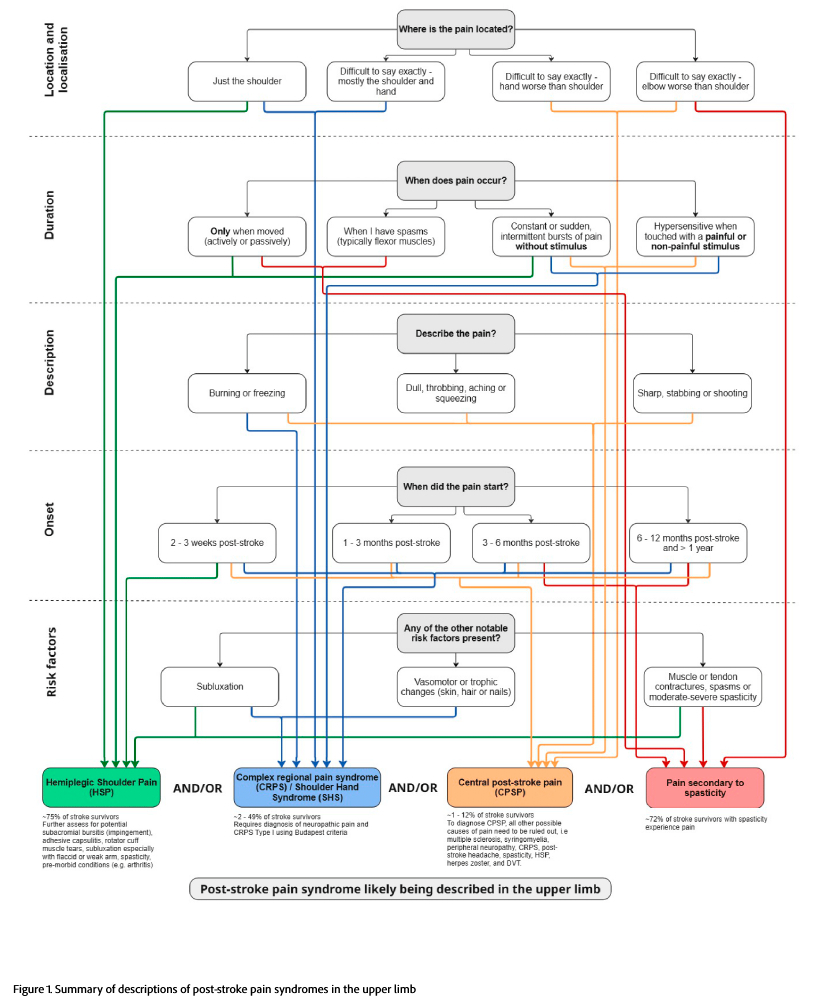
Central post-stroke pain occurs when there is damage to central pain pathways, particularly the thalamus and/or hyperexcitability of the spinothalamic tract5,10. Symptoms include a variety of subjective pain descriptions, including dull, throbbing, aching, stabbing, shooting, or burning in areas of the body affected by stroke10. The onset generally occurs between one and six months after the stroke and is induced by hyperaesthesia or presents as constant or intermittent bursts of pain without stimulus10. Central post-stroke pain is difficult to identify, as all other possible causes of pain must be excluded before a diagnosis can be made10. Therefore, the diagnosis involves a comprehensive review of the history and physical tests.
Hemiplegie shoulder pain
In contrast to central post-stroke pain, hémiplégie shoulder pain is localised and more clearly defined. Hemiplegie shoulder pain is classified as moderate to severe and usually manifests within the first three weeks post-stroke5. Causes include neurological, mechanical, and musculoskeletal factors such as subluxation, that hinder motor recovery and affect rehabilitation and quality of life10. The diagnosis can be made from musculoskeletal and neurological assessments of the hémiplégie upper limb and a thorough analysis of the medical and occupational history17.
Pain secondary to spasticity
Spasticity, which affects stroke survivors within three months to one year after stroke, particularly in the flexor muscles of the hémiplégie upper limb, is associated with painful muscle spasms, muscle and tendon contractures, and therefore poor occupational performance10. Risk factors include weakness, reduced sensitivity to touch, and a low Barthel Index (Bl) score18. A study by Wissel et al. found that spasticity was most closely associated with pain in the shoulder (60%), followed by the elbow (100%), and wrist (33%) of participants19.
Complex regional pain syndrome
A rare but serious pain syndrome seen in stroke survivors is complex regional pain syndrome, more commonly known as shoulder-hand syndrome in stroke. This syndrome is characterised by chronic neuropathic pain, motor limitations, and various sensory, vasomotor, motor, trophic, and sudomotor signs and symptoms5. Risk factors for CRPS relate to stroke severity, namely prolonged hospital admission, joint subluxation, extreme hand weakness, and extreme hand weakness, low modified Bl and high National Institute of Health Stroke Scale scores20. Diagnosing this syndrome is challenging and requires the exclusion of other causes, with specific symptoms in multiple domains according to the Budapest criteria5.
Figure 1 (below) serves as a summary of the review of literature of the common post-stroke pain syndrome descriptions affecting the upper limb. Due to the overlap in presenting symptoms, each component may indicate one or more pain syndromes. The pain syndrome most closely associated with the responses for each component is the one most likely being described by the client.
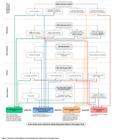


To appreciate the complexity of these pain conditions, a comprehensive approach that integrates physical and behavioural components is recommended9'11. The OTPF-4 includes prevention as a key outcome of occupational therapy which considers avoiding or reducing potential barriers to occupational performance12. In the presence of an impairment such as pain, the outcome of occupational therapy is to restore occupational performance, promote well-being and quality of life for clients and their families through the process of evaluation and intervention to support these outcomes12. These three phases (prevention, evaluation and intervention) an occupational therapist uses to address pain - or the risk thereof - is described next.
Pain Prevention
Prevention strategies are paramount, as post-stroke neuropathic pain is often chronic, debilitating, and lacks a definitive cure. Guidelines specific to the role of occupational therapy in pain prevention are limited and focus primarily on the evaluation and intervention of pain. However, the literature related to the general prevention of pain can guide occupational therapists to intervene early to prevent the onset of post-stroke syndromes and optimise occupational engagement. The prevention of glenohumeral subluxation and promotion of joint stability is particularly emphasized in the literature and should be a priority aim in all patients with hemiplegia5,10,16. Strategies include educating the stroke survivor and the caregiver involved, exercise, positioning, and prescription of assistive products9. Since prolonged immobilisation is a risk factor for the development all post-stroke pain syndromes, early active, active-assisted and passive mobilisation is recommended5,16. When combined with Botulinum Toxin A, electrical stimulation can reduce spasticity, thus reducing the risk of contracture development16. In addition, painful contractures can be prevented by stretching and positioning to counteract the pattern of tone916. Splinting and taping alone are not recommended for spasticity prevention; however, further research is required16. These techniques should be used with caution, as spasticity does not always cause pain and can positively reduce muscle atrophy, maintain bone mineral density, and improve mobility18.
Pain evaluation
The OTPF-4 guides a holistic evaluation of pain, including the compilation of an occupational profile and medical history, the evaluation of cognitive, sensory perceptual, psychosocial, and physical functions, and the identification of relevant environmental factors11,12. It also involves evaluating occupational performance and analysing how pain impacts it9. Identification of the location, type, intensity and frequency of pain is essential, along with assessing perceptions, coping skills, and the ability of individuals to manage their pain9. Various methods, such as interviews, observation, and questionnaires, can be used to gather this information9. Subjective methods to assess pain may include using the Brief Pain Inventory; McGill Pain Questionnaire; Numeric Rating Scale; Visual Analog Scale; Wong-Baker FACES Pain Rating Scale; Face, Legs, Activity, Cry, Consolability Behavioural Pain Scale; or the Pain Enjoyment of Life and General Activity Scale9. Numerous other assessments such as the Disabilities of the Arm, Shoulder and Hand; Pain Coping Questionnaire; Pain Self-Efficacy Questionnaire; Canadian Occupational Performance Measure; Functional Disability Inventory; or Patient-Specific Functional Scale are also options9. The goal of the evaluation is to understand the interaction between environmental, personal, and occupational factors and pain9. Based on these evaluation findings, occupational therapists develop individualised pain management plans that respond to the variable nature of pain9.
Pain Intervention
A multidisciplinary team (MDT) - including doctors, psychologists, physiotherapists, and occupational therapists - is essential to addressing both the medical and psychosocial aspects of pain7,16,21. Effective pain management therefore requires occupational therapists to understand the physiology of pain, the mechanisms of pain, the disabilities associated with pain, and successful pain interventions offered by various MDT members9. The role of the occupational therapist is to focus on helping people manage pain while participating in meaningful occupations9. Through this approach, physical, mental, and spiritual needs can be met9. Occupational therapists use a variety of techniques to manage pain, including problem solving pacing, graded activity exposure, and energy conservation during participation in occupations9. Recommendations also involve improving body mechanics, joint protection, graded motor imagery, virtual reality, sensory re-education, exercise, sleep, and pain neuroscience education that can help stroke survivors understand the mechanism of pain and how they need to manage it9. Assistive products and environmental adaptations can also be considered to encourage occupational performance despite the pain9. In addition, techniques such as mindfulness, cognitive behavioural therapy, cognitive rehabilitation and coping skills training are used9. Occupational therapists also play a role in the management of pain medications, advocating for patients, and facilitating support or education groups9.
METHODOLOGY
Study design
A quantitative cross-sectional descriptive survey design was used.
Study population and sampling
South African occupational therapists working with stroke survivors constituted the study population. As there is no specific database for occupational therapists who work with stroke survivors in South Africa, it was necessary to estimate the population size from available statistics. Of the 6,221 occupational therapists registered with Health Professions Council of South Africa (HPCSA)22, an estimated 35.3% work in neurology23. Thus, 2,196 individuals were estimated to work in the field of neurology. Given a 10% error margin and a 95% confidence rate, a minimum of 93 participants were required for the study. Inclusion criteria required that participants be registered occupational therapists with a South African undergraduate occupational therapy degree. Participants must have managed a stroke survivor of any age within the month before the completion of the survey. Convenience sampling was employed and invitations to participate were distributed by professional organisations (Occupational Therapy Association of South Africa, and the South African Neurodevelopmental Therapy Association) to their members. The survey link was also shared via Facebook and Whatsapp on occupational therapy social media pages and groups. Snowball sampling was utilised as an additional recruitment method.
Instrumentation
Based on the research objectives, an online survey questionnaire was developed from the findings of the literature. Participants who met the inclusion criteria completed the survey, which included participant demographics, practice setting details, stroke survivor demographics, and the nature of post-stroke pain identified by participants in their practice. To prevent response bias, before each section, participants initially provided open-ended responses on the prevention, evaluation (assessment), and intervention (treatment) techniques they use in practice. They then ranked 23 prevention strategies, 42 assessment methods, and 38 interventions on a Likert scale. The responses were combined into "never/rarely," "sometimes", and "often/always" for presentation purposes. Items on the Likert scale were selected from the literature for relevance. After the Likert scale in each section, participants were allowed to add any other techniques they used, as the Likert scale list was not collectively exhaustive.
The content validity of the survey was established through reviews by five experienced occupational therapists, including two university occupational therapy lecturers, two founders of the Occupational Therapy Pain Management Group in South Africa, and a neurological rehabilitation clinician. Although one of the therapists provided written feedback without completing the rating scales, the Content Validity Index (CVI) was calculated based on four expert ratings, which gave S-CVII Ave scores of 0.91 for relevance and 0.96 for clarity. Due to the required CVI rating standard of one24, the survey underwent refinement, excluding irrelevant questions, rephrasing unclear ones, and improving clarity through added examples and elaborations on ambiguous terms. Additional response options, such as biopsychosocial intervention techniques, were also incorporated.
Ethical Considerations
Ethical approval was granted by the relevant institutional Human Research Medical Ethics Committee at the University of the Witwatersrand with reference number M221071. The survey included an information letter before beginning the survey; subsequent completion of the survey constituted consent and the participants were informed that they could withdraw from the study without negative consequences. The survey did not collect identifiable information, and each participant was allocated a participant number.
Data Collection
Data were collected and managed using Research Electronic Data Capture (REDCap) tool hosted by the University of the Witwatersrand. Online data collection occurred from 6 February 2023 to 6 May 2023 with three hard copy survey responses manually entered into REDCap by the researcher. These surveys were available in hard copy at a Gauteng Department of Health workshop for participants who did not have access to data and were collected by the workshop coordinator, thus maintaining anonymity. The survey link was reposted on social media platforms to serve as reminders. Data was securely stored on the REDCap platform. After data collection, the data were exported to a password-protected Microsoft Excel spreadsheet.
Data Analysis
Descriptive statistics were applied using Microsoft Excel. Data were summarised using frequency tables and percentages. Content analysis was performed for open-ended questions, involving response analysis, coding, and calculation of response frequencies within categories. To improve accuracy, the second author reviewed the coding and calculations and made corrections accordingly.
RESULTS
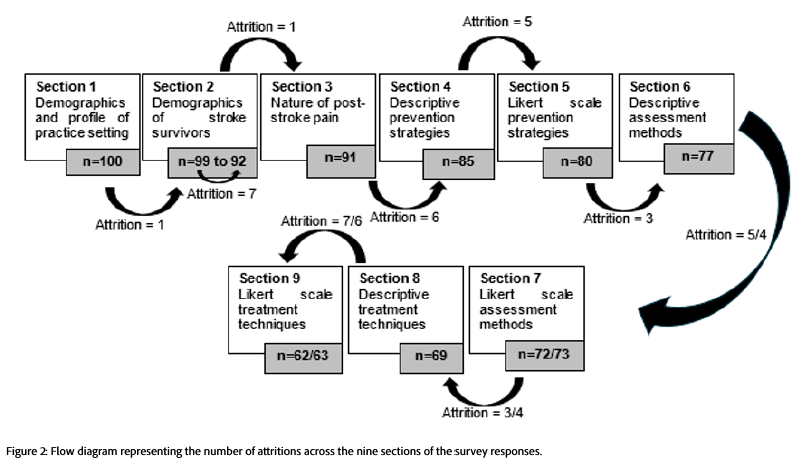
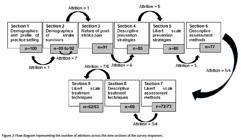
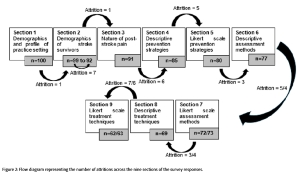
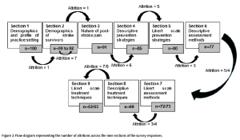
The response rate exceeded the required sample size of 93 and reached 107.5%. Of the 125 respondents, 25 were excluded for not meeting the inclusion criteria (n=8), not providing responses (n=3), or only completing the inclusion criteria questions (n=14). Of the remaining 100 responses, 37 contained missing data. Despite missing data, all 100 responses were included in the analysis, and the presence of missing data was reported for each question. Of the 100 responses, attrition was observed in the nine sections of the survey (Figure 2, below), possibly attributed to the extended response times for open text-based questions and the extensive Likert scale ratings on prevention, assessment, and intervention methods. Therefore, participant fatigue may have occurred as they progressed. Furthermore, participants who took breaks may have faced challenges returning to complete the survey due to the absenceofreturncodee sent bbREDCap.
Demographics and profile of the practice setting
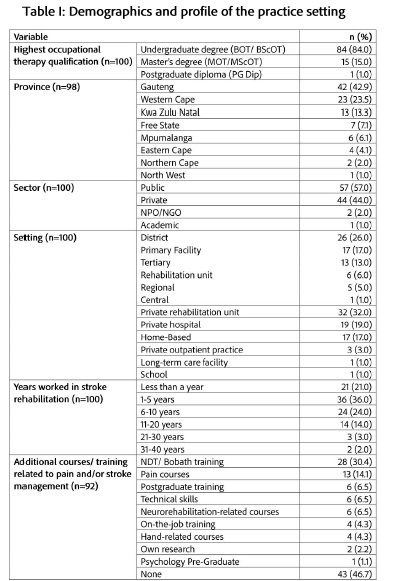
Of the 100 participants, 84.0% (n=84) had undergraduate qualifications as their highest level of education. Participants from eight provinces responded to the survey, with the majority (n=42; 42.9%) practising in Gauteng province and 57.0% (n=57) working in the public sector. The range of experience in stroke rehabilitation varied widely from less than a year to 31-40 years, and the majority (n=36; 36%) had 1-5 years of experience. In particular, 46.7% (n=43) had not received additional training in post-stroke pain management, while approximately one-third (n=28; 30.4%) had attended Bobath/Neurodevelopmental Therapy (NDT) training. Table I (page 6) provides further demographic information.
Demographics of stroke survivors
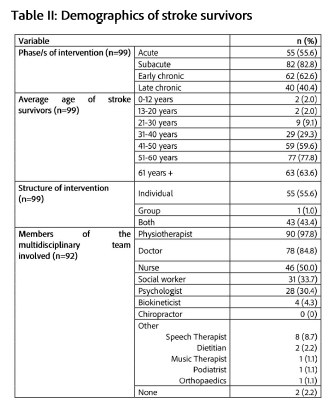
Participants intervened primarily with 51 to 60-year-olds (n=77; 77.8%) in the subacute phase of stroke recovery (n=82; 82.8%). Only one participant exclusively used group sessions for intervention, while the majority used individual sessions (n=55; 55.6%), or a combination of individual and group sessions (n=43; 43.4%). Collaboration with other healthcare professionals was common, particularly with physiotherapists (n=90; 97.8%), doctors (n=78; 84.8%), and nurses (n=46; 50%). Table II (below) shows a summary of the demographics of the stroke survivors with whom the participants intervened.
Nature of post-stroke upper limb pain
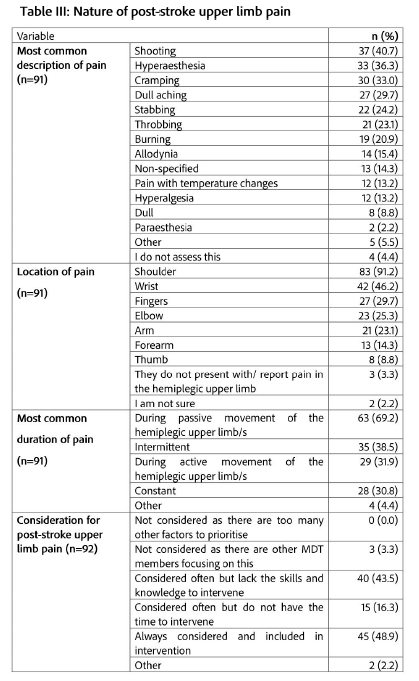
Among 91 participants, 96,7% (n=88) acknowledged pain in stroke survivors with whom they intervened. The most common descriptions of pain included shooting (n=37; 40.7%), hyperaesthesia (n=33; 36.3%), and cramping (n=30; 33.0%). Although five participants indicated 'other1 descriptions, none were different from those presented and were therefore excluded. The participants most frequently reported pain located in the stroke survivor's shoulder (n=83; 91.2%), followed by the wrist (n=42; 46.2%) and the fingers (n=27; 29.7%). Most noted that pain occurred during passive movement ofthe hémiplégie upper limb (n=63; 69.2%) and was often described as intermittent (n=35; 38.5%). The results, summarised in Table III (below), summarise the participants' experiences of hemiplegic upper limb pain with the stroke survivors with whom they intervened.
Overall pain management
Table III above shows the overall intervention of the participants for post-stroke upper limb pain. Notably, 48.9% (n=45) always included pain management, 43.5% (n=40) considered it but lacked intervention skills or knowledge, and 16.3% (n=15) reported time constraints. A minority, 3.3% (n=3), relied on other members ofthe MDT to manage pain.
Pain Prevention
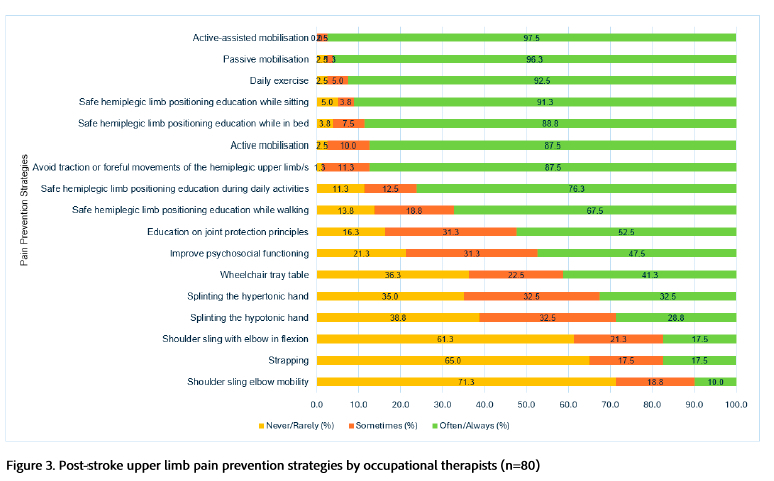
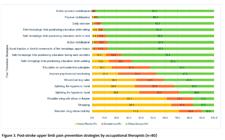
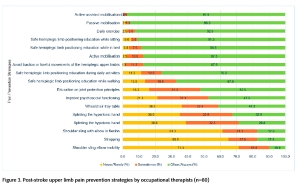
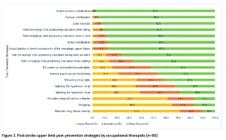
Notably, in the open-text responses 17.6% (n=15) of 85 participants indicated that they do not include pain prevention in their management of stroke survivors. Frequencies reported for each pain prevention strategy in Figure 3 (below). The most commonly reported strategies to prevent pain were active-assistance mobilisation (97.5%; n=78)( passive mobilisation (96.3%; n=77), daily exercise (92.5%; n=74)( and education on positioning of the hemiplegic upper limb in sitting (91.3%; n=73). The vast majority reported rare use of strapping (65.0%; n=52) and shoulder slings (61.3 - 71.3%; n=49 - 57).
Pain Evaluation
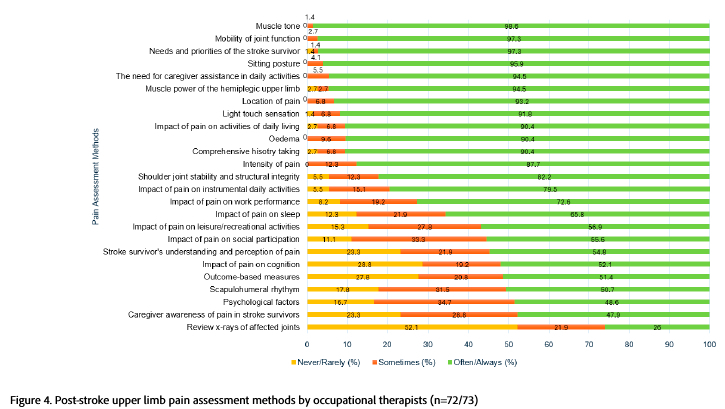
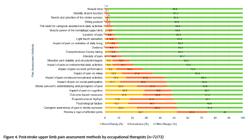
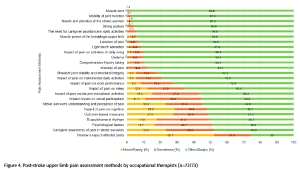
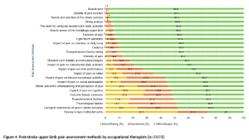
Responses reported for each pain assessment method in Figure 4 (below). The most common subjective assessments included; determining the needs and priorities of their clients (97.3%; n=71), the need for caregiver assistance (94.5%; n=69)( and impact of pain on their client's daily activities (90.4%; n=66). The objective assessments most administered were muscle tone (98.6%; n=72), mobility of joint function (97.3%; n=71), sitting posture (95.9%; n=70), muscle power of the hémiplégie upper limb (94.5%; n=69), location of pain (93.2%; n=68), and oedema (90.4%; n=66). Although most of the participants (51.4%; n=37) reported using outcome-based measures 'often' or 'always', only 27.0% (n=10) later listed relevant measures in the open-text responses. Pain rating scales included numerical rating scales (4.1%; n=3), the visual analogue scale (6.8%; n=5), the Abbey Pain Scale (1.4%; n=1), the Disabilities of the Arm, Shoulder and Hand (DASH/ QuickDASH) (2.7%; n=2) and the Fugl-Meyer Assessment (2.7%; n=2) and two which were not specified (2.7%; n=2). Lastly, methods such as reviewing X-rays of affected joints (52.1%, n=38), assessing the caregiver awareness of pain in stroke survivors (23.3%; n=17) and the client's psychological deficits (16.7%; n=12) were 'rarely' or 'never' used.
Pain Interventions
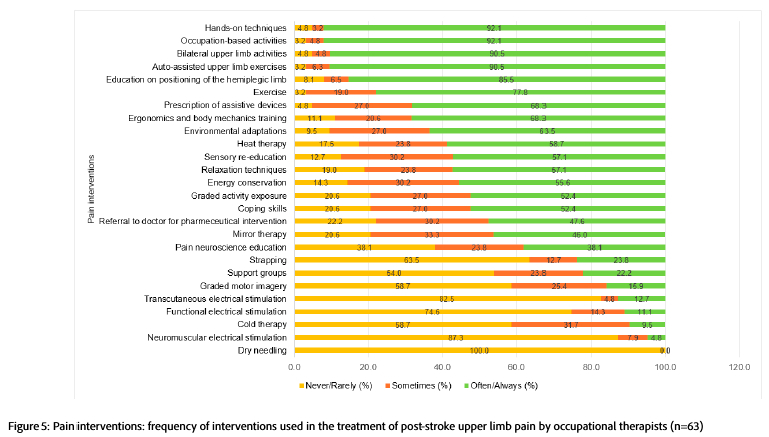
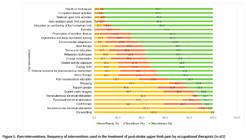
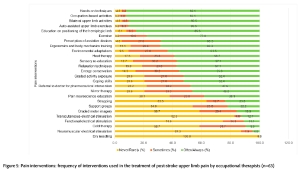
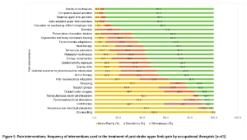
Frequencies reported for each pain intervention in Figure 5 (below). Notably, in the open-text responses 14.5% (n=10) of the participants indicated that they do not treat pain in their clients with stroke. Interventions most employed Often' or 'always' by occupational therapists were physical skills or daily tasks, namely hands-on techniques (92.1%; n=58), occupation-based activities (92.1%; n=58), auto-assisted upper limb exercises (90.5%; n=57), and bilateral upper limb activities (90.5%; n=57). Psychosocial interventions such as coping skills, pain neuroscience education, relaxation techniques and support groups were less commonly used. Interesting, less than half of participants regularly refer stroke clients to a doctor for pharmaceutical intervention (47.6%; n=30). Modalities 'rarely' or 'never' used were dry needling (100%; n=63), graded motor imagery (58.7%; n=37) and the various forms of electrical stimulation - namely neuromuscular electrical stimulation (NMES) (87.3%; n=55), transcutaneous electrical nerve stimulation (TENS) (82.5%; n=52) and functional electrical stimulation (FES) (74.6%; n=47).
DISCUSSION
Through an online survey, the study described how occupational therapists prevent, evaluate and intervene with post-stroke upper limb pain in South Africa.
Demographic information
Most participants had undergraduate qualifications, had less than five years of experience and, in accordance with HPCSA data, worked in provinces that host the most occupational therapists; Gauteng and the Western Cape. Interestingly, more than half of the participants were from the public sector, contrary to the current distribution of occupational therapists in South Africa, where the majority work in the private sector25. This response distribution may have been due to the primary researcher's employment in a public health facility where the researcher's study was well-known to colleagues.
Characteristics of post-stroke upper limb pain
Most participants reported upper limb pain in stroke survivors with whom they intervened, highlighting the substantial problem of post-stroke pain in South Africa. This may be due to inadequate prevention and early intervention strategies leading to pain as a secondary complication. Participants also reported that stroke survivors were most frequently between the ages of 51 and 60 years old. This is consistent with local literature where in Johannesburg, the average age of stroke is between 45 and 76 years old with a mean of 61 years26; compared to high-income countries with a mean stroke age of 69 years27.
Occupational therapists in South Africa should consider the impact pain may have on younger stroke survivors' roles such as being a worker. Further studies should potentially explore reasonable accommodations for the management of pain in the work environment. Post-stroke pain was reported to predominantly affect the shoulder. Additionally, pain was mostly experienced during passive movement of the upper limb and is described as a 'shooting' pain. These findings are consistent with the literature that indicates that hémiplégie shoulder pain is the most common post-stroke pain syndrome5.
Pain Prevention
Mobilisation was the most common preventative intervention reported by occupational therapists treating the stroke population. Forms of mobilisation included active and active-assisted mobilisation, strengthening through exercise, and passive mobilisation which is supported by the SA-CSRG16.
Positioning of the upper limb is a common pain prevention strategy recommended in the literature. In this study, most occupational therapists reported using education of safe positioning of the upper limb particularly in sitting. Interestingly, although positioning was considered by almost all participants, nearly 40% of the participants 'never1 or 'rarely' considered prescription of a wheelchair tray table. Wheelchair tray tables firmly support the elbow joint when seated and can aid in positioning the shoulder in some of degree external rotation as recommended16. Reduced use of wheelchair tray tables may be due to cost, non-adjustable wheelchair armrest height, desk armrests that cannot hold the bulky wooden table, stroke survivor preferences, and/or reduced awareness of their benefits. This highlights a need for low-cost, lightweight and compact wheelchair tray tables to be a standard consideration when prescribing wheelchairs to stroke survivors at risk of shoulder pain.
Shoulder slings are rarely prescribed by most occupational therapists, with slings that allow elbow movement used less than traditional slings that position the elbow in flexion. Although the use of shoulder slings in the prevention of hémiplégie shoulder pain remains debatable10,16, a sling that supports the hémiplégie upper limb against gravity, without positioning the shoulder in adduction and internal rotation, is more favourable28. Subluxation slings such as the GivMohr and Omo Neurexa Plus follow these guidelines whilst providing both distal and proximal support. The low adoption of these may be due to lack of awareness, cost or lack of accessibility to these slings in South Africa. Further research is also recommended on the correct type of sling and its benefits.
The limited use of splinting and taping by participants is consistent with the literature that discourages its use in spasticity prevention16. Interestingly, in the open-text responses no participants mentioned facilitating scapulohumeral rhythm exercises to prevent subacromial impingement. Given the evidence for the use of this intervention in the literature29, it is recommended this evidence-practice gap should be addressed through training. Only two participants mentioned using electrical stimulation despite its positive effect on preventing shoulder subluxation in acute stroke clients30. The reduced use of electrical stimulation may be due to equipment cost; however, it can be argued that it is more cost-effective than the long-term management of chronic pain and should be considered by occupational therapists.
Pain Evaluation
Due to the subjective nature of pain, the high percentage of subjective assessments used by participants with a focus on client goals, activity limitations and participation restrictions in this study is positive. However, a client's psychological factors were among the least to be assessed. This is significant because cognition, physical performance, and psychological impairments are significantly correlated in stroke survivors who experience pain9. A position statement from the American Occupational Therapy Association explains that occupational therapists must assess an individual's coping skills, pain perceptions, psychological and mental responses to pain, and their ability to self-manage their pain9. The Pain Self-Efficacy Questionnaire31 is a feasible tool for South African clinicians to measure psychological functions as it is free and quick to administer. The authors are not aware of any pain scales that have been developed specifically for the stroke population and therefore general pain rating scales such as numeric rating scales, visual analogue scales, faces pain scales, and/or verbal pain descriptor scales are used9. Additionally, occupational therapy tools such the Canadian Occupational Performance Measure (COPM) can determine the impact of pain on occupational performance9. Although these tools are effective, stroke survivors' deficits in cognition and/or perception can limit their use. This gap identifies the need for pain assessment tools that can accommodate clients with aphasia or cognitive impairments.
Physical assessments and observations were the two main categories identified for the objective assessment. Most participants assessed muscle tone, the mobility of joint functions and the muscle strength of the hémiplégie upper limb. These evaluations are necessary as they provide the occupational therapist with information to delineate the cause of pain, such as spasticity or musculoskeletal impairments11. Just over half of the participants indicated that they use outcome-based measures, but only few named relevant measures related to pain in the open-text response. This discrepancy suggests a possible response bias. Interestingly, no outcome-measures mentioned were related to daily functioning. Training on the purpose, and methods of using outcome- measures related to activities and life participation such as the modified BI and COPM is therefore recommended.
Pain Intervention
Interventions for managing upper limb pain post-stroke were similar to those identified in the prevention of pain and included mobilisation and strengthening. 'Hands-on techniques' was the most used intervention which refers to mobilisation guided by a therapist, popularised by the NDT/Bobath theory - the most taught theory in South African occupational therapy programmes32. In addition, almost a third of participants had received further NDT training in these techniques. As discussed for pain prevention, mobilisation and strengthening included passive, active-assisted and active mobilisation techniques and strengthening exercises that align with the SA-CSRG16. Therapists however should be aware that stretching a spastic muscle can induce nociceptive pain due to disruption of muscle fibres18 and therefore stretches should be slow and gentle16.
Almost all participants reported using occupation-based activities to treat pain. This finding is expected and aligns with the philosophy of the profession that engagement in meaningful activities brings about healing. However, the effect of occupational engagement on pain severity has not been proven33,34 and requires further investigation. Nevertheless, occupational therapists are encouraged to use meaningful tasks9 as it has psychological benefits on motivation and mood which may indirectly impact pain. Using meaningful activities in therapy can also act as a medium to incorporate interventions like motor imagery, pacing, graded activity exposure, functional electrical stimulation and active mobilisation.
Occupational therapists in this study focused predominately on the intervention of physical components compared to psychosocial components in the management of pain. This finding may be due to the demographics of participants having more physical-related undergraduate skills than pain or psychology-focused training. Occupational therapists have the capacity to make valuable contributions to the MDT in managing post-stroke upper limb pain through this specialised skillset. Skills such as mindfulness and relaxation techniques, cognitive behavioural therapy, cognitive rehabilitation, coping skills training, and group therapy are recommended9.
Neuropathic pain syndromes are more effectively managed with an interdisciplinary team approach rather than a single intervention16. Interestingly, most participants report that they do not refer their clients to doctors for pharmaceutical pain management often, despite doctors being a common MDT member. This finding may be due to an assumption that pain is already being managed with medication. Optimal pharmaceutical treatment is reliant on comprehensive subjective and objective information gained by the MDT and therefore therapists are encouraged to refer to doctors, especially when neuropathic pain is suspected. Where possible, patients with focal spasticity should be referred to doctors for Botulinum Toxin A injections, as there is strong evidence supporting their effectiveness in reducing spasticity.
CONCLUSION
In this study, post-stroke upper limb pain is frequently encountered by occupational therapists in South Africa. Mobilisation of the shoulder joint is the top pain prevention strategy used by occupational therapists and should possibly be supplemented with the prescription of wheelchair tray tables, subluxation slings and the application of electrical stimulation. Due to the subjective nature of pain, the main evaluation methods currently used in occupational therapy practice are suitable. However, more evaluation tools are needed, such as the impact of pain on cognition, psychological factors, and occupations. Although post-stroke pain interventions are similar to the strategies used in pain prevention, more psychosocial interventions are recommended for pain management. The rising prevalence of stroke highlights the urgency for occupational therapists to improve their knowledge and skills in pain management, crucial to alleviating the burden of care in the country.
Limitations
A limitation of the study includes the possible response bias of some participants. Incomplete responses may have been due to survey fatigue. Additionally, the potential influence of the Likert scales on the participant's responses to the open-ended questions regarding current practice in the evaluation and intervention of post-stroke pain is another limitation influencing the validity of the data, as is the lack of consistent terminology used amongst participants.
Recommendations
Based on the findings of this study, it is recommended that national best-practice guidelines specific to post-stroke pain management by occupational therapists are developed and regularly reviewed. Further research is also recommended on the effectiveness of occupational engagement on pain severity in stroke survivors. Interprofessional management of pain, and the evaluation and treatment of psychosocial components should be emphasised in occupational therapy undergraduate and postgraduate studies. In addition, the efficacy of glenohumeral subluxation prevention strategies - the prescription of wheelchair tray tables and subluxation slings - needs to be established.
Author contributions
Jenna Cohen was the primary researcher as a Master of Occupational Therapy candidate and contributed substantially to the conceptualisation and design of the study, instrument development, data collection, interpretation of the data and drafting of the manuscript. Fiona Breytenbach and Kirsty van Stormbroek supervised the study from conceptualisation phase to finalisation of the manuscript to be published. This included ongoing revision and significant contribution to revising the manuscript based on the feedback from the editors. The accuracy and integrity of the manuscript have been ensured by all authors.
REFERENCES
Acknowledgements and conflict of interest
The authors thank all participants who provided valuable input through their responses to the survey. There are no conflicts of interest to declare, and the study was not funded by any funding agency.
LITERATURE REVIEW
-
1. Ranganai E, Matizirofa L. An analysis of recent stroke cases in South Africa: Trend, seasonality and predictors. South African Medical Journal. 2020;110(2):92-99. doi:http://dx.doi.org/10.7196/samj.2020.v110i2.013891
» http://dx.doi.org/10.7196/samj.2020.v110i2.013891 -
2. Haslam BS, Butler DS, Kim AS, Carey LM. Somatosensory Impairment and Chronic Pain Following Stroke: An Observational Study. International Journal of Environmental Research and Public Health. 2023;20(2):906. doi:http://dx.doi.org/10.3390/ijerph20020906
» http://dx.doi.org/10.3390/ijerph20020906 -
3. Whitehead S, Baalbergen E. Post-stroke rehabilitation. South African Medical Journal. 2019;109(2):81-83. doi:http://dx.doi.org/10.7196/samj.2019.v109i2.00011
» http://dx.doi.org/10.7196/samj.2019.v109i2.00011 -
4. Westerlind E, Singh R, Persson HC, Sunnerhagen KS. Experienced pain after stroke: A cross-sectional 5-year follow-up study. BioMed Central Neurology. 2020;20(1):1-8. doi:http://dx.doi.org/10.1186/s12883-019-1584-z
» http://dx.doi.org/10.1186/s12883-019-1584-z -
5. Yang S, Chang MC. Poststroke Pain. Seminars in Neurology. 2021;41(1):67-74. doi:http://dx.doi.org/10.1055/s-0040-1722641
» http://dx.doi.org/10.1055/s-0040-1722641 -
6. Larson CM, Wilcox GL, Fairbanks CA. Defining and Managing Pain in Stroke and Traumatic Brain Injury Research. Comparative Medicine. 2019;69(6):510-519. doi:http://dx.doi.org/10.30802/AALAS-CM-19-000099
» http://dx.doi.org/10.30802/AALAS-CM-19-000099 -
7. Haslam BS, Butler DS, Kim AS, Carey LM. Chronic pain following stroke: Current treatment and perceived effect. Disability and Health Journal. 2021;14(1):100971. doi: http://dx.doi.org/10.1016/j.dhjo.2020.100971
» http://dx.doi.org/10.1016/j.dhjo.2020.100971 -
8. Scuteri D, Mantovani E, Tamburin S, Sandrini G, Corasaniti MT, Bagetta G, Tonin P. Opioids in Post-stroke Pain: A Systematic Review and Meta-Ana lysis. Frontiers in Pharmacology. 2020;11(November):1-13. doi:http://dx.doi.org/10.3389/fphar.2020.587050
» http://dx.doi.org/10.3389/fphar.2020.587050 -
9. Breeden KL, Rowe N. Role of Occupational Therapy in Pain Management. The American Journal of Occupational Therapy. 2021,75(3):1-29. doi:http://dx.doi.org/10.5014/ajot.2021.75S3001
» http://dx.doi.org/10.5014/ajot.2021.75S3001 -
10. Treister AK, Hatch MN, Cramer SC, Chang EY, Diego S, Beach L, Care P. Demystifying post-stroke pain: from etiology to treatment. Physical Medicine and Rehabilitation: The Journal of Injury, Function, and Rehabilitation. 2018;9(1):63-75. doi:http://dx.doi.org/10.1016/j.pmrj.2016.05.015
» http://dx.doi.org/10.1016/j.pmrj.2016.05.015 -
11. Hiemstra L, Devan D, Roome H, Coetzee G. Occupational therapy pain management to enable occupational engagement. South African Journal of Occupational Therapy. 2024;54(3):1-4. doi:https://doi.org/10.17159/2310-3883/2024/vol54no3a10.
» https://doi.org/10.17159/2310-3883/2024/vol54no3a10 -
12. American Occupational Therapy Association. Occupational therapy practice framework: Domain and process (4th ed.). American Journal of Occupational Therapy. 2020;74(SuppL 2), 7412410010. doi:https://doi.org/10.5014/ajot.2020.74S2001
» https://doi.org/10.5014/ajot.2020.74S2001 - 13. World Health Organization. International Classification of Functioning Disability and Health Short Version. Geneva: WHO Library Catalouging-in-Publication Data; 2001.
- 14. Department of Health South Africa. Regulations Defining the Scope of the Profession of Occupational Therapy Government Gazette. 2023
-
15. Platz T. Evidence-Based Guidelines and Clinical Pathways in Stroke Rehabilitation-An International Perspective. Frontiers in Neurology. 2019;10:1-7. doi:http://dx.doi.org/10.3389/fneur.2019.00200
» http://dx.doi.org/10.3389/fneur.2019.00200 -
16. Stellenbosch University & Department of Health Republic of South Africa. South African-Contextualised Stroke Rehabilitation Guideline (SA-CSRG). 2019. Viewed 07 May 2019. Available from https://www.sun.ac.za/english/faculty/healthsciences/health-rehabilitation-sciences/Documents/Completed%20stroke%20guidelines_May2019.ppf
» https://www.sun.ac.za/english/faculty/healthsciences/health-rehabilitation-sciences/Documents/Completed%20stroke%20guidelines_May2019.ppf -
17. Keszler M, Gude T, Heckert K. Pain Syndromes Associated With Cerebrovascular Accidents. In: Challenging Neuropathic Pain Syndromes: Evaluation and Evidence-Based Treatment. Missouri: Elsevier Inc.; 2018. p. 155-165. doi:http://dx.doi.org/10.1016/B978-0-323-48566-1.00019-X
» http://dx.doi.org/10.1016/B978-0-323-48566-1.00019-X -
18. Kuo CL, Hu GC. Post-stroke Spasticity: A Review of Epidemiology, Pathophysiology, and Treatments. International Journal of Gerontology. 2018;12(4):280-284. doi:http://dx.doi.org/10.1016/j.ijge.2018.05.005
» http://dx.doi.org/10.1016/j.ijge.2018.05.005 -
19. Wissel J, Schelosky LD, Scott J, Christe W, Faiss JH, Mueller J. Early development of spasticity following stroke: a prospective, observational trial. Journal of Neurology. 2010;257(7):1067-72. doi: http://dx.doi.Org/10.1007/s00415-0105463-1
» http://dx.doi.Org/10.1007/s00415-0105463-1 -
20. Kim CY, Choi SB, Lee ES. Prevalence and predisposing factors of post-stroke complex regional pain syndrome: Retrospective case-control study. Journal of Stroke and Cerebrovascular Diseases. 2024;33(2):107522. doi:https://doi.org/10.1016/j.jstrokecerebrovasdis.2023.107522
» https://doi.org/10.1016/j.jstrokecerebrovasdis.2023.107522 -
21. Plecash AR, Chebini A, Ip A, Lai JJ, Mattar AA, Randhawa J, Field TS. Updates in the Treatment of Post-Stroke Pain. Current Neurology and Neuroscience Reports. 2019,-19(11):86. doi:http://dx.doi.org/10.1007/s11910-019-1003-2
» http://dx.doi.org/10.1007/s11910-019-1003-2 - 22. Health Professions Council of South Africa. Health Professions Council of South Africa Annual Report 2022/2023.2023.
-
23. Occupational Therapy Association of South Africa. Find an OT. 2023 [accessed 2023 May 15]. https://www.otasa.org.za/find-an-ot/
» https://www.otasa.org.za/find-an-ot/ -
24. Yusoff MSB. ABC of Content Validation and Content Validity Index Calculation. Education in Medicine Journal. 2019;11(2):49-54. doi:http://dx.doi.org/10.21315/eimj2019.11.2.6
» http://dx.doi.org/10.21315/eimj2019.11.2.6 -
25. Ned L, Tiwari R, Buchanan H, Van Niekerk L, Sherry K, Chikte U. Changing demographic trends among South African occupational therapists: 2002 to 2018. Human Resources for Health. 2020,18(1):1-12. doi:http://dx.doi.org/10.1186/s12960-020-0464-3
» http://dx.doi.org/10.1186/s12960-020-0464-3 -
26. Pillay SC, Redant R, Umuneza N, Hoosen A, Breytenbach F, Haffejee S, Matsena-Zingoni Z, Sekome K 'Factors affecting length of hospital stay in stroke survivors in South Africa: A call for a stroke unit', African Journal of Disability. 2022, 11(0), a1065. doi:https://doi.org/10.4102/ajod.v11i0.1065
» https://doi.org/10.4102/ajod.v11i0.1065 -
27. Rahbar MH, Medrano M, Diaz-Garelli F, Gonzalez Villaman C, Saroukhani S, Kim S, Tahanan A, Franco Y, Castro-Tejada G, Diaz SA, Hessabi M. Younger age of stroke in low-middle income countries is related to healthcare access and quality. Annals of Clinical and Translational Neurology. 2022,-9(3):415-27. doi:https://doi.org/10.1002/acn3.51507
» https://doi.org/10.1002/acn3.51507 - 28. National Stroke Foundation. Clinical Guidelines for Stroke Management. 2010. Melbourne Australia.
-
29. Onursal Kilinç, Ö., Kilinç, M., Ayvat, E., Düzgün, I., & Özçakar, L. Effects of scapulo-humeral training on ultrasonographic and clinical evaluations in stroke: a randomized controlled trial. Topics in Stroke Rehabilitation. 2024;31(5), 501-512. doi:https://doi.org/10.1080/10749357.2024.2302720
» https://doi.org/10.1080/10749357.2024.2302720 -
30. Ada L, Foongchomcheay A. Efficacy of electrical stimulation in preventing or reducing subluxation of the shoulder after stroke: a meta-analysis. Australian Journal of Physiotherapy. 2002 Jan 1,-48(4):257-67. doi:https://doi.org/10.1016/S0004-9514(14)60165-3
» https://doi.org/10.1016/S0004-9514(14)60165-3 -
31. Nicholas MK. The pain self-efficacy questionnaire: taking pain into account. European Journal of Pain. 2007;11(2):153-63. doi:https://doi.org/10.1016/j.ejpain.2005.12.008
» https://doi.org/10.1016/j.ejpain.2005.12.008 - 32. Freeme JD. The training and practice in neurological rehabilitation theories in the occupational therapy management of stroke patients in South Africa (Dissertation). Johannesburg: University of Witwatersrand; 2011.
-
33. Jeong S, Cho S. Acceptance and patient functioning in chronic pain: the mediating role of physical activity. Quality of Life Research. 2017;26,903-911. doi:https://doi.org/10.1007/s11136-016-1404-5
» https://doi.org/10.1007/s11136-016-1404-5 -
34. Nielsen S, Skou S, Larsen A, Polianskis R, Arendt-Nielsen L, Ostergaard A, Kjaer-Staal Petersen K, Vaegter H, Sondergaard J, Christensen J. Changes in pain, daily occupations, lifestyle, and health following an occupational therapy lifestyle intervention: a secondary analysis from a feasibility study in patients with chronic high-impact pain. Scandinavian Journal of Pain. 2024;24(1), 20230043. doi: https://doi.org/10.1515/sjpain-2023-0043
» https://doi.org/10.1515/sjpain-2023-0043
Reviewed: 11 November 2024
Revised: 22 July 2025
Accepted: 26 July 2025
EDITOR
Blanche Pretorius
https://orcid.org/0000-0002-3543-0743
DATA AVAILABILITY
Upon reasonable request, from corresponding author for 5 years after publication date
FUNDING
No funding was received.