Evidence of occupational therapy intervention for depression: A rapid review
Abstract
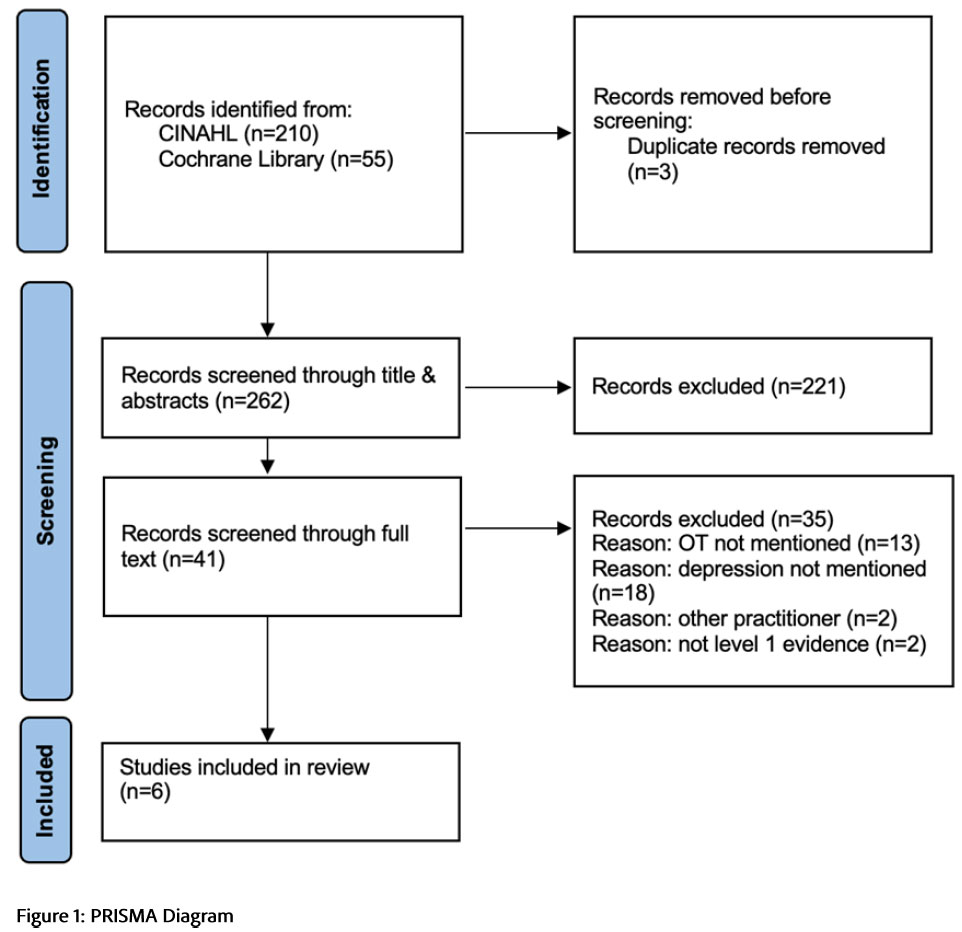
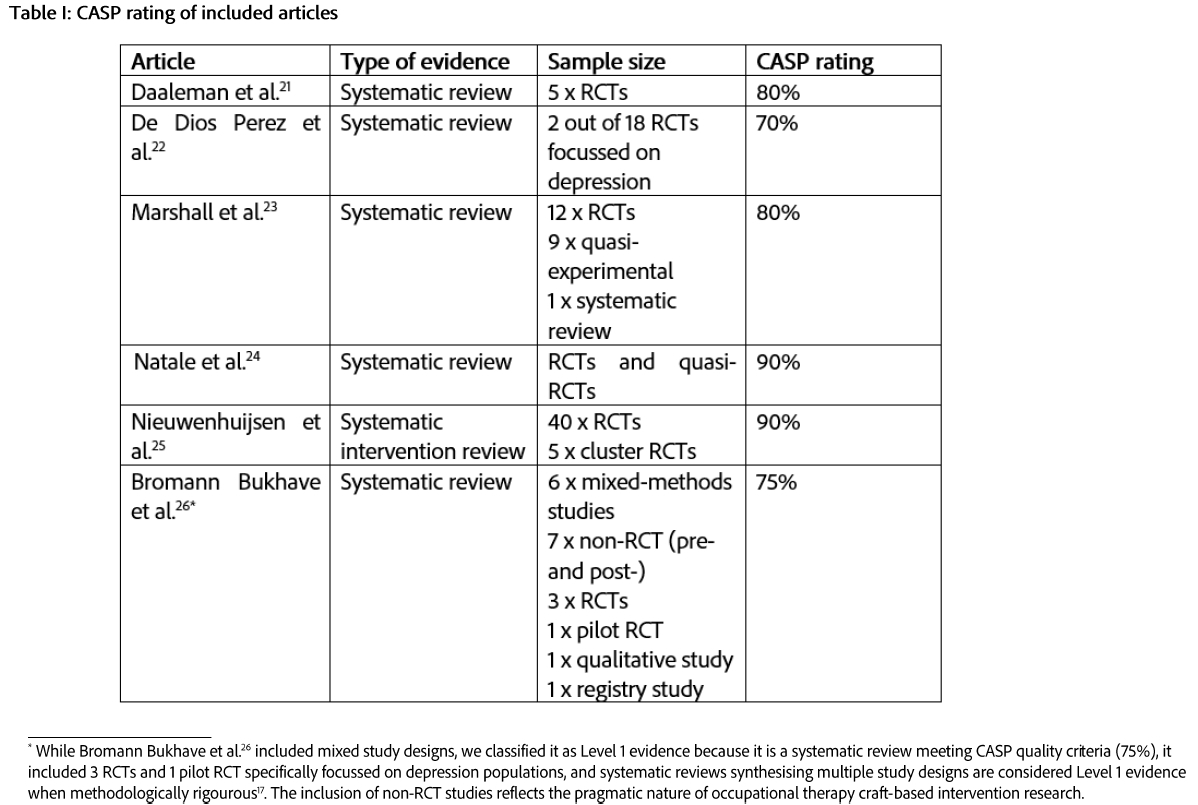
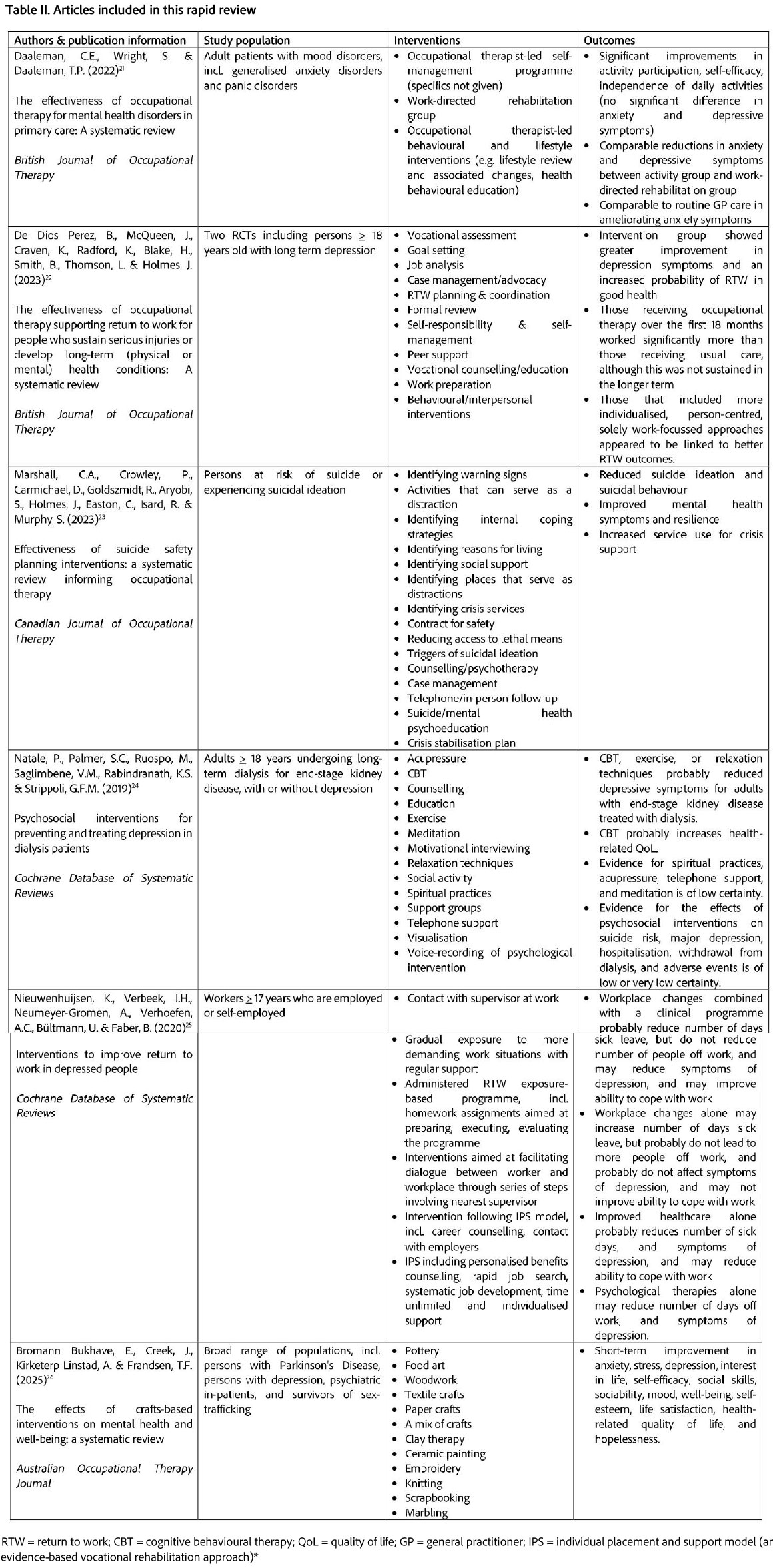
INTRODUCTION: Depression is a leading cause of disability. Occupational therapy interventions address the multifaceted impact of depression by promoting participation and engagement in meaningful activities. This review examined the specific contribution of occupational therapy as part of a national initiative in South Africa to inform public healthcare practice on the role of occupational therapy in treating depressive conditions METHOD: A rapid review methodology was used to synthesise evidence from the CINAHL and Cochrane Library databases. Systematic reviews and randomised controlled trials (RCTs) published from 2014 until 2025 on occupational therapy interventions for depressive disorders were included. The initial search yielded 265 articles. Following title and abstract of 262 articles conducted by three reviewers using predetermined inclusion criteria, 41 articles proceeded to full-text review RESULTS: Six systematic review articles with CASP ratings ranging from 70 to 90%, were included. These synthesised evidence from between 5 and 45 RCTs conducted predominantly in high-income countries. Identified intervention themes included return-to-work and work retention after depression, healthy lifestyle interventions and suicide risk mitigation, specific therapeutic approaches and techniques, activity-based and occupational performance components, and social- and community-focussed interventions. Work-focussed interventions showed the strongest evidence base, while tele-health delivery of occupational therapy interventions remained under-explored CONCLUSION: Occupational therapy interventions for depression span individualised, components of function, and group-based approaches, with emphasis on work and lifestyle outcomes. The evidence is heavily concentrated in high income countries. To inform South African practice, local occupational therapists should prioritise systematic documentation and generation of high quality evidence from diverse economic contexts, and address the limited exploration of tele-health interventions in current practice IMPLICATIONS FOR PRACTICE •Local occupational therapists working with persons with depression should prioritise the systematic documentation of interventions and outcomes to contribute to building a contextually relevant evidence base. •Occupational therapists should develop competencies in tele-health service delivery and explore opportunities to deliver depression interventions through remote platforms while remaining mindful of digital divides and infrastructure limitations. •Occupational therapists should strengthen community-based rehabilitation (CBR) approaches for depression, integrating with primary care services while addressing community-level stigma and accessibility barriers.
tele-health service delivery; return to work; healthy lifestyle; suicide risk mitigation; social- and community-based intervention; good health and well-being
 Thumbnail