Evidence of occupational therapy intervention for depression: A rapid review
Abstract
INTRODUCTION: Depression is a leading cause of disability. Occupational therapy interventions address the multifaceted impact of depression by promoting participation and engagement in meaningful activities. This review examined the specific contribution of occupational therapy as part of a national initiative in South Africa to inform public healthcare practice on the role of occupational therapy in treating depressive conditions METHOD: A rapid review methodology was used to synthesise evidence from the CINAHL and Cochrane Library databases. Systematic reviews and randomised controlled trials (RCTs) published from 2014 until 2025 on occupational therapy interventions for depressive disorders were included. The initial search yielded 265 articles. Following title and abstract of 262 articles conducted by three reviewers using predetermined inclusion criteria, 41 articles proceeded to full-text review RESULTS: Six systematic review articles with CASP ratings ranging from 70 to 90%, were included. These synthesised evidence from between 5 and 45 RCTs conducted predominantly in high-income countries. Identified intervention themes included return-to-work and work retention after depression, healthy lifestyle interventions and suicide risk mitigation, specific therapeutic approaches and techniques, activity-based and occupational performance components, and social- and community-focussed interventions. Work-focussed interventions showed the strongest evidence base, while tele-health delivery of occupational therapy interventions remained under-explored CONCLUSION: Occupational therapy interventions for depression span individualised, components of function, and group-based approaches, with emphasis on work and lifestyle outcomes. The evidence is heavily concentrated in high income countries. To inform South African practice, local occupational therapists should prioritise systematic documentation and generation of high quality evidence from diverse economic contexts, and address the limited exploration of tele-health interventions in current practice IMPLICATIONS FOR PRACTICE •Local occupational therapists working with persons with depression should prioritise the systematic documentation of interventions and outcomes to contribute to building a contextually relevant evidence base. •Occupational therapists should develop competencies in tele-health service delivery and explore opportunities to deliver depression interventions through remote platforms while remaining mindful of digital divides and infrastructure limitations. •Occupational therapists should strengthen community-based rehabilitation (CBR) approaches for depression, integrating with primary care services while addressing community-level stigma and accessibility barriers.
tele-health service delivery; return to work; healthy lifestyle; suicide risk mitigation; social- and community-based intervention; good health and well-being
INTRODUCTION
Depression is a leading cause of disability worldwide. The condition, which is characterised by persistent sadness, loss of interest, and functional impairment, and a significant impact on a person's quality of life and social functioning123
Occupational therapy's approach to depression is to promote a person's mental health and well-being through engagement in meaningful activities4567
Occupational therapy intervention and scope of practice in South Africa are governed by the National Health Act891011
As the professional association for occupational therapists in South Africa, OTASA was approached to define the roles and practices of therapists within quality healthcare in the country, towards the integration of occupational therapy as rehabilitation offering into universal healthcare. In response to this request, an OTASA task team was commissioned to compile practice evidence for interventions offered in various areas of healthcare, including for occupational therapy for depression. This rapid review directly addresses that mandate by synthesising current evidence to support the articulation of occupational therapy's role in treating depression with the NHI framework.
The OTASA Standards Protocol Group provides guidance on occupational therapy interventions by developing and maintaining standard operating protocols for health conditions where therapists are involved. This rapid review reports the outcomes of a systematic search to produce evidence related to occupational therapy interventions for depressive disorders. The aim of the review was to identify Level 1 evidence-based occupational therapy practices and interventions for depression across all care settings and ages.
METHODOLOGY
Rapid review methodology was selected to provide timely, high level evidence for decision-making related to high priority, emergent, and contextual health questions1212
The authors of this paper conducted the review and met on a monthly basis to promote consistency and uniformity in approaches and support. The authors are occupational therapists with clinical and academic research experience, including in teaching and learning, and clinical student supervision. Subject-specific expertise was obtained from two of the authors who have practice experience in mental health rehabilitation, as well as the draft standard operating procedure (SOP) for occupational therapy depression intervention that was developed by expert therapists in South Africa13
The review process was guided by the South African Department of Health's Method Guide for Rapid Reviews141215151613:2.
Topic and review refinement
The research question was developed through stakeholder involvement to ensure fit for purpose121516
Peer reviewed, full text English articles of Level 1 evidence17
Strategy and search
Two databases, CINAHL and Cochrane Library, were searched on 7 February 2025 for evidence. A MeSH search term builder was used to develop the search string used in the Cochrane Library, namely:
("depression" OR "depressive disorder" OR "major depressive disorder") AND ("occupational therap*") AND ("treatment").
The search string used in CINAHL was:
("depression" OR "depressive disorder" OR "major depressive disorder") AND ("occupational therapy" OR "occupational therapist" OR "occupational therapists" OR "ot") AND ("treatment" OR "intervention" OR "management" OR "rehabilitation") AND ("systematic review").
The search was limited to two databases consistent with rapid review methodology which prioritises efficiency while maintaining rigour12
Screening and selection
The 265 articles were uploaded into web-based Rayyan.ai18
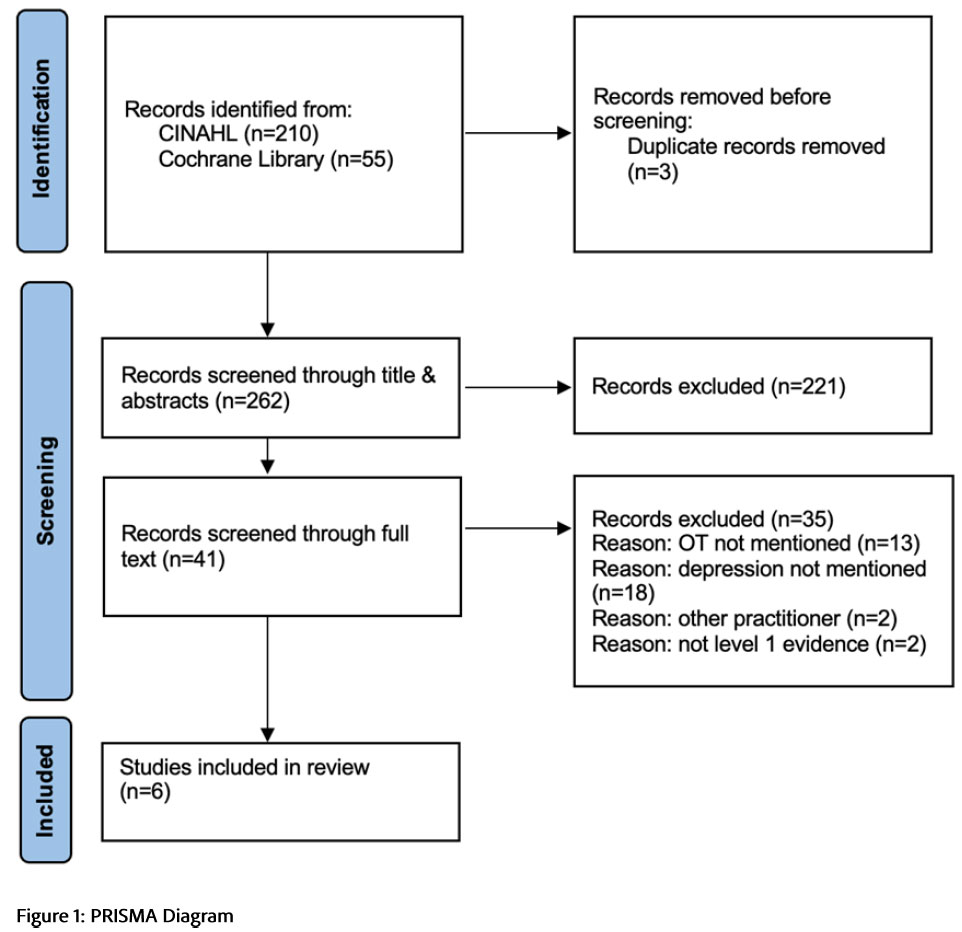
Two reviewers (the first and second listed authors) independently screened all titles and abstracts according to the developed inclusion and exclusion criteria, and 221 articles were excluded. Forty-one (n=41) articles remained for full text screening which was done by two reviewers (the first and third listed authors) and a third reviewer (the fourth listed author) resolved 11 disagreements through review and discussion with the first reviewer. Only six (n=6) articles met the selection criteria and were included in the review. Articles were excluded when the service providers' delivering interventions were not identified, or were identified as other than occupational therapists, when the article reported general rehabilitative interventions without specifying occupational therapy involvement, when depression was not specifically identified as a condition in the article, and if the article did not report Level 1 evidence. One article (Natale et al.24Figure 1 (below) shows the results of the search, screening, and selection in the form of a PRISMA diagram19
Risk of bias assessment, quality appraisal and data extraction
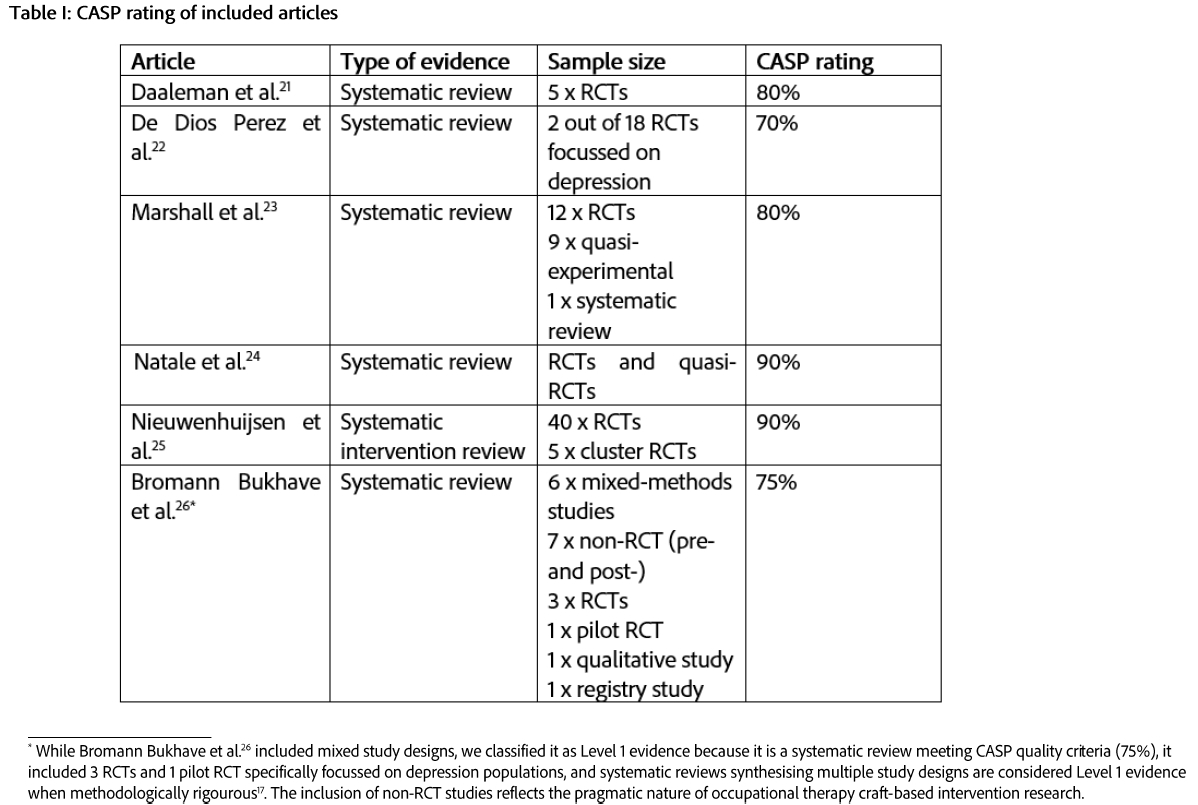
The quality of the included systematic reviews (n=6) was evaluated using the Critical Appraisal Skills Programme (CASP) appraisal tool for Systematic Reviews20Table I, (page 4) These ratings reflect methodological rigor, reliability, and relevance of findings, and provide a foundation for drawing conclusions about the effectiveness of interventions that were examined across the included studies. All studies demonstrated strong methodological quality (>70%), with four studies achieving >80%. The primary methodological limitations identified through CASP appraisal included limited precision of results due to small sample sizes and heterogeneity22,23, and one review indicated potential incompleteness in the inclusion of relevant studies26
A data extraction sheet was developed in MS Excel to capture information about the type of study, the study setting and population, occupational therapy interventions, and the outcomes of interventions.
Synthesis
Analysis and synthesis of data were done by grouping studies by themes, intervention types and foci, and outcomes. Patterns and inconsistencies in the data were highlighted, and key findings summarised. Quantitative aspects of data, for example frequency of interventions, were counted and grouped, and then expressed as percentages to derive meaningful insights. Data, outcomes, and discrepancies were discussed in meetings amongst the co-researchers. The first author integrated analytical insights to synthesise the discussion and conclusions.
RESULTS
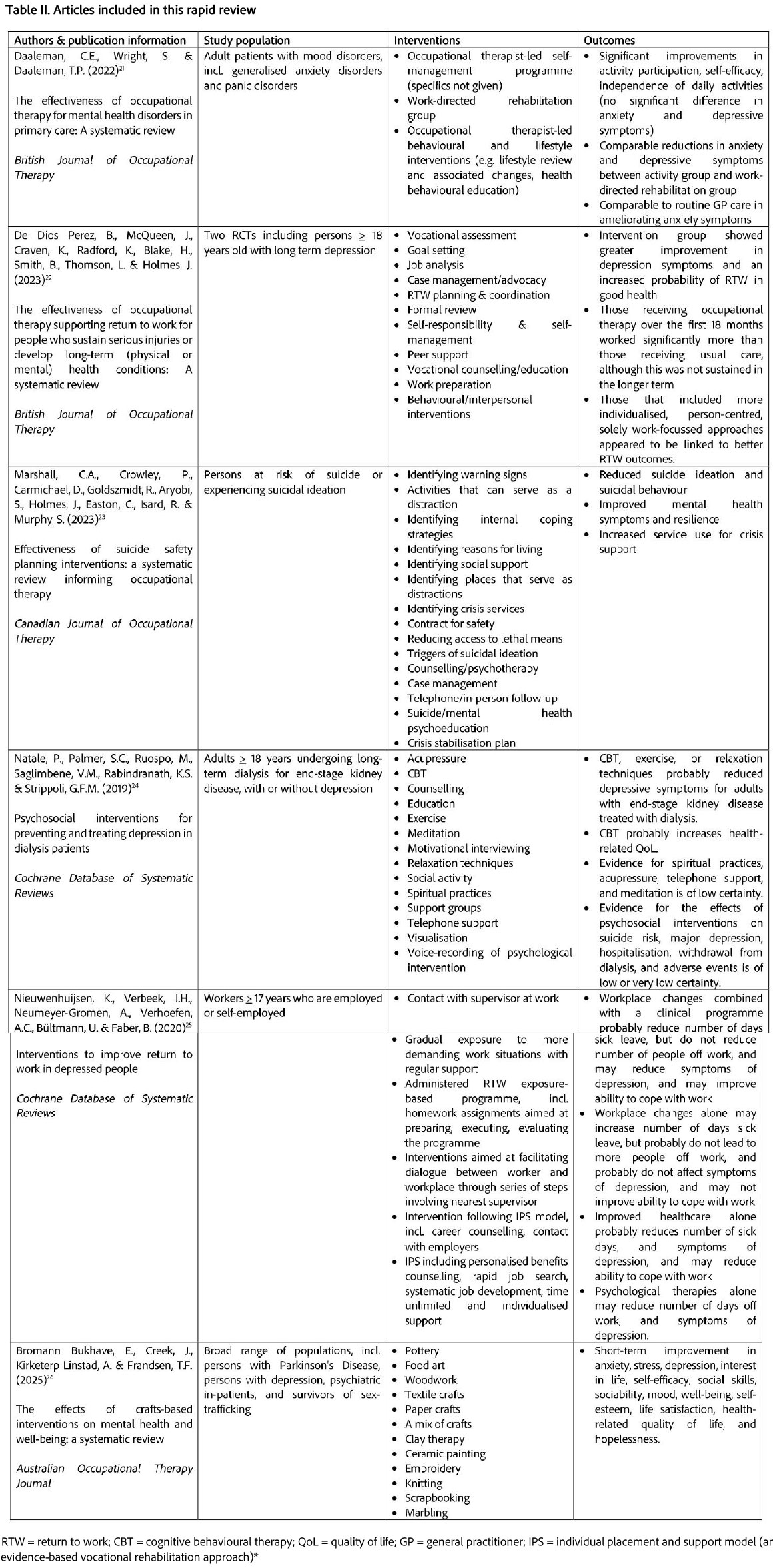
Six (n=6) articles published from 2019 until 2025 were included in the review, shown in Table II (page 5). Three (n=3) of these reported effectiveness studies21,22,23; of which two (n=2) had a focus on the effectiveness of occupational therapy intervention with clients with depression21,22 and one (n=1) focussed on the effectiveness of suicide safety planning2321,22, the United Kingdom21,22,25, the United States of America21,22,23,25, Ireland2122222222,23, Switzerland22,23, Germany2222,23,26, and Taiwan23252423
A third of the articles (n=2) did not report the service settings where interventions were offered24,25, but those that did included a wide range of settings. These were primary care21,26, specialised mental health/behavioural outpatient clinics2321,26, in-person clinical settings22,26, workplace settings2222,23,26, veteran services, refugee camps, emergency departments, and colleges/universities2322,23,26, and one study reported data gathered at a museum as intervention setting, an art gallery, an archive service, and a research institute26
Most studies reported interventions with adult populations (older than 17 years), with the exception of one study that did not report any ages262123242526
Synthesis across studies revealed a number of convergent findings, namely that work-focussed interventions with persons with depression consistently incorporated both workplace and clinical elements, and that activity-based approaches put emphasis on meaningful occupation over passive therapies. Social support was, furthermore, integrated across multiple intervention types rather than stand-alone interventions, and individualisation and person-centredness were centrally positioned regardless of intervention category. There was variable specificity in the descriptions of occupational therapy versus multidisciplinary roles in the articles, and different intensities and durations of interventions were reported, from a single session to 24 months, along with limited consensus on optimal outcomes measures.
While Bromann Bukhave et al.2617
Occupational therapy interventions
A broad range of occupational therapy interventions was reported in the included articles, spanning specific therapies or techniques, such as meditation, as well as psycho-education, and skills training approaches. The most extensively described areas of intervention were work-focussed interventions, healthy lifestyle practices, suicide focussed safety planning interventions, social and community-based approaches, and specific therapies.
Work-focussed interventions for depression
Two articles reported the occupational therapy focus of interventions to be on work (return to work and work retention) with persons with depression. Across these studies a pattern emerged of graded, individualised approaches that combine workplace modifications with clinical interventions. Common elements included vocational assessment, goal setting, self-management and self-responsibility, behavioural and interpersonal interventions, work hardening, vocational counselling or education, case management, return-to-work planning and coordination22
Both studies emphasised the importance of employer engagement and workplace dialogue, though Nieuwenhuijsen et al.2522
The Individual Placement and Support (IPS) model appeared in two instances25
Interventions towards healthy lifestyle practices
Two studies reported on occupational therapy interventions that promote healthy lifestyle practices with persons with depression, with exercise emerging as an intervention element across different populations and contexts. Physical exercise interventions ranged from supervised strength exercises for reducing work-related sickness absence2524
A methodological limitation across studies was the lack of clarity regarding professional discipline boundaries. Nieuwenhuijsen et al.2524
Beyond exercise, spiritual practices were identified as an additional intervention element within psychosocial approaches24
Suicide safety planning and risk mitigation interventions
Interventions geared towards preventing suicide of persons with depression, or reducing the risk of suicide, featured prominently in one of the reviewed articles. Marshall et al.23
Contracting for safety, where the person with depression makes a verbal contract with the practitioner to reach out for professional support, was a component highlighted to occupational therapists. Furthermore, interventions included reducing access to lethal means, identifying triggers of suicidal ideation, counselling and psychotherapy, case management, telephonic or in-person follow-up, suicide or mental health psychoeducation, and devising crisis stabilisation plans.
Therapies and techniques for intervention
Therapeutic techniques reported across four studies revealed both discipline-specific and shared approaches within multidisciplinary contexts. Occupational therapists working in clinical mental health environments reported the use of art therapy, breathing exercises, calming techniques, mindfulness practice, and discussion in interventions for depression26242324
A pattern emerged in interventions for dialysis patients with depression, where complementary and alternative approaches supplemented conventional techniques. These included acupressure, techniques of meditation, motivational interviewing, visualisation, and clients listening to the voice recording of psychological interventions were recorded as interventions with this group24
Activity-based and component-focussed interventions
The literature revealed some distinct yet complementary approaches to activity-based and component-focussed occupational therapy interventions for depression. Meaningful activity engagement served dual purposes; firstly, as distraction for persons with suicidal ideation23242626
Beyond activity-based approaches, the literature identified key intervention elements integrated into occupational therapy practice. Psychoeducation appeared consistently in both suicide prevention protocols23,24 and depression treatment programmes23,24. Goal setting further emerged as intervention element for persons with long-term mental health conditions22
Social- and community-focussed intervention
Social support interventions emerged as a universal intervention element regardless of population or practice setting. However, the operationalisation of social support varied. Peer support appeared in vocational contexts where return-to-work was a focus22232424
A notable difference existed between passive social support identification and active case management. While most studies described social support as an element to be identified or established, Marshall et al.2323
DISCUSSION
This review found evidence of occupational therapy interventions for depression that span individualised and component-focussed approaches to groups and interventions aimed at the occupational performance areas of work and lifestyle. However, the scope of this review omitted evidence of assessments performed and approaches to assessment to plan occupational therapy intervention with persons with depression. Assessment procedures form part of a comprehensive occupational therapy approach with this condition. The draft Depressive Disorders Protocol for Occupational Therapists13
Importantly, the identification of only six studies that met the inclusion criteria of this review invites critical examination. This limitation may reflect a genuine scarcity of Level 1 occupational therapy-specific depression research, or database limitations in the capturing of occupational therapy literature. Moreover, the integration of occupational therapy approaches in multidisciplinary mental health teams may make it difficult to identify profession-specific interventions, while overly restrictive inclusion criteria in this review may have excluded potentially relevant studies. The limited database search likely contributed to the exclusion of occupational therapy-specific journals that are not comprehensively indexed in these databases. Future reviews should include OTDBASE, OTSeeker, and manual searches of core occupational therapy journals to capture the full scope of occupational therapy depression intervention research.
The reviewed evidence included CBT, counselling, and psychotherapy as interventions, although we acknowledge that not all included studies explicitly identified occupational therapists as the sole service provider. Some interventions were delivered within multidisciplinary teams, making it difficult to isolate occupational therapy-specific contributions. In South Africa, entry-level occupational therapy training includes basic cognitive-behavioural strategies, activity-based counselling, and psychoeducation1313
The gathered evidence further reflects the current state of occupational therapy depression intervention research, where high quality RCTs remain limited. As such, some included systematic reviews synthesised heterogeneous study designs and populations. In such cases, we focussed our analysis on depression-specific findings within broader reviews while noting this limitation in interpreting effect sizes and applicability.
The concentration of evidence from high-income countries has important implications for LMIC practice. HIC contexts more typically feature comprehensive healthcare systems, established occupational therapist roles, resources for intensive interventions, and populations with different cultural conceptualisations of depression. Despite such geographic disparities, South African occupational therapy practice correlates strongly with the evidence1313
Beyond South Africa, occupational therapy practices with persons with depression across Southern Africa similarly emphasise vocational rehabilitation and supported employment, including elements of client-centred approaches, illness self-management education, and adapted behavioural therapies27,28. However, Level 1 evidence from these contexts remains notably absent, demonstrating a gap in the research literature.
The reviewed evidence displayed, furthermore, an emphasis on the application of therapies and techniques, for example, counselling, CBT, and mindfulness, that are not traditionally considered core occupational therapy interventions. This integration, however, reflects contemporary occupational therapy practice rather than a departure from the profession's scope. South African occupational therapists acquire a basic level of skill in these techniques as part of their undergraduate training, and the draft Standard Operating Protocol of OTASA describes these approaches as integral elements of local occupational therapy interventions for persons with depression13
In mental health settings where occupational therapists form part of multi-disciplinary teams, the adoption of psychological therapies within occupational therapy constitute common practice2930
The South African draft Standard Operating Protocol identifies several interventions that were absent from the reviewed studies. These include home programmes, assistive devices and technology, cognitive interventions (encompassing remediation, cognitive hardening, and ergonomics), time management strategies, and approaches addressing community-level stigma13133131
Finally, the review revealed a notable gap in reporting on tele-health use in depression intervention, similarly limited in its consideration in the South African Protocol. This omission is surprising considering the development and uptake of tele-health interventions in the past decade and their proven advantages, which include increased accessibility, cost-effectiveness, feasibility, privacy protection, and facilitation of integrative care with primary providers323333
Implications and recommendations
Practice implications
Given the lack of documented evidence from low- to middle-income countries, it is important that occupational therapists working with persons with depression prioritise the systematic documentation of both assessment procedures, interventions, and outcomes. This documentation will contribute to building an evidence base with local and contextual relevance.
Research priorities
Along with practice information, there is a need for high quality research that examines occupational therapy interventions for depression in low- to middle-income countries, particularly in Southern Africa. Future studies must investigate the effectiveness of locally adapted interventions, including vocational rehabilitation, community-based services, and interventions addressing stigma and home- or work adjustments. This research would provide evidence-based support for practices already implemented in these contexts.
Tele-health service delivery
Occupational therapists are encouraged to explore opportunities to deliver depression interventions through remote platforms. Developing competencies in tele-health service delivery is recommended, for example virtual home assessments for routine and activity pattern evaluation, digital craft-based interventions, and tele-health vocational counselling and workplace consultation. Tele-health development should, however, remain mindful of digital divides and infrastructure limitations when serving rural or under-resourced populations. Future research should investigate the effectiveness, feasibility, and acceptability of tele-health delivered occupational therapy interventions for depression across diverse settings. Studies should, specifically, examine implementation in low to middle-income countries and rural areas, identify barriers to uptake, and develop culturally sensitive tele-health protocols that maintain therapeutic effectiveness while addressing contextual challenges.
Policy implications
Occupational therapy as a profession that addresses depression must be recognised explicitly in the care pathways within universal health coverage. As such, prioritised funding for community-based occupational therapy positions and telehealth infrastructure becomes imperative in the planning and development of the Department of Health's strategy.
Community-based interventions
Finally, research is needed to examine the effectiveness of community-based occupational therapy interventions for depression, including their integration with primary care services. Studies should identify best practices for community reintegration support, evaluate the impact of addressing community-level stigma, and explore sustainable models for delivering ongoing community-based care in resource-constrained settings.
Ethical consideration declaration
Ethical clearance was not required for this review as no primary data collection was done. The quality and bias of selected articles were tested to ensure quality results to inform the question of this review.
CONCLUSION
This review identified evidence of occupational therapy interventions for depression across individualised, component-focussed, and group-based approaches, with emphasis on work and lifestyle performance areas. Among intervention categories, work-focussed approaches demonstrated the strongest evidence base, with consistent findings across multiple systematic reviews supporting graded return-to-work programmes that combine workplace modifications and clinical interventions. Craft-based activity interventions showed promising short-term outcomes, while suicide safety planning protocols provide clear frameworks for occupational therapy contribution to crisis intervention. Evidence for lifestyle interventions and specific therapies was more variable and often embedded within multidisciplinary delivery.
Evidence gaps emerged, most notably the geographic concentration of evidence in high income countries. This represents a critical limitation for South African and Southern African practice, where contextual factors such as resource constraints, cultural conceptualisations of depression, community-based care models, and stigma differ from HIC settings. South African and Southern African occupational therapists demonstrate practices consistent with international evidence, yet operate without locally generated Level 1 evidence. Additionally, unique intervention foci, such as community-based services, reflect contextually responsive practices that remain undocumented in the international literature.
The most urgent research priorities are effectiveness studies of occupational therapy depression interventions in LMIC settings, particularly in South Africa, clear documentation of occupational therapy-specific contributions within team-based care, development of tele-health intervention and testing, and cultural adaption processes for occupation-based approaches.
For South African occupational therapy practice, this review supports a continued emphasis on work-focussed rehabilitation, integration of craft and meaningful activity approaches, suicide safety planning competency development, and systematic documentation as foundation for local evidence generation. The profession must prioritise rigorous documentation of assessment and interventions practices, generate high quality evidence from diverse economic contexts, and address the notable absence of tele-health interventions in current practice.
Conflict of interest declaration
The authors declare they received remuneration from the Occupational Therapy Association of South Africa (OTASA) for this review. They declare that this did not affect their decision making in the review and results were not skewed. They have no bias to declare.
Author contributions
All listed authors planned and participated in the review. Shaheed Soeker initiated the review, and Madri Engelbrecht led the writing of the article. All authors approved the final version of the manuscript.
REFERENCES
-
1. American Psychological Association. Diagnostic and Statistical Manual of Mental Disorders, Fifth Edition, Text Revision (DSM-5-TR). 5th ed., Washington D.C.: American Psychological Association Publishing; 2022. Available from https://doi.org/10.1176/appi.books.9780890425787
» https://doi.org/10.1176/appi.books.9780890425787 -
2. World Health Organisation. International classification of functioning, disability and health: ICF. Geneva: WHO; 2001. Available from http://www.who.int/classifications/icf/en/
» http://www.who.int/classifications/icf/en/ -
3. Argentzell, E., Bäckström, M., Lund, K. & Eklund, M. (2020). Exploring mediators of the recovery process over time among mental health service users, using a mixed model regression analysis based on cluster RCT data. BMC Psychiatry, 20(1), 520. https://doi.org/10.1186/s12888-020-02924-2
» https://doi.org/10.1186/s12888-020-02924-2 -
4. American Occupational Therapy Association. Occupational Therapy Practice Framework: Domain and process fourth edition, Am J Occup Ther. 2020;74:1-87. Available from https://doi.org/10.5014/ajot.2020.74S2001
» https://doi.org/10.5014/ajot.2020.74S2001 -
5. Wisenthal, A., Krupa, T., Kirsh, B.H. & Lysaght, R. Cognitive work hardening for return to work following depression: an intervention study. Can J Occup Ther. 2018;85(1):21-32. https://doi.org/10.1177/0008417417733275
» https://doi.org/10.1177/0008417417733275 - 6. Wilcock, A.A. & Hocking, C. (2015). An occupational perspective of health (3rd Ed.). Thorofare, NJ: SLACK Incorporated
- 7. Ikiugu, M.N. & Pollard, N. (2015). Meaningful living across the lifespan: occupation-based intervention strategies for occupational therapists and scientists. London: Whiting & Birch Ltd
-
8. South African Government. National Health Act 61 of 2003. South Africa; 2003; [Accessed 2023 Jun 10]. Available from https://www.gov.za/sites/default/files/gcis_document/201409/a61-03.pdf
» https://www.gov.za/sites/default/files/gcis_document/201409/a61-03.pdf -
9. National Department of Health. Framework and Strategy for Disability and Rehabilitation services [homepage on the internet]. 2015 [Accessed 2023 Jun 10]. Available from http://ilifalabantwana.co.za/wp-content/uploads/2016/07/Framework-25-may_1_3.docx
» http://ilifalabantwana.co.za/wp-content/uploads/2016/07/Framework-25-may_1_3.docx -
10. South African Government. The Constitution of the Republic of South Africa. The Bill of Rights Republic of South Africa: https://www.gov.za/documents/constitution/chapter-2-bill-rights; 1996 p.243.
» https://www.gov.za/documents/constitution/chapter-2-bill-rights -
11. National Department of Health. White Paper: National Health Insurance Policy - Towards Universal Health Coverage. Dep Heal. 2017;1-67. Available from https://www.health.gov.za/wp-content/uploads/2023/11/NHI-Policy-2017.pdf
» https://www.health.gov.za/wp-content/uploads/2023/11/NHI-Policy-2017.pdf -
12. Garritty, C., Gartlehner, G., Nussbaumer-Streit, B., King, V. J., Hamel, C., Kamel, C., et al. Cochrane Rapid Reviews Methods Group offers evidence-informed guidance to conduct rapid reviews. J Clin Epidemiol. 2021;130:13-22. https://doi.org/10.1016/j.jclinepi.2020.10.007
» https://doi.org/10.1016/j.jclinepi.2020.10.007 -
13. OTASA (2026) Depressive disorders standard operating protocol for occupational therapists (OT). Unpublished. Available at https://www.otasa.org.za/wp-content/uploads/2025/12/OTASA-Draft-Protocol-for-Depression-.pdf
» https://www.otasa.org.za/wp-content/uploads/2025/12/OTASA-Draft-Protocol-for-Depression-.pdf -
14. Department of Health. (2022). NEMLC-Protocol Template for rapid reviews of COVID-19_v4.0_12March2022 1 Methods guide for rapid reviews for covid-19 medicine reviews Rationale for rapid reviews. https://www.health.gov.za/wp-content/uploads/2022/03/Protocol-Template-for-rapid-reviews-of-COVID-19_v4.0_12March2022.pdf
» https://www.health.gov.za/wp-content/uploads/2022/03/Protocol-Template-for-rapid-reviews-of-COVID-19_v4.0_12March2022.pdf -
15. WFOT. WFOT Definition of Occupational Therapy [Internet]. 2012. Available from https://wfot.org/resources/definitions-of-occupational-therapy-from-member-organisations
» https://wfot.org/resources/definitions-of-occupational-therapy-from-member-organisations -
16. OTASA. O.T.A. of S. (2017). Occupational Therapy Association of South Africa Position statement on rehabilitation. South African Journal of Occupational Therapy, 47(3), 63-64. https://doi.org/10.17159/2310-3833/2017/v47n3a9
» https://doi.org/10.17159/2310-3833/2017/v47n3a9 -
17. Forrest, J.L. and Miller, S.A. Translating evidence-based decision making into practice: EBDM concepts and finding the evidence. J Evid Based Dent Pract. 2009;9:59-72. https://doi.org/10.1016/j.jebdp.2009.03.017
» https://doi.org/10.1016/j.jebdp.2009.03.017 -
18. Rayyan Systems I. (2020) Rayyan Intelligent Systematic Review. Rayyan https://rayyan.qcri.org/. 2020.
» https://rayyan.qcri.org/ -
19. King, V.J., Stevens, A., Nussbaumer-Streit, B. Kamel, C. and Garritty, C. (2022). Paper 2: Performing rapid reviews, Systematic Reviews, 11(1):1-10. https://pubmed.ncbi.nlm.nih.gov/35906677/
» https://pubmed.ncbi.nlm.nih.gov/35906677/ -
20. Critical Appraisal Skills Programme. CASP Systematic Review [Internet]. 2018. Available from https://casp-uk.net/casp-tools-checklists/systematic-review-checklist/
» https://casp-uk.net/casp-tools-checklists/systematic-review-checklist/ -
21. Daaleman, C. E., Wright, S. T., & Daaleman, T. P. The effectiveness of occupational therapy for mental health disorders in primary care: A systematic review. Br J Occup Ther. 2022;85(4): 224-30. https://doi.org/10.1177/03080226211058362
» https://doi.org/10.1177/03080226211058362 -
22. De Dios Perez, B., McQueen, J., Craven, K., Radford, K., Blake, H., Smith, B., Thomson, L., Holmes, J. The effectiveness of occupational therapy supporting return to work for people who sustain serious injuries or develop long-term (physical or mental) health conditions: A systematic review. Br J Occup Ther. 2023;86(7): 467-81. https://doi.org/10.1177/03080226231170996
» https://doi.org/10.1177/03080226231170996 -
23. Marshall, C. A., Crowley, P., Carmichael, D., Goldszmidt, R., Aryobi, S., Holmes, Easton, C., Isard, R., Murphy, S. Effectiveness of Suicide Safety Planning Interventions: A Systematic Review Informing Occupational Therapy. Can J Occup Ther. 2023;90(2): 208-36. https://doi.org/10.1177/00084174221132097
» https://doi.org/10.1177/00084174221132097 -
24. Natale, P., Palmer, S.C., Ruospo, M., Saglimbene, V.M., Rabindranath, K.S., Strippoli, G.F.M. (2019). Psychosocial interventions for preventing and treating depression in dialysis patients. Cochrane Database of Systematic Reviews 2019, Issue12. Art. No.: CD004542. https://doi.org/10.1002/14651858.CD004542.pub3
» https://doi.org/10.1002/14651858.CD004542.pub3 -
25. Nieuwenhuijsen, K., Verbeek, J.H., Neumeyer-Gromen, A., Verhoefen, A.C., Bültmann, U., Faber, B. (2020). Interventions to improve return to work in depressed people, Cochrane Database of Systematic Reviews (10). Art. No.: CD006237, DOI: https://doi.org/10.1002/14651858.CD006237.pub4
» https://doi.org/10.1002/14651858.CD006237.pub4 -
26. Bromann Bukhave, E., Creek, J., Kirketerp Linstad, A. & Frandsen, T.F. The effects of crafts-based interventions on mental health and well-being: a systematic review, Australian Occupational Therapy Journal. 2025;72:e70001. https://doi.org/10.1111/1440-1630.70001
» https://doi.org/10.1111/1440-1630.70001 -
27. Chimara, M., Van Niekerk, L., & van Biljon, H. M. Scoping review exploring vocational rehabilitation interventions for mental health service users with chronic mental illness in low-income to upper-middle-income countries. BMJ Open. 2022; 12(5): e059211. https://doi.org/10.1136/bmjopen-2021-059211
» https://doi.org/10.1136/bmjopen-2021-059211 -
28. Mavindidze, E., Nhunzvi, C., & Van Niekerk, L. Supported employment interventions for workplace mental health of persons with mental disabilities in low-to-middle income countries: A scoping review. PLoS ONE. 2023;18(9 September), 1-18. https://doi.org/10.1371/journal.pone.0291869
» https://doi.org/10.1371/journal.pone.0291869 -
29. Eklund, M., Parsonage-Harrison, J. & Argentzell, E. Occupation- and lifestyle-based mental health interventions - A hallmark for the occupational therapy profession? British Journal of Occupational Therapy. 2024; 87(7): 395-97. https://doi.org/10.1177/03080226241228750
» https://doi.org/10.1177/03080226241228750 -
30. Walker, N., Vernon-Smith, M., & Townend, M. A feasibility study of a novel work-focused relational group CBT treatment programme for moderate to severe recurrent depression. Mental Health Review Journal. 2021;26(4): 328-52. https://doi.org/10.1108/MHRJ-01-2021-0005
» https://doi.org/10.1108/MHRJ-01-2021-0005 -
31. Kohrt, B. A., Asher, L., Bhardwaj, A., Fazel, M., Jordans, M. J. D., Mutamba, B. B., et al. The role of communities in mental health care in low-and middle-income countries: a meta-review of components and competencies. Int J Environ Res Public Health. 2018;15(6). https://doi.org/10.3390/ijerph15061279
» https://doi.org/10.3390/ijerph15061279 -
32. Hand, L.J. The role of telemedicine in rural mental health care around the globe, Telemedicine journal and e-health. 2022;28(3): 285-294. https://doi.org/10.1089/tmj.2020.0526
» https://doi.org/10.1089/tmj.2020.0526 -
33. Richardson, L. K., Frueh, B. C., Grubaugh, A. L., Egede, L., & Elhai, J. D. Current directions in videoconferencing tele-mental health research. Clinical Psychology: Science and Practice. 2009;16(3): 323-38. https://doi.org/10.1111/j.1468-2850.2009.01170.x
» https://doi.org/10.1111/j.1468-2850.2009.01170.x

Reviewed: 12 December 2025
Revised: 19 January 2026
Accepted: 20 January 2025
Published: April 2026
DATA AVAILABILITY: Upon reasonable request, from Corresponding Author
FUNDING: The Occupational Therapy Association of South Africa (OTASA) requested the authors to do this rapid review and they were remunerated by the association