Perceived occupational gaps among the Ugandan general population - a pilot study
Abstract
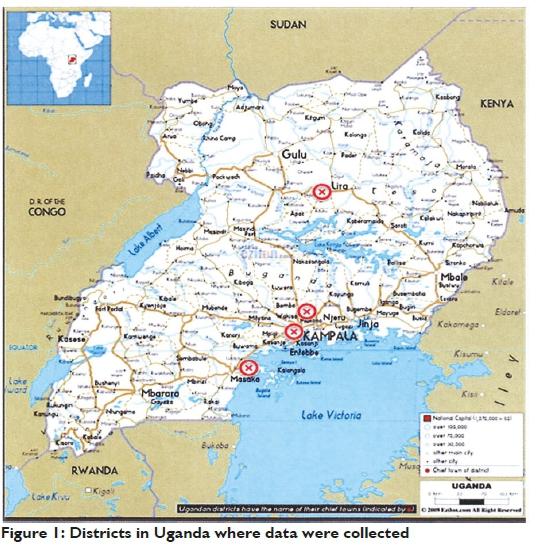
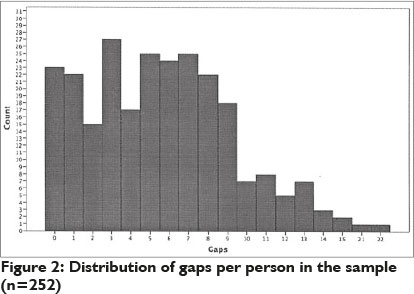
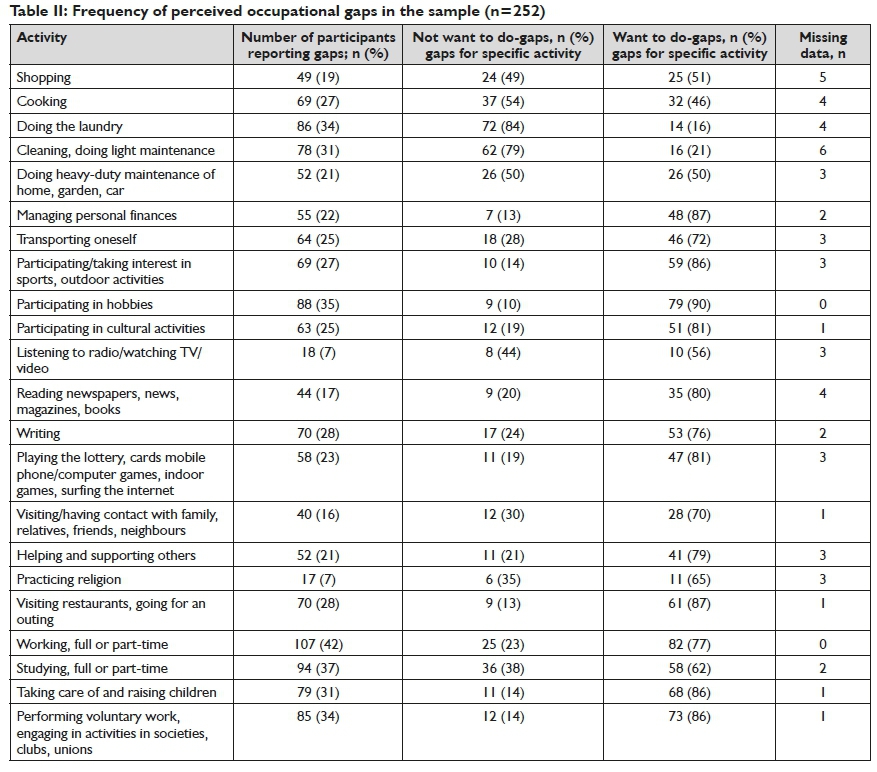
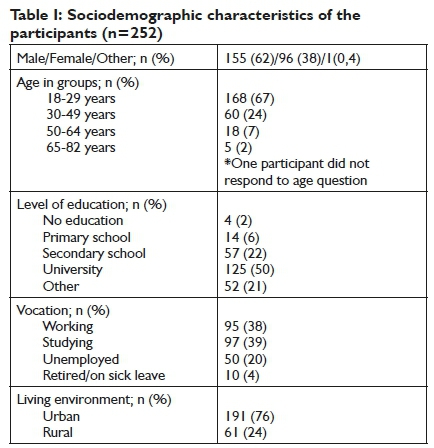
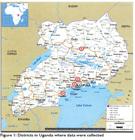
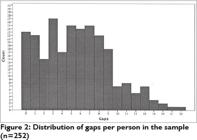
PURPOSE: This study aimed at culturally adapting the Occupational Gaps Questionnaire and to describe gaps which may exist during participation in everyday occupations i.e. the discrepancy between what a person wants to do and what he or she actually does in everyday life, in a reference sample from an English-speaking population in Uganda and furthermore to explore differences in occupational gaps between the Ugandan and Swedish reference samples. METHOD: A cross-sectional design was used and data were collected using the Occupational Gaps Questionnaire in four different districts in Uganda (n = 252). The Swedish representative sample included 771 people. RESULTS: Occupational gaps were reported by 91% of the participants (mean=5.8; SD=3.9) in Uganda. The number of gaps per person was higher than in the Swedish sample. The most common gaps in the Ugandan sample were reported as Working (42%), Studying (37%) and Hobbies (35%) in comparison to Cleaning (29%), Sports (23%) Hobbies as well as Travelling for pleasure (20%) in the Swedish sample. Younger participants perceived significantly more gaps than older participants in both samples. CONCLUSIONS: The majority of the participants perceived gaps, indicating that occupational gaps are perceived to a greater extent in Uganda.
Activities in daily living; participation in everyday occupations; assessment; culture; reference sample; self-report
 Thumbnail
 Thumbnail