Exploring the lived experiences and challenges of informal traders on the Durban beachfront
Abstract
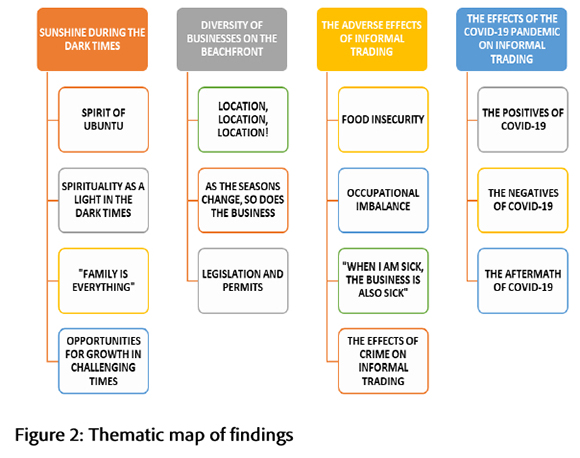
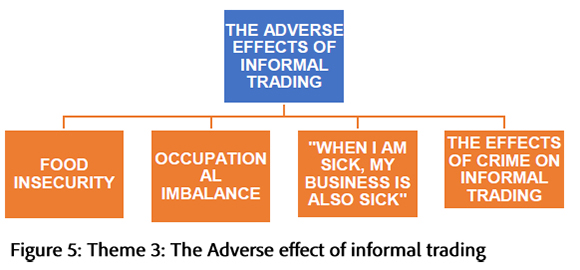
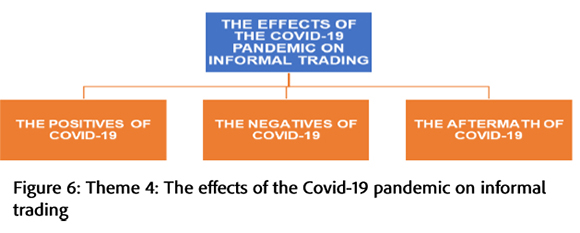
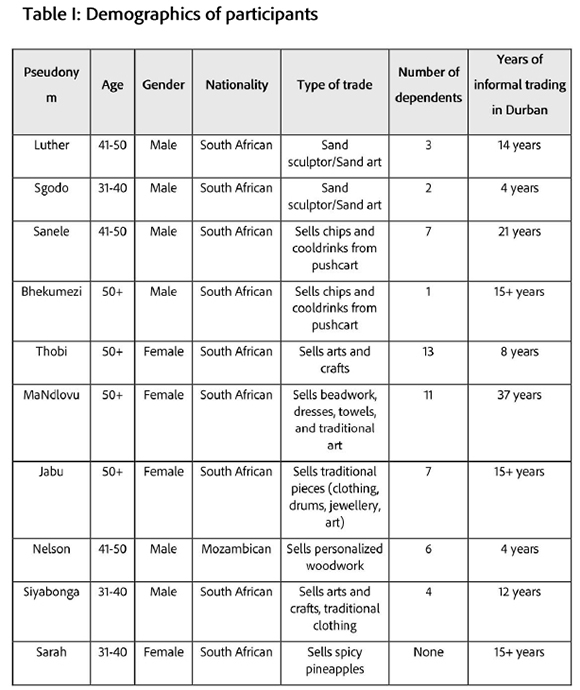
INTRODUCTION: The study explored the lived experiences of informal traders on the Durban beachfront, to understand their challenges and impact on their roles, occupations, and livelihoods. This has important implications for occupational therapy, as it is a work occupation METHODS: The study utilised a qualitative design to explore their lives and working conditions. Purposive and snowball sampling was used to identify 10 participants who completed a demographic questionnaire and were interviewed using a semi-structured interview schedule FINDINGS: The study identified both positive and negative aspects of informal trading. Positive aspects included the financial support from families, and spirituality provided strength and facilitated ubuntu among traders. Negative aspects included crime, adverse weather conditions, poor infrastructure, a lack of basic amenities, and harassment from the police and municipal officials. The occupational imbalance of the traders resulted in difficulties fulfilling their roles. Comorbid health conditions, food insecurity and the aftermath of COVID-19 were other negative aspects CONCLUSION: Informal traders faced financial uncertainty, food insecurity, adverse weather conditions, poor infrastructure, occupational imbalance, crime, deteriorating health, and declining tourism. The positive aspects included developing perseverance, gaining skills and ubuntu among traders. Improving the infrastructure for the traders with increased visible policing may reduce crime and create a safer environment for the traders Implications for Practice • The research identified interventions and policies to improve informal traders' lived experiences and well-being. Training in stress management, ergonomics, and business skills will enhance the traders' coping strategies and financial stability. • Occupational therapists should advocate for policy reforms by amplifying traders' voices on work-related challenges. Addressing these issues will provide broader societal insights and support inclusive policy development. • Informal trading allows greater control over schedules, leisure and self-care, which bolsters mental health and empowerment. • Occupational therapy can address occupational imbalance, fostering identity, purpose and overall well-being of informal traders.
comorbid health conditions; food insecurity; occupational imbalance; Ubuntu; visible policing; good health and well-being; industry; innovation and infrastructure
 Thumbnail
 Thumbnail
 Thumbnail
 Thumbnail
 Thumbnail
 Thumbnail