Age-related changes in serum anti-Müllerian hormone in women of reproductive age in Kenya
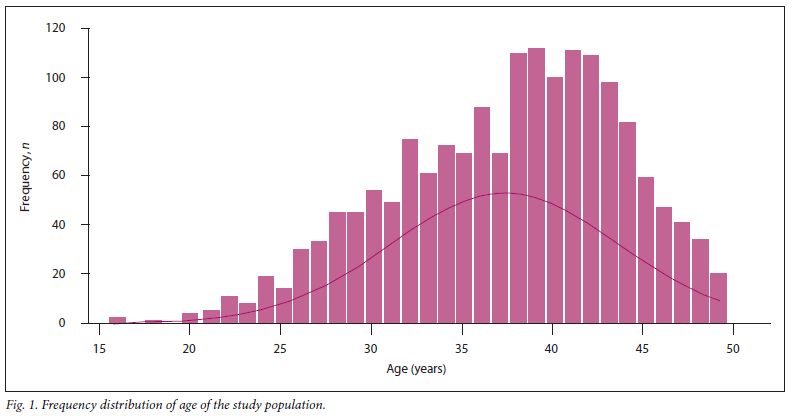
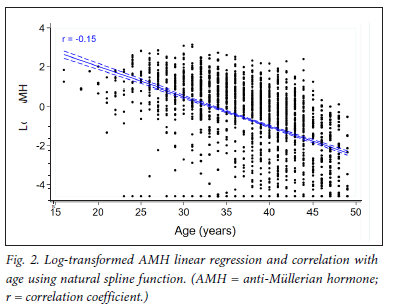
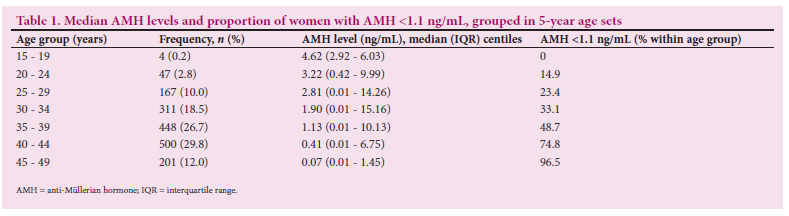
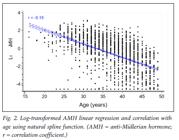
BACKGROUND: Anti-Müllerian hormone (AMH) is produced by the granulosa cells of ovarian antral follicles and plays a role in the recruitment of dominant follicles during folliculogenesis. The serum level of AMH is proportional to the number of developing follicles in the ovaries and reflects ovarian reserve. Nomograms of AMH variation with age exist from Caucasian populations, but there are none drawn from local African data OBJECTIVES: To establish age-specific median serum AMH levels in an unselected East African population of women of reproductive age METHODS: We retrospectively analysed data on 1 718 women who underwent AMH testing using the Beckman Coulter AMH Gen II enzyme-linked immunosorbent assay during the period 2015 - 2019 at Aga Khan University Hospital, Nairobi, Kenya. Age-specific median AMH levels were derived and presented in 5-year age bands. AMH levels were then log-transformed and, using linear regression in a natural spline function, presented on a scatter plot to demonstrate variation across reproductive age RESULTS: The median (interquartile range (IQR)) age of women who were tested for AMH was 38 (19 - 49) years. For the study population, the median (IQR) serum AMH level was 0.87 (0.01 - 17.10) ng/mL. The AMH concentration was inversely related to age, with a progressive decline whereby an increase of 1 year resulted in a corresponding decrease in AMH of 0.18 ng/mL. The proportion of women with decreased ovarian reserve increased exponentially with age from 14.9% in those aged 20 - 24 years to 48.7% at 35 - 39 years CONCLUSION: From a large dataset of mainly black African women, this study confirms that serum AMH declines with advancing age, as reported elsewhere in Caucasian populations. There was, however, a higher than expected number of women with diminished ovarian reserve for age. Future studies prospectively exploring ovarian reserve in the general population could unravel underlying biological, reproductive and environmental factors that may influence AMH levels and reproductive capacity in this indigenous population
South African Journal of Obstetrics and Gynaecology
 Thumbnail
 Thumbnail