Predictors of successful vaginal birth after one caesarean section at selected hospitals in Lusaka, Zambia
BACKGROUND. Repeat caesarean section (CS) carries an increased risk of both maternal and neonatal morbidity and mortality. Planned vaginal birth after CS (VBAC), with an estimated success rate of 60 - 80%, is clinically safer than elective repeat CS, and also limits the rise in CSs. There is no single generalised validated tool to predict success of VBAC. OBJECTIVES. To determine predictors of successful VBAC among mothers with one previous CS at selected hospitals in Lusaka, Zambia. METHOD. Determination of independent predictors with significant high odds of a successful VBAC among mothers offered a trial of labour (TOL) was conducted in a cross-sectional study. Women with a history of one previous lower-segment CS, who were carrying a singleton fetus and were in established labour or draining amniotic fluid and scheduled for TOL after CS, were included in the study. Convenience sampling was used to enrol 290 participants. Using SPSS version 22, bivariate analysis and logistic regression analysis were used to analyse data. An independent factor associated with successful VBAC and with a p-value <0.05 was considered significant. RESULTS. Of the participants, 236 (81.4%) had a successful vaginal delivery and 54 (18.6%) failed to deliver vaginally and required emergency CS. Key independent predictors of success of VBAC were primary education level (adjusted odds ratio (AOR) 2.21; 95% confidence interval (CI) 1.01 - 4.84), multiparity (AOR 4.81; 95% CI 1.16 - 19.93), previous successful VBAC (AOR 9.94; 95% CI 1.29 - 76.70), inter-delivery interval after the primary CS (AOR 18.54; 95% CI 5.98 - 57.48), a history of fetal distress (AOR 9.33; 95% CI 2.48 - 35.08), malpresentation (AOR 6.13; 95% CI 1.65 - 22.70) or failed induction of labour (AOR 20.52; 95% CI 3.32 - 127.03) as indications for the primary CS, Bishop score (AOR 7.06; 95% CI 1.92 - 25.97), cervical dilation (AOR 11.62; 95% CI 3.86 - 35.03), duration of labour (AOR 20.78; 95% CI 5.62 - 76.80), birthweight (AOR 6.80; 95% CI 3.33 - 13.91) and Apgar score (AOR 28.42; 95% CI 5.67 - 142.38). CONCLUSION. A combination of independent sociodemographic and obstetric factors that have significant high odds for a good outcome of VBAC could help predict success of delivery in a given population. This information could also aid in counselling mothers on mode of delivery.
Caesarean section (CS); vaginal birth after caesarean section (VBAC); elective repeat caesarean section (ERCS); predictors of success
Predictors of successful vaginal birth after one caesarean section at selected hospitals in Lusaka, Zambia
M MukapeI; B VwalikaII
IBSc HB, MB ChB, MSc, MMed (O&G), FZCMS; Department of Obstetrics and Gynaecology, School of Medicine, University of Zambia, Zambia
IIBSc HB, MB ChB, MSc, MMed (O&G), PhD; Department of Obstetrics and Gynaecology, School of Medicine, University of Zambia, Zambia
BACKGROUND. Repeat caesarean section (CS) carries an increased risk of both maternal and neonatal morbidity and mortality. Planned vaginal birth after CS (VBAC), with an estimated success rate of 60 - 80%, is clinically safer than elective repeat CS, and also limits the rise in CSs. There is no single generalised validated tool to predict success of VBAC.
OBJECTIVES. To determine predictors of successful VBAC among mothers with one previous CS at selected hospitals in Lusaka, Zambia.
METHOD. Determination of independent predictors with significant high odds of a successful VBAC among mothers offered a trial of labour (TOL) was conducted in a cross-sectional study. Women with a history of one previous lower-segment CS, who were carrying a singleton fetus and were in established labour or draining amniotic fluid and scheduled for TOL after CS, were included in the study. Convenience sampling was used to enrol 290 participants. Using SPSS version 22, bivariate analysis and logistic regression analysis were used to analyse data. An independent factor associated with successful VBAC and with a p-value <0.05 was considered significant.
RESULTS. Of the participants, 236 (81.4%) had a successful vaginal delivery and 54 (18.6%) failed to deliver vaginally and required emergency CS. Key independent predictors of success of VBAC were primary education level (adjusted odds ratio (AOR) 2.21; 95% confidence interval (CI) 1.01 - 4.84), multiparity (AOR 4.81; 95% CI 1.16 - 19.93), previous successful VBAC (AOR 9.94; 95% CI 1.29 - 76.70), inter-delivery interval after the primary CS (AOR 18.54; 95% CI 5.98 - 57.48), a history of fetal distress (AOR 9.33; 95% CI 2.48 - 35.08), malpresentation (AOR 6.13; 95% CI 1.65 - 22.70) or failed induction of labour (AOR 20.52; 95% CI 3.32 - 127.03) as indications for the primary CS, Bishop score (AOR 7.06; 95% CI 1.92 - 25.97), cervical dilation (AOR 11.62; 95% CI 3.86 - 35.03), duration of labour (AOR 20.78; 95% CI 5.62 - 76.80), birthweight (AOR 6.80; 95% CI 3.33 - 13.91) and Apgar score (AOR 28.42; 95% CI 5.67 - 142.38).
CONCLUSION. A combination of independent sociodemographic and obstetric factors that have significant high odds for a good outcome of VBAC could help predict success of delivery in a given population. This information could also aid in counselling mothers on mode of delivery.
Keywords: Caesarean section (CS), vaginal birth after caesarean section (VBAC), elective repeat caesarean section (ERCS), predictors of success
Vaginal birth after caesarean section (VBAC) describes a vaginal delivery in a woman who has previously given birth via caesarean section (CS). Patients desiring VBAC undergo a trial of labour (TOL), also called TOL after CS (TOLAC). Pregnant women who have had one previous CS have two delivery options: VBAC or elective repeat CS (ERCS). There is a consensus[1-3] that planned VBAC is a clinically safer choice than ERCS for the majority of women with a single previous lower-segment CS (LSCS). Several reports[4-6] have indicated that the absolute risk of uterine rupture attributable to a TOL after one previous CS is ~1 per 1 000. Having undergone two previous CSs further increases the risks of uterine rupture in a subsequent pregnancy, so for a future pregnancy, having had a successful VBAC offers protection after undergoing the risk in the current pregnancy.[4] Such a strategy would also limit escalation of the CS rate and maternal morbidity associated with multiple CSs.[3,7,8] Many studies[9-11] have addressed methods for identifying women at low and high risk of failure of VBAC, but none of them have resulted in a validated result, raising the crucial question of how to reliably predict successful VBAC. There is considerable variation across institutions in the proportion of women who attempt TOLAC and successfully deliver vaginally.[1,3,5,12] Even factors found to be associated with successful VBAC vary from centre to centre.[5] The Royal College of Obstetricians and Gynaecologists[3] reported in 2015 that vaginal birth after one previous CS had a success rate of 72 - 75%. In sub-Saharan Africa, a meta-analysis[12] of 17 published reports concluded that the probability of vaginal delivery in this situation was 69%. In Zambia, no large-scale, countrywide study has been done to establish what factors will predict success of VBAC. A prospective study[13] on the outcome of labour following one previous CS done at University Teaching Hospital (UTH) in Lusaka nearly three decades ago for the period 1 October 1995 - 30 September 1996 concluded that a TOL after a previous CS was a reasonable and moderately safe option to be followed at UTH. Our present aim was to determine the predictive factors associated with successful VBAC among mothers with one previous CS at selected hospitals in Lusaka.
Methods
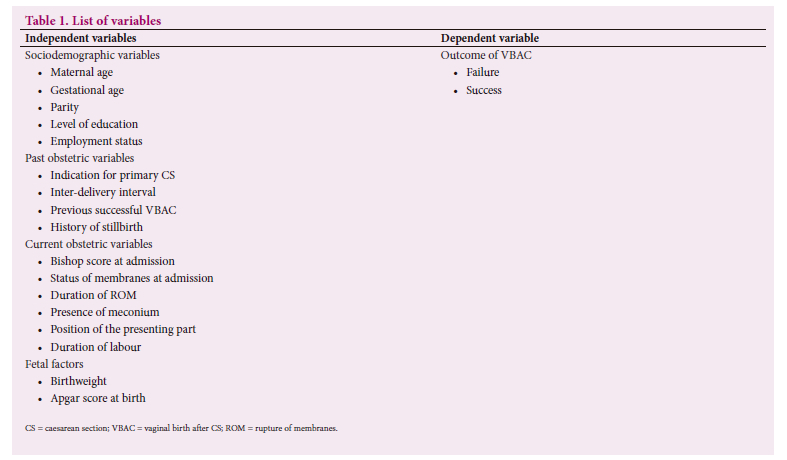
This was a cross-sectional study to identify predictive independent factors associated with successful VBAC among mothers with one previous CS who were offered a TOL at selected hospitals in Lusaka. The hospitals were UTH, Kanyama General Hospital, Matero General Hospital, Chilenje General Hospital and Chipata General Hospital. Data were collected for the 5-month period 1 May 2021 - 30 September 2021. The sample size of 280 was calculated using the Cochran formula with the estimate of prevalence of ~76%, based on a study by Mulindi. [13] The desired width of confidence interval (CI) or absolute error of precision was taken as 0.05. Convenience sampling was used to enrol 290 participants. Women carrying a singleton fetus with a history of one previous LSCS who were in established labour or draining amniotic fluid and scheduled for TOLAC were included in the study, whereas pregnant women who did not consent and those with incomplete medical records were excluded. There were two outcomes, successful VBAC or failed VBAC. A successful VBAC was defined as a participant who managed to deliver spontaneously by the vaginal route after beingoffered a TOLAC, while a failed VBAC was a participant who did not manage to deliver vaginally after been offered a TOLAC and proceeded to deliver via emergency CS. Sociodemographic factors, past and present obstetric factors and fetal factors in the cases of successful VBAC were then analysed. Table 1 shows the variables that were studied.
Bivariate analysis was performed using the data editor ofSPSS, version 22 (IBM, USA), to determine the associations between various independent and dependent categorical factors. If Pearson's χ2p-value was <0.05, the association was considered significant. This analysis was followed by logistic regression analysis to control for the confounding effect of independent determinants.
Ethical clearance was obtained from the University of Zambia Biomedical Research Ethics Committee (ref. no. 1514-2021), and permission to conduct the study was then obtained from the National Health Research Authority in Zambia (ref. no. NHRA00007/19/04/2021).
Results
Study participants
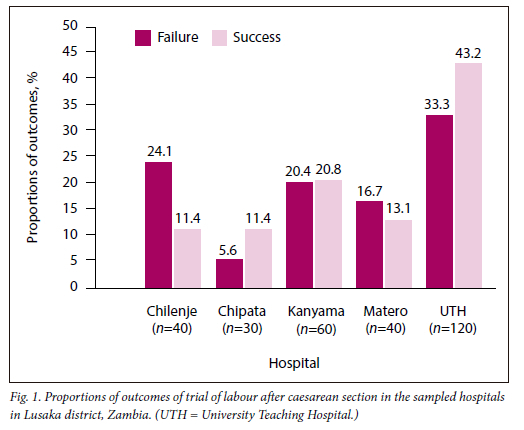
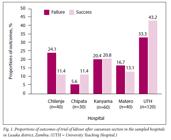
Of the 290 participants, 236 (81.4%) successfully delivered vaginally after one previous CS, while 54 (18.7%) failed the TOL and underwent emergency CS. Fig. 1 shows the proportions of outcomes of VBAC in the sampled hospitals in the Lusaka district. Being a referral centre, UTH had the largest proportion of participants (n=120; 41.4%), followed by Kanyama General Hospital with 60 (20.7%), Chilenje and Matero General Hospitals with 40 each (13.8%), and Chipata General Hospital with the lowest number of participants at 30 (10.3%). Of all successful VBACs, UTH had the highest proportion (43.2%), followed by Kanyama General Hospital (20.8%) and Matero General Hospital (13.1%). Chipata and Chilenje hospitals had the lowest contributions to the success rate of VBAC with 1.4% each.
Bivariate analysis for sociodemographic characteristics
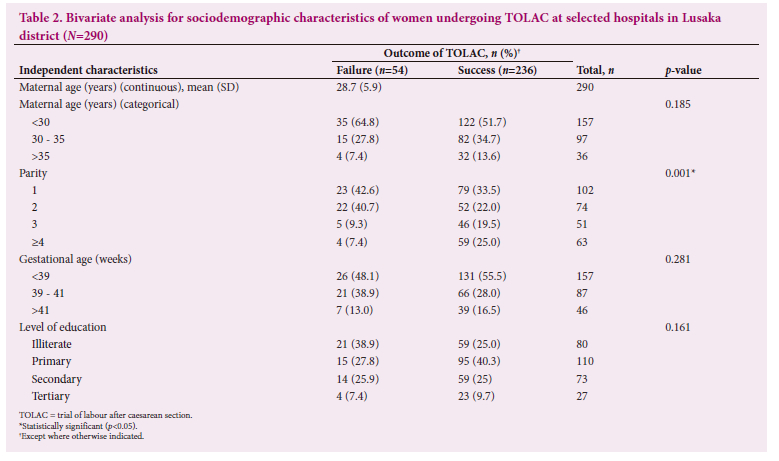
Table 2 shows that parity was the only sociodemographic characteristic of pregnant women with a single previous CS that was significantly associated with outcome (p=0.001).
Bivariate analysis for past obstetric characteristics
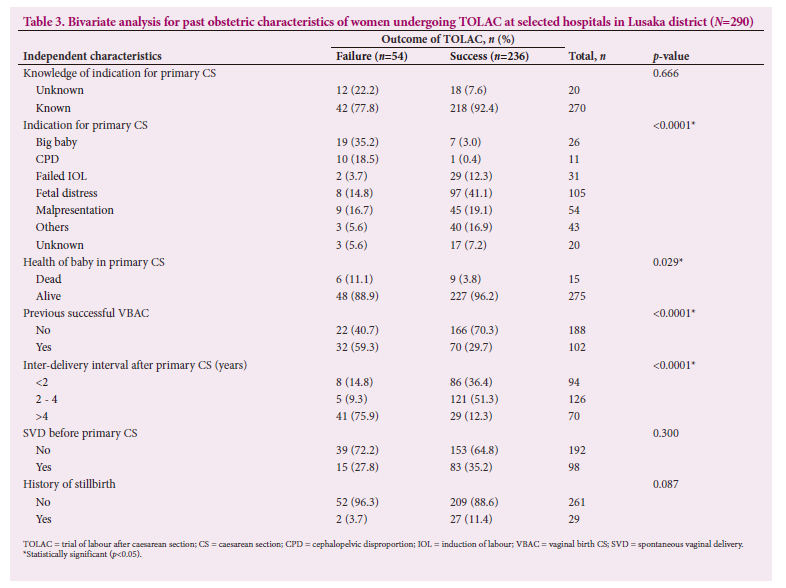
Table 3 shows that indication for the primary CS (p<0.0001), health of the baby in the primary CS (p=0.029), previous successful VBAC (p<0.0001) and inter-delivery interval after the primary CS (p<0.0001) were all found to have a statistically significant association with successful vaginal delivery after one previous CS.
Bivariate analysis for current obstetric and fetal characteristics
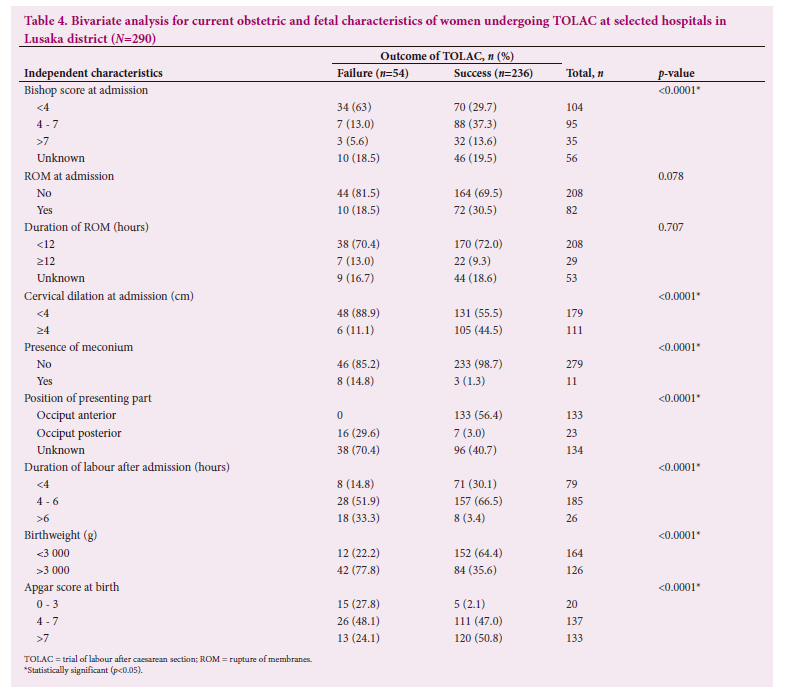
Table 4 shows that a Bishop score at admission of >4, cervical dilation of >4 cm at admission, lack of meconium, occipito-anterior position of presenting part, shorter duration of labour (<6 hours), birthweight <3 000 g and Apgar score >7 had a statistically significant association with successful VBAC, as p-values were all <0.05.
Logistic regression analysis for sociodemographic characteristics of study participants
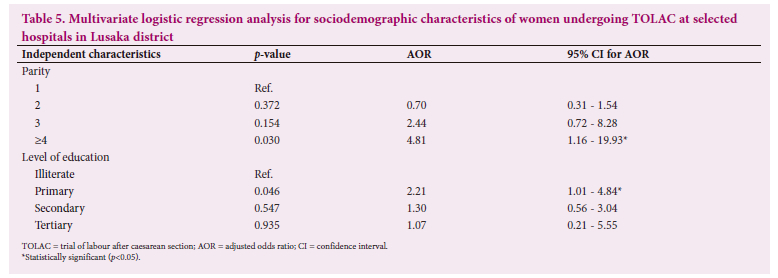
Table 5 shows that multiparity of >4 increased the odds of successful VBAC by more than four times (adjusted odds ratio (AOR) 4.81; 95% CI 1.16 - 19.93; p=0.030) compared with para 1 mothers. Women with primary education were more than twice as likely to have a successful VBAC (AOR 2.21; 95% CI 1.01 - 4.84; p=0.046) compared with illiterate mothers.
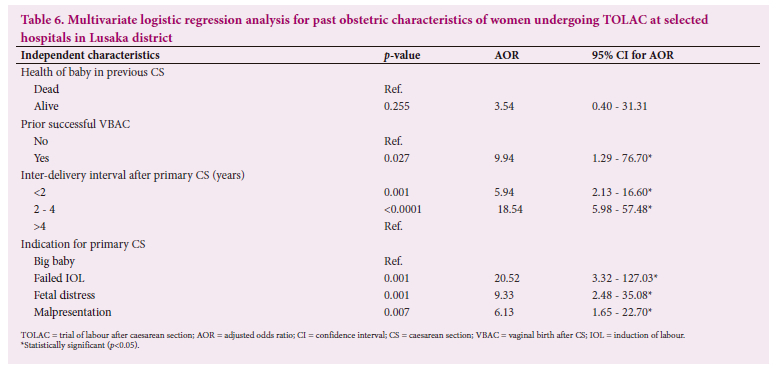
Table 6 shows that women with a previous history of successful VBAC were found to have more than nine times higher odds of successful VBAC (AOR 9.94; 95% CI 1.29 - 76.70; p=0.027) compared with those with no history of previous successful VBAC. Women with a shorter inter-delivery interval of 2 - 4 years after the primary CS were found to be >18 times more likely to give birth vaginally (AOR 18.54; 95% CI 5.98 - 57.48; p<0.0001) compared with those with a longer interval of >4 years. Non-recurring indications for the primary CS, such as fetal distress and malpresentation, were found to have a stronger statistical association with successful VBAC than recurring indications such as CPD and a big baby. Mothers with a history of fetal distress had an AOR of 9.33 (95% CI 2.48 - 35.08; p=0.001), while those with a history of malpresentation had an AOR of 6.13 (95% CI 1.65 - 22.70). Although failed induction of labour (IOL) is a recurring indication for CS, in this study it was found that a history of IOL in the primary CS had a strong statistical correlation with success of VBAC (AOR 20.52; 95% CI 3.32 - 127.03; p=0.001).
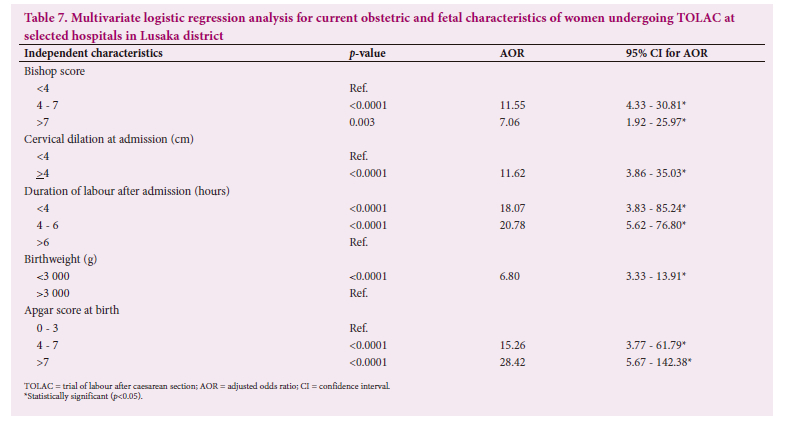
Table 7 shows that a Bishop score at admission of >7 was associated with a seven times higher likelihood of successful VBAC (AOR 7.06; 95% CI 1.92 - 25.97; p<0.003) compared with a score of <4. Women with a single previous CS who were admitted in the active phase of labour (>4 cm cervical dilation) had a >11 times higher likelihood of successful VBAC (AOR 11.62; 95% CI 3.86 - 35.03; p<0.0001) compared with those in the latent phase of labour with <4 cm dilation of the cervix. Furthermore, women with a shorter duration of labour of 4 - 6 hours after admission were found to have a >20 times higher likelihood of successful VBAC (AOR 20.78; 95% CI 5.62 - 76.80; p<0.0001) compared with women with prolonged labour of >6 hours. With regard to fetal characteristics, babies weighing <3 000 g were more than six times more likely to be born successfully via vaginal delivery after a TOL (AOR 6.80; 95% CI 3.33 - 13.91) than those whose birthweight was >3 000 g. In addition, babies with an Apgar score >7 were more than 28 times more likely to have been born successfully via vaginal delivery after a TOL (AOR 28.42; 95% CI 5.67 - 142.38; p<0.0001) compared with those whose Apgar score was <3, who were more likely to have been born by emergency CS.
Discussion
The main objective of this study was to investigate the factors associated with successful VBAC among mothers with one previous CS at selected hospitals in Lusaka, Zambia. In this study, the key independent predictors of success of VBAC were primary education level, multiparity, previous successful VBAC, inter-delivery interval after the primary CS, fetal distress, malpresentation, failed IOL, Bishop score, cervical dilation, duration of labour, birthweight and Apgar score. Maternal age, gestational age, spontaneous vaginal delivery before the primary CS, health of the baby in the previous CS, history of stillbirth, and ruptured membranes at admission were found to have no statistical effect on the odds of success of VBAC.
Using both bivariate analysis and multivariate logistic regression analysis, the outcome of VBAC for maternal age was insignificant.
This was contradictory to many studies,[14-16] which found that there was a significant decline in the success rate of VBAC with increased maternal age. It has been argued that medical problems such as chronic hypertension and diabetes mellitus increase with age, and this in turn increases the VBAC failure rate.[17] Multiparity of >4 was found to be associated with more than four times the odds of a successful VBAC (AOR 4.81; 95% CI 1.16 - 19.93; p=0.030) compared with para 1 mothers. This finding is consistent with studies by Balachandran et al.[18] and Senturk et al.,[19] who found that increasing parity was associated with an increase in the VBAC rate. Our study found that women with primary education were more than twice as likely to have a successful VBAC (AOR 2.21; 95% CI 1.01 - 4.84; p=0.046) compared with illiterate mothers, and that there was no statistically significant significance between outcomes of VBAC in women with secondary or tertiary education. A study by Gilbert et al.[20] found that elective CSs were planned and carried out more often in more educated women than in women with high school education or less, suggesting that level of education does influence the obstetric management of women with a previous CS. A woman who is more educated would probably opt for a planned repeat CS rather than attempt a vaginal birth after CS.
Multivariate logistic regression analysis showed that women with a previous successful VBAC had more than nine times higher odds of having a successful VBAC (AOR 9.94; 95% CI 1.29 - 76.70; p=0.027) compared with those with no history of a previous successful VBAC. This finding is consistent with a meta-analysis by Guise et al.,[21] who concluded that women with a previous successful VBAC were three to seven times more likely to have a VBAC for their current delivery compared with women choosing VBAC who had not had a previous vaginal delivery. Several other studies[16,22,23] report that a woman with history of a previous successful VBAC had a higher chance of vaginal birth compared with a woman without a previous successful VBAC when attempting a TOL after CS. Furthermore, the rate of uterine rupture decreased after the first successful VBAC and did not increase with subsequent vaginal deliveries (0.87% risk after VBAC, 0.52% after five deliveries).[24] A possible explanation for this finding is that multiparous women develop efficient uterine contractions in labour and are less likely to have a problem with cephalopelvic disproportion (CPD).[251 In the present study, women with an inter-delivery interval of 2 - 4 years after the primary CS were found to be >18 times more likely to give birth vaginally (AOR 18.54; 95% CI 5.98 - 57.48) compared with those with a longer interval of >4 years. Non-recurring indications for primary CS such as fetal distress and malpresentation were found to have a stronger statistical association with success of VBAC than recurring indications such as CPD and a big baby. Mothers with a history of fetal distress had more than nine times higher odds of having a successful VBAC (AOR 9.33; 95% CI 2.48 - 35.08), while those with history of malpresentation such as transverse or oblique lie and breech presentation had more than six times higher odds (AOR 6.13; 95% CI 1.65 - 22.70). This finding is consistent with several other studies that concluded that VBAC was maximally successful in patients whose CS was carried out for non-recurring indications such as malpresentation, fetal distress and antepartum haemorrhage.[14,26,27]
In the present study, women with a Bishop score at admission of >7 had a seven times higher likelihood of a successful VBAC (AOR 7.06; 95% CI 1.92 - 25.97) compared with those with a lower Bishop score of <4. This finding is consistent with a study by Durnwald and Mercer,[28] who reported that a favourable Bishop score on admission was the strongest and most significant predictor for successful VBAC, and that the chances of VBAC improved as the Bishop score at the time of admission increased. Several other studies[25,29-31] found that spontaneous onset of labour and a higher Bishop score were associated with successful VBAC. Although cervical dilation is part of the Bishop score, it was analysed independently in logistic regression in the present study in order to appreciate its specific effect on success of vaginal birth after one previous CS. It was found that women with a single previous CS admitted in the active phase of labour (>4 cm cervical dilation) had a >11 times higher chance of successful VBAC (AOR 11.62; 95% CI 3.86 - 35.03) compared with those admitted in the latent phase of labour with <4 cm dilation of the cervix. These findings are similar to those in a study by Landon et al.,[32] who reported that women with cervical dilation of >4 cm at admission had a greater likelihood of achieving a successful TOL compared with women with a failed TOLAC (48.1% v. 26.4%; p<0.001). In the present study, women with a shorter duration of labour of 4 - 6 hours after admission were found to have a >20 times higher likelihood of successful VBAC (AOR 20.78; 95% CI 5.62 - 76.80; p<0.0001) compared with women with prolonged labour of >6 hours. Our results were similar to the observational data obtained from the OptiBIRTH randomised trial, in which 790 patients undergoing TOLAC from Ireland, Italy and Germany were analysed. [33] With regard to fetal characteristics, both bivariate and multivariate logistic regression analysis in the present study showed that birthweight had a strongly significant association with successful VBAC (p<0.0001). We found that that babies with a birthweight <3 000 g had a more than six times higher chance of being delivered vaginally (AOR 6.80; 95% CI 3.33 - 13.91) compared with babies weighing >3 000 g. This finding is consistent with reports from several studies that the chances of a vaginal delivery decreased when the fetal weight exceeded 3 500 g (p<0.05).[14,27,34] In the present study, babies with an Apgar score >7 had a >28 times higher likelihood of having been born successfully via vaginal delivery after a TOLAC (AOR 28.42; 95% CI 5.67 - 142.38; p<0.0001) compared with those whose Apgar score was <3, who were more likely to have been born by emergency CS. This finding indicates good clinical practice of monitoring fetal wellbeing during labour, so that fetal compromise and distress can be diagnosed early and the baby can be delivered by emergency CS. This practice prevents most babies from having a lower Apgar score (<3) after vaginal birth. An Apgar score <3 defines severe grade III hypoxic ischaemic encephalopathy, which has serious neonatal and long-term complications including cerebral palsy. In addition, several studies[35-38] report that prolonged duration of labour is significantly associated with a low Apgar score.
Conclusion
Successful VBAC depends on a combination of independent sociodemographic, past obstetric, current obstetric and fetal predictive factors associated with high odds of success. Knowledge of these factors on the part of the attending obstetrician or midwife is key in counselling mothers on mode of delivery. With the aim of predicting success, this information could help to appropriately select women who have had one previous CS as candidates for a TOL and thus reduce the morbidity and mortality associated with multiple elective repeat CSs. In our study, the main determinants of success of VBAC included multiparity, a previous successful VBAC, non-recurring indications for the primary CS, an inter-delivery interval of 2 - 4 years after the primary CS, a favourable Bishop score, active phase of labour, shorter duration of labour, occipito-anterior position of the presenting part, birthweight <3 000 g, and an Apgar score >7.
Declaration. The research for this study was done in partial fulfilment of the requirements for MM's MMed (O&G) degree at the School of Medicine, University of Zambia.
Acknowledgements. The authors thank the study participants and the research assistants for their co-operation and their trust in this research. We further thank Mr Siame Aaron for his technical support in data analysis.
Author contributions. MM conceptualised the study and drafted the manuscript. BV as supervisor and mentor contributed to conceptualisation, design, analysis and interpretation of the data and approved the final version of the manuscript for publication.
Funding. None.
Conflicts of interest. None.
References
-
1. ACOG Practice bulletin no. 115: Vaginal birth after previous cesarean delivery. Obstet Gynecol 2010;116(2 Pt 1):450-463. https://doi.org/10.1097/AOG.0b013e3181eeb251
» https://doi.org/10.1097/AOG.0b013e3181eeb251 -
2. National Institute for Health and Clinical Excellence (NICE). Caesarean section. Clinical guideline (CG132). 23 November 2011. https://www.nice.org.uk/guidance/cg132 (accessed 6 December 2024).
» https://www.nice.org.uk/guidance/cg132 -
3. Royal College of Obstetricians and Gynaecologists. Birth after previous caesarean birth (Green-top Guideline no. 45). Last reviewed 1 October 2015. https://www.rcog.org.uk/guidance/browse-all-guidance/green-top-guidelines/birth-after-previous-caesarean-birth-green-top-guideline-no-45/ (accessed 6 December 2024).
» https://www.rcog.org.uk/guidance/browse-all-guidance/green-top-guidelines/birth-after-previous-caesarean-birth-green-top-guideline-no-45/ -
4. ACOG practice bulletin. Vaginal birth after previous cesarean delivery. Int J Gynecol Obstet 1999;66(2):197-204. https://doi.org/10.1016/S0020-7292(99)80021-6
» https://doi.org/10.1016/S0020-7292(99)80021-6 -
5. Ugwumadu A. Does the maxim 'once a caesarean, always a caesarean' still hold true? PLoS Med 2005;2(9):e305. https://doi.org/10.1371/journal.pmed.0020305
» https://doi.org/10.1371/journal.pmed.0020305 -
6. Prior cesarean delivery. In: Cunningham F, Leveno KJ, Dashe JS, Hoffman BL, Spong CY, Casey BM. eds. Williams Obstetrics. 26th ed. McGraw-Hill, 2022: ch. 31. https://accessmedicine.mhmedical.com/content.aspx?bookid=2977§ionid=250396730 (accessed 6 December 2024).
» https://accessmedicine.mhmedical.com/content.aspx?bookid=2977§ionid=250396730 -
7. Cook JR, Jarvis S, Knight M, Dhanjal MK. Multiple repeat caesarean section in the UK: Incidence and consequences to mother and child. A national, prospective, cohort study. BJOG 2013;120(1):85-91. https://doi.org/10.1111/1471-0528.12010
» https://doi.org/10.1111/1471-0528.12010 -
8. Marshall NE, Fu R, Guise JM. Impact of multiple cesarean deliveries on maternal morbidity: A systematic review. Am Obstet Gynecol 2011;205(3):262.e1-8. https://doi.org/10.1016/j.ajog.2011.06.035
» https://doi.org/10.1016/j.ajog.2011.06.035 -
9. Knight HE, Gurol-Urganc I, van der Meulen JH, et al. Vaginal birth after caesarean section: A cohort study investigating factors associated with its uptake and success. BJOG 2014;121(2):183-192. https://doi.org/10.1111/1471-0528.12508
» https://doi.org/10.1111/1471-0528.12508 - 10. Shaheen N, Khalil S, Iftikhar P. Prediction of successful trial of labour in patients with a previous caesarean section. J Pak Med Assoc 2014;64(5):542-545.
-
11. Wen J, Song X, Ding H, et al. Prediction of vaginal birth after cesarean delivery in Chinese parturients. Sci Rep 2018;8(1):3084. https://doi.org/10.1038/s41598-018-21488-6
» https://doi.org/10.1038/s41598-018-21488-6 -
12. Boulvain M, Fraser WD, Brisson-Carroll G, Faron G, Wollast E. Trial of labour after caesarean section in sub-Saharan Africa: A meta-analysis. Br J Obstet Gynaecol 1997;104(12):1385-1390. https://doi.org/10.1111/j.1471-0528.1997.tb11008.x
» https://doi.org/10.1111/j.1471-0528.1997.tb11008.x -
13. Mulindi M. Outcome oflabour following one previous ceaserean section at the University Teaching Hospital in Lusaka, 1 October 1995 - 30 September 1996, Lusaka: African Digital Health Library, 1999. https://library.adhl.africa/handle/123456789/12982 (accessed 6 December 2024).
» https://library.adhl.africa/handle/123456789/12982 - 14. Bashir JA, Noureldin K, Ellhassan MAY, Abdelwahid MA, Handady MOS. Factors associated with success rate of vaginal birth after one caesarean section (VBAC) in Ibrahim Malik Teaching Hospital, Khartoum-Sudan. Austin J Obstet Gynecol 2018;5(9):1129.
-
15. Maurya A, Manik A. Study of factors associated with success of vaginal birth after previous one caesarean section. Sch J App Med Sci 2016;4(1C):210-213. https://doi.org/10.36347/sjams.2016.v04i01.039
» https://doi.org/10.36347/sjams.2016.v04i01.039 -
16. Srinivas SK, Stamilio DM, Sammel MD, et al. Vaginal birth after caesarean delivery: Does maternal age affect safety and success? Paediatr Perinat Epidemiol 2007;21(2):114-120. https://doi.org/10.1111/j.1365-3016.2007.00794.x
» https://doi.org/10.1111/j.1365-3016.2007.00794.x -
17. Wu Y, Kataria Y, Wang Z, Ming WK, Ellervik C. Factors associated with successful vaginal birth after a cesarean section: A systematic review and meta-analysis. BMC Pregnancy Childbirth 2019;19(1):360. https://doi.org/10.1186/s12884-019-2517-y
» https://doi.org/10.1186/s12884-019-2517-y -
18. Balachandran L, Vaswani PR, Mogotlane R. Pregnancy outcome in women with previous one cesarean section. J Clin Diagn Res 2014;8(2):99-102. https://doi.org/10.7860/JCDR/2014/7774.4019
» https://doi.org/10.7860/JCDR/2014/7774.4019 -
19. Senturk MB, Cakmak Y, Atac H, Budak M. Factors associated with successful vaginal birth after cesarean section and outcomes in rural area of Anatolia. Int J Womens Health 2015;7:693-697. https://doi.org/10.2147/IJWH.S83800
» https://doi.org/10.2147/IJWH.S83800 -
20. Gilbert A, Benjamin A, Abenhaim HA. Does education level influence the decision to undergo elective repeat caesarean section among women with a previous caesarean section? J Obstet Gynaecol Can 2010;32(10):942-947. https://doi.org/10.1016/s1701-2163(16)34681-3
» https://doi.org/10.1016/s1701-2163(16)34681-3 - 21. Guise JM, Eden K, Emeis C, et al. Vaginal birth after cesarean: New insights. Evid Rep Technol Assess (Full Rep) 2010;191:1-397.
-
22. Birara M, Gebrehiwot Y. Factors associated with success of vaginal birth after one caesarean section (VBAC) at three teaching hospitals in Addis Ababa, Ethiopia: A case control study. BMC Pregnancy Childbirth 2013;13:31. https://doi.org/10.1186/1471-2393-13-31
» https://doi.org/10.1186/1471-2393-13-31 -
23. Cecatti JG, Pires HMB, Faúndes A, Duarte Osis MJ. Factors associated with vaginal birth after previous cesarean section in Brazilian women. Rev Panam Salud Publica 2005;18(2):107-113. https://doi.org/10.1590/s1020-49892005000700005
» https://doi.org/10.1590/s1020-49892005000700005 -
24. Mercer BM, Gilbert S, Landon MB, et al. Labour outcomes with increasing number of prior vaginal births after cesarean delivery. Obstet Gynecol 2008;111(2 Pt 1):285-291. https://doi.org/10.1097/AOG.0b013e31816102b9
» https://doi.org/10.1097/AOG.0b013e31816102b9 -
25. Kalok A, Zabil SA, Jamil MA, et al. Antenatal scoring system in predicting the success of planned vaginal birth following one previous caesarean section. J Obstet Gynaecol 2018;38(3):339-343. https://doi.org/10.1080/01443615.2017.1355896
» https://doi.org/10.1080/01443615.2017.1355896 -
26. Flamm BL, Newman LA, Thomas SJ, Fallon D, Yoshida MM. Vaginal birth after caesarean delivery: Results of a 5-year multicenter collaborative study. Obstet Gynecol 1990;76(5 Pt 1):750-754. https://doi.org/10.1097/00006250-199011000-00004
» https://doi.org/10.1097/00006250-199011000-00004 - 27. Shakti V, Behera RC, Sandhu GS, Singh A, Bandhu HC. Vaginal birth after caesarean delivery. J Obstet Gynecol India 2006;56:320-323.
-
28. Durnwald C, Mercer B. Vaginal birth after caesarean delivery: Predicting success, risks of failure. J Matern Fetal Neonatal Med 2004;15(6):388-393. https://doi.org/10.1080/14767050410001724290
» https://doi.org/10.1080/14767050410001724290 -
29. Gupta S, Jeeyaselan S, Guleria R, Gupta A. An observational study of various predictors of success of vaginal delivery following a previous cesarean section. J Obstet Gynaecol India 2014;64(4):260-264. https://doi.org/10.1007/s13224-014-0519-2
» https://doi.org/10.1007/s13224-014-0519-2 -
30. Li YX, Bai Z, Long DJ, et al. Predicting the success of vaginal birth after caesarean delivery: A retrospective cohort study in China. BMJ Open 2019;9(5):e027807. https://doi.org/10.1136/bmjopen-2018-027807
» https://doi.org/10.1136/bmjopen-2018-027807 -
31. Madaan M, Agrawal S, Nigam A, Aggarwal R, Trivedi SS. Trial of labour after previous caesarean section: The predictive factors affecting outcome. J Obstet Gynaecol 2011;31(3):224-228. https://doi.org/10.3109/01443615.2010.544426
» https://doi.org/10.3109/01443615.2010.544426 -
32. Landon MB, Hauth JC, Leveno KJ, et al. Maternal and perinatal outcomes associated with a trial of labor after prior cesarean delivery. N Engl J Med 2004;351(25):2581-2589. https://doi.org/10.1056/NEJMoa040405
» https://doi.org/10.1056/NEJMoa040405 -
33. Grylka-Baeschlin S, Clarke M, Begley C, et al. Labour characteristics of women achieving successful vaginal birth after caesarean section in three European countries. Midwifery 2019;74:36-43. https://doi.org/10.1016/j.midw.2019.03.013
» https://doi.org/10.1016/j.midw.2019.03.013 -
34. Bujold E, Hammoud AO, Hendler I, et al. Trial of labor in patients with previous cesarean section: Does maternal age influence outcome? Am J Obstet Gynecol 2004;190(4):1113-1118. https://doi.org/10.1016/j.ajog.2003.09.055
» https://doi.org/10.1016/j.ajog.2003.09.055 -
35. Altman M, Sandström A, Petersson G, Frisell T, Cnattingius S, Stephansson O. Prolonged second stage of labor is associated with low Apgar score. Eur J Epidemiol 2015;30(11):1209-1215. https://doi.org/10.1007/s10654-015-0043-4
» https://doi.org/10.1007/s10654-015-0043-4 -
36. Bekalu G, Etefa T, Asefa A, Terefe B, Dereje D. Determinants of low fifth minute Apgar score among newborn delivered in Jimma University Medical Center, Southwest Ethiopia. Int J Pediatr 2020;2020:9896127. https://doi.org/10.1155/2020/9896127
» https://doi.org/10.1155/2020/9896127 -
37. Gudayu TW. Proportion and factors associated with low fifth minute Apgar score among singleton newborn babies in Gondar University Referral Hospital; North West Ethiopia. Afr Health Sci 2017;17(1):1-6. https://doi.org/10.4314/ahs.v17i1.2
» https://doi.org/10.4314/ahs.v17i1.2 -
38. Salustiano EMA, Campos JADB, Ibidi SM, Ruano R, Zugaib M. Baixos indices de Apgar no quinto minuto de vida em populaçao de baixo risco: Fatores maternos e obstetricos e resultados pos-natais [Low Apgar scores at 5 minutes in a low risk population: Maternal and obstetrical factors and postnatal outcome]. Rev Assoc Med Bras 2012;58(5):587-593. https://doi.org/10.1590/S0104-42302012000500017
» https://doi.org/10.1590/S0104-42302012000500017

Accepted 30 July 2024