A retrospective chart review of supportive care management components for normal vaginal deliveries at Tygerberg Hospital, Cape Town, South Africa, in accordance with the 2020 World Health Organization Labour Care Guide
BACKGROUND. Global maternity health standards have focused their attention on woman-centred practices and supportive measures following the release of the 2020 World Health Organization Labour Care Guide. However, adherence to standard practices remains poorly quantified based on inconsistencies in the documentation of intrapartum care. OBJECTIVE. To assess the documentation and implementation of supportive care components, in alignment with the Labour Care Guide, for 160 women who underwent normal vaginal deliveries at Tygerberg Hospital, Cape Town, South Africa, during 2023 and 2024. METHODS. Data on demographics, antenatal mental health screening, partogram completion, and supportive care components including labour companionship, pain relief, oral fluid intake and posture were extracted from electronic records. RESULTS. Documentation of supportive care components was notably inconsistent. Only 1.2% of participants had a recorded labour companion, and while 67.5% required pain relief, only 43.5% of those with a documented indication received adequate analgesia. Oral fluid intake was recorded in only 1.3%, compared with 23.8% for intravenous fluids. Maternal posture was undocumented in 56.9% of records, with the lithotomy position being the most frequently noted among those documented. Intrapartum monitoring was also suboptimal, as only 21.9% of partograms were fully completed. CONCLUSION. These findings highlight significant gaps between recommended supportive care practices and clinical documentation, underscoring the need for improved implementation and monitoring of woman-centred care standards.
supportive care; labour companion; oral fluids; pain relief; posture
A retrospective chart review of supportive care management components for normal vaginal deliveries at Tygerberg Hospital, Cape Town, South Africa, in accordance with the 2020 World Health Organization Labour Care Guide
D S MaraisI; R A AdamsII; M H BothaIII
IMB ChB; Faculty of Medicine and Health Sciences, Stellenbosch University, Cape Town, South Africa
IIBSc, BSc Hons, MPhil, PhD; Department of Obstetrics and Gynaecology, Faculty of Medicine and Health Sciences, Stellenbosch University, Cape Town, South Africa
IIIMB ChB, MMed (O & G), FCOG (SA), PhD; Department of Obstetrics and Gynaecology, Faculty of Medicine and Health Sciences, Stellenbosch University, Cape Town, South Africa
BACKGROUND. Global maternity health standards have focused their attention on woman-centred practices and supportive measures following the release of the 2020 World Health Organization Labour Care Guide. However, adherence to standard practices remains poorly quantified based on inconsistencies in the documentation of intrapartum care.
OBJECTIVE. To assess the documentation and implementation of supportive care components, in alignment with the Labour Care Guide, for 160 women who underwent normal vaginal deliveries at Tygerberg Hospital, Cape Town, South Africa, during 2023 and 2024.
METHODS. Data on demographics, antenatal mental health screening, partogram completion, and supportive care components including labour companionship, pain relief, oral fluid intake and posture were extracted from electronic records.
RESULTS. Documentation of supportive care components was notably inconsistent. Only 1.2% of participants had a recorded labour companion, and while 67.5% required pain relief, only 43.5% of those with a documented indication received adequate analgesia. Oral fluid intake was recorded in only 1.3%, compared with 23.8% for intravenous fluids. Maternal posture was undocumented in 56.9% of records, with the lithotomy position being the most frequently noted among those documented. Intrapartum monitoring was also suboptimal, as only 21.9% of partograms were fully completed.
CONCLUSION. These findings highlight significant gaps between recommended supportive care practices and clinical documentation, underscoring the need for improved implementation and monitoring of woman-centred care standards.
Keywords: supportive care; labour companion; oral fluids; pain relief; posture.
Many healthcare facilities, particularly in low- and middle-income countries, often fall short in providing adequate supportive care during childbirth. This shortfall has significant consequences, including postpartum psychological effects and negative birthing experiences. As this concern is recognised worldwide, healthcare across diverse settings has increasingly moved towards patient-centred approaches to help address these challenges.[1]
In 2018, the World Health Organization (WHO) introduced its guideline on intrapartum care for a positive birthing experience.[2] These recommendations highlight the need to support not only the physical but also the emotional and psychological wellbeing of women during labour. Moreover, in 2020 the WHO updated the labour care partogram to emphasise the importance of woman-centred care, aiming to improve the childbirth experience.[3] This revised version includes a dedicated section for the documentation of supportive care measures provided during labour.
In a post-apartheid South Africa (SA), despite efforts to reform and reconstruct the public healthcare system, challenges such as underdevelopment, implementation failures and discrimination continue to undermine rapid improvement and progress.[4] Studies have consistently documented that patients are still subjected to various degrees of abuse. These accounts range from clinical negligence to verbal and physical abuse, across healthcare settings from specialised to rural.[5] The subsequent impact of the systemic issues faced has caused distress, lack of trust, unhealthy power dynamics, and lack of accountability in the workplace.[5]
Tygerberg Hospital in Cape Town, SA, functions within a strained healthcare system marked by a growing population and limited resource allocation. Although it is funded through the national budget, only a small fraction of funds are directed towards essential maternal care, creating significant operational pressures. These include high patient volumes, chronic staff shortages and infrastructural limitations, including inadequate bed capacity and compromised privacy.
In some cases, women in labour are left seated in chairs owing to the lack of available beds. This is not an isolated occurrence, and showcases a deeper systemic strain. The combination of inadequate physical space and an overstretched workforce erodes the ability of healthcare providers to deliver respectful care. This has a ripple effect on documentation practices, which too become inconsistent or delayed. These challenges, compounded by broader systemic constraints, have a cumulative detrimental impact on the quality of intrapartum care. They undermine the provision of respectful and supportive care and contribute to inconsistent documentation or record keeping, making it difficult to monitor care processes and identify areas for improvement.
The revised WHO Labour Care Guide was developed to promote incorporation of key elements of supportive intrapartum care, including companionship, pain management, oral hydration and maternal positioning.[3] These components are often overlooked in clinical practice, despite evidence demonstrating that they improve both maternal and neonatal outcomes, as well as the overall childbirth experience.[3]
Advancing woman-centred care in maternal health
The landscape of maternal healthcare is evolving, with increasing emphasis on respectful, woman-centred approaches to childbirth. Recent literature strongly advocates that a woman-centred standard of care be prioritised across all aspects of management. Achieving this requires robust protocols and guidelines that actively embed and sustain this focus in clinical practice. A qualitative review of women's perspectives on childbirth identified three key themes shaping the experience: the physical and psychological aspects of labour and delivery; the influence of cultural, social and familial norms on expectations; and the role of maternity care in supporting these considerations.[6] Together, these findings highlight the need to translate women's perspectives into actionable standards, ensuring that care is not only clinically effective but also aligned with the values and needs of those giving birth.
The global standard of care
In 2014, the WHO issued a statement on the global urgency to address the disrespect and abuse of women during childbirth.[7] This was later followed by two additional guidelines in 2015 and 2016, which recommended the inclusion of culturally appropriate labour companions to enhance the birthing experience and improve maternal satisfaction. In 2018, the WHO released recommendations for intrapartum care for a positive childbirth experience, emphasising woman-centred interventions and outcomes as a framework for improving the quality of care during labour.[2]
The national standard of care
The issue of abuse in the SA maternity setting is a matter of profound concern, affecting both public and private hospital environments. The reported abuse inflicted by healthcare professionals during childbirth takes many forms, including verbal and physical abuse, non-consensual care, bribery, neglect and abandonment. Furthermore, the root causes identified can stem from the lack of professional support, increased workloads and inadequate infrastructure that could turn any environment hostile.[8]
The Better Births Initiative was established to promote more evidence-based clinical policies, including labour companionship, with the objective of improving both maternal and infant outcomes. The pilot study ofthe Better Births Initiative demonstrated that focused educational interventions have the potential to influence healthcare provider behaviour.[9] However, one of the main factors determining the success of the change programme was the receptiveness, attitude and volition of health professionals.
Companionship
Theories on continuous labour support state that companionship may enhance the physiological progression of childbirth through reducing the maternal stress response.[10] Labour companions such as a doula, partner, family member or friend play a key role in providing practical assistance, emotional support and advocacy for maternal needs throughout the childbirth experience. Studies have shown that labour companionship contributes to a more compassionate and supportive birth environment, enhancing women's childbirth experiences and reducing their vulnerability to mistreatment and abuse during labour.[11-13]
In 2017, a Cochrane review synthesising evidence from 27 randomised controlled trials involving more than 15 000 women across 17 countries found that continuous support during labour was associated with improved maternal and neonatal outcomes.[10] Women receiving this support were more likely to have a spontaneous vaginal birth, needed less pharmacological pain relief, experienced shorter labours, and had lower rates of assisted delivery and caesarean section. The reports also described fewer negative emotional experiences and a lower risk of postpartum depression.[10]
Despite these benefits, support during labour is often regarded as a low priority in healthcare settings.[11] The SA national integrated maternal and perinatal care guidelines, for example, do not adequately emphasise the role and importance of labour companions in the section on general care of women in labour.[14]
Pain relief
Pharmacological methods
The SA guidelines recommend that all women be offered pharmacological pain relief options, including pethidine, morphine, Entonox and paracetamol, as part of respectful maternity care.[14] Pain during labour is complex, multifaceted, and widely recognised as one of the most severe forms of physical pain, originating from myometrial ischaemia and the stretching of pelvic structures.[15]
The experience and perception of pain are influenced by many factors, including psychological, emotional and cultural elements.[16] Evidence suggests that negative birthing experiences due to pain may stem from inadequate guidance from healthcare professionals, lack of companionship, or persistent stigma around pain relief, with some women viewing it as a sign of weakness.[17]
Non-pharmacological methods
While evidence for non-pharmacological methods to relieve pain is limited, their low risk of adverse effects makes them valuable additions to pain management strategies. These methods include relaxation techniques such as breathing exercises and yoga. Studies have shown that these techniques may improve women's psychological and emotional wellbeing.[18]
Oral fluids
The restriction of fluids and food has been widely debated through the years. In the 1940s, Mendelson[19] recommended that fasting during labour should be encouraged because of the increased risk of aspiration (pulmonary aspiration pneumonitis) in patients undergoing general anaesthesia. This risk is mostly attributed to anatomical increased pressure on the stomach, delayed passage of gastric contents due to the use of opioids, and difficulty of intubation.[19]
Although substantial advances in obstetric anaesthesia have reduced the risk associated with general anaesthesia, and its use during childbirth has declined considerably, restrictions on oral intake during labour remain a common practice in many maternity settings.[20] The American Society of Anesthesiologists has stated that strict restrictions on oral intake during labour are known to cause patient discomfort and distress.[21] To enhance maternal comfort, current recommendations therefore support the intake of clear fluids and electrolyte-containing beverages.[21,22] Furthermore, available evidence suggests that routine restrictions on oral intake during labour provide no clear benefit for women with low-risk pregnancies.[21,22]
Posture
Maternal birthing positions have evolved as Western medicine shifted from maternal preferred positions to those most convenient for healthcare providers, making recumbent positions the default despite limited scientific justification.[23] Upright or non-recumbent positions offer several physiological advantages, including gravitational assistance, reduced aortocaval compression, improved uterine perfusion and contractions, and facilitation of fetal descent.[24,25] In contrast, chair or unsupported recumbent positions have been associated with increased blood loss, increased risk of postpartum haemorrhage in multiparous women, and severe perineal tearing.[26] Squatting, which aligns the maternal bearing-down effort with the birth canal, has been identified as particularly effective during the second stage of labour.[24]
Methods
Study design and population
This study was a single-centre, retrospective chart review conducted at a tertiary hospital. The study population consisted of women who underwent spontaneous vertex vaginal delivery during the 2023 and 2024 calendar years.
Women were eligible for inclusion if they had spent at least 6 hours in the labour ward prior to delivery, ensuring sufficient exposure to intrapartum care processes and documentation practices.
Women who had an assisted vaginal delivery or caesarean section were excluded, as these modes of delivery involve additional clinical interventions and management protocols that may influence the provision and documentation of supportive care measures.
Study setting
The study was conducted at Tygerberg Hospital, which has a general labour ward and a four-room obstetric critical care unit. All patients admitted to the ward are routinely clerked, and all deliveries are systematically recorded in the birth registry.
Data collection
Eligible participants were identified from the Tygerberg Hospital birth registry. Maternal case records were subsequently accessed through the electronic case management system and reviewed using a study-specific data collection form developed to capture the variables of interest. Data collected included demographic and obstetric characteristics (maternal age, gravidity and parity), antenatal screening information, partogram completion, and documentation of supportive care measures during labour.
All identifying information was removed prior to data capture to protect participant confidentiality. Data collection was conducted within a secure hospital environment, and study data were entered directly into a password-protected REDCap database accessible only to the principal investigator.
Statistical analysis
We summarised the sociodemographic characteristics of the study participants using descriptive statistics. Categorical variables were reported as frequencies and percentages, while continuous variables were described using measures of central tendency (e.g. mean or median) and dispersion (e.g. interquartile range (IQR)), as appropriate. Data on supportive care and pain management documentation were also summarised using frequencies and percentages and presented in summary tables. All analyses were conducted using Stata statistical software, release 18 (StataCorp, USA).[27]
Ethical considerations
Ethical approval was obtained from the Undergraduate Research Ethics Committee of Stellenbosch University (ref. no. UEA-2025-29288). Permission to conduct the study was granted by Tygerberg Hospital management. As this was a retrospective review of existing clinical records, a waiver of informed consent was approved by the ethics committee.
Results
Patient demographics and obstetric characteristics
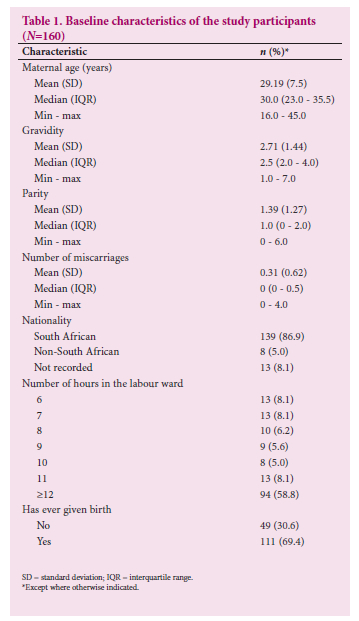
Table 1 presents the demographic and obstetric characteristics of the study participants. A total of 160 women who underwent normal vertex vaginal deliveries were included in the analysis. The mean (standard deviation (SD)) age of the study population was 29.19 (7.5) years, with a median (IQR) of 30.0 (23.0 - 35.5) years. The age range spanned from 16 to 45 years.
Mean (SD) gravidity was 2.71 (1.44), with a median (IQR) of 2.5 (2.0 - 4.0), and the cohort of women was therefore moderately experienced, having had multiple pregnancies. The wider IQR distribution in comparison with parity accounts for pregnancies that may not have resulted in live births. Mean parity was 1.39 (1.27), with a median of 1 (0 - 2). Most women had no history of miscarriage, with a mean of 0.31 (0.62) and a median of 0 (0 - 0.5, range 0 - 4). The study therefore had a mixed cohort of participants, with most women (69.4%, n=111), multiparous, while 30.6% (n=49) were primiparous.
The majority of the participants (58.8%, n=94) spent >12 hours in the labour ward, with the remainder spending between 6 and 11 hours. The data are unclear with regard to how long the participants were in active labour; however, they do suggest prolonged stays in the labour ward. Most participants were SA nationals (86.9%), while 5.0% were non-SA, and 8.1% had no nationality recorded.
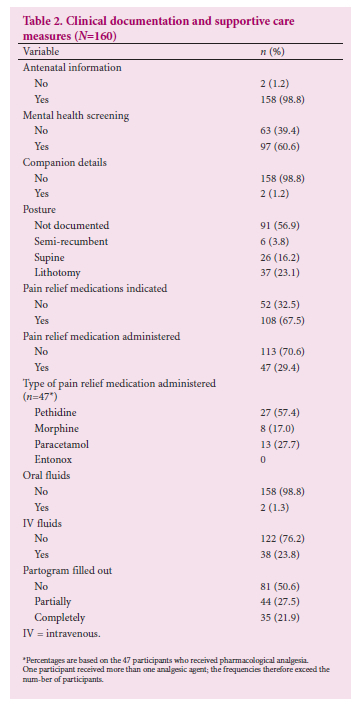
Table 2 shows all the documentation of supportive care components during labour. The data demonstrate much absent or poorly recorded documentation.
Labour companion
Documented presence of a labour companion was almost entirely absent from the maternal case records, with only 1.2% (n=2) of the participants having had a recorded companion during labour.
Pharmacological pain relief
Pain relief during labour was documented as being indicated for 67.5% of participants (n=108). However, only 47 participants (43.5% of those with a documented indication; 29.4% of the total cohort) received pharmacological pain relief. This means that 61 participants (56.5% of those with a documented indication) did not receive analgesia despite a documented indication. Among the 47 participants who received pharmacological analgesia, pethidine was the most commonly administered medication (57.4%, n=27), followed by paracetamol (27.7%, n=13) and morphine (17.0%, n=8). One participant received more than one analgesic agent. Entonox was not administered to any participants.
Oral and intravenous fluid administration
Documentation of oral fluid administration was poor, with only 1.3% of participants (n=2) recorded as receiving fluids orally during labour. These entries appeared exclusively on the intravenous fluid charts rather than in the maternal case records. In contrast, intravenous fluid administration was documented in 23.8% of participants (n=38).
Posture
Posture was not documented in the majority of cases, with 56.9% of participants (n=91) lacking any recorded information regarding their position during labour. Of the documented positions, the lithotomy position was the most frequently used (23.1%, n=37). Other commonly recorded positions were the supine position (16.2%, n=26) and the semi-recumbent position (3.8%, n=6).
Monitoring labour and record completion
Antenatal information was well documented in 98.8% of cases (n=158), indicating a high level of adherence for antenatal care at the participants' respective clinics. In contrast, mental health screening was recorded in only 60.6% of cases (n=97), indicating that over one-third of the women lacked a documented psychological assessment at the time of admission to the labour ward at Tygerberg Hospital.
For the cohort, 50.6% of partograms were not completed at all, while 27.5% were partially filled, missing important and relevant information. Only 21.9% were fully completed.
Discussion
The purpose of this study was to evaluate the recording of supportive care measures during labour at Tygerberg Hospital and to assess the extent to which the recorded care aligned with WHO recommendations. Overall, the findings revealed substantial gaps in the recording of supportive care measures, with several key components of respectful maternity care either inconsistently recorded or absent. It remains unclear whether these findings reflect deficiencies in the provision of supportive care, shortcomings in documentation practices, or a combination of both.
Labour companionship
The maternal case records demonstrated low rates of documented labour companionship during childbirth. Whether this reflects limited provision of labour companionship, poor documentation practices, or a combination of both cannot be determined from this study. Nevertheless, the finding is important because labour companionship is a key component of respectful maternity care and has consistently been associated with improved maternal emotional support and satisfaction, enhanced communication with healthcare providers, greater practical support, and reduced use of medical interventions such as pharmacological analgesia.[10]
If the low rates of documented lab our companionship reflect clinical practice, several factors may contribute to the limited implementation of labour companionship in maternity settings. These include institutional policies, cultural and social norms, and infrastructural constraints such as overcrowding and inadequate privacy. In high-volume labour wards, shared patient spaces and limited privacy may present practical barriers to accommodating companions.[28-30] In addition, healthcare providers' attitudes, established workplace practices and organisational culture may influence the acceptance and integration of labour companions into routine intrapartum care.
Consistent with WHO recommendations, numerous studies have shown that continuous labour support from a companion, whether a doula, partner or family member, improves women's childbirth experiences and is associated with improved maternal and neonatal outcomes.[13,28]
The low rates of documented labour companionship make it difficult to determine whether labour companionship was not provided, not recorded, or both. Nevertheless, incomplete documentation limits the ability to evaluate adherence to WHO recommendations and may undermine continuity of care, quality assurance and accountability within maternity services. Improving the consistent recording of labour companionship is therefore an important first step in evaluating and strengthening the implementation of woman-centred care. Where labour companionship is not routinely implemented, efforts to address organisational, infrastructural and cultural barriers may further support adherence to evidence-based intrapartum care recommendations.
Pain relief during labour
Pharmacological pain relief was documented as indicated for 108 women; however, only 47 received analgesia. This discrepancy may reflect several factors, including limited availability of analgesic medication, staffing constraints, delays in medication administration, or incomplete documentation of clinical care. Although the retrospective design of this study does not permit determination of the underlying cause, the findings highlight a potential gap between the documented assessment of pain management needs and the delivery of pharmacological analgesia during labour.
There may be varying perceptions of pain management among healthcare providers. For some, labour pain may be regarded as a natural and expected aspect of childbirth. However, this stance needs to be carefully balanced with clinical reasoning and ethical responsibility to mitigate suffering whenever possible. Previous studies have reported the underutilisation or delayed administration of analgesia in resource-limited maternity care settings, which suggests that barriers such as limited midwife autonomy, pharmacological shortages and lack of institutional guidelines significantly hinder timely and effective pain management.[31]
Despite the high proportion of women with a documented indication for pain relief during labour, analgesia was administered inconsistently. Previous studies have suggested that factors such as high patient loads, understaffing and unclear institutional policies may constrain the timely administration of analgesia. The underutilisation of analgesia not only limits women's autonomy but also challenges the principle of non-maleficence and the fundamental right to adequate pain relief. The lasting effects on a woman's psychological wellbeing may shape how she perceives the quality of care received during one of the most vulnerable moments of her life. To achieve equitable and compassionate obstetric care, targeted interventions such as staff training, improved resource allocation and the standardisation of pain management protocols should be prioritised.
Oral and intravenous fluids
Internationally established guidelines recommend that women at low risk during labour be encouraged to maintain oral intake.[20,32] Global guidelines from the WHO promote the unrestricted intake of oral fluids during uncomplicated labour, emphasising its role in maintaining hydration and maternal comfort. The low rate of documented oral fluid intake in the present study suggests deficiencies in the provision of oral fluids, the recording of oral fluid intake, or both. Given the physiological demands of labour, adequate hydration is essential for maternal wellbeing and optimal uterine function.[32] The absence of documentation regarding oral fluid intake may indicate that women were not encouraged to consume fluids during labour, that oral fluid intake was not recorded, or both. Possible explanations include uncertainty regarding intrapartum hydration practices, variation in local clinical practice, or incomplete documentation.
The provision of intravenous fluids, which was more frequently documented, may indicate a preference for controlled fluid administration or an innate response to clinical indications such as dehydration or prolonged labour. While the relatively higher rate of intravenous fluid administration may align with hydration goals, it reflects a more medicalised approach to labour management. While intravenous fluid administration is a well-documented practice, inaccurate recording of the overall amount of fluid intake may lead to complications such as fluid overload or hyponatraemia.[32] An observational study found an association between imbalanced intravenous fluid administration during labour and an increase in fetal volume expansion and greater weight loss postpartum.[33]
The restriction of oral intake without clear medical justification may contribute to maternal discomfort and fatigue, potentially affecting the progression of labour. Education on the benefits of oral fluid intake and the necessity for comprehensive record keeping may improve adherence to best practices.
Posture
Documentation of maternal posture during labour was poor, with most participants lacking any recorded information on positioning. The inconsistent documentation suggests that maternal positioning may be an undervalued component of routine intrapartum care. Among the documented maternal positions, the lithotomy and supine positions were most frequently recorded, suggesting a preference for traditional labour practices. This choice may be influenced by institutional norms, provider training, and physical constraints in the labour ward environment. Evidence consistently indicates that upright, squatting or kneeling positions help to facilitate labour progression. Collectively, these positions have been shown to enhance maternal comfort, facilitate labour progression and reduce the need for medical interventions.
In practice, clinical perceptions may exist that associate upright labour positions with an increased risk of perineal injury, owing to concerns about inadequate ability to support the perineum effectively once patients bear down. In addition, the use of traditional static birthing positions appears to be influenced by convenience for healthcare professionals. The benefits include easier access and deployment of assistive devices and fetal heat rate monitoring. Healthcare providers may also have limited clinical training in alternative birthing positions and therefore primarily utilise bed-based positions during labour.
Evidence from a Cochrane review challenged these assumptions, demonstrating that upright, gravity-assisted positions during labour significantly reduced the duration of the second stage and the incidence of interventions of assisted deliveries and episiotomies.[23] The review found fewer adverse effects on the fetal heart rate in these positions. The predominance of passive positions used in the present study cohort underscores a disconnect between evidence-based recommendations and current clinical practices. The underutilisation of upright dynamic positions suggests that there is a failure to offer alternative postures and compromises the physiological benefits of movement during labour. The restriction of mobility may disempower women and limit their ability to actively participate in their birthing experience.
Lack of documentation limits the ability to evaluate clinical practices and hinders opportunities for quality improvement. Clinical protocols should therefore clearly encourage and promote the use of a variety of maternal positions to support women's labour experiences.
Antepartum and intrapartum monitoring
The high rate of antenatal documentation suggests that early maternal healthcare has been effectively integrated into routine clinical practice. However, the underdocumentation of mental health assessments indicates a gap in the provision of holistic, woman-centred care, particularly with regard to identifying psychological vulnerability during pregnancy.
As mental health gains increasing global recognition as a critical component of overall wellbeing, it should form an integral part of respectful maternity care. This is especially relevant in the SA context, where teenage pregnancy rates remain high, with an estimated 150 000 girls aged 10 - 19 years becoming pregnant during the 2022/2023 calendar years.[34] Adolescents are particularly vulnerable to adverse psychological outcomes, further underscoring the importance of consistent and effective mental health screening during pregnancy.
The justification for supportive care documentation
The WHO recommends the routine use of partograms to monitor labour progress, identify complications promptly, and initiate evidence-based decision-making. The poor completion of partograms may reflect systemic issues including time constraints, staff shortages and occupational burnout. These patterns are commonly observed in settings characterised by high patient volumes, stressful working environments and limited staffing. These factors may contribute to incomplete or inconsistent clinical records. Furthermore, poor completion of partograms may result in discontinuity of care and delayed clinical intervention, and increase the risk to patient safety.
Supportive care during lab our should not be viewed as a 'nice to have', but rather as a cornerstone of respectful maternity care. It is important to acknowledge that the present findings must be interpreted in the context of the specific clinical environment, where most healthcare workers are over-stretched. It is understandable that clinical priorities often shift, especially in response to urgent situations. However, the inconsistent documentation practices create a pattern that cannot be dismissed as administrative oversight.
Documentation serves as the definitive proof that care was provided. Without it, the delivery of interventions cannot be verified. Documentation is not merely for administrative purposes, but rather an act to validate that the care given is continuous and can be held accountable. Without it, these practices are unmeasurable and ultimately expendable.
The argument that supportive care is undervalued, while pharmacological charting and retrospective notes on surgical procedures are deemed more deserving, reflects a deeper misalignment in how healthcare workers prioritise aspects of clinical care. This difference may not arise from feasibility constraints, but rather from cultural prioritisation. Such a perspective risks creating a culture in which emotional and psychological wellbeing are consistently sidelined.
While supportive care may require time, training and institutional commitments, so too do all other aspects of quality care. The absence of supportive frameworks should not justify inaction, but rather serve as a catalyst for change. Advocating for supportive care in both practice and documentation creates a system that safeguards safety while affirming the humanity of all women in labour.
Recommendations
The recommendation from this study is to strengthen the documentation of supportive care in maternity settings. One strategy is the formal integration of supportive care documentation into routine clinical practice using the revised WHO partogram, which incorporates key supportive care components. Healthcare facilities should establish a clear operational framework that clearly defines documentation standards. Targeted training for midwives and other healthcare professionals is needed, emphasising the clinical relevance and benefits to maternal safety and improved outcomes. Incorporation of regular audits to monitor whether interventions are successful is essential and will help to fully integrate best practices.
Policy reinforcement on both national and institutional levels will provide the necessary infrastructure to enable implementation and documentation.
Study limitations and strengths
This study was a single-centre, retrospective chart review conducted over a limited time frame, which may restrict the generalisability of its findings. The retrospective design inherently carries a risk of missing or incomplete data. Additionally, because the analysis relied solely on documented records, the findings may not fully reflect actual clinical practices or the true provision of care. Variations in protocols, policies and clinical environments across institutions may further limit transferability to other settings.
Despite these limitations, the study offers valuable insight into documentation practices and patterns of care in an SA maternity context. By highlighting gaps between recorded and recommended practices, it contributes meaningfully to the broader discussion on quality improvement and respectful maternity care.
Conclusion
This study revealed notable discrepancies in the documentation of supportive care measures during labour at Tygerberg Hospital. We can argue that the reliability of respectful care and the extent to which evidence-based approaches are being consistently applied do not align with WHO guidelines. Despite systemic pressures that shape clinical priorities, the omission of supportive care from documentation should not be treated as a minor oversight. The narrative therefore needs to be changed to one that recognises supportive care as integral to valuing and honouring patients holistically, thereby laying the foundation for sustainable and meaningful change.
Declaration. None.
Acknowledgements. The authors would like to thank the Department of Obstetrics and Gynaecology at Stellenbosch University and Tygerberg Hospital for their support of this undergraduate research project.
Author contributions. DSM developed the study protocol and conducted all data collection. MHB provided academic supervision and contributed to the development of the study protocol. RAA provided co-supervision and critically reviewed and revised the manuscript. All authors reviewed and approved the final version of the manuscript.
Funding. None.
Conflicts of interest. None.
AI contribution. We acknowledge the use of artificial intelligence (Perplexity, USA) in assisting with the readability of the original manuscript.
References
-
1. Buback L, Kinyua J, Akinyi B, Walker D, Afulani PA. Provider perceptions of lack of supportive care during childbirth: A mixed methods study in Kenya. Health Care Women Int 2021;43(9):1062-1083. https://doi.org/10.1080/07399332.2021.1961776
» https://doi.org/10.1080/07399332.2021.1961776 -
2. World Health Organization. WHO Recommendations: Intrapartum Care for a Positive Childbirth Experience. Geneva: WHO, 2018. https://www.who.int/publications/i/item/9789241550215 (accessed 24 October 2024).
» https://www.who.int/publications/i/item/9789241550215 -
3. World Health Organization. WHO Labour Care Guide: User's Manual. Geneva: WHO, 2020. https://www.who.int/publications/i/item/9789240017566 (accessed 24 October 2024).
» https://www.who.int/publications/i/item/9789240017566 -
4. Coovadia H, Jewkes R, Barron P, Sanders D, McIntyre D. The health and health system of South Africa: Historical roots of current public health challenges. Lancet 2009;374(9692):817-834. https://doi.org/10.1016/S0140-6736(09)60951-X
» https://doi.org/10.1016/S0140-6736(09)60951-X -
5. Jewkes R, Abrahams N, Mvo Z. Why do nurses abuse patients? Reflections from South African obstetric services. Soc Sci Med 1998;47(11):1781-1795. https://doi.org/10.1016/s0277-9536(98)00240-8
» https://doi.org/10.1016/s0277-9536(98)00240-8 -
6. Downe S, Finlayson K, Oladapo OT, Bonet M, Gülmezoglu AM. What matters to women during childbirth: A systematic qualitative review. PLoS ONE 2018;13(4):e0194906. https://doi.org/10.1371/journal.pone.0194906
» https://doi.org/10.1371/journal.pone.0194906 -
7. World Health Organization. Statement: The prevention and elimination of disrespect and abuse during facility-based childbirth. 14 September 2014. https://www.who.int/publications/i/item/WHO-RHR-14.23 (accessed 27 October 2024).
» https://www.who.int/publications/i/item/WHO-RHR-14.23 -
8. Honikman S, Fawcus S, Meintjes I. Abuse in South African maternity settings is a disgrace: Potential solutions to the problem. S Afr Med J 2015;105(4):284-286. https://doi.org/10.7196/SAMJ.9582
» https://doi.org/10.7196/SAMJ.9582 - 9. Smith H, Brown H, Hofmeyr GJ, Garner P. Evidence-based obstetric care in South Africa -influencing practice through the 'Better Births Initiative'. S Afr Med J 2004;94(2):117-120.
-
10. Bohren MA, Hofmeyr GJ, Sakala C, Fukuzawa RK, Cuthbert A. Continuous support for women during childbirth. Cochrane Database Syst Rev 2017, Issue 7. Art. No.: CD003766. https://doi.org/10.1002/14651858.CD003766.pub6
» https://doi.org/10.1002/14651858.CD003766.pub6 -
11. World Health Organization. Why having a companion during labour and childbirth may be better for you. 19 March 2019. https://www.who.int/news/item/19-03-2019-why-having-a-companion-during-labour-and-childbirth-may-be-better-for-you (accessed 25 October 2024).
» https://www.who.int/news/item/19-03-2019-why-having-a-companion-during-labour-and-childbirth-may-be-better-for-you -
12. Shakibazadeh E, Namadian M, Bohren MA, et al. Respectful care during childbirth in health facilities globally: A qualitative evidence synthesis. BJOG 2018;125(8):932-942. https://doi.org/10.1111/1471-0528.15015
» https://doi.org/10.1111/1471-0528.15015 -
13. Bohren MA, Berger BO, Munthe-Kaas H, Tunçalp Ö. Perceptions and experiences oflabour companionship: A qualitative evidence synthesis. Cochrane Database Syst Rev 2019, Issue 3. Art. No.: CD012449. https://doi.org/10.1002/14651858.CD012449.pub2
» https://doi.org/10.1002/14651858.CD012449.pub2 -
14. Department of Health, Republic of South Africa. National integrated maternal and perinatal care guidelines for South Africa. 2024. https://knowledgehub.health.gov.za/system/files/elibdownloads/2024-10/Integrated%20Maternal%20and%20Perinatal%20Care%20Guideline_23_10_2024_0.pdf (accessed 25 October 2024).
» https://knowledgehub.health.gov.za/system/files/elibdownloads/2024-10/Integrated%20Maternal%20and%20Perinatal%20Care%20Guideline_23_10_2024_0.pdf -
15. Labor S, Maguire S. The pain of labour. Rev Pain 2008;2(2):15-19. https://doi.org/10.1177/204946370800200205
» https://doi.org/10.1177/204946370800200205 -
16. Beigi SM, Valiani M, Alavi M, Mohamadirizi S. The relationship between attitude toward labor pain and length of the first, second, and third stages in primigravida women. J Educ Health Promot 2019;8:130. https://doi.org/10.4103/jehp.jehp_4_19
» https://doi.org/10.4103/jehp.jehp_4_19 -
17. Ugarph Edfeldt M, Gustavsson H, Hilden K, Cao Y, Backman H. Pharmacological pain relief and women's birth experience: A systematic review. BMC Pregnancy Childbirth 2025;25(1):505. https://doi.org/10.1186/s12884-025-07602-3
» https://doi.org/10.1186/s12884-025-07602-3 -
18. Zuarez-Easton S, Erez O, Zafran N, Carmeli J, Garmi G, Salim R. Pharmacologic and nonpharmacologic options for pain relief during labor: An expert review. Am J Obstet Gynecol 2023;228(5S):S1246-S1259. https://doi.org/10.1016/j.ajog.2023.03.003
» https://doi.org/10.1016/j.ajog.2023.03.003 -
19. Mendelson CL. The aspiration of stomach contents into the lungs during obstetric anesthesia. Am J Obstet Gynecol 1946;52:191-205. https://doi.org/10.1016/s0002-9378(16)39829-5
» https://doi.org/10.1016/s0002-9378(16)39829-5 -
20. Singata M, Tranmer J, Gyte GM. Restricting oral fluid and food intake during labour. Cochrane Database Syst Rev 2013, Issue 8. Art. No.: CD003930. https://doi.org/10.1002/14651858.CD003930.pub3
» https://doi.org/10.1002/14651858.CD003930.pub3 -
21. Committee on Obstetric Anesthesia, American Society of Anesthesiologists. Statement on oral intake during labor. 26 October 2022. www.asahq.org. https://www.asahq.org/standards-and-practice-parameters/statement-on-oral-intake-during-labor (accessed 25 October 2024).
» https://www.asahq.org/standards-and-practice-parameters/statement-on-oral-intake-during-labor -
22. Bouvet L, Garrigue J, Desgranges F-P, Piana F, Lamblin G, Chassard D. Women's view on fasting during labor in a tertiary care obstetric unit: A prospective cohort study. Eur J Obstet Gynecol Reprod Biol 2020;253:25-30. https://doi.org/10.1016/j.ejogrb.2020.07.041
» https://doi.org/10.1016/j.ejogrb.2020.07.041 -
23. Gupta JK, Sood A, Hofmeyr GJ, Vogel JP. Position in the second stage of labour for women without epidural anaesthesia. Cochrane Database Syst Rev 2017, Issue 5. Art. No.: CD002006. https://doi.org/10.1002/14651858.CD002006.pub4
» https://doi.org/10.1002/14651858.CD002006.pub4 -
24. Ang CK, Tan TH, Walters WA, Wood C. Postural influence on maternal capillary oxygen and carbon dioxide tension. BMJ 1969;4(5677):201-203. https://doi.org/10.1136/bmj.4.5677.201
» https://doi.org/10.1136/bmj.4.5677.201 -
25. Krywko DM, King KC. Aortocaval compression syndrome. In: StatPearls (Internet). Treasure Island, FL: StatPearls Publishing, 2020. https://www.ncbi.nlm.nih.gov/books/NBK430759/ (accessed 26 October 2024).
» https://www.ncbi.nlm.nih.gov/books/NBK430759/ -
26. Huang J, Zang Y, Ren L-H, Li F-J, Lu H. A review and comparison of common maternal positions during the second-stage of labor. Int J Nurs Sci 2019;6(4):460-467. https://doi.org/10.1016/j.ijnss.2019.06.007
» https://doi.org/10.1016/j.ijnss.2019.06.007 -
27. Stata. What's new in Stata 18. https://www.stata.com/stata18/ (accessed 16 June 2026).
» https://www.stata.com/stata18/ -
28. El-Halabi S, Pembe AB, Dumont A, et al. Towards a universal implementation of labor companionship: A synthesis of the policy and facility environment of eight low-and-middle income countries. Front Health Serv 2025;5:1550473. https://doi.org/10.3389/frhs.2025.1550473
» https://doi.org/10.3389/frhs.2025.1550473 -
29. Kabakian-Khasholian T, Portela A. Companion of choice at birth: Factors affecting implementation. BMC Pregnancy Childbirth 2017;17(1):265. https://doi.org/10.1186/s12884-017-1447-9
» https://doi.org/10.1186/s12884-017-1447-9 -
30. Brown H, Hofmeyr GJ, Nikodem VC, Smith H, Garner P. Promoting childbirth companions in South Africa: A randomised pilot study. BMC Med 2007;5:7. https://doi.org/10.1186/1741-7015-5-7
» https://doi.org/10.1186/1741-7015-5-7 -
31. Parkies LE, Murray D, Okafor UB. Pharmacological labour pain interventions: South African midwives' perspective. BMC Nurs 2024;23:176. https://doi.org/10.1186/s12912-024-01844-w
» https://doi.org/10.1186/s12912-024-01844-w -
32. Kearney L, Craswell A, Dick N, Massey D, Nugent R. Evidence-based guidelines for intrapartum maternal hydration assessment and management: A scoping review. Birth 2024;51(2):253-263. https://doi.org/10.1111/birt.12773
» https://doi.org/10.1111/birt.12773 -
33. Chantry CJ, Nommsen-Rivers LA, Peerson JM, Cohen RJ, Dewey KG. Excess weight loss in first-born breastfed newborns relates to maternal intrapartum fluid balance. Pediatrics 2011;127(1):e171-e179. https://doi.org/10.1542/peds.2009-2663
» https://doi.org/10.1542/peds.2009-2663 -
34. South African Government. Women, youth and persons with disabilities on economic consequences of teenage pregnancy. 6 April 2024. https://www.gov.za/news/media-statements/women-youth-and-persons-disabilities-economic-consequences-teenage-pregnancy (accessed 5 August 2025).
» https://www.gov.za/news/media-statements/women-youth-and-persons-disabilities-economic-consequences-teenage-pregnancy

Accepted 7 April 2026