Prevalence and outcome of human papilloma virus-mediated oropharyngeal squamous cell carcinoma in a low- and middle-income setting
Abstract
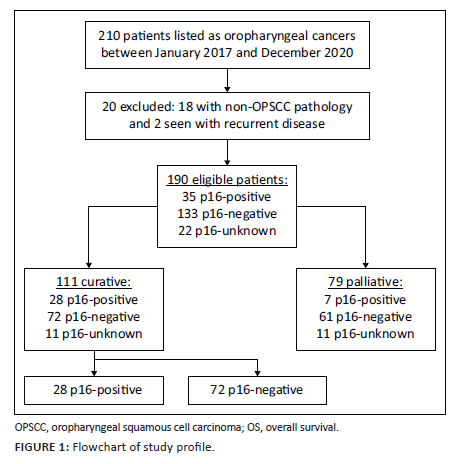
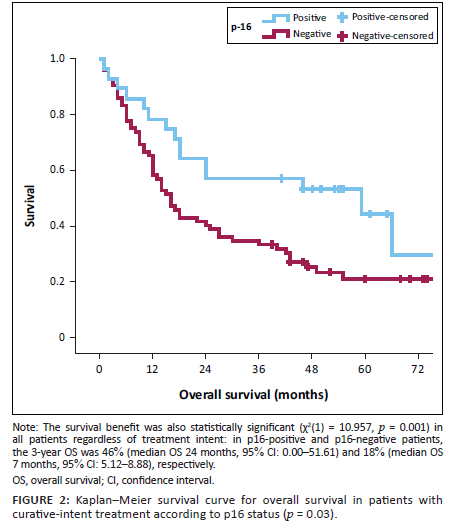
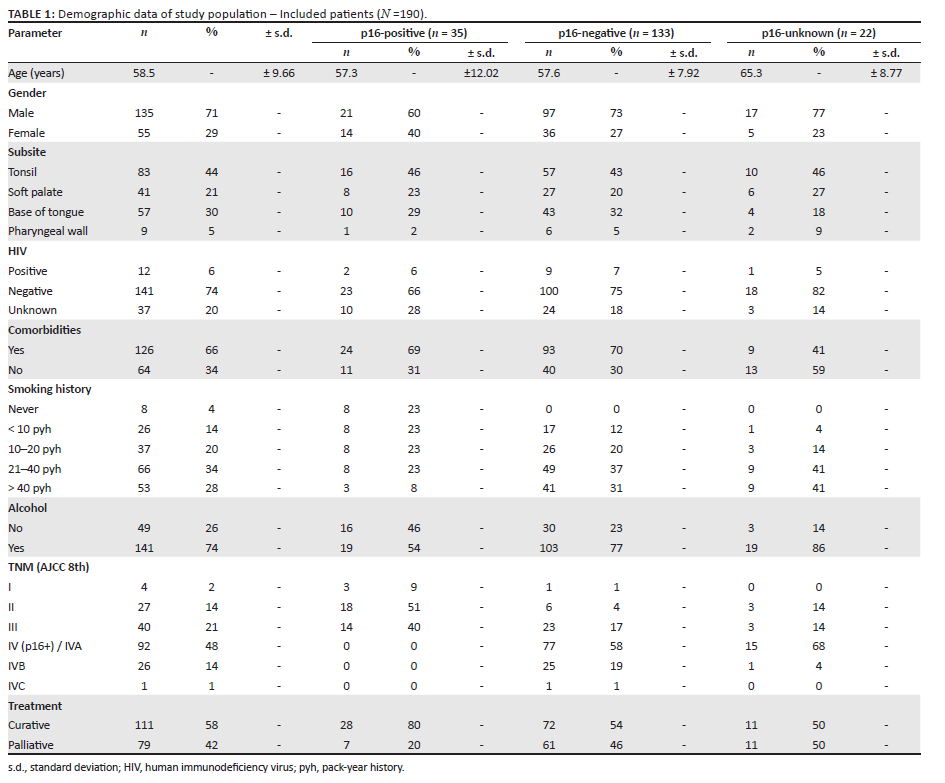
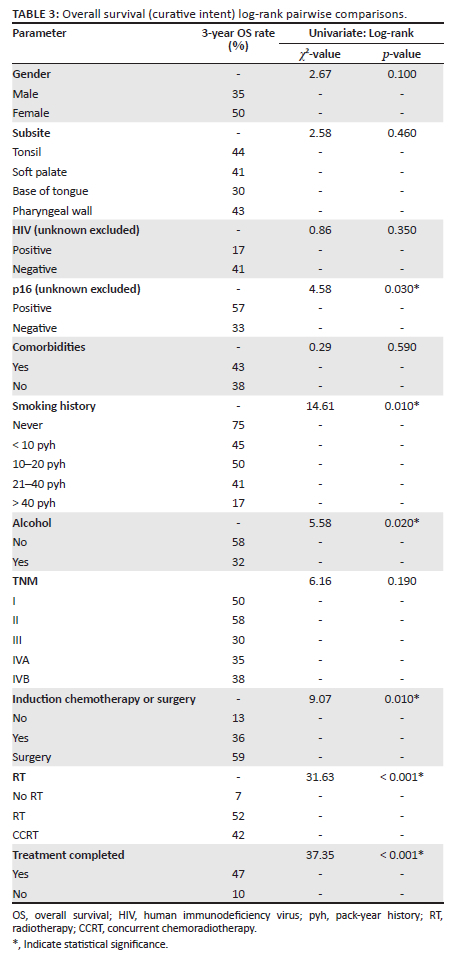
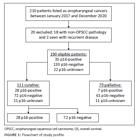
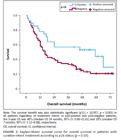
BACKGROUND: Oropharyngeal squamous cell carcinoma (OPSCC) is divided into two distinct disease entities, distinguished by p16 status, which confers significant prognostic benefit when positive (human papilloma virus-mediated). Limited data exist in low- and middle-income countries (LMICs) to correlate whether this translates to our setting, where lifestyle risk factors are rife such as heavy alcohol, tobacco consumption and poor socioeconomic status. AIM: This study aimed to evaluate the prevalence and compare overall survival (OS) of p16-positive and negative OPSCC within a LMIC setting. SETTING: This single-centre study was conducted at Groote Schuur Hospital, Cape Town, South Africa. METHODS: Retrospective observational study where data were collected on patients with OPSCC from January 2017 to December 2020, exploring prevalence and OS at 3-years in patients treated with curative intent. Demographic and lifestyle factors were analysed to identify statistical significance. RESULTS: A total of 190 patients were included. Prevalence of p16-positive OPSCC was 20.8%. A total of 111 patients were treated with curative intent: 3-year OS in patients with p16-positive was 57% (median OS 59 months, 95% confidence interval [CI]: 0.00-120.16) and p16-negative patients 33% (median OS 16 months, 95% CI: 11.85-20.15), which is statistically significant (p = 0.03). CONCLUSION: P16-positive OPSCC has superior OS compared to p16-negative OPSCC, with lower prevalence compared to developed countries. CONTRIBUTION: P16-positive OPSCC comprises an important minority (20.8%) of OPSCC where p16 status, smoking and alcohol consumption are the most important prognostic factors.
oropharyngeal squamous cell carcinoma; p16-positive/negative; HPV-mediated; prevalence; overall survival; low- and middle-income countries
 Thumbnail
 Thumbnail