Prevalence and outcome of human papilloma virus-mediated oropharyngeal squamous cell carcinoma in a low- and middle-income setting
Abstract
BACKGROUND: Oropharyngeal squamous cell carcinoma (OPSCC) is divided into two distinct disease entities, distinguished by p16 status, which confers significant prognostic benefit when positive (human papilloma virus-mediated). Limited data exist in low- and middle-income countries (LMICs) to correlate whether this translates to our setting, where lifestyle risk factors are rife such as heavy alcohol, tobacco consumption and poor socioeconomic status. AIM: This study aimed to evaluate the prevalence and compare overall survival (OS) of p16-positive and negative OPSCC within a LMIC setting. SETTING: This single-centre study was conducted at Groote Schuur Hospital, Cape Town, South Africa. METHODS: Retrospective observational study where data were collected on patients with OPSCC from January 2017 to December 2020, exploring prevalence and OS at 3-years in patients treated with curative intent. Demographic and lifestyle factors were analysed to identify statistical significance. RESULTS: A total of 190 patients were included. Prevalence of p16-positive OPSCC was 20.8%. A total of 111 patients were treated with curative intent: 3-year OS in patients with p16-positive was 57% (median OS 59 months, 95% confidence interval [CI]: 0.00-120.16) and p16-negative patients 33% (median OS 16 months, 95% CI: 11.85-20.15), which is statistically significant (p = 0.03). CONCLUSION: P16-positive OPSCC has superior OS compared to p16-negative OPSCC, with lower prevalence compared to developed countries. CONTRIBUTION: P16-positive OPSCC comprises an important minority (20.8%) of OPSCC where p16 status, smoking and alcohol consumption are the most important prognostic factors.
oropharyngeal squamous cell carcinoma; p16-positive/negative; HPV-mediated; prevalence; overall survival; low- and middle-income countries
Introduction
Oropharyngeal squamous cell carcinoma (OPSCC) forms part of a greater collection of cancers involving the head and neck (HNC), which result in significant morbidity and mortality. A substantial proportion of HNC cases arise in developing countries, contributing to 67% of global prevalence and 82% of HNC-related deaths worldwide.12345678
Recent systematic reviews on global prevalence of HPV-mediated OPSCC indicate that the prevalence varies significantly. A pooled proportional meta-analysis published in 2020 indicates that the global prevalence is 44.8%5, with the highest prevalence in Northern Europe, United States (US), China and South Korea.976,10 Research on HPV vaccination in preventing cervix cancer112,12 P16 positivity is now accepted as the most significant prognostic marker in OPSCC - to the extent that the AJCC 8th edition has separate classifications for p16-positive and p16-negative OPSCC.139142 laser microsurgery or robotic surgery.1510,16 Adjuvant RT ± concurrent chemotherapy is required in as many as two-thirds of patients,171819,20 Response to induction chemotherapy is also an important prognostic marker in locally advanced cases.2122,23 Treatment outcomes are universally improved; the Nichols et al.1424102526
Methods
We conducted a retrospective observational study of patients with newly diagnosed oropharyngeal cancer at GSH between January 2017 and December 2020. All patients with a new histologically confirmed diagnosis of squamous cell carcinoma of the oropharynx, including subsites: base of tongue, tonsils, soft palate and pharyngeal wall were included. Patients diagnosed with non-OPSCC pathology, recurrent disease or treated at an institution other than GSH were excluded. Those who were offered curative treatment were included in the assessment of OS at 3 years.
Data collection methods
Clinical data were collected from patient medical records, the departmental electronic patient registry (EPR), National Health Laboratory Service (NHLS) online portal (TrakCare). Where p16 status was unknown, p16 IHC was requested to be performed on 70 archived specimens via a collaboration between the departments of Anatomical Pathology and Radiation Oncology at GSH, University of Cape Town. Funding for the material costs involved in performing these tests was obtained from Radiation Oncology departmental research funds. Data collection was completed between January 2024 and March 2024. A participant number was assigned to each patient included in the study and data de-identified before data analysis was performed.
Treatment
All patients were reviewed at the HNC clinic by a multidisciplinary team to determine appropriate treatment intent and management plan. Patients suitable for curative treatment received one of the following: locally advanced cancers received induction chemotherapy (either TPF: taxane, platinum and fluorouracil; or platinum and fluorouracil if unfit for TPF) followed by CCRT (3-weekly or weekly platinum: cisplatin or carboplatin) or RT alone. Surgery was used in selected early-stage cancers, with adjuvant RT if clinically indicated. Concurrent cetuximab was not available for platinum ineligible patients. All patients receiving definitive RT were treated with volumetric modulated arc therapy (VMAT) and the simultaneous integrated boost (SIB) technique. Radiotherapy prescription was typically a 3-dose level plan. Primary tumour and involved nodes received the highest dose with an equivalent dose at conventional fractionation (EQD2) of 66 Gy - 70 Gy; intermediate risk nodal stations received an EQD2 of 60 Gy - 64 Gy and uninvolved nodal stations at risk received an EQD2 of 48 Gy - 54 Gy. Radiotherapy was administered in 30-33 fractions, once daily, Monday to Friday. Patients were monitored weekly with clinical assessment and blood tests. Supportive care was provided including nutritional support and feeding tubes when indicated. Patients deemed unfit for curative intent, by consensus decision of the multidisciplinary HNC team, were offered appropriate palliative treatment, including palliative RT, chemotherapy and supportive care. Palliative RT was commonly planned with lateral-opposed fields and prescribed to 30 Gy - 36 Gy in 3 Gy fractions. P16 status was not considered in determining treatment intent. Clinical follow-up, including indirect laryngoscopy if indicated, was carried out at 6 weeks post-treatment, and thereafter, 3 monthly for 1-2 years, 6 monthly for 3 years, and annually from 5 years post-treatment. Imaging, biopsies and further investigations were carried out as clinically indicated. Patients with disease recurrence were considered for salvage, palliative treatment or supportive care.
Statistical analysis
To achieve statistical significance for the primary objective, a minimum sample size of 75 patients, at an expected p16 positivity of 20%, was estimated utilising a log-rank calculator. A 4-year study period was chosen to accrue sufficient patients. Statistical Package for the Social Sciences (SPSS version 29) software was used for descriptive and inferential statistics to analyse the data. Kaplan-Meier survival analysis was used to determine OS (defined as time from new patient consultation until the date of death or last follow-up) with p-values ≤ 0.05 considered statistically significant. Univariate log-rank pairwise comparisons and the chi-square test were used to analyse subgroups on survival distributions and Bonferroni corrections were applied to identify statistical significance.
Ethical considerations
Ethical clearance to conduct this study was obtained from the University of Cape Town Faculty of Health Sciences Human Research Ethics Committee (No. 022/2024). Informed consent was not required as this was a retrospective review of medical records.
Results
Patient characteristics
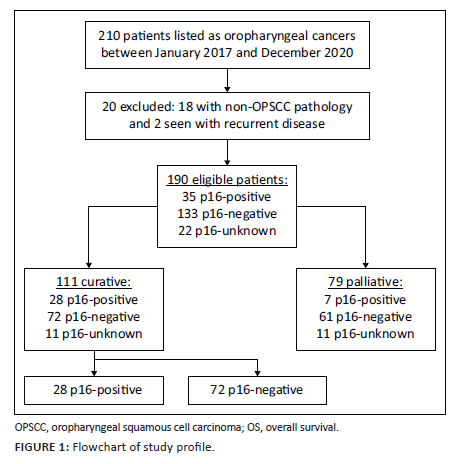
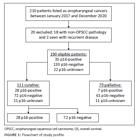
A total of 210 medical records were reviewed, with 20 excluded: 18 with non-OPSCC pathology and 2 seen with recurrent disease. A total of 190 patients were eligible for inclusion in the section of the study assessing prevalence; 100 patients were eligible for inclusion in the assessment of OS at 3 years. A total of 190 patients were eligible for the study (Figure 1) with 111 patients (58%) treated with curative intent and 79 (42%) treated palliatively. Prevalence of HPV-mediated OPSCC (p16-positive) in our study population with known p16 status was 20.8%. Palliative patients had a lower p16 prevalence: 10.3% compared to 28% in patients who received curative treatment.
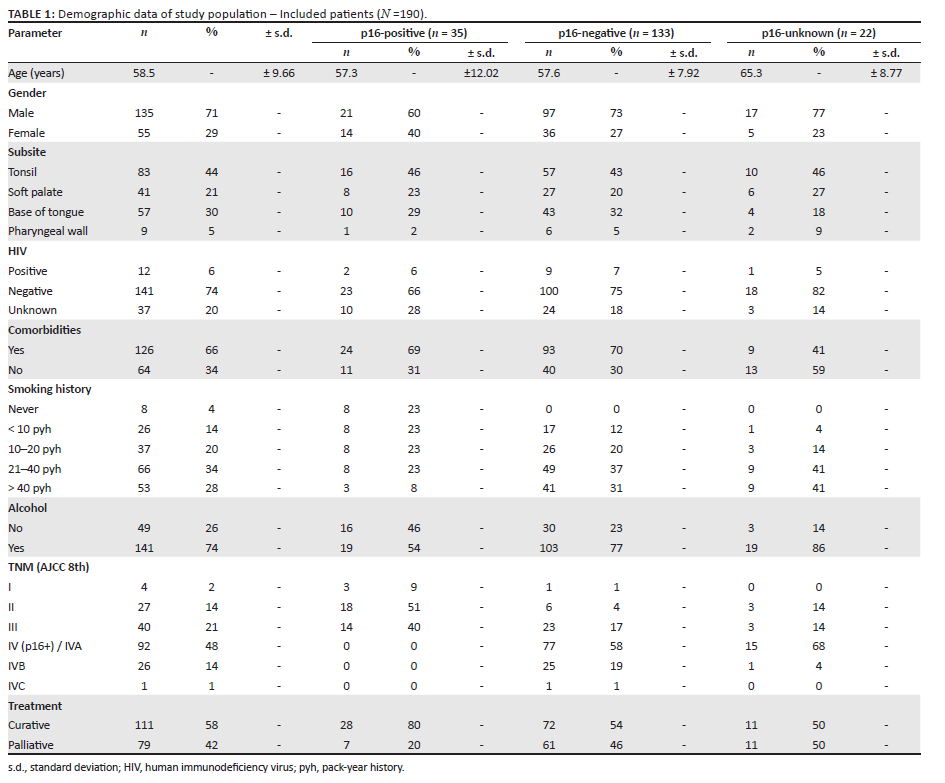
The demographic data of the study population is detailed in Table 1. The mean age of patients at presentation was 58.5 years old. The study population consisted predominantly of males (71%), alcohol consumers (74%), smokers (96%) and patients with comorbidities (66%). Locally advanced disease (Stage III-IVB) predominated (83%) with only one patient presenting with Stage IVC de novo metastatic disease (1%). The p16-positive group consisted of more never-smokers (23%) and non-alcohol users (46%); in comparison to the p16-negative group who had greater associations with alcohol (77%) and > 20 pack-year history tobacco usage (68%). The majority of p16-positive patients presented with early-stage disease I-II (60%) and were offered curative treatment (80%). There was no significant disparity in age, gender, subsite, human immunodeficiency virus (HIV) status and comorbidities between the two groups.
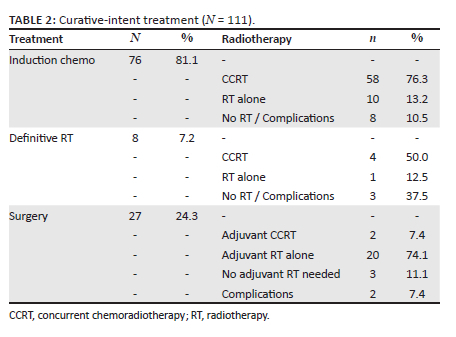
A total of 111 patients (Table 2) were treated with curative intent, and 90 patients (81.1%) completed the prescribed treatment course. Treatment was abandoned in 21 patients (18.9%) for one of the following reasons: complications related to induction chemotherapy in eight (7.2%), deemed unfit post-operatively for adjuvant RT in two (1.8%), complications during RT in eight (7.2%) and patient demised before definitive treatment could commence in three cases (2.7%).
Treatment outcomes
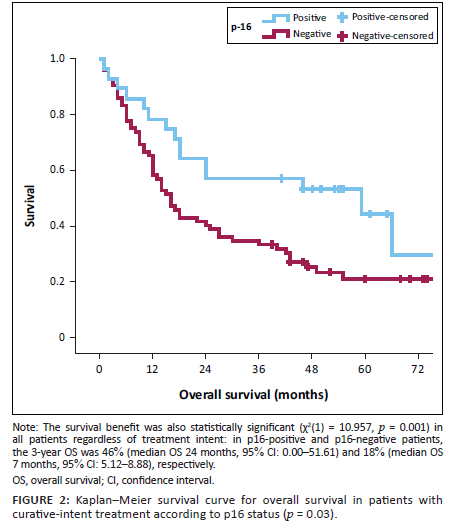
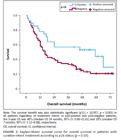
The primary endpoint, the 3-year OS in p16-positive and negative patients treated with curative intent (Figure 2) was 57% (median OS 59 months, 95% confidence interval [CI]: 0.00-120.16) and 33% (median OS 16 months, 95% CI: 11.85-20.15), respectively. This is statistically significant (χ2p = 0.03).
Predictive factors for overall survival
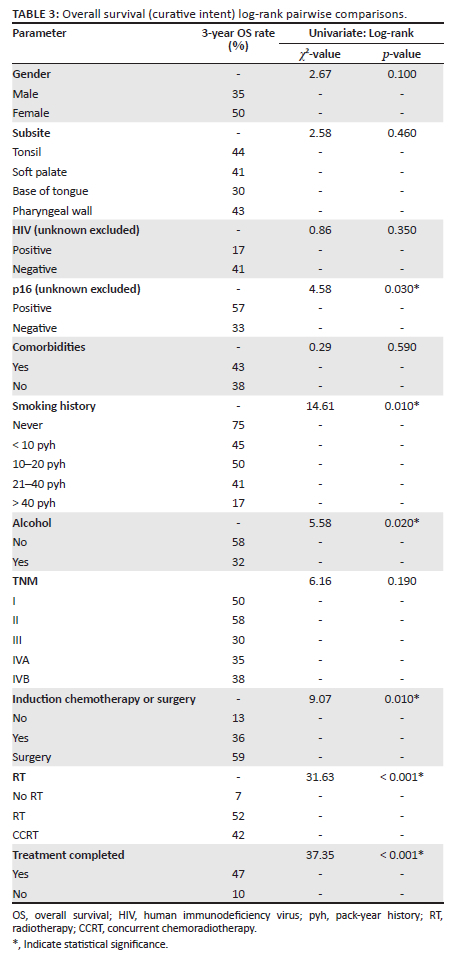
A univariate analysis identified p16 status, smoking history, alcohol consumption and treatment completion as significant predictors of OS. In contrast, sex, anatomical subsite, HIV status and comorbidity burden were not significantly associated with OS (Table 3). Tumour, Node, Metastasis (TNM) staging was found to be statistically significant (p = 0.001) when analysed within the entire patient population, but not within the curative-intent subset (p = 0.19). Treatment intent was a notable factor in determining OS with 40% OS at 3 years for patients offered curative treatment as compared to 0% in the palliative intent subset (p < 0.001). Pairwise log-rank comparisons demonstrated that both surgery and induction chemotherapy were associated with statistically superior survival compared with no induction chemotherapy (p < 0.001). No significant difference in survival was observed between surgery and induction chemotherapy after Bonferroni correction (p = 0.025; adjusted significance threshold p < 0.02). Concurrent chemoradiotherapy was statistically superior to both RT and no RT (p < 0.001), and RT was superior to no RT (p < 0.001).
Discussion
The prevalence of HPV-mediated OPSCC defined by p16 positivity was identified in 20.8% of the tested study population, which correlates with a recent systematic review in sub-Saharan Africa which showed a prevalence of 20.3% (78 of 384 patients).75,9 Global systematic reviews have a paucity of data from African countries, and so this study is researching an important knowledge gap. Patients with p16-positive OPSCC treated with curative intent have an OS at 3-years of 57% (p = 0.03) and lived a median of 43 months longer compared with patients with p16-negative OPSCC. A survival advantage for p16-positive OPSCC is in concordance with international data; however, the OS is notably lower than described in international studies.1427p = 0.005). Additional testing to detect HPV itself (via ISH or polymerase chain reaction (PCR) was not available for this study, which in conjunction with p16 IHC, would increase the specificity and sensitivity in the diagnosis of HPV-mediated OPSCC.51318p = 0.01), with OS at 3-years as follows: never-smokers (75%), < 10 pyh (45%), 10 pyh - 20 pyh (50%), 21 pyh - 40 pyh (41%) and > 40 pyh (17%). Alcohol consumption was also shown to be a negative prognostic factor (p = 0.01), but not within the p16-positive subset treated with curative intent (p = 1.74). Sparse clinical data detailing alcohol consumption limited further interpretation of this parameter. Early-stage cancers, patients eligible for curative treatment and those who completed the full course of treatment had improved outcomes. Our study indicates that p16 status and smoking are the most important prognostic factors for OPSCC. There was no correlation with outcome and the following factors: gender, patient comorbidities and anatomical subsite. Our patients were predominantly male (71%), had ≥ 1 comorbidity (66%) and were HIV-negative (74%). Human immunodeficiency virus prevalence (6%) in this study is congruent with regional HIV prevalence in men (7.3%).28n = 28) of p16-positive OPSCC treated with curative intent resulted in a large CI, with the lower limit at zero; this is an inherent limitation of a small study although statistical significance was achieved it does reduce precision. Paucity of clinical data in the medical records, including standardised consultation templates and record keeping, limit the data that can be comprehensively collected. Certain details, such as type of chemotherapy used, specific RT details, treatment-related morbidity and disease-free survival were not included in this study. Including these data points may have provided more comprehensive insight into the treatment of p16-negative versus p16-positive OPSCC. P16-negative OPSCC (79.2%) remains more common than p16-positive OPSCC at our institution, thus the importance of continued public health campaigns to encourage smoking cessation and moderating alcohol usage is clear. However, as was seen in the developed world, South Africa and low- and middle-income countries are likely to see a continual rise in p16-positive OPSCC and thus gender-neutral HPV vaccination programmes and routine testing of p16 on OPSCC specimens should become the standard where feasible. P16 status provides important prognostic information to the clinician and patient. An ethical dilemma exists in resource-limited settings given the proven OS benefit conferred with p16-positive OPSCC: one could argue that prioritising limited resources to provide optimised treatment for this group, who stand to benefit the most, can be justified.
Conclusion
Oropharyngeal squamous cell carcinoma is the most common HNC, consisting of two distinct cancers distinguished by the presence or absence of HPV co-infection. This study shows that HPV-mediated OPSCC comprises an important minority (20.8%) of OPSCC. In our local setting, p16 status, smoking and alcohol consumption are the most important prognostic factors. The treatment approach to OPSCC is unchanged, regardless of p16 status, but it is a readily available and affordable test that alters the staging and can provide valuable prognostic information to patients and clinicians. Further collaborative multicentre research in South Africa, sub-Saharan Africa and other LMICs should be conducted, to further quantify the prevalence and prognostic information relayed by p16 status in OPSCC.
Competing interests
The authors, Travis T.S. van der Riet; Mmaphuti J. Chokoe Maluleke; Komala Pillay and Julie A. Wetter, declare that they have no financial or personal relationships that may have inappropriately influenced them in writing this article.
CRediT authorship contribution
Travis T.S. van der Riet: Conceptualisation, Data curation, Formal analysis, Investigation, Methodology, Project administration, Writing - original draft, Writing - review & editing. Mmaphuti J. Chokoe Maluleke: Formal analysis, Investigation, Resources, Visualisation. Komala Pillay: Formal analysis, Methodology, Project administration. Julie A. Wetter: Conceptualisation, Supervision, Writing - review & editing. All authors reviewed the article, contributed to the discussion of results, approved the final version for submission and publication, and take responsibility for the integrity of its findings.
Funding information
This research received no specific grant from any funding agency in the public, commercial or not-for-profit sectors.
Data availability
The data that support the findings of this study are available on request from the corresponding author, Travis T.S. van der Riet.
Disclaimer
The views and opinions expressed in this article are those of the authors and are the product of professional research. They do not necessarily reflect the official policy or position of any affiliated institution, funder, agency or that of the publisher. The authors are responsible for this article's results, findings and content.
Acknowledgements
The authors would like to acknowledge and thank the following: Prof. Alistair Hunter assisted with the design of the project and Mrs Melanie de Bruyn assisted with analysis and interpretation of data. This article stems from a published thesis submitted in partial fulfilment of the requirements for the degree of Masters of Medical Radiation Oncology in the Department of Radiation Oncology, University of Cape Town, South Africa, titled 'Prevalence and outcome of HPV-mediated oropharyngeal squamous cell carcinoma in a low- and middle-income setting', with supervisor Dr Julie Wetter in 2025. The thesis was reworked, revised and adapted into a journal article for publication. The original thesis is currently unpublished and was not publicly available online at the time of publishing this article.
References
-
1. Fagan JJ. Africa: A window on challenges and opportunities for head and neck cancer. Laryngoscope Investig Otolaryngol. 2021;6(3):414-419. https://doi.org/10.1002/lio2.554
» https://doi.org/10.1002/lio2.554 -
2. Yakin M, Ngan R, Kagoma Y, et al. Human papillomavirus and oral and oropharyngeal carcinoma: The essentials. Aust Dent J. 2019;64(1):11-18. https://doi.org/10.1111/adj.12652
» https://doi.org/10.1111/adj.12652 -
3. Wai K, Mundt K, Kaplan J, et al. Molecular diagnostics in human papillomavirus-related head and neck squamous cell carcinoma. Cells. 2020;9:500. https://doi.org/10.3390/cells9020500
» https://doi.org/10.3390/cells9020500 -
4. Grønhøj Larsen C, Nielsen K, Krogh M, et al. Correlation between human papillomavirus and p16 overexpression in oropharyngeal tumours: A systematic review. Br J Cancer. 2014;110(6):1587-1594. https://doi.org/10.1038/bjc.2014.42
» https://doi.org/10.1038/bjc.2014.42 -
5. Mariz BAL, Lima R, Sousa J, et al. Global prevalence of human papillomavirus-driven oropharyngeal squamous cell carcinoma following the ASCO guidelines: A systematic review and meta-analysis. Crit Rev Oncol Hematol. 2020;156:103116. https://doi.org/10.1016/j.critrevonc.2020.103116
» https://doi.org/10.1016/j.critrevonc.2020.103116 -
6. D'Souza G, Kumar B, Raj A, et al. Case-control study of human papillomavirus and oropharyngeal cancer. N Engl J Med. 2007;356(19):1944-1956. https://doi.org/10.1056/NEJMoa065497
» https://doi.org/10.1056/NEJMoa065497 -
7. Okerosi S, Osei-Bonsu J, Aboagye E, et al. Human papillomavirus-associated head and neck malignancies in sub-Saharan Africa: A systematic review. JCO Glob Oncol. 2023;9:e2200259. https://doi.org/10.1200/GO.22.00259
» https://doi.org/10.1200/GO.22.00259 -
8. Bulane A, Nkomo S, Mthembu M, et al. Human papillomavirus DNA in head and neck squamous cell carcinomas in the Free State, South Africa. J Med Virol. 2020;92(2):227-233. https://doi.org/10.1002/jmv.25556
» https://doi.org/10.1002/jmv.25556 -
9. Carlander AF, Olofsson E, Lindqvist T, et al. A contemporary systematic review on repartition of HPV-positivity in oropharyngeal cancer worldwide. Viruses. 2021;13(7):1326. https://doi.org/10.3390/v13071326
» https://doi.org/10.3390/v13071326 -
10. Clark JM, Fox J, Thomas G, et al. Long-term survival and swallowing outcomes in advanced stage oropharyngeal squamous cell carcinomas. Papillomavirus Res. 2019;7:1-10. https://doi.org/10.1016/j.pvr.2018.09.002
» https://doi.org/10.1016/j.pvr.2018.09.002 -
11. Rahimi S, Shafique M, Khan F, et al. HPV-related squamous cell carcinoma of oropharynx: A review. J Clin Pathol. 2020;73(10):624-629. https://doi.org/10.1136/jclinpath-2020-206686
» https://doi.org/10.1136/jclinpath-2020-206686 -
12. Dayyani F, Schiller J, Kumar S, et al. Meta-analysis of the impact of human papillomavirus (HPV) on cancer risk and overall survival in head and neck squamous cell carcinomas (HNSCC). Head Neck Oncol. 2010;2(1):15. https://doi.org/10.1186/1758-3284-2-15
» https://doi.org/10.1186/1758-3284-2-15 -
13. Machczyński P, Bartosz S, Wojciech J, et al. A review of the 8th edition of the AJCC staging system for oropharyngeal cancer according to HPV status. Eur Arch Otorhinolaryngol. 2020;277(9):2407-2412. https://doi.org/10.1007/s00405-020-05979-9
» https://doi.org/10.1007/s00405-020-05979-9 -
14. Nichols AC, Holliday E, Sullivan D, et al. Does HPV type affect outcome in oropharyngeal cancer? J Otolaryngol Head Neck Surg. 2013;42(1):9. https://doi.org/10.1186/1916-0216-42-9
» https://doi.org/10.1186/1916-0216-42-9 -
15. De Virgilio A, Tanaka H, Henderson M, et al. Transoral robotic surgery and intensity-modulated radiotherapy in the treatment of the oropharyngeal carcinoma: A systematic review and meta-analysis. Eur Arch Otorhinolaryngol. 2021;278(5):1321-1335. https://doi.org/10.1007/s00405-020-06224-z
» https://doi.org/10.1007/s00405-020-06224-z -
16. Wang MB, Sullivan K, Singh B, et al. HPV-positive oropharyngeal carcinoma: A systematic review of treatment and prognosis. Otolaryngol Head Neck Surg. 2015;153(5):758-769. https://doi.org/10.1177/0194599815592157
» https://doi.org/10.1177/0194599815592157 -
17. Quon H, Harris J, Cox D, et al. Radiation therapy for oropharyngeal squamous cell carcinoma: American Society of Clinical Oncology endorsement of the American Society for Radiation Oncology evidence-based clinical practice guideline. J Clin Oncol. 2017;35(36):4078-4090. https://doi.org/10.1200/JCO.2017.73.8633
» https://doi.org/10.1200/JCO.2017.73.8633 -
18. Lassen P, Gustafsson M, Håkansson K, et al. Treatment outcomes and survival following definitive (chemo)radiotherapy in HPV-positive oropharynx cancer: Large-scale comparison of DAHANCA vs PMH. Int J Cancer. 2022;150(8):1329-1340. https://doi.org/10.1002/ijc.33876
» https://doi.org/10.1002/ijc.33876 -
19. Zakeri K, Dunn L, Lee N. HPV-associated oropharyngeal cancer de-escalation strategies and trials: Past failures and future promise. J Surg Oncol. 2021;124(6):962-966. https://doi.org/10.1002/jso.26696
» https://doi.org/10.1002/jso.26696 -
20. Economopoulou P, Kotsantis I, Psyrri A. De-escalating strategies in HPV-associated head and neck squamous cell carcinoma. Viruses. 2021;13(9):1787. https://doi.org/10.3390/v13091787
» https://doi.org/10.3390/v13091787 -
21. Lorch JH, Zhu J, Huang Y, et al. Induction chemotherapy with cisplatin and fluorouracil alone or in combination with docetaxel in locally advanced squamous-cell cancer of the head and neck: Long-term results of the TAX 324 randomised phase 3 trial. Lancet Oncol. 2011;12(2):153-159. https://doi.org/10.1016/S1470-2045(10)70279-5
» https://doi.org/10.1016/S1470-2045(10)70279-5 -
22. Dolezal JM, Rosenberg AJ. Induction chemotherapy in low-risk HPV+ oropharyngeal cancer. Curr Treat Options Oncol. 2022;23(1):54-67. https://doi.org/10.1007/s11864-022-00941-9
» https://doi.org/10.1007/s11864-022-00941-9 -
23. Guo TW, Zhang X, Chen Y, et al. Outcomes of patients with oropharyngeal squamous cell carcinoma treated with induction chemotherapy followed by concurrent chemoradiation compared with those treated with concurrent chemoradiation. Cancer. 2021;127(16):2916-2925. https://doi.org/10.1002/cncr.33491
» https://doi.org/10.1002/cncr.33491 -
24. Sedghizadeh PP, Jones B, Yang H, et al. Is p16-positive oropharyngeal squamous cell carcinoma associated with favorable prognosis? A systematic review and meta-analysis. Oral Oncol. 2016;54:15-27. https://doi.org/10.1016/j.oraloncology.2016.01.002
» https://doi.org/10.1016/j.oraloncology.2016.01.002 -
25. Crossley JR, Parker D, Khan S, et al. Distant metastases in human papillomavirus-related oropharyngeal squamous cell carcinoma: Systematic review and meta-analysis. Head Neck. 2023;45(1):275-282. https://doi.org/10.1002/hed.27230
» https://doi.org/10.1002/hed.27230 -
26. Tiedemann D, Martin E, Roehrig J, et al. Systematic review on location and timing of distant progression in human papillomavirus-positive and human papillomavirus-negative oropharyngeal squamous cell carcinomas. Head Neck. 2019;41(3):793-798. https://doi.org/10.1002/hed.25458
» https://doi.org/10.1002/hed.25458 -
27. Mehanna H, Taberna M, Von Buchwald C, et al. Prognostic implications of p16 and HPV discordance in oropharyngeal cancer (HNCIG-EPIC-OPC): A multicentre, multinational, individual patient data analysis. Lancet Oncol. 2023;24(3):239-251. https://doi.org/10.1016/S1470-2045(23)00013-X
» https://doi.org/10.1016/S1470-2045(23)00013-X -
28. Government of Western Cape. Bod: A5 booklet [homepage on the Internet]. Western Cape Government; [cited 2024 Aug 25]. Available from: https://www.westerncape.gov.za/health-wellness/files/wcg-blob-files?file=2023-11/Burden%20of%20disease_bod_a5_booklet_0_0.pdf
» https://www.westerncape.gov.za/health-wellness/files/wcg-blob-files?file=2023-11/Burden%20of%20disease_bod_a5_booklet_0_0.pdf

Accepted: 04 May 2026
Published: 13 June 2026