An assessment of traditional and complementary medicine utilisation in cancer patients from KwaZulu-Natal, South Africa: A cross-sectional study
Abstract
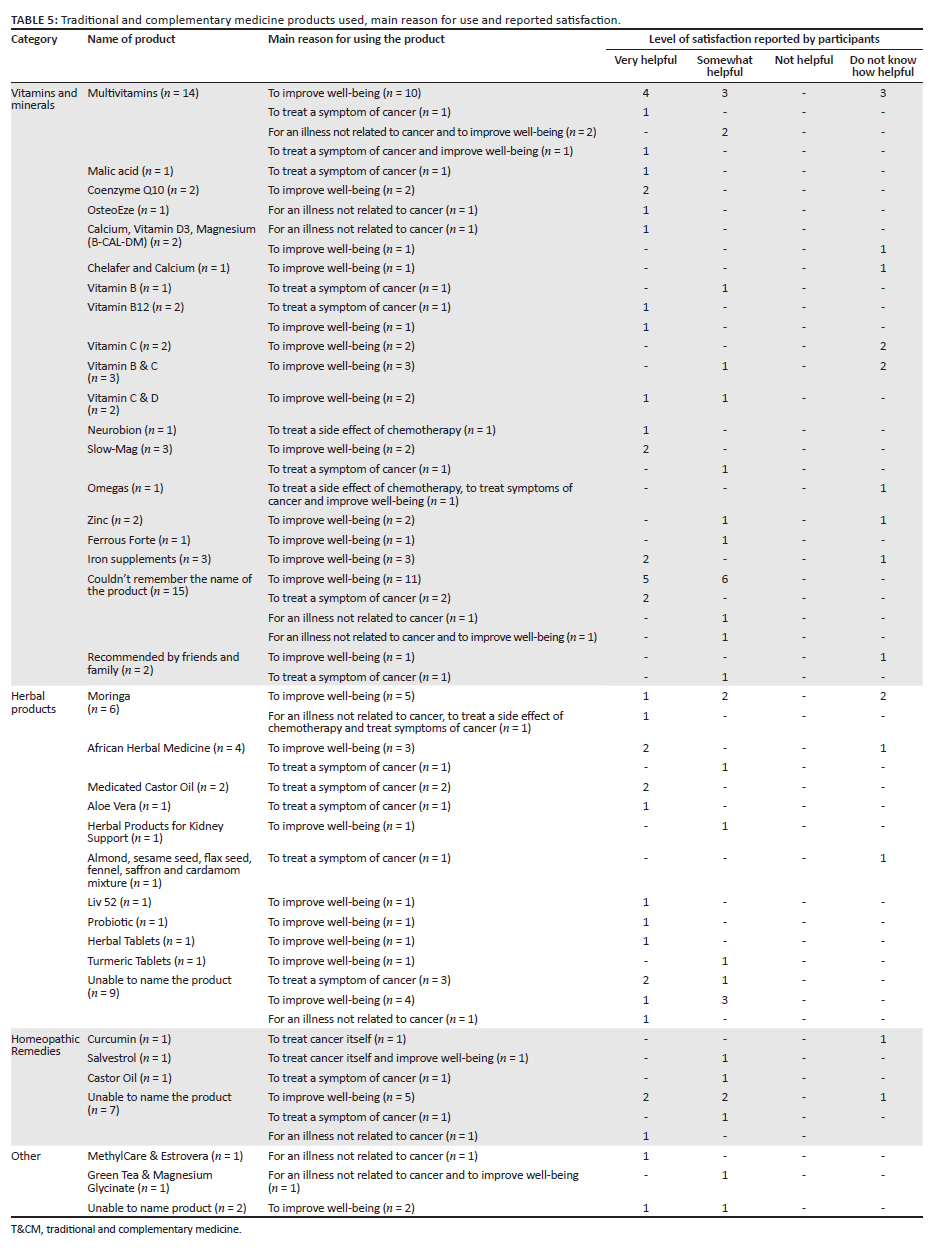
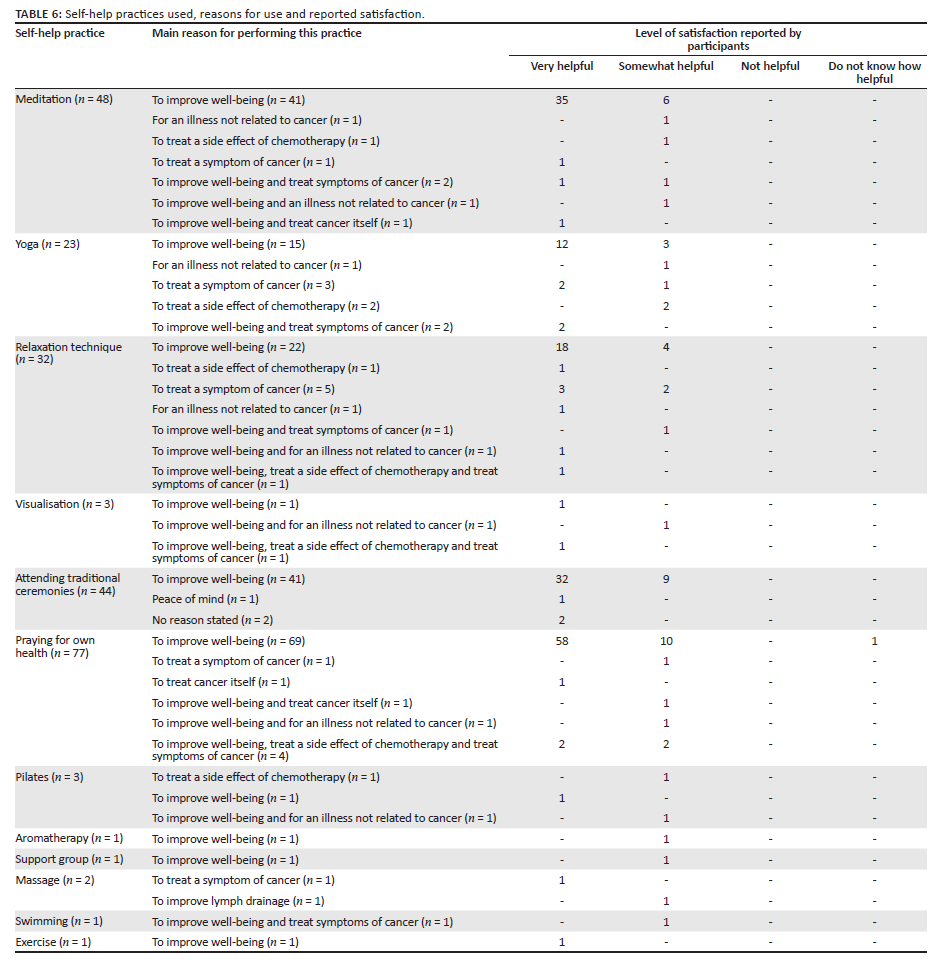
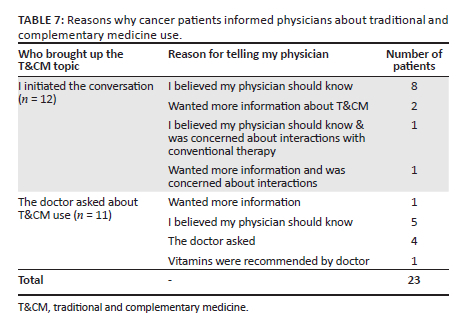
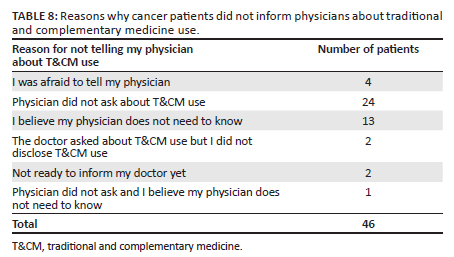
BACKGROUND: Traditional and complementary medicine (T) use among cancer patients is increasing globally; however, it remains under-researched. Anticancer drugs have a narrow therapeutic window, and the use of complementary products may interact with chemotherapy. AIM: This study aims to investigate the prevalence of T usage, reasons for use, perceived value of T and patient disclosure of T use to physicians among cancer patients in KwaZulu-Natal, South Africa. SETTING: Surveys were conducted at oncology centres in the private sector in KwaZulu-Natal. METHODS: Adult cancer patients were approached to complete a survey collecting demographic data and information related to the use of T An adapted version of the International Complementary and Alternative Medicine Questionnaire was used. RESULTS: Sixty-nine per cent of the 100 patients surveyed were T users, of which, 57% used at least one form of T to treat either a side effect of chemotherapy, cancer symptoms or cancer itself. Vitamins and/or minerals were used by 45% of participants, 27% used herbal products and 9% used homeopathic remedies. The most common self-help practice was prayer (77%). One-third of T users disclosed their T use to their physician. CONCLUSION: Most cancer patients rely on mainstream conventional medicine to treat cancer itself. However, many still use T, and it is an important consideration when patients are undergoing chemotherapy. A relatively low percentage of patients disclosed T use. CONTRIBUTION: This study provides recent data on commonly used T modalities, reasons for use and perceived benefits. These findings emphasise potential safety considerations and the need for more integrative T discussions with patients.
traditional medicine; complementary medicine; alternate medicine; herbal medicine; cancer patients; patient disclosure