Comparison of electronic portal imaging device-based Winston-Lutz analysis software
Abstract
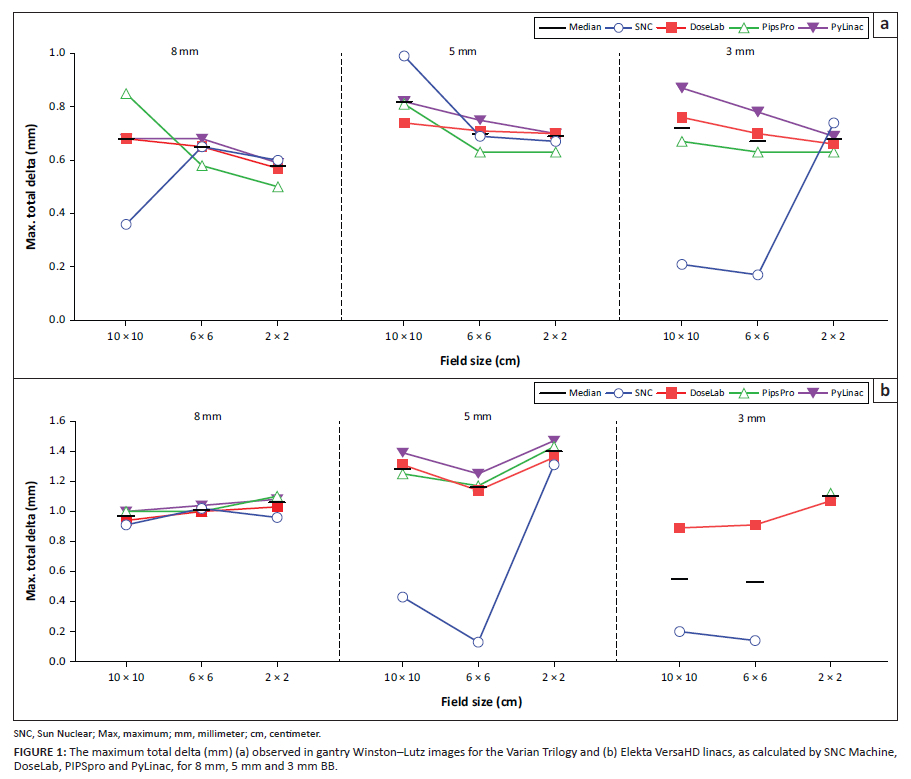
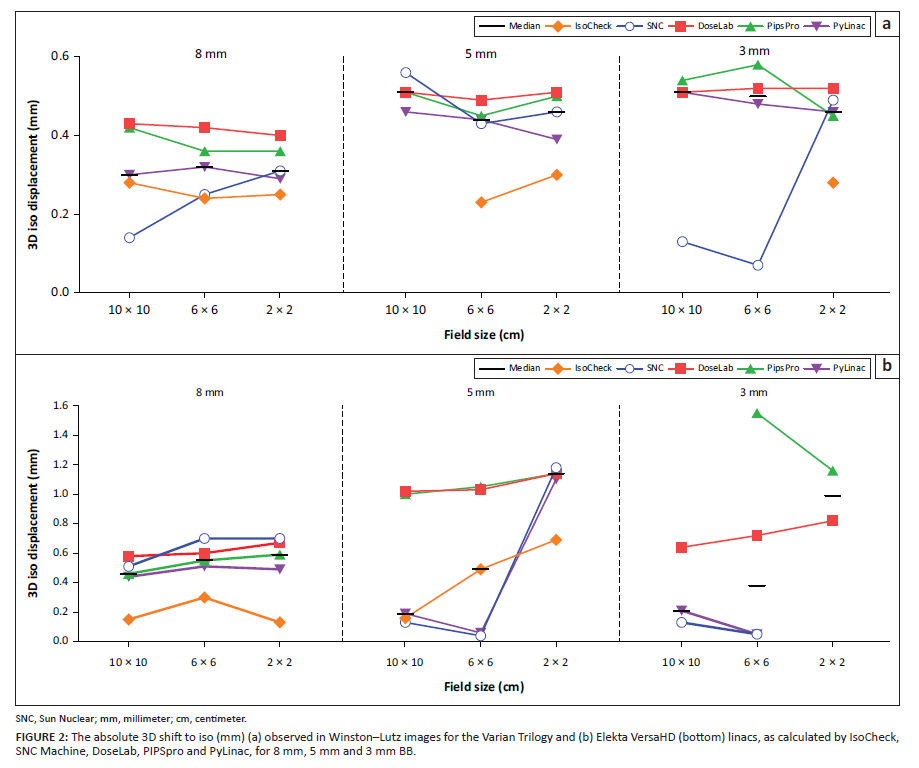
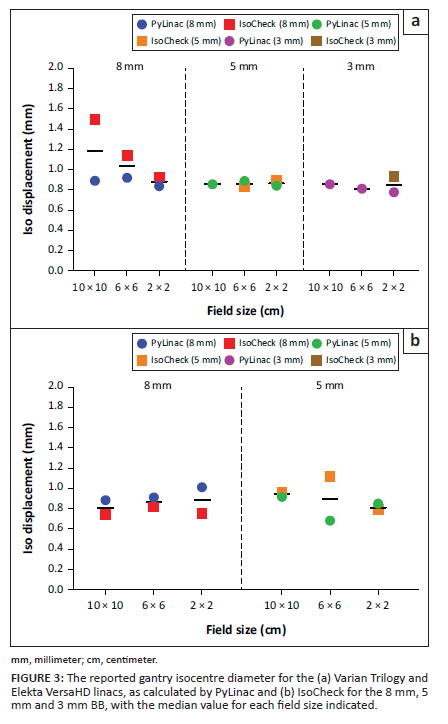
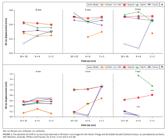
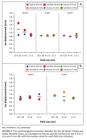
BACKGROUND: Stereotactic radiosurgery (SRS) with a linear accelerator requires submillimetre geometric accuracy. The Winston-Lutz (WL) test verifies coincidence among radiation, mechanical, and imaging isocentres. While portal imaging (EPID)-based WL methods offer rapid assessments, results may depend on image quality, ball bearing (BB) size, field size, and software algorithms. AIM: To systematically compare commercial and open-source WL analysis software under varying imaging conditions. SETTING: Multiple radiotherapy centres across Western Cape South Africa. Utilizing Varian Trilogy and Elekta Versa HD linear accelerators. METHODS: Megavoltage (MV) EPID images were acquired on a Varian Trilogy (150 cm SID) and Elekta VersaHD (160 cm SID) using 6 MV flattened beams across multiple gantry and couch angles. Field sizes 10 cm × 10 cm, 6 cm × 6 cm and 2 cm × 2 cm and BB diameters 8 mm, 5 mm and 3 mm were tested. Images were analysed using Physikalisch-Technische Werkstätten (PTW) IsoCheck v1.2, SNC Machine v2.0.6, DoseLab Pro v7.0.0, PIPSpro Stereotactic v5.0.0, and PyLinac v2.2.6. Evaluated metrics included maximum total delta, 3D isocentre displacement, and isocentre diameter. RESULTS: Processing success and accuracy varied by BB size, field size, and linac type. Most software failed on Elekta VersaHD images with a 3 mm BB, except DoseLab, which succeeded in all cases. On Trilogy, smaller fields yielded smaller deltas; the inverse occurred on VersaHD (neither trend was statistically significant). SNC Machine exhibited the largest delta variation (Coefficient of Variation [CoV]: 19% - 114%), while DoseLab was most consistent (CoV: 1% - 6%). IsoCheck and PyLinac yielded comparable isocentre diameters when processing succeeded, with optimal consistency at 5 mm BB (Trilogy) and 8 mm BB (VersaHD). CONCLUSION: The WL test outcomes depend on software, BB size, and imaging geometry. Preprocessing flexibility enhances robustness, and using larger BBs (5 mm - 8 mm) and mid-sized fields (~6 cm × 6 cm) improves detectability. When the 3D isocentre shift is minimised, maximum total delta can reflect the isocentre target error, but understanding software-specific definitions remains critical for SRS quality assurance (QA). CONTRIBUTION: This study compares the performance of different WL software when analysing the same images.
EPID; Winston-Lutz; linac isocentre; stereotactic; quality assurance
 Thumbnail
 Thumbnail
 Thumbnail