Outcomes of an acute lymphoblastic leukaemia cohort between 2008 and 2017 at a South African paediatric oncology unit
Abstract
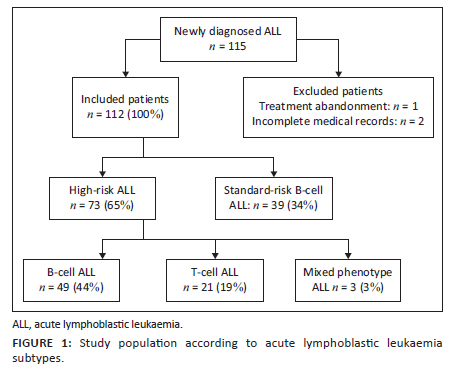
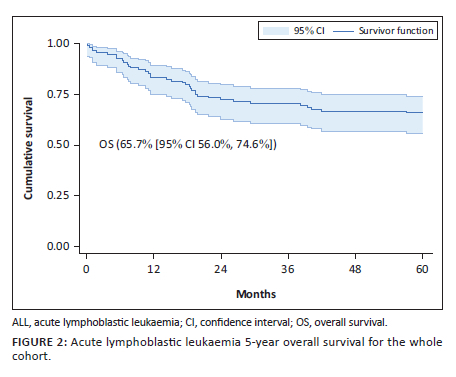
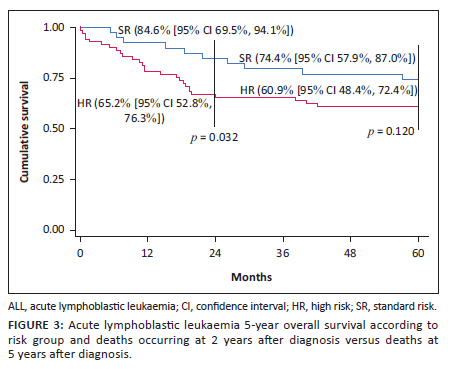
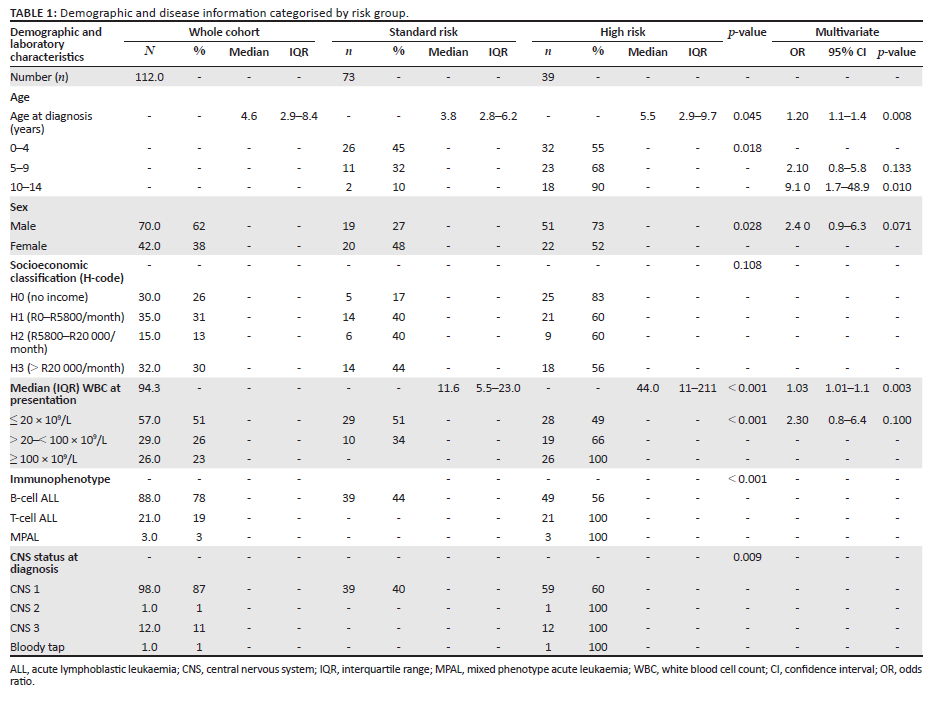
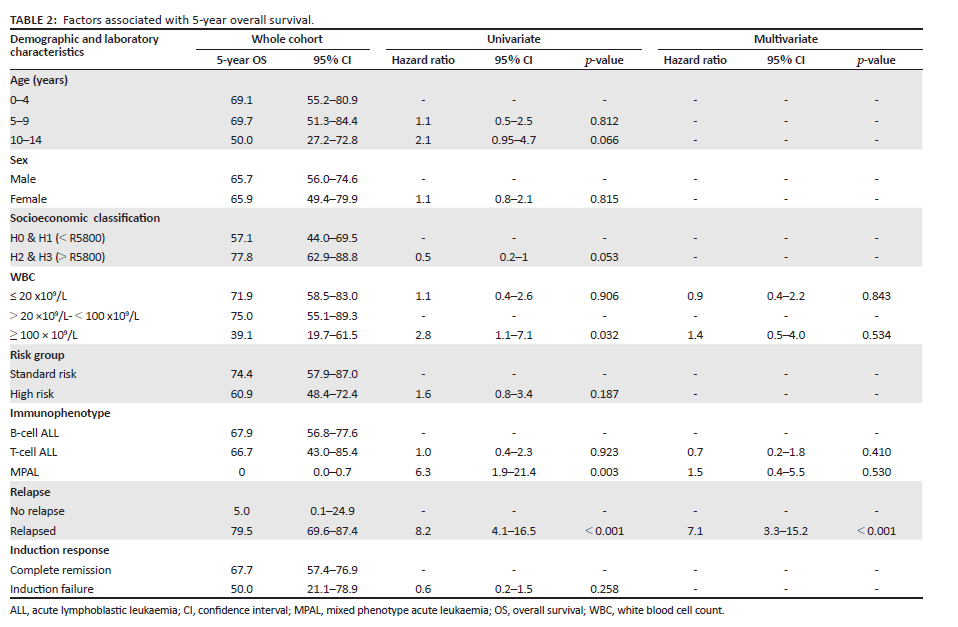
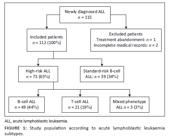
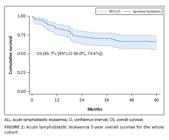
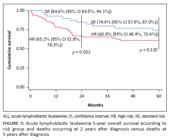
BACKGROUND: Acute lymphoblastic leukaemia (ALL) is the most common childhood cancer, yet few studies have reported the treatment outcomes, toxicity patterns and relapse rates in low- and middle-income countries. AIM: To investigate overall survival (OS) and toxicity patterns in children with ALL. SETTING: The study took place at Tygerberg Hospital, South Africa. METHODS: Data on demographics, disease, treatment, toxicity and outcome data were collected over ten years. Descriptive statistics and associations were calculated. Overall survival was estimated using Kaplan-Meier curves. RESULTS: A total of 112 patients (male-to-female ratio 1:0.6) had a median age of 4.6 years (IQR 2.9-8.4). The 5-year OS was 65.7% (95% CI 56.0% - 74.6%), and the 5-year EFS was 64.8% (95% CI 55.0% - 73.8%). Standard-risk patients had higher 5-year OS of 74.4% (95% CI 57.9% - 87.0%) versus 60.9% (95% CI 48.4% - 72.4%) for high-risk patients. Most relapses (20.5%; n = 23) occurred in high-risk patients (82.6%, 19/23) (p = 0.049). Patients with Hyperleukocytosis (23%; n = 26) was linked to increased relapse risk (OR 5.0; 95% CI 1.5% - 17.5%; p = 0.026). Ten patients (8.9%) died while on maintenance treatment. Grade 3 and 4 haematological toxicity occurred in 18% and 19%, respectively. Delays in maintenance initiation occurred in 29% of patients, and 8% required blood product support. CONCLUSION: The OS in standard-risk ALL improved to 74.4%, while overall OS was 65.7%. Hyperleukocytosis at diagnosis was associated with increased relapse risk. CONTRIBUTION: This study highlights the burden of haematological toxicity in South African children treated on a contemporary ALL regimen, with frequent treatment delays and need for blood product support.
paediatric acute lymphoblastic leukaemia; ALL; childhood leukaemia; toxicity; relapse; survival outcomes childhood ALL
 Thumbnail
 Thumbnail
 Thumbnail