Perceptions of learners and teachers on the use of information and communication technology in public primary school libraries in Highveld Ridge East circuit in Mpumalanga Province
Abstract
This study explores the perceptions of learners and teachers on the utilisation of Information and Communication Technology (ICT) in public primary school libraries in the Highveld Ridge East Circuit of Mpumalanga Province. Anchored in the quantitative research approach, the study targeted five public primary schools equipped with some level of ICT infrastructure. Data were collected through structured questionnaires distributed to both learners and teachers who actively use library resources for teaching and learning. The findings revealed that learners generally hold highly positive perceptions of ICT use in school libraries, while teachers reported satisfaction with its integration, despite encountering persistent challenges such as limited technical training, infrastructure maintenance issues, and unreliable internet connectivity. The study underscores the importance of ICT-related skills, knowledge, and perceptions in enhancing library services, curriculum engagement, and administrative efficiency. Recommendations arising from the findings are intended to inform the effective implementation of ICT in public primary school libraries and may also serve as a reference for secondary schools seeking to improve digital library practices.
Perceptions; ICT; Knowledge; Learners; Public primary school libraries; Skill; Teachers; Utilisation
1 Introduction and background
As educational technology continues to gain momentum, understanding how information and communication technologies (ICTs) influence school library utilisation is crucial in shaping learners and teachers' perceptions, knowledge, and skills into practice. The use and importance of ICT in school libraries in both developed and developing countries has been documented, yet there is huge disparity between these countries in the usage of internet, computer ownership, and broadband subscriptions (Nixon 2019: 4). South Africa is a developing country located in sub-Saharan Africa, and is among the least computerised in the world, although better than some countries in Africa (Nixon 2019: 4). Similar challenges are prevalent in other developing countries, especially across sub-Saharan Africa, where the integration of ICT in school libraries remains limited and uneven. In South Africa, the situation reflects a blend of progress and persistent inequality. While some well-resourced, urban, and quintile 4 and 5 schools have embraced ICT integration, many rural and township schools still lack basic library facilities, internet access, and qualified teacher librarians (Nixon 2019).
In South Africa, the Fourth Industrial Revolution (4IR) demands a high level of digital literacy, making the adoption of ICT in school libraries more critical than ever. The adoption of ICT in school libraries depends largely on the perceptions of both learners and teachers. Similarly, skills and knowledge are necessary to leverage ICT in educational settings (Centerwall 2016:137). Furthermore, the successful implementation of ICT in school libraries depends significantly on the knowledge and skills of learners and teachers. Gaining a deeper understanding of these factors is crucial to ensure that ICT integration leads to meaningful educational outcomes.
Nixon (2019:4) highlights that ICT tools in school libraries help learners in activities such as typing, printing, emailing, and reducing the workload associated with school assignments, ultimately improving their academic performance. The provision of ICT infrastructure, including computers and scanners, among others, significantly enhances the efficiency and quality of library services, benefiting staff and end-users (Singh & Rana 2015:99).
International research has reported that schools and districts that provide resources and place priority on the establishment of effective school library programmes have seen surges in assessment scores (Lance & Kachel 2018:18; Scholastic 2016). Research by Adedokun, Magaji and Makinde (2018:61) has shown that schools in sub-Saharan Africa with advanced ICT infrastructure in their libraries have seen improvements in their learners' reading, spelling, and writing skills. In South Africa, similar evidence indicates that learners from schools with fully functional libraries equipped with ICT tend to achieve superior academic performance (Hart & Zinn 2015:22; Nixon 2019:4).
Research has shown that successful ICT integration in school libraries depends not only on infrastructure, but also on the knowledge, perceptions, and digital skills of teachers and learners (Centerwall 2016). A positive library experience, enhanced by quality facilities, digital tools, and responsive services, fosters greater user satisfaction and academic achievement (Iwhiwhu & Okorodudu 2012).
The study sought to evaluate the perceptions, knowledge, and skills of learners and teachers, and to identify the opportunities and barriers to adopting ICT in school libraries. Ultimately, the study offers recommendations for improving the implementation and effectiveness of ICT in these educational spaces, serving as a valuable reference for teachers, policymakers, and researchers seeking to optimise library resources in the digital age.
2 Contextual setting for the study
The Mpumalanga Department of Education (MDoE) is divided into four districts, namely, Bohlabela, Ehlanzeni, Gert Sibande, and Nkangala. This study focused on the Gert Sibande District and was conducted in the Highveld Ridge East Circuit, which includes 27 schools, comprising seven secondary schools, one special school, and 19 primary schools spread across urban, township, and farm areas. For the purpose of this study, five primary schools from quintiles 2, 4, and 5 were selected.
The District has a mix of schools with varying resources. For instance, 16 schools fall into quintile 1-2 (no-fee schools with low socio-economic status), while 10 are in quintile 4-5 (better-resourced schools) under the MDoE (Educational Management and Information Systems (EMIS) 2023). The disparity in access to ICT is evident, as quintile 4-5 schools are equipped with functional libraries, computers, internet, and other technologies. Some schools in quintile 1-2 have ICT resources available in their school libraries. In contrast, schools in townships and farms in quintile 1-2 struggle with inadequate ICT infrastructure, poorly equipped libraries, and limited internet access, which worsens educational inequalities and hampers the integration of ICT in learning.
3 Problem statement
The utilisation of ICT in school libraries plays a crucial role in achieving educational objectives by empowering teachers to develop learners who are well-equipped for continuous learning. However, the effective utilisation of ICT by learners and teachers remains a challenge due to varying levels of skills and knowledge towards information technology. While some users demonstrate proficiency in ICT tools, others struggle with basic competencies and thus limiting the impact of ICT resources in the school library setting. Teachers play a crucial role in guiding learners to use ICT tools effectively, yet gaps in their technological pedagogical content knowledge (TPACK) may hinder the seamless integration of ICT into library services and educational activities. Additionally, the learners' ability to engage with ICT depends not only on their ICT skills, but it also on their exposure and motivation to use information technologies for learning purposes.
Beyond skills and knowledge, perception toward ICTs significantly influences its adoption and utilisation. Some learners and teachers view ICT as a valuable tool for improving access to information and fostering digital literacy, while others may resist its use due to a lack of confidence, training, or perceived relevance. Perception encourages engagement and innovation, whereas resistance, fear of technology, or a lack of confidence may hinder ICT integration. Furthermore, external barriers such as unreliable connectivity and devices, and inadequate ICT maintenance exacerbate the challenges faced by school libraries. Ismail, Affandy and Hamzah (2018) and Nixon (2019) highlight that most school libraries lack proper ICT infrastructure.
The study sought to understand the interplay between perceptions, skills, and knowledge toward ICT utilisation. Addressing these factors will contribute to a more efficient and technology-driven school library environment that supports teaching and learning in the Highveld Ridge East Circuit of the Gert Sibande District in Mpumalanga.
4 Purpose of the study
This study investigated the perceptions of learners and teachers on the usage of ICT in public primary school libraries in the Highveld Ridge East Circuit in Mpumalanga Province, South Africa. The specific objectives were as follows:
Perceptions of learners and teachers towards ICT in primary school libraries.
Knowledge and skills level in ICT utilisation in primary school libraries.
5 Conceptual framework
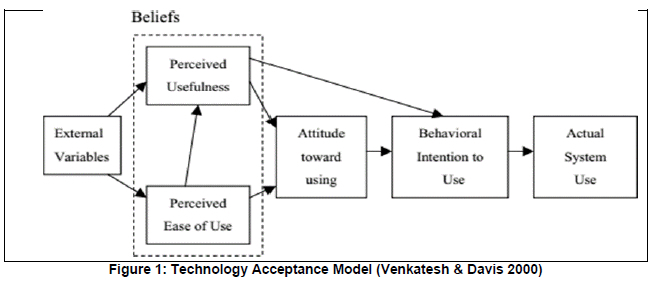
The study adopted the Technology Acceptance Model (TAM) developed by Davis as illustrated in Figure 1 to guide the perceptions of learners and teachers in ICT use in primary school libraries. The TAM posits that external variables influence users' beliefs, namely, perceived usefulness and perceived ease of use, which, in turn, affect their attitudes, intentions, and actual usage of a system. Each of the research objectives aligns with one or more concepts of TAM, as shown in the figure, which illustrates the researchers' understanding of how these concepts are interconnected (Salawu, Boltitio & Masibo 2023:2103). This alignment ensures a theory-driven approach to analysing both the perceptions and practical engagement with ICT in educational library settings.
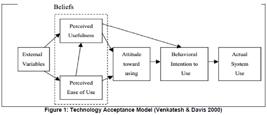
Figure 1 displays the proposed TAM model, encompassing the following six stages: External variables, PU, PEOU, Attitude, Behaviour, and Actual system use (Venkatesh & Davis 2000:186). Based on the conceptual framework in the figure, the key variable of the TAM, which is crucial in determining the success of ICT adoption, relates to the learners' and teachers' perceptions on the use of ICT in primary school libraries. In addition to TAM, the study is also guided by the White Paper on e-Education (Department of Basic Education 2004) Policy and the National Guidelines for School Library and Information Services of South Africa (NGSLIS) (2012). These policy frameworks emphasise the importance of equitable access to quality education and the role of ICT, especially in the digital age. The NGSLIS, in particular, encourages the integration of ICT resources to enhance learning outcomes and promote digital literacy among both learners and teachers within school libraries.
By combining TAM with relevant policy guidelines provides a comprehensive framework for investigating ICT use in primary school libraries. While policies outline structural and strategic requirements, TAM explains individual user acceptance and, together, they offer a strong lens to examine learners' and teachers' ICT perceptions, knowledge, and skills in the Highveld Ridge East Circuit.
6 Review of related literature
The literature is discussed in line with the objectives of the study.
6.1 Perceptions of learners and teachers towards ICT in primary school libraries
Perception is a process by which organisms interpret and organise sensations to produce a meaningful experience of the world (Gross 2004: 209). Perception is closely related to attitude. Since attitude cannot be measured directly as it is a hypothetical construct, methods of measuring attitude assume that attitudes can be measured by people's beliefs or opinions (Gross 2004: 351). According to Lilley and Usherwood (2000: 15), regular users of library services have the most realistic expectations and perceptions of the library, as they already have some experience of it. Okachukwu (2022) defines 'attitude' as an enduring, learnt predisposition or mental state of readiness towards a specific object or situation. Nnadi (2018:9) further expounds on the definition, stating that attitudes include inclinations, feelings, prejudices, biases, preconceived notions, ideas, fears, and convictions about a particular topic.
The same sentiment is shared by Spacey, Goulding and Murray (2003), who found that gender seems to affect ICT use. Nyemezu (2022:7) adds that age and gender are relevant factors in examining the use of ICT. This study conceptualised attitudes as feelings about an item's effectiveness, necessity, and utility. Therefore, the attitude regarding using ICT within the school library is how learners and teachers perceive it and react to it.
6.2 Learners' perceptions
Learners often exhibit enthusiasm and curiosity towards ICT use in school libraries. Library resources are the reason learners visit the library. They tend to perceive technology as engaging, modern, and interactive. Access to digital storybooks, educational games, and audiovisual content enhances their learning experiences and increases their motivation to use library resources. Learners view ICT as a tool that fosters autonomy, enabling them to search for information, complete tasks, and explore topics of interest independently.
Nasiruddin (2017) explored the transformative impact of digital school libraries on impoverished children in rural Bangladesh. The study highlighted that children initially engaged in non-educational activities, such as watching television, playing by the riverside, and wandering aimlessly. To redirect their interests towards education, the research team created and presented short educational videos, which successfully encouraged learners to return to school and visit the library frequently. The study found that digital school libraries played a crucial role in improving the pass rate, increasing learners' enrolment, and enhancing the involvement of school management committees (SMCs) in school improvement initiatives.
Gray and Thomas (2025) examined how primary school students in South East Queensland perceive their school library's role in supporting reading, research, and technology integration. The study found that while learners generally felt encouraged to read and borrow books, many expressed limited support with using computers and locating information for their schoolwork. This finding contrasts with earlier studies that reported stronger perceptions of ICT support in school libraries. Notably, the learners emphasised the importance of having access to high-quality books, but it also highlighted a desire to engage more deeply with new technologies.
Learners' perceptions of school library support, particularly in relation to technology and information access, are increasingly gaining attention as libraries evolve to meet 21st-century educational demands. In schools where ICT tools are outdated, limited in quantity, or inaccessible due to scheduling constraints, learners may express frustration or lose interest. Moreover, the lack of structured ICT-related activities in library sessions can result in passive use or the underutilisation of resources, leading to missed opportunities for meaningful curriculum integration. Nevertheless, learners' perceptions are shaped by access and guidance.
6.3 Teachers' perceptions
Teachers generally perceive ICT as a valuable asset for enhancing teaching practices and enriching learner experiences. Within the library context, ICT is viewed as an enabler of differentiated instruction and access to diverse educational content that aligns with curriculum outcomes. Many teachers appreciate the potential of ICT to make information retrieval faster, support independent learning, and foster digital literacy. Innovative learning methods, particularly the increasing use of ICT applications, are reshaping modern education. Aivazidi and Michalakelis (2023) conducted a study in Greece to explore how primary school teachers' perceptions, computer self-efficacy, and demographic factors influence their use of ICT in teaching. The findings confirmed that teachers' positive perceptions and confidence in using ICT significantly impact its effective integration in the classroom. These insights highlight the importance of addressing teacher-related factors to ensure successful ICT adoption in education.
Aligning with Akhwani (2020), the TPACK framework aims to help teachers to understand the specifics for effectively integrating ICT into teaching and learning processes. The main issue with teachers is the fear of failure, which can be resolved through professional development, adequate resources, support structures, which, if acquired, can help to increase teachers' comfort levels with ICT. Positive perceptions of ICT are commonly observed among teachers who have received professional development or possess strong confidence in using technology. These perceptions are especially strengthened when ICT tools are purposefully integrated into the curriculum to support and enrich teaching and learning. For instance, using library-based tablets for group reading or research activities that directly align with classroom topics not only enhances instructional delivery, but it also reinforces teachers' constructive views on the value of technology in education.
Consequently, while understanding teachers' perceptions of ICT remains vital, future research should also explore learners' perspectives and their motivation to engage with ICT in learning. The successful adoption of ICT in education fundamentally depends on the active engagement and preparedness of teachers, who should be equipped with appropriate tools and instructional strategies to navigate and lead technological integration effectively.
Conversely, a disconnect between ICT use and curriculum delivery may lead to perceptions that ICT is a novelty rather than a necessity. This misalignment often stems from poor planning, limited collaboration between teachers and library staff, and a lack of policy enforcement at the school level.
6.4 Knowledge and skills level in ICT utilisation in primary school libraries
Libraries have been reimagined as dynamic learning hubs that not only provide access to digital tools but also offer guidance and resources to help learners explore and understand emerging technologies (Ejikeme & Okpala 2017; Harper 2016; Moorefield-Lang & Coker 2019; Szymkowiak, Melovic, Dabic, et al. 2021). Collectively, this body of research underscores the critical role that school libraries play in equipping learners with the digital skills and knowledge required for modern learning environments and meeting their evolving educational needs. Many school libraries have responded to the widespread use of personal digital devices by transforming their spaces to better support the development of learners' technological skills and knowledge. Knowledge and skills form the foundation for the effective use of ICT in school libraries by primary school learners and teachers. As noted by Jameel (2018:232), having sufficient knowledge and skills empowers both learners and teachers to make meaningful use of ICT resources in the school library context.
Akhwani (2020:293) opines that introducing the Technological Pedagogical Content Knowledge (TPACK) framework will help teachers to comprehend the specific knowledge and skills necessary for effectively integrating ICT into teaching and learning processes. Similarly, Zinn (2016:1) emphasised the importance of acquiring knowledge and skills in promoting the effective use of ICT in school libraries.
The study by Ismail et al. (2018:5) revealed that learners in rural primary schools in Bangladesh possessed significant knowledge and skills in ICT and exhibited a strong attitude for using ICT tools and techniques effectively. Mkumbo (2016:187) asserts that the use of ICT in school libraries in Tanzania is limited to learners with computer and internet usage skills, with most learners lacking information literacy. In Bangladesh, digital school libraries have proven to be an effective tool for improving educational outcomes among extremely poor and marginalised children. This is described by Nasiruddin (2017) in a project implemented in Shariatpur, one of the lowest-performing and flood-affected districts, which used digital learning resources and targeted training to increase learner engagement, improve pass and enrolment rates, and enhance the capacity of SMCs and parent-teacher associations. The digital school libraries played a critical role in building knowledge, skills, and awareness among both learners and teachers, particularly in communities with minimal exposure to formal education and technology.
In the Ogun State, Nigeria, a study by Ajay and Omolabi (2016:22) revealed that teachers who regularly employed ICT tools and gadgets were more inclined to utilise the library's ICT resources. Conversely, teachers with minimal skills and knowledge in ICT tended to underutilise ICT and might not fully appreciate the significance of online resources such as emails (Amadin & Obienu 2015:11). Mihai (2020) supports that teachers possessing adequate skills and knowledge in ICT use school gadgets more effectively than those with limited experience. The study also revealed that formal qualifications and certificates do not necessarily translate into the necessary skills and knowledge to access ICT in school libraries.
In contrast, a study by Zinn (2016:6) in the Western Cape found that most teachers are technophobic and avoid using the internet. This finding aligns with the research conducted by Msila (2016), which revealed that teachers in South Africa lack sufficient ICT knowledge and skills due to inadequate training in their professional development.
Jameel (2018:232) emphasises that possessing adequate knowledge and skills is essential for the effective utilisation of ICT in school libraries. Similarly, Zinn (2016:1) underscores the critical role of acquiring ICT-related competencies in promoting the meaningful integration of technology within library environments. In the African context, many library users still lack the requisite knowledge and skills to effectively engage with ICT in school libraries. However, the development and application of these competencies are largely dependent on the availability of enabling factors, such as ICT devices, relevant application software, and access to educational resources, including Massive Open Online Courses (MOOCs) and Open Educational Resources (OERs).
It is, therefore, essential to continuously enhance and update teachers' knowledge and skills in the use of ICT to effectively support the integration and diffusion of technological innovations within educational settings. This can be facilitated through targeted professional development initiatives, such as seminars and specialised training programmes. Hatlevik and Hatlevik (2018) emphasise that such programmes should not only focus on general ICT competencies but should also address the specific pedagogical applications of ICT relevant to the classroom context. This is particularly critical in primary education, where the needs and characteristics of both teachers and learners may differ significantly from those in other educational levels.
7 Methodology and population of the study
This study was grounded in the positivist paradigm and employed the quantitative research approach (Creswell 2014:266). A survey research design was used to systematically collect data (Leavy 2017:5). Data were collected through a total of 95 structured, self-developed questionnaires from two groups consisting of 75 Grade 7 learners and 20 teachers (one per grade, from Grades 4-7 in each of the five schools). The learners' questionnaire included binary ("YES/NO") items and was structured as follows:
Section A: Learners' perceptions towards ICT utilisation in primary school libraries.
Section B: Learners' ICT skills and knowledge.
The teachers' questionnaire used a range of response formats (such as, "uncomfortable," "more knowledgeable") and was structured as follows:
Section A: Teachers' perceptions towards ICT utilisation in primary school libraries.
Section B: Teachers' ICT skills and knowledge for supporting library-based learning.
The questionnaires were pre-tested for clarity and comprehensiveness, with the aim to capture both the affective (attitudes/perceptions) and cognitive (skills/knowledge) dimensions of ICT use in school libraries.
The study adopted a cross-sectional design, collecting data at a single point in time between February and May 2024, to capture a snapshot of learners' and teachers' perceptions, knowledge, and skills related to ICT use in school libraries (Creswell 2014). A probability sampling technique was used to ensure equal selection chances for respondents, enhancing representativeness and generalisability within the Highveld Ridge East Circuit. Data were analysed using MS Excel, employing both descriptive and inferential statistical methods. Descriptive statistics were used to summarise trends in ICT skills, knowledge, and attitudes, while inferential statistics helped to identify relationships and differences across respondent groups, supporting broader conclusions on ICT integration in school libraries.
Learner and teacher populations in five primary schools
A total of five primary schools were included in the study, with an overall learner population of Grades 1-7 distributed as follows:
School A: 1,993 learners
School B: 1,140 learners
School C: 1,053 learners
School D: 1,133 learners
School E: 910 learners
The total Grade 7 learner population across the five schools was 1,098, from which a sample of 75 learners was selected using the simple random sampling technique to ensure equal representation.
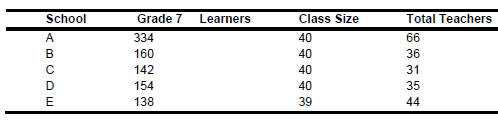
Grade 7 and teacher details per school:
This data provides insights into the distribution of learners and staffing, particularly in Grade 7, across the selected schools.
The study focused on Grade 7 learners as they are the seniors in the primary phase, with the longest exposure to the school environment and ICT resources, making them well-suited to provide informed responses. From a total of 19 primary schools in the circuit, five schools were randomly selected to ensure equal participation opportunities. Within each selected school, 15 Grade 7 learners were randomly chosen, with proportional representation of both boys and girls based on class composition. Although Grade 7 learners are not classified as a vulnerable or marginalised group, strict ethical considerations were followed due to their status as minors. These included,
Gaining informed consent from school authorities and parents/guardians,
Ensuring assent from the learners,
Guaranteeing confidentiality and anonymity, and
Emphasising the voluntary nature of participation.
The researchers sought permission from the University of South Africa (UNISA) Ethics Review Committee and the MDoE before collecting data from the targeted public primary school libraries.
8 Discussion of findings
The research findings are presented and discussed according to the two objectives of this study, namely, perceptions of learners and teachers towards ICT, and the knowledge and skills level in ICT utilisation to support primary school libraries in Highveld Ridge East Circuit primary schools. Learners and teachers are essential stakeholders in the teaching and learning process. The lack of ICT resources in schools is not the sole barrier to their effective use in school libraries. Other critical factors include the perceptions, skills, and knowledge of both learners and teachers. For innovation in the library or classroom to be successfully implemented, learners and teachers should possess the necessary competencies and a positive mindset (Msila 2016:1978). A negative attitude towards ICT integration in schools can be a major obstacle to its successful adoption and use. Conversely, the skills and knowledge that learners and teachers possess empower them to effectively utilise ICT in school libraries.
8.1 Perceptions of learners and teachers towards ICT
The first objective discussed the perception towards ICTs to support school libraries. As revealed in Figure 1.2, the perception towards ICT in school libraries is a critical factor influencing its integration and utilisation among learners and teachers. Positive attitudes can enhance adoption and implementation, leading to improved educational outcomes. Conversely, negative attitudes can hinder progress and limit the effectiveness of ICT in supporting teaching and learning. Understanding and addressing these attitudes are essential for successful ICT integration in school libraries.
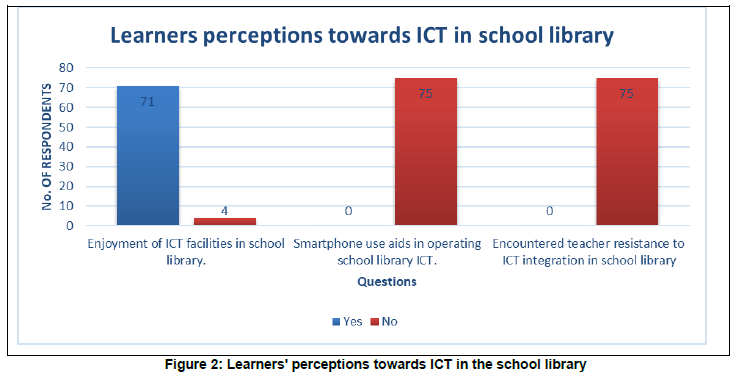
Figure 2 presents the learners' perception towards ICT in the school library. The researchers wanted to understand the learners' perspective to adapting and learning in a technology-driven environment. The data indicated that 71 (94.67%) of the respondents enjoyed using the ICT facilities in the school libraries, and 4 (5.33%) stated that they were not interested. Regarding the use of smartphones, 75 (100%) of the respondents did not use smartphones to assist in operating the ICT facilities in the school library. Seventy-five (100%) respondents did not face teacher resistance when integrating ICT into the school library. The data also indicated a positive perspective among learners towards using ICT facilities in the school library, with the majority expressing enjoyment in utilising these resources for educational purposes. Semerci and Aydin (2018) suggest that learners are likely to have a positive attitude if they have access to the tools necessary for accessing technological information for academic tasks.
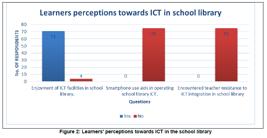
Furthermore, the study indicated that learners with limited ICT knowledge and skills tend to harbour negative attitudes towards using digital libraries. The inference drawn from the above shows that smartphones do not assist in operating ICT facilities, as school policy prohibits learners from accessing phones during teaching and learning. These findings revealed a positive perspective among learners and highlighted recognition of the value that ICT brings to the educational experience, motivating them to overcome challenges and embrace new ways of learning. This suggested that perception towards ICT, whether positive or negative, have a significant impact on both learner outcomes and the quality of teaching.
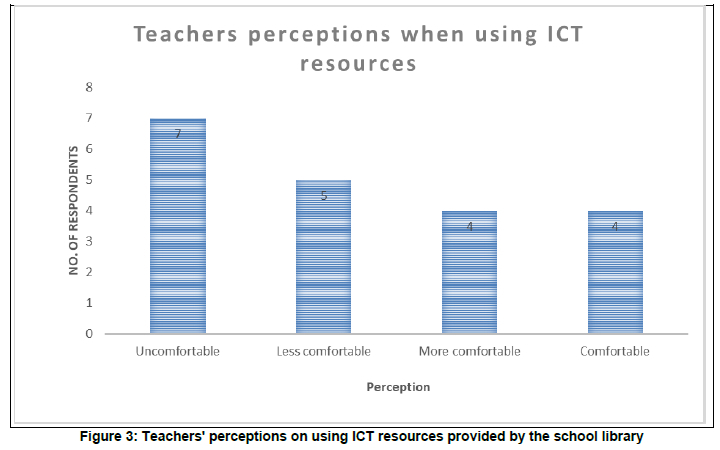
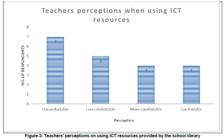
Figure 3 presents the teachers' perceptions on using ICT resources provided by the library. The researchers sought to explore and understand the perception of teachers' comfort level with ICT. The data indicated that seven (35%) of the respondents were uncomfortable, five (25%) were less comfortable, four (20%) were more comfortable, and four (20%) were comfortable. The data revealed a range of perceptions among teachers regarding their comfort level with using ICT resources provided by the library. Some teachers expressed discomfort, while others felt less comfortable with these resources. Conversely, a portion of the respondents reported a higher degree of comfort, with a few indicating that they were entirely at ease. This variation in perspective underscores the need for targeted support and professional development to enhance overall comfort and proficiency with ICT tools among teachers.
8.2 Knowledge and skills level in ICT utilisation in primary school libraries
The second objective focused on the knowledge and skills level in ICT utilisation in primary school libraries. The researchers sought to ascertain the respondents' skills and knowledge in ICT to determine if they were adequately equipped with the necessary skills and knowledge to utilise and manage ICTs in school libraries effectively.
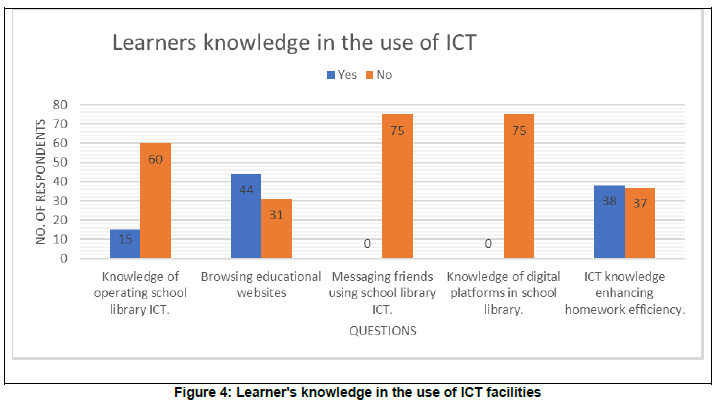
Figure 4 presents learners' knowledge in the use of ICT. The researchers aimed to establish the learners' knowledge in using ICT resources, especially for academic purposes. The data indicated that 15 (20%) of the respondents had knowledge of operating ICT and 60 (80%) of the respondents did not have knowledge of ICT operation. Forty-four (58.67%) of the respondents had knowledge of browsing educational websites and 31 (41.33%) had no knowledge of browsing educational websites. The data further indicated that 75 (100%) respondents never sent messages to friends using ICT facilities in the school library. The data indicated that 75 (100%) respondents do not know the digital platforms in the school library. It was also revealed that 38 (50.67%) of the respondents agreed that knowledge on digital platforms can enhance the efficiency of homework completion and 37 (49.33%) did not have knowledge that could enhance the efficiency of homework completion.
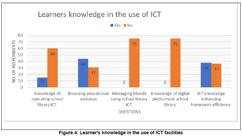
The data revealed major gaps in learners' ICT knowledge, with most lacking basic skills and are unfamiliar with digital library platforms. However, many showed proficiency in browsing educational websites.
Additionally, there was a clear divide in understanding how ICT can enhance homework completion, with half of the respondents recognising its potential benefits, while the other half did not. This suggests a need for targeted training to improve overall ICT literacy and usage among learners. Conversely, Ismail et al. (2018:5) opine that learners in rural primary schools in Bangladesh possess significant knowledge and skills in ICT and can use libraries' ICT facilities effectively.
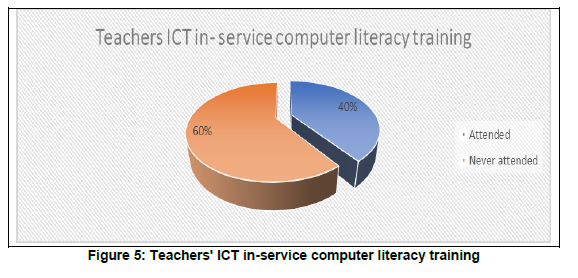
Figure 5 presents teachers' in-service computer literacy training attendance. It was essential for the researchers to know whether the teachers received any ICT training from the library to use assistive technology computers and access the online library catalogue. The data indicated that eight (40%) of the respondents attended in-service computer literacy training, and 12 (60%) teachers never attended in-service computer literacy training. The data revealed a notable discrepancy in teachers' respondence to in-service computer literacy training. While a significant number of teachers have attended such training, a larger proportion have not received any formal instruction in computer literacy. This indicated a potential gap in professional development related to the use of assistive technology and access to the online library catalogue, underscoring the need for increased training opportunities to ensure that all teachers are equipped with essential ICT skills. Tokwe (2019) indicates that Aussie Books for Zim has actively installed Koha open-source software on each computer, aiming to equip teachers with library skills in circulation and cataloguing.
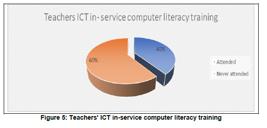
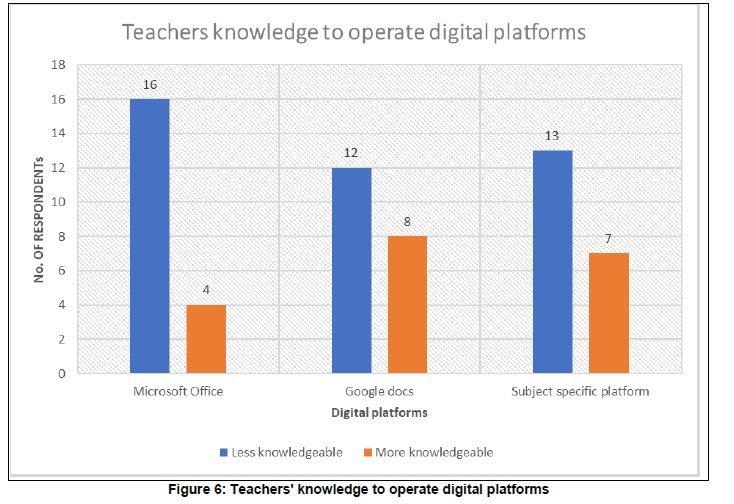
Figure 6 presents the teachers' knowledge of digital platforms. The data indicated that 16 (80%) of the teachers were more knowledgeable in utilising Microsoft Office and four (20%) were less knowledgeable about the programme. Twelve (60%) of the respondents were less knowledgeable, and eight (40%) of the respondents were more knowledgeable about Google Docs. Thirteen (66%) of the respondents were less knowledgeable about browsing the subject-specific platforms, and seven (35%) of the respondents were more knowledgeable about browsing the subject-specific platforms.
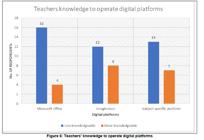
The data revealed varying levels of knowledge among teachers regarding different digital platforms. A large majority were well-versed in using Microsoft Office, whereas a smaller group had limited knowledge in this area. Knowledge of Google Docs was more evenly distributed, with some teachers being quite proficient and others being less familiar. Additionally, there was a notable difference in familiarity with subject-specific platforms, with the majority having less knowledge and a smaller group being more knowledgeable. This highlighted the need for targeted professional development to address gaps in digital platform knowledge among teachers. The findings align with Mkumbo (2016), who states that most school libraries are staffed with personnel with minimal ICT knowledge, with some staff members being entirely ignorant of information literacy.
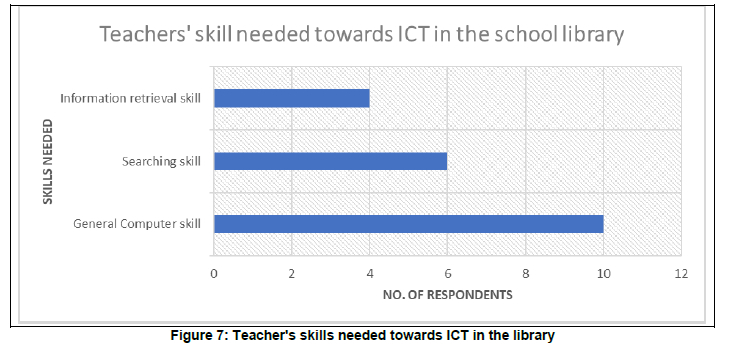
Figure 7 presents the skills needed towards ICT in the library. The researchers sought to understand whether teachers had the skills to create a technology-rich environment that supports teaching and learning activities in the school library. The data indicated that four (20%) of the respondents were skilled in information retrieval, while six (30%) of the respondents indicated being experienced in search, and 10 (50%) of the respondents indicated general computer skills.
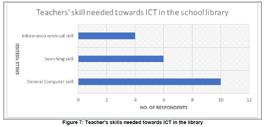
The data highlighted the range of skills that teachers possess for creating a technology-rich environment in the school library. A smaller group of teachers were skilled in information retrieval, while a few others had experience with search functions. However, a larger proportion of teachers demonstrated general computer skills. This distribution of skills underscored the need for focused training to enhance specific competencies, such as information retrieval and search techniques, to better support teaching and learning activities in the library. Jameel (2018) corroborates the results, indicating that teachers with adequate ICT skills and knowledge utilise school devices more effectively than those with limited experience. Aligning with Akhwani (2020), the TPACK framework aims to help teachers understand the specific knowledge and skills necessary for effectively integrating ICT into the teaching and learning processes. The main issue with teachers is the fear of failure, which can be resolved through professional development, adequate resources, support structures, and a positive attitude towards technology. It can help to enhance teachers' comfort levels with ICT.
9 Conclusion and recommendations
The perception of learners and teachers towards ICT varied significantly based on PU and PEOU. The study highlights the positive perception among learners towards using ICT in the school library, with many enjoying the educational ICT tools available. However, there was a notable variation in the comfort levels of teachers, with some feeling less confident in using ICTs. This difference in perceptions can be attributed to factors such as familiarity with technology, ease of use, and personal preferences. Additionally, the study revealed a gap in learners' knowledge and skills regarding the operation of library ICT facilities and digital platforms. To address these challenges, the importance of comprehensive ICT education and training for both learners and teachers is emphasised. By investing in ICT training programmes and promoting peer learning, both learners and teachers can improve their competence, ensuring the effective use of ICT for teaching and learning in school libraries.
The following recommendations provided offer a strategic roadmap to improve the perception towards ICT, and effectiveness of ICT skills and knowledge in public primary school libraries:
Training on ICT integration by offering regular workshops to help teachers develop the skills needed to integrate ICT effectively into their teaching, focusing on easing technophobia and building confidence.
Introduce the TPACK framework to help teachers understand how to blend technology with teaching methods.
Create an environment where mistakes in ICT usage are seen as learning opportunities rather than failures, helping to reduce anxiety among teachers who are hesitant to use technology.
Training initiatives, especially for teachers, will help foster a more supportive and confident approach to ICT, addressing attitudes and reducing technophobia.
Investing in comprehensive ICT training programmes and fostering peer learning environments will build learners' and teachers' competence, ensuring that ICT is used effectively in both teaching and learning.
Introduce mandatory ICT courses for learners, covering basic computer skills, digital platform navigation, and information retrieval to ensure that all learners can engage effectively with technology.
Organise hands-on workshops for learners, focusing on practical ICT operations, such as using library systems, digital platforms, and messaging tools.
Implement continuous professional development programmes for teachers, ensuring that all teachers, regardless of their previous training, are proficient in ICT use.
Integration of ICT into library curriculum and school programmes
By embracing these recommendations, schools can improve the perception of learners and teachers towards ICT to support public school library, creating a more technology-friendly and productive learning environment. Addressing these recommendations can equip both learners and teachers with the necessary knowledge and skills to utilise ICT effectively to enhance academic performance and library management. In conclusion, the successful integration of ICT in school libraries requires a multifaceted approach involving infrastructure development, capacity building, pedagogical alignment, cultural transformation, policy support, and continuous evaluation. Implementing these recommendations can significantly enhance the role of school libraries in supporting 21st-century learning.
Future studies may consider incorporating qualitative methods, such as interviews, to gain richer, more nuanced insights into ICT use in the school library context.
References
- Adedokun, T.O., Magaji, S., Omawumi, O. and Makinde, O.O. 2018. Internet use and library patronage among students in selected senior secondary schools in Lagos State. Covenant Journal of Library & Information Science, 1(2): 60-70.
- Aivazidi, M. and Michalakelis, C. 2023. Information and communication technologies in primary education: teachers' perceptions in Greece. Informatics, 10(57). [Online]. https://doi.org/10.3390/informatics10030057 (10 June 2025).
- Akhwani, A. 2020. Integration of TPACK as a basic framework for 21st century learning: an analysis of professional teacher competencies. 1st International Conference on Information Technology and Education (ICITE). Advances in Social Science, Education and Humanities Research, 508: 291-296.
- Amadin, F.J. and Obienu, A.C. 2015. Consolidation of school e-libraries database using multitenancy approach. African Journal of Computing & ICT, 8(8): 11-18.
- Centerwall, V. 2016. Performing the school librarian: using the butlerian concept of performativity in the analysis of school librarian identities. Journal of Librarianship and Information Science, 51(1): 137-149.
- Creswell, J.W. 2014. Educational research: planning, conducting and evaluating quantitative and qualitative research. 4th ed. Cape Town: Pearson.
- Davis, F.D. 1989. Perceived usefulness, perceived ease of use, and user acceptance of information technology. MIS Quarterly, 13(3): 319-340.
- Department of Basic Education. 2004. Draft White Paper on e-Education. [Online]. https://www.gov.za/sites/default/files/gcis_document/201409/267341.pdf (10 June 2025).
- Department of Basic Education. 2012. National Guidelines for School Library and Information Services of South Africa (NGSLIS). Pretoria: Department of Basic Education.
- Ejikeme, A.N. and Okpala, H.N. 2017. Promoting children's learning through technology literacy: Challenges to school librarians in the 21st century. Education and Information Technologies, 22(3): 1163-1177.
- Gray, B. and Thomas, D. P. 2025. Student perceptions of primary school library support: Investigating reading, research, and technology use. Journal of Librarianship and Information Science, 0(0). [Online]. https://doi.org/10.1177/09610006251322983 (10 June 2025).
- Gross, R. 2004. Psychology: the science of mind and behaviour. 4th ed. Tonbridge, Kent: Greengate Publishing.
- Harper, M.S. 2016. Designing an innovative school library environment to facilitate 21st century literacy skills. IASL Annual Conference Proceedings. [Online]. https://doi.org/10.29173/iasl7203 (10 June 2025).
- Hart, G. and Zinn, S. 2015. The power of professional learning communities: lessons from a high school teacher-librarian professional development project. South African Journal of Education, 35(1): 1-10.
- Hart, G. and Zinn, S. 2015. The drive for school libraries in South Africa: intersection and connections. Library Trends, 64(1): 19-41.
- Hatlevik, I.K.R. and Hatlevik, O.E. 2018. Examining the relationship between teachers' ICT self-efficacy for educational purposes, collegial collaboration, lack of facilitation and the use of ICT in teaching practice. Front. Psychol., (9): 935.
- Ismail, A., Affandy, H.B. and Hamzah, M.R. 2018. Factors influencing the use of ICT in rural school libraries. MATEC Web of Conferences: Sciences. DOI: 10.1051/matecconf/201815006045
- Iwhiwhu, B.E. and Okorodudu, P.O. 2012. Public library information resources, facilities, and services: user satisfaction with the Edo State Central Library, Benin City, Nigeria. Library Philosophy and Practice, 5(1): 1-16.
- Jameel, A.S. 2018. Challenges facing students toward ICT library adoption. International Conference on Accounting, Business, Economics and Politics (ICABEP). Erbil: Cihan University. 231-237.
- Leavy, P. 2017. Quantitative, qualitative, mixed methods, arts-based, and community-based participatory research approaches. New York, London: Guildford Press.
- Lilley, E. and Usherwood, B. 2000. Wanting it all: the relationship between expectations and the public's perceptions of public library services. Library Management, 21(1): 13-24.
- MDoE. 2023. Education Management Information Systems (EMIS): list of all schools according to districts and circuits in Mpumalanga province. Nelspruit: Mpumalanga Department of Education:
- Mihai, M. 2020. The use of interactive whiteboards in urban Gauteng classrooms. Perspectives in Education, 38(2): 318-336.
- Mkumbo, W.C. 2016. The role of school libraries in realising the achievement of inclusive and equitable quality education in Tanzania: SDGs by 2010. International Research: Journal of Library & Information Science, 6(2): 184-190.
- Moorefield-Lang, H. and Coker, M. 2019. Makerspaces in the high school setting. Qualitative and Quantitative Methods in Libraries, 6: 47-59.
- Msila, V. 2016. Teacher readiness and information and communications technology (ICT) use in classrooms: a South African case study. Creative Education, 6: 1973-1981.
- Nasiruddin, M.D. 2017. Digital school libraries in Bangladesh: a role model for changing lives of the extreme poor children. International Journal of Library and Information Science, 9:25-36.
- Nnadi, C.U. 2018. Attitude of undergraduate students towards the academic use of electronic information resources in two Federal Universities in Enugu and Anambra State. Unpublished master's thesis.
- Nyemezu, C.O. 2022. Attitude of library and information science students towards electronic information resources in selected university libraries in Rivers State. Library Philosophy and Practice. [Online]. https://digitalcommons.unl.edu/libphilprac/7021 (10 June 2025).
- Okachukwu, N.C. 2022. Attitude of library and information science students towards electronic information resources in selected university libraries in Rivers State. Library Philosophy and Practice (e-journal), 6913. [Online]. https://digitalcommons.unl.edu/libphilprac/6913 (10 June 2025).
- Salawu, R.O., Boltitio, A.O.B. and Masibo, S. 2023. Theoretical and conceptual frameworks in research: conceptual clarification. European Chemical Bulletin, 12(12): 2103-2117.
- Scholastic. 2016. School libraries work! A compendium of research supporting the effectiveness of school libraries. [Online]. www.scholastic.com/slw (10 June 2025).
- Semerci, A. and Aydin, M.K. 2018. Examining high school teachers' attitudes towards ICT use in education. International Journal of Progressive Education, 14(2): 93-105.
- Singh, S. and Rana, V.S. 2015. A study of impact of ICT on library users and library services. International Journal of Scientific Research Engineering & Technology (IJSRET) EATHD Conference Proceedings. 14-15 March 2015. 99-101.
- Spacey, R., Goulding, A. and Murray, I. 2003. ICT and change in UK public libraries: does training matter? Library Management, 24(1&2): 61-69.
- Tokwe, H. 2019. Proceedings of the 48th Annual Conference of the International Association of School Librarianship: 23rd International Forum on Research in School Librarianship. 21-25 October 2019. Dubrovnik, Croatia. 1-7.
Accepted: 12 December 2025