Post-pandemic perspectives: Library and Information Science students' expectations of library services at National University of Science and Technology in Zimbabwe
Abstract
COVID-19 pandemic precipitated unprecedented disruptions in academic library service delivery worldwide, compelling institutions to hastily adjust to digital and remote access. This article investigated the perceptions and expectations of library services among National University of Science and Technology (NUST) library and information science students after the COVID-19 pandemic. A quantitative research approach was employed, utilising the LibQUAL survey questionnaire to collect data from 60 students, which measures service quality across three dimensions. These include affect of service, information control, and library- as- a- place. The LibQUAL+™ survey questionnaire was administered online through Google Forms, yielding a 90% response rate. The findings revealed that the pandemic significantly transformed the landscape of NUST Library services, revealing gaps between students' expectations and perceptions of the service quality, highlighting areas for improvement in staff engagement, resource accessibility, and service evaluation tools. The results underscore the need for strategic enhancements to align library services with evolving user needs in a post-COVID-19 academic environment.
Library services; expectations; perceptions; LibQUAL; National University of Science and Technology; COVID-19; Digital access
1 Introduction
The higher education system was greatly affected by the COVID-19 pandemic, leading to significant changes in service delivery in academic libraries (Chigwada 2022). Similarly, the National University of Science and Technology (NUST) Library was no exception, and it was affected by the COVID-19 pandemic too, resulting in changes to service delivery. NUST Library was established in 1992 (NUST 2013). However, the library is still housed off-site in the city centre, approximately 6.3 km from the main campus, pending the construction of a state-of-the-art library on the university campus. It provides all staff and students with services and information resources using the latest tools and methods to support the University's teaching, learning, and research activities. These services include reference assistance, interlibrary loan services, document delivery, and an information literacy programme to improve students' research skills (Chigwada 2022). With COVID-19, academic libraries changed their service delivery methods to meet new demands as teaching and learning shifted online (Chigwada 2022).
The pandemic imposed a host of challenges, including the imposition of social distancing to prevent the spread of the virus (Rafiq, Batool, Ali, & Ullah 2021). Furthermore, exchanging physical copies of information sources was considered risky as it could transmit the virus. As a result, physical libraries had to be closed for users (Rafiq et al. 2021), and new forms of library services were introduced (Durodolu, Chisita & Dube 2021). Virtual library services and off-site book collection measures were implemented (University of Cape Town Libraries 2021). This was done to ensure continued access to academic information while complying with COVID-19 protocols.
Prior COVID-19, academic libraries conducted surveys to gauge the expectations and perceptions of users with regards to the services. In Kekana's (2016) study on postgraduate students' perceptions of the University of KwaZulu-Natal -Pietermaritzburg Campus Library, it was found that while postgraduate students had high expectations for most library services, they held negative perceptions of some services. Various user categories had varying levels of satisfaction. The doctoral students' general reaction suggested that they were satisfied with most offerings. Whether library services are mainly used depends on how users perceive them. Even though data show how critical academic libraries are to educational institutions (Wong & Webb 2011). Similarly, Matiwane (2017) found that students at Walter Sisulu University were less satisfied with services such as interlibrary loan services, electronic database access, sufficient space, adequate photocopying facilities, and computer workstations.
During COVID-19, libraries established book delivery and pickup services to improve teaching, learning, and research (Molepo & Shokane 2021). Some librarians improved their services by leveraging cutting-edge technologies, such as providing additional website content, offering online access to library guides, and even using artificial intelligence tools, such as bots, to better accommodate library users' needs (Molepo & Shokane 2021). While COVID-19 still exists, it is no longer a pandemic hence this period is regarded as post-COVID-19. However, as outlined above, libraries were affected at the height of the pandemic. As such, exploring students' perceptions regarding library services in the post-COVID-19 era is necessary. Based on the above background, this research therefore, aimed to investigate how the pandemic affected the use of library services and students' perceptions of changes implemented in response to it, using the NUST Library in Zimbabwe as a case study. To guide this study, the following research questions were posed:
• What are the students' perceptions of the quality of library services provided by the NUST Library post-COVID-19?
• What are the students' expectations of the quality of library services provided by the NUST Library post-COVID-19?
2 Problem statement
The COVID-19 pandemic had a significant impact on library services at educational institutions, including the NUST Library. With the implementation of social distancing measures amidst the pandemic and the need to minimise physical contact, there was a need for remote access to library resources and student services. Social distancing protocols brought the need for remote access to services and more e-resources, however, highlighting disparities in internet connectivity, remote access, and digital literacy. Despite these barriers, students relied on online resources to support their academic work (Salas-Pilco, Yang & Zhang 2022). To adapt to students' changing needs, the library introduced new services to address the challenges posed by the pandemic. Consequently, it is essential to investigate students' perceptions and expectations of library services at the NUST Library in the post-COVID-19 era.
While studies (Mgqalelo 2005; Munohsamy 2016; Nzivo & Chuanfu 2013; Oche 2021; Posey 2009; Sheeja 2010; Udem Ikenwe & Ugwuamoke 2020) have been conducted to examine library users' perceptions before COVID-19. As far as the researchers are concerned, after numerous searches in academic databases, it appears that there is a paucity of literature on Zimbabwean students' perceptions of library services offered post the pandemic, especially at a science and technology university that differs from traditional ones in being more practically oriented, focused on evolving technology, and playing a direct role in industry. Thus, this paper sought to address this gap in the literature. This article aimed to assess the pandemic's impact on the provision of library services and its effect on students' ability to access resources and services. Furthermore, the paper explored students' perceptions of the measures implemented by the NUST Library to ensure their safety while using library resources and services.
The study findings can provide insights into the effectiveness of the measures implemented by the NUST Library to provide library services during the pandemic. This also informs the development of strategies to improve the provision of library services for students in the post-COVID-19 era. Furthermore, the findings assist in identifying areas for improvement and in providing recommendations for future planning of library services at NUST.
3 Theoretical framework
Several models have been developed to measure service quality and user perceptions. The Balanced Scorecard (BSC) model, the European Foundation for Quality Management (EFQM) model, the SERVPERF model, the LibQUAL instrument, SERVQUAL, and the Total Quality Management (TQM) model are among the well-known models to measure service quality and user perceptions (Naidu 2009). However, the LibQUAL model, developed by SERVQUAL for libraries, served as the foundation for this study. The LibQUAL instrument is derived from the Gap theory of service quality and the SERVQUAL instrument. According to Cook, Heath, Thompson and Webster (2003), SERVQUAL defines service quality as the gap between customer expectations of a service and their actual perception of the service received. LibQUAL is a web-based protocol for assessing the quality of library services and has been utilised in hundreds of libraries worldwide (Thompson, Cook & Kyrillidou 2006).
The LIBQUAL+ survey is a popular instrument for libraries to "identify best practices, analyse deficits, and effectively allocate resources" (Association of Research Libraries 2019). It is used to measure service quality from the users' viewpoint. LibQUAL is an effective, comprehensive market survey for research libraries as it analyses service quality across various aspects (Cook et al. 2001). LibQUAL measures three dimensions such as effects of service, information control, and library as a place (Association of Research Libraries 2017; Miller 2008). LibQUAL measures library customers' perceptions of service quality and identifies differences between minimum, desired, and perceived service expectations (Partap 2017). Information control refers to how users can access and manage information resources. Affect of service refers to how successful library workers satisfy users' requirements and expectations, and the Library as a place refers to how welcoming and conducive the physical library setting is to learn. The survey's three dimensions help understand how well students can access and manage information resources. The results of this survey enable academic libraries to better understand their users' needs and tailor their services accordingly. Furthermore, LibQUAL has demonstrated good reliability and validity across different contexts (Heath & Cook 2003; Hernon & Calvert 1996).
This section provides an overview of various LibQUAL studies conducted in academic settings worldwide. Pre-pandemic studies (before 2020) are discussed first, followed by studies conducted during the pandemic (2020-2023), and then post-pandemic (after May 2023). The studies' findings and their significance are summarised. The LibQUAL model has been used globally and across diverse academic contexts to assess service quality, and the results of these studies suggest that ongoing tensions between users' expectations and perceptions persist. The pre-pandemic literature highlighted the importance of the Library as a place dimension, whereas studies during and post-pandemic shifted their focus towards the information control dimension. This trajectory is essential in understanding students' post-COVID expectations and perceptions.
Pre-Pandemic studies, such as Matiwane (2017), emphasise the importance of the Library- as- a- place. Matiwane (2017) conducted a LibQUAL study to determine the expectations and perceptions of student library users regarding the quality of services offered by the Walter Sisulu University Libraries (WSUL) at the Butterworth Campus. The findings revealed that students strongly emphasised the need for a safe and secure place to study. The highest expectation (82%) was a safe and secure place to study, which was also reflected in their highest perception (78.3%). Subsequent expectations included a well-lit library and a quiet study environment (Matiwane 2017).
Similarly, Kumar and Mahajan (2019) in their research titled "Library performance assessment of service quality through LibQUAL: The case of Maharshi Dayanand University (MDU), Rohtak in India", the survey results indicated that library users had the highest expectations for the Library- as- a- place dimension, consistent with Matiwane's (2017) findings across the three LibQUAL dimensions. However, unlike Matiwane (2017), the overall perceived library service quality fell short of users' expectations. These results by Kumar and Mahajan (2019) indicated that, while users had the highest expectations in the Library- as- a- place dimension, physical infrastructure alone did not guarantee satisfaction. Cumulatively, these studies indicate that while physical environments are central to satisfaction, they do not automatically translate into positive user experiences. During the pandemic, studies across Africa and Asia reveal that digital access and staff responsiveness are vital for meeting user needs and should be prioritised.
Rilwanu and Maidabino (2020) assessed postgraduate students' expectations and perceptions of library service quality at federal universities in North-Western Nigeria, and the findings showed that although students expected high-quality services to support their research, they also expressed negative perceptions of the quality of services provided. These results align with those of Partap and Rao (2020) in India, where users expressed dissatisfaction with the accessibility of electronic resources and with staff's efforts to build confidence. Their study (Partap and Rao 2020) on selected university libraries in the Haryana and Punjab States, India, revealed negative gaps across nearly all LibQUAL dimensions, particularly in remote access, electronic resources and community spaces. In light of these findings, the authors noted that library users were dissatisfied with the services and products provided, which did not meet their expectations. Taken together, these studies (Rilwanu & Maidabino 2020; Partap & Rao 2020) reflect an international shift: users who come to libraries expect them to offer frictionless digital access and staff who are nimble and knowledgeable. The pandemic and the Fourth Industrial Revolution magnified this dual demand, yet institutions may not have the infrastructure or funds to provide great access.
In contrast, studies such as those by Huda et al. (2020) showed that the pandemic increased reliance on remote access and highlighted that staff performance is vital for user loyalty and satisfaction. Their research, conducted in Jakarta, titled "Analysis (LibQUAL) on loyalty and library satisfaction; a case study in YARSI University Library Service Centre", demonstrated that staff performance, along with information availability and infrastructure, directly influence satisfaction, which then positively impacts loyalty. Their findings suggest that LibQUAL components directly, significantly, and favourably affect user satisfaction. In addition, through user satisfaction, the LibQUAL components have a positive and significant indirect effect on loyalty.
In Pakistan, Zaheer et al. (2020) examined users' expectations and perceptions of the quality of library services at Mirpur University of Science and Technology (MUST). Similar to the findings of Partap and Rao (2020) in India, the majority of male students were more dissatisfied than their female counterparts with the quality of library services and had very high expectations for the services provided. Students generally had higher expectations than faculty members. Participants expected better service, improved staff conduct, a wider variety of library materials, and improvements to physical spaces and atmosphere. Recognising these high expectations can help the audience feel that their feedback is crucial for ongoing improvement efforts.
At the University of Cape Coast's Sam Jonah Library, Ghana, Parbie, Phuti, and Barfi (2021) found that while the majority of students were satisfied with computer facilities and study spaces, postgraduate students expressed dissatisfaction with printing resources, highlighting varied expectations among user groups. On the other hand, Gyau, Liu, and Kwakye's (2021) evaluation of Jiangsu University Library highlights how cultural and linguistic contexts influence international students' perceptions of library service quality. While the Library- as- a- place dimension received positive feedback, notable deficiencies were found in the information control and affect of service dimensions. The positive perceptions of the library environment emphasise its role as a safe, comfortable and inviting environment for study, a finding supported by earlier research (e.g., Matiwane 2017). In contrast, negative views on information control and service affect reveal accessibility and communication challenges for international students. The authors concluded that "the results showed there is a need for immediate attention in services having negative and wide gap scores," while acknowledging that language barriers may have influenced perceptions of some services (Gyau, Liu & Kwakye 2021).
Previous studies have examined library users' perceptions prior to COVID-19 (Mgqalelo 2005; Munohsamy 2016; Nzivo & Chuanfu 2013; Oche 2021; Posey 2009; Sheeja 2010; Udem, Ikenwe, & Ugwuamoke 2020). However, there is limited scholarship on Zimbabwean students' views of library services in the post-pandemic period, particularly within science and technology universities that are practically oriented, technology-driven, and closely integrated with industry. This study addresses this gap by assessing the pandemic's impact on library service provision, students' access to resources, and their perceptions of the safety measures implemented by the NUST Library.
5 Research methodology
This study adopted a positivist paradigm, using quantitative methods to gather empirical data and understand social realities. The University of Nottingham (2021) states that positivism is based on measurement and reason, emphasising that knowledge can be revealed through objective, quantifiable observation of an activity, action, or reaction. A descriptive survey design using the LibQUAL instrument was employed. Descriptive surveys focus on behaviour, attitudes or beliefs to understand the target population's qualities (Lau 2024). The study employed a quantitative approach, emphasising a systematic empirical investigation based on measurable data. This approach is designed to identify trends and establish relationships between variables. The population consisted of all Library and Information Science students at NUST, totalling 60 students (34 postgraduate and 26 undergraduate). These students were chosen because they frequently use library services.
A census sampling method was utilised to eliminate sampling error. Given the manageable size of the participant group, this method was appropriate for a very small population (Muyembe & Anselemo 2023), in this case, the 60 Library and Information Science students at NUST. The students were contacted through the Head of Department, who assisted in distributing the questionnaires. The questionnaire was sent to the class representatives, who posted to their class WhatsApp groups. Each student received a questionnaire along with an informed consent form explaining the research's purpose, its aims, and instructions for completing the survey. The informed consent form also outlined the voluntary nature of participation and provided contact details for the researchers in case of queries. In addition, respondents could decline to participate or withdraw at any stage of the research without penalty. Before accessing the questionnaires, respondents had to indicate their agreement by selecting "I Consent". The survey was conducted from the first to the 16th of October 2024, with a six-week extension to allow ample time for responses, demonstrating respect for participants' schedules.
The LibQUAL+™ survey instrument questionnaire was used to collect data, consisting of 16 core questions grouped into three dimensions: affect of service, information control, and library as place. The LibQUAL was chosen because it is a widely validated tool for measuring perceived service quality from the user's perspective, facilitating the identification of gaps between minimum, desired, and perceived service levels. Its focus on the three dimensions is particularly well-suited to assessing students' perceptions and expectations, which align directly with this study's research objectives.
The survey was conducted online using Google Forms, chosen for its cost-effectiveness, accessibility and ability to reach students remotely during the post-pandemic period. Even though LibQUAL provides a standardised set of questions, the instrument can be adapted for administration on different platforms. For this research, LibQUAL questionnaires were embedded in Google Forms to facilitate distribution and ensure responses were automatically organised. Responses were automatically organised in Google spreadsheets, allowing easy viewing of the data in spreadsheet format. Google Forms also generated charts and graphs showing percentages and frequencies, enabling preliminary analysis. For analysis, the data were processed in Excel and presented through tables and descriptive text. Excel was preferred over other analysis tools like SPSS because it has built-in functions that enable efficient handling of descriptive statistics, graphical presentation and frequency distribution. Furthermore, Excel is widely available and does not require additional licensing costs. A total of 54 students completed the survey, yielding a response rate of 90%.
6 Findings and discussions
This section presents the paper's key findings and discussion in light of the research objectives and the existing literature. Respondents were asked to indicate how they perceived or expected library service under three dimensions, namely, affect of service, information control, and library- as- a- place. The findings and discussion for each dimension are presented below.
6.1
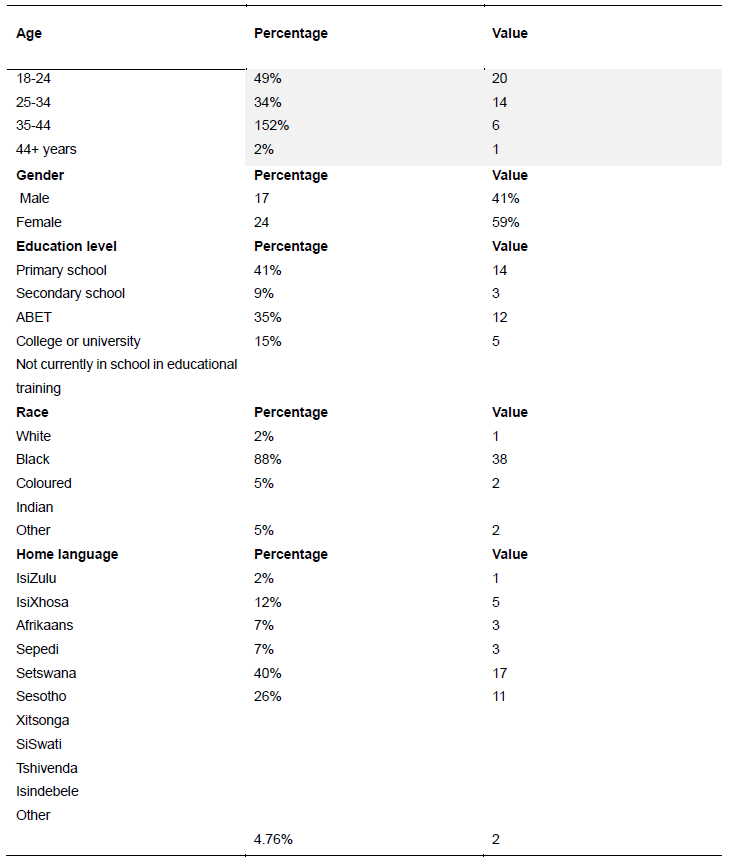
Demographic informationOf the 54 (90%) respondents who completed the questionnaires, 32 (59.3%) were females, and 22 (40.7%) were males. Most respondents, 40 (74.1%), were between the ages of 19 and 30 years and are categorised as Generation Z, born between the mid-to-late 1990's and the 2010's.
According to McKinsey and Company (2024):
"Generation Z refers to people born between 1996 and 2010. They're the second-youngest generation, between millennials and Generation Alpha. Gen Z identity has been shaped by the digital age, climate anxiety, a shifting financial landscape, and COVID-19. They're known as 'digital natives'-the first generation to grow up with the internet."
Based on the defining traits of Generation Z, it can be implied that they expect seamless, on-demand access to library resources regardless of time or location. The findings reveal that 29 (53.7%) respondents were postgraduate students, making up the largest group, while 25 (46.3%) were undergraduates.
6.2
Students perceptions of library servicesRespondents used a five-point Likert scale to indicate their level of agreement or disagreement with a series of statements on the various dimensions of the LibQUAL model. The questionnaire consisted primarily of compulsory Likert scale items, supplemented by open-ended questions and a few multiple-response items. All percentages are rounded to one decimal point; as a result, total percentages may at times exceed 100%. The findings are presented in Tables 1-6 below, in the order of the research questions: starting with perceptions, followed by expectations.
Research question 1 was: What are the students' perceptions of the quality of library services provided by the NUST Library post-COVID-19?
The survey findings at the NUST Library underscore a troubling trend in user perceptions regarding the affect of service dimension. As outlined in Table 1, 28 (51.9%) of respondents remained neutral when asked about staff responsiveness, while only 18 (33.3%) expressed agreement or strong agreement that library staff effectively address inquiries. This pattern emerges in responses regarding staff approachability: 16 (29.6%) participants felt uncomfortable approaching staff for assistance, and an additional 20 (37%) remained neutral. The predominance of neutral responses across statements, ranging from 37% to 52%, suggests alarming uncertainty about staff engagement, which is critical to cultivating a positive library experience.
These results resonate with Zulu's (2022) findings, which similarly noted high levels of neutrality within the affect of service dimension, indicating a pervasive issue that warrants attention. The combination of neutral and negative perceptions towards library staff signals a significant disconnect between user expectations and the reality of staff engagement. This gap is further emphasised by Buthelezi's (2020) assertion that library personnel are expected to provide high-quality, dedicated service, which does not appear to be the case in the current study. In contrast, Ncwane's (2016) research indicated that student perceptions of library staff were predominantly positive, with satisfaction ratings ranging from 70% to 80%.
The stark disparity in these findings highlights an urgent need for the NUST Library to re-evaluate its approach to user engagement and service delivery, ensuring that staff are knowledgeable, courteous, genuinely supportive and approachable to enhance overall user satisfaction and library experience.
The findings presented in Table 2 reveal significant concerns regarding respondents' perceptions of the information control dimension within the NUST Library. Notably, only 21 (38.9%) respondents agreed or strongly agreed that the library provides diverse information sources, suggesting a potential deficiency in the breadth of resources available to meet students varied academic needs. This sentiment is echoed in perceptions of organised information and user training, with 23 (42.6%) and 22 (40.8%) respondents expressing dissatisfaction, respectively. The relatively high disagreement rates of 16 (29.7%) for user training and 14 (25.9%) for accessible information further underscore a critical gap in the library's ability to support users in locating and utilising information resources effectively.
The findings align with Kumar and Kumar's (2020) assertion regarding the importance of resource diversity for fostering effective learning and research. Overall, the lack of consensus on key aspects such as organised information, user training, and the availability of diverse sources signals an urgent need for the library to enhance its services. Based on these findings, the NUST Library must expand resource diversity, improve organisation, and enhance user training, as these gaps directly obstruct students' ability to access and utilise information effectively.
The respondents' perceptions regarding the NUST Library as a physical space, as illustrated in Table 3, revealed a complex landscape of satisfaction and ambivalence. A commendable 40 (74.1%) of respondents agreed that the library offers a variety of study areas, including quiet and group study rooms, indicating a recognition of its functional spaces. However, a notable 11 (20.4%) remained neutral, suggesting uncertainty about the adequacy and accessibility of these facilities. Regarding technology infrastructure, 38 (70.4%) of respondents expressed positive views, yet 13 (24.1%) of neutral responses imply that awareness of technological resources does not necessarily translate into active engagement. The findings concerning the comfort of the library environment were mixed; while 29 (53.7%) perceived it as comfortable, a substantial 21 (38.9%) remained neutral, indicating varying satisfaction levels.
Moreover, perceptions of safety and security were concerning, with only 23 (42.6%) affirming the library's safety, while nearly half of the respondents, 26 (48.1%), expressed neutrality, and five (9.3%) deemed it unsafe. This high ambivalence underscores the critical need for the library to enhance its physical environment, ensuring that it is conducive to study and research and perceived as secure and welcoming. Amarasekara and Marasinghe (2020) and Tetteh and Nyantakyi-Baah (2019) note that a library's physical atmosphere and facilities play a pivotal role in fostering user engagement and satisfaction. Therefore, addressing these gaps is essential for the NUST Library to serve its users better and fulfil its role as a vital academic resource.
Research Question 2 was: What are the students' expectations of the quality of library services provided by the NUST Library post-COVID-19?
The results presented in Table 4 illuminate respondents' pronounced expectations regarding the Affect of service dimension within the NUST Library, indicating a significant alignment with user needs in a rapidly evolving educational landscape. An overwhelming 51 (94.4%) of respondents agreed or strongly agreed with statements about the responsiveness, knowledge, approachability, courtesy, and personalised support of library staff, underscoring the critical role of these attributes in enhancing the user experience. This high level of expectation is particularly salient in the context of the challenges posed by remote and isolated learning during the pandemic, which has reshaped students' interactions with academic libraries. Such findings resonate with the literature, notably Kekana's (2016) research, which documented similarly elevated expectations among Cecil Renaud Library users at the University of KwaZulu-Natal, albeit at slightly lower rates, ranging from 76% to 83%.
While these statistics suggest a recognised value in librarian-user interactions, they also highlight a gap between current service delivery and the ideal experiences students anticipate. This discrepancy calls for a critical re-evaluation of library services to ensure that staff meet and exceed user expectations, fostering a more supportive and engaging academic environment. Addressing these expectations is imperative, as neglecting them may hinder the library's ability to serve as a vital resource for student success and engagement in their academic pursuits. The findings reveal that respondents place great importance on staff responsiveness and support, expecting courteous, approachable, and knowledgeable service, indicating that the NUST library must strengthen staff-user interactions and invest in training to close the gap between expectations and actual experiences.
The findings regarding respondents' expectations for the Information control dimension, as outlined in Table 5, illuminate a robust demand for enhanced library services that facilitate efficient access to and utilisation of information resources. A striking 41(76%) of respondents expressed agreement or strong agreement with the necessity for easily accessible materials, user-friendly tools, and well-structured collections, underscoring the imperative for libraries to adapt to the evolving educational landscape, particularly in the wake of the COVID-19 pandemic, which has highlighted the challenges students face in accessing online materials. Furthermore, 42 (77.8%) of respondents emphasised the importance of intuitive search tools, a sentiment supported by Allison and Mering (2018), who argued that practical information discovery tools significantly enhance user satisfaction and engagement. The expectations for interlibrary loan services and information retrieval assistance were similarly high, with 40 (74% and 41 (75.9%) respondents, respectively, indicating a critical need for comprehensive support in research endeavours.
Additionally, the demand for user training programs, as reflected in the 42 (77.8%) agreement rate, underscores students' recognition of the necessity of proficiency in navigating library resources. These findings are consistent with contemporary literature advocating for libraries to prioritise access to diverse information resources and enhance digital services to meet 21st century user expectations, as Odu and Omini (2017) noted. The data affirm that libraries must regularly review and update their collections to ensure they remain comprehensive and current, aligning with recent research that shows the positive impact of accessible resources on student success (Jha & Jha 2021). Ultimately, the survey results assert a compelling call for libraries to evolve in their service delivery, ensuring that they adequately address the dynamic needs of their user communities.
The data in Table 6 show that respondents consistently held high expectations for the "Library- as- a- place" dimension, with over 74% agreeing or strongly agreeing with the statements. Particularly notable was the expectation for "comfortable and diverse study spaces", cited by 42 (77.7%) students, indicating a clear demand for spatial environments that cater to varied learning preferences. While these expectations were marginally lower than those reported for Information Control, they nonetheless underscore the centrality of physical library environments in shaping student satisfaction. This pattern aligns with Ncwane's (2016) findings, which highlight student expectations for not only accessible and secure physical spaces but also technological infrastructure within the library setting. Such congruence across studies suggests that, post-pandemic, the value of the library extends beyond mere access to resources as it now includes its role as a multifunctional academic hub. Students expect libraries to offer both quiet individual zones and collaborative learning areas, backed by reliable technology and safe surroundings.
These findings invite a re-evaluation of how space planning and resource allocation are approached in academic libraries. The persistent emphasis on the physical environment challenges any assumption that digital access alone can satisfy evolving user needs. Instead, an integrated model recognising the interdependence of space, technology, and service quality remains crucial in delivering a holistic academic support experience.
7 Conclusions and Recommendations
This research assessed Library and Information Science students' perceptions, expectations, and use of library services post-COVID-19 at NUST in Zimbabwe. It employed a standardised instrument, LibQUAL questionnaire, grounded in the Gap Service Quality Theory. The study concluded that there is a significant gap between the expectations and perceptions of library services among LIS students at NUST post-COVID-19. While students have high expectations for library services, particularly regarding staff attributes such as responsiveness, approachability, and knowledgeability, their actual experiences often fall short of these expectations. Neutral responses were prevalent, indicating uncertainty about the library's effectiveness and suggesting potential shortcomings in communication and user engagement. To address these issues, several recommendations are made. First, the library should enhance training programmes to improve customer service skills, ensuring staff members are better equipped to meet user needs.
Additionally, implementing user feedback systems will allow students to share their experiences and concerns, which can inform ongoing staff development. Regarding information control, the library is encouraged to diversify its collection based on user needs and preferences, ensuring that materials are accessible and relevant. This includes investing in user-friendly technology to facilitate better access to resources. Lastly, regarding the library as a physical space, it is essential to enhance safety measures and redesign study areas to create comfortable, conducive learning environments. By focusing on these areas, NUST Library can better meet student expectations, improve user satisfaction, and establish itself as a vital educational resource in the post-pandemic landscape. Addressing these recommendations will help bridge the identified gaps and enhance the library experience for students.
The implications of this study are significant for both policy and practice. Although students generally expressed satisfaction with the services provided by NUST Library, there are notable gaps between their expectations and actual perceptions that need to be addressed. The findings highlight the need for enhanced staff engagement and training, improved digital access and greater diversity of resources, and better physical infrastructure to create a safe and conducive study environment. Additionally, the results suggest that academic libraries must continuously adapt to technological advancements and user demands to remain relevant in the fourth industrial revolution.
References
Allison, D. and Mering, M. 2018. Use of discovery tools in ARL Libraries. Faculty Publications, UNL Libraries. 366. [Online]. https://digitalcommons.unl.edu/libraryscience/366/ (13 July 2026).
4 Literature review
- Amarasekara, K. and Marasinghe, I. 2020. User Satisfaction with Library Resources and Services: A survey was conducted in the main library of the Open University of Sri Lanka. Journal of the University Librarians Association of Sri Lanka, 23(2): 27-46
- Association of Research Libraries. 2017. LibQUAL+® 2017 Survey Results - ARL. [Online] https://www.bath.ac.uk/publications/university-of-bath-library-general-user-surveys/attachments/libqual-user-satisfaction-2017.pdf (13 May 2026)
- Association of Research Libraries. 2019. LibQUAL+® monthly update. [Online] https://www.libqual.org/news/1295. (21 June 2024).
- Buthelezi, N. P. 2020. Adult users' perceptions of library services provided by Nongoma Public Library, KwaZulu-Natal. Masters' dissertation. [Online]. https://researchspace.ukzn.ac.za/handle/10413/18691 (1 April 2023).
- Durodolu, O., Chisita, C. T. and Dube, T. V. 2021. Flattening the curve of fake news in the epoch of infodemic: an epistemic challenge, in Blankenship, R. Handbook of research on deep fakes, fake news, and misinformation in online teaching and learning technologies. IGI Global: 143-161.
- Gyau, F., Liu, J. and Kwakye, O. 2021. Evaluation of user satisfaction with academic libraries services based on students' perspectives. Open Access Library Journal, 8(8): 1-17.
- Heath, F., and Cook, C. 2003. SERVQUAL: Service Quality Assessment in Libraries. In Encyclopedia of Library and Information Science (2nd ed., Vols. 1-3: 2613-2625). New York: Marcel Dekker.
- Hernon, P. and Calvert, P. J. 1996. Methods for measuring service quality in university libraries in New Zealand. The Journal of Academic Librarianship, 22(5): 387-391.
- Huda, N., Rizky, T.D., Muslikh, M. and Rini, N. 2020. Analysis (LibQual) on loyalty and library satisfaction; A case study in YARSI University Library Service Center. Jurnal Organisasi dan Manajemen, 16(2): 182-195.
- Jha, S. and Jha, A. 2021. User Expectations and Library Services: A Study of Academic Libraries. International Journal of Library and Information Science, 13(2): 45-59.
- Kekana, M. D. 2016. Postgraduate students perceive the library as an environment for reading, studying, and researching at the University of KwaZulu-Natal Pietermaritzburg Campus. Masters' dissertation. [Online] https://researchspace.ukzn.ac.za/handle/10413/14377 (12 July 2025).
- Kumar, A. and Mahajan, P. 2019. Library performance assessment of service quality through LibQUAL: The case of Maharshi Dayanand University (MDU), Rohtak (India). Library Philosophy and Practice, 1-17. [Online] https://digitalcommons.unl.edu/libphilprac/2638/ (4 June 2024).
- Kumar, S. and Kumar, V. 2020. Diversity of information sources in academic libraries: user perceptions and satisfaction. Journal of Library and Information Science, 45(2): 123-136. [Online] https://doi.org/10.1016/j.lisr.2020.01.002 (4 June 2024).
- Lau, S. 2024. Survey design. [Online] https://thedecisionlab.com/reference-guide/psychology/survey-design (2 August 2024).
- Matiwane, N. 2017. User perceptions of education students with special reference to the quality of service at Walter Sisulu University Library, Butterworth, South Africa. Masters' dissertation. [Online] https://researchspace.ukzn.ac.za/handle/10413/17044?show=full (12 April 2026).
- McKinsey and Company. 2024. What is Gen Z? [Online] https://www.mckinsey.com/featured-insights/mckinsey-explainers/what-is-gen-z (21 March 2026).
- Mgqalelo, N. 2005. Third-year students' perceptions of the library services at the Butterworth campus of the Eastern Cape Technikon, South Africa. Masters' dissertation. [Online] https://researchspace.ukzn.ac.za/handle/10413/18395 (21 March 2025).
- Miller, K. F. 2008. Service quality in academic libraries: an analysis of LibQUAL scores and institutional characteristics. Unpublished PhD dissertation, University of Central Florida, Orlando.
- Munohsamy, T. 2016. Students' Perception of Library Services in Academia: a case study of Universiti Teknologi Brunei. Advances in Science, Technology and Engineering Systems Journal, 1(6): 1-4.
- Muyembe, A. B. and Anselemo, I. P. 2023. Scientific research sample size determination. International Journal of Science and Technology, 11(7): 45-53.
- Ncwane, S. E. 2016. User perceptions of service quality and satisfaction at the Mangosuthu University Technology's Natural Sciences Library, Umlazi, Durban. Masters' dissertation. [Online] https://core.ac.uk/download/pdf/196550675.pdf (18 April 2024).
- NUST (National University of Science and Technology). 2013. National University of Science and Technology - About Us. [Online] https://web.archive.org/web/20140222025644/https://www.nust.ac.zw/index.php?option=com_content & view=article & id=69 & Itemid=157 (Accessed: 08 April 2026).
- Nzivo, C. N. and Chuanfu, C. 2013. International students' perception of library services and information resources in Chinese academic libraries. The Journal of Academic Librarianship, 39 (2): 129-137. [Online] https://doi.org/10.1016/j.acalib.2012.11.004 (1 April 2026).
- Oche, N. A. 2021. An assessment of users' perception of services in Benue State Polytechnic Library, Ugbokolo. Library Philosophy and Practice (e-journal). 4980. [Online] https://digitalcommons.unl.edu/libphilprac/4980 (5 April 2023).
- Odu, J. O. and Omini, E. U. 2017. Mobile phone applications and the utilization of library services in the University of Calabar Library, Calabar, Nigeria. Global Journal of Educational Research, 16(2): 111-119.
- Parbie, S., Phuti, R. and Barfi, K. A. 2021. Users' perception of library facilities: Evidence from the University of Cape Coast. Library Philosophy and Practice (e-journal), Paper 4921. [Online] https://www.researchgate.net/publication/349139587_Users'_Perception_of_Library_Facilities_Evidence_from_the_University_of_Cape_Coast (4 May 2026).
- Partap, B. 2017. Evaluating library service quality using LibQUAl+ TM tool: A case study of Punjab Agricultural University, Ludhiana. Int. J. Inf. Mov, 2: 12-19.
- Partap, B. and Rao, S. S. 2020. Measuring user's perception about library service quality in select university libraries of Haryana and Punjab of States, India: a LibQUAL+TM study. Management Journal of Siva Sivani Institute of Management, 10(2): 55-70.
- Posey, J. A. 2009. Student perceptions and expectations of library services quality and user satisfaction at Walters State Community College. East Tennessee State University: Doctoral thesis. [Online] https://dc.etsu.edu/cgi/viewcontent.cgi?article=3188 & context=etd (4 May 2026).
- Salas-Pilco, S. Z., Yang, Y. and Zhang, Z. 2022. Student engagement in online learning in Latin American higher education during the COVID-19 pandemic: A systematic review. British Journal of Educational Technology, 53(3): 593-619. [Online] https://bera-journals.onlinelibrary.wiley.com/doi/full/10.1111/bjet.13190 (18 April 2026).
- Sheeja, N. K. 2010. Undergraduate students' perceptions of digital library: a case study. The International Information and Library Review, 42 (3): 149-153.
- Thompson, B., Cook, C. and Kyrillidou, M. 2006. Stability of library service quality benchmarking norms across time and cohorts: A LibQUAL+TM study. In C. Khoo, D. Singh & A.S. Chaudhry (Eds.), Proceedings of the Asia-Pacific Conference on Library & Information Education & Practice 2006 (A-LIEP 2006), Singapore, 3-6 April 2006 (pp. 52-60). Singapore: School of Communication &Information, Nanyang Technological University.
- University of Cape Town Libraries. 2021. Library Services during COVID-19. [Online]. http://www.lib.uct.ac.za/covid19 (5 April 2023).
- University of Nottingham. 2021. Understanding Pragmatic Research. [Online] https://www.nottingham.ac.uk/helmopen/rlos/research-evidence-based-practice/designing-research/types-of-study/understanding-pragmatic-research/section05.html (11 May 2026).
Accepted: 19 May 2026