Fostering sustainable university-community partnerships: bibliotherapy's role in bridging disconnection and reconnection in public mental healthcare
Abstract
This study reflects upon four-year socially engaged scholarship efforts that led to establishing an in-house facility at a public mental healthcare centre in Gauteng, South Africa. The transformative potential of bibliotherapy was adopted to address the need for adult literacy development. Post-intervention, thirty-five female residents participated in a five-week journaling activity, reflecting on their experiences in the set context. Researchers provided guiding questions, and participants recorded their thoughts through writing or drawing. Inductive coding with MAXQDA revealed a central theme, "Bridging the divide between disconnect and re-connect," with sub-themes including "user characteristics", "emotional experiences", and "coping skills". The findings show that bibliotherapy can significantly improve users' well-being, communication, and independence. This approach offers a cost-effective and collaborative solution in public mental healthcare, enhancing patient literacy and overall well-being. The study highlights the therapeutic benefits of reading and narrative engagement, providing valuable insights for future university-community collaborative outreach and mental healthcare practices.
bibliotherapy; mental health; adult literacy; healing narratives; university-community partnerships
1 Introduction
Mental health significantly affects a population's well-being, economies, social life and family stability (Gumede, 2021; WHO, 2013). Unfortunately, mental health disorders are rising worldwide, particularly after COVID-19 (WHO, 2022). South Africa (SA), a middle-income country, ranks among the lowest in mental health care. Across Africa, low literacy levels persist, and in multilingual contexts, mental health challenges are compounded by difficulties with expressive and receptive language skills (Akgun & Benli, 2019:102; Joubert & Hay, 2019:2). The latter puts patients at risk for "communication vulnerability" and adds to the stigma associated with mental illness, such as feelings of shame, fear of prejudice, discrimination and isolation in some communities (Gumede, 2021).
Mental health extends beyond psychological distress, encompassing overall well-being, life satisfaction and emotional equilibrium. The World Health Organisation (WHO, 2022) defines it as realising one's abilities, coping with stress, working productively and contributing to one's community. In SA, the Mental Health Care Act (17 of 2002) supports rehabilitating individuals for independent functioning and community integration.
Sadly, SA ranks among the lowest globally in spending on mental health care. The overstretched system faces limited resources, widening the imbalance between care needs and available support (Madlala et al., 2022:1). Poor South Africans are especially affected by inadequate capacity, accessibility, and resources in the public sector (Sorsdahl et al., 2023: 2; Gumede, 2021; Joubert & Hay, 2019:1, Stats SA 2022). The country also struggles with shortages of practitioners, specialists, counsellors, and medication for chronic mental illnesses like depression, bipolar disorder and anxiety (Sorsdahl et al. 2023; Gumede, 2021; Joubert & Hay, 2019:1). To ease the crisis, experts advocate on-going training for caregivers, non-specialists, paraprofessionals, and laypersons to help alleviate the dire mental health situation in Africa and Sub-Saharan Africa. Sorsdahl et al. (2023:2) further recommend task-sharing and redistributing responsibilities among psychiatrists, psychologists, health workers, educators, and community members to expand service access. Centre-based caregivers are also key partners in supporting alternative communication strategies.
The Life Esidimeni tragedy, where 144 patients died, highlights the severe lack of capacity and funding in SA's mental health facilities (Makgoba, 2016; Section 27 Report, 2016). Proactive measures are essential to prevent similar crises.
Given systemic challenges, there is an urgent need for accessible, cost-effective interventions to support emotional well-being and ease pressure on overstretched services. Bibliotherapy offers one such solution-an expressive, literacy-based approach that promotes communication, self-reflection and emotional processing through reading and storytelling. With emotional wellness a global priority and demands on providers rising, this paper argues for bibliotherapy as a low-cost, empowering tool to strengthen expressive communication skills and emotional support structures within mental healthcare settings.
Recognising the need to support recovery and reintegration, this paper explores the potential of bibliotherapy to complement existing strategies and enhance informal education processes that build emotional resilience, self-expression and social connection. The study was guided by the question, "How does an on-site Adult Literacy Centre foster self-recognition and awareness of life beyond a mental healthcare facility?" Participants referred to the Adult Literacy Centre as a library, reflecting their familiarity with this concept. This paper shares feedback from residents one year after establishing the on-site centre. Operating from the premise that communication skills are crucial for mental health, the study contributes to a broader effort to address adult literacy, promote lifelong learning, and develop innovative literacy facilities within mental health and rehabilitation settings.
2 Background
Described by the WHO as a "long-neglected problem", mental health directly influences sustainable development (WHO, 2013). Globally, mental health, well-being and citizen prosperity are increasingly prioritised through policies, legislation, education and public-private sector interventions (Gumede, 2021; WHO, 2013). Notably, the United Nations' 17 Sustainable Development Goals (SDGs), established in 2015, highlight SDG 3 (Good Health and Well-being), SDG 4 (Quality Education), SDG 5 (Gender Equality), and SDG 10 (Reduced Inequalities) as especially relevant (UN, 2015). That same year, Agenda Aslam: The Africa We Want reinforced commitments to the continent. Recent studies further underscore the urgent need to expand access to mental health care across Africa (UNICEF/WHO, 2023; Geda et al., 2021: 3, 8).
Bibliotherapy is one of several therapeutic interventions relevant to improving the mental health and well-being of mental health care users. As a non-clinical, low-cost approach, it enables individuals to navigate emotional, behavioural and social challenges through engagement with carefully selected text (Sabnis, 2023:1; Haney, 2022:108; Tukhareli, 2011:1). Its particular value in mental healthcare lies in its ability to foster insight, empathy, emotional catharsis and self-reflection, a core mechanism shown to support psychological healing and resilience. Moreover, bibliotherapy supports person-centred care by encouraging autonomy and internal dialogue, which complements rather than replaces clinical interventions while also aligning with the imperative of cost containment in increasingly burdened healthcare systems (Davis, 2022:13). The literature attests to the broad application of bibliotherapy across helping professions - including nurses, psychologists, counsellors, social workers, librarians, teachers and community-based caregivers due to its adaptability and relevance across cultures and developmental stages (Haney, 2022; Joubert & Hay, 2019:2; Tukhareli, 2011:2; Mitchell-Kamalie, 2002:54). Despite its potential, there remains a gap in empirical research focusing specifically on narrative-based treatments in mental health, especially those embedded within literacy focused interventions. (Davis, 2022:13; Sampaio et al., 2022:3).
3 Bibliotherapy terminology
For centuries, literature has served as a means of escape, education and solace (Sabnis, 2023:1; Tukhareli, 2011:10). Bibliotherapy traces its origins to ancient Greece, where it was conceived as a "healing tool" to improve the "state of mind through books" (Sabnis, 2023:1). Coined by Samuel McChord Crothers in 1916, the term bibliotherapy encompasses the use of books, reading and storytelling to assist individuals in overcoming psychological obstacles (Haney, 2022:9). The literature further confirms the consensus that the term bibliotherapy represents a combination of two concepts: "book" and "healing or therapy" (Akgun & Benli, 2019:101; Tukhareli, 2011:1). Scholarship also asserts various definitions of bibliotherapy, with the common denominator being a change in attitudes and behaviour after interacting with a book (Mitchell-Kamalie, 2002:37; Akgun & Benli, 2019:101). In this study, bibliotherapy is a non-clinical intervention utilising literature, reading and expressive communication to promote mental and emotional well-being.
While bibliotherapy interventions can be highly effective, they may suit some users better than others. Bibliotherapy is not recommended for individuals who are psychotic, cannot distinguish reality from fantasy, have negative views on reading, or perceive book suggestions as a hidden diagnosis. Prior needs assessments must gauge individuals' comprehension abilities, responsiveness to stories and text, attention span and receptive language skills.
4 The theoretical framework of bibliotherapy
Bibliotherapy follows structured processes in individual or group therapy sessions (Akgun & Benli, 2019:100). Initially, readers identify with a main character facing similar challenges. This unconscious recognition of similarities between the character, group, institution or symbol and the reader precedes a deeper, more objective introspection into the reader's feelings (Akgun & Benli, 2019:102; Mitchell-Kamalie, 2002:17; Tukhareli, 2011:2). This process is followed by a catharsis or active emotional release (Mitchell-Kamalie, 2002:17), after which the reader becomes emotionally involved in the text, through realising how the role models in the book navigated their situations to solve a problem independently.
Akgun & Benli, 2019:100). The final process, known as 'universalisation', is considered a key goal of bibliotherapy. Readers recognise they are not alone in facing challenges and are guided to apply solutions to different situations through the strategic use of bibliotherapy (Tukhareli, 2011:3; Akgun & Benli, 2019:106).
Since 1900, bibliotherapy has been used alongside medical and psychological treatments to address behavioural challenges and promote positive attitude shifts. It teaches adaptive behaviours and enhances coping skills for everyday experiences and broader social issues. Globally, bibliotherapy-through self-help books, fiction and poetry has proven effective in supporting mental health treatment. It shows notable improvement in individuals with moderate depression, stress, anxiety, and panic attacks, as well as conditions such as attention deficit disorder (ADD), attention deficit hyperactivity disorder (ADHD), acquired immune deficiency syndrome (AIDS), autism, cancer, cerebral palsy, physical disabilities, sleep disorders and eating disorders (Davis, 2022:11; Akgun & Benli, 2019:101). Bibliotherapy often complements cognitive behavioural therapies (CBTs) and grief counselling while aligning with positive psychology and resilience theory, which emphasise individual and community strengths (Joubert & Hay, 2019:2). Additionally, bibliotherapy interventions draw from Acceptance and Commitment Therapy (ACT), which promotes "psychological flexibility" and acceptance of distressing experiences for valued living and committed action (Davis, 2022:7). Together, bibliotherapy and ACT address diverse mental health challenges and enhance overall well-being and quality of life (Geda et al., 2021: 2, 5).
In SA, bibliotherapy has proven effective in promoting literacy, cognitive development, behaviour modification and positive attitudes among vulnerable populations of all ages (Haney, 2022:54; Tukhareli, 2011:10; Mitchell-Kamalie, 2002:137). Common themes include coping with dynamic family structures, domestic abuse, bullying, stress, anxiety, isolation, grief, bereavement, child abuse and physical impairments (Tukhareli, 2011:2). Activity-based approaches are integral to bibliotherapy, transcending reading, to incorporate interactive processes and creative expressions. These ensure the book's message is internalised, supporting sustained positive behaviour or attitude changes. Recognised activities include (among others) reflections, discussions, role play, story mapping, writing letters, crafting personalised stories and creating artwork (Mitchell-Kamalie, 2002:16).
5 Bibliotherapy and literacy
Bibliotherapy relies on books and reading, with well-documented evidence linking it to improved literacy levels (Aslam & Amna, 2021: 62). A supportive reading environment enhances mental health by improving emotional expression, language usage, receptive skills, comprehension and vocabulary (Mitchell-Kamalie, 2002:137; Mitchell-Kamalie, 2002:119; Tukhareli, 2011:1). As part of mental health interventions, bibliotherapy holds considerable promise for improving literacy competencies. These competencies are considered essential for developing sustainable interventions to enhance communication skills among users in mental health care.
Established within the care facility, the in-house Adult Literacy Centre aligns with global trends in socially engaged scholarship (SES), aiming to co-create knowledge for sustainable change and counteracting the "cost of silence", voicelessness and fear of disclosure that persist in many communities. In 2022, a multidisciplinary partnership between an academic faculty and a library culminated in a well-resourced centre accessible to all residents. Supporting adult literacy and lifelong learning, prioritised by the United Nations (2015) as a key SDG, the project reflects on the centre's contributions to the well-being of participants.
6 Research methodology
This section presents the research methodology used in this study
6.1 Design
This study investigates the articulated experiences of participants by uncovering and describing the denoted subjective architecture of participants' lived experiences.
6.2 Participants
The research was conducted at a state-funded non-governmental mental health care facility located in Gauteng, SA. The facility, designed to accommodate up to 85 female residents, was part of a broader community engagement initiative focused on rehabilitation activities and resident well-being. Inaugurating its in-house library on 6 June 2022, the facility commenced weekly library sessions, fostering familiarity between residents and the researchers.
The residents' diversity reflects broader SA society (Stats SA, 2022), with ages ranging from early twenties to elderly individuals. Caregivers primarily focused on residents' physical health and continued residency required adherence to prescribed medication. To ensure anonymity, no additional biographical information was collected. Residents were invited to participate during initial information sessions conducted in Afrikaans, English, isiZulu and Sesotho, with inclusion criteria requiring prior utilisation of the in-house library within the past 12 months. Thirty-five residents volunteered to partake in a five-week journaling activity guided by tailored questions reflecting their experience within the facility. This approach aimed to elicit nuanced insights into residents' perspectives and voiced needs. Despite differing abilities, all participants contributed to data collection.
6.3 Data collection
Data collection occurred on the care centre's premises during October and November 2023. Researchers visited the centre weekly and presented participants with a new probing question to facilitate reflective actions. Caregivers received orientation on the data collection method and questioning protocol to assist participants between the researchers' weekly visits.
The research team initially planned to collect participant responses via WhatsApp, providing a dedicated cell phone number and free Wi-Fi. However, this approach was ineffective as many residents of the mental health facility either lacked cell phones or only had limited access, which they prioritised for personal connections. Additionally, the mobile data provided was primarily used for social media, as there was no Wi-Fi on the premises. Consequently, diverse digital literacy levels and these issues resulted in no research-related responses being received.
We adopted a low-tech approach by sharing weekly creative prompts with residents to reflect upon their engagement with the library. Prompts included questions like: "What has your experience with the [anonymised] library been during the last year?" (Week 1), "Tell me about the kinds of reading material you take out and why?' (Week 2), "If you could be any main character story/book, who would it be and why? (Week 3), and "If you could write a story about anything, what would you write about and why?" (Week 4). Participants could respond by writing or drawing, and responses were collected anonymously the following week to protect privacy. This "draw-and-write technique" (Joubert & Hay, 2019) allowed participants to visually represent their experiences with the in-house library, reading preferences and the rationale behind their choices.
6.4 Data analysis
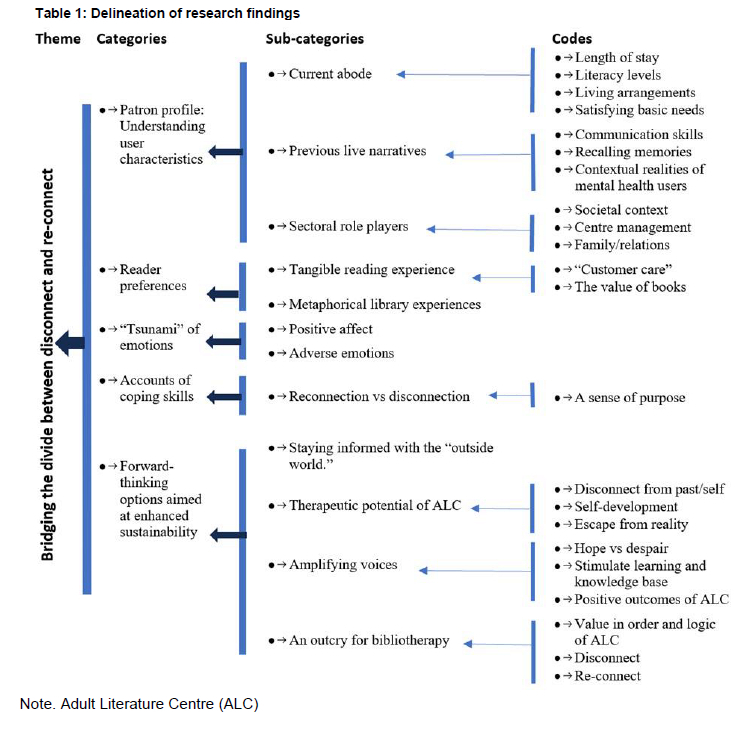
All journal entries and scanned drawings were uploaded to MAXQDA for inductive analysis. Repeated readings of participants' reflections helped deepen the understanding of their personal stories and emotions. Coding and data categorisation followed Saldanah's (2018) qualitative coding framework, focusing on simultaneous coding to capture the complexity of the data. This method helped identify recurring patterns and develop higher-order themes representing participants' collective meaning-making. To improve trustworthiness, informal feedback was collected during weekly prompts as a form of contextual member checking, considering the limitations of the facility setting. The resulting themes are illustrated in Table 1 below.
6.5 Ethics
Participant autonomy and well-being were central to the study. Voluntary participation was prioritised, accommodating those who temporarily withdrew. Communication and data collection were tailored to residents' skill levels and backgrounds. Researchers focused strictly on participants' engagement with the library during the specified timeframe, avoiding personal inquiries. Interactions were conducted at approved times, respecting residents' schedules and privacy. To minimise stress, caregivers received briefings on study objectives, participant rights and data collection methods. In addition to the on-site nurse monitoring participants' well-being, a registered counsellor was available for participant support during the data collection period as required by the 'REDACTED' ethical clearance ('REDACTED').
6.6 Rigour
Considerable effort was dedicated to fostering social and rehabilitation-oriented interactions before initiating data collection. The rationale was to cultivate robust relationships among researchers, residents and caregivers within the care centre.
These relationships formed the cornerstone of a conducive environment wherein participants felt secure to express themselves. This approach facilitated seamless communication between researchers and participants and bolstered caregiver support mechanisms.
To uphold the integrity and dignity of all parties, ethical clearances and permissions were diligently obtained from the care centre. We selected data collection methods that ensured suitability and safety in the sensitive mental health setting. The researchers' engagement and expertise in employee well-being and Information Science enriched the study's methodology, allowing for a comprehensive understanding of the research domain.
7 Results
This section summarises themes from interviews related to the research question. Table 1 presents the main theme, "Bridging the divide between disconnect and re-connection," and outlines five sub-themes: patron profile, user characteristics, reader preferences, emotional experiences, coping skills, and sustainable options. Verbatim quotes from participants illustrate these themes.
7.1 Patron profile: Understanding user characteristics
7.1.1 Current abode
Participants shared contrasting accounts of their experiences with malnutrition and food scarcity while expressing gratitude for their care and support at the care centre. This highlights their reliance on the centre for their daily needs and well-being. Participant 11 noted her stay at the centre for the past 50 years and recalled how compassionately she has always been treated by staff and caregivers. She also felt privileged to receive daily meals.
Participants openly recognised their limitations but were eager to share their experiences. Notably, differing literacy levels were reflected in their written submissions and drawings, as they expressed themselves through self-images, environmental depictions, and childhood memories. They appreciated the well-resourced library that serves a diverse reader population. This was primarily attributed to library staff and residents, who can match reading preferences and available genres. "I like to recommend books to the people who come to take out books", affirmed Participant 18. Moreover, spirituality played a significant role for many. Participant 19 announced, "Having a library has helped bring me closer to God", while others viewed the library resources as contributing to their spiritual growth. Participant 10 also described the library as a source of wisdom embodied in books.
7.1.2 Previous life narratives
Some participants shared detailed accounts of their lives before the mental care facility, acknowledging past hurts. They often used metaphors and animals to describe their upbringing and its significance. Participant 32 fondly remembered learning from books as a child on a farm.
Unfortunately, traumatic memories also surfaced, including experiences of heartbreak, neglect and abuse. Gender-based violence emerged as a recurring topic, with some participants depicting instances of abuse by family members. Participant 28 specifically voiced her distress about her children's well-being, highlighting strained past relationships and regrets. Some participants expressed no interest in reconnecting with family outside the facility, while others longed for connections beyond its confines. These narratives shed light on the complex realities faced by mental health users, underscoring the need for support and understanding within and beyond the care facility.
7.1.3 Sectoral role players
Residents had diverse backgrounds, ranging from established neighbourhoods to early homelessness. Many recalled their roles as daughters, mothers, and partners, with some reminiscing about childhood library visits and others having access to books at home, encouraged by their parents. Participant 3 was noticeably surprised to find a library at the first care centre where she had stayed.
Residents were generally satisfied with the care centre's management and felt safe and supported. They appreciated the caregivers' reliability and care but had limited family contact and few visitors. Due to COVID-19 funding constraints, in-house rehabilitation services were restricted to one full-time nurse, and the social worker position was vacant.
7.2.1 Tangible reading experience
Participants valued the diverse reading materials and expressed positive feelings towards the library and its resources. Their overall love for the library resulted in "…the opportunity to escape, relax, learn, dream, study and explore…", according to Participant 12. She was adamant that she could not imagine a life without books. The library also ignited a love for reading amongst confessed past non-readers (Participant 2). Participant 4 equated her newfound passion for reading as a "mental shift towards enjoying reading".
Comments such as "the library rocks" and "thumbs up" were directly attributed to the library staff's (residents themselves) friendly, caring, empathetic and effective customer service while managing the centre with great care. Library staff felt honoured to be part of the library, enjoying their roles in recommending suitable materials. Participants praised the reading selections and the library's ambience, cleanliness, and overall neatness.
Numerous participants highlighted their personal preferences for information formats such as poetry, novels, encyclopaedias, religious books, fantasy, fiction, thrillers, romance, picture books and magazines. Participant 15 prefers "… books to reality" and stated, "I escape from reality, and I imagine I'm in the book I'm busy reading… I am happier when I'm surrounded by books." Participant 7 eloquently described how reading played a significant role in reclaiming a sense of empowerment within her circumstances, expressing that she feels a profound sense of mastery from being immersed in books, which aided understanding. Books seemed to have positively promoted participants' well-being, and several participants believed they felt better when they read. Participant accounts aired benefits such as a growing vocabulary, enhanced knowledge levels and "keeping our minds busy" since using the library facilities. The act of reading also resulted in accounts of enhanced coping acts.
7.2.2 Metaphorical library experience
Several participants used metaphors to describe their individual library experiences and how they experience life at the moment. Participant 7 shared a symbolic story using animal characters who were rescued and ended up very happy to have found a place to stay and to be taken care of. Marvelling at her fun-filled experience, Participant 15 said, "… I felt like Belle in Beauty and the Beast when she saw the library in the castle." Participant 21 labelled the library as her "…happy place", a special place where she feels calm and serene and eagerly awaits the weekly visits it entails. Overall, the library seems to have become a compass and an anchor for many. Several participants likened their library experiences to fairy tales, envisioning them as an imaginative "happy place" and comparing their discoveries to finding a "treasure chest".
7.3 "Tsunami" of emotions
7.3.1 Positive affect
Most participants reacted positively to the library and literacy. Many expressed surprise and delight at the wide variety of books and magazines available when the library opened. Participant 21 commented: "When I was appointed library manager a year ago, I was thrilled…thank you for giving us this wonderful blessing and gift…" The emotional depth conveyed in this quote is supported by others labelling an on-site library as a privilege and regarding their involvement as an "honour". The feeling of thankfulness abounded in participants' writings and drawings. Feelings and emotions relevant to enjoyment were also common in text and drawings, with ample smiling faces and hearts accompanying their responses.
Participants expressed how books have sparked their curiosity since the library opened. One requested extended hours, while another insisted the library should never close. A participant's transformation from disliking reading to developing a love for literature highlights the positive impact of curiosity and eagerness, thanks to the library. Additionally, a few participants explained how books have deeply affected their lives, inspiring them to foster connections with others and rekindle relationships. Participant 28 yearned for some form of recognition and approval from other residents during an in-house talent event and obtained the lyrics to the song from the library's resources.
Participants shared that the library brings joy and improves their sense of calm and relaxation. They highlighted the library's serene and peaceful atmosphere, and many noted feelings of acceptance among visitors.
7.3.2 Adverse emotions
The journal entries highlighted the hardships and sadness faced by participants before arriving at the care centre. Processing these accounts was emotionally challenging for us as researchers. However, this paper will specifically focus on negative experiences related to the library.
Despite the majority of participants expressing positive feelings and associations with the library, Participant 4 shared adverse experiences related to reading books of her choice. She mainly prefers to read thrillers, even though this sometimes leads to her having feelings of being scared. These fears were not further explored during data collection. In addition, Participant 32 chronicled her journey of abuse and shared a poem she wrote as she attempted to come to terms with the losses she endured before becoming a resident in the care centre. To add to this, she also shared these worded experiences during the annual in-house talent show. Thus, linking literature, tangibly dealing with trauma and resilience.
7.4 Accounts of coping skills
7.4.1 Reconnection vs disconnection
Participants expressed challenging emotions through their texts and drawings, yet many showed resilience and optimism in navigating their circumstances. They shared various coping mechanisms, emphasising how the library has become essential to their recovery and well-being.
Notably, many participants cited praying and reading Christian literature as effective coping strategies and sources of solace while grappling with past heartbreak. Furthermore, the responsibilities associated with managing the library and other ad-hoc duties have contributed significantly to a sense of purpose and self-worth among library staff.
Some participants have begun to show signs of acceptance towards their current environment. For instance, Participant 32 shared that she once wrote a poem as a source of self-comfort following the unexpected loss of her baby.
Overall, participants' responses underscore the positive impact of the library in reconnecting them with the "outside world", with some individuals revealing transformative experiences within the safe confines of the care centre. Some participants expressed a desire for radios, while others lamented the lack of cell phones and financial means for airtime and data to facilitate communication beyond the care centre.
Participant 16 demonstrated a keen interest in understanding the lives of people outside the facility, expressing a desire to learn from others' experiences. While some participants expressed a longing to connect with the world beyond the care centre, many also highlighted the solace they find in literature, explicitly mentioning the benefits of books in helping them escape from reality. On multiple occasions, participants emphasised that literature serves as a strategy for temporarily distancing themselves from the external world.
Most participants' narratives underscored a significant disconnect between themselves and their close family members and a sense of disconnection from their identities. Several participants openly acknowledged the challenges of grappling with unresolved issues and lingering questions from their past. For some, these unresolved matters translated into strained relationships with certain family members, while others expressed a complete lack of desire to reconnect with their families.
Participant 28 shared her distress and admitted to "messing things up" while attempting to reconnect with her children, underscoring the complexities of navigating strained familial relationships. Despite these recollections, stories and drawings reflecting limited ties to their previous lives, participants did not always express a wish to revive old relationships. Instead, several participants articulated a strong desire to escape from a reality tethered to their past experiences, with Participant 15 again succinctly stating: "I prefer books to reality".
Disconnection was frequently accentuated by participants' narratives of isolation, whether by choice or as a result of life events. Some written texts explicitly conveyed feelings of loneliness, confirming limited relationships beyond a few other residents at the centre. Participant 28 described a constant sense of embarrassment due to a physical issue. At the same time, another's drawings depicted a mouth that appeared unable to speak, possibly suggesting a disconnection from innermost feelings and an inability to address them effectively.
Additionally, several drawings of human figures omitted essential organs such as ears, mouths, necks, hands and feet, possibly reflecting a detachment from these body parts. Amidst these challenges, participants expressed solace in literature, explicitly highlighting the benefits of escaping from reality. On multiple occasions, participants associated literature with a means of disconnecting from the outside world and finding comfort within its pages.
7.5 Forward-thinking options aimed at enhanced sustainability
7.5.1 Staying informed with the "outside world."
Within the framework of our investigation, participants showed an interest in life beyond the care centre. Many are acutely aware of the difference between a life "out there" and "in here". Formats such as novels and magazines assist in exposing other societal contexts.
7.5.2 Therapeutic Potential of Adult Literacy Centre
Acknowledging the reported positive outcomes of engaging with literature, we were compelled to contemplate the implicit therapeutic value of interacting with books beyond their function as sources of reading material supplied to the library.
Library materials have played a significant role in many participants' paths toward self-development by fostering learning and expanding personal knowledge bases. Some participants recounted how reading was encouraged in their homes during childhood and how they frequented libraries after school. Conversely, others discovered the transformative power of reading after the library was established at the care centre. The potential for mental healthcare centre users to engage with various literature formats focused on self-awareness and self-care was established. In addition, there is an ongoing need to expand reading collections according to specific user needs and the immediate circumstances of residents within the defined context.
7.5.3 Amplifying voices
Several participants felt empowered due to their interactions with reading and the library. Library staff also noted increased self-worth, attributed to their roles and responsibilities.
Some participants shared how engaging with literature at the care centre positively impacted their healing journey. Participant 12 depicted her transformation from despair to hope, contrasting her former feelings of being "the black sheep of the family" with newfound acceptance and belonging. Participant 32 demonstrated self-care by taking ownership of her healing process after losing loved ones through reading and translating her "brokenness" into "healing" through poetry. Stories and recollections have given voices to participants who may otherwise feel unheard. For instance, Participant 17, described by library staff as "our most enthusiastic and keen reader," is deaf and unable to read, yet consistently anticipates the library's opening every Friday and is always the first in line-a testament to the profound impact of the library experience beyond conventional literacy.
7.5.4 Abounding opportunities for bibliotherapy practices
What began as a modest collection of donated books at a healthcare centre has blossomed into a fully-fledged Adult Literacy Centre. The centre embodies the potential to expand and harness the positivity of participants to enhance rehabilitation efforts through bibliotherapy. This transformation underscores the profound impact of literature in fostering personal growth and well-being within our community.
Participants expressed strong positive feelings towards books, reading, and the on-site library. They showed gratitude and affection for the library staff in their writings and drawings, recognising their dedication. Becoming library members made participants feel included and welcomed in the reading community. Participant 5 attested to the benefits of belonging to this reading community, stating, "I like that they recommend books and authors I will enjoy and keep books aside for me." This personalised service reflects the library's dedication to individual preferences and enriching the reading experience. Participants also expressed confidence in recommending tailored resources focused on interests like marriage, thrillers, religion, or poetry.
Many submitted drawings displayed pride, prominently featuring the library's name. Participants highlighted a connection between increased reading opportunities, greater empathy, and reduced isolation, especially regarding fiction and religious resources.
Participants shared how reading fosters understanding of ourselves and deeper connections with others. These insights emphasise literature's power to cultivate empathy and social ties within our community.
Bibliotherapy interventions empower residents to connect with relatable resources and express emotions through various forms of art. Participants show a strong desire to continue literacy activities, aspiring to write books and document their personal stories. Specific aspirations shared include: "I would love to write reading books one day" (Participant 15), "I was good at drawing bushmen and animals…I've always had a love for animals and can't stand cruelty" (Participant 28), "am now a published poet" (Participant 21) and "...she loves to draw and also copy words from books…sometimes she 'writes' her letters without copying…" (Participant 17). The participants' aspirations reflect their creative talents and ambitions, showcasing a strong enthusiasm for literary and artistic pursuits. Implementing bibliotherapy programs can empower residents to develop their skills and promote emotional expression and personal growth.
Bibliotherapy shows promise in helping individuals reconnect with themselves and improve their thinking and behaviour. The data highlights the potential of this approach at the care centre, given participants' positive feelings toward the library. Makerspaces can facilitate writing and expression workshops, encompassing storytelling, poetry and creative drawing sessions that deepen engagement with literary resources. Participant experiences align with this vision: Participant 28 fondly recalled her childhood drawing skills, demonstrating creativity through her drawings of animals. Participant 15 aspires to write a book in the future, joining the ranks of published poets in the group.
Their voices reflect the impact of the library on their reading habits and personal growth: "[the library]… inspires me and it gives me the courage to read more books" (Participant 4), "I feel experienced [experienced] and read any book" (Participant 7) and "I love to read books to keep my mind busy" (Participant 4). Bibliotherapy initiatives inspire courage and mental engagement through reading, aligning with participants' desires for creative expression and personal growth.
8 Discussion
Thematic qualitative reveals several overarching findings. Participants valued the centre as a "treasure chest", connecting them with the outside world and providing life-altering experiences within this safe space. This sharply contrasts the everyday realities faced by many without access to mental health care in the South African public system (Madlala et al., 2022:1; Stats SA, 2022). Reading personal accounts of self-discovery and coping served as a "band-aid," supporting healing journeys. This underscores the need to expand the reading collection and develop bibliotherapy initiatives tailored to residents' needs. Makerspaces offer creative outlets where skills grow, building self-worth and encouraging entrepreneurship. Finally, practical expression and communication remain central to supporting users in mental health care facilities.
Many participants associated the new on-site Adult Literacy Centre with "pure joy". They reported happiness, gratitude, and exhilaration from accessing the centre. This aligns with a South African study showing that books, reading, and libraries uplift users (Tukhareli, 2011:10). Sabnis (2023:1) also highlights readinging benefirs, noting its power to "transport readers to different worlds." Participants gradually moved from recalling adverse past experiences to embracing new and engaging reading material, marking an important step towards reconnecting with themselves and a world beyond care facility.
A safe environment is essential in mental health care. Participants often described the sense of safety linked to the in-house Adult Literacy Centre. Tukhareli (2011:10) confirms the value of these secure spaces, showing how they foster love, belonging, self-esteem, self-actualisation, and learning while also supporting the exploration of concepts, emotions, and social expectations. Some participants revealed life-altering experiences linked to the Adult Literacy Centre. Beyond spiritual connections, many developed more positive attitudes toward others, crediting books for inspiring shifts in perception and improving relationships. The literature supports this, confirming that reading helps vulnerable individuals see situations from different perspectives, fostering greater empathy (Sabnis, 2023:2). Similarly, Akgun and Benli (2019:104) report that engaging with reading material promotes positive behaviours, including love, respect, responsibility, patience, tolerance, empathy, honesty, and cleanliness.
Findings from this study underscore the plethora of possibilities for bibliotherapy. A basic online search confirms that libraries in many public institutions, such as prisons, hospitals and schools, remain scarce in mental health care facilities. These users could benefit greatly from adult literacy programmes. Bibliotherapy offers numerous advantages: fostering empathy (Sabnis, 2023:2; Tukhareli, 2011:10), enhancing self-awareness, self-concept, and self-confidence (Sabnis, 2023:2; Akgun & Benli, 2019:109), building connections and belonging (Sabnis, 2023:1; Tukhareli, 2011:1; Akgun & Benli, 2019:102) and reducing stress through immersive reading (Sabnis, 2023:2). It also develops critical thinking by presenting alternative solutions to social issues (Tukhareli, 2011:3; Mitchell-Kamalie, 2002:129; Akgun & Benli, 2019:109) and improves coping skills for managing personal challenges (Akgun & Benli, 2019:109; Mitchell-Kamalie, 2002:129).
Finally, this study revealed that mental health challenges are severely impacted by patients' expressive and receptive language skills, which shape how they communicate thoughts and emotions (Akgun & Benli, 2019:102; Joubert & Hay, 2019:2). 'Communication vulnerability' includes long-term or temporary communication disabilities, language disparities, cultural differences and low literacy, all of which can hinder recovery (Gumede, 2021).
Effective communication among mental healthcare users, caretakers, healthcare workers, community members, and family is essential for mental well-being. This is especially important in SA, which faces shortages of practitioners, specialists, counsellors and medication for chronic mental illnesses (Sorsdahl et al., 2023; Gumede, 2021; Joubert & Hay, 2019:1). Literature confirms the impact of traumatic experiences on psychological disorders, emotional experiences, and coping (Akgun & Benli, 2019:102). Bibliotherapy can help address feelings of being trapped in physical and emotional challenges (Tukhareli, 2011:11). Findings from this study, including both text and drawing, underscore the need to enhance users' expressive skills to communicate discomfort and to request support effectively.
9 Recommendations
Based on the users' perceptions, the Adult Literacy Centre should incorporate African cultural norms and values. Literature confirms the benefits of culturally relevant stories, which expand perspectives on ethnic roots and traditions during bibliotherapy (Joubert & Hay, 2019:1). These approaches enhance appreciation of African culture and support self-awareness development (Tukhareli, 2011:7).
Future studies should include more representative samples, particularly black males in mental healthcare facilities, to better understand adult literacy inclinations. Further research should explore ways to improve expressive language skills, including MAKATON sign language and alternative and augmentative communication (AAC) strategies, which can be integrated into bibliotherapy. AAC techniques show promise in SA by enhancing language comprehension and replacing speech to help users express healthcare needs more effectively. Makerspaces also offer potential as creative environments for developing expressive skills, building self-worth, and supporting entrepreneurship. Finally, research should explore models for recording the impact of community engagement projects on real-life community challenges, advancing citizen science practices.
10 Limitations of the study
To the researchers' knowledge, there are no public mental healthcare facilities with libraries in the Gauteng area. The study aims to highlight the need for more innovative reading facilities in public care and rehabilitation, although some limitations should be acknowledged.
Almost half of the care centre's full-time residents participated in the study. More individuals could have joined if the library offered materials in indigenous languages. While some contributed in African languages, a wider variety of formats would have increased participation. Research teams should include a diverse range of languages for re-entry into this setting. This study could not explore online rehabilitation facilities due to restrictions on data access, devices, and the timing of online interactions. The challenges within the public mental health sector limited our data collection opportunities. The exploration of anonymous verbal contributions from participants should have been more thorough. This would have allowed those who are less confident in writing to share their library experiences more comfortably. Finally, it is suggested that alternative methodologies, such as the Mmogo Method® for data collection purposes and longitudinal study designs, be considered for future researcher engagement, given the unique challenges of entering a data-rich environment described in this article.
11 Conclusion
The study emphasises the need to tackle disconnection from oneself and the outside world in mental healthcare. Although bibliotherapy has proven beneficial, it is still underutilised in public mental health settings. Implementing bibliotherapy and improving communication skills could be a cost-effective approach in these facilities.
Engaging in-house caregivers, healthcare workers, practitioners, community members, and mental healthcare users is essential for maximising the effectiveness of initiatives. Bibliotherapy fosters collaboration among researchers, practitioners, and community members, enhancing expressive communication skills and improving literacy and mental well-being. This teamwork reflects a commitment to holistic care and personal growth in mental health communities.
In conclusion, CS Lewis's quote, "We read to know we're not alone," reflects the findings of this study. Academic researchers are increasingly adopting socially engaged scholarship that addresses the immediate needs of communities. Successful solutions will depend on multidisciplinary approaches and active participation from community members committed to lifelong learning.
Author contributions:
The final version was a two-year collaborative effort between Authors 1 and 2 from the initial conceptualisation until publication.
Data availability statement:
Research data cannot be disclosed due to the sensitive nature of the interview data gathered and the potential risk of participant identification.
Funding statement
This research did not receive any funding.
Conflict of interest disclosure:
The authors have no conflicts of interest in declaring and certifying that they have seen and approved the manuscript.
Ethics approval statement:
Ethical clearance was obtained from the Ethics Committee after evaluation of the application prior to the data collection process ('REDACTED'). The care centre management also granted written permission to conduct a research study at the facility.
References
7.2 Reader preferences
- Akgun, E., & Benli, G.K. (2019). Bibliotherapy with preschool children: A case study. Current Approaches in Psychiatry, 11(1):100-111.
- Aslam, A., & Amna, S. (2021). Bibliotherapy: A potential tool for stress reduction in nurses: An interventional study. Journal of Nurses & Midwives Pakistan, 1(2):5-63.
- Davis, C.H. (2022). Storytelling to promote mental health: A conceptual analysis and application with acceptance and commitment therapy for depression (All Graduate Theses and Dissertations, No. 8634). Utah State University. [Online]. https://digitalcommons.usu.edu/etd/8634
- Geda, Y.E., Krell-Roesch, J., Fisseha, Y., Tefera, A., Beyero, T., Rosenbaum, D., Szabo, T.G., Araya, M., & Hayes, S.C. (2021). Acceptance and commitment therapy in a low-income country in Sub-Saharan Africa: A call for further research. Frontiers in Public Health. [Online]. https://doi.org/10.3389/fpubh.2021.732800
- Gumede, W. (2021, October 28). Untreated mental illnesses impact on SA's economy, social and family stability. News24. [Online]. https://www.news24.com/news24/opinions/columnists/guestcolumn/william-gumede-untreated-mental-illnesses-impact-on-sas-economy-social-and-family-stability-20211028
- Haney, N.M. (2022). Bibliotherapy in the helping professions: A heuristic model for intervention design (Master's thesis). Liberty University. [Online]. https://digitalcommons.liberty.edu/cgi/viewcontent.cgi?article=1945&context=masters
- Joubert, C., & Hay, J. (2019). Capacitating postgraduate education students with lay counselling competencies via the culturally appropriate bibliotherapeutic Read-me-to-Resilience intervention. South African Journal of Education, 39(3):1-13.
- Makgoba, M.W. (2016). The report into the circumstances surrounding the deaths of mentally ill patients: Gauteng province. Office of the Health Ombud. [Online]. https://www.sahrc.org.za/home/21/files/Esidimeni%20full%20report.pdf
- Mental Health Care Act 2002 (Act No. 17 of 2002) General Regulations. (2004, December 15). Government Gazette, Republic of South Africa, No. 27117. [Online]. http://www.hpcsa.co.za/Uploads/editor/UserFiles/downloads/legislations/acts/mental_health_care_act_17_of_2002.pdf
- Sabnis, P. (2023, August 8). The power of bibliotherapy: How books can heal the mind and soothe the soul. LinkedIn. [Online]. https://www.linkedin.com/pulse/power-bibliotherapy-how-books-can-heal-ming-soothe-soul-sabins-irrwf/
- Saldana J. (2018). Writing qualitatively: the selected works of Johnny Saldaña. England: Routledge.
- Section 27 Organisation for Human Rights. (2016). Life Esidimeni timeline. [Online]. https://section27.org.za/campaigns/life-esidimeni/
- Statistics South Africa (2022). Mid-year population estimates. [Online]. https://census.statssa.gov.za/#/
- Tukhareli, N. (2011). Bibliotherapy in a library setting: Reaching out to vulnerable youth. The Canadian Journal of Library and Information Practice and Research, 6(1):1-18. [Online]. https://doi.org/10.21083/pc.v6i1.1915
Accepted: January 2026