Preservation management framework in library and archival institutions: a conceptual research
Abstract
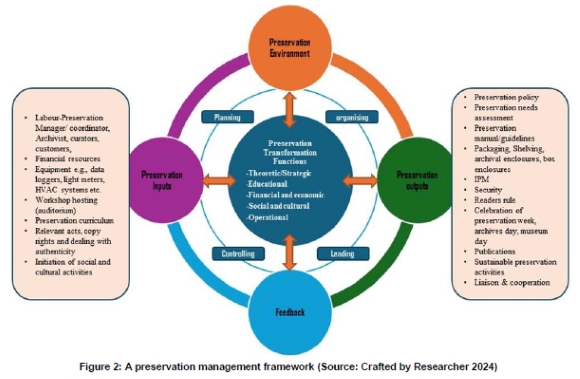
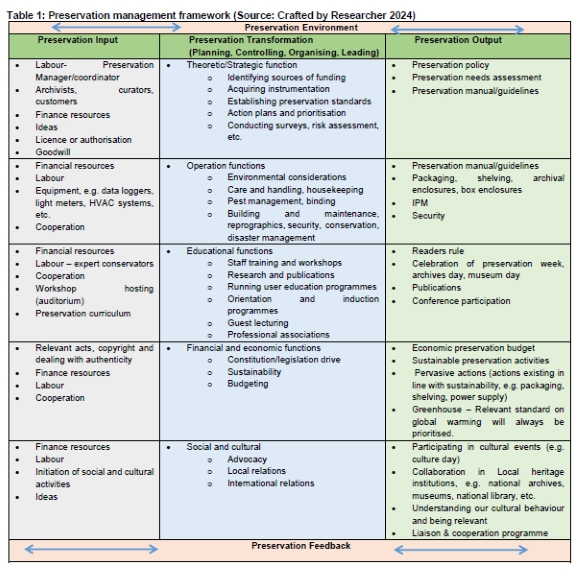
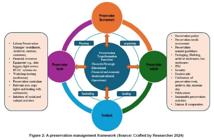
On a daily basis, organisations, both government and non-government, produce a lot of goods, provide services and create records as evidence of their business transactions. It is therefore critical to acquire, preserve, and disseminate the various artefacts, goods, and information resources as evidence of the world's social, intellectual, artistic, and spiritual achievements. Failure to protect these resources could lead to the world's loss of assets, history, legacy, education, and misinformed planning. Preservation, therefore, ensures that there is continued access to goods, services, and information resources for the long term. However, the preservation management process is still new in most developing libraries and archival institutions and is challenged by various predicaments with various flavours from one continent to the other. The key challenge is the lack of conceptual management frameworks that can be used for preservation in small developing libraries and archival institutions. The purpose of this study was to develop a management framework that can be used for sustainable preservation management, especially in less-resourced library and archival institutions. The paper presents a literature review, professional hands-on experience, and evaluation of views and opinions on management, frameworks, and sustainable preservation.
Preservation framework; heritage protection; management; preservation sustainability
 Thumbnail
 Thumbnail