Documentation and integration of indigenous knowledge in public libraries for inclusive information services in Ghana
Abstract
The dominance of colonial supremacy and foreign knowledge has become persistent in many African public libraries and knowledge acquisition, including Ghana. Hence, some of the local communities' information needs may be denied due to public libraries' inability to supply indigenous knowledge (IK). This study, therefore, sought to assess the documentation and integration of IK in public libraries in Ghana. This study adopted the interpretive research paradigm using a qualitative case study design. Regional directors of public libraries were the target participants. Data for this study were collected with the aid of an interview guide and analysed using thematic content analysis. The study found that, generally, current collection development policies do not sufficiently cover the documentation and integration of IK in public libraries, except in a few cases. Where IK is supported, this is done at two levels: (1) Through support for the availability of IK in libraries and (2) support for staff development to deal with IK in public libraries. In addition, professional staff development, budget allocation for the purchase and provision of materials, and the creation of a conducive environment for IK owners and other patrons who wish to document IK in public libraries were revealed as the efforts put in place by public libraries to support IK documentation and integration.
Indigenous Knowledge; Public Libraries; Documentation and Integration; Information Services; Ghana
1 Introduction
Indigenous knowledge (IK) refers to the traditional, local knowledge developed by people in specific geographic areas and serves as the foundation for social, economic, cultural, and governance systems (Buthelezi et al., 2024; Omigie et al., 2022). It is integral to community heritage and is mainly transmitted orally, which makes it vulnerable to loss over time (Asamoah & Ngulube, 2021; Da Silva et al., 2024). To preserve its value, documentation and integration of IK are essential. Therefore, a major concern of intangible or tacit knowledge, such as IK, is its durability and shareability in time and space (Dlamini 2016 cited in Buthelezi, 2024).
Documentation seeks to preserve IK in its complete raw form for posterity (Adebayo et al., 2017), whereas integration is the act or practice of fusing two or more constituents (IK and grammar books/material), which were formally segregated as one scheme (Shaked 2017). In this study, documentation means a systematic way of translating and recording IK in a comprehensive, structured form, while integration denotes incorporating IK into public library services to enhance inclusivity and accessibility for all users.
Public libraries, as community information hubs, are mandated by the United Nations Educational, Scientific and Cultural Organisation (UNESCO) and the International Federation of Library Associations (IFLA) (1994) to provide equitable access to information, including IK. However, global and regional initiatives such as UNESCO's 1966 Abidjan meeting and the 1968 establishment of the Regional Centre for Research and Documentation on Oral Traditions in Niamey have attempted to promote IK documentation but have achieved limited success (UNESCO, 1974; Alemna, 1993). Successful examples exist in countries like the USA, South Africa, New Zealand, and Nigeria, where public libraries actively preserve and promote IK (Burns et al., 2014; Greyling & Zulu, 2010). In contrast, Ghanaian public libraries have made limited efforts since independence, largely due to colonial legacies that shaped their focus on Western materials (Alemna, 2015; Plockey, 2018). Omigie et al. (2022) emphasise that librarians must be trained and empowered to lead IK documentation and integration initiatives to make libraries more inclusive and responsive to community knowledge needs.
2 Problem statement
However, the issue of IK documentation is not a novel one (Ngulube 2002), and efforts made thus far have not yielded the desired results (Alemna 2015; UNESCO 2019) apart from a few countries where IK is gaining prominence and recognition (Tharakan 2017). Some of the efforts made, and the countries in which the efforts are gaining recognition are, the Centre for Research in Black Culture (New York Public Library, USA), eThekwini (Metropolitan Library in Durban, South Africa), tribal libraries (USA), and Māori people collections (New Zealand) (Burns et al. 2014; Sarkhel 2017; Greyling & Zulu 2010). Also included among countries making efforts to document and integrate IK in public libraries are China, India, Botswana, and Nigeria (Okorafor, 2010; Jain & Jibri, 2016), Australia (Thorpe & Byrne, 2016; Francis & Liew, 2009) and Zimbabwe (Chisita, 2011).
In view of the above revelations, it appears that some public libraries worldwide have begun to document and promote IK for future generations (Owiny et al. 2014). However, the dominance of Western and foreign knowledge largely remains in many African countries. Ghana is only one of the countries whose public library stock is mainly rooted in colonial epistemologies. This results in the neglect of IK in most public libraries in Ghana (Alemna 2015; UNESCO, 2019; Asamaoh & Ngulube 2021). As a result, some of the information needs of the communities that the public libraries serve may be denied due to their inability to supply IK (Ngulube 2012:15). This study, therefore, sought to explore the commitment level of Ghana's public libraries towards the documentation and integration of IK, and the extent to which their frameworks support the documentation and integration of IK.
3 Objectives of the study
To achieve the purpose of the study, the following objectives were set:
Assess librarians' perceptions on collection development policies on IK documentation and integration in Ghana.
Determine the efforts made by public libraries to document and integrate IK.
4 Theoretical framework
The Afrocentric Theory, developed by Molefi Kete Asante in the 1980s, emphasises the centring of African values, perspectives, and experiences in the production of knowledge to counter Western epistemological dominance. It posits that African culture should be the foundation for understanding African realities and development (Asante, 1980; 2003; 2005). The theory is based on four key assumptions: the collective and spiritual nature of human beings, the emotional approach to knowledge, and the interconnectedness of all existence (Asante, 1988; Imafidion, 2012). While Afrocentricity does not reject Eurocentrism, it demands the "location" of African knowledge within its cultural context and rejects its marginalisation and dominance of Western knowledge systems in African education and scholarship (Monteiro-Ferreira, 2010; Schiele, 1996).
In this study, the Afrocentric theory served as the guiding framework, highlighting the need to position African perspectives and traditions at the core of documenting and integrating IK in Ghanaian public libraries. It challenges Eurocentric dominance and supports the recognition of IK as a legitimate and valuable component of library collections and services. By applying this theory, the study promotes inclusivity and cultural relevance in information service delivery, ensuring that Ghanaian public libraries reflect and preserve the cultural realities and heritage of their communities.
5 Background and context of the study
The Ghana Library Authority (GhLA), originally established as the Ghana Library Board in 1950 under the Gold Coast Library Board Ordinance of 1949, was initiated by Rt. Rev. John Orfeur Aglionby, with support from the British Council and an initial collection of 27,000 books (Ghana Library Board, 2010). Since then, the GhLA has evolved into the main body responsible for public library services in Ghana, now managing over 700,000 books across 63 libraries nationwide, including 10 regional and 53 branch libraries (GhLA, n.d.).
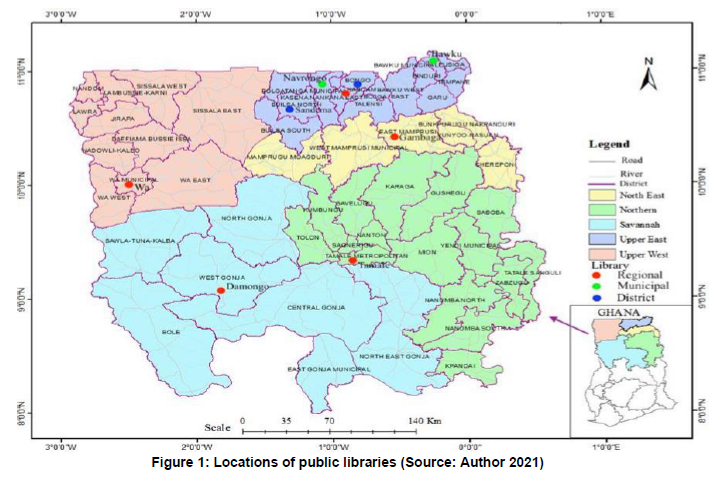
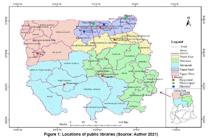
This study was conducted in Northern Ghana, covering the Northern, Savannah, North East, Upper East, and Upper West Regions, where 10 public libraries operate under the GhLA. These comprise five regional, two municipal, and three district libraries. However, following the 2018 creation of six new regions, one district, and one municipal library, both situated in areas designated as newly regional capitals (Savanah, North-East regions), remain under the Northern Regional Library's jurisdiction because they have not yet been upgraded to the status of regional libraries. Therefore, participants for this study were selected from these three regions. Below is a map showing all 10 public libraries, including the three selected regional libraries in northern Ghana.
6 Methodology
The study employed an interpretivist paradigm and a qualitative case study design to explore regional library directors' perspectives on the documentation and integration of IK in Ghana's public libraries. This paradigm was suitable, as it focuses on understanding human experiences within social contexts (Pham, 2018). Three regional directors, representing five northern regional libraries, were purposively selected due to their roles in policy implementation and decision-making within the GhLA.
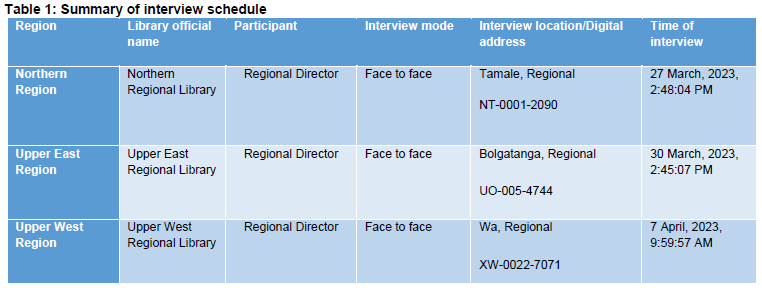
Data were collected through semi-structured interviews guided by an interview schedule and analysed using thematic content analysis. To ensure trustworthiness, a pilot study was conducted at the University for Development Studies Library to validate the interview guide's clarity and relevance. Interviews were audio-recorded, transcribed verbatim, and supported with direct quotes to illustrate emerging themes. An audit trail was maintained for transparency. The interview guide had two sections: one on librarians' views regarding Collection Development Policies (CDPs) and the other on public library efforts to promote IK documentation and integration. Table 1 gives detailed information on when, how, and where the interviews for the study were conducted.
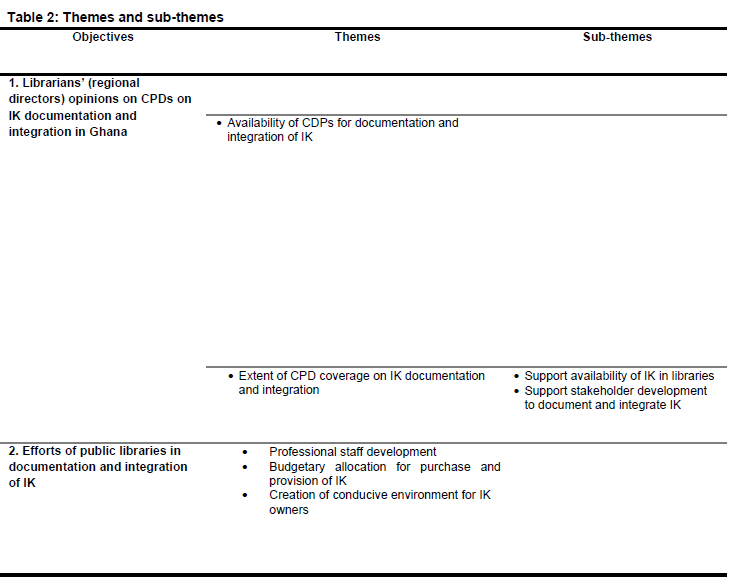
Thematic content analysis was done by recognising, analysing, and reporting patterns/themes within data generated during the interviews of public regional directors. This process allowed for flexibility and explanation of thorough and valuable multifaceted data. Following the analysis of interview discussions, three broad themes emerged for objectives one and two. Table 2 gives the themes and sub-themes.
7 Findings and discussions
This section of the study deals with the presentation of findings and the discussion of the findings.
7.1 Findings
The findings of the study are presented in this section. The presentation is done in line with the objectives of the study
7.2 Librarians' perception on collection development policies on IK documentation and integration in Ghana
The assessment of librarians' perceptions of CDPs on IK documentation and integration in Ghana's public libraries revealed two main themes: first, the availability of CDPs addressing IK documentation and integration, and second, the extent to which these policies cover and support IK documentation and integration within public libraries.
7.1.1 Availability of CDPs for documentation and integration of IK in public libraries in Ghana
The interviewed directors of regional public libraries indicated that, while CDPs exist in Ghana's public libraries, they do not explicitly address the documentation and integration of IK. Regional library directors acknowledged being aware of relevant policies supporting IK documentation and integration in libraries, but noted that these policies only indirectly relate to IK issues, rather than providing specific guidelines or frameworks for its documentation and integration. For instance, Participant A said:
"Libraries in Ghana have a CDP. It is called the Ghana Library Acquisition and Collection Development Policy. The policy largely talks about acquisition of materials and improving library collections".
Also, Participant B stated this:
...Of course, there is a library acquisition and collection development policy that is supposed to guide public libraries' collection efforts, but it does not specifically deal with IK documentation and integration. The cultural development policy, which deals with how to document our cultures, among others is more specific. So, the documentation and integration of IK is dealt with more in this policy.
In another view, Participant C indicated this:
With regards to documentation and integration of IK in public libraries, there is no specific policy to focus on; however, there is a general Ghana library policy on acquisition and collection development. So, IK is surely part
From the narratives above, CDPs were available; however, the policies were not intentionally targeting the documentation and integration of IK. This has the tendency to insulate library officials from making frantic efforts to ensure that IK is documented and integrated in public libraries.
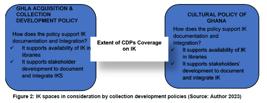
7.1.3 Extent of CDPs coverage on IK documentation and integration
The second theme revealed that the coverage of IK documentation and integration in existing CDPs is limited. Participants noted that while the policies show some supportive intent, they do not provide clear directives or enforceable guidelines for implementation. Participants' efforts to explain this theme resulted in two minor or sub-themes emerging:
Support for the availability of IK in libraries
Support for stakeholder development to document and integrate IK
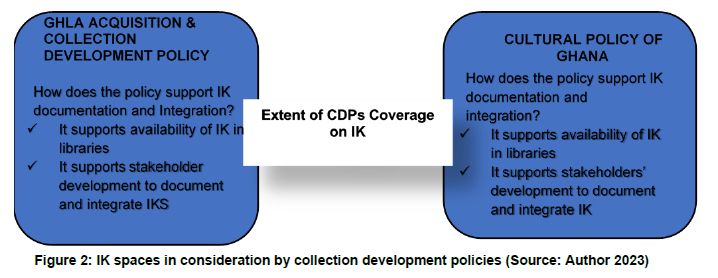
Figure 1 below depicts the specific themes that were examined from each policy as identified by selected regional directors in the course of the interviews conducted.
7.1.3.1 Policy support for the availability of IK in libraries
The three regional director participants' views on how each of the policies supported or considered making IK available to clients of public libraries. They explained that all the policies took into account the availability of IK, as they quickly referred to the aims of the various policies. In a direct response to the policies that support the availability of IK in public libraries, participants had this to say:
Participant A stated this:
"As for making provision for anything, it is easy. So, I am not surprised about the provisions made in all the policies regarding making IK available in public libraries. In fact, both the GhLA CDPs and the Cultural Policy of Ghana have in them statements that call for IK to be made available for people in explicit writing."
Participant C also said this:
"Availability provisions are always the first to be considered in terms of service provision. So, all the policies support for IK availability is expected. The two policies I have mentioned have all stated clearly that IK should be made available for the general public to benefit."
Furthermore, participant C indicated:
"All the policies support the availability of IK for people to appreciate. To be precise, it is stipulated in the Cultural Policy of Ghana that culture (dressing, festivals, food etc.) should be featured in the daily lives of Ghanaians. So, clearly, the Cultural Policy supports making IK available."
Participant B also concluded:
"The GhLA CDP is a comprehensive document that supports the collection of all kinds of knowledge IK and making them available. This is obvious because if you want to let people have access to anything, you must first of all ensure that the service is available. All the policies, because they aimed to promote IK, have therefore no option than to ensure the support of IK availability."
This means that, in ensuring the documentation and integration of IK, participants were of the view that provisions for its availability are fundamental. This is because one cannot make efforts to document and integrate something, including IK, when it is not available. However, it was noted that responses from participants suggested that the mere fact that a policy has captured that IK should be made available in libraries is not enough. Hence, going forward, monitoring mechanisms should be put in place to ensure the implementation of policies.
7.1.3.2 Support for stakeholder development to document and integrate IK in libraries
According to all three directors of regional public libraries, it was indicated that out of the two policies, only one considered stakeholder development as an area to help in the documentation and integration of IK. This policy was the Cultural Policy of Ghana in Chapter III on cultural education. Various views emanated from participants, and their views are stated as follows:
Participant B had this to say in terms of the policies' support for stakeholder development:
"We expected to have a direct policy from some of these policies for the development of library staff to be able to document and integrate IK for the benefit of all, but the policies were too general in nature. Both Cultural Policy and the Constitution of Ghana ensured that support for stakeholders' development in one way or the other. For instance, the Cultural Policy of Ghana made the provision for the support in the training and development of indigenous writers and publishers of educational materials which ultimately aims at ensuring that owners of IK have their knowledge documented and preserved for future generations".
Participant A also states that:
"I can say that the Cultural Policy of Ghana did not forget us librarians. I think it has as part of its aim to support and empower libraries and librarians to promote Ghanaian cultural heritage"
Also, participant C expressed this:
"I think there is no doubt that stakeholder development has featured in the Cultural Policy. But for me, it is not enough, because none of the policies considered the development of library staff specifically. However, I think it is understandable since these policies are national and not meant for one particular profession like ours"
As revealed in the narrations above, participants were not proud of the fact that there was no direct policy statement targeted at supporting librarians' or library officials' professional development. This is because the various collection development policies identified in the study that sought to talk about IK were not meant for libraries specifically.
7.2 Efforts of public libraries in the documentation and integration of IK services
Interviews with the three regional library directors revealed several initiatives supporting IK documentation and integration, including professional staff development, budget allocations for acquiring IK materials, and creating a conducive environment for IK owners and other patrons who wish to document IK in public libraries.
7.2.1. Professional staff development
All regional directors indicated that professional development is a key initiative supporting IK documentation and integration, noting that staff are periodically given opportunities for education and training to enhance their skills and effectiveness in library service delivery. The responses of participants were narrated as follows:
Participant B highlighted this:
"As a director, I have attended numerous seminars that focus on conscientising as well as training librarians on the need to document and integrate IK in public libraries. The GhLA organised these seminars I attended, so, I can say that I have developed professionally, and it is because of the library authority."
Participant A also stated that:
"My staff have always been allowed to go for further studies. Even though they do not go to study specifically documentation and integration of IK in public libraries, their broad knowledge acquired would help them appreciate the importance of collection development, including the documentation and integration of IK."
Also, Participant C indicated:
"The library authority from time to time organise seminars and training programmes for its staff to enhance their knowledge. Some of these trainings were in the area of collection development in which documentation and integration of IK is a part of."
From the narration of the participants, it is clear that professional development programmes, such as seminars and workshops, which are vital for increasing librarians' awareness and understanding of IK and its integration into library collections, have been attended by the librarians. These initiatives serve to enhance staff capacity and commitment, enabling librarians to effectively document and incorporate IK in public libraries.
7.2.2 Budget allocation for the purchase and provision of IK
According to the selected regional directors, budgetary allocations are always made by libraries for the purchase of IK materials to be stocked. The responses of participants were narrated as follows:
Participant C:
... "Because of the relevance of IK, monies are often set aside to ensure the acquisition of collections, including IK, for the benefit of library patrons, but very very (emphasis) small."
Elaborating on this issue of budget allocation for IK, Participant A stated:
"The preservation of this area of knowledge is worrying, considering the way and current form we have it. The fear of it becoming extinct has even made it more worrying. So, every now and then, the GhLA makes some paltry budgetary allocation for the purchase of such collections to be stocked in libraries across the country for use by people. That's the best they can do."
Participant B commented on this matter by saying:
"Documentation and integration of IK is very dear to the GhLA, and so, at every point in time, try as much as possible to provide money to collect and document this kind of special knowledge. But more can be done in this regard because the money is not always enough, considering how tedious it is to collect such knowledge."
As indicated in the above views, participants received some budgetary allocations from their regulatory body (GhLA), even though such allocations were not enough. Participants were resolute on the fact that budgetary allocations could aid in acquiring IK and funding its documentation and integration. As a result, these participants felt that more budgetary allocations could be made for public libraries to fund the collection and integration of IK in public libraries.
7.2.3 Creation of a conducive environment for IK owners
Participants reported that public libraries actively work to create welcoming and supportive environments for IK owners to visit and document their knowledge. Additionally, libraries reach out to IK owners within communities, educating them on the importance, processes, and benefits of documenting their knowledge for cultural preservation and national development. The responses of participants were recounted as follows:
In terms of this effort, Participant A said:
"We as librarians through the GhLA, have all the time to provide IK owners the platform and the opportunity to make available their knowledge for documentation and integration in public libraries without any force."
Also, Participant B said:
"Our doors are always opened for people of all kinds, including owners of IK, to come and document their knowledge. We don't discriminate against anybody. The GhLA has always encouraged IK owners to bring their IK for documentation by providing them with unlimited access to the library and methods of how to do that. So, there is always a conducive environment for IK owners to store their knowledge in the library"
In addition, Participant C stated:
The library is a place where knowledge can be stored. So, there is that opportunity for everybody to have their knowledge collected if they so wish, without any form of discrimination or favour. In doing so, we sometimes do community visits to educate and encourage owners of IK to document their knowledge in the library.
The findings indicated that public libraries welcome IK owners to collaborate with librarians on IK documentation and integration. However, while libraries provide spaces for such engagement, they rarely extend these efforts into communities or the homes of IK owners, which could have strengthened relationships and encouraged greater participation by making IK custodians feel more valued and respected.
8 Discussion of results
This section of the study presents the discussions of the findings in this study. The discussions are done according to the objectives of the study
8.1 Public librarians' opinions of the need for IK documentation and integration
Grounded in Afrocentricity theory, which advocates for revitalising IK to empower Africans (Asante, 1998), the study found that all regional library directors recognised the importance of documenting IK in public libraries. They agreed that preserving IK helps sustain cultural identity and community heritage, aligning with scholars such as Netshakhuma (2023a) and Buthelezi et al. (2024). The participants further noted that integrating IK into public libraries would promote inclusive service delivery, ensuring equal access to information for all members of society, regardless of literacy or social status.
The study's findings align with the 2013 World Summit on the Information Society (WSIS), which emphasised the need to preserve and promote indigenous peoples' cultural heritage and knowledge (WSIS, 2013). Given that IK is largely intangible, its documentation and integration in public libraries are essential for safeguarding it. This approach would encourage indigenous communities to engage with public libraries, fostering collaboration in creating and preserving IK while promoting inclusive information service delivery.
All regional library directors indicated that policies, such as the GhLA's Acquisition and CDP and the Cultural Policy of Ghana, support efforts to IK into public library collections. This aligns with Afrocentricity theory, which advocates for initiatives that promote indigenous culture and guide IK documentation and integration (Asante, 1987). However, the study found that Ghana lacks a unified national policy specifically addressing IK documentation and integration in public libraries. This policy gap has resulted in inconsistent and fragmented approaches, echoing findings by Asamoah and Ngulube (2021), Helling (2012), and Mhlongo (2018). While existing policies provide general mandates, they do not adequately meet the specific needs of IK management. Given Ghana's commitment to international declarations and constitutional rights supporting access to information, the establishment of a national library policy is urgently needed to provide strategic direction and strengthen IK documentation and integration efforts (Asamoah & Ngulube, 2021; Netshakhuma, 2023b).
Participants stated that existing policies, including the Cultural Policy of Ghana (2004) and the GhLA Acquisition and CDP, acknowledge the availability of IK within library collections. The Acquisition Policy supports the development of diverse materials to meet the information needs of all users, aligning with Afrocentric theory, which advocates for the preservation and interpretation of African traditions and culture (Asante, 1998). Similarly, the Cultural Policy encourages libraries to collect materials on African arts, culture, and indigenous science, while the Constitution of Ghana (1992, Art. 39[2]) promotes integrating customary values into national life. However, participants emphasised that none of these policies specifically focus on IK, echoing findings from Mhlongo (2018) in South Africa. Instead, IK is treated as part of general knowledge, reflecting its limited recognition in national policy frameworks, as also observed in Tanzania by Kaiza-Boshe (2003) and Lwoga (2009). The study confirms Da Silva et al.'s (2024) and Netshakhuma's (2023b) findings that national education and cultural policies often overlook the epistemological uniqueness of IK. Therefore, participants stressed the urgent need for dedicated policy guidelines to effectively guide IK documentation and integration in Ghanaian public libraries (Buthelezi et al., 2024; Asamoah & Ngulube, 2021; Netshakhuma, 2023b).
The study revealed that among the two key policies reviewed, only the Cultural Policy of Ghana, specifically in Chapter III on cultural education, addresses stakeholder development to support the documentation and integration of IK. The GhLA's CDP, however, lacks provisions for staff capacity building, indicating limited institutional commitment to IK integration. As Asamoah and Ngulube (2021) note, policy success depends on the skills and readiness of personnel responsible for its implementation. Participants further observed that the existing CDPs' support for IK documentation and integration is not mandatory, as libraries are not the direct targets of these policy provisions. This neglect contradicts the Afrocentricity theory (Asante, 1990; 2003), which emphasises empowering Africans to manage their cultural and intellectual systems based on their own values and contexts. Consequently, the absence of binding policies and staff development initiatives undermines efforts to integrate IK effectively into public library services.
8.2 Efforts of public libraries in the documentation and integration of IK services
The findings on the efforts of libraries in support of IK documentation and integration are in line with the Afrocentricity theory, which encourages Africans to cultivate the habit of doing things on their own, which reflects their values and background (Asante 1990). However, in Ghana, public libraries are run by the GhLA in a centralised system at the national headquarters in Accra and then circulated to all regional libraries for onward implementation. However, according to participants in the study, there is some level of flexibility, as the executive director may delegate to others a portion of that responsibility. This allows the regional directors in their libraries to make decisions that can enhance IK services in the libraries, as is suggested by the Afrocentricity theory that there is a need for cultures to be masters of their own in terms of duties and abilities (Asante 2003). To this extent, the study revealed that the level of support for the availability of IK in public libraries, as well as support for professional development, was largely through the efforts of the various regional library directors across the various regions, with little support from GhLA. Although the GhLA played a role, its support was perceived as limited compared to the proactive measures predominantly driven by the efforts of individual regional directors. This finding underscores the importance of empowering regional library directors and providing them with more consistent and substantial support from the GhLA and the government. The limited backing from GhLA may constrain the scalability of IK documentation and integration efforts and the professional development of librarians. Strengthening the GhLA's involvement and resources dedicated to IK initiatives could enhance the impact and continuity of these efforts, leading to a more robust and unified approach to the protection of IK in public libraries across the nation.
The findings above give credence to the fact that Ghana lacks a comprehensive policy to incorporate IK in libraries to serve as a guide, confirming the assertion by Asamoah and Ngulube (2021), who also revealed that Ghana does not have any framework to incorporate IK in public libraries. As a result, issues of validation (integrity and authenticity), and who is assigned the responsibility of what to do and where to start from are non-existent. Therefore, individual public libraries' efforts in IK documentation and integration strategies were unstructured and not based on any uniform approach.
In terms of professional development as an effort made by public libraries to support IK documentation and integration in public libraries, the selected regional directors of public libraries revealed that they gave opportunities to staff to add value to their lives through education and training. According to the participants in the study, it is through staff professional development that staff can add value to themselves to keep abreast of the dynamic nature of the world. This is because training equips librarians to deal with their changing role, including the documentation and integration of IK into the library information system (Asamoah & Ngulube, 2021; Magara, 2015; Ngulube, 2018; Ngulube et al., 2015). This gives credence to the assertion that through staff professional development, a profession remains relevant to be in a position to deal with changing needs (Sturges 2015). This finding is similar to Mhlongo's (2018) findings. However, while professional staff development in the study of Mhlongo was related to conditional grants provided for staff who were victims of salary and conditions of employment disparities as a result of different pay systems, staff professional development in the study was geared towards improving staff knowledge to improve general service delivery and on IK documentation and integration.
Regarding public libraries' support for the availability of IK in public libraries, all three participants in the study indicated that they made budgetary allocations for the purchase of IK materials to be documented in their various libraries. This conforms to the theory of Afrocentricity, which states that for IK to be placed at the centre of CDPs in public libraries, it must acquire some IK materials and integrate them into its services (Asante 1987; Asante 1990). According to the participants in this study, budget allocations were small. According to Asamoah and Ngulube (2021), this aligns with the broader budgetary allocations of public libraries that are often limited, leading to libraries not being able to meet their mandates. This effort, though small according to the participants of this study, helped to acquire a few indigenous books to shelve in libraries. This is in line with Mhlongo (2018), who revealed that budgets and library materials are essential for the effective functioning of a library. As a result, failure to make this sacrifice of allocation will hurt IK documentation and integration, and lead to poor provision of library services.
Another effort made by public libraries in support of IK documentation and integration was the creation of an environment conducive to IK owners and other patrons who wished to document IK in public libraries. This was done by ensuring that libraries were opened to all people and that local communities were respected. This is in line with Owiny et al.'s (2014) and Twinoburyo's (2019) findings, who revealed that libraries are known for promoting the rights of users and originators of IK as well as recognising and paying attention to issues raised in local communities with dignity. This costless effort in support of IK documentation and integration has the tendency to bring people from all walks of the communities, including IK owners, to the library because they do not feel discriminated against and intimidated in any way. Hence, their willingness to make the library their friend, which can enhance the IK collection and further documentation and integration.
9 Conclusion and recommendation
In assessing the extent to which the collection development policies of public libraries support the documentation and integration of IK, two focus areas emerged as efforts being considered in both policies. These two focus areas, according to the three regional directors of public libraries, were support for the availability of IK in libraries and support for staff development to deal with IK in public libraries. The study established that the extent to which CDPs of public libraries considered documentation and integration of IK in public libraries was not deep enough, as the policy provisions were not binding on public libraries. That is, the considered policy provisions identified in the CDPs were not deliberate and specific for public libraries to own and implement. Rather, the considerations were general and open. Therefore, these provisions of support for IK documentation and integration in public libraries were challenging for most public libraries to implement. Hence, individual public libraries' efforts in IK documentation and integration strategies were amorphous and not based on any uniform approach, leading to inconsistent and unstructured approaches across libraries, limiting the inclusivity of IK resources.
Because of the relevance of IK, the researchers recommend that library-specific legislation should be developed by the Parliament of Ghana to mandate GhLA to prioritise documentation and integration of IK in their collection development. This legal requirement would provide an opportunity to train staff and improve the overall process of documenting and integrating IK materials into the libraries by making strict budget allocations to support this course. This study recommends that the government, through the GhLA formulate a single policy solely on IK, which would include its collection, documentation, and integration in public libraries and this policy should be binding on all public libraries in the country. This would attract more attention from the government by way of budgetary allocations and accountability on the part of GhLA to ensure that IK, including its documentation and integration, becomes a success, which would benefit the entire world and for posterity.
References
- Aboyade, W.A. & Adeyemo, O.O. 2019, 'The role of the library in the acquisition, preservation, and dissemination of indigenous knowledge and cultural heritage in Nigeria', American Research Journal of Humanities & Social Science (ARJHSS), 2(8): 39-44.
- Adebayo, C.L.N., Oluwaseye, J. & Adeyemo, A.A. 2017. Documentation and dissemination of indigenous knowledge by library personnel in selected research institutes in Nigeria. Library Philosophy and Practice (e-journal), 1628. https://digitalcommons.unl.edu/libphilprac/1628 (Accessed: 6 December 2025).
- Alemna, A.A. 2015. The role of libraries in harnessing indigenous knowledge in Ghana. Ghana Library Journal, 17(1): 27-32. https://journal.gla.org.gh/index.php/glj/article/view/61 (Accessed: 6 December 2025).
- Asamoah, C. & Ngulube, P. 2021. Exploring models for the management of indigenous knowledge in academic libraries of Ghana, Information Development, 39(4): 787-797. https://doi.org/10.1177/02666669211052928
- Asante, M.K. 1980. Afrocentricity: The theory of social change. Buffalo, NY: Amulefi Publishing Company.
- Asante, M.K. 1987. The Afrocentric idea. Philadelphia, PA: Temple University Press.
- Asante, M.K. 1988. Afrocentricity. Trenton, NJ: Africa World Press.
- Asante, M.K. 1990. Afrocentricity and the critique of drama. The Western Journal of Black Studies, 14(2): 136. https://www.proquest.com/scholarly-journals/afrocentricity-critique-drama/docview/1311804243/se-2 (Accessed: 06 December 2025).
- Asante, M.K. 2003. Afrocentricity: The theory of social change (revised and expanded). Chicago, IL: African American Images.
- Asante, M.K. 2005. Afrocentricity: Notes on a disciplinary position. In Conyers, J.L. (ed.), Afrocentric Traditions. New Brunswick, NJ: Transaction, 1-13.
- Burns, K., Doyle, A.M., Joseph, G. & Krebs, A. 2014. Indigenous librarianship. Doctoral dissertation. University of British Columbia. [Online] https://open.library.ubc.ca/handle/2429/51923?utm_source=chatgpt.com (6 December 2025).
- Buthelezi, S.C., Ocholla, D. & Dlamini, P. 2024, Strategies for documenting and disseminating indigenous knowledge at a South African university, South African Journal of Information Management, 26(1): 1648. https://hdl.handle.net/10520/ejc-info_v26_n1_a1648 (Accessed: 6 December 2025).
- Byrne, A. 2005. Indigenous knowledge and libraries: An afterword. Australian Academic and Research Libraries, 36(2): 201-205. https://doi.org/10.1080/00048623.2005.10721260
- Chanza, N. & De Wit, A. 2013. Epistemological and methodological framework for indigenous knowledge in climate science. Indilinga African Journal of Indigenous Knowledge Systems, 12(2): 203-216. https://hdl.handle.net/10520/EJC149933
- Chisita, C.T. 2011. Role of libraries in promoting the dissemination and documentation of indigenous agricultural information: Case Study of Zimbabwe. In Paper of World Library and Information Congress: 77th IFLA General Conference and Assembly. [Online] http://conference.ifla.org/past-wlic/2011/78-chisita-en.pdf (6 December 2025).
- Creswell, J.W. 2014. Research design: Qualitative, quantitative, and mixed methods approach, 3rd ed. Los Angeles: Sage Publications.
- Da Silva, C., Pereira, F. & Amorim, P. 2024. The integration of indigenous knowledge in school: A systematic review' Compare: A Journal of Comparative and International Education, 54(7): 1210-1228. https://doi.org/10.1080/03057925.2023.2184200
- Francis, K.D. & Liew, C.L. 2009. Digitised indigenous knowledge in cultural heritage organisations in Australia and New Zealand: an examination of policy and protocols. Proceedings of the American Society for Information Science and Technology, 46(1): 1-21. https://doi.org/10.1002/meet.2009.145046025
- Ghana Library Authority. n.d.. Collection development policy Document. (Unpublished).
- Ghana Library Board. 2010. Policies, programmes and activities for Government of Ghana portal. Unpublished internal document, Accra: Ghana Library Board.
- Grey, S. 2014. Indigenous Knowledge. Self-archived PDF. [Online] https://www.scribd.com/document/752034939/Grey2014-IndigenousKnowledge. (Accessed: 6 December 2025).
- Greyling, E. & Zulu, S. 2010. Content development in an indigenous digital library: A case study in community participation. IFLA Journal, 36(1): 30-39. https://doi.org/10.1177/0340035209359570
- Helling, J. 2012. Public libraries and their national policies: International case studies. Elsevier. [Online]https://shop.elsevier.com/books/public-libraries-and-their-national-policies/helling/978-1-84334-679-1?utm_source=chatgpt.com (6 December 2025).
- Imafidion, E. 2012. The concept of person in an African culture and its implication for social order, Lumina, 23(2): 78-96.
- Jain, P. & Jibril, L. 2016. Expanding library services for indigenous community posterity: A case of selected public libraries in Botswana. In Paper presented at the 82nd IFLA General Conference and Assembly, Columbus, Ohio, 13-19 August 2016. [Online] http://library.ifla.org/1445/1/168-jain-en.pdf (6 December 2025).
- Kaiza-Boshe, T. 2003. Gender, biodiversity and local knowledge systems to strengthen agricultural and rural development: The policy context for Tanzania. FAO LinKS project report 8, Food and Agriculture Organization of the United Nations. [Online]: http://www.fao.org/sd/LINKS/documents_download/Rep%208%20Kaiza-Boshe.pdf (6 December 2025).
- Lwoga, E.T. 2009. Bridging the agricultural knowledge and information divide: The case of selected telecenters and rural radio in Tanzania. The Electronic Journal of Information Systems in Developing Countries, 43(1): 1-14. https://doi.org/10.1002/j.1681-4835.2010.tb00310.x
- Magara, E. 2015. Integration of indigenous knowledge management into the university curriculum: A case for Makerere University. Indilinga African Journal of Indigenous Knowledge Systems, 14(1): 25-41. https://hdl.handle.net/10520/EJC174406
- Magwa, W. 2010. Revisiting the language question in Zimbabwe: A multilingual approach to the language in education policy. Journal of Multicultural Discourses, 5(2): 157-168. https://doi.org/10.1080/17447143.2010.491915
- Maina, C.K. 2012. Traditional knowledge management and preservation: Intersections with Library and Information Science. The International Information & Library Review, 44(1): 13-27. https://doi.org/10.1016/j.iilr.2012.01.004
- Monteiro-Ferreira, A.M. 2010. Afrocentricity and Westernity: A critical dialogue in search of the demise of the inhuman (Doctoral dissertation, Temple University Libraries). [Online] http://hdl.handle.net/20.500.12613/1948 (6 December 2025).
- Mutero, E. 2013. Five strategies which can be used to document indigenous knowledge. [blog essay]. [Online]https://archivesessays.blogspot.com/2013/03/five-strategies-which-can-be-used-to.html (6 December 2025).
- Nakata, M., Hamacher, D., Warren, J., Byrne, A., Pagnucco, M., Harley, R., ... & Bolt, R. 2014. Using modern technologies to capture and share indigenous astronomical knowledge, Australian Academic & Research Libraries, 45(2): 101-110. https://doi.org/10.1080/00048623.2014.917786
- Netshakhuma, N.S. 2023a. "Assessment of indigenous language archive preservation in South Africa." In Promoting the socio-economic wellbeing of marginalized individuals through adult education, edited by Sampson Tawiah and Itumeleng Innocentia Setlhodi, 97-117. Hershey, PA: IGI Global.
- Netshakhuma, N.S. 2023b. A framework to preserve indigenous archive stories in South Africa. In Combining modern communication methods with heritage education 250-265. IGI Global. DOI.10.4018/978-1-6684-6217-1.ch016 (Accessed: 6 December 2025).
- Ngulube, P. 2018. Overcoming the difficulties associated with using conceptual and theoretical frameworks in heritage studies. In Handbook of research on heritage management and preservation, edited by P. Ngulube, 1-23. Hershey, PA: IGI Global.
- Ngulube, P. 2002. Managing and preserving indigenous knowledge in the knowledge management era: challenges and opportunities for information professionals. Information Development, 18(2): 95-102. https://doi.org/10.1177/026666602400842486
- Ngulube, P., Dube, L. & Mhlongo, M. 2015. Towards a cartography of indigenous knowledge systems in library and information science training and education in Anglophone eastern and southern Africa. Indilinga African Journal of Indigenous Knowledge Systems, 14(2): 145-168. [Online] https://hdl.handle.net/10520/EJC183450 (6 December 2025).
- Omigie, C.A., Makinde, T.O. & Adeniran, A.V. 2022. Documentation of Nigerian indigenous knowledge system: The role of the library. Library Philosophy and Practice (e-journal), 7506. [Online] https://digitalcommons.unl.edu/libphilprac/7506 (18 October 2024).
- Owiny, S.A., Mehta, K. & Maretzki, A.N. 2014. The use of social media technologies to create, preserve, and disseminate indigenous knowledge and skills to communities in East Africa. International Journal of Communication, 8:14. https://ijoc.org/index.php/ijoc/article/view/1667 (Accessed: 6 December 2025).
- Pham, L. 2018. Qualitative approach to research, a review of advantages and disadvantages of three paradigms: Positivism, interpretivism and critical inquiry. University of Adelaide. https://doi.org/10.13140/RG.2.2.13995.54569
- Prasanna, P. & Chaithanya, J. 2021. Indigenous knowledge system and documentation process." Just Agriculture Multidisciplinary e-Letter, 1(9). [Online] https://justagriculture.in/files/newsletter/2021/may/24.%20Indigenous%20Knowledge%20System%20and%20Documentation%20Process.pdf (6 December 2025).
- Schiele, J.H. 1996. Afrocentricity: An emerging paradigm in social work practice. Social Work, 41(3): 284-294. https://doi.org/10.1093/sw/41.3.284
- Shaked, H. 2017. The literacy myth: Cultural integration and social structure in the nineteenth century. Routledge: New York, USA.
- Sithole, J. 2006. The challenges faced by African libraries and information centres in documenting and preserving indigenous knowledge. IFLA journal, 33(2): 117-123. https://doi.org/10.1177/0340035207080304
- Tharakan, J. 2017. Indigenous knowledge systems for appropriate technology development. In Indigenous people, edited by Purushothaman Venkatesan, 123-134. London, UK: InTech. https://doi.org/10.5772/intechopen.69889
- Thorpe, K. & Byrne, A. 2016. Indigenous voices in the state library of New South Wales. The Australian Library Journal, 65(1): 17-29. https://doi.org/10.1080/00049670.2016.1129682
- Twinoburyo, D.K. 2019. Preservation of endangered indigenous knowledge: The role of community libraries in Kampala, Uganda. Qualitative and Quantitative Methods in Libraries, 8(1): 61-72. [Online] https://qqml_journal.net/index.php/qqml/article/view/512 (6 December 2025).
- UNESCO/IFLA. 1994. Public Library Manifesto. United Nations (1949) UN Declaration of Human Rights. UNESCO/IFLA: The Hague. [Online] https://www.ifla.org/files/assets/public-libraries/publications/PL-manifesto/pl-manifesto-en.pdf (6 December 2025).
- UNESCO, 1974. African oral tradition: selection and formulation of some themes. Paris: UNESCO. [Online]https://unesdoc.unesco.org/ark:/48223/pf0000023399 (6 December 2025).
- UNESCO 2019. Local and indigenous knowledge systems (LINKS). [Online]: https://en.unesco.org (18 October 2024).
- World Bank. 2004. Indigenous knowledge-local pathways to global development. Washington, DC: World Bank. [Online] https://documents.worldbank.org/en/publication/documents_reports/documentdetail/981551468340249344/indigenous-knowledge-local-pathways-to-global-development marking-five-years-of-the-world-bank- indigenous-knowledge-for-development-program (06 December 2025).
Accepted: 8 January 2026