COVID-19 information seeking: a survey of residents of Chilinde and Chinsapo Townships in Malawi
Abstract
The Coronavirus Disease 2019 (COVID-19) outbreak spread anxiety among the general public, which was exacerbated by an excessive amount of misleading information. This study investigated the behaviour of Chilinde and Chinsapo residents in seeking COVID-19 information. The study used a quantitative research approach, whereby a modified Health Information National Trends Survey (HINTS) questionnaire was used to collect data from 627 participants. Descriptive statistics were used to summarise the characteristics of the study participants and the sources and types of COVID-19 information used. Most of the participants (71.3%, n=447) reported that they had looked for information about COVID-19 from different sources. Doctors and healthcare providers were the main sources of information on COVID-19. There were 58.1% (n=364) of participants who indicated that they were extremely worried about getting infected with COVID-19. It was further found that there was limited use of online platforms to access COVID-19 information. Multiple logistic regression results showed that male respondents had a higher chance of having online access to COVID-19 information than their female counterparts. Chilinde participants were more likely to have online access, unlike those residing in Chinsapo. This study recommends raising awareness to the masses regarding the use of reputable online sources in crisis situations in the future.
Covid-19; online information; information needs; online sources; Malawi
1 Introduction
The first case of Coronavirus Disease 2019 (COVID-19) in Malawi was confirmed on 2 April 2020 (Tengatenga, Tengatenga, Duley & Tengatenga, 2021). Since then, the disease affected the functioning of social institutions in Malawi and around the world. People learned to pay attention to information about the pandemic regarding signs and symptoms, the spread, prognosis, and treatment, among others (Wang, Lu, Ko, Chen, Li, Chang & Yen, 2020). However, many factors affected access to and use of information. As suggested by the United Nations Secretary General, access to information is a human right, and in some circumstances, it can be a matter of life and death (Guterres, 2022).
The COVID-19 pandemic caused despondency and fear, which required access to information to allay. With the explosion of information on COVID-19, research has shown that access to information can exacerbate anxiety and despair (Neria & Sullivan, 2011). Studies conducted worldwide have found that people require information about the nature of COVID-19. For instance, people in Israel feel there is a lack of clear and accurate COVID-19 information from official sources (Yavetz, Aharony & Sofer, 2022). Similarly, in the Netherlands, te Poel, Linn, Baumgartner, van Dijk and Smit (2021) found that people needed information to prevent contamination as well as about treatment, vaccination, and symptoms. As Tovstiga and Tovstiga (2021) put it, knowledge about COVID-19 has been rapidly evolving, creating a dilemma. Tovstiga and Tovstiga further observed that the trajectory of knowledge about COVID-19 can be mapped into four phases. The first phase is characterised by fear and uncertainty. This phase is fertile ground for misinformation, conspiracy theories, and fear mongering. The second phase is a learning zone in which knowledge about the pandemic progresses and broad patterns begin to be suggested. In the next stage, Tovstiga and Tovstiga suggest that in the next stage, knowledge becomes actionable. As the pandemic progresses, new insights are generated that are integrated into existing knowledge to produce new knowledge that empowers deliberate and purposeful actions. Finally, when full mastery of the pandemic is attained based on experiential knowledge, it enables practitioners to execute purpose-driven actions.
In Malawi, as the number of COVID-19 cases continued to increase, the government instituted lock down, which mandated confinement to one's home unless absolutely necessary for performing, supplying, or gaining access to critical services (Mmanga, Ndasauka, Kainja, Kondowe, Mchenga, Maliwichi & Nyamali, 2023). During this period, public gatherings were restricted to only 50 people and schools were closed. Some studies have shown that most Malawians were full of fear, stress and anxiety due to the increase in the spread of the virus as well as the rising death toll (Banda, 2022; Nyondo-Mipando, Nyirenda, Suwedi-Kapesa, Chirwa, Nyapigoti, Chirambo, Singini, & Mwapasa, 2022). To minimise the spread of the virus and reduce tension, anxiety, and panic among Malawians, access to reliable and accurate information was crucial in informing Malawians on the need to adopt preventive actions and best practices. It is not known how Malawians sought information essential in preventing the spread of the virus as no studies investigated the information seeking behaviours on COVID-19 information in Malawi.
This paper is based on a survey which was part of a bigger research project aimed at investigating health literacy demands of COVID-19 information materials in Malawi. The survey was aimed at investigating COVID-19 information seeking behaviour among the people residing in Lilongwe City, specifically in the townships of Chinsapo and Chilinde. The survey focused on the sources of information, trustworthiness of information and its sources, predictors of access to online information and confidence levels in seeking information on COVID-19. Specifically, the following objectives were pursued:
• To assess COVID-19 information needs of the general population.
• To identify sources of COVID-19 information used by the general population.
• To investigate factors that affected the use of online sources of COVID-19 information.
Access to timely, accurate, and trustworthy information can assist individuals in making appropriate decisions regarding their health and help minimise the spread of false information and rumours regarding COVID-19, which can lead to unnecessary anxiety and stress (Islam, Laato, Talukder & Sutinen, 2020; Wu, Shi, Lu, Li & Ma, 2022). Public trust, which is essential in combating an epidemic, can be increased by the availability of trustworthy information (Moon, 2020). The World Health Organisation (WHO) (2022) recommended that countries should ensure that action plans are put in place to ensure that citizens have access to information that is trustworthy and helpful in preventing further spread of the virus. Some studies highlighted the need for accurate information on COVID-19 treatment, preventive measures, such as mask-wearing, hand hygiene, and social distancing to increase people's understanding on preventing the spread of the virus (Hernández-García & Giménez-Júlvez, 2020; Sulistyawati, Rokhmayanti, Aji, Wijayanti, Kurnia Widi Hastuti, Sukesi & Mulasari, 2021). Khan, Mallhi, Alotaibi, Alzarea, Alanazi, Tanveer and Hashmi (2020) indicated that people needed adequate information regarding COVID-19 vaccine in order to clear out rumours and misinformation concerning the vaccine. Khan et al. (2020) further indicated that lack of adequate and reliable information was a contributing factor to COVID-19 vaccine hesitancy. Provision of information on benefits of COVID-19 vaccine was found to be effective in enhancing the vaccine uptake (Davis, Golding & McKay, 2022; Kerr, Freeman, Marteau & van der Linden, 2021).
In Malawi, low uptake of COVID-19 vaccine among the general population was associated with lack of information on the benefits and effectiveness of vaccines (Safary & Mtaita, 2022; Whitehead, Songo, Phiri, Kalande, Lungu, Phiri, Van Oosterhout, Hoffman & Moucheraud, 2023). This justified the need for disseminating information on benefits as well as the effectiveness of COVID-19 vaccine, to increase their uptake. It is evident that ensuring that the information needs of the public were met, was crucial in empowering individuals to adopt effective measures for preventing the spread of the virus as well as minimising the risk of both contraction and transmission.
2.1 COVID-19 information sources used by the general public
Health information sources are fundamental to a healthy living. In 2022, WHO issued a call for "universal access to health information for all" using various sources (Samuels, 2022). However, misinformation has undermined the effectiveness of COVID-19 information campaigns. Brennen, Simon, Howard, and Nielsen (2020) identified two major categories of misinformation. The first category was the top-bottom, which concerned misinformation spread by high-level public figures. The second category is bottom-up and is spread by the public. In their study, Brennen et al. (2020) found that 88% of misinformation appeared on social media.
Studies identify several information sources that people used to access information on COVID-19. In India, community radio stations in collaboration with the Ministry of Information embarked on COVID-19 awareness programs for people on preventive measures, such as frequent hand washing, wearing of face masks, and social distancing (Laskar & Bhattacharyya, 2021). Access to radio campaign messages on COVID-19 preventive measures is essential in reaching out to a large number of people, thereby enhancing citizens' behaviour by increasing their understanding and adoption of COVID-19 preventive measures (Brownell, 2023; Talabi, Oyedeji, Adelabu, Sanusi, Adaja, Talabi, Bello, Lamidi & Alade, 2022). Radio programs can be an effective medium for informing communities with little access to other media regarding COVID-19 prevention strategies in a timely and accurate manner. A study by Efe (2020) found that mass media such as radio, television, and others were more effective and reliable information sources used by people seeking information on COVID-19. The study further found that people were seeking information from family members and friends. Another study by Adu-Gyamfi and Asante, (2022), indicated that television programs, family, friends, and churches were the most used sources for providing educational information on COVID-19. Parents are an important group that could influence one to make a decision in following COVID-19 preventive measures, such as hand washing behaviours and vaccine acceptance (Costantini, 2021; de Maio Nascimento, 2020). Some studies conducted in Malawi reported that most common sources of information on COVID-19 were radio, television, health workers and friends (Jiyajiya & Mtenje-Mkochi, 2022; Manda, 2021). Jiyajiya and Mtenje-Mkochi (2022) indicated that the majority of Malawians own radios, making this medium the predominant source of COVID-19 information. The widespread ownership of radios facilitated convenient access to COVID-19 updates. The availability of a wide range of information resources facilitated access to information that could help in dealing with the spread of the virus.
2.2 Factors affecting the use of online sources for COVID-19 information
The Internet and other online technologies serve as important tools for information seekers to access important information (Javaid & Khan, 2021). Social media is an online tool that plays a crucial role in providing information on COVID-19 (Mohammed, Sha'aban, Jatau, Yunusa, Isa, Wada, Obamiro, Zainal, & Ibrahim, 2022). Studies have shown that in several countries, governments depended on social media to disseminate information on COVID-19 to the citizens. Governments, health workers, and other organisations have used social media as a tool for disseminating messages to people on hygiene practices, social distancing, wearing face masks, and other information (Azlan, Hamzah, Sern, Ayub & Mohamad, 2020; Mahnaz, 2021). Social media platforms such as Facebook, Twitter, Instagram, and TikTok were essential in preserving human connections during the lockdown. These platforms enabled users to communicate their ideas, emotions, and experiences with others, fostering a sense of community and social support. People were able to communicate with others who experienced comparable difficulties and exchange guidance on how to deal with the pandemic (Limaye, Sauer, Ali, Bernstein, Wahl, Barnhill & Labrique, 2020; Rolandi et al., 2020; Wilson-Nash, Pavlopoulou & Wang 2023). It is evident that access to and effective utilisation of Internet technology enabled people to access information on better ways of dealing with the virus and how they could stay safe in the midst of the pandemic.
Social media also fueled misleading information concerning COVID-19, which resulted in failure among the general public to make effective use of social media in seeking healthcare information. The dissemination of false information in society has largely been attributed to social media resulting to loss of trust among the people on information shared via social media (Campolino, Bernardes, Alonso, Gómez-Salgado, Ruiz-Frutos, Domínguez-Salas & Días, 2022; Fernández-Torres, Almansa-Martínez & Chamizo-Sánchez, 2021). Social media platforms facilitated the rapid and widespread sharing of information, frequently without fact-checking or verification, making it simpler to spread incorrect or misleading information. False narratives, conspiracy theories, and propaganda amplified as a result of polarised people and communities and increased mistrust (Malanga & Adu-Boahen, 2021; Romer & Jamieson, 2020).
Several studies have noted that misleading information through social media posts was the source of stress and panic among people, as anyone could post any information without verifying and considering its impact. Twitter and Facebook posts caused confusion, anxiety, and terror while also making it challenging for people to distinguish between correct information and incorrect or misleading information (Chen, Zhang, Jahanshahi, Alvarez-Risco, Dai, Li, J. & Ibarra, 2020; Stephens, 2020). In China, some studies found that people were sharing misleading information through social media platforms such as Facebook, Twitter, and WeChat, such that the emotionally charged or controversial spread throughout the country regardless of its authenticity, and there were many stories and conspiracy theories concerning the virus' origins (King, Pan & Roberts, 2017; Naeem et al., 2021; Zheng et al., 2020). Nkambule and Mbakaya (2024) highlighted that COVID-19 vaccine hesitancy and refusal in Malawi was linked to myths disseminated, through social media platforms like WhatsApp and Facebook. General public tended to believe information circulated on these platforms, such as unfounded claims associating vaccines with issues like blood clots and infertility. Unverified information spread through social media could cause the general public to question the credibility of information and stop trusting and seeking healthcare information.
This stressed the importance of individuals turning to trustworthy sources for COVID-19 information over information obtained through social media. According to Tangcharoensathien, Calleja, Nguyen, Purnat, D'Agostino, Garcia-Saiso, Landry, Rashidian, Hamilton and AbdAllah (2020), people could make informed decisions about their health and stop the spread of the disease by obtaining credible information on COVID-19. The study highlights the significance of employing reliable information sources, such as reputable news organisations, governments, health organisations, and health workers, to prevent the spread of false information and promote proper communication on COVID-19. Reliable sources could offer details on COVID-19 testing and treatment choices, which could encourage people to seek the necessary medical attention (Bin Naeem & Kamel Boulos, 2021). Naeem and Bhatti (2020) stated that in times of health crises, maintaining access to trustworthy information sources and services is crucial. This guarantees that people from all walks of life can actively participate in making knowledgeable healthcare and preventive decisions.
Information seekers needed to become more proficient in finding COVID-19 information and being able to recognise false information and fake news by consistently confirming information from several reputable sources before accepting it as reality (Soleymani, Esmaeilzadeh, Taghipour & Ashrafi-rizi, 2021). Soleymani et al., (2021) added that people must be more competent in ensuring that they are able to obtain accurate and reliable information by verifying with health professionals such as doctors and other information from reputable government and health organisation websites. Individuals with skills and competencies in finding online information could successfully obtain information that can be helpful in dealing with the spread of the virus.
As argued by Albright, Albright, Kawooya and Hoff (2007), in the absence of a vaccine for a particular illness, information can be used to stop or slow down the spread of the illness. Unlike with vaccines, there are not many studies in Malawi to investigate the efficacy of health information campaigns, especially during pandemics. Through investigation of information needs, sources, and the factors affecting the use of online information sources during COVID-19 in Malawi, this study contributes to knowledge on COVID-19, and enhance the understanding of effective communication strategies in times of public health emergencies. It further provides insights into reliable information sources during pandemics. Our study has illuminated the factors affecting the use of online information sources by the general public and proposes appropriate interventions which may require collaboration between the government, librarians, health communication experts, content creators and others to design strategies so that they could enhance easy access to accurate and reliable health information.
3 Methods
The study utilised quantitative action research where a survey was used to collect data on the general population's and health workers' information needs on COVID-19 and sources used to obtain that information. Action research approach guided by Stringer's "Look, Think, Act" routine (Stringer, 2014) was employed to assess the health literacy demand of COVID-19 information materials.
3.1 Sampling strategy
Two-stage cluster sampling was used to recruit study participants where the focus was on high density urban areas in which townships were considered the clusters. A simple random strategy was employed to select two townships (Chilinde & Chisapo) among the six townships namely Area 23, Chilinde, Area 25, Mgona, Chisapo and Mtandire. Within the townships, blocks were also sampled according to the size of the township and finally participants within the households were sampled proportional to population size (PPS) of sub-clusters. This was done to ensure representativeness of the sample to the whole population.
Sample size
The following formula was used to determine a sample size for the study.
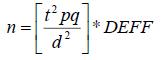
Where
n is sample size, t is linked to 95% level of confidence for cluster sampling, p is expected prevalence , q is expected non-prevalence (1-p), d is relative desired precision rate and DEFF is design effect.
Since there are no previous information about the prevalence of information acquisition and design effect, 50% and 1.5 have been used respectively. The desired precision rate was set at 5%.
Consequently, the sample size was estimated as follows.
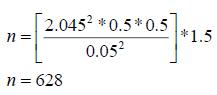
Therefore, 628 households were included in the study, each contributing one participant to the study; hence, the sample size was 628.
3.2
Data collectionA modified Health Information National Trends Survey (HINTS) questionnaire was used to collect data on information needs regarding COVID-19 and information sources used by the general public in April 2022. Ten research assistants were trained for 2 days on how to administer the questionnaires to research participants to ensure quality and accurate data. Furthermore, pre-testing of the research instrument was implemented to assess effectiveness of the tool in capturing information. Where possible, some questions were modified and paraphrased to suit the research participants. The researchers adapted already validated existing data collection tool. Cronbach's alpha obtained for the data in the study was 0.89 signifying excellent internal consistency reliability.
3.3
Data collectionHINTS questionnaire was used to collect data on information needs regarding COVID-19 and information sources used by the general public. The researchers adapted an already validated data collection tool. HINTS is a validated instrument developed by National Cancer Institute, USA (Nelson, Kreps, Hesse, Croyle, Willis, Arora, Rimer, Vish Viswanath, Weinstein, & Alden, 2004). Furthermore, pre-testing of the research instrument was implemented to assess effectiveness of the tool in capturing information. Where possible, some questions were modified and paraphrased to suit the research participants. Cronbach's alpha obtained for the data in the study was 0.89 signifying excellent internal consistency reliability.
Final year nursing students from Kamuzu University of Health Sciences (KUHeS) were recruited as research assistants to collect data for the study. These students went through a comprehensive training on how they could effectively collect data using the HINTS questionnaire. They were also trained on ethical standards in data collection in order to minimise bias.
Paper based questionnaire was used to collect data, where the participants in the households were given a copy of questionnaires to fill. Throughout the process of data collection, data collectors were available to provide clarification and address any questions participants had. The research assistants refrained from interfering with participants as they completed the questionnaires, in order to ensure the integrity of the data collection process.
3.4
Data analysisWe used descriptive statistics to summarise the characteristics of the study participants and the sources and types of COVID-19 information they used. Mean and frequencies were computed and reported on continuous and categorical variables, respectively. Cronbach's alpha was computed to measure reliability and validity of the tool. Furthermore, binary logistic regression which is inferential statistical method was performed to identify predictors of access to online services at 5% level of significance. Results were presented in tables and charts. All analyses were conducted using Statistical Package for the Social Sciences (SPSS) version 23.
3.5
Ethical considerationsEthical approval for the study was obtained from the College of Medicine Research and Ethics Committee (COMREC). Written informed consent was obtained from all participants, and they were assured of their voluntary participation before agreeing to participate in the study.
4 Results
This section presents the results of this study.
4.1 Demographic information
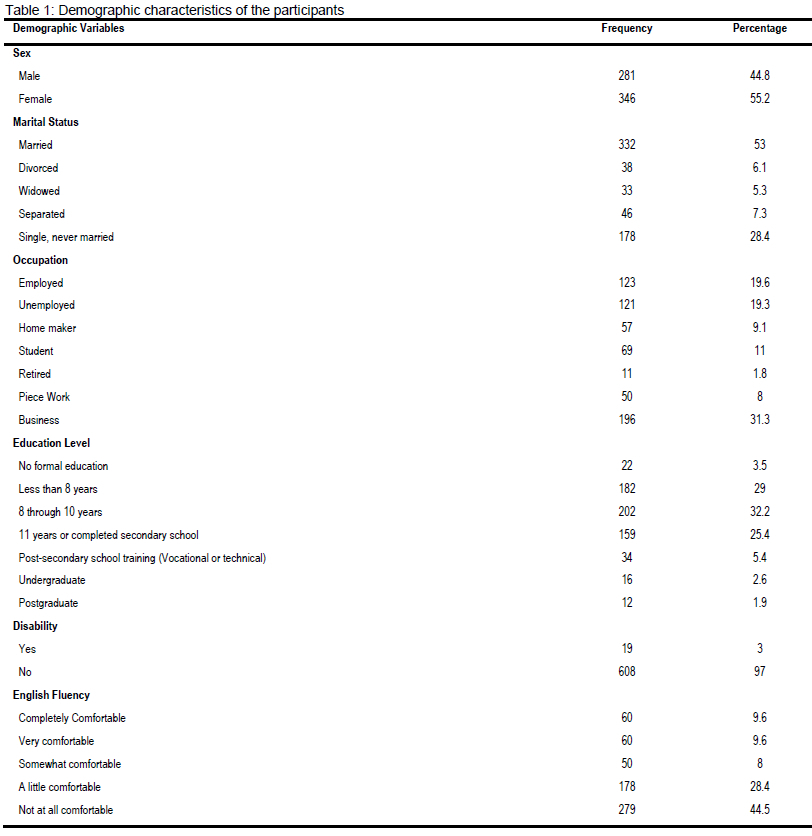
The survey involved 627 residents of Chilinde and Chinsapo against the planned sample size of 628, representing a response rate of 99.8 as one participant voluntarily withdrew from participating in the study while completing the questionnaire. The descriptive statistics of the sociodemographic variables are presented in Table 1. The mean age of the participants was 33.3 years with ages ranging from 18 to 82 years. Females accounted for the majority representing 55.2%. majority of the participants were married (53%, n=332), followed by those who were single, and never married (28.4%, n=178). Results further indicate that most of the participants were doing business to earn a living (31%, n=196) and those who had retired had the least representation (1.8%, n=11) among the seven categories of occupation. In terms of education, 32.2% had completed 8 through 10 years of study. Few participants (1.9%, n=12) had attained a postgraduate education. The results indicated that 3% (n=19) were disabled. In terms of English fluency, 44.5% (n=279) indicated that they were not at all uncomfortable speaking English.
4.2 Information about COVID-10
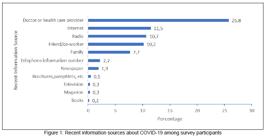
To determine if participants actively looked for COVID-19 information, we asked them, "Have you ever looked for information about COVID-19 from any source?". We also asked participants to state the sources they went to first when looking for COVID-19 information.
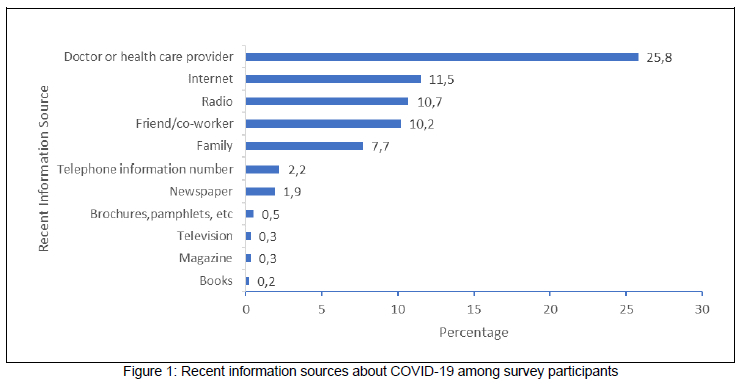
The majority of the participants (71.3%, n=447) reported that they had looked for information about COVID-19 from some sources. As presented in Figure 1, doctors and healthcare providers were the most recent sources of information.
4.3 Confidence in accessing COVID-19 information
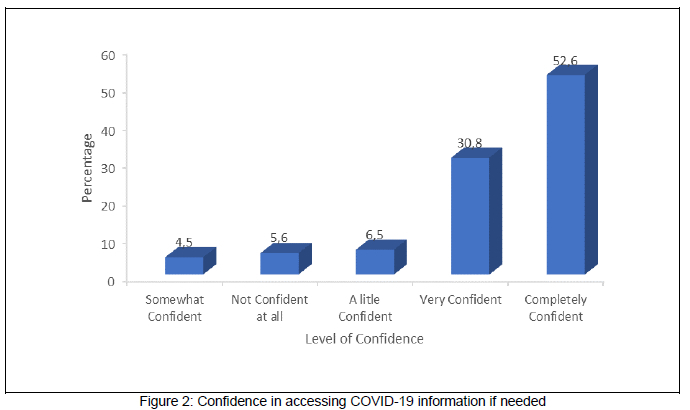
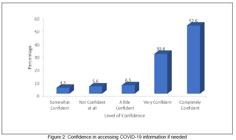
When asked about their confidence in accessing advice or information about COVID-19 if they needed it, the majority of the participants (52.6%, n=330) were completely confident that they would get the information. Another section of the participants indicated not having confidence at all (5.6%, n=35) in obtaining information about COVID-19 if needed.
4.4 Level of anxiety in getting the disease
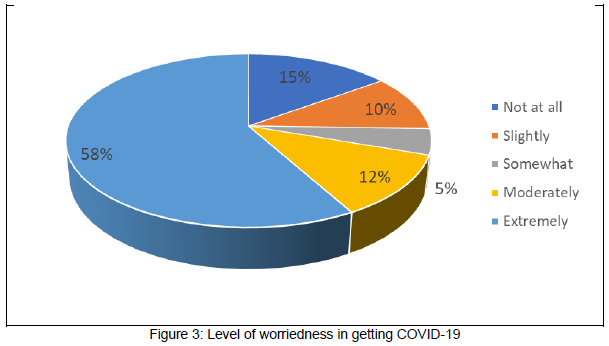
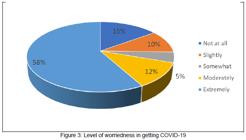
Regarding the level of anxiety about getting the disease, results have shown that 58.1% (n=364) were extremely worried about getting infected with COVID-19, whereas only 15% (n=94) were not worried at all. The results further revealed that only 35.6% (n=223) were able to go for the COVID-19 test. The majority (64%, n=401) did not go for the test, while 0.5% (n=3) were not sure if they had the test or not.
4.5 Trust towards COVID-19 information sources
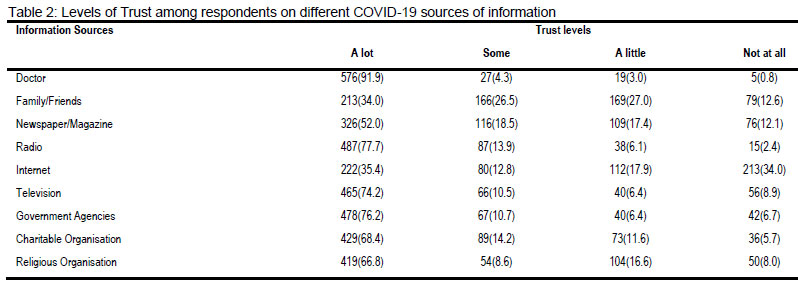
The survey showed that people trusted more information coming from doctors (91.9%, n=576), followed by information coming from the radio (77.7%, n=487). The study further found that 76.2% trusted information from government agencies. The results also indicated that some participants (34%, n=213) did not at all trust Internet as a source of COVID-19 information.
4.6
Comfortability with EnglishRegarding comfortability with English, the results show that participants who are little or not comfortable with English are less likely to access online materials than those who were completely comfortable with English. The odds of the participants who had little or no comfortability at all accessing Internet were 55.3% and 73.6% less than those who were completely comfortable with English, respectively. In addition, the results indicated that occupation influences access to the Internet. Unemployed participants had a lower chance of accessing online materials than those who were employed. The odds of unemployed participants accessing the Internet were 51.7% less than those employed. An increase in age was also found to affect access to online materials. A one-year increase in age by participants reduced the chance of accessing online materials by 6.3%.
4.7
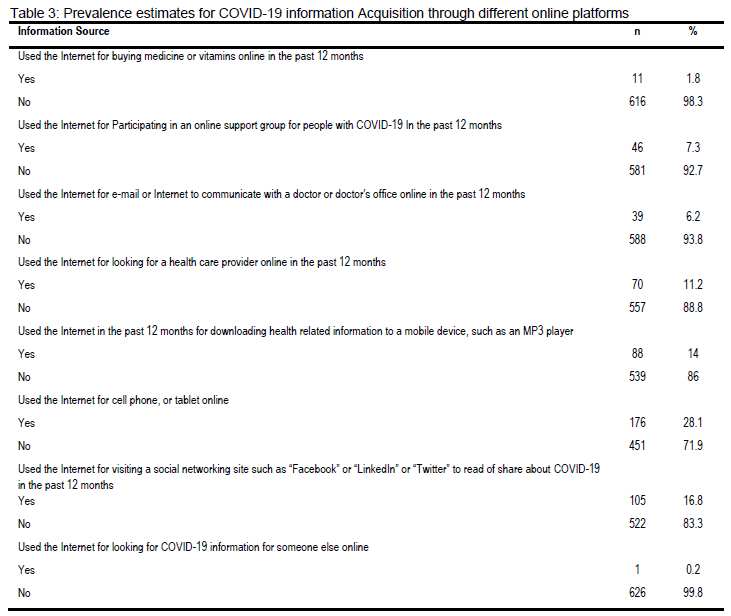
Acquisition of COVID-19 information through different online platformsThe survey indicated that only 32.7% (n=205) of participants had access to online platforms. Online activities among the participants were generally low, with approximately 1.8 % (n=11) reporting they had bought medicines or vitamins online, and 7.3% (n=46) participating in an online support group for people with COVID-19. On the other hand, 6.2% (n=39) of the participants reported having ever used an email or the Internet to communicate with a doctor or doctor's office, 11.2% (n=70) had looked for health care providers online, and 14% (n=88) had used the Internet to download health-related information to a mobile device. The study further found that 16.7% (n=105) of the participants were able to visit social networking platforms such as Facebook, Linkedln, or Twitter to read or share COVID-19 information 12 months before the study. Only one participant indicated that they had ever looked for COVID-19 information on the Internet for someone else.
4.8 Predictors of access to online services
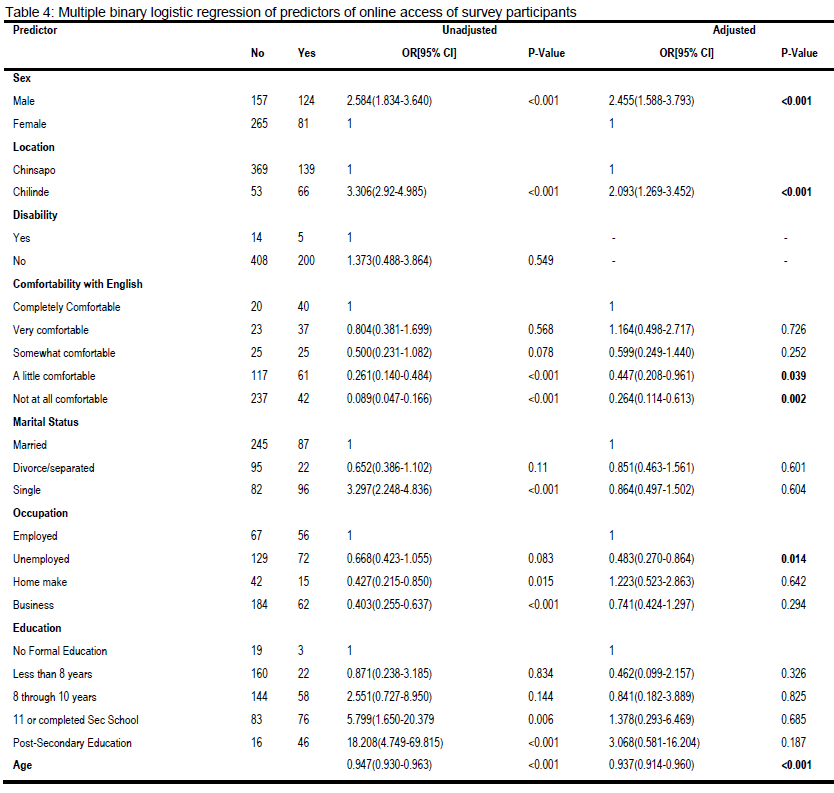
To identify the predictors of access to online services, binary logistic regression was performed. First, simple binary logistic regression was performed to identify variables for multiple binary logistic regression. The variables whose p-values from the bivariate analysis were equal to or less than 0.2 were candidates for multiple logistic regression. Consequently, disability [P =0.549;, OR 1.373; 95% CI (0.488-3.864)] was excluded from the list of variables for multiple logistic regression.
In multiple logistic regression analysis, the factors most strongly associated with online access included sex [p <0.001, OR 2.455, 95% CI (1.588-3.793)], location [p-value <0.001, OR 2.093, 95% CI (1.269-3.452)], comfort with English [p-value 0.002, OR 0.264, 95% CI (0.114-0.613)], occupation [p-value 0.014, OR 0.483, 95% CI (0.270-0.864)], and age [p-value<0.001, OR 0.937, 95% CI (0.914-0.960)] at 5% level of significance.
Based on the multiple logistic regression results, male respondents have a higher chance of having online access to COVID-19 information than their female counterparts. The chances of obtaining online COVID-19 information by males were 2.455 times that of females. The results further show that participants from Chilinde were more likely to have online access, unlike those residing in Chinsapo. The odds of accessing online information materials for those coming from Chilinde were 2.093 times that of participants residing in Chinsapo. On comfortability with English, results show that participants who are little or not comfortable with English are less likely to access online materials as compared to those participants who are completely comfortable with English. The odds of the participants who have little comfortability and no comfortability at all accessing internet are 55.3% and 73.6% less than those who have completely comfortability with English respectively.
Besides, results indicate that occupation has influence on access to internet. Participants who are unemployed have less chance of accessing online materials as compared to those who are employed. The odds of unemployed participants accessing internet are 51.7% less than those employed. Lastly, it is more evident based on results that with an increase in years, participants are less likely to access materials online. One-year increase in age by participants reduces the chance of accessing online materials by 6.3%.
5. Discussion
In our study, although the Internet was used as a source of COVID-19 information, it was identified as the second-least trusted. Respondents in our study thought that COVID-19 information should be provided by official sources such as doctors. Similar to our study, social media had limited acceptance as a source of COVID-19 information in Greece (Skarpa & Garoufallou 2021). In Skarpa and Garoufallou's study, participants stated that they chose social media as a source of information, not for its credibility but out of habit. Commentators have observed that COVID-19 related directives that were issued by government and hospital authorities were obeyed due to fear of sanctions (Tengatenga et al., 2021). It can therefore also be argued that in a survey like ours, people are bent on identifying these as trusted because of the authority they hold.
Our study was conducted at the end of the pandemic period. This is reflected in the results where most people were confident that they would find COVID-19 information that they needed. The reasonably high numbers of people who were confident that they would find COVID-19 information should they need it can be attributed to the government's information campaign when the disease was declared a pandemic. A study done by Olaimat, Aolymat, Shahbaz and Holley (2020) also found that the majority of participants had correct knowledge of COVID-19. However, this study showed that the level of knowledge was directly associated with the level of education. In our study, we did not measure the accuracy of the participants' knowledge. With widespread concern about the phenomenon of fake news on COVID-19 (Skarpa & Garoufallou, 2021), it is important to ensure that people have correct information about COVID-19.
Our study found that the most commonly used sources of information in Chilinde and Chinsapo townships were doctors and health workers. In contrast, an online survey administered by Mohammed et al. (2022), identified social media as a commonly used source of COVID-19 information. In our study, the use of social media as a source of COVID-19 was associated with educational level. Therefore, the low usage of social media in our study could be attributed to the low education levels and low confidence in the English language among most participants. Most content on social media is in English, which requires a certain degree of postsecondary education. Our finding is supported by some previous studies (Clayman, Manganello, Viswanath, Hesse, & Arora, 2010; Koo, 2016) that have shown that people with higher levels of education and that were more comfortable with the English language, were more likely to use online health information sources.
Unlike our study participants, most people in Taiwan relied on the Internet as a reliable source of information (Dubey, Biswas, Ghosh, Chatterjee, Subhankar, Dubey, Chatterjee, Subham, Lahiri & Lavie, 2020). Although Internet penetration in Malawi was at a low 18 percent as of January 2021 (Datreportal, 2021), issues discussed on online platforms shaped the public discourse about important topics, including COVID-19. With 35 percent of our respondents trusting information found on the Internet in a country with such low Internet penetration was significant. Many of the participants (44.5%) we interviewed were not confident in the English language. We also found that comfortability with English was associated with increased Internet use. We found that men were more likely to use the Internet as a source of COVID-19 information. These results were corroborated by those reported by Pénard, Poussing, Zomo Yebe and Ella (2012) in Gabon, where the level of education and computer skills were associated with increased use of the Internet as a source of information. Unlike Malawi, Taiwan experienced a complete lockdown during the pandemic, resulting in people staying indoors (Dubey et al., 2020).
Consequently, the Internet was the only available source of information in Taiwan (Dubey et al., 2020). Contrary to our findings, a scoping review conducted by Ades (2020) found that women were more likely to use social media as a source of COVID-19 information. Unlike our study, most participants in the studies reviewed by Ades attained college education or higher. However, Rowley, Johnson and Sbaffi (2017) observed that the differences between men and women in the use of mobile devices to access health information were subtle. Additionally, Rowley et al. observed that women tend to use a wide range of information sources. In addition, the Malawi women were the primary caregivers. As such, they visit the hospital for their illnesses and for other family members' illnesses.
This resonates with Dervin's (1998) definition of context as a situation bounded by time and space, where information problems arise and sense-making occurs. On the other hand, Reisdorf, Blank, Bauer, Cotten, Robertson and Knittel (2021) found a statistically significant association between the number of types of information sources used and gender, education, income, online ability, children in the home, and area of residence. Unlike Rowley et al. (2017), Reisdorf et al. observed that women used fewer types of information sources than men. This is consistent with the findings of our study, in which men were more likely to use social media than women were.
Most people have experienced anxiety during the COVID-19 pandemic. Anxiety was caused by a lack of information that would assist them in avoiding viral infection. The findings of our study showed that the majority of people were confident that if they needed COVID-19 information, they would find some. This is reflected in the finding that the majority were not worried that they would be infected with COVID-19. In their study, Vintila, Tudorel, Stefanut, Ivanoff and Bucur (2022) found that a lack of COVID-19 information caused anxiety and stress in many people. They further observed that anxiety resulted from a lack of information and misinformation about the spread of COVID-19 through social media.
6. Conclusion and recommendations
Accurate information regarding pandemics such as COVID-19 is essential for lowering anxiety and enabling informed decisions among people. The study found that 58% of participants experienced anxiety as they were extremely worried about getting infected with COVID-19. Higher levels of anxiety were attributed to a lack of reliable information regarding COVID-19. Consequently, they actively sought information about the virus. Most participants displayed high levels of confidence in their information-seeking efforts related to COVID-19. Furthermore, it is clear that healthcare professionals were important primary providers of information in this situation. The results indicated poor utilisation of the Internet to obtain information about COVID-19, with a significant number of participants having difficulty with English, which made it challenging for them to efficiently use online resources. It was also found that gender and location were among the predictors of the use of the Internet to access information on COVID-19.
This study recommends using a variety of platforms to disseminate information in crisis situations in future. It further recommends encouraging people to obtain this information through media sources such as radio, newspapers, and television. This strategy could help people who have difficulty obtaining information to have easy access to information through various sources. This method could also help to reach a larger audience with vital and timely information, thereby enabling people to make the right decisions.
Furthermore, the study stresses the critical need to raise public awareness of reputable Internet resources that might be beneficial during times of crisis. This includes information professionals such as librarians offering guidance on how to determine the reliability of websites, cross-checking material with respectable health organisations, and developing critical thinking skills while dealing with crisis-related online content. This has the ability to increase user trust in using Internet information efficiently in crucial situations.
The study emphasises the need to empower the general public to actively evaluate information sources in times of crisis such as natural disasters, pandemics, and other emergencies. This could help in ensuring that people are making decisions based on right information.
References
2 Literature review
- Ades, A.S., 2020. The effective of health communication about the awareness of COVID-19 through social media. Social Medicine, 13(3): 118-126.
- Adu-Gyamfi, S. & Asante, E. 2022. Sources of information about COVID-19 among older adults in Ghana, 2019-2021. Journal of Social, Behavioral, and Health Sciences, 16(3): 1-18. https://doi.org/10.5590/JSBHS.2022.16.1.01
- Albright, K.S., Kawooya, D. & Hoff, J. 2007. "Information vaccine: information and Uganda's reduction of HIV/AIDS". In: McHarazo, A. and Koopman, S. (eds). Librarianship as a bridge to an information and knowledge society in Africa. IFLA: The Hague. pp. 486-499.
- Azlan, A.A., Hamzah, M.R., Sern, T.J., Ayub, S.H. & Mohamad, E. 2020. Public knowledge, attitudes and practices towards COVID-19: A cross-sectional study in Malaysia. PLOS ONE, 15(5): e0233668. https://doi.org/10.1371/journal.pone.0233668
- Bin Naeem, S., Kamel Boulos, M.N., 2021. COVID-19 misinformation online and health literacy: a brief overview. International Journal of Environmental Research and Public Health, 18(15): 8091.
- Brennen, J.S., Simon, F.M., Howard, P.N. & Nielsen, R.K. 2020. Types, sources, and claims of COVID-19 misinformation (PhD Thesis). University of Oxford: Oxford.
- Brownell, C.J., 2023. 'COVID taught me...': examining child-radio productions in the COVID-19 pandemic. Children & Society, 37(1): 55-70. https://doi.org/10.1111/chso.12616
- Campolino, L.M., Bernardes, J.M., Alonso, M.S., Gómez-Salgado, J., Ruiz-Frutos, C., Domínguez-Salas, S. & Días, A. 2022. Communication, information, and knowledge in the pandemic by COVID-19 in Brazil. Medicine ,101(28): e29559. https://doi.org/10.1097/MD.0000000000029559
- Chen, X., Zhang, S.X., Jahanshahi, A.A., Alvarez-Risco, A., Dai, H., Li, J. & Ibarra, V.G. 2020. Belief in a COVID-19 conspiracy theory as a predictor of mental health and well-being of health care workers in Ecuador: cross-sectional survey study. JMIR Public Health and Surveillance, 6(3): e20737. https://doi.org/10.2196/20737
- Clayman, M.L., Manganello, J.A., Viswanath, K., Hesse, B.W. & Arora, N.K., 2010. Providing health messages to Hispanics/Latinos: understanding the importance of language, trust in health information sources, and media use. Journal of Health Communication, 15(3): 252-263. https://doi.org/10.1080/10810730.2010.522697
- Costantini, H. 2021. COVID-19 vaccine literacy of family carers for their older parents in Japan. Healthcare, 9 (8): 1038. https://doi.org/10.3390/healthcare9081038
- Datreportal, 2021. Digital in Malawi: all the statistics you need in 2021 [Online]. DataReportal - Global Digital Insights. https://datareportal.com/reports/digital-2021-malawi (accessed on 25 August 2023).
- Davis, C.J., Golding, M., McKay, R., 2022. Efficacy information influences intention to take COVID-19 vaccine. British Journal of Health Psychology, 27(2): 300-319. https://doi.org/10.1111/bjhp.12546
- de Maio Nascimento, M., 2020. Covid-19: U3A students' report on the impacts of social isolation on physical and mental health and access to information about the virus during the pandemic. Educational Gerontology, 46(9): 499-511. https://doi.org/10.1080/03601277.2020.1795371.
- Dervin, B. (1998). Sense-making theory and practice: An overview of user interests in knowledge seeking and use. Journal of Knowledge Management, 2(2): 36- 46.
- Dubey, S., Biswas, P., Ghosh, R., Chatterjee, Subhankar, Dubey, M.J., Chatterjee, Subham, Lahiri, D., Lavie, C.J., 2020. Psychosocial impact of COVID-19. Diabetes & Metabolic Syndrome: clinical research & reviews, 14(5): 779-788.
- Fernández-Torres, M.J., Almansa-Martínez, A. & Chamizo-Sánchez, R., 2021. Infodemic and fake news in Spain during the COVID-19 pandemic. International journal of environmental research and public health, 18(4):1781.
- Guterres, M.M.O., 2022. Secretary-General's remarks at the Security Council Debate on United Nations Peacekeeping Operations: the key role of strategic communications [Online]. United Nations: Geneva. https://www.un.org/sg/en/content/sg/statement/2022-07-12/secretary-generals-remarks-the-security-council-debate-united-nations-peacekeeping-operations-the-key-role-of-strategic-communications-bilingual-delivered-scroll-down (accessed on 18 April 2023).
- Hernández-García, I. & Giménez-Júlvez, T. 2020. Assessment of health information about COVID-19 prevention on the internet: infodemiological study. JMIR public health and surveillance, 6(2): e18717.
- Islam, A.K.M.N., Laato, S., Talukder, S. & Sutinen, E. 2020. Misinformation sharing and social media fatigue during COVID-19: an affordance and cognitive load perspective. Technological Forecasting and Social Change, 159: 120201. https://doi.org/10.1016/j.techfore.2020.120201
- Javaid, M. & Khan, I.H. 2021. Internet of Things (IoT) enabled healthcare helps to take the challenges of COVID-19 Pandemic. Journal of Oral Biology and Craniofacial Research, 11(2): 209-214. https://doi.org/10.1016/j.jobcr.2021.01.015
- Jiyajiya, P.M. & Mtenje-Mkochi, A. 2022. Linguistic and communication exclusion in COVID-19 awareness campaigns in Malawi. Journal of African Media Studies, 14(3): 455-470. https://doi.org/10.1386/jams_00088_1
- Kerr, J.R., Freeman, A.L., Marteau, T.M. & van der Linden, S. 2021. Effect of information about COVID-19 vaccine effectiveness and side effects on behavioural intentions: two online experiments. Vaccines, 9(4): 379.
- Khan, Y.H., Mallhi, T.H., Alotaibi, N.H., Alzarea, A.I., Alanazi, A.S., Tanveer, N. & Hashmi, F.K., 2020. Threat of COVID-19 vaccine hesitancy in Pakistan: the need for measures to neutralize misleading narratives. The American journal of tropical medicine and hygiene, 103(2): 603.
- King, G., Pan, J. & Roberts, M.E. 2017. How the Chinese government fabricates social media posts for strategic distraction, not engaged argument. American political science review, 111 (3): 484-501.
- Koo, J.H. 2016. Information-seeking within negative affect: lessons from North Korean refugees' everyday information practices within PTSD. Journal of the Korean Society for Library and Information Science, 50(1): 285-312.
- Laskar, K.A. & Bhattacharyya, B. 2021. Community radio stations' production responses to COVID-19 pandemic in India. Media Asia, 48 (4): 243-257. https://doi.org/10.1080/01296612.2021.1970421
- Mahnaz, M., 2021. Citizens' trust in government as a function of good governance and government agency's provision of quality information on social media during COVID-19. Government Information Quarterly, 38(4): 101597. https://doi.org/10.1016/j.giq.2021.101597
- Malanga, D. & Adu-Boahen, E. 2022. Fighting online misinformation and disinformation in Malawi amidst the Covid-19 pandemic: a multi-stakeholder collaborative approach. In: Global Information Society Watch 2021-2022 - Digital Futures for a Post-Pandemic World (Online). https://www.giswatch.org/sites/default/files/Malawai.pdf (Accessed on 6 May 2024).
- Manda, L.Z. 2021. Exploring COVID-19 infodemic in rural Africa: a case study of Chintheche, Malawi. Journal of African Media Studies, 13(2): 253-267. https://doi.org/10.1386/jams_00047_1
- Mmanga, C., Ndasauka, Y., Kainja, J., Kondowe, F., Mchenga, M., Maliwichi, L. & Nyamali, S. 2023. The world is coming to an end! COVID-19, depression, and anxiety among adolescents in Malawi. Frontiers in Psychiatry 13: 1-11.
- Mohammed, M., Sha'aban, A., Jatau, A.I., Yunusa, I., Isa, A.M., Wada, A.S., Obamiro, K., Zainal, H. & Ibrahim, B. 2022. Assessment of COVID-19 information overload among the general public. Journal of Racial and Ethnic Health Disparities, 9(1): 184-192. https://doi.org/10.1007/s40615-020-00942-0
- Moon, M.J. 2020. Fighting COVID-19 with agility, transparency, and participation: wicked policy problems and new governance challenges. Public administration review, 80(4): 651-656.
- Naeem, S.B. & Bhatti, R. 2020. The Covid-19 'infodemic': a new front for information professionals. Health Information & Libraries Journal, 37(3): 233-239.
- Naeem, S.B., Bhatti, R. & Khan, A., 2021. An exploration of how fake news is taking over social media and putting public health at risk. Health Information & Libraries Journal, 38(2): 143-149.
- Nelson, D., Kreps, G., Hesse, B., Croyle, R., Willis, G., Arora, N., Rimer, B., Vish Viswanath, K., Weinstein, N. & Alden, S. 2004. The Health Information National Trends Survey (HINTS): development, design, and dissemination. Journal of Health Communication, 9(4): 443-460. https://doi.org/10.1080/10810730490504233
- Neria, Y. & Sullivan, G.M., 2011. Understanding the mental health effects of indirect exposure to mass trauma through the media. Jama, 306(12): 1374-1375.
- Nkambule, E. & Mbakaya, B.C. 2024. COVID-19 vaccination hesitancy among Malawians: a scoping review. Systematic Reviews, 13(1): 77. https://doi.org/10.1186/s13643-024-02499-z
- Nyondo-Mipando, A.L., Nyirenda, D., Suwedi-Kapesa, L., Chirwa, M., Nyapigoti, W., Chirambo, L., Singini, R. & Mwapasa, V. 2022. "Why take the patient back home?": exploring the lived experiences of caregivers of COVID-19 infected individuals in Blantyre, Malawi. PLOS Global public health, 3(9): e0001601. https://doi.org/10.21203/rs.3.rs-2127905/vl
- Olaimat, A.N., Aolymat, I., Shahbaz, H.M. & Holley, R.A. 2020. Knowledge and information sources about COVID-19 among university students in Jordan: a cross-sectional study. Frontiers in public health, 8: 254.
- Pénard, T., Poussing, N., Zomo Yebe, G. & Ella, N. 2012. Comparing the determinants of internet and cell phone use in Africa: evidence from Gabon. Communications & Strategies, 86: 65-83.
- Reisdorf, B., Blank, G., Bauer, J.M., Cotten, S.R., Robertson, C. & Knittel, M. 2021. Information-seeking patterns and COVID-19 in the United States. Journal of Quantitative Description: Digital Media 1(2021): 1-38.
- Rolandi, E., Vaccaro, R., Abbondanza, S., Casanova, G., Pettinato, L., Colombo, M. & Guaita, A. 2020. Loneliness and social engagement in older adults based in Lombardy during the COVID-19 lockdown: the long-term effects of a course on social networking sites use. International journal of environmental research and public health, 17(21): 7912.
- Romer, D. & Jamieson, K.H. 2020. Conspiracy theories as barriers to controlling the spread of COVID-19 in the US. Social science & medicine, 263: 113356.
- Safary, E. & Mtaita, C. 2022. A qualitative exploration of perceptions of the COVID-19 vaccine in Malawi during the vaccine rollout phase. One Health & Implementation Research, 2(2): 79-87.
- Samuels, R. 2022. Garwood: Westfield Regional Health Department monthly Covid-19 update [Online]. Clark-Garwood: NJ Patch. URL https://patch.com/new-jersey/clark/garwood-westfield-regional-health-department-monthly-covid-19-update (accessed 20 August 2023).
- Skarpa, P.E., Garoufallou, E., 2021. Information seeking behavior and COVID-19 pandemic: a snapshot of young, middle aged and senior individuals in Greece. International journal of medical informatics, 150: 104465.
- Soleymani, M.R., Esmaeilzadeh, M., Taghipour, F. & Ashrafi-rizi, H. 2021. COVID-19 information seeking needs and behaviour among citizens in Isfahan, Iran: a qualitative study. Health Information & Libraries Journal, 40(4): 359-370.
- Stephens, M. 2020. A geospatial infodemic: mapping Twitter conspiracy theories of COVID-19. Dialogues in Human Geography, 10(2): 276-281.
- Stringer, E.T, 2014. Action research. Thousand Oaks, Carlifonia: SAGE Publications.
- Sulistyawati, S., Rokhmayanti, R., Aji, B., Wijayanti, S.P.M., Kurnia Widi Hastuti, S., Sukesi, T.W. & Mulasari, S.A. 2021. Knowledge, Attitudes, practices and information needs during the COVID-19 pandemic in Indonesia. Risk Management and Healthcare Policy, 14: 163-175. https://doi.org/10.2147/RMHP.S288579
- Talabi, F.O., Oyedeji, K.A., Adelabu, O., Sanusi, B.O., Adaja, T., Talabi, J.M., Bello, S.A., Lamidi, I.K. & Alade, M. 2022. Public perception of radio campaign messages in managing COVID-19 pandemic in selected states, Nigeria. Human Vaccines & Immunotherapeutics, 18(5): 2085958. https://doi.org/10.1080/21645515.2022.2085958
- Tangcharoensathien, V., Calleja, N., Nguyen, T., Purnat, T., D'Agostino, M., Garcia-Saiso, S., Landry, M., Rashidian, A., Hamilton, C. & AbdAllah, A. 2020. Framework for managing the COVID-19 infodemic: methods and results of an online, crowdsourced WHO technical consultation. Journal of medical Internet research, 22(6): e19659.
- te Poel, F., Linn, A.J., Baumgartner, S.E., van Dijk, L., Smit, E.S. 2021. Sick for information?: information needs and media use of the Dutch public during the Covid-19 pandemic. European Journal of Health Communication, 2(3): 2443.
- Tengatenga, J., Tengatenga Duley, S.M. & Tengatenga, C.J. 2021. Zimitsani Moto: understanding the Malawi COVID-19 response. Laws 10(2): 20. https://doi.org/10.3390/laws10020020
- Tovstiga, N., Tovstiga, G. 2021. COVID-19: a knowledge and learning perspective. Knowledge Management Research & Practice, 19(4): 427-432.
- Vintila, M., Tudorel, O.I., Stefanut, A., Ivanoff, A. & Bucur, V. 2022. Emotional distress and coping strategies in COVID-19 anxiety. Current Psychology, 42(20): 1-10.
- Wang, P.-W., Lu, W.-H., Ko, N.-Y., Chen, Y.-L., Li, D.-J., Chang, Y.-P. & Yen, C.-F. 2020. COVID-19-related information sources and the relationship with confidence in people coping with COVID-19: Facebook survey study in Taiwan. Journal of medical Internet research, 22(6): e20021.
- Whitehead, H.S., Songo, J., Phiri, K., Kalande, P., Lungu, E., Phiri, S., Van Oosterhout, J.J., Hoffman, R.M. & Moucheraud, C. 2023. Correlates of uptake of COVID-19 vaccines and motivation to vaccinate among Malawian adults. Human Vaccines & Immunotherapeutics, 19(2): 2228168. https://doi.org/10.1080/21645515.2023.2228168
- Wilson-Nash, C., Pavlopoulou, I. & Wang, Z. 2023. Selecting, optimizing, and compensating during lockdown: How older consumers use social networking services to improve social well-being. Journal of Interactive Marketing, 58(2-3): 301-320.
- World Health Organisation, 2022. COVID-19 pandemic: countries urged to take stronger action to stop spread of harmful information [Online]. URL https://www.who.int/news/item/23-09-2020-covid-19-pandemic-countries-urged-to-take-stronger-action-to-stop-spread-of-harmful-information (accessed 6 May 2023).
- Wu, X., Shi, L., Lu, X., Li, X., Ma, L., 2022. Government dissemination of epidemic information as a policy instrument during COVID-19 pandemic: evidence from Chinese cities. Cities, 125(2022): 103658. https://doi.org/10.1016/j.cities.2022.103658
- Yavetz, G., Aharony, N. & Sofer, Y.Y. 2022. Information needs and seeking behaviors of Israeli citizens during the COVID-19 outbreak. Aslib Journal of Information Management, 75(4), 752-772.
- Zheng, Y., Goh, E. & Wen, J. 2020. The effects of misleading media reports about COVID-19 on Chinese tourists' mental health: a perspective article. Anatolia, 31(2): 337-340.
Accepted: 13 May 2024