Enhancing social presence in asynchronous instruction: a focus on a higher education institution in Zimbabwe
Abstract
This research investigated strategies to cultivate social interaction and a sense of community within an asynchronous information literacy programme for instructors and learners at a Zimbabwean academic institution. Employing a pragmatic epistemology, the study utilised a parallel convergent mixed methods design, combining questionnaires and interviews for data collection. The sample consisted of 87 enrolled students in their first year, first semester of study and four lecturers. The student sample size (calculated using an online tool) ensured a 95% confidence level with a 5% margin of error. The four participant instructors were purposely included. Findings revealed that asynchronous methods - discussion forums, pre-recorded lectures, uploaded materials, online group projects and quizzes - were unsuccessful in fostering social presence or effective information literacy instruction. Challenges identified included the lack of real-time interaction, limited non-verbal cues and delayed feedback, which hindered the development of a cohesive online community and potentially diminished the quality of e-learning experiences. Based on these results, recommendations were made to improve the effectiveness of asynchronous learning. Implementing various communication channels (chat rooms, messaging systems, email) was suggested to promote connection and relationship building among participants. Encouraging instructors to facilitate non-academic activities was proposed to foster a sense of community within the online classroom. Additionally, providing real-time feedback, promptly responding to inquiries and encouraging learner collaboration were recommended strategies to create a supportive virtual learning environment that enhances the overall learning experience for all participants.
Academic institution; Asynchronous learning; Information literacy; Information literacy instruction; Social Isolation; Social Presence
1 Introduction
The COVID-19 pandemic precipitated a rapid transition to online learning within global academic institutions. This necessitated the concurrent implementation of synchronous and asynchronous instructional modalities, a pedagogical approach that persists today. While research substantiates the efficacy of these methods in knowledge dissemination, a critical gap has emerged in understanding the challenges to social presence, particularly within asynchronous learning environments. Social presence is defined as a learner's perception of interpersonal connection within a learning environment. It encompasses feelings of belonging, interaction and engagement (Kreijns, Xu & Weidlich 2022). While crucial in all educational contexts, social presence is particularly salient in asynchronous learning, where real-time communication is limited, potentially contributing to feelings of isolation (Sung & Mayer 2012). Asynchronous learning offers students the flexibility to access course materials and complete coursework at their own pace, fostering autonomy. However, this flexibility creates challenges in establishing a sense of community with peers and instructors (social presence). Disengaged learners may exhibit reduced motivation to actively participate, hindering knowledge acquisition. Additionally, the absence of non-verbal cues, crucial for building rapport and trust in face-to-face interactions, can impede accurate message interpretation and the development of empathy and mutual understanding among learners (Parrish et al. 2021). Furthermore, asynchronous environments that emphasise individual study and self-reflection may be less motivating than collaborative discussions and group work, potentially leading to feelings of isolation and disengagement, especially for learners who thrive on social interaction and feedback (Lee et al. 2024).
Despite the widespread adoption of asynchronous learning methodologies in Zimbabwean educational institutions as a consequence of the COVID-19 pandemic, a notable dearth of research exists specifically examining the implications of this mode of instruction within the local context. This study aimed to bridge this research gap by conducting an empirical investigation of the challenges to social presence encountered when delivering information literacy instruction through asynchronous methods at a selected Zimbabwean academic institution.
2 Statement of the problem
The COVID-19 pandemic compelled a rapid transition to asynchronous learning modalities within Zimbabwean higher education institutions. This pedagogical shift, while necessitated by circumstances, poses a potential risk to social presence, defined as students' perceptions of interpersonal interaction and connectedness within the online learning milieu. Asynchronous learning inherently creates temporal and spatial distance among students, instructors and the student cohort. This isolation can attenuate the richness of the learning experience, particularly for learners aligned with connectivism, a theory prioritising social interaction in knowledge construction.
The absence of social presence can adversely impact both student and instructor satisfaction. Research consistently underscores the significance of community and interaction in cultivating student motivation and engagement. Correspondingly, instructors may experience diminished job satisfaction due to the constraints of asynchronous communication in establishing rapport and assessing student comprehension. If left unaddressed, the erosion of social presence in asynchronous learning environments can lead to decreased student retention, academic performance and overall learning outcomes.
3 Purpose of the study
This study investigates strategies to cultivate social presence within an asynchronous information literacy programme for instructors and learners at a Zimbabwean academic institution. To realise this purpose, the following research objectives guided this study:
• To evaluate the effectiveness of asynchronous learning techniques used for information literacy instruction by the selected academic institution in Zimbabwe.
• To assess the challenges related to the social presence that arise in information literacy instruction within an asynchronous learning environment in the selected academic institution in Zimbabwe.
• To examine ways to enhance social presence in information literacy instruction using asynchronous learning methods in the selected academic institution in Zimbabwe.
3 Review of related literature
Dunlap and Lowenthal (2014) define social presence as the perception of someone being "real" in a mediated communication environment. This feeling of connection with others, despite physical distance, relies heavily on non-verbal cues (Borup et al. 2012). Information literacy training thrives on such interaction, fostering collaboration and engagement through activities like group discussions and peer reviews (Borup et al. 2012; McKay & Sridharan 2024). Information literacy, as defined by the Salim et al. (2018), is the ability to recognise when information is needed and to effectively locate, evaluate and utilise that information. This skillset is crucial for academic success, professional development and informed citizenship in today's information-rich society (Naik & Padmini 2014). Information literacy plays a pivotal role in fostering social presence and engagement in asynchronous learning environments. By enabling learners to effectively locate, evaluate and utilise information, information literacy empowers them to actively participate in online discussions, share relevant resources and build meaningful relationships with their peers and instructors (Badiger, Choudhary & Badiger 2017). Cultivating strong information literacy skills, learners can mitigate the potential challenges of asynchronous learning and foster a vibrant online community that supports their academic and personal growth (McKay & Sridharan 2024). As Kreijns et al. (2022) suggest, a fundamental goal of any educational endeavour is to cultivate a sense of community and active participation in the course content, including the development of information literacy skills.
Social presence further promotes critical thinking, diverse perspectives and network building among learners (Sung & Mayer 2012), and combats isolation and fosters belonging, ultimately leading to increased motivation (Bailey 2022; Kop 2011). However, the COVID-19 pandemic challenged the maintenance of social presence, particularly in education (Bailey 2022). Asynchronous learning emerged as a dominant mode of instruction due to school closures (Ratan et al. 2022). Defined by Perveen (2016) as a method where students and instructors need not be present simultaneously, asynchronous learning provides access to pre-recorded lectures, readings and discussion forums - all completed at the learner's pace. While widely used in online education, it can also be integrated into traditional classrooms (Ratan et al. 2022). Ahmed et al. (2019), Bailey (2022), Kop (2011), Lee et al. (2024), McKay and Sridharan (2024), Mudenda et al. (2023), Nuci et al. (2021), Parrish et al. (2021), Perveen (2016), Ratan et al. (2022), Rohr et al. (2022), Ross et al. (2018) and Sung and Mayer (2012) suggest the following types as being the most used in academic institutions:
(i) Self-paced courses: These courses consist of pre-recorded lectures, readings and assignments that students can complete at their own pace without any strict deadlines.
(ii) Discussion forums: Online discussion forums provide an avenue for learners to engage in discussions and share ideas with their peers and instructors asynchronously.
(iii) Recorded lectures: Recorded lectures give students the flexibility to watch and listen to course content at a time that suits them best.
(iv) Online quizzes and assessments: Students can take online quizzes and assessments at their convenience to test their understanding of the course material.
(v) Learning management systems (LMS): An LMS is a software application that enables educators to create, manage and deliver online courses and content asynchronously.
(vi) Interactive multimedia content: Interactive multimedia content such as videos, animations and simulations can be accessed asynchronously and provide an engaging and interactive learning experience.
(vii) Peer review: Assignments can be peer reviewed asynchronously, allowing students to receive feedback from their peers at a time that suits them best.
As highlighted earlier, asynchronous learning, while offering flexibility for students to progress at their own pace (Perveen 2016; Sung & Mayer 2012), presents distinct challenges to social presence (the perception of connection with others in a mediated environment) (Dunlap & Lowenthal 2014). One key challenge lies in potential isolation. Students may have limited opportunities for real-time interaction with peers, leading to disconnection and a diminished sense of community within the course (Berry 2019). Perveen (2016) emphasises that asynchronous learning necessitates different social interaction skills than face-to-face settings. Initiating communication with peers and instructors requires greater proactiveness due to the lack of shared physical space. Additionally, written communication can be more prone to misinterpretations than verbal communication (Ratan et al. 2022). Borup et al. (2012) highlight challenges faced by instructors in fostering a sense of community within asynchronous courses. Instructors must devise creative methods to encourage interaction, such as discussion forums or group projects, while still respecting students' pace. However, strategies exist to enhance social presence.
Borup et al. (2012) suggest that instructors should provide clear guidelines for student interaction and cultivate a positive learning environment. Kop (2011) and Ong and Quek (2023) advocate for encouraging collaborative work through tools like forums, group projects and wikis, fostering idea-sharing and collaboration that builds community. Mudenda et al. (2023) and Perveen (2016) emphasise encouraging constructive peer feedback and promoting trust and collaboration. Additionally, Borup et al. (2012) recommend incorporating multimedia content like videos, podcasts or interactive quizzes to create a more engaging and immersive learning experience, ultimately strengthening the sense of community. Previous research, such as that conducted by Borup et al. (2012), Kop (2011), Lee et al. (2024), McKay and Sridharan (2024), Ong and Quek (2023), Perveen (2016) and Ratan et al. (2022), has primarily centred on student agency in cultivating social presence. This study sought to expand upon these findings by examining both learner and instructor perspectives to identify novel strategies for enhancing social presence within the context of asynchronous information literacy instruction.
4 Theoretical underpinning
This study is grounded in connectivism, a learning theory emphasising the significance of networked knowledge and the construction of connections within those networks (Hendricks 2019). Given the research focus on social presence within technology-driven asynchronous learning, connectivism offers a compelling theoretical lens. This theory underscores the importance of connections and networks in the learning process, particularly in the digital age, where information is readily accessible through technology (Siemens 2005). The emphasis on connections is highly relevant to the investigation of social presence in asynchronous environments. Connectivism posits that learning occurs through the creation and strengthening of connections between learners, information sources and ideas (Hendricks 2019). Social presence, in this context, refers to the degree to which learners feel connected with peers and instructors in online learning settings. Interactive discussions, collaborative activities and multimedia content can all contribute to a stronger sense of social presence. Furthermore, connectivism highlights the centrality of social interactions and connections in learning. It suggests that learners actively engage with others and build networks to effectively acquire knowledge and skills (Kop 2011).
Similarly, social presence fosters a sense of community and engagement in online environments, creating opportunities for interaction, idea-sharing and collaborative learning. In essence, connectivism and social presence are intertwined concepts that emphasise the importance of social interactions and connections in knowledge construction. Connectivism moves beyond individual knowledge possession and emphasises the collective intelligence emerging from network interactions (Siemens 2005). This aspect is particularly relevant to this study, which explores asynchronous learning methods heavily reliant on technology. As connectivism argues, digital tools and platforms are crucial for creating and sustaining networks that facilitate knowledge sharing and collaboration (Kop 2011). This focus on technology aligns perfectly with the study's examination of asynchronous learning methods delivered through digital tools.
5 Methodology
This study adopted a pragmatic epistemology to examine social presence within asynchronous learning environments. Pragmatism emphasises the practical implications of knowledge, focusing on how different conceptions of social presence influence student connections with instructors and peers and, ultimately, impact learning outcomes (Hendricks 2019). The research explored the impact of communication tools and strategies (discussion forums, email, video lectures) on promoting social presence among learners. Factors like instructor feedback, peer support and collaborative activities were investigated for their role in fostering a sense of connection in online settings. This pragmatic approach extended to examining practical considerations in designing and implementing online courses. The study explored how course structure, workload and assessment methods influenced student perceptions of social presence. The goal was to identify ways to optimise these factors for positive learning outcomes.
A convergent parallel mixed methods design was utilised. A convergent parallel mixed methods research design involves the simultaneous collection of both quantitative and qualitative data (Creswell 2024; Ngulube 2022). These data streams are then analysed independently, using appropriate methods for each type of data. The findings from both analyses are integrated to provide a more comprehensive and nuanced understanding of the research problem. This approach allows researchers to explore both the breadth and depth of a phenomenon, combining the strengths of both quantitative and qualitative research methods. As such, this study involved concurrent data collection through both questionnaires and interviews (Creswell & Plano Clark 2018). Questionnaires were administered to students within the chosen academic institution, gathering quantitative data on their perspectives of social presence in asynchronous learning. This data provided insights into student attitudes towards collaboration, communication and feedback mechanisms. Semi-structured interviews were conducted with information literacy instructors. This qualitative approach yielded in-depth data on participants' experiences and perceptions of social presence. Interviews allowed for an in-depth exploration of individual instructors' perspectives, providing a comprehensive understanding of their perceptions regarding students' experiences and outcomes of information literacy instruction. Additionally, this approach facilitated the investigation of any challenges encountered during instruction.
The combined use of questionnaires and interviews yielded a holistic understanding of social presence in asynchronous learning environments. This comprehensive picture informed future refinements in instructional design, ultimately leading to improved learning experiences for information literacy students. The population comprised 87 students and four instructors. The study focused on first year, first-semester students, as they represented the cohort that underwent formal information literacy training. The student sample size was determined using an online tool to achieve a 95% confidence level with a 5% margin of error (n = 72). Due to the limited size of the instructor population (n = 4), all instructors were included in the study. Therefore, the final sample size comprised 76 participants (72 students and 4 instructors). Quantitative data analysis was performed using Statistical Package for the Social Sciences (SPSS) software. Qualitative data analysis employed QDA Miner Lite software. Data presentation utilised various techniques such as tables, graphs, thematic analysis, words and verbatim quotes. The study adhered to strict ethical considerations, including obtaining necessary ethical clearance, ensuring participant confidentiality through the use of pseudonyms and anonymity, and obtaining informed consent from all participants.
6 Research findings and discussions
This section adhered to presenting the study findings and is divided into subheadings, as derived from the research objectives. These included: the effectiveness of asynchronous learning methods and ways of enhancing social presence in asynchronous learning environments.
6.2
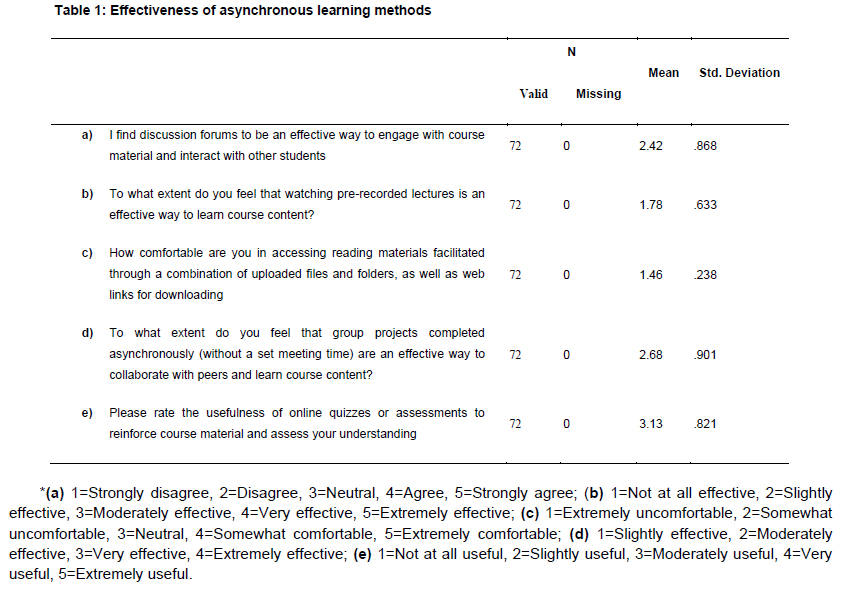
Discussion forumsTable 1 presents the results of the questionnaire regarding students' perceptions of discussion forums for engagement with course material and interaction with peers. As shown in Table 1, the average score of 2.42 on a Likert scale (disagreeing with the statement) suggests a lack of strong consensus on the effectiveness of discussion forums. The standard deviation of 0.868 further indicates variability in responses, ranging from strong disagreement to strong agreement. Notably, the neutral option suggests ambivalence among some students. These findings resonate with instructor feedback, indicating lower-than-anticipated participation in certain forums. One instructor observed a lack of student enthusiasm and engagement, with some not participating at all.
These results imply that while some students perceive discussion forums as valuable for engagement and interaction, there is no clear consensus. This variability suggests the need to explore the underlying reasons behind these differing opinions. This aligns with existing research, as studies like Kop (2011) and Ong and Quek (2023) report mixed findings on the effectiveness of discussion forums. Some studies find them beneficial, while others highlight issues like time constraints and lack of substantial discussion.
6.3
Pre-recorded lecturesData from Table 1 suggest that students rated pre-recorded lectures on information literacy content relatively low (mean score of 1.78 out of 5). The standard deviation of 0.633 indicates some variation in responses, but a general trend of perceiving them as less effective. Interviews with instructors (e.g., CASE: ILE3) corroborated this, revealing low download rates for their uploaded instructional videos despite significant time invested in creation.
This highlights a potential disconnect between instructor efforts and student learning preferences. Furthermore, instructors reported instances where students raised questions already addressed in videos, suggesting a lack of engagement with the pre-recorded content. These findings align with those of Ratan et al. (2022), where the undergraduate students rated pre-recorded lectures lower than other instructional materials. Similarly, Sadaf et al.'s (2021) meta-analysis of 30 studies suggests that pre-recorded lectures are generally less effective than live lectures or other online instruction formats. Taken together, the results point towards the potential limitations of pre-recorded lectures as the primary delivery method for information literacy content.
6.4
Accessing reading materialTable 1 also reveals student discomfort (mean rating of 1.46) with accessing reading materials delivered through a combination of uploaded files, folders and web links. The standard deviation of 0.238 indicates limited response variation, suggesting a consistent level of discomfort. Based on the interviews conducted, it was found that students generally do not go through the files and other materials that instructors upload online. One of the participants noted "It appears that students are accustomed to engaging in face-to-face interactions with their lecturers and peers, which makes it challenging for them to read materials individually. This tendency can be observed even amidst lockdown restrictions, as evidenced by their scheduling of face-to-face discussions through social online forums." (CASE: ILE4). What emerged from this finding was that instructors need to rethink their approach to providing reading materials to students. Simply uploading files, folders and web links may not be an effective way to engage students and encourage them to access the materials provided. The discomfort level of 1.46 indicated that students were not comfortable with this method, and the tight clustering around the mean suggested that this was a consistent sentiment across the study participants.
The fact that students generally do not go through the materials uploaded by the instructors further underscores the need for a more engaging and accessible approach to providing reading materials. These findings are supported by a study conducted by Mudenda et al. (2023), which found that most students were uncomfortable with accessing reading materials through similar methods during and after the COVID-19 pandemic.
6.5
Asynchronous group projectData from Table 1 indicate that students rated asynchronous information literacy group projects with a moderate effectiveness rating (mean score of 2.68 on a 1-5 scale). The standard deviation of 0.68 suggested some variation in responses, implying potential for improvement. Interviews revealed that most students did not favour asynchronous group projects. Participants expressed concerns about uneven workload distribution, with some students neglecting their responsibilities and relying on others to complete the work (CASE: ILE4).
This aligns with Tenenbaum et al.'s (2017) findings that asynchronous projects presented greater communication, coordination, and social cohesion challenges than face-to-face projects. Similarly, McKay and Sridharan (2024) reported that students perceived asynchronous group projects as moderately effective but noted issues like a lack of motivation and difficulty coordinating tasks. These findings suggested that while asynchronous group projects offer some value, their perceived efficacy could be enhanced.
6.6
Online quizzes and assessmentTable 1 indicates that online quizzes and assessments were viewed as moderately helpful for reinforcing course material and assessing comprehension (mean score of 3.13 out of 5). The standard deviation of 0.821 suggests some variability in perceived usefulness. Nevertheless, most respondents seemed to consider them at least somewhat useful. Based on the interview findings, it appears that a considerable proportion of students are open to participating in assessments. One of the participants made the following remarks,
"When it comes to assessments, many students usually feel that they are required to participate and have no other choice in the matter. This could be due to different reasons such as the academic policies and institutional requirements that mandate their participation. Even if some [students] may not agree with this approach or may feel that certain assessments are not relevant to their learning, they are still compelled to take part to meet these expectations. On the other hand, there are also [sic] a few students who actively choose to neglect assessments altogether." (CASE: ILE2)
These findings suggest that online quizzes or assessments can be moderately useful for reinforcing course material and assessing understanding, although individual preferences vary. The results of the interviews suggest that a significant number of students were willing to take part in assessments.
However, it is essential to acknowledge that these findings may not apply to every student, since assessments do not provide the same social presence and cohesion that are crucial for effective learning (Dunlap & Lowenthal 2014). Concerning this study, two research studies (Ross et al. 2018; Nuci et al. 2021) have shown that completing online quizzes can improve student engagement and learning outcomes in information technology and general education courses, respectively, leading to higher exam scores and grades. To promote a positive sense of community and ensure equitable support during the assessment process, it was imperative to acknowledge and address the challenges that may arise and accommodate the varying needs of students in information literacy.
7 Social presence challenges in asynchronous learning environment
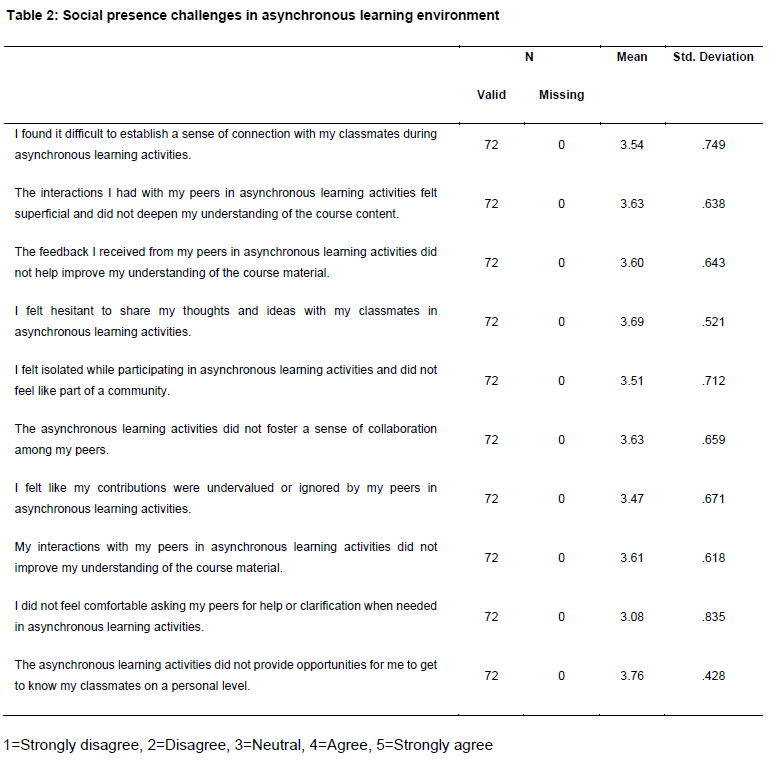
The second objective of this study focused on assessing the challenges related to the social presence that arise in information literacy instruction within an asynchronous learning environment in the selected academic institution in Zimbabwe. The theory of connectivism emphasises the significance of forming learning communities that promote a feeling of social presence and involvement. It also emphasises the importance of establishing a welcoming and comprehensive learning environment that stimulates cooperation, information exchange and social engagement, even in situations where learners are not physically together. Therefore, this study needed to evaluate the obstacles to social presence in asynchronous learning environments, which can affect the implementation of connectivism in the information literacy context. To obtain information about this objective, the researcher employed a questionnaire utilising a Likert scale, as well as a series of inquiries from the interview guide. The findings from the questionnaire are displayed in Table 2.
The table shows that the mean scores for the statements ranged from 3.08 to 3.76, indicating that students generally felt neutral or somewhat in agreement regarding these challenges. The standard deviations of the mean scores ranged from 0.428 to 0.835, indicating some variability in the data, but overall, most respondents felt similar about each statement. In particular, students found it challenging to establish a sense of connection with their classmates (mean score of 3.54) and to deepen their understanding of course content through interactions with peers (mean score of 3.63). They also felt hesitant to share their thoughts and ideas and did not feel like part of a community (mean score of 3.69). In addition, students reported feeling undervalued or ignored by their peers and found it difficult to ask for assistance or clarification when needed (mean score of 3.47). On the positive side, some students felt that the asynchronous learning activities provided opportunities to collaborate with their peers. However, they did not feel that their interactions with peers significantly improved their understanding of the course material (mean score of 3.69).
The findings of this study suggest that students in online courses may struggle with a sense of isolation and disconnection. They may find it challenging to establish relationships with their peers, engage in meaningful discussions and collaborations, and feel they are part of a community. This lack of connection can also make it difficult for students to ask for assistance or clarification when needed, hindering their learning experience. Additionally, the data indicate that asynchronous learning activities may not fully address these challenges, as some students reported positive experiences collaborating with peers but did not feel that their interactions significantly improved their understanding of course material. In line with these findings, the study by Mudenda et al. (2023) found that students in online courses often feel isolated and disconnected from their peers, which can negatively impact their motivation and engagement. Another study by Ong and Quek (2023) found that students in asynchronous online discussions tend to engage less in social interaction and have fewer supportive behaviours than face-to-face discussions, which could contribute to feelings of isolation and disconnection.
Qualitative data unveiled a significant challenge to social presence within asynchronous learning environments: the paucity of real-time interaction. While such platforms afford learners flexibility, this advantage is often mitigated by a pronounced reduction in synchronous communication between students and instructors. Participants reported that this absence of immediate interaction hindered the cultivation of a robust sense of community and impeded the learning process. As one instructor emphasised, the ease of content creation and uploading within asynchronous platforms is counterbalanced by the crucial lack of direct interaction and timely feedback (CASE: ILE1). Similarly, student responses highlighted the isolation and difficulties in comprehending complex concepts without the benefit of real-time dialogue and clarification. These findings aligned with previous research. Ratan et al. (2022) and Lee et al. (2024) independently corroborate the notion that while asynchronous learning provides flexibility, it can also compromise student motivation, engagement and overall learning experience due to the reduced opportunities for real-time interaction.
A significant challenge to establishing a social presence in asynchronous learning environments is the absence of nonverbal cues. Instructors reported difficulties in assessing student engagement and comprehension due to limited access to visual and auditory indicators such as facial expressions and body language. As one participant emphasised,
"Nonverbal communication plays a significant role in the psychology of education as it provides valuable insights into the level of understanding and interest of the learners in the course. Therefore, the absence of nonverbal cues can hurt the learning process" (CASE: ILE3).
This study indicates that instructors who relied solely on text-based interactions may struggle to accurately gauge student participation and comprehension. Non-verbal cues offer crucial insights into student interest, attention and understanding of course material. Without these visual and auditory indicators, instructors may be limited in their ability to provide effective instruction and support, potentially impacting overall learning outcomes. Previous research supports these findings. Ong and Quek (2023) highlight the negative impact of absent non-verbal communication on student-teacher interactions within asynchronous environments, leading to reduced engagement and social presence. Conversely, Nuci et al. (2021) indicates the positive influence of incorporating non-verbal cues in video-based feedback, enhancing social presence and student engagement in online courses.
Interview data revealed that providing timely feedback to students was a significant challenge for lecturers in asynchronous learning environments. As one instructor noted,
"With a current enrolment of over 80 students, giving prompt feedback and maintaining an active presence in the asynchronous information literacy course can be a daunting task. The sheer volume of learners makes it challenging to respond to their questions and concerns effectively" (CASE: ILE1).
These findings align with previous research. Kop (2011) and Borup et al. (2012) reported longer feedback turnaround times in asynchronous interaction than in face-to-face courses, attributing this to increased workload and the absence of synchronous interaction. Borup et al. (2012) identifies delayed feedback as a common challenge in asynchronous learning, highlighting the limitations of asynchronous communication tools in providing immediate support. Additionally, Ong and Quek (2023) emphasis the impact of instructor workload on timely feedback, suggesting that juggling multiple responsibilities can hinder the provision of adequate student support. To address the challenges posed by asynchronous learning and enhance social presence, the following section explores strategies for fostering a sense of community and connection among students.
7.1 Enhancing social presence in asynchronous learning environment
Connectivism theory underscores the importance of social interaction and collaboration in knowledge construction (Siemens 2005). In asynchronous online environments, fostering social presence becomes crucial, as it allows learners to connect, share experiences and perspectives, and build a collective understanding of the subject matter (LeeT et al.T 2024). Aligned | with this theoretical perspective, the third research objective of this study aimed to explore strategies for enhancing social presence within information literacy instruction delivered asynchronously at an academic institution in Zimbabwe.
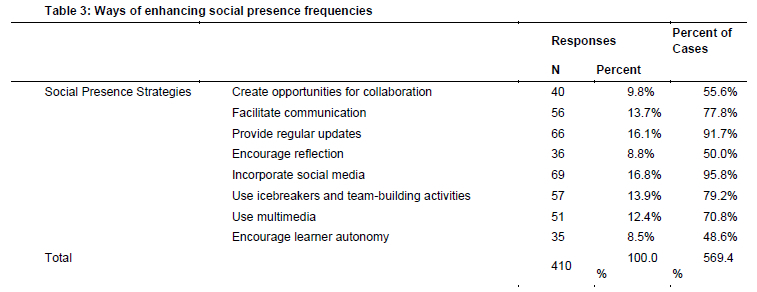
To gather data relevant to this objective, a multi-response Likert scale questionnaire was employed together with a semi-structured interview guide incorporating open-ended questions. The findings from the Likert scale are presented in Table 3.
Dichotomy group tabulated at value 1.
Table 3 highlights student preferences for strategies promoting social presence in asynchronous information literacy instruction. The most favoured strategy, endorsed by 69 respondents (16.8%), was "incorporating social media." This finding resonates with instructor perspectives (CASE: ILE3), who viewed social media as a tool for enhancing connections, resource sharing and collaboration beyond traditional methods.
This approach aligns with Ahmed et al.'s (2019) research, demonstrating how a social networking site like Facebook fosters a sense of belonging and social presence in an online course. Similarly, Rohr et al. (2022) found that using Twitter in an asynchronous online course improved communication and collaboration, ultimately enhancing social presence. These findings suggest that integrating social media platforms into online learning experiences can cultivate a stronger sense of community and engagement among learners, potentially mitigating the isolation often associated with asynchronous learning environments.
The second most popular strategy, endorsed by 66 respondents (16.1%), was "providing regular updates." This aligns with interview data (CASE: ILE3) emphasising the importance of consistent updates to maintain learner engagement and connection to the learning process, contributing to a sense of community and belonging. Examples of such updates include weekly announcements, progress reports or feedback on assignments.
Kop (2011), Lee, et al. (2024) and Ong and Quek (2023) underscore the value of regular updates in fostering online learner communities and promoting social presence, ultimately leading to better learning outcomes. These findings highlight the importance of prioritising communication and engagement in online environments by providing learners with regular updates and feedback, fostering a supportive learning environment, even with limited face-to-face interaction.
Although "encouraging learner autonomy" emerged as the least reported strategy (35 responses, 8.5%), its potential significance should not be solely determined by response frequency. One interviewee (CASE: ILE4) emphasised the importance of learner autonomy in all learning endeavours, aligning with research by Ong and Quek (2023) that identifies it as a positive influence on social presence. Similarly, Ross et al. (2018) demonstrates that promoting learner autonomy through self-directed learning activities significantly improved social presence in an online course. Therefore, encouraging learner autonomy remains a valuable consideration in online teaching practices where it can be appropriately implemented.
8 Conclusions and recommendations
The study findings suggest that the asynchronous information literacy methods employed at the Zimbabwean institution may not fully address student needs regarding social presence. These methods appear to limit opportunities for interaction and collaboration, potentially impacting student engagement, motivation and ultimately, learning outcomes. This finding aligns with broader concerns regarding the limitations of social presence in asynchronous environments. In today's online learning landscape, academic institutions must acknowledge and address the challenges associated with remote learning. Instructors can implement alternative strategies to foster effective communication and collaboration among students. For instance, providing learners with multiple communication channels (chat rooms, messaging systems, email) can facilitate connections and relationship building.
These channels can support meaningful discussions and idea exchange, ultimately enriching the learning experience. Furthermore, fostering a sense of community within the online classroom can be achieved by encouraging non-academic interaction. Creating virtual social spaces where learners can share personal interests and life experiences can promote inclusivity and belonging, which are crucial for a positive learning environment. Finally, active instructor participation is essential. Providing real-time feedback, promptly answering questions and encouraging collaboration can significantly enhance the quality of learning and create a supportive environment for all participants. The findings of this study have significant implications for researchers and practitioners in Zimbabwe and internationally. For researchers, this study contributes to the body of knowledge on social presence in asynchronous learning, particularly in developing contexts, and introduces a robust mixed methods approach. For practitioners, the study provides actionable insights into effective pedagogical practices, technological tools, and policy implications for enhancing social presence in online learning.
References
- Ahmed, Y. A., Ahmad, M. N., Ahmad, N. and Zakaria, N. H. 2019. Social media for knowledge-sharing: A systematic literature review. Telematics and Informatics, 37(72): 112. https://doi.org/10.1016/j.tele.2018.01.015.
- Badiger, M., Choudhary, P. and Badiger, K.G. 2017. Information literacy: Need and importance. International Journal of Applied Research, 3(7): 173-175.
- Bailey, D. 2022. Interactivity during Covid-19: mediation of learner interactions on social presence and expected learning outcome within videoconference EFL courses. Journal of Computers in Education, 9: 291-313. https://doi.org/10.1007/s40692-021-00204-w
- Berry, S. 2019. Teaching to connect: Community-building strategies for the virtual classroom. Online Learning, 23(1): 164-183. https://files.eric.ed.gov/fulltext/EJ1210946.pdf
- Borup, J., West, R.E. and Graham, C.R. 2012. Improving online social presence through asynchronous video. Computers & Education, 59(1): 103-114. https://doi.org/10.1016/j.iheduc.2011.11.001
- Creswell, J.W. 2024. My 35 Years in mixed methods research. Journal of Mixed Methods Research, 18(3), 203-215. https://doi.org/10.1177/15586898241253892
- Creswell, J.W. and Plano-Clark, V.L. 2018. Designing and conducting mixed methods research. 3rd ed. Thousand Oaks, CA: Sage
- Dunlap, J.C. and Lowenthal, P.R. 2014. Tweeting the night away: Using Twitter to enhance social presence. Journal of Information Systems Education, 20(2): 129-135.
- Hendricks, G. 2019. Connectivism as a learning theory and its relation to open distance education. Progressio: South African Journal for Open and Distance Learning Practice, 41. https://doi.org/10.25159/2663-5895/4773
- Kop, R. 2011. The challenges to connectivist learning on open online networks: Learning experiences during a massive open online course. The International Review of Research in Open and Distributed Learning, 12(3): 19-38.
- Kreijns, K., Xu, K. and Weidlich, J. 2022. Social presence: Conceptualization and measurement. Educational Psychology Review, 34: 139-170. https://doi.org/10.1007/s10648-021-09623-8
- Lee, H., Park, S., Yoo, J. & Kim, H. 2024. Design to improve social presence among university students in asynchronous online learning environment. Proceedings of the CHI Conference on Human Factors in Computing Systems, 80: 1-7. https://dl.acm.org/doi/abs/10.1145/3544549.3585593
- McKay, J. and Sridharan, B. 2024. Student perceptions of collaborative group work (CGW) in higher education. Learning and Teaching in Higher Education, 49(2): 221-235. https://doi.org/10.1080/03075079.2023.2227677
- Mudenda, S., Daka, V., Mufwambi W, et al. 2023. Student's perspectives, satisfaction and experiences with online and classroom learning during the COVID-19 pandemic: Findings and implications on blended learning. SAGE Open Medicine 11. https://journals.sagepub.com/doi/10.1177/20503121231218904
- Naik, M.M. and Padmini. 2014. Importance of information literacy. International Journal of Digital Library Services, 4(3): 1-3.
- Ngulube, P. 2022. Using simple and complex mixed methods research designs to understand research in information science. In Ngulube, P. (ed.) Handbook of research on mixed methods research in information science (pp. 20-44). Hershey, PA: IGI Global.
- Nuci, K. P., Tahir, R., Wang, A.I. and Imran, A.S. 2021. Game-based digital quiz as a tool for improving students' engagement and learning in online lectures. IEEE Access, 9: 91220-91234. https://ieeexplore.ieee.org/document/9452076
- Ong, S.G.T. and Quek, G.C.L. 2023. Enhancing teacher-student interactions and student online engagement in an online learning environment. Learning Environments Research, 26: 681-707. https://doi.org/10.1007/s10984-022-09447-5
- Parrish, C.W., Guffey, S.K., Williams, D.S., Estis, J.M and Lewis, D. 2021. Fostering cognitive presence, social presence and teaching presence with integrated online - team-based learning. TechTrends, 65: 473-484. https://doi.org/10.1007/s11528-021-00598-5
- Perveen, A. 2016. Synchronous and asynchronous e-language learning: A case study of Virtual University of Pakistan. Open Praxis, 8(1): 21-39. https://files.eric.ed.gov/fulltext/EJ1093436.pdf
- Ratan, R., Ucha, C., Lei, Y.S., Lim, C., Triwibowo, W., Yelon, S., Sheahan, A., Lamb, B., Deni, B., Hsueh, V. and Chen, V. 2022. How do social presence and active learning in synchronous and asynchronous online classes relate to students' perceived course gains? Computers & Education, 205: 104621. https://doi.org/10.1016/j.compedu.2022.104621
- Rohr, L., Squires, L. and Peters, A. 2022. Examining the use of Twitter in online classes: Can Twitter improve interaction and engagement? The Canadian Journal for the Scholarship of Teaching and Learning, 13(1). https://doi.org/10.5206/cjsotlrcacea.2022.L10892
- Ross, B., Chase, A.M., Robbie, D., Oates, G. and Absalom, Y. 2018. Adaptive quizzes to increase motivation, engagement and learning outcomes in a first-year accounting unit. International Journal of Educational Technology in Higher Education, 15(1): Article 30. https://doi.org/10.1186/s41239-018-0113-2
- Sadaf, A., Wu, T. and Martin, F. 2021. Cognitive presence in online learning: A systematic review of empirical research from 2000 to 2019. Computers and Education Open, 2: 100050. https://doi.org/10.1016/j.caeo.2021.100050
- Salim, S.F.M.Y.S., Mahmood, M.F. and Ahmad, A.B. 2018. The importance of information literacy to support lifelong learning in convergence era. International Journal of Academic Research in Progressive Education and Development, 7(3): 352-362.
- Siemens, G. 2005. Connectivism: A learning theory for the digital age. International Journal of Instructional Technology and Distance Learning, 2: 3-10. https://teachingexchange.arts.ac.uk/conference/2023/assets/files/Connectivism%20Siemens%20(1).pdf
- Sung, E. a Mayer, R.E. 2012. Five facets of social presence in online distance education. Computers in Human Behavior, 28(5): 1868-1878. https://doi.org/10.1016/j.chb.2012.04.014
Accepted: 4 February 2025