Partnership of Libraries, Research, and LIS Education in Information Literacy
Abstract
Partnership is crucial in achieving success in all sectors of life and this applies to information literacy (IL) as well. The purpose of this paper is to discuss the role of the partnership of libraries, research, and LIS education in shaping IL in the workplace. The paper applies a qualitative research approach through discourse, and the lived experience of the author in research and teaching in related areas in academic institutions for decades. The importance of frameworks, as well as the requirements and understanding of the challenges and opportunities inherent in IL, are discussed. The paper concludes by recognising the role of partnership and the development of IL as a multidisciplinary, dynamic, and technology-driven domain, in successfully enabling access to information, and concludes that this partnership is worth investing in for development. The paper has implications for research, teaching and learning in higher education, library services, and library and information science curricula.
Information literacy; libraries; partnerships; library and information science education; South Africa
1 Introduction
Information literacy (IL) has become a buzzword across the globe, and its popularisation exists at the highest level internationally - through, for example, several United Nations(UN) organisations, such as the United Nations Educational, Scientific and Cultural Organisation (UNESCO); professional associations, such as the International Federation of Library Associations and Institutions (IFLA); the Standing Conference of Eastern, Central, and Southern African Library and Information Associations (SCECSAL); and the Library and Information Association of South Africa (LIASA). Formidable international and regional conferences, such as the International Conference on Information Literacy (ICIL) and its regional chapters, such as the International Conference on ICIL African Chapter at the North-West University, South Africa, in 2022 , which are held regularly to share theoretical and practical aspects of the domain. All this is happening because of the recognition that IL is important for lifelong learning; it is a human right, as expressed by the United Nations Declaration of Human Rights (UNDHR) (1949) and even more critical in the digital era, befitting the highest attention.
The initial IL, as pronounced by Paul Zurkovski in 1974 (Badke 2010)., has rapidly transformed, due to the increased access and use of information technologies, which demand new literacies, such as multimedia, digital literacies, and social media literacy. Against the background of all this literacy development, we should not forget the focus of IL, which refers, essentially, to people who access and use information on a regular basis. Libraries, research, and education (e.g. Library and Information Science Education [LISE]) must play a major role in delivering IL to the right audience, and their partnership with other relevant stakeholders, in this regard, is fundamental.
Partnership means working together towards a common goal, such as IL. Although partnership is considered to lead to the solution of a common problem, it occurs, in this instance, in at least three different forms, namely optimistic, pessimistic and realistic. Optimists focus on mutual benefits, rather than on immediate reward or risks. Pessimists focus on the influence and dominance of parties involved (e.g., resource development theory), as proposed by Pfeffer and Salancik (1978). It is opportunistic and exploitative in nature, and therefore not popular for collaboration. Realistic forms of this collaboration focus on the prevailing situation at the time of a collaborative project, as reflected in Alter and Hage's (1993) evolutionary theory. Thus, several factors influence the viability of a collaborative initiative, such as, political, economic, social, technological and legal factors (PESTL). It is transactional.
In this paper, this author argue that IL is multidisciplinary and requires the involvement of multiple stakeholders for effective delivery. The paper unpacks the concept of IL, IL framework, the role of the library, strategies, the role of research and LIS schools, challenges and opportunities followed by conclusions.
The author has used his experiential knowledge as a university academic (including academic administration) for more than 30 years, supplemented with relevant reports and studies in the domain most of which are reflected in the citations and discourse for writing the paper. The initial version of the paper, which was a Keynote, is reflected in the acknowledgement.
2 Information Literacy: The Concept
Information literacy, as a concept, has been defined many times with different levels of inclusivity and exclusivity (Ireri 2025; Mudave 2016; Sample 2020) to the extent that some (Owusu-Ansah 2005) suggest that the focus should be on reaping the benefits of IL, rather than dwelling on endless definitions. After intensive discussions, the most broad, comprehensive, and inclusive definitions originated from UN organisations, professional associations and societies, and government institutions. Among these, is the International Federation of Library Associations and Institutions (IFLA). It defines IL as the "ability to identify when information is needed; carry out a specific task; problem-solve; cost-efficiently search for information; organize or reorganize sources of information; interpret, analyse and retrieve necessary information; appraise the accuracy and reliability of the information; and observe the ethical use of information sources" (IFLA 2006: 17).
This definition, which falls among the more inclusive categories of definition, seems to bring on board the following eight IL components directly or indirectly. Thus, information seeking, information retrieval, critical and analytical/evaluative thinking, information sources, information use, information ethics, research methods, and new literacies. The components intersect with IL to some extent (in breadth and depth), but not entirely. For example, information retrieval (IR) is not IL, but is part of IL. The components are reflected in Figure 1.
Besides the components reflected in Fig 1, IL is part of literacy or education in a broad sense and, therefore, intricately linked to other literacies. For example, there is a close link between IL and computer literacy, analytical and critical literacy, media literacy, financial literacy (Kinyanjui & Ocholla 2024), multimedia/digital literacy, new literacies, and civic literacy, among others. Digital or multimedia literacy has become quite prominent among IL or literacies in general. Related in definition to IL, digital literacy "is the ability and skill to find, evaluate, utilise, share, and create content using information technologies and the Internet."2 Digital literacy, has eight components including: creativity, critical thinking and evaluation, cultural and social understanding, collaboration, finding and selecting information, effective communication, e-safety, and functional skills (Hague & Payton 2010:19). Digital literacy is becoming quite a popular form of literacy, as reflected in a study by Onyancha (2020) demonstrating its rapid growth during the last 10 years.
IL is important. The reasons behind its growth and spread are found in related studies (Durodolu and Ocholla 2017) and IL definitions. In a nutshell, the purpose of IL is to find and evaluate information from multiple sources; enable life-long learning; enable critical thinking and problem solving; enable self-learning, self-determination, independence, and freedom; enable responsible and effective use of information; enable research capacity building and support teaching and learning (T&L); and support the ethical use of information, which enables the avoidance of cybercrime, fabrication, falsification and plagiarism.
3 Framework
Frameworks are viewed as foundations upon which knowledge, for example, such as IL is rooted, for better understanding, use, and appreciation. IL is founded on, and informed by, several frameworks and theories (Ocholla 2021a). Broadly, IL frameworks are guided by behavioural theories (Durodolu 2016: 4-5), such as the Theory of Reasoned Action (TRA) and the Theory of Planned Behaviour (TPB) in general. Durodolu (2016:4-5) also refers to Limber, Sundin and Talya's three IL theoretical groupings, which include phonomyography (reflecting on lived experiences), socio-cultural (focusing on social interaction), and Foucauldian discourse analysis. Related theories behind these approaches are also found in, for example, Actor Network Theory (ANT), Social Network Theory (SNT), and Social Capital Theory (SCT) that appear in related studies (Fari & Ocholla 2016; Ocholla 2008; Sullivan & Skelcher 2002).
The extending discourse on frameworks concerns legal and ethical issues. In the first instance, access to information and knowledge has been declared a fundamental human right and a social justice aspiration. For example, the Universal Declaration of Human Rights (UDHR), Article 19, states "that everyone has the right to freedom of opinion and expression; that this right includes freedom to hold opinions without interference and to seek, receive and impart information and ideas through any media and regardless of frontiers" (World Summit on Information Society [WSIS 2016:9]). Secondly, access to information and knowledge can be viewed from the applied ethics perspective, particularly with regards to rights, which include the understanding of virtue, deontology/duty, rights and utilitarianism. Rights refer to the promotion and protection of human dignity ethically and legally. Thus, we have some rights merely by virtue of being humans. Ingram (2008) article referring to "Right to Have Rights" provides a valuable breakdown of the rights. Thirdly, in the United Nations ( e.g., UNESCO), policies, declarations, and agreements, such as the Universal Declaration on Human Rights WSIS (2016) and United Nations Sustainable Development Goals (SDG) declaration.
Fourth, ethical considerations can be defined at individual state and government levels, as reflected in a country's constitution, laws, and policies (e.g., the South African Bill of Rights3) and the interpretation thereof (Sachs 1988). Such interventions are expressed in the rights to literacy, education, expression, association, and other means that promote access and use of information. Fifth, research and publications, in many forms, have also provided a significant foundation for IL (Onyancha 2020). Overwhelmingly, the studies consider access to information and knowledge to be an essential part of social justice (Ocholla 2021b). Most of IL research is informed by one or more of the IL theories (Durodolu 2016) and models (e.g. the information search process, the Big6 information model, the seven pillars of IL, the pathways to knowledge model, the PLUS model, and the seven faces of IL model), which have been discussed in related studies (Odede 2020; Sample 2020). Collaboration frameworks (Pham and Tanner 2014) also feature strongly in the discourse.
4 The role of the library
Libraries have been involved in IL for many years, directly or indirectly (Sample 2020), largely through library orientation and library instructions. For example, IL instructions in academic libraries (Jiyane & Onyancha 2010) and school libraries (Ireri and Ocholla 2025) provide some insight into their role, to some extent. A study referring to new trends in library and information services in South Africa by Ocholla and Ocholla (2020), shows the prominence of IL among other services offered by the academic libraries studied in South Africa. While IL features as the top service, with 88%, the definition of IL implies that there are other indirect/hidden IL services offered within the other services listed in a useful figure by the authors( Ocholla and Ocholla 2020:361), suggesting that IL may be offered in most of the services with different levels of intensity. For example, in social media (Rabatseta, Maluleka & Onyancha 2021). The impact of the library services (Ocholla, Mutsvangwa, Hadebe 2016) shows the potential growth and value of IL in the sector. Also, IL seem to feature strongly, with different levels of intensity, among the disciplinary skills, personal competencies and generic skills required by academic libraries in the digital era (Raju 2014)
A lot has been written about the collaboration of libraries with LIS schools, but partnership with other stake holders, such as university research offices/divisions, is increasing. Studies and experience show that libraries and LIS schools have collaborated in many ways, but often with difficulties linked to optimism, pessimism (power, influence, identity, culture, and attitude), and realism (Andres & Usova 2014; Dlamini, Mlambo & Masenya 2021; Jain 2017; Sacchanand 2012; Ukachi 2016). Among the areas of collaboration known to us in South Africa, for example, are supporting LIS practical education, supporting teaching and learning by providing spaces for experiential learning, conducting IL workshops for university students in many areas (Ocholla and Ocholla 2020:361), which benefit LIS students. Sometimes such workshops are offered jointly with LIS schools. Fundamentally, LIS schools support libraries with the required human resources for library services. Often, continuous professional development support is either offered, and organised, by the libraries or LIS schools, alone or jointly. Where LIS schools exist within higher education institutions (HEIs), such as universities, librarians support the teaching and learning as co-lecturers, adjunct lecturers, or guest lecturers (Jain 2017; Sacchanand 2012) to hone the practical skills of librarianship in the students. Increasingly, according to my knowledge, qualified academic librarians (with at least PhD qualification) support the examination of PhD theses and dissertations in LIS schools in South Africa. Libraries provide office and teaching spaces for LIS schools.
For example, between 2012 to 2024, the Department of Information and Knowledge Stewardship at the University of Cape Town was hosted by UCT libraries. Also, the University of Zululand library has been hosting the IT laboratory (for the LIS School) for teaching and learning LIS practical modules/courses at its premises for more than 15 years. To make the LIS curriculum relevant to the job market, advisory boards of LIS schools( some of which this author participated) include library representatives at the institutional level, libraries support both the research, teaching, and learning of the institutions and belong to the research division of the university administratively, which seals their collaboration with the research office and research undertaking of such institution or universities( e.g. at my university). There are examples in South Africa(e.g. at UNISA) where university library directors served as university deputy vice-chancellors (in acting capacity) in charge of research and academic affairs, showing the value of their knowledge and the library to university research enterprises. Collaborative research and co-publications between librarians and LIS educators are also on the rise, thereby strengthening both the research capacity and research services provided by libraries.
5 Strategies
Information literacy strategies are widely discussed in related studies (Ireri and Ocholla 2025; Ocholla, Mutsuvunguma and Hadebe 2016). These IL strategies are reflected in the library policy and guidelines, the planning for IL programmes and activities (e.g., what is to be done, why, how, where, when, by who, for whom, and at what cost), the involvement of stakeholders (users, institution, service providers, the advisory board), capacity building, and the visibility of IL activities by means of promotion, marketing, and web-presence. Library workshops, where library information service activities and programmes occur, has been a major way of implementing IL strategies (Ocholla, Mutsunguma and Hadebe 2016). Such workshops cover most of the services reflected by Ocholla and Ocholla (2020:361), including e-resources, information retrieval, library orientation/know-your-library, publishing, referencing, ethics/plagiarism, and social networking, which are all linked to IL with different levels of intensity.
Artificial intelligence debates, understanding and incorporation in libraries also has implications to IL. A recent study by Ireri and Ocholla (2025:3), in reference to school libraries in Kenya, confirmed that library orientation, library user education, IL, literacy and reading promotion, media literacy and IL (e.g., IL, information skills), trans literacy (reading, writing, and interacting across a range of platforms, tools, and media), inquiry-based learning (e.g. problem-based learning and critical thinking), technology integration, and IL programmes are prevalent in school libraries. In most cases, library orientation/know-your-library is the most popular. We believe that IL is achievable in a smart library (Ocholla and Ocholla 2020:264) environment with smart staff, technologies, users, leadership, resources, services, and spaces.
6 The role of research
Research is a fundamental mandate of university education for knowledge creation and dissemination, and academic libraries play a key role through their information services. Through IL oriented library workshops, library users are poised to benefit from these services. Thus, the role of research in a university is enabling knowledge creation and dissemination, developing scientific and professional practice, as well as developing creative, analytical and rational thinking for informed decision making. Also, research enables the finding of solutions to challenges or problems affecting humanity, confirming or refuting theories and hypotheses, self-development and independent learning - a mandate that justifies the existence of universities/research entities and enables the visibility and recognition of institutions. We will not discuss these items in detail in this paper.
Libraries are likely to improve research and IL activities even more when the librarians conduct research and publish (Ocholla, Ocholla, and Onyancha 2012; 2013). In the two studies cited in the previous sentence, it is recommended that the promotion of university librarians to senior library positions should be linked to their research and publication profile, as they serve a vibrant academic and student community who require their research-oriented services, which are better understood by individuals involved in research. It was also argued (Ocholla, Ocholla and Onyancha 2012; 2013) that most academic librarians are involved in IL instruction or teaching IL to the university's academic community, where themes related to e-resources, information seeking and retrieval, publishing and information ethics (alluded to earlier) are common. Undoubtedly, IL and digital literacy are important research areas in LIS (Onyancha 2020) and in South Africa (Ocholla 2024).
7 The role of LIS schools
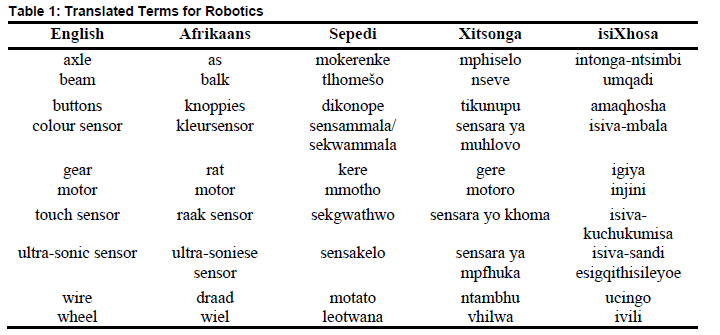
There is growing research on IL education, for example regarding IL by academic libraries (Jiyane & Onyancha 2010). Library and information schools' major role is capacity building for IL through research, teaching, and learning, as well as community outreach. Fundamentally, this involves IL literacy curriculum development, which includes continuous professional development (CPD). Thus, LIS schools would offer CPD through short courses on their own or in partnership with other stakeholders, such as libraries and LIS professional associations, such as the Library and Information Association of South Africa (LISA) and LIS employers. LIS schools can also provide advisory services by participating in LIS related advisory boards. Based on my experience in teaching most of the content in Table 1 and Figure 1, IL need not be offered through autonomous modules/courses only, as its content overlaps with other related courses (e.g., Table 1) and information services (Ocholla, et al. 2016; Ocholla and Ocholla 2020:362). We believe that a smart LIS education (Ocholla 2021a), rooted in a strong curriculum, with good staff/faculty, students, research, teaching and learning, technology, library support /services, and institutional policies, has the potential to deliver the required IL education by LIS Schools.
8 Challenges and opportunities
Challenges and opportunities are two sides of the same coin. Among them are partnership/collaboration (Ocholla 2008), research support, institutional support, popularisation and advocacy of IL, library support (Ocholla, et al. 2016; Ocholla and Ocholla 2020), LIS education (capacity building), multidisciplinary (Onyancha 2020) IL, stakeholder support (e.g., professional associations, such as IFLA, and LIASA), and emerging/new literacies (e.g., digital literacy, social media literacy) (Onyancha 2020). We highlight two of the components in the next section.
First, partnership/collaboration has been a major challenge among LIS schools (Ocholla 2008) and between LIS schools and libraries, but it also presents opportunity. There are many reasons for this. Partnership initiatives do not end in implementation due to a lack of willingness, funding, sustainability, and limitations to effectiveness. Formalising partnerships, by policy and fulfillable agreements and guidelines, has also been lacking. For example, not all LIS schools constitute advisory boards for curriculum development, that improves the relevance and effectiveness of LIS graduates in the workplace, because of a lack of policy and structure at institutional and national level (i.e., professional associations), which mandates the formation and sustainability of such advisory units/systems. We believe that formalising partnership and collaboration by means of policy (which also guides memoranda of understanding) would cover important elements such as purpose, structure, infrastructure and resources (e.g., funding and staffing), governance, administration, and sustainability for operationalising collaborative activity.
There are positive initiatives for partnerships among libraries and LIS schools within professional organisations/associations (e.g., LIASA, SCECSAL, IFLA) which can be emulated and exploited. Outside the professional associations are independent bodies, such as the Committee of Higher Education Libraries of South Africa (CHELSA4), which are recognised by Universities South Africa (USAf), with a mandate to ensure optimal information access and success for research, teaching, and learning within its affiliated higher education institutions. A strong partnership between research and the library exists within CHELSA members. The National Council for Library and Information Services (NCLIS) of South Africa5, enacted by law in 2001 serves to advise the government on LIS matters, with ten defined functions listed in section four of the act. Among these are: section 41a, the development and co-ordination of Library and Information Services; 41b, the provision of co-operation among library and information services; 41(g), the promotion of basic and functional literacy, as well as IL and a culture of reading; and 41 (f), the effectiveness of library and information science education and training. While recognising the limitations of professional associations (Ocholla, Dorner and Britz 2013), we believe that NCLIS is the statutory body at the national level best able to facilitate and co-ordinate the partnership between libraries and LIS schools in South Africa. Unfortunately, the potential of NCLIS is not fully exploited for the purposes of enabling functional partnerships within LIS and between LIS and libraries. Most of the existing partnerships between LIS schools and libraries are achieved through informal arrangements, some of which are sealed through agreements, such as a memorandum of understanding (MoU).
The second component to be discussed is research support. Research in IL is showing a remarkable growth, and new literacies, such as digital literacy, are developing faster (Onyancha 2020) due to the increased use of technology for information and knowledge creation and dissemination/sharing. This growth suggests that research investment in IL is increasing. Certainly, research on IL in South Africa is increasing (Ocholla 2024). Given the importance of IL, research in the domain must be sustainable and supported with policy, infrastructure, and resources at a national and institutional level. Libraries and LIS schools are expected to play a key role in policy development, popularising and implementing IL research, teaching and learning, as well as programmes and activities. National LIS institutions, such as the NCLIS, whose functions includes supporting IL programmes and activities, should intensify their roles and activities in the domain by involving libraries and LIS schools more in the IL domain.
While the benefits of collaboration are widely acknowledged and appreciated, collaboration among LIS Schools in Africa has been faced with more challenges than opportunities (Maluleka, Onyancha & Ajiferuke 2016; Ocholla 2008; Ocholla & Bothma 2007). Some of the challenges affect collaboration with other entities, such as the libraries. Libraries, LIS schools and research offices within a university are poised, or expected, to work together for IL as a common goal, and to find the right approach to collaboration, which is beneficial rather than harmful. Experience has shown that a pessimistic form of collaboration where, for example, a LIS school or library wants to prevail over another, does not always succeed in producing the desired results.
9 Conclusions
At the beginning of this paper, we recognised that IL is a human right, as it enables access to information and lifelong learning, which promotes social justice. This observation is supported by international and national conventions/declarations, laws/policy, and research in the domain, with information access and success in the use thereof at the centre. It is recognised that IL is multidisciplinary; therefore, it requires partnership and the involvement of multiple stake holders, particularly those involved in human resources development, such as academic institutions, libraries, and LIS schools. As a multidisciplinary domain, research, teaching, and learning may occur in other related components, as reflected in Figure 1, which include information seeking and retrieval, research methods, information sources, new literacies, and information ethics. This broad-based approach extends its importance and value to human research development and research capacity building within academic institutions and beyond, including the library workplace.
Partnership/collaboration is cumbersome. Appropriate approaches from optimistic, pessimistic and realistic paradigms, must be explored and adopted. While the use of any of the three approaches is prevalent in practice, the widely held view is that the optimistic paradigm works much better for partnerships because of its nature and benefits and therefore must be considered by stakeholders. It is increasingly agreed that the concept of IL is widely known, so focus on its development and implementation is crucial for reaping the benefits thereof. The role of libraries, LIS schools, and research for IL is recognised in this paper. It is evident that libraries and LIS schools are involved in IL development and execution within their mandates in the academic environment, and valuable lessons have been learnt. In the library workplace, for example, the librarians must know, not only when information is needed, but why, how, when, where and by whom, for effective access and success (e.g., use of information without cognitive, and physical barriers) in the use of information. To achieve the IL support required, both formal and informal education (e.g. by continuous professional development [CPD]), with sound knowledge of the domain, as in Figure 1, are essential.
Partnership, policy/guidelines, multidisciplinary, research and sustainability come to the fore for IL development. Also, relevant skills and competencies (Raju 2014) must be provided to the information service providers, the challenges to IL are not obstacles if we focus on plenty of opportunities for its initiation, planning, and implementation within academic institutions. The evidence of growing research activities in IL in multiple areas (Onyancha 2020) encourages more research and practice in the domain. This paper is expected to extend the on-going discourse on IL and provide additional knowledge for research, teaching, and learning for LIS education, as well as improve information practice.
Acknowledgement
A version of this paper was presented in PowerPoint format as Keynote at the second IL seminar series themed "Research Skills in the Workplace" in 2022, hosted by Cape Peninsula University Library. I wish to thank the critical readers of this paper for their valuable remarks.
References
- Alter, C. and Hage J. 1993. Organizations working together. Newbury Park, CA: Sage
- Andres, A. and Usova, T. 2024. A conceptual analysis of collaboration in information literacy librarianship. The Journal of Academic Librarianship, 50(5):102934.
- Badke, W. 2010. Foundations of information literacy: learning from Paul Zurkowski. Online, 34(1):48-50.
- Dlamini, P., Mlambo, B. & Masenya, T. 2021. Collaboration between librarians and academics in the department of information studies for curriculum development in KZN [Electronic version]. Library Philosophy and Practice), (e-journal). 6746. [Online]. https://digitalcommons.unl.edu/libphilprac/6746 (1 August 2025)
- Durodolu, O. 2016. Technology acceptance model as a predictor of using information system to acquire IL skills. Library Philosophy & Practice(e-journal). 1450. [Online]. http://digitalcommons.unl.edu/libphilprac/1450 (1 August 2025)
- Durodolu, O.O. and Ocholla, D.N. 2017. Search strategy, self-concept and metacognitive skills of secondary school teachers in selected cities in Nigeria and South Africa. Libri, 67(2): 89-102.
- Fari, S.A. and Ocholla, D.N. 2016. Nature, patterns and trends of research collaboration among academics in selected universities in Nigeria and South Africa. Mousaion, 34(1):1-22.
- Hague, C. and Payton, S. 2010. Digital literacy across the curriculum (Vol. 4, No. 1, pp. 1-63). Bristol: Futurelab.
- IFLA (International Federation of Library Associations and Institutions). 2006. Guidelines on information literacy for lifelong learning. [Online]. http://www.ifla.org/files/assets/information-literacy/publications/ifla-guidelinesen.pdf (1 October 2025)
- Ingram, J.D. 2008. What is a "right to have rights"? Three images of the politics of human rights. American political science review, 702(4):401-416.
- Ireri, J.M. 2025. Information literacy skills of students in secondary schools with African perspective: a literature review. In Information, Knowledge, and Technology for Teaching and Research in Africa, (pp. 131-159). Gewerbestrasse : Springer.
- Ireri, J. and Ocholla D. 2025. Status of information literacy skills offered by secondary school libraries to students in urban and rural environments in Kenya. South African Journal of Libraries and Information Science, 91(1): 1-12.
- Jain, P. 2017. Delivery of library and information science curriculum: a joint endeavour among LIS educators and library practitioners at the University of Botswana. Library review, 66(6/7): 482-504.
- Jiyane, G.V. and Onyancha, O.B. 2010. Information literacy education and instruction in academic libraries and LIS schools in institutions of higher education in South Africa. South African Journal of Libraries and Information Science 76 (1): 11-23.
- Kinyanjui, J.W. and Ocholla, D. 2024. Financial Literacy Amongst Women Entrepreneurs for Economic Empowerment in Kenya. In Information, Knowledge, and Technology for Teaching and Research in Africa: Information Behavior in Knowledge and Economy (pp. 53-83). Cham: Springer Nature Switzerland.
- Maluleka, J. R., Onyancha, O.B. and Ajiferuke, I. 2016. Factors influencing research collaboration in LIS schools in South Africa. Scientometrics, 107(issue number?):337-355.
- Ocholla, D.N. 2024. Reflections on trends, challenges and opportunities of LIS research in South Africa: a contextual discourse. Information, Knowledge, and Technology for Teaching and Research in Africa: Information Behavior in Knowledge and Economy, pp.161-193.
- Ocholla, D.N. 2021a. Information and knowledge access for social justice: perspectives from Mandela's long walk to freedom. A Reader on Information Ethics, ICIE, Pretoria,41-61.
- Ocholla, D.N. 2021b. Echoes down the corridor. Experiences and perspectives of library and information science education (LISE) during COVID-19 through an African lens. Library Management, 42(4-5): 305-321.
- Ocholla, D.N. 2008. The status and challenges of collaboration in library and information science (LIS) education and training in Africa. New Library World, 109(9/10): 466-479.
- Ocholla, D.N., Dorner, D. and Britz, J. 2013. Assessment and evaluation of LIS education: global commonalities and regional differences - South Africa, New Zealand and USA. International Journal of Library and Information Services (LIBRI), 63(2): 135-148.
- Ocholla, L., Mutsvunguma, G. and Hadebe, Z. 2016. The impact of new information services on teaching, learning and research at the University of Zululand library. South African Journal of Libraries and Information Science, 82(2): 11-19.
- Ocholla, D.N. and Ocholla, L. 2020. Readiness of academic libraries in South Africa to research, teaching and learning support in the fourth industrial revolution. Library Management, 41(6/7): 355-368.
- Ocholla, D., Ocholla, L. and Onyancha, O, B. 2012. Research visibility, publication patterns and output of academic librarians in sub-Saharan Africa: The case of Eastern Africa. Aslib Proceedings, 64(5): 478-493.
- Ocholla, D., Ocholla, L. and Onyancha, O. B. 2013. Insight into research publication output of academic librarians in Southern African public universities from 2002 -2011. African Journal of Libraries Archives and Information Science, 23(1): 5-22.
- Odede, I. 2020. Models for teaching information literacy: A comparative review of the top six models. Mousaion: South African Journal of Information Studies, 38(2):1-19. https://doi.org/10.25159/2663-659X/7254
- Owusu-Ansah, E. K. 2005. Debating definitions of information literacy: enough is enough! Library Review, 54(6): 366-374.
- Pham, H. T. and Tanner, K. 2014. Collaboration between academics and librarians: a literature review and framework for analysis. Library Review, 63(1/2): 15-45.
- Pfeffer, J. and Salancik, G. R. 1978. The external control of organizations: A resource dependence perspective. New York: Harper & Row.
- Raju, J. 2014. Knowledge and skills for the digital era academic library. Journal of Academic Librarianship, 40(2):163-170
- Sacchanand, C. 2012. Building collaboration between library and information science educators and practitioners in Thailand: Transcending barriers, creating opportunities. World Library and Information Congress, Helsinki, August (Vol. 11).
- Sample, A. 2020. Historical development of definitions of information literacy: A literature review of selected resources. The journal of academic librarianship, 46(2): 102116.
- Sullivan, H.and Skelcher, C. 2002. Working across boundaries: Collaboration in public services. Basingstoke: Palgrave Macmillan.
- Ukachi, N.B. 2016. Collaboration among library and information science educators in West Africa: Benefits, challenges and opportunities. Hague: Publisher.
Accepted: 2 April 2026
2 see https://www.twinkl.co.za/teaching-wiki/digital-literacy
3 https://www.justice.gov.za/constitution/chp02.html
4 https://chelsa.ac.za/about/
5 https://www.dsac.gov.za/sites/default/files/2022-08/National%20Council%20For%20Library%20and%20Information%20Services%20Act%2C%202001.pdf