Artificial intelligence and employee assistance programmes in South Africa: A systematic review of ethical, cultural and digital transformation requirements for workforce well-being
Abstract
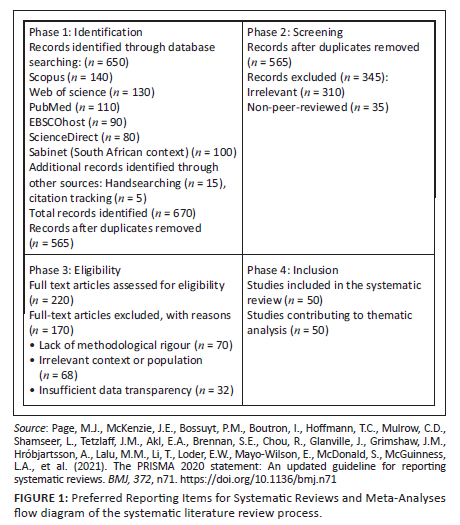
ORIENTATION: Artificial intelligence is increasingly transforming employee assistance programmes (EAPs) by enabling proactive, data-driven and context-sensitive approaches to employee well-being. In South African context, however, socio-economic inequalities, pronounced digital divides and cultural and linguistic diversity continue to constrain the adoption of artificial intelligence (AI)-enhanced EAPs, leaving ethical, cultural and structural considerations insufficiently examined. RESEARCH PURPOSE: To address this gap, this study employed a systematic review of peer-reviewed literature from 2012 to 2024 to examine and synthesise the ethical, cultural and digital transformation requirements influencing the adoption of AI-driven EAPs in South African workplaces. MOTIVATION FOR THE STUDY: The integration of AI in EAPs has not been fully explored in the South African context, where challenges of diversity, ethics and digital equity remain prominent. RESEARCH APPROACH/DESIGN AND METHOD: In accordance with the Preferred Reporting Items for Systematic Reviews and Meta-Analyses 2020 guidelines, a review of the Scopus, Web of Science, PubMed and EBSCOhost databases resulted in the identification of 50 relevant articles, which were analysed thematically. MAIN FINDINGS: The synthesis produced six interconnected themes: (1) adoption and implementation dynamics (2) infrastructure and digital competency barriers (3) cultural and linguistic appropriateness (4) ethical governance and data privacy (5) economic and structural constraints and (6) employee well-being outcomes. PRACTICAL/MANAGERIAL IMPLICATIONS: To unlock the potential of AI in EAPs, it is essential to create strategies that are culturally responsive, ethically governed and technologically inclusive. CONTRIBUTION/VALUE-ADD: This review offers insights to assist policymakers, Human Resource (HR) professionals and EAP designers in developing fair and contextually relevant digital well-being interventions within South African workplaces.
artificial intelligence; cultural diversity; digital transformation; employee assistance programmes; ethics in technology; leadership; well-being
 Thumbnail