Work engagement and burnout of academics at South African higher education institutions: A job demands and resources perspective
Abstract
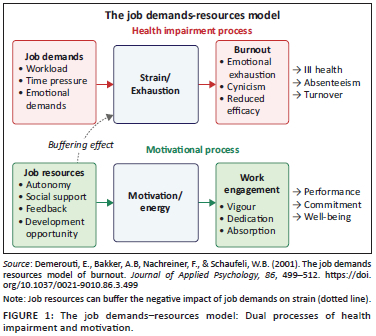
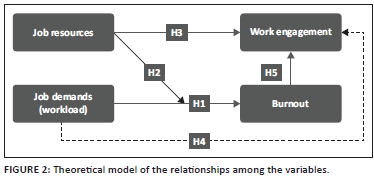
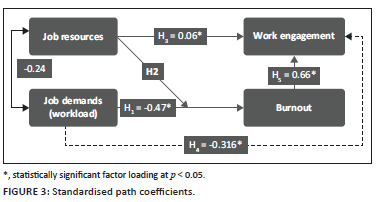
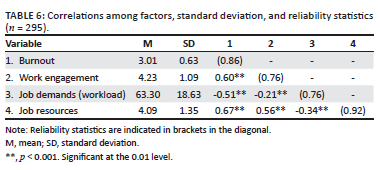
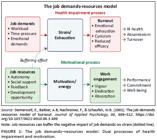
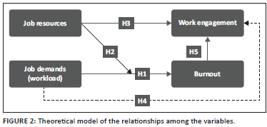
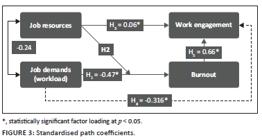
ORIENTATION: The transformation of the academic landscape, exacerbated by COVID-19, creates an urgent need to understand escalating demands on academics and how resources could help overcome these challenges RESEARCH PURPOSE: This study tested a structural model examining how job demands and resources directly and indirectly influence employee outcomes through burnout and work engagement in South African higher education institutions MOTIVATION FOR THE STUDY: While evidence links work engagement, burnout, and job demands-resources (JD-R) across workplaces, these relationships remain under-explored in South African academia, particularly during COVID-19 RESEARCH APPROACH/DESIGN AND METHOD: Using a quantitative design, respondents (N = 309) from several South African universities completed six instruments assessing burnout, work engagement, job resources (autonomy, meaningful work, organisational support) and job demands (workload, online teaching, work-home interaction and publication pressure). Structural equation modelling evaluated model fit and tested hypothesised relationships MAIN FINDINGS: High job demands significantly increased burnout, while job resources promoted engagement and reduced burnout. Results highlight the need for institutional strategies to alleviate excessive demands while reinforcing key resources PRACTICAL/MANAGERIAL IMPLICATIONS: Institutions should develop targeted interventions enhancing job resources, clarifying roles, and creating supportive environments, especially during organisational change CONTRIBUTION/VALUE-ADD: This study advances understanding of burnout and engagement in South African higher education, challenging simplistic JD-R model applications and contributing to theoretical development and practical interventions tailored to South African academics
Job Demands-Resources model; academic burnout; work engagement; higher education; South African academics; structural equation modelling
 Thumbnail
 Thumbnail
 Thumbnail