Cloud ERP adoption in Ekurhuleni's logistics SMEs: A conceptual model
Abstract
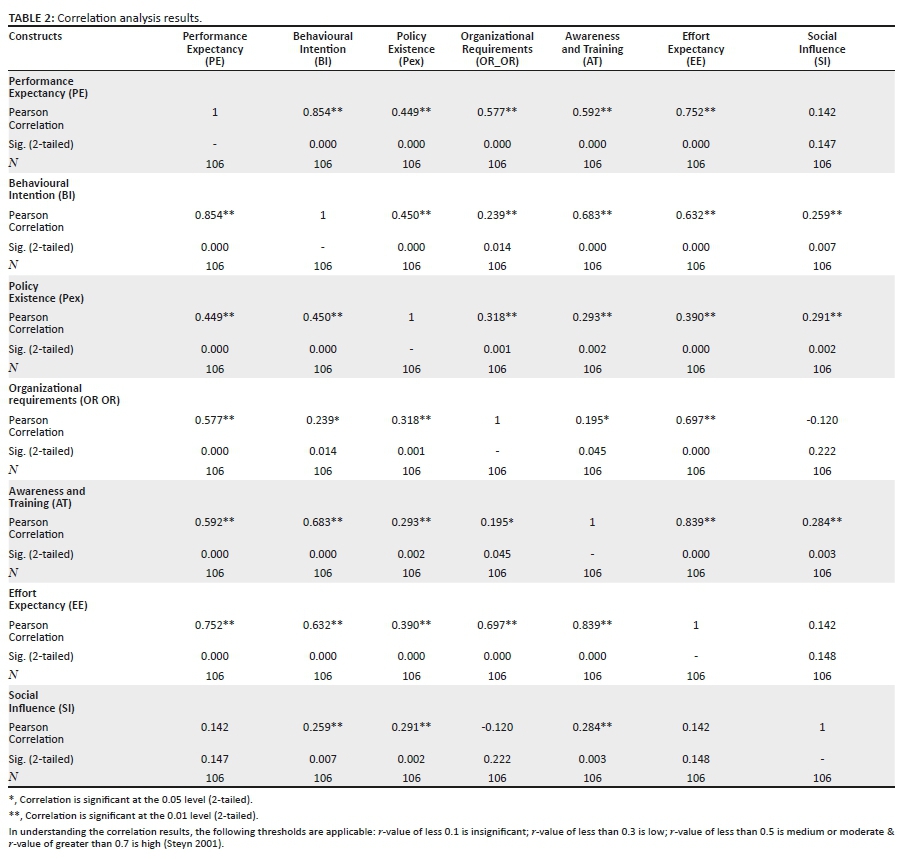
BACKGROUND: Logistics small and medium enterprises (SMEs) in Ekurhuleni face operational inefficiencies due to manual processes and outdated systems. Although cloud-based enterprise resource planning (ERP) solutions offer scalable and cost-effective improvements, adoption remains limited OBJECTIVES: This study aimed to develop a Cloud ERP Adoption Model (CEAM) by identifying organisational, technological and environmental factors influencing adoption. The study was guided by the Technology-Organisation-Environment (TOE) framework, with additional constructs from diffusion of innovation theory METHOD: A quantitative approach was used. Data were collected from 123 participants, including information technology (IT) personnel, decision-makers and logistics managers in Ekurhuleni-based SMEs. Analysis was conducted using IBM SPSS Statistics version 31.0.0.0, IBM Corp., Armonk, NY, United States, applying descriptive statistics, Pearson correlation and multiple regression RESULTS: Significant relationships were observed across constructs (r = 0.55-0.84; p < 0.01). All predictors, except skills (β = -0.113; p = 0.799), significantly influenced adoption, with 10 of 11 hypotheses supported CONCLUSION: Cloud ERP adoption among logistics SMEs is driven primarily by organisational readiness, leadership commitment, financial capacity and strategic intent rather than technical attributes CONTRIBUTION: The study contributes by proposing an empirically validated CEAM to support SMEs, technology vendors and policymakers in advancing digital transformation
cloud ERP; logistics SMEs; conceptual model; adoption; Ekurhuleni; South Africa
 Thumbnail
 Thumbnail