A knowledge management implementation strategy for architectural firms in Gauteng, South Africa
Abstract
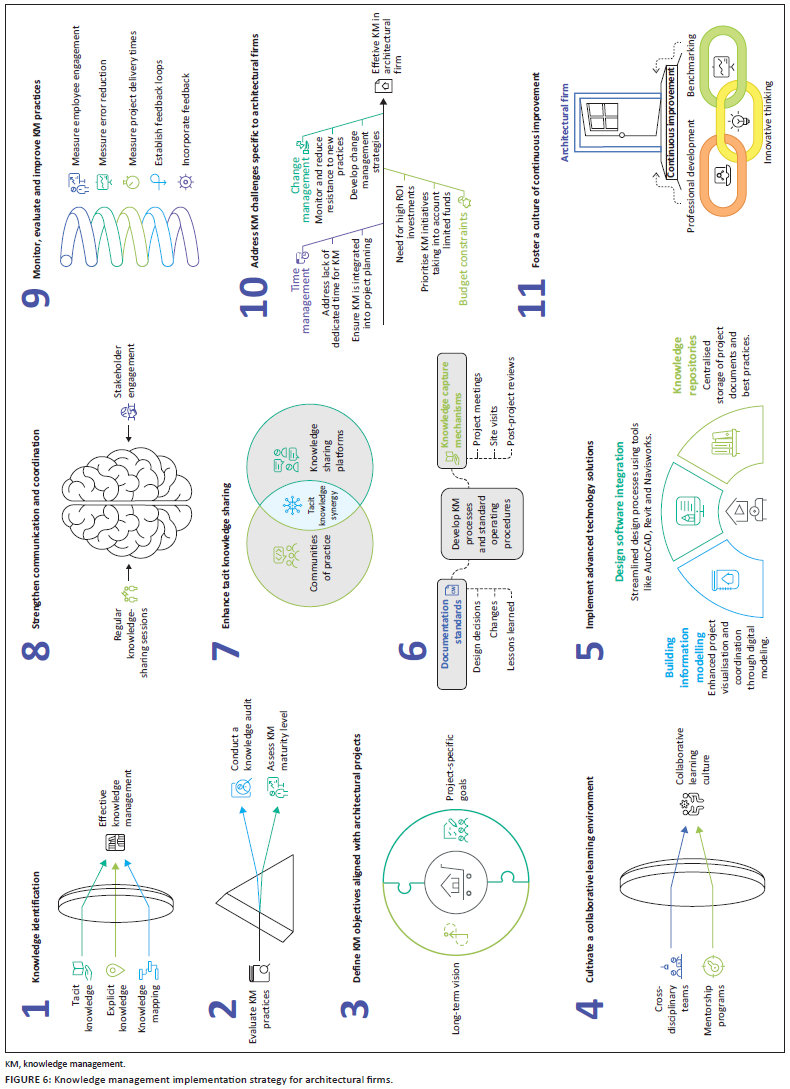
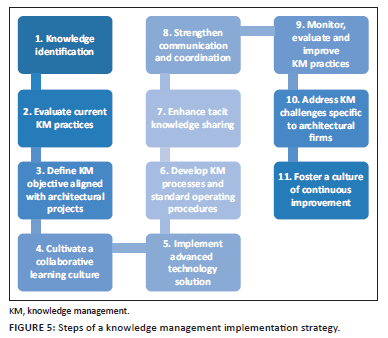
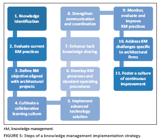
BACKGROUND: The application of knowledge management (KM) practices in architectural firms differs across firms. By developing a KM implementation strategy, architectural firms will optimally benefit from KM OBJECTIVES: The objective was to investigate the application of KM practices in architectural firms and to develop an implementation strategy for architectural firms to benefit from KM METHOD: Based on Nonaka's socialisation, externalisation, combination and internalisation (SECI) model, the study investigates how architectural firms generate, disseminate and preserve knowledge. Employing a qualitative, multi-case study methodology, semi-structured interviews were carried out at five architectural firms to identify factors that either facilitate or impede KM adoption RESULTS: Large architectural firms implement customised KM systems, whereas smaller firms face difficulties with established methodologies because of resource limitations. Notable challenges include the capture of tacit knowledge, time restrictions and financial limitations. Supportive elements include backing from leadership, promoting a learning culture and using building information modelling (BIM) technologies CONCLUSION: The study suggests an 11-step strategy for implementing KM, focusing on cost-effective technological solutions, ongoing professional development and environments that encourage collaborative learning. This organised approach aims to enhance project results, boost organisational effectiveness and ensure the sustainability of KM practices CONTRIBUTION: The article presents insights that can inform and improve KM practices within the architectural industry. By tackling the specific challenges confronting architectural firms in South Africa, the recommendation to building industry professionals and policymakers highlights the transformative potential of effective KM practices in fostering innovation, improving efficiency and securing competitive advantages within the architectural field
knowledge management; architectural firms; socialisation; externalisation; combination; and internalisation model; tacit knowledge; building information modelling; South Africa
 Thumbnail
 Thumbnail
 Thumbnail
 Thumbnail
 Thumbnail
 Thumbnail
 Thumbnail