Navigating VUCA Challenges in Manufacturing Environment: An Integrated ISM and Fuzzy MICMAC Approach
Abstract
This study explores the challenges of managing volatility, uncertainty, complexity, and ambiguity (VUCA) in manufacturing. Using interpretive structural modelling (ISM) and fuzzy MICMAC, it identifies and prioritises key enablers of decision-making. ISM structures the relationships between enablers, while fuzzy MICMAC categorises them, based on influence and dependence. The results highlight agile leadership and adaptive organisational structure as the most influential enablers, while customer retention strategies and crisis preparedness are highly dependent. This study provides a structured framework to enhance organisational resilience and adaptability in complex manufacturing environments.
Abstract
Hierdie studie ondersoek die uitdagings verbonde aan die bestuur van wisselvalligheid, onsekerheid, kompleksiteit en onduidelikheid (VUCA) in vervaardiging. Deur gebruik te maak van interpretatiewe strukturele modellering (ISM) en fuzzy MICMAC, identifiseer en prioritiseer die studie sleutelfaktore wat besluitneming moontlik maak. ISM struktureer die verwantskappe tussen hierdie faktore, terwyl fuzzy MICMAC die faktore op grond van invloed en afhanklikheid kategoriseer. Die resultate beklemtoon aanpasbare leierskap en 'n aanpasbare organisasiestruktuur as die mees invloedryke faktore, terwyl kliëntebehoudstrategieë en krisisgereedheid 'n hoë mate van afhanklikheid toon. Hierdie studie bied 'n gestruktureerde raamwerk om organisatoriese veerkragtigheid en aanpasbaarheid in komplekse vervaardigingsomgewings te versterk
1. INTRODUCTION
Manufacturing industries in the modern era face unprecedented challenges that are driven by rapid technological advancements, changing market demands, and globalisation[1],[2]. The Fourth Industrial Revolution, commonly known as Industry 4.0, introduces technologies such as the Internet of Things (IoT), artificial intelligence (AI), and robotics, fundamentally altering the way products are designed, manufactured, and delivered[3].
While these innovations bring new opportunities, they also introduce several challenges, including the need for skilled labour, high costs of technological integration, and the complexity of managing interconnected production systems. Moreover, supply chain disruptions, as witnessed during global events such as the COVID-19 pandemic, have exposed the vulnerabilities in global manufacturing networks. This has forced organisations to rethink their strategies for resilience and flexibility. Rising consumer expectations for customisation, along with stricter environmental regulations, add to the complexity of modern manufacturing processes[4]. Manufacturers are increasingly required to balance operational efficiency with sustainability goals, all while managing escalating costs and global competition.
The difficulties faced by modern manufacturing can be effectively analysed through the VUCA framework, which stands for "volatility, uncertainty, complexity, and ambiguity"[5],[6]. The VUCA concept originated at the United States Army War College in 1987 to describe the post-Cold War multilateral world, drawing from leadership theories[7]. It was adapted to business contexts to characterise turbulent environments[8]. In manufacturing, VUCA manifests through macro-environmental forces that are often analysed via the PEST (political, economic, social, technological) dimensions[9]. For instance: volatility arises from political/geopolitical tensions (e.g., trade wars disrupting supply chains); uncertainty stems from economic fluctuations (e.g., raw material price swings); complexity from interconnected technological advancements (e.g., Industry 4.0 integrations); and ambiguity from social/regulatory shifts (e.g., evolving sustainability demands). This PEST-linked perspective underscores the need for resilient enablers in manufacturing, as explored in this study.
Each of these dimensions is highly relevant to the new age manufacturing environment. In the manufacturing sector, these VUCA characteristics manifest through frequent disruptions in supply chains, technological obsolescence, shifting customer preferences, and dynamic regulatory pressures - all of which challenge conventional decision-making and strategic planning pressures - of manufacturing is clouded by uncertainty, particularly concerning the adoption and impact of emerging technologies. Decision-makers must navigate unpredictable market trends, regulatory changes, and geopolitical tensions, all of which complicate strategic planning.
Understanding these VUCA-related challenges is essential for developing strategies that enhance organisational resilience in the manufacturing sector. This article aims to explore how manufacturing industries can navigate VUCA challenges by identifying and prioritising enablers using an integrated interpretive structural modelling (ISM) and fuzzy MICMAC approach, focusing specifically on building organisational resilience in dynamic and uncertain environments. The following research objectives are addressed in this study:
To prioritise the enablers of VUCA challenges in manufacturing.
To construct a structural model using ISM to analyse the interactions between these enablers.
To classify identified enablers into categories such as autonomous, dependent, linkage, and driving, based on their influence and dependence.
ISM and fuzzy MICMAC analysis are widely recognised tools for analysing complex interrelationships among strategic factors and enabling structured prioritisation. Traditionally, these methods have been applied in stable business settings for project planning, risk management, and technology adoption. However, their structured, interpretive approach also holds significant potential for application in VUCA environments, where ambiguity and complexity can overwhelm unstructured analysis methods. By systematically identifying the driving and dependent factors in a network of interrelated enablers, ISM and fuzzy MICMAC help organisations to navigate complexity, clarify strategic priorities, and support informed decision making under uncertainty. Despite this potential, their explicit use in modelling factors in VUCA settings - particularly in the manufacturing domain - remains relatively limited in the current literature. This study addresses that gap by applying these methodologies to explore and structure key enablers for organisational adaptability in VUCA conditions, thereby offering a practical tool for strategic resilience. This research work focuses specifically on the manufacturing sector in a VUCA environment, rather than on general management practices. The aim is to explore and understand the dynamic interrelationships among key enablers that influence strategic decision-making and operational resilience in manufacturing organisations facing VUCA challenges. The findings are examined with respect to the study's central focus - addressing VUCA challenges in the manufacturing sector - by demonstrating the role and influence of each identified enabler. Visual tools such as tables and diagrams are incorporated to illustrate the hierarchical structure derived from the ISM methodology. The sections that follow walk the reader through the development of the model, and discuss how the resulting insights could inform strategic planning and operational decision making in manufacturing environments.
Beyond methodological advancements, navigating VUCA in manufacturing demands a fundamental shift in management philosophy - from linear, centralised planning to systems and complexity thinking[10],[11]. Systems theory emphasises interconnectedness, feedback loops, and emergent behaviour, recognising that VUCA environments require decentralised strategic decisions to enhance responsiveness and resilience[12]. Tools such as Vester's sensitivity model[13], which classifies variables by systemic roles and impacts, complement fuzzy MICMAC in promoting holistic views. Scenario thinking further aids in managing the unexpected by exploring multiple futures[14]. This philosophical evolution broadens the scope of enablers, as evidenced in our model, in which driving factors such as agile leadership and adaptive organisational structure facilitate decentralised, holistic approaches. By integrating these insights, ISM and fuzzy MICMAC not only structure interrelationships, but also support a paradigm shift towards adaptive, systems-oriented management in manufacturing.
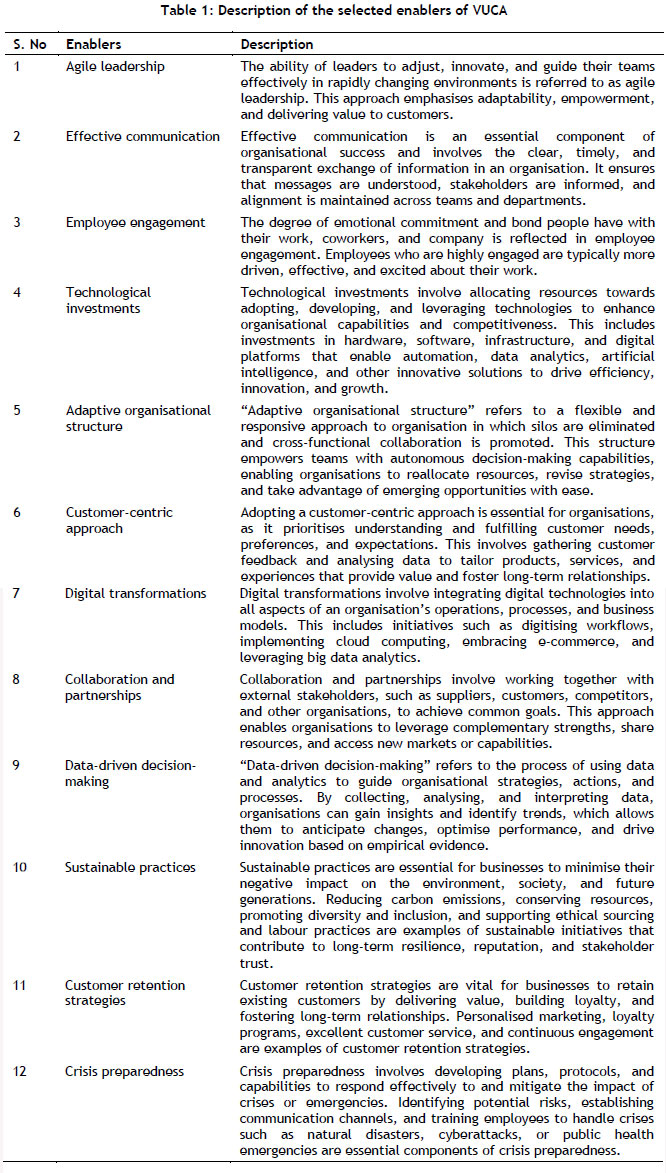
The study begins by identifying the enablers that support effective management in VUCA environments. It is crucial that the identified enablers are contextually relevant and specific to the study's objectives. The identification of enablers was conducted through a systematic literature review, focusing on peer-reviewed sources related to VUCA challenges in manufacturing and organisational resilience (e.g., Industry 4.0, supply chain disruptions, adaptive strategies). Keywords such as "VUCA manufacturing", "organizational resilience enablers", and "agile leadership VUCA" were used to search databases such as Scopus, Web of Science, and Google Scholar. From an initial pool of over 50 potential factors, 12 key enablers were finalised, based on these criteria: (1) frequency of mention in high-impact studies; (2) direct relevance to navigating VUCA dimensions in manufacturing contexts; (3) potential for interrelationships (suitable for ISM/fuzzy MICMAC); and (4) practical implications for decision-making and resilience. This process ensured contextual specificity to manufacturing rather than general management. While primarily literature-driven, the selection was cross-validated for alignment with established frameworks[15],[16]. The selected enablers, detailed in Table 1 with descriptions and supporting studies, represent critical levers for enhancing adaptability in volatile environments.
Although ISM and fuzzy MICMAC techniques have been widely applied in sectors such as manufacturing, logistics, and policy planning to assess and rank key factors, their use in VUCA contexts is still limited. In such environments, organisations face rapidly changing conditions that require more than just identifying critical enablers - they need to understand how these enablers influence one another in a dynamic system. Most prior studies tend to examine enablers in isolation, overlooking the complex interconnections that exist between them. This approach falls short in VUCA settings, where a change in one factor often triggers cascading effects on others. Addressing this limitation, the present study applies ISM to map out the structural relationships among enablers, and uses fuzzy MICMAC to classify them, based on their influence and dependence under uncertain conditions. By combining these two methodologies, the study constructs a comprehensive and hierarchical model that reflects the real-world interdependencies among enablers. This model equips decision-makers with practical insights, helping them to identify which factors act as key drivers and which are more reactive, thereby enabling more strategic planning. The framework ultimately supports organisations in strengthening their capacity to adapt and remain resilient amid volatility and unpredictability.
3. METHODOLOGY
The central objective of the present research study is to identify and scrutinise the critical enablers that shape the administrative landscape in VUCA settings, based on prior published research. Subsequently, experts in the field provide insights and evaluations of these factors to elucidate their interconnections and interdependencies. Thereafter, the ISM technique is applied to investigate the network of relationships among these factors. Following the ISM analysis, the factors are classified using a fuzzy MICMAC analysis to categorise them further, based on their driving power and dependencies.
3.1. Interpretive structural modelling
ISM is an interactive multi-criteria decision-making (MCDM) methodology that organises diverse and interdependent variables into a structured model[41],[42]. Its goal is to integrate expert insights and academic knowledge to simplify complex systems into an organised framework. While the ISM methodology and framework can be applied to various VUCA-related scenarios, this study specifically concentrates on the manufacturing sector in a VUCA environment.
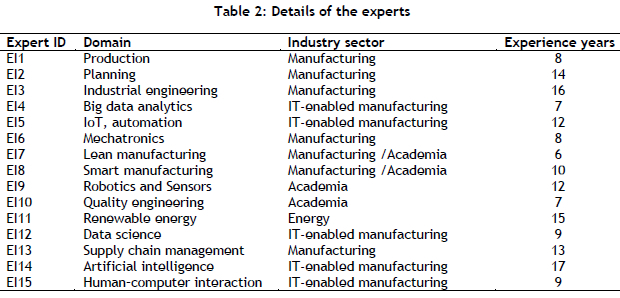
An expert panel was deliberately chosen for their knowledge and experience in manufacturing-related domains, ensuring that their insights were relevant to industry-specific challenges. The factors analysed in the study stem from issues commonly faced in manufacturing settings, and the ISM approach is used to map the complex interrelationships among these elements. Thus, the VUCA perspective is tailored to address the dynamics of transformation and resilience in the manufacturing industry. Taking geographic diversity into account, online meetings were scheduled to accommodate various time zones. The experts participated in structured discussions, and thorough documentation of their responses was ensured. A designated facilitator led brainstorming sessions to gather the experts' opinions and to analyse the relationships among the identified enablers. An introductory briefing was held before these sessions to familiarise the experts with the chosen enablers. Throughout the brainstorming process, the experts actively contributed to delineating contextual relationships among the enablers. Ultimately, consensus from all the participating experts was sought to validate the established relationships. Table 2 shows the domains of the experts and their experience.
3.2. Structural self-interaction matrix
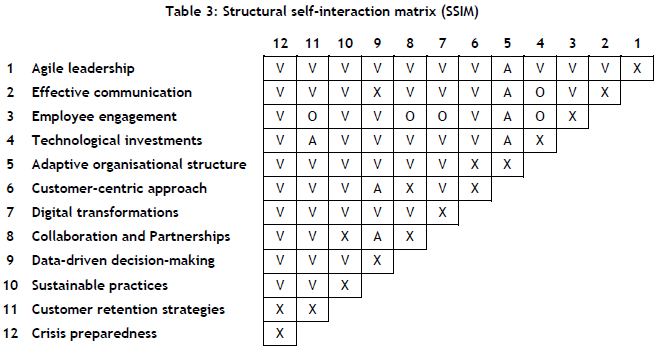
The SSIM process is critical for understanding how various enablers interact and support one another. Four symbols are used to denote these interactions[43].
V: Enabler i leads to or drives Enabler j.
A: Enabler i is influenced by or achieved through Enabler j.
X: Enablers i and j mutually facilitate or influence each other.
O: Enablers i and j are not related.
These symbols are applied to evaluate the contextual relationship between each pair of enablers systematically, forming the basis for further analysis through techniques such as ISM. The SSIM helps to identify key driving enablers and dependencies, facilitating more informed decision-making.
Table 3 presents the application of symbols V, A, X, and O, illustrating how enablers interact and influence one another in the SSIM. This approach is particularly useful in prioritising enablers for strategic initiatives, especially in complex and dynamic environments that are characterised by VUCA. Both ISM and SSIM offer a systematic way to structure complex problems by translating expert judgements into a clearly defined relational model[44],[45]. By organising interdependent factors and visualising their relationships, these tools help leaders to understand better the system's dynamics, manage uncertainty, and focus efforts on the most impactful enablers. Consensus was established through a well-organised and collaborative process involving expert input. First, the participants were introduced to the study's objectives, key enablers, and the ISM technique. Multiple virtual sessions were conducted, allowing the experts from different regions to take part. During these sessions, they evaluated the relationships between enablers using SSIM symbols (V, A, X, O). Any differing opinions were addressed through open discussions, allowing for clarification and mutual understanding. The final SSIM was created only after complete agreement was reached among all the participants. The entire process was carefully recorded and reviewed to confirm its transparency and consistency in the results.
3.3. Reachability matrix
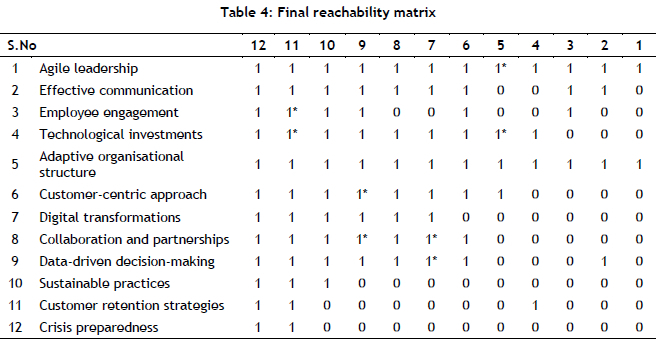
The reachability matrix is constructed from the interpretive matrix to show the direct and indirect connections between the enablers. This matrix helps to establish the hierarchical structure among the enablers and to identify the levels of the relationships. To create the initial reachability matrix, the entries in the interpretive logic knowledge base are altered: "Yes" responses are replaced with "1", signifying a direct influence, and "No" responses are replaced with "0", signifying no direct influence. This process is illustrated in Table 4. Next, a transitivity check is performed on the initial reachability matrix. The principle of transitivity states that, if Enabler A affects Enabler B and Enabler B affects Enabler C, then Enabler A should affect Enabler C. This check confirms that the matrix accurately portrays all indirect relationships. After verifying and incorporating these transitive connections, the final reachability matrix is developed, as shown in Table 4. This matrix serves as the foundation for subsequent steps in the ISM process, providing a clear depiction of how enablers interact within the system
3.4. Level partition
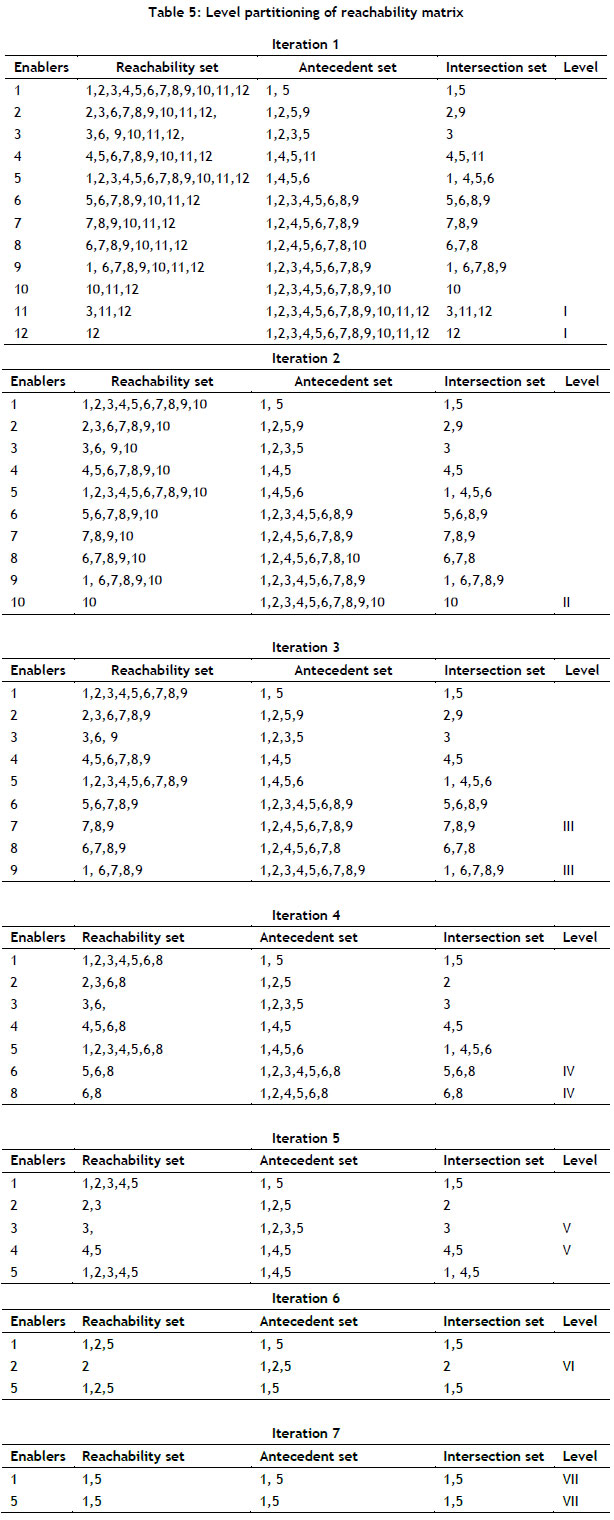
Level partitioning is a process of organising enablers into different tiers based on the relationships identified in the reachability matrix. This process helps in understanding the hierarchy and influence of each enabler. Driving enablers, which are located at the highest level, have a direct impact on those at the lower levels. These driving enablers set the stage for other enablers, and may also have indirect effects throughout the system. To determine the levels, the following steps are taken:
1. Identifying reachability and intersection sets: For each enabler, determine the reachability set (all the enablers it can influence) and the intersection set (the enablers with which it shares influence).
2. Assigning levels: Enablers with the same reachability and intersection sets are grouped at the same level. The enablers at level 1, having no enablers influencing them, are placed at the top of the hierarchy.
3. Iteration: Remove the enablers at the current level from the matrix and repeat the process to determine the next level. This iterative process continues until all enablers are appropriately tiered. The hierarchical arrangement is essential for constructing the diagram, which shows which enablers drive the system and which are influenced by others. Five iterations of level partitioning were performed, resulting in the structured hierarchy shown in Table 5.
3.5. Formation of ISM-based model
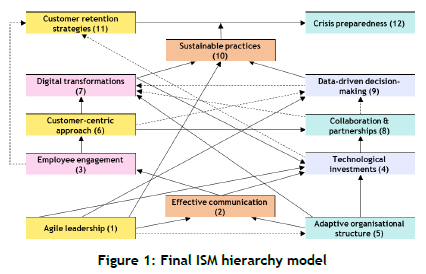
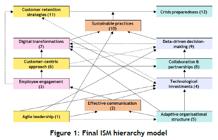
Drawing from the levels established during the partitioning phase and the reachability matrix, a directed hierarchical model is created to represent the hierarchical relationships and interdependencies between the enablers visually. The final ISM hierarchy model, shown in Figure 1, provides a clear visual representation of how each enabler has an impact on others in the hierarchy. This structured view helps to comprehend the flow of influence and the critical enablers driving the system. The constructed ISM hierarchy model serves as a valuable tool for visualising the interactions and dependencies among the enablers, facilitating improved strategic planning and decision-making for managing VUCA challenges.
3.6. Fuzzy MICMAC
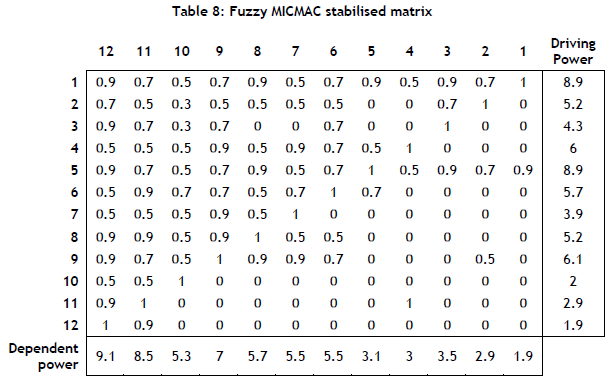
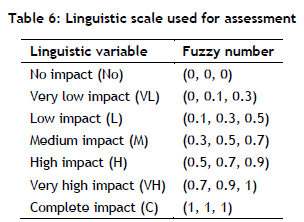
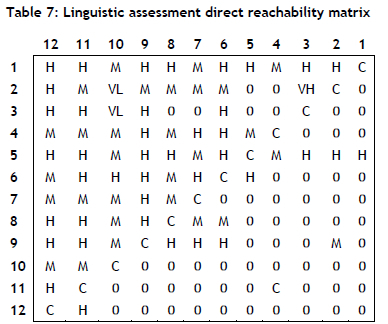
Fuzzy MICMAC analysis enhances conventional MICMAC techniques by incorporating fuzzy set theory to quantify varying degrees of interrelationships between factors accurately. This approach addresses the limitations of standard MICMAC analysis, providing a more nuanced understanding of interdependencies. The binary direct reachability matrix (BDRM) is created by evaluating the inter-dependencies among the enablers in the ISM process. This matrix represents whether one enabler has a direct influence on another, with a value of "1" indicating a direct relationship and "0" indicating no relationship. Following the establishment of the BDRM, fuzzy sets are used to assess the connections between the enablers. Fuzzy sets, which span the range of (0, 1), are characterised by membership functions that capture the degree of influence that one enabler exerts on another. This process entails the use of linguistic scale values, as shown in Table 6, to evaluate the relationships. Experts provide their evaluations using a linguistic scale to generate the linguistic assessment direct reachability matrix (LADRM). These linguistic assessments are then transformed into triangular fuzzy numbers, characterised by lower value (a), upper value (c), and middle value (b), with the condition that a<b<c. The fuzzy numbers are subsequently defuzzified to convert them into crisp values, resulting in the fuzzy direct reachability matrix (FDRM). Table 7 shows the LADRM, and Table 8 shows the fuzzy MICMAC stabilised matrix, which has the combined value of driving power and dependence power of all 12 enablers.
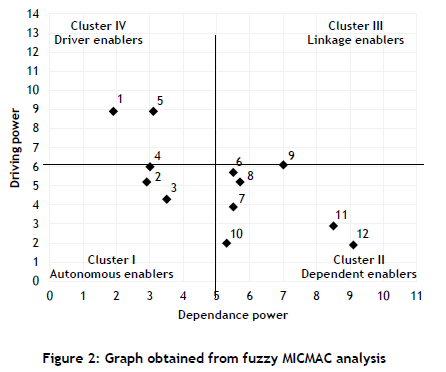
Based on the fuzzy MICMAC analysis shown in Figure 2, enablers are categorised into four clusters according to their driving and dependence powers:
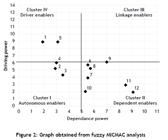
Cluster I: Autonomous enablers have minimal driving and dependence power. While they do not significantly influence other enablers, they may still create bottlenecks if not addressed. Examples are Enabler 10 (driving power: 2, dependent power: 2.9) and Enabler 12 (driving power: 1.9, dependent power: 1.9).
Cluster II: Dependent enablers exhibit high dependence but low driving power, meaning that they are heavily influenced by other enablers but exert minimal influence themselves. Examples are Enabler 1 (dependent power: 9.1, driving power: 8.9), Enabler 2 (dependent power: 8.5), and Enabler 3 (dependent power: 5.3). These enablers are positioned at the top of the hierarchy, and require systematic management to strive for organisational stability.
Cluster III: Linkage enablers have both high driving and dependence power, making them highly influential and interdependent. Changes in these enablers can have a significant impact on others; examples are Enabler 4, Enabler 5, and Enabler 9 (driving powers: 6, 8.9, and 6.1 respectively). Continuous monitoring is necessary, as alterations in these enablers can create cascading effects.
Cluster IV: Driver enablers show the highest driving power, with little to no dependence on other enablers. They are the primary influencers in the system, and addressing these enablers could significantly shape the behaviour of other enablers. Enabler 1 and Enabler 5 (both with driving power: 8.9) are identified as key drivers, and their effective management is essential to mitigate risks and maximise organisational success in VUCA contexts.
The methodology used - ranging from the careful selection of experts to the development of the SSIM and achievement of consensus - provided a strong and coherent basis for building a dependable ISM. Each phase, from identifying relevant enablers to confirming their interconnections, was specifically tailored to reflect the intricate and evolving challenges faced in VUCA-affected manufacturing contexts. With the SSIM finalised and agreement secured among the experts, the groundwork is now in place to proceed with constructing the ISM model. Section 4 presents the outcomes of this modelling phase, including the derivation of the reachability matrix, identification of hierarchical levels, and the formation of the final model, which collectively shed light on the influence and importance of each enabler in the system.
4. RESULTS AND DISCUSSION
This study was guided by the expectation - shaped by the literature and expert insights - that enablers such as adaptive organisational structure, agile leadership, collaborative partnerships, and technological investments would be pivotal for organisations, particularly in the manufacturing sector, to navigate VUCA environments effectively. Prior studies consistently highlight that flexibility in organisational design, strong leadership, strategic partnerships, and digital readiness are critical factors for resilience and adaptability[46].
The results of our ISM and fuzzy MICMAC analyses confirmed these expectations. Adaptive organisational structure and collaboration and partnerships emerged as the key driving enablers in the system. This outcome supports the findings of[47], who emphasised that structural flexibility and robust collaborative networks are essential for manufacturing firms to withstand supply chain disruptions, respond to market volatility, and manage technological change. The strong driving power of these enablers suggests that foundational organisational agility and partnerships serve as critical levers for fostering resilience.
Meanwhile, agile leadership, effective communication, and technological investments were categorised as dependent enablers - factors whose successful implementation relies on the presence of stronger, foundational drivers. This observation aligns with the conclusions drawn by[48], who noted that leadership agility and technology adoption have an impact primarily when supported by adaptive structures and collaborative cultures. Furthermore, the identification of technological investments as a dependent factor resonates with the Industry 4.0 readiness models suggested by[49], who argued that technological initiatives alone are insufficient drivers of transformation unless integrated into a supportive organisational ecosystem.
Organisational culture plays a crucial role in how effectively the identified enablers are implemented in VUCA environments. A culture that supports innovation, collaboration, and learning can significantly enhance the impact of enablers such as digital transformation, employee engagement, and adaptive structures. Without cultural alignment, strategic efforts may face resistance or fail to be sustained over time. In addition, firm-specific conditions - such as size, industry type, digital maturity, or management structure - affect how organisations respond to VUCA challenges. Recognising these starting conditions or "organisational archetypes" allows for better tailoring of strategies. For example, the priorities of a tech-driven startup will differ from those of a traditional manufacturing firm. Considering these contextual factors could strengthen the relevance and applicability of the ISM model in practice.
Although this study explored enablers for adopting advanced technologies in VUCA environments in a broad sense, its primary focus aligns closely with the manufacturing sector, considering the background of the expert panel involved. The manufacturing industry frequently encounters difficulties such as unpredictable supply chains, shifting customer demands, rapid technological advancements, and workforce skill shortages - all of which are intensified in a VUCA landscape. The critical driving factors identified, such as flexible organisational structures and collaborative networks, hold particular importance for manufacturers that aim to enhance operational resilience. For example, leadership agility combined with strategic partnerships allows manufacturing firms to adapt quickly to supply disruptions or technological shifts. In addition, fostering a culture of continuous employee development and embracing sustainable practices can boost efficiency, product quality, and stakeholder trust, contributing to long-term competitiveness. Consequently, the ISM model developed in this study provides a valuable guide for manufacturers seeking to strengthen adaptability and to sustain growth amid ongoing uncertainties.
By implementing these recommendations, industries could better navigate the complexities of VUCA environments, improving resilience, innovation capacity, and maintaining a competitive edge.
4.1. Managerial implications
The development of the ISM model has significant managerial implications, especially in navigating VUCA environments. The ISM model effectively identifies driving and dependent enablers that are critical for organisational resilience and strategic adaptation. By strategically leveraging these enablers, organisations could strive for consistent adaptation to VUCA dynamics, thereby enhancing their competitive advantage and operational resilience. Addressing problems such as insufficient top management commitment is crucial. This could be achieved through proactive education and alignment of senior executives with the strategic importance of VUCA resilience. Engaging senior leadership through case studies, successful implementation examples, and targeted training initiatives would foster their commitment. Involving them early in pilot programmes and decision-making processes, while showcasing initial successes, would promote the enthusiasm and long-term engagement that are essential for sustained implementation.
4.2. Limitations and future scope
The ISM modelling process faces several limitations that should be considered when navigating VUCA environments. First and foremost, the methodology relies heavily on individual expertise and opinions, which could introduce subjectivity, potentially having an impact on the analysis outcomes. The diverse perspectives, backgrounds, and experiences of specialists assessing enabler connections may lead to varied interpretations and biases, possibly skewing the results. The absence of quantitative measurements in ISM further limits its capacity to provide precise assessments of enabler interactions, thus hindering objective ranking and evaluation of their strengths or influences. To mitigate these limitations, adopting a rigorous and transparent approach in ISM modelling would be essential. This would include engaging a diverse group of specialists, validating outcomes through multiple iterations, critically examining assumptions, and incorporating a wide range of viewpoints to minimise biases.
5. CONCLUSION
This research examined how organisations - especially those operating in VUCA environments - could strategically adopt advanced technologies to enhance adaptability, foster innovation, and improve stakeholder satisfaction. The study moved beyond traditional Industry 4.0 approaches by focusing on enablers that drive sustainable and resilient transformation. A combination of a literature review and expert consultations led to the identification of key enablers that influence successful technology adoption. These enablers were then analysed using ISM and fuzzy MICMAC techniques to determine their hierarchical structure and interdependencies.
The findings revealed that agile leadership, effective communication, and technological investments are highly dependent factors that are vital for implementation, but that are influenced by more foundational elements. In contrast, adaptive organisational structure and collaboration and partnerships were recognised as the most influential driving enablers in the system. The fuzzy MICMAC analysis further validated these roles by categorising the enablers according to their driving and dependence powers. These insights highlight the importance of strengthening the driving enablers to support and activate the more dependent ones, ensuring a more effective and strategic technology transformation.
The ISM methodology proved to be a valuable tool for untangling complex interrelationships and guiding structured decision-making in uncertain and fast-changing environments. The successful implementation of transformative technologies requires prioritising strategies that bolster driving enablers to support and elevate dependent factors effectively. The ISM modelling approach used in this study provided a structured framework for navigating the intricate complexities associated with technological deployment.
In essence, the proposed ISM-fuzzy MICMAC framework serves as a valuable building block for reflective practice in manufacturing organisations, which are inherently socio-technical systems that involve complex human interactions[50]. While the model provides a structured hierarchy of enablers to guide strategic resilience, practitioners should apply it reflectively, recognising that social dynamics can introduce paradoxes - such as the Condorcet paradox in collective decision-making, in which aggregated preferences may cycle or lack transitivity despite rational individual inputs[51]. Enablers such as effective communication and employee engagement could help to mitigate such inconsistencies by fostering alignment and dialogue. This reflective application would ensure that the framework adapts to firm-specific contexts, enhancing its utility in real-world VUCA navigation.
5.1. Directions for Future Research
Building on the VUCA challenges outlined in this study, which lead to multiple possible futures in manufacturing environments, future research could explore the integration of scenario-planning techniques to anticipate and navigate these uncertainties. Scenario thinking, pioneered by Wack[51],[53], encourages managers to develop alternative narratives for volatile markets, complementing our driving enablers such as agile leadership. A shift in managerial mindset - towards systems thinking and adaptability - would also be imperative at all levels, as emphasised by Senge[10] in complex organisational contexts. Empirical studies could test these mindset shifts in real-world manufacturing settings, perhaps through longitudinal case studies or simulations, to validate their impact on resilience. This would extend our ISM-fuzzy MICMAC framework by incorporating behavioural dimensions, addressing firm-specific variations in VUCA responses.
REFERENCES
2. LITERATURE REVIEW
- [1] Garavan, T. N., Darcy, C., & Bierema, L. L. 2024. Learning and development in highly dynamic VUCA contexts: A new framework for the L&D function. Personnel Review, 53(3), pp. 641-656.
- [2] Hong, J., Quan, Y., Tong, X., & Lau, K. H. 2024. A hybrid ISM and fuzzy MICMAC approach to modeling risk analysis of imported fresh food supply chain. Journal of Business & Industrial Marketing, 39(2), pp. 124-141.
- [3] Sethi, M., & Gupta, M. P. 2024. Modelling the enablers of organizational resilience: A modified total interpretive structural modeling (m-TISM) approach. Benchmarking: An International Journal, 32(5), pp. 1776-1824.
- [4] Ruben, R. B., Rajendran, C., Ram, R. S., Kouki, F., Alshahrani, H. M., & Assiri, M. 2023. Analysis of barriers affecting Industry 4.0 implementation: An interpretive analysis using total interpretive structural modeling (TISM) and fuzzy MICMAC. Heliyon, 9(12), e22506.
- [5] Guo, Y., Zhao, Q., Cao, Z., & Huang, S. 2023. The influence of tourism and hospitality students' perceived effectiveness of outcome-based education on their VUCA skills. Scientific Reports, 13(1), 8079.
- [6] Hu, X., Zhang, Y., & Xia, M. 2024. How does supervisors' developmental feedback affect Chinese employees' work role performance? The roles of thriving at work and trait mindfulness. Humanities and Social Sciences Communications, 11(1), 1480.
- [7] Bennis, W., & Nanus, B. 1985. Leaders: The strategies for taking charge. New York: Harper & Row.
- [8] Bennett, N., & Lemoine, G. J. 2014. What a difference a word makes: Understanding threats to performance in a VUCA world. Business Horizons, 57(3), pp. 311-317.
- [9] Mack, O., Khare, A., Krämer, A., & Burgartz, T. (eds). 2016. Managing in a VUCA world. Cham: Springer.
- [10] Senge, P. M. 1990. The art and practice of the learning organization. New York: Doubleday.
- [11] Stacey, R. D. 2007. Strategic management and organisational dynamics: The challenge of complexity to ways of thinking about organisations. Harlow, UK: Pearson Education.
- [12] Anderson, P. 1999. Perspective: Complexity theory and organization science. Organization Science, 10(3), pp. 216-232.
- [13] Vester, F. 2012. The art of interconnected thinking: Ideas and tools for a new approach to tackling complexity. München: MCB-Verlag.
- [14] Schwartz, P. 1997. Art of the long view: Planning for the future in an uncertain world. New York, NY: John Wiley & Sons.
- [15] Bennett, N., & Lemoine, J. 2014. What VUCA really means for you. Harvard Business Review, 92(1/2) 27-42.
- [16] Attar, M., & Abdul-Kareem, A. 2020. The role of agile leadership in organisational agility. In Akkaya, B. (ed.), Agile business leadership methods for Industry 4.0, pp. 171-191. Bingley, UK: Emerald Publishing Limited.
- [17] Mendrofa, S. A., Vittorio, R., Hulu, F., Aina, Q., & Saling, S. 2024. Fostering organizational resilience through agile leadership: A comparative study analysis. Global International Journal of Innovative Research, 2(5), pp. 974-983.
- [18] Sharma, N., Mishra, P., & Gupta, S. K. 2024. The mediating effect of organizational communication on emotional intelligence and turnover intention. Multidisciplinary Reviews, 7(9), 2024205.
- [19] Husain, Z. 2013. Effective communication brings successful organizational change. The Business & Management Review, 3(2), p. 43-50.
- [20] Nienaber, H., & Martins, N. 2020. Exploratory study: Determine which dimensions enhance the levels of employee engagement to improve organisational effectiveness. The TQM Journal, 32(3), pp. 475-495.
- [21] Thakur, P. 2014. A research paper on the effect of employee engagement on job satisfaction in IT sector. Journal of Business Management & Social Sciences Research, 3(5), pp. 31-39.
- [22] Agazu, B. G., & Chalchissa, A. K. 2024. Innovation strategy and firm competitiveness: A systematic literature review. Journal of Innovation and Entrepreneurship, 13(1), 24.
- [23] Rocchi, V., Brissaud, D., Steinwender, A., & Bocquillon, A. 2024. Technological and organisational factors to succeed in Industry 4.0 transition implementation: An empirical study. International Journal of Manufacturing Technology and Management, 38(3), pp. 213-235.
- [24] Hanelt, A., Bohnsack, R., Marz, D., & Marante, C. A. 2021. A systematic review of the literature on digital transformation: Insights and implications for strategy and organizational change. Journal of Management Studies, 58(5), pp. 1159-1197.
- [25] Susanty, A. I., Budiharjo, E., & Winarto, W. 2024. Achieving an agile organisation in an Indonesian telecommunications company: Investigation on leadership impact and mediation variables. Journal of Science and Technology Policy Management, 15(1), pp. 6-30.
- [26] Gupta, S., & Ramachandran, D. 2021. Emerging market retail: Transitioning from a product-centric to a customer-centric approach. Journal of Retailing, 97(4), pp. 597-620.
- [27] Dash, A. 2024. Do customer centricity and innovativeness mediate the relationship between total quality management and the corporate success of SaaS companies? Benchmarking: An International Journal, 31(3), pp. 903-919.
- [28] Cirillo, V., Fanti, L., Mina, A., & Ricci, A. 2023. New digital technologies and firm performance in the Italian economy. Industry and Innovation, 30(1), pp. 159-188.
- [29] Weritz, P., Braojos, J., Matute, J., & Benitez, J. 2024. Impact of strategic capabilities on digital transformation success and firm performance: theory and empirical evidence. European Journal of Information Systems, 34(3), pp. 415-435.
- [30] Aichouni, A. B. E., Ramlie, F., & Abdullah, H. 2021. Process improvement methodology selection in manufacturing: A literature review perspective. International Journal of Advanced and Applied Sciences, 8(3), pp. 12-20.
- [31] Badraoui, I., Van der Lans, I. A., Boulaksil, Y., & Van der Vorst, J. G. 2024. Horizontal logistics collaboration success factors: Expectations versus reality. Benchmarking: An International Journal, 31(1), pp. 29-52.
- [32] Orero-Blat, M., Palacios-Marqués, D., & Leal-Rodríguez, A. L. 2025. Orchestrating the digital symphony: the impact of data-driven orientation, organizational culture and digital maturity on big data analytics capabilities. Journal of Enterprise Information Management, 38(2), pp. 679-703.
- [33] Cristofaro, M., Giardino, P. G., & Barboni, L. 2025. Growth hacking: A scientific approach for data-driven decision making. Journal of Business Research, 186, 115030.
- [34] Panigrahi, S. S., Bahinipati, B., & Jain, V. 2019. Sustainable supply chain management: A review of literature and implications for future research. Management of Environmental Quality: An International Journal, 30(5), pp. 1001-1049.
- [35] Orieno, O. H., Ndubuisi, N. L., Eyo-Udo, N. L., Ilojianya, V. I., & Biu, P. W. 2024. Sustainability in project management: A comprehensive review. World Journal of Advanced Research and Reviews, 21(1), pp. 656-677.
- [36] Gursoy, D., & Cai, R. 2025. Artificial intelligence: An overview of research trends and future directions. International Journal of Contemporary Hospitality Management, 37(1), pp. 1-17.
- [37] Junardi, J., Juniwati., & Listiana, E. 2025. The impact of customer relationship marketing and social media marketing on customer satisfaction and retention: A study at PT Sewu Segar Nusantara. International Journal of Finance and Business Management, 3(1), pp. 37-46.
- [38] Klyver, K., & Nielsen, S. L. 2024. Preparedness shapes tomorrow: crisis preparedness and strategies among SMEs amid external crises. Entrepreneurship & Regional Development, 36(9-10), pp. 1363-1384.
- [39] Jin, Y., Coombs, W. T., Wang, Y., Van der Meer, T. G. L. A., & Shivers, B. N. 2024. "READINESS": A keystone concept beyond organizational crisis preparedness and resilience. Journal of Contingencies and Crisis Management, 32(1), e12546.
- [40] Althar, R. R., Samanta, D., Purushotham, S., Sengar, S. S., & Hewage, C. 2023. Design and development of artificial intelligence knowledge processing system for optimizing security of software system. SN Computer Science, 4(4), 331.
- [41] Jindal, A., & Sangwan, K. S. 2011. Development of an interpretive structural model of barriers to reverse logistics implementation in Indian industry. In Hesselbach, J., & Herrmann, C. (eds), Glocalized solutions for sustainability in manufacturing: Proceedings of the 18th CIRP International Conference on Life Cycle Engineering, pp. 448-453. Berlin Heidelberg: Springer, 2011.
- [42] Sage, A. P., & Smith, C. L. 2009. Interpretive structural modeling (ISM) methodology: Applications in large-scale decision-making processes. IEEE Transactions on Systems, Man, and Cybernetics, 39(5), pp. 125-133.
- [43] Yetkin, M. E., Simsir, F., Ozfirat, M. K., Ozfirat, P. M., & Yenice, H. 2016. A fuzzy approach to selecting roof supports in longwall mining. South African Journal of Industrial Engineering, 27(1), pp. 162-177.
- [44] Travem, J. S., Naidoo, S., & Rajcoomar, A. 2021. A structural equation model linking innovation and knowledge management capability to improve organisational capability efficiency. South African Journal of Industrial Engineering, 32(2), pp. 65-81.
- [45] Warfield, J. N. 1978. Societal systems planning, policy and complexity. Cybernetics and System, 8(1), pp. 113-115.
- [46] Sushil. 2012. Interpreting the interpretive structural model. Global Journal of Flexible Systems Management, 13(2), pp. 87-106.
- [47] Schuh, G., Anderl, R., Gausemeier, J., Ten Hompel, M., & Wahlster, W. (eds). 2020. Industrie 4.0 maturity index: Managing the digital transformation of companies, UPDATE 2020. Munich: Acatech STUDY.
- [48] Dubey, R., Gunasekaran, A., Childe, S. J., Wamba, S. F., Roubaud, D., & Foropon, C. 2021. Empirical investigation of data analytics capability and organizational flexibility as complements to supply chain resilience. International Journal of Production Research, 59(1), pp. 110-128.
- [49] Shashi, P. C., Cerchione, R., & Ertz, M. 2020. Managing supply chain resilience to pursue business and environmental strategies. Business Strategy and the Environment, 29(3), pp. 1215-1246.
- [50] Müller, J. M., Buliga, O., & Voigt, K.-I. 2018. Fortune favors the prepared: How SMEs approach business model innovations in Industry 4.0. Technological Forecasting and Social Change, 132, pp. 2-17.
- [51] Wack, P. 1985. Scenarios: Shooting the rapids. Harvard Business Review, 63(6), pp. 139-150.
- [52] Ackoff, R. L. 2005. Creating the corporate future. In Lucas, M. (ed.), Understanding business environments (pp. 217-227). London, UK: Routledge.
- [53] Gehrlein, W. V., & Lepelley, D. 2017. Elections, voting rules and paradoxical outcomes. Berlin: Springer.
Accepted for publication: 21 Jan 2026
Available online: 22 May 2026
ORCID® identifiers
J. Dhiyaneswaran: https://orcid.org/0000-0002-2617-2228
R. Ben Ruben: https://orcid.org/0000-0002-8694-1682