Information and Communication Technology for E-waste Awareness and Management in Rural Communities of South Africa
Abstract
This paper provides insight into the importance of the proper disposal of electronic waste, also known as e-waste, which contains hazardous substances such as lead, mercury, and cadmium that can harm both the environment and human health. This is a serious problem for people living in rural communities in South Africa, as they grow food in the soil and drink water from river flows and dams, which may be contaminated. This study, based on a qualitative approach and on semi-structured interviews, revealed, through the use of the social capital theory, a lack of awareness and poor management of e-waste in these communities, with practices such as burning and landfill disposal being common. The research suggests using information and communication technology tools, such as an e-waste registration and collection app, to improve awareness and management. It recommends launching educational programmes to inform rural communities about the dangers of e-waste and to promote safe disposal practices.
Abstract
Hierdie artikel bied insig in die belangrikheid van die behoorlike wegdoening van elektroniese afval, ook bekend as e-afval, wat gevaarlike stowwe soos lood, kwik en kadmium bevat wat die omgewing en die menslike gesondheid kan benadeel. Dit is 'n ernstige probleem vir mense wat in landelike gemeenskappe in Suid-Afrika woon, aangesien hulle voedsel in die grond verbou en water uit riviere en damme gebruik wat moontlik besoedel kan wees. Hierdie studie, gebaseer op 'n kwalitatiewe benadering en semigestruktureerde onderhoude, toon deur die gebruik van sosialekapitaalteorie 'n gebrek aan bewustheid en swak bestuur van e-afval in hierdie gemeenskappe. Praktyke soos verbranding en wegdoening op stortingsterreine is algemeen. Die navorsing stel die gebruik van inligtings- en kommunikasietegnologiehulpmiddels voor, soos 'n toepassing vir die registrasie en insameling van e-afval, om bewustheid en bestuur te verbeter. Dit beveel aan dat opvoedkundige programme ingestel word om landelike gemeenskappe oor die gevare van e-afval in te lig en veilige wegdoeningspraktyke te bevorder.
1. INTRODUCTION AND BACKGROUND
The increased use of electronic products has posed electronic waste (e-waste) problems around the world, especially in under-resourced communities in Africa, including South Africa. Many people lack awareness of the dangers that e-waste poses to their health and environment. Embracing the use of information and communication technology (ICT) could help to raise awareness of e-waste and promote proper disposal practices in these communities.
Electronic products, such as mobile phones, television sets, laptops, computers, refrigerators, radios, washing machines, and batteries, have become an integral part of people's daily lives. Access to such products has increased in both developing and developed nations. With the rapid improvements to features of such products, their lifespan has shortened [1]. Combining both the increasing ownership of electronic products and their short lifespan has increased the number of outdated, non-functioning, and unwanted electronic products, which are referred to as 'e-waste'.
Electronic devices are made up of hazardous chemicals that must be safely discarded at the end of their lifespan to avoid chemicals posing a danger to human health and the environment [2]. Improperly discarded e-waste creates an unfriendly environment because of the toxins being released into the air, water, and soil. The communities living in rural and remote areas that are under-resourced experience problems with pollution, as they grow their food in the soil and drink from river flows and dams. The poor handling of e-waste in these under-resourced communities could lead to ploughing, irrigation, and drinking water being unsuitable for human and animal consumption and for the environment.
South Africa is a developing nation at the southern tip of Africa, with an estimated population of over 59 million people [3]. The country comprises nine provinces, with the Eastern Cape, where the study was carried out, being the poorest province. The country is divided into two settlement types, namely urban areas and the remote rural areas, the latter of which are mostly under-resourced - that is, areas with limited basic resources such as sanitation, running water, and proper infrastructure [4]. The country has a constitution that states that each of its citizens has a right to live in a healthy environment with access to basic services such as electricity, healthcare, education, sanitation, and proper infrastructure. However, with e-waste being the fastest-growing stream in the country [5], this right is diminishing. The compromise in executing of such policies has an impact in different sectors, such as ICT, industrial engineering (IE), agriculture, climate, and environment.
This study identified two sectors that could work closely together to address the environmental and awareness problems caused by e-waste, namely ICT and IE. ICT provides an application that could be used by different stakeholders, including communities in understanding of e-waste, while IE could be instrumental in designing recycling systems that use recycled items to manufacture e-waste materials and increase the lifespan of electronic products [16], since most electronic device components are produced through the IE design and production cycle. [5] highlighted the role of IE in improving the e-waste collection mechanism by designing and developing emerging technologies that could help with e-waste management. These technologies could include artificial intelligence (AI), chemical recycling, and design recycling infrastructure in which broken electronic equipment could be sent for processing so that those valuable parts could be re-used. [17] suggested that e-waste generation could be reduced by 16% to 86% if generative AI could be implemented in circular-economy strategies. This study acknowledges that IE's contribution to e-waste management would be more technical, whereas ICT could provide an interactive solution, with relevant stakeholders, for e-waste management awareness.
The rest of the paper is structured as follows: Section 2 provides the problem statement; Section 3 is a review of the literature on e-waste disposal and management; Section 4 discusses the methodology and the social capital theory, which was used in the study; Section 5 discusses the results of the study; Section 6 presents the recommendations arising from the study's results; and Section 7 concludes the paper.
2. PROBLEM STATEMENT
The most recent research study conducted in South Africa shows that e-waste has increased significantly [6] and that remote and rural communities are contributing to this fast growth of e-waste in the country [6]. Despite the visible increase in e-waste generation, the majority of e-waste is burnt, dumped into land pits, buried underground, landfilled, or recycled informally, thus creating health and environmental problems for animals and humans [6,7]. However, no known research has focused on finding or assessing the awareness of rural and remote communities about the proper disposal of e-waste. The improper disposal of e-waste could be associated with a lack of awareness of proper and legal disposal methods. Thus, there is a lack of ICT integration with e-waste to raise awareness and improve its management in rural and remote areas in South Africa.
Therefore, this study aimed (1) to assess e-waste awareness and its management in rural and remote areas of South Africa, which are mostly under-resourced, and (2) to identify ICT tools to assist with e-waste awareness and management in these rural and remote areas and to determine how their use could assist with e-waste awareness and management. The overall objective of the study was to increase awareness levels about the proper disposal of e-waste in rural and remote areas of South Africa, and in particular in the Eastern Cape.
Several studies have been conducted in South Africa on e-waste disposal and management, and on waste management in general. However, most of these studies have focused on urban areas, and no known research has been conducted to assess the awareness levels of communities about proper disposal and management.
[8] conducted research that aimed to develop a model to estimate informally disposed domestic waste in rural versus urban South Africa. The study's results established that the proportion of domestic waste that is mismanaged in South Africa is significant and that its exclusion from national waste estimates leads to the inaccurate representation of waste management practices in existing waste data repositories. The study looked at waste management in general in rural and urban areas, not at e-waste specifically; and the awareness component was never covered by the research.
[9] conducted research to evaluate e-waste management in eThekwini Municipality, KwaZulu-Natal Province in South Africa, from storage, collection, transportation, and recycling up to the disposal phase. The study found that ITC waste was the largest waste stream, followed by entertainment equipment waste. The study also found that household participants' understanding and knowledge of e-waste was relatively low, as only 33% of the participants demonstrated some knowledge of e-waste [9]. Although the study assessed the awareness levels of the community about e-waste, the study did not cover rural areas.
[10] reviewed the organisation of the South African e-waste recycling industry by considering the legal environment and probing the barriers to e-waste recycling throughout the value chain. The review indicated that the development of the e-waste recycling sector in South Africa depended on a robust collection network and the enabling of local end-processing, refining, and manufacturing capacity [10]. The review concluded that the legislative environment for e-waste recycling was evolving and needed to be continually reviewed in order to assess its ability to enable or activate the development of the sector [10]. However, the review's focus was e-waste recycling in the value chain and not on e-waste disposal and management in general, which is the focus of this study.
[11]'s study investigated the key barriers and enablers to implementing e-waste end-processing technologies in South Africa. The study highlighted that only 12% of generated e-waste was estimated to have been recycled in 2015 [11] owing to a lack of formal take-back schemes and a lack of consumer awareness [11]. The study showed that the e-waste recycling industry in SA had potential as an emerging secondary resource economy. However, the study noted that the extent to which the industry would mature depended on the organisation of its collection network as well as the development of local end-processing and manufacturing capacity [11]. In conclusion, the study recommended increasing consumer awareness and engagement to increase recycling rates [11]. The study researched aspects of awareness and engagement in general, but it did not focus on rural and remote communities.
[12] investigated current practices in South Africa dealing with e-waste from the household sector in urban areas in order to develop a framework for the re-use, recycling, and disposal of e-waste. The study revealed that convenience, a positive attitude towards e-waste recycling, and environmental awareness were the biggest contributors to recycling e-waste among consumers. Although the study included some aspects of awareness in its investigation, it focused only on urban communities.
[13,14,15] conducted studies in waste management, focusing on rural communities and low-income settlements. [13] carried out an investigation to assess the waste management practices and problems of households in the Northern Cape of South Africa. The results of the study indicated that municipalities and households needed to search collaboratively for solutions that would result in effective waste management in rural areas.
[14] investigated waste disposal practices in low-income South African communities, and found that families living in low-income settlements are at risk of solid waste exposure, and that this situation was exacerbated by poor access to piped water, proper sanitation, and electricity [14]. [15] examined the relationship between rural socio-economic conditions and solid waste generation and management. The study found that communities characterised by lower income generation disposed of their waste inside their households, apart from certain waste, such as nappies, that was disposed of in freshwater ecosystems, open spaces, and illegal dump sites [15]. All three studies focused on solid waste disposal and management, and not specifically on e-waste; and none included the aspect of investigating the awareness levels of the communities about e-waste disposal and management.
4. METHODOLOGY
To conduct this study, a qualitative research methodology and social capital theory (SCT) techniques were adopted to gain an understanding of e-waste problems in under-resourced villages. The adopted theory also explored how the communities could benefit from having ICT systems to help them to improve e-waste management and awareness. SCT allows communities or a group of individuals to share their difficulties, ideas, and innovations based on their lived experiences [18]. SCT is based on relationship networks in communities to elevate social cohesion and to find solutions to the problems they face.
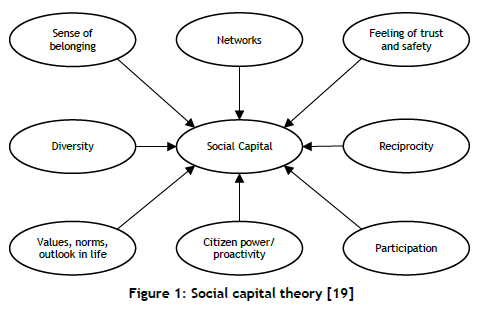
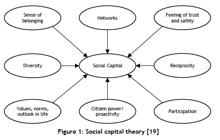
SCT provides a way to understand the issues and lived experiences of communities, thus leading to the benefits that they want to experience after understanding and solving those issues. SCT does this through its attributes of sense of belonging, networks, feelings of trust and safety, diversity, reciprocity, values, norms and outlook, power and pro-activity, and participation [19] (see Figure 1).
Semi-structured interviews were used to collect data. Semi-structured interviews were chosen, based on the use of SCT, which allows a group of people to share problems, ideas, and innovations, based on their lived experiences. The semi-structured interviews were used to gather collective responses from the participants. This interview technique allowed the researcher to pose follow-up questions to respondents so that they could expand on their answers and use examples when needed. The set of questions to be asked were piloted before the data collection process. The questionnaire had three sections: the first looked at awareness; the second looked at management; and the third section looked at information and communication technology (ICT) tools to be adopted for e-waste awareness and management.
The literature review was conducted to decide on the research themes that justified the researchers' argument about e-waste management and awareness. The set of questions was based on the identified themes using keywords, such as awareness, environmental management, and health. To analyse the data, a thematic data analysis approach through SCT components was embraced, in which the data set from the structured interviews and the focus groups was coded for analysis.
The study's population consisted of people living in rural and remote under-resourced villages in the Eastern Cape of South Africa. The participants were aged 18 years or older. Purposive sampling was used to select the participants; 15 villagers ended up participating in the study. Ethical clearance was obtained from the Research Ethics Committee of the authors' university (ethical clearance number 214259684/22/12). Permission to carry out the study was also obtained from the two chiefs overseeing the two villages in question.
The villages each consisted of more than one settlement; the first village had four settlements, and the second had three settlements. Each village had its own chief who led its inhabitants. The chiefs had committees that selected the overseers who managed the administrative duties of the villages. The committees were chosen from among older men and women from each location. Other responsibilities of these committees were to look after people's and animals' well-being. These villages were located close to each other, separated only by wide grazing fields. Surrounding the villages were nine other villages. All eleven of the villages used one clinic for healthcare services, and all fell under the same local municipality. The villagers grew their own food and reared their own livestock. Their main water supply was rivers and dams, as they did not have water taps and basic sanitation. The background just described led to the authors' interest in pursuing this study of e-waste management and awareness.
5. RESULTS AND DISCUSSION
The SCT's attributes were used to analyse the data and present the results. The results were also analysed based on the codes and themes derived from the structured interviews and the focus groups, which were categorised into different codes and themes. The first part of the results analysis is based on the SCT's attributes, and the second part of the results is based on the codes and themes. Thematic analysis was used to identify, analyse, and report themes identified from the textual data [20]. The six stages of thematic analysis were followed:
The researchers had to be familiar with the data; this was done by going through the data multiple times and taking notes.
Generated codes; this was done by coding interesting parts of the data.
Codes were then grouped into potential themes.
Potential themes were reviewed against the data to ensure that none were missed.
After the review, the themes were named.
A production report of the themes was generated, aligning it with the collected data.
According to SCT, the following findings were established:
5.1. Sense of belonging
According to [21], individuals from communities feel secure and confident when surrounded by others who share a common goal. This permits them to speak freely when discussing issues that have an impact on their community. The participants spoke openly about their problems in the communities, and encouraged one another not to hide any of their difficulties with e-waste. Some participants shared how the health of their children had been affected.
Respondent 6: My child once suffered from a running [runny] stomach. I then gave him some laxatives, since he told me he was playing and swallowed his daddy's old watch battery, which came out when he went to the bathroom.
The respondent mentioned that she was uncomfortable sharing this, as the child she was referring to was now older; but since she had heard other villagers sharing their experiences, she felt that she could do the same. The respondents agreed that coming together to solve the issue of e-waste in their communities would bring about change in their lives, as they shared a common goal. They felt that it was important for them to work together and to hold one another's hands so that no one would feel like an outcast in solving the social issues that the community faced. The statement was supported by Respondent 12, who stated: 'Having people facing the same problem coming out to discuss and look for ideas is good, so to share and find solutions together'.
5.2. Networks
Networks provide a platform for people in the community to come together to share their lived experiences. Geographical and time constraints are regarded as not having an impact on such platforms, as required people are found in one place. The researcher found the participants gathered in one place at the agreed time. The respondents also acknowledged that it was easy for them to be in one place in order to have a platform to voice their frustrations with e-waste problems. They said that converging in one place to share problems and ideas about how those problems could be tackled ensured that very small problems would be forgotten, as they kept on reminding one another.
5.3. Feeling of trust and safety
The participants mentioned that being in one place improved trust between them. Some shared how they suffered from e-waste economically, losing their livestock to swallowed objects. It was confirmed that having one's livestock die was seen as a disgrace in the community.
Respondent 2: I am sure I am not the only one who has lost out on livestock due to this problem. It is a shame in the community when you lose your livestock to an unknown disease or your livestock dies from swallowed objects. People say many things, such as that you cannot afford to take care of your livestock in terms of buying medication from vets.
They all agreed that being together in solving community issues was safer than being alone, because you are surrounded by people who know you, as opposed to working with strangers.
5.4. Diversity
The respondents came from different backgrounds in respect of age and educational level. They noted that having a mixture of generations also ensured that, even for generations to come, whatever solution they had for e-waste would be carried over to the next generation. They also mentioned that they all felt equal, as they shared their problems and did not feel undermined by those with higher education qualifications.
5.5. Reciprocity
The respondents mentioned that working together in a team ensured that they would produce results. They mentioned that they would feel appreciated by being compensated with free Wi-Fi, so that they would not have to buy data with money they did not have. This was mentioned because they said that they would like to have an application in which they could register e-waste items to be collected from their houses.
While this highlights an interest in ICT-enabled solutions, it also reveals the infrastructural limitations in these rural communities. In an interview with the municipal representative, it was mentioned that they were preparing to roll out free Wi-Fi to all demarcated and under-resourced villages in the municipality. However, when the researchers followed this up, they were informed that the current priority was clinics and schools. In the light of this, the findings suggest that immediate ICT interventions for e-waste awareness and management should consider alternative low-data or offline-compatible technologies, such as SMS- or USSD-based systems, which do not rely on continuous internet connectivity. It is worth mentioning that the participants indicated that they did not mind using their own data to address the e-waste problem they faced; this further suggested their openness to mobile-based ICT solutions that were affordable and accessible within the existing constraints.
Respondent 1: To solve the e-waste challenge we need to be firm on what we want and give away our old electronic stuff without demanding pay. We should at least be given free Wi-Fi to connect to the internet, so that we are able to register on the tool to be developed to assist us.
5.6. Values, norms, and outlook
This attribute relates to mutual respect among community members when sharing their lived experiences. It was noted that there was mutual understanding and respect among the participants. No one spoke over another, and they gave one another time to speak. Support and word of encouragement were expressed to those who had lost their livestock to e-waste.
5.7. Power
The unity of communities in dealing with social problems gives them the power to improve their lives. All the respondents agreed that it was up to them to solve the e-waste issue and that, by working side by side, they had the power to improve their situation. They mentioned that having that power would encourage other communities that faced a similar problem to come together for the betterment of their lives.
5.8. Pro-activity and participation
The community members had positive minds in achieving a common goal. This was evident during the data collection phase, as all the participants had a good feeling and showed interest in the e-waste topic. The lack of knowledge about e-waste and how it should be managed encouraged members to seek more information from the researcher about what was going to happen from then on. They were positive that ICT tools had the potential to assist them. Certain tasks were handed to some participants to spread the word about e-waste's dangers and management.
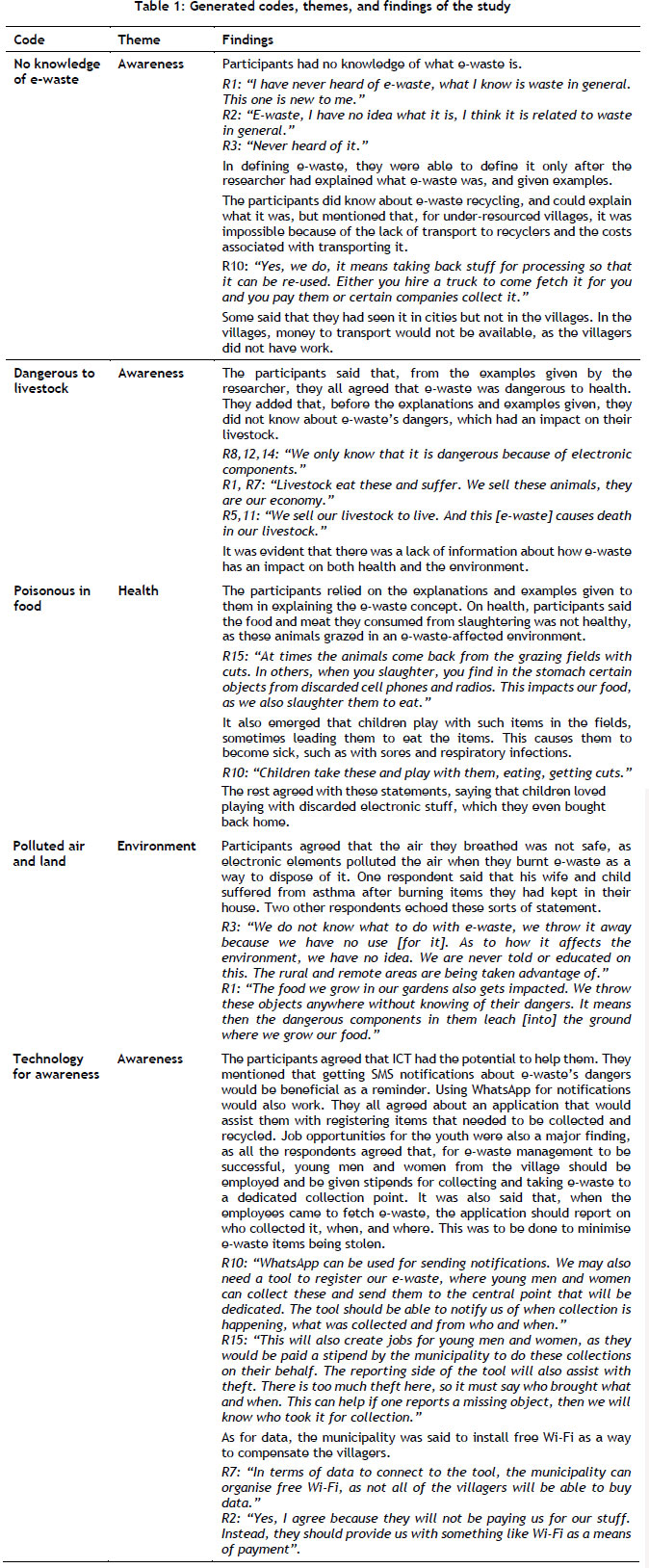
The study's findings, based on the generated codes and themes, are presented in Table 1 below.
6. RECOMMENDATIONS
There is a need to roll out e-waste awareness programmes in remote rural villages in South Africa. The rollout would increase awareness of the dangers of e-waste and of how it should be managed. This would influence the attitude of people in those villages. Based on the results obtained, people from these areas would be willing to cooperate with whatever help they could get.
Municipalities that support rural and remote areas, which are usually under-resourced, should provide recycling sites where items could be collected. The ICT element that the participants mentioned should be considered in order to make them feel welcome and important because their recommendation was taken seriously. This would ensure that they comply with the e-waste management provided by the municipality. Television and radio adverts should also be used to spread the word to these rural and remote villages on e-waste awareness and management. This study also recommends that the municipality place e-waste containers in under-resourced villages for sorting and storage.
7. CONCLUSIONS
Awareness of how electronic products are properly disposed of at the end of their life is critical, as these products may contain hazardous components. The improper discarding of e-waste releases hazardous substances into the atmosphere, water, or ground, which poses a risk to both the environment and human health. For people living in rural and remote communities, the irregular disposal of e-waste presents serious problems, as they grow their food in the soil and drink the water from rivers and dams that may be contaminated. Therefore, the objective of this study was to provide insight into e-waste awareness and its management in rural and remote communities of South Africa that are under-resourced, and how awareness and management could be spread using ICT tools.
The study adopted a qualitative approach, with semi-structured interviews being used to collect data from the participants. Using the social capital theory to analyse the data, the study's results show that there is a lack of awareness of proper e-waste disposal in South Africa's rural and remote communities, where burning e-waste or throwing it away in open fields are regarded as ways to dispose of it. The study's results confirm that ICT tools, such as an application that communities could use to register e-waste items for collection by the government or by recycling companies, could be used to help with e-waste awareness and management.
The study also recommends the integration of IE in the design phase of electronic products to prolong their life span by adopting AI, by chemical recycling, and by designing a recycling infrastructure in which broken electronic equipment could be sent for processing, so that those valuable parts could be re-used. In conclusion, the study recommends rolling out e-waste awareness programmes to these rural and remote communities in order to educate them about the proper ways to manage e-waste and to raise awareness of its dangers to health and the environment.
8. LIMITATIONS
This study was limited to studying only two under-resourced communities in the Eastern Cape, not the whole province. Another limitation was that the study focused on e-waste and not on all other types of waste, such as plastic and general waste. The data collection relied solely on semi-structured interviews, with no triangulation through additional methods such as surveys, observations, or document analysis. The study was limited to interviewing only 15 participants, not the whole community where the study was carried out.
9. FUTURE RESEARCH
Awareness of how electronic products are properly disposed of at the end of their life is critical, as these products may contain hazardous components.
The authors recommend that future research look at e-waste awareness and its management throughout the Eastern Cape. Another recommendation would be to examine the two aspects of e-waste that this study investigated, but on a national level. This would give a clear picture of how the country manages e-waste and provide an overall picture of awareness levels. A final recommendation would be to study how IE could be integrated into designing ICT-enabled tools for e-waste collection purposes.
REFERENCES
3. LITERATURE REVIEW
-
[1] Ylä-Mella, J., Keiski, R. L. & Pongrácz, E. 2022. End-of-use vs. end-of-life: When do consumer electronics become waste? Resources, 11(2), 18. https://doi.org/10.3390/resources11020018
» https://doi.org/10.3390/resources11020018 -
[2] DeVroom, D. Why it's important to dispose of e-waste properly. IDR environmental services. 2019. Available from: https://blog.idrenvironmental.com/why-it-s-important-to-dispose-of-e-waste-properly [accessed 11 June 2024].
» https://blog.idrenvironmental.com/why-it-s-important-to-dispose-of-e-waste-properly -
[3] World Bank. 2020. The World Bank in South Africa. Available from: https://www.worldbank.org/en/country/southafrica [accessed 15 February 2022].
» https://www.worldbank.org/en/country/southafrica -
[4] Gazana, O. 2016. The role of telehealth in enhancing access to healthcare services in an underresourced setting: A case of Mantunzeleni in Eastern Cape Province. Master's thesis, Cape Town: Cape Peninsula University of Technology. https://etd.cput.ac.za/handle/20.500.11838/2399 [accessed 12 August 2024].
» https://etd.cput.ac.za/handle/20.500.11838/2399 -
[5] Ichikowitz, R. & Hattingh, T. S. 2020. Consumer e-waste recycling in South Africa. South African Journal of Industrial Engineering, 31(3), pp. 44-57. https://doi.org/10.7166/31-3-2416
» https://doi.org/10.7166/31-3-2416 -
[6] Andeobu, L., Wibowo, S. & Grandhi, S. 2021. An assessment of e-waste generation and environmental management of selected countries in Africa, Europe and North America: A systematic review. Science of The Total Environment, 792(1), 792, 148078. 10.1016/j.scitotenv.2021.148078
» https://doi.org/10.1016/j.scitotenv.2021.148078 -
[7] STATS SA. 2018. Only 10% of waste recycled in South Africa. Available from: www.statssa.gov.za/?p=11527 [accessed 10 March 2022].
» www.statssa.gov.za/?p=11527 -
[8] Rodseth, C., Notten, P. & Von Blottnitz, H. 2020. A revised approach for estimating informally disposed domestic waste in rural versus urban South Africa and implications for waste management. South African Journal of Science, 116(1-2), 5635. https://doi.org/10.17159/sajs.2020/5635
» https://doi.org/10.17159/sajs.2020/5635 -
[9] Mkhwanazi, B. 2021. Assessment of electronic waste (e-waste) management in eThekwini Municipality, Kwazulu-Natal Province, South Africa. Master's thesis, Pretoria: University of South Africa. Available from: https://ir.unisa.ac.za/handle/10500/28461 [accessed 10 March 2022].
» https://ir.unisa.ac.za/handle/10500/28461 -
[10] Moyo, T., Sadan, Z., Lotter, A. & Petersen, J. 2022. Barriers to recycling e-waste within a changing legal environment in South Africa. South African Journal of Science, vol. 118 (Special issue). https://doi.org/10.17159/sajs.2022/12564
» https://doi.org/10.17159/sajs.2022/12564 -
[11] Sadan, Z. 2019. Exploring the potential for local end-processing of e-waste in South Africa. Master's thesis, Cape Town: University of Cape Town. https://open.uct.ac.za/items/f22b41df-b70c-4c26-9489-862e0f5e49c3 [accessed 22 June 2024].
» https://open.uct.ac.za/items/f22b41df-b70c-4c26-9489-862e0f5e49c3 -
[12] Mouton, A. J. J. 2020. A framework for the re-use, recycling and disposal of waste electrical and electronic equipment: The South African case. Doctoral dissertation, Potchefstroom North-West University. https://v-des-dev-lnx1.nwu.ac.za/handle/10394/36262 [accessed 22 June 2024].
» https://v-des-dev-lnx1.nwu.ac.za/handle/10394/36262 -
[13] Viljoen, J. M., Schenck, C. J., Volschenk, L., Blaauw, P. F. & Grobler, L. 2021. Household waste management practices and challenges in a rural remote town in the Hantam Municipality in the Northern Cape, South Africa. Sustainability, 13(11), 5903. https://doi.org/10.3390/su13115903
» https://doi.org/10.3390/su13115903 -
[14] Haywood, L. K., Kapwata, T., Oelofse, S., Breetzke, G. & Wright, C. Y. 2021. Waste disposal practices in low-income settlements of South Africa. International Journal of Environmental Research and Public Health, 18(15), 8176. https://doi.org/10.3390/ijerph18158176
» https://doi.org/10.3390/ijerph18158176 -
[15] Zondi, N., Qwatekana, Z. & Dube, S. 2023. Modernisation of rural communities: Solid waste management implication. African Journal of Inter/Multidisciplinary Studies, 5(1), pp 1-11. https://doi.org/10.51415/ajims.v5i1.1149
» https://doi.org/10.51415/ajims.v5i1.1149 -
[16] Liu, K., Tan, Q., Yu, J., & Wang, M. 2023. A global perspective on e-waste recycling. Circular Economy, 2(1), 100028. doi:https://doi.org/10.1016/j.cec.2023.100028
» https://doi.org/10.1016/j.cec.2023.100028 -
[17] Wang, P., Zhang, L.-Y., Tzachor, A., & Chen, W.-Q. 2024. E-waste challenges of generative artificial intelligence. Nature Computational Science, 4, 818-823. doi:https://doi.org/10.1038/s43588-024-00712-6
» https://doi.org/10.1038/s43588-024-00712-6 - [18] Fari, S. A. 2015. Applying social capital theory and the technology acceptance model in information and knowledge sharing research. Inkanyiso, Journal of Humanities and Social Sciences, 7(1), pp 19-28.
- [19] Halpern, D. 20050. Social capital. Cambridge: Polity Press.
- [20] Braun, V. & Clarke, V. (2006). Using thematic analysis in psychology. Qualitative Research in Psychology, 3(2), 77-101.
-
[21] Chow, W. S. & Chan, L. S. 2008. Social network, social trust and shared goals in organizational knowledge sharing. Information Management, 45(7), pp. 458-465. https://doi.org/10.1016/j.im.2008.06.007
» https://doi.org/10.1016/j.im.2008.06.007
Accepted for publication: 8 Apr 2026
Available online: 22 May 2026
ORCID® identifiers
O. Gazana: https://orcid.org/0000-0002-3291-2077
T. Ngqond: https://orcid.org/0000-0003-3371-3659
H. Mauwa: https://orcid.org/0000-0003-3475-8859