A Conceptual Framework for Analysing the Adoption of Cloud Computing in the Banking Sector
Abstract
Cloud computing has emerged as a critical enabler of innovation, efficiency, and scalability in banking operations. It is providing scalable, efficient, and cost-effective solutions in the banking sector. The adoption of cloud computing in banking is the subject of numerous studies, but they are mainly case-based or context-specific, and lack generalisable frameworks for comparative analysis between different banking contexts. There are no coherent conceptual frameworks for structural analysis of cloud computing adoption in the banking industry. However, an integrated and coherent conceptual framework is necessary to allow for structured analysis, to enable identification of interrelationships among variables, and to guide empirical research. This study develops a conceptual framework for cloud computing adoption in the banking industry, identifying key factors in three dimensions: technological (perceived usefulness, relative advantage, cost saving, perceived risk, system quality, trust, security, perceived ease of use, complexity, technology readiness, privacy, information quality, and data security); organisational (top management support, innovativeness, performance expectancy, training and education, attitude, organisational competency, service quality, and image); and environmental (competitive pressure, regulatory support, trading partner support, regulatory readiness, and user satisfaction).
Abstract
Wolkrekenaarskap het na vore getree as 'n kritieke dryfveer vir innovasie, doeltreffendheid en skaalbaarheid in bankbedrywighede. Dit bied skaalbare, doeltreffende en kostedoeltreffende oplossings in die banksektor. Die aanvaarding van wolkrekenaarskap in die bankwese is die onderwerp van talle studies, maar hierdie studies is hoofsaaklik gevalgebaseerd of konteks-spesifiek en bied nie veralgemeenbare raamwerke vir vergelykende ontleding tussen verskillende bankkontekste nie. Daar bestaan geen samehangende konseptuele raamwerke vir die strukturele ontleding van die aanvaarding van wolkrekenaarskap in die bankbedryf nie. 'n Geïntegreerde en samehangende konseptuele raamwerk is egter nodig om gestruktureerde ontleding moontlik te maak, die onderlinge verwantskappe tussen veranderlikes te identifiseer en empiriese navorsing te rig. Hierdie studie ontwikkel 'n konseptuele raamwerk vir die aanvaarding van wolkrekenaarskap in die bankbedryf en identifiseer sleutelfaktore in drie dimensies: tegnologies (waargenome bruikbaarheid, relatiewe voordeel, kostebesparing, waargenome risiko, stelselgehalte, vertroue, sekuriteit, waargenome gebruiksgemak, kompleksiteit, tegnologiese gereedheid, privaatheid, inligtingsgehalte en datasekuriteit); organisatoriese (ondersteuning deur topbestuur, innoverendheid, prestasieverwagting, opleiding en onderrig, houding, organisatoriese bevoegdheid, diensgehalte en beeld); en omgewingsfaktore (mededingingsdruk, regulatoriese ondersteuning, ondersteuning deur handelsvennote, regulatoriese gereedheid en gebruikerstevredenheid).
1. INTRODUCTION
The rise of cloud computing (CC) has industries globally providing scalable, efficient, and cost-effective solutions, particularly in data-driven sectors such as banking [1]. Understanding the key factors driving CC adoption and implementing robust data governance (DG) frameworks is crucial for banks, as it supports informed decision-making, ensures compliance with evolving regulations, and fosters innovation while maintaining data security [2]. The central thesis of this study is that, although there is no linear relationship between the adoption of CC and the institutionalisation of DG practices in South African banks, most banks are strengthening their CC capabilities to comply with DG regulatory requirements. Conversely, CC can also influence DG in banks. The study contributes to both theoretical knowledge and practical applications in the banking industry.
The overall objective of this study is to investigate the factors influencing the adoption of CC and DG practices among banks in South Africa. To achieve the objective, the study seeks to answer the following research questions: RQ1 : How are the adoption and use of CC influencing the governance of data by banks in South Africa? RQ2: How are national government policies and regulations influencing the adoption and use of CC (controls and regulations) in governing personal data by banks in South Africa? RQ3: How do internal capabilities contribute to the quality of data and the adoption of DG in the organisation? Based on these research questions, the study proposes a conceptual framework for CC adoption, incorporating technological readiness, regulatory frameworks, organisational culture, and other critical influencing factors.
Section 2 of this article presents an overview of the banking sector, including the role of digital technologies to enhance efficiency, security, and consumer insights, as well as the difficulties of DG and regulatory compliance in the sector. The section also summarises the impact, benefits, problems, and human concerns associated with CC adoption in the banking sector. Section 2 also provides an overview of DG and its key features in the banking sector, emphasising the need to ensure data integrity, security, and regulatory compliance. Section 3 develops a conceptual framework by synthesising the diffusion of innovation (DOI), the technology acceptance model (TAM), the resource-based view (RBV), and the technology-organisation-environment (TOE) frameworks, and concludes with a discussion of the proposed framework.
2.1. Banking sector overview
The banking sector contributes greatly to financial intermediation and economic development by providing essential monetary services such as deposits, loans, and wealth management [3, 4]. These services rely largely on secure and real-time transactions to ensure customer trust and operational efficiency. As banks process immense numbers of transactions every day, ensuring data accuracy, security, and availability is critical to their success. To improve service quality, banks are adopting digital technologies that enable real-time payments, automatic account reconciliation, and improved financial accuracy, to reduce transaction errors and discrepancies [5].
The reasons for the adoption of digital technologies in banking include efficiency gains, the need to increase data security, and better understandings of customer needs and behaviour. Banks are leveraging data analytics to gain deeper insights into customers' behaviour, enabling more personalised services and targeted marketing strategies [6]. Banks adopt multi-factor authentication solutions, including biometric verification and one-time passwords, to strengthen the protection of customer information from unauthorised access [7, 8]. Furthermore, banks use cutting-edge cybersecurity tools and methods to detect and prevent possible attacks. Beyond security, data analytics enables banks to analyse client behaviour better, adapt personalised services, and identify new market trends [9]. Banks use digital reporting systems to maintain regulatory compliance, transparency, and accountability while exploring financial services such as digital wallets and peer-to-peer lending [9, 10].
Digital technologies, particularly CC, provide the opportunity to collect vast amounts of customer data without time and space constraints; however, this raises concerns about potential misuse, prompting regulators to establish stricter data protection laws [11, 12]. Compliance with laws such as the General Data Protection Regulation (GDPR) and the Protection of Personal Information Act (POPIA) adds another layer of complexity, as banks must ensure that their cloud services comply with these regulatory requirements [13]. To mitigate these security and compliance risks, it is crucial that banks invest in staff training and foster a culture of data protection [14]. Other challenges amplified by digital technologies are cyber threats (such as data theft and fraud), and the compliance complexities from cross-border data storage (which raises the need to adapt legal frameworks to emerging digital challenges). Given these complexities, regulatory bodies must leverage modern technologies to develop and implement updated regulations efficiently, ensuring that banks can operate securely while embracing digital innovation [11, 12, 15].
Through models such as software-as-a-service (SaaS), platform-as-a-service (PaaS), and infrastructure-as-a-service (IaaS), CC allows banks to meet the growing demands for speed, efficiency, and cost-effectiveness [16]. These cloud services enhance operational flexibility and reduce capital expenditure by shifting from physical infrastructure to cloud-based solutions, which are particularly beneficial in data-driven economies. CC has emerged as one of the key enablers of innovation in the banking sector, providing cost-effective, scalable, and flexible IT solutions.
2.2.
Data governance in the banking sectorDG is a framework that ensures effective data management, data integrity, privacy, and security [17]. It helps to address problems related to fragmented systems, regulatory compliance, and maintaining high-quality data for decision-making [17]. Governance frameworks establish clear accountability, roles, and standards, aligning data with organisational strategies to enhance competitiveness and value [18]. Essential practices involve adhering to data management, security, privacy, and regulatory requirements, ensuring strong governance in response to dynamic data challenges. The primary goal of DG is to establish clear accountability and responsibilities regarding data-related decisions in an organisation [19].
The complexity of data in cloud environments demands governance mechanisms that ensure secure, private, and accurate data management [13]. In the banking sector, risk assessment and governance of data in cloud environments are critical for maintaining compliance with regulatory standards and ensuring the integrity of sensitive financial data. Effective data analysis reveals patterns that provide a competitive advantage, transforming data into a strategic asset [20]. Strong DG reduces concern over data security, privacy, and compliance, which are identified as the main barriers to the adoption of CC. DG also reduces CC costs by eliminating redundant data, enforcing lifecycle management, aligning data with business value, and optimising storage tiers. A conceptual framework is required to analyse the adoption of CC with a holistic approach.
2.3.
Theoretical foundations and frameworks for cloud computing adoptionThe literature review explicitly addresses the key concept of CC adoption by examining the theoretical, organisational, technological, and environmental factors, and two models that influence the decision to adopt and use CC in the banking sector.
Diffusion of innovations (DOI) theory, the technology acceptance model (TAM), the resource-based view (RBV), and the technology-organisation-environment (TOE) frameworks complement one another to cover various aspects such as adoption dynamics, internal resources, organisational readiness, and external influences, creating a robust foundation for addressing the challenges of CC adoption in the banking sector.
DOI theory explains the adoption of innovations based on five key characteristics: observability, trialability, complexity, relative advantage, and compatibility [21]. These attributes influence the rate and extent of adoption in a social system, particularly in organisational contexts. DOI provides a comprehensive yet simple framework, wherein lies its strength; but it has limitations in predictive capability, and needs to be supplemented by other models, such as TAM and TOE, for deeper insight.
The TAM focuses on individual user perceptions, specifically: perceived usefulness (PU) (the belief that technology enhances performance), perceived ease of use (PEOU) (the simplicity of and effort required to use the technology), and the behavioural intention to use (BI) (willingness to adopt technology, shaped by PU and PEOU) [22]. In banking, the TAM helps to understand how perceived benefits and user-friendliness drive the adoption of CC and related technologies. However, TAM's emphasis on individual perceptions limits its application to broader organisational contexts.
The RBV framework emphasises the need to leverage unique organisational resources and capabilities in achieving competitive advantage through the VRIO framework (value, rarity, imitability, and organisation).
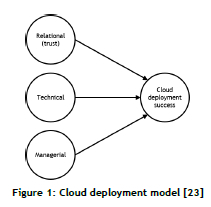
RBV identifies key resources - technical, managerial, and relational (which is the strength of this theory) -that enable successful CC adoption and governance. The theory underplays the importance of external factors such as regulatory requirements, which are crucial in highly regulated sectors such as banking. Thus, the theory requires integration with external factors to address market dynamics and regulatory pressures [23].
G. Garrison et al. [23] present a cloud deployment model based on three key capabilities: relational (trust), technical, and managerial.
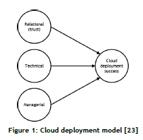
This model has room for improvement, as the capabilities may not act independently but rather in a continuous feedback loop. For example, the successful implementation of CC (technical capability) could enhance the organisation's trust in the cloud vendor (relational capability). In turn, this increased trust could lead to more opportunities for using additional cloud services and resources, reinforcing the organisation's technical and managerial capabilities. Another example of a suggestion to improve this model is related to external factors such as market dynamics, regulatory changes, and technological advancements, which may also influence the interplay between capabilities.
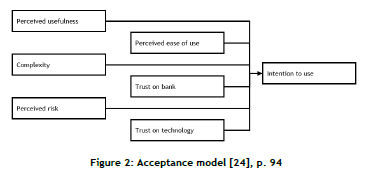
Another model analysed is the acceptance model proposed by Sinha and Mukherjee (2016) (Figure 2).
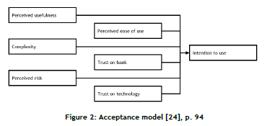
This model also presents opportunities for improvements, and explores variables that could help to explain the relationships between the six factors and the intention to use. For instance, user experience (UX) could act as a mediator between perceived ease and intention to use, as a positive UX could enhance perceived ease and, subsequently, increase the intention to use. The model could also incorporate external variables that might influence the six factors. For instance, external influences such as domestic and international regulations, marketing efforts, word-of-mouth, or media coverage could have an impact on perceptions and intention to use. Another suggestion is the possibility of integrating user education and training as a potential factor in the model that could be beneficial. Educating users about the benefits and ease of using banking technologies, and providing training sessions to enhance their comfort with the technology, could have a positive impact on their perceptions and intention to use.
This study proposes a combination of frameworks that expand to include more variables related to internal and external factors, based on an examination of the strengths and limitations of these theories and the models, in order to effectively address the adoption of CC in the banking sector. The TOE framework provides a structured approach to technology adoption [25], analysing technology (characteristics such as complexity and compatibility), organisation (internal readiness, resources, and management support), and environment (external pressures, including regulatory frameworks and competitive dynamics). This framework excels in integrating external influences, making it appropriate for sectors such as banking, where external compliance mandates (e.g., GDPR, POPIA) and competitive pressures are pivotal.
The limited studies of the relationship between CC and DG create a knowledge gap that is most evident in the banking industry, where data control and compliance with laws are crucial. Factors influencing CC adoption, such as technological readiness and organisational culture, are among the least explored, and it is equally essential to understand how these elements interact with DG frameworks in relation to cloud adoption. Prior studies, such as those of Gupta et al. [26] and Katari and Ankam [17], focus on the impact of DG on CC, neglecting the bidirectional influence and failing to consider their combined impact. South African banks operate under strict regulations and face unique difficulties, such as infrastructural difficulties and cybersecurity risks [27-29]. There is little to no research designed for this context [30], resulting in providers having a limited understanding of what constitutes an ideal framework for CC and DG integration. The limited research fails to explain how banks could effectively confront these barriers using CC, particularly regarding competitiveness and operational efficiency.
The central thesis of this study is that, although there is no linear relationship between the adoption of CC and the institutionalisation of DG practices in South African banks, most banks are strengthening their CC capabilities to comply with DG regulatory requirements. Conversely, CC can also influence DG in banks. The study contributes to both theoretical knowledge and practical applications in the banking industry. Its emphasis on the South African environment provides insights for legislators, banking executives, and information technology (IT) professionals. These insights should assist stakeholders to understand better how to address CC adoption and DG implementation in order to improve organisational operations, promote regulatory compliance, and align with strategic goals.
3. A SYNTHETIC CONCEPTUAL FRAMEWORK FOR ANALYSING ADOPTION OF CLOUD COMPUTING
This study proposes integrating specific factors that are derived from existing frameworks into the technological, organisational, and environmental dimensions to improve the overall robustness of the TOE framework to analyse CC adoption in the banking sector.
3.1. Technological factors
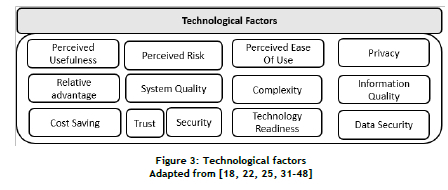
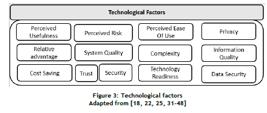
Perceived usefulness, as described in the TAM, evaluates the extent to which users believe that technology improves task performance. In banking, DG directly correlates with the ability of banks to streamline operations, enhance data accuracy, and ensure regulatory compliance [22, 31]. The relative advantage factor assesses the degree to which new technologies offer perceived benefits over existing practices. In banking, adopting superior DG technologies ensures operational efficiency and competitive positioning. The perception of relative advantage is important for technology adoption in the highly regulated and dynamic banking industry [32, 33]. Operational efficiency through cost-saving technologies is a motivator for adoption in the banking sector. Streamlined processes and reduced overheads highlight the importance of cost considerations in selecting DG tools [34, 35].
Technology adoption often comes with inherent risks, particularly concerning security, privacy, and operational disruptions. Understanding such perceived risks is crucial for decision-making and fostering trust in new DG solutions [36, 37]. The quality of technological systems, including their reliability, functionality, and scalability, plays a central role in supporting robust DG strategies. High system quality ensures the effective implementation and management of data between organisations [38, 39]. Trust is a cornerstone for technological adoption. Stakeholder confidence in the security and the effectiveness of DG tools fosters broader acceptance and enhances the credibility of governance practices [25, 40]. Data security is paramount in the banking sector, where safeguarding sensitive financial information is critical. Effective governance frameworks must address cybersecurity concerns, aligning with both organisational and regulatory expectations [18, 41].
Ease of use has a significant impact on stakeholder attitudes towards technology adoption. Simplified interfaces and intuitive systems lower the barriers to adoption, enabling smoother integration of DG technologies [31]. The complexity of implementing new technologies often hinders adoption; thus, addressing the intricacies of integration and minimising operational disruptions is essential for successful technology governance [36, 42]. The preparedness of an organisation and its employees to adopt new technologies directly influences the success of DG initiatives. Evaluating readiness ensures that the necessary infrastructure and skill sets are in place [43, 44]. Privacy concerns are integral to data-driven technologies, particularly in banking. Finding a balance between data use and protecting client information is essential for compliance and ethical governance practices [43, 45]. High-quality information underpins effective DG. Ensuring the accuracy, relevance, and timeliness of data supports informed decision-making and enhances governance outcomes [43, 46]. In addition to general security concerns, specific measures to protect sensitive banking data are critical. Emphasising robust cybersecurity measures enhances trust and compliance in the banking sector [47, 48].
3.2. Organisational factors
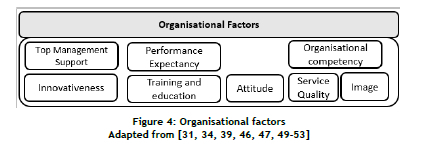
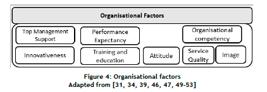
Top management support (TMS) plays a pivotal role in driving the adoption of DG initiatives, because strong leadership commitment ensures the allocation of necessary resources, the alignment of organisational goals, and a sustained focus on technology integration. TMS directly influences the success of these initiatives by fostering a culture of innovation and accountability [46, 49]. In the banking sector, encouraging an innovative mindset enables institutions to stay competitive and to adapt to rapidly changing technological and regulatory landscapes [39, 50]. Stakeholders' expectations about the improvements in operational and strategic performance because of technological integration influence their willingness to support and adopt DG solutions. Clear communication of expected benefits is essential to align expectations and encourage engagement [46].
The success of technological integration in DG heavily depends on the availability of skilled personnel. Structured training and education programmes would ensure that employees have the necessary competencies to navigate and use advanced governance tools effectively, reducing resistance to change and promoting seamless adoption [34, 46]. Stakeholders' attitudes toward DG initiatives influence their behaviour and decision-making processes; for instance, positive perceptions of the benefits and necessity of technological drivers significantly enhance the likelihood of adoption and long-term success [51].
The overall capability of an organisation to implement and manage technological innovations directly correlates with the success of DG frameworks, as defended by many authors. High organisational competency reflects an institution's ability to leverage technology for competitive advantages and regulatory compliance [31, 46]. Service quality, including the efficiency, reliability, and responsiveness of DG systems, has an impact on customer satisfaction and organisational credibility. Effective systems boost trust and drive the adoption of governance solutions [31, 47]. An organisation's reputation and the perceived value of its technological initiatives are key variables that influence stakeholder behaviour. A positive image associated with DG technologies fosters trust and engagement, which are essential for successful implementation [52, 53].
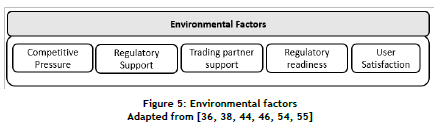
3.3. Environmental factors
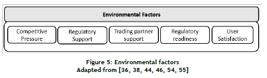
The competitive nature of the banking business encourages institutions to implement sophisticated DG plans and to embrace innovative technologies that improve efficiency and compliance, and support decision-making to differentiate themselves from their competitors. Because of this competitive pressure, banks invest in strong DG frameworks that fit with their market objectives and client expectations [46, 54]. On one hand, regulatory frameworks influence the use of DG technologies by providing supportive policies that offer advice and incentives for compliance; on the other hand, restrictive or fragmented regulations can create substantial problems. Thus, it is important to understand the impact of regulatory settings to overcome complexity and to improve their governance procedures [44, 46].
Shared systems and standards among partners improve data interoperability, security, and governance processes, resulting in more effective DG, as they can share resources and experiences, increasing confidence and improving the adoption and implementation of technological solutions in financial ecosystems [46]. The regulatory readiness factor ensures that organisations are better prepared to comply with laws, regulations, ethical requirements, and industry standards [36, 38]. Last, user satisfaction with technology initiatives is an important factor in determining the effectiveness and long-term viability of DG measures. Positive user experience increases acceptance, system use, and support for future technical developments. Satisfied users also help to foster a culture of innovation and continuous improvement [55].
3.4. Proposed conceptual framework
Banks use CC technology to increase their operational efficiency and to deliver better services to their customers. Nevertheless, the use of CC brings difficulties, such as complex data management, cybersecurity concerns, and compliance issues caused by evolving regulations and outdated legal frameworks. CC provides benefits to banks, including cost savings, scalability, and agility via models such as SaaS, PaaS, and IaaS. However, concerns about data security, privacy, regulatory compliance, and the complexity of transitioning from traditional IT infrastructures have hindered adoption. Thus, effective DG is essential for solving these problems, as it enables data integrity, regulatory compliance, and risk mitigation by standardising processes, ensuring accountability, and aligning with organisational goals. However, fragmented legislation, organisational opposition, and insufficient management support frequently limit its implementation. Given the regulatory obligations of laws such as POPIA and GDPR, a structured and integrated governance system is critical for preserving consumer confidence and compliance.
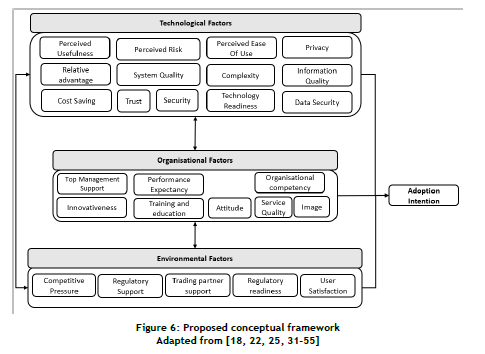
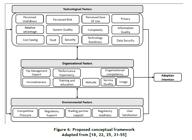
To address the limitations of the existing conceptual frameworks, this study developed a conceptual framework that combines the many theoretical perspectives mentioned earlier (DOI, TAM, RBV, and TOE). These factors were structured according to the TOE framework, which integrates multiple theoretical perspectives to explain technology adoption. TOE has emerged as a prominent framework in studies of CC adoption [43]. It classifies the key adoption drivers in three categories. The technological factors category includes perceived utility, cost savings, system quality, security, and simplicity of use, all of which influence CC and DG adoption. The second category, the organisational factors, highlights the importance of top management support, innovation, workforce competency, and service quality in fostering technological integration; and third, the environmental factors category addresses external pressures, including competitive dynamics, regulatory frameworks, and trading partner collaboration, which shape governance and cloud adoption strategies. By integrating these dimensions, the framework provides a holistic approach to streamlining and optimising CC adoption in the banking sector.
In line with the central thesis of this study, the conceptual framework presents a nonlinear relationship between the adoption of CC and the institutionalisation of DG practices in South African banks. The conceptual framework proposes the following:
• Technological factors influence and are influenced by organisational factors;
• Organisational factors influence and are influenced by environmental factors;
• Environmental factors influence and are influenced by technological factors; and
• All the factors influence the adoption intention of CC technologies.
Figure 6 summarises the identified factors according to the TOE framework.
3.5. Discussion
This study has proposed a conceptual framework that is essentially an enhancement of the existing conceptual frameworks and that helps to understand how technological, organisational, and environmental factors have an impact on CC adoption. While this conceptual framework provides theoretical insights, empirical validation is necessary to confirm its practical applicability, particularly in emerging markets such as South Africa. The proposed framework will be tested in future work.
Future research should focus on exploring the relationships between the identified factors through case studies or large-scale surveys to assess their impact on CC adoption and DG effectiveness. In addition, sector-specific variations should be examined to understand how technological, organisational, and environmental drivers differ between financial institutions of varying sizes or geographical locations. Comparative studies between different regions or regulatory environments could further enhance the global applicability of the proposed framework.
Furthermore, longitudinal studies on the adoption and impact of CC and DG over time could offer clues about the long-term effectiveness of these factors, and determine whether they have sustained influence on cloud adoption and governance success and how they evolve in response to changing technological, regulatory, and market conditions. Addressing these research gaps would be critical in enhancing cloud adoption in the banking sector.
REFERENCES
2. LITERATURE REVIEW
- [1] Vinoth, S., Vemula, H.L., Haralayya, B., Mamgain, P., Hasan, M.F., and Naved, M. 2022. Application of cloud computing in banking and e-commerce and related security threats. Materials Today: Proceedings, 51, pp. 2172-2175.
- [2] Al-Ruithe, M., Benkhelifa, E., and Hameed, K. 2019. A systematic literature review of data governance and cloud data governance. Personal and Ubiquitous Computing, 23, pp. 839-859.
- [3] Aluko, O.A. and Ajayi, M.A. 2018. Determinants of banking sector development: Evidence from sub-Saharan African countries. Borsa Istanbul Review, 18(2), pp. 122-139.
- [4] Baradaran, M. 2020. Banking on democracy. Washington University Law Review, 98, pp. 353-418.
- [5] Javaid, M., Haleem, A., Singh, R.P., Suman, R., and Khan, S. 2022. A review of blockchain technology applications for financial services. BenchCouncil Transactions on Benchmarks, Standards and Evaluations, 2(3), 100073.
- [6] Dicuonzo, G., Galeone, G., Zappimbulso, E., and Dell'Atti, V. 2019. Risk management 4.0: The role of big data analytics in the bank sector. International Journal of Economics and Financial Issues, 9(6), pp. 40-47.
- [7] Tsai, C.-H. and Su, P.-C. 2021. The application of multi-server authentication scheme in internet banking transaction environments. Information Systems and e-Business Management, 19(1), pp. 77-105.
- [8] Bodepudi, A. and Reddy, M. 2020. Cloud-based biometric authentication techniques for secure financial transactions: A review. International Journal of Information and Cybersecurity, 4(1), pp. 1-18.
- [9] Wewege, L., Lee, J., and Thomsett, M.C. 2020. Disruptions and digital banking trends. Journal of Applied Finance and Banking, 10(6), pp. 15-56.
- [10] Jaiwant, S.V. 2022. Artificial intelligence and personalized banking. In V. Garg and I Goel, eds, Handbook of research on innovative management using AI in Industry 5.0. IGI Global, pp. 74-87.
- [11] Iglezakis, I., Jougleux, P., Mitrou, L., and Synodinou, T.E. 2020. The legal regulation of cyber attacks, 2nd ed. Wolters Kluwer.
- [12] Didenko, A.N. 2020. Cybersecurity regulation in the financial sector: Prospects of legal harmonization in the European Union and beyond. Uniform Law Review, 25(1), pp. 125-167.
- [13] Bounagui, Y., Mezrioui, A., and Hafiddi, H. 2019. Toward a unified framework for cloud computing governance: An approach for evaluating and integrating IT management and governance models. Computer Standards & Interfaces, 62, pp. 98-118.
- [14] Baloyi, N. and Kotzé, P. 2017. Are organisations in South Africa ready to comply with personal data protection or privacy legislation and regulations? In 2017 IST-Africa Week Conference (IST-Africa). IEEE.
- [15] Wang, S., Asif, M., Shahzad, M.F., and Ashfaq, M. 2024. Data privacy and cybersecurity challenges in the digital transformation of the banking sector. Computers & Security, 147, 104051.
- [16] Mell, P. and Granee, T. 2011. The NIST definition of cloud computing. Special Publication (NIST SP), National Institute of Standards and Technology, Gaithersburg, MD, USA.
- [17] Katari, A. and Ankam, M. 2022. Data governance in multi-cloud environments for financial services: Challenges and solutions. Educational Research (IJMCER), 4(1), pp. 339-353.
- [18] Abraham, R., Schneider, J., and Vom Brocke, J. 2019. Data governance: A conceptual framework, structured review, and research agenda. International Journal of Information Management, 49, pp. 424-438.
- [19] Alhassan, I., Sammon, D., and Daly, M. 2016. Data governance activities: An analysis of the literature. Journal of Decision Systems, 25(sup1), pp. 64-75.
- [20] Erevelles, S., Fukawa, N., and Swayne, L. 2016. Big data consumer analytics and the transformation of marketing. Journal of Business Research, 69(2), pp. 897-904.
- [21] Dedehayir, O., Ortt, R.J., Riverola, C., and Miralles, F. 2017. Innovators and early adopters in the diffusion of innovations: A literature review. International Journal of Innovation Management, 21(08), pp. 85-115.
- [22] Granic, A. and Marangunic, N. 2019. Technology acceptance model in educational context: A systematic literature review. British Journal of Educational Technology, 50(5), p. 2572-2593.
- [23] Garrison, G., Kim, S., and Wakefield, R.L. 2012. Success factors for deploying cloud computing. Communications of the ACM, 55(9), pp. 62-68.
- [24] Sinha, I. and Mukherjee, S. 2016. Acceptance of technology, related factors in use of off branch e-banking: An Indian case study. The Journal of High Technology Management Research, 27(1), pp. 88-100.
- [25] Eze, S.C., Olatunji, S., Chinedu-Eze, V.C., Bello, A.O., Ayeni, A., and Peter, F. 2019. Determinants of perceived information need for emerging ICT adoption: A study of UK small service businesses. The Bottom Line, 32(2), pp. 158-183.
- [26] Gupta, R., Saxena, D., and Singh, A.K. 2021. Data security and privacy in cloud computing: Concepts and emerging trends. arXiv preprint arXiv:2108.09508.
- [27] Akinbowale, O.E., Klingelhöfer, H.E., Zerihun, M.F., and Mashigo, P. 2024. Development of a policy and regulatory framework for mitigating cyberfraud in the South African banking industry. Heliyon, 10(1), e23491.
- [28] Warikandwa, T.V. 2021. Personal data security in South Africa's financial services market: The Protection of Personal Information Act 4 of 2013 and the European Union General Data Protection Regulation compared. Potchefstroom Electronic Law Journal (PeLJ), 24(1), pp. 1-32.
- [29] Gwatidzo, T. 2025. The impact of bank regulation on commercial bank performance: Evidence from South Africa. South African Journal of Economics, 93(1 ), pp. 86-111.
- [30] Van Heerden, C. and Van Heerden, W. 2022. How efficient is the South African banking sector? International Journal of Economics and Finance Studies, 14(4), pp. 152-186.
- [31] Gangwar, H., Date, H., and Ramaswamy, R. 2015. Understanding determinants of cloud computing adoption using an integrated TAM-TOE model. Journal of Enterprise Information Management, 28(1) pp. 107-130.
- [32] Eze, S.C., Olatunji, S., Chinedu-Eze, V.C., and Bello, A.O. 2018. Key success factors influencing SME managers' information behaviour on emerging ICT (EICT) adoption decision-making in UK SMEs. The Bottom Line, 31(3/4), pp. 250-275.
- [33] Ho, J.C. 2022. Disruptive innovation from the perspective of innovation diffusion theory. Technology Analysis & Strategic Management, 34(4), pp. 363-376.
- [34] Al-Ruithe, M. and E. Benkhelifa. 2017. Analysis and classification of barriers and critical success factors for implementing a cloud data governance strategy. Procedia Computer Science, 113, pp. 223-232.
- [35] Sobhanmanesh, F., Beheshti, A., Nouri, N., Chapparo, N.M., Raj, S., and George, R.A. 2023. A cognitive model for technology adoption. Algorithms, 16(3), 155.
- [36] Anagnostopoulos, I. 2018. Fintech and regtech: Impact on regulators and banks. Journal of Economics and Business, 100, pp. 7-25.
- [37] Martins, J., Mamede, H.S., and Correia, J. 2022. Risk compliance and master data management in banking: A novel BCBS 239 compliance action-plan proposal. Heliyon, 8(6), e09627.
- [38] Zanello, G., Fu, X., Mohnen, P., and Ventresca, M. 2016. The creation and diffusion of innovation in developing countries: A systematic literature review. Journal of Economic Surveys, 30(5), pp. 884-912.
- [39] Kimiagari, S. and Baei, F. 2022. Promoting e-banking actual usage: Mix of technology acceptance model and technology-organisation-environment framework. Enterprise Information Systems, 16(8-9), pp. 1427-1483.
- [40] Wang, Z., Guan, Z., Hou, F., Li, B., and Zhou, W. 2019. What determines customers' continuance intention of FinTech? Evidence from YuEbao. Industrial Management & Data Systems, 119(8), pp. 1625-1637.
- [41] Kshetri, N. 2019. Cybercrime and cybersecurity in Africa. Journal of Global Information Technology Management, 22(2), pp. 77-81.
- [42] Min, S., So, K.K.F., and Jeong, M. 2021. Consumer adoption of the Uber mobile application: Insights from diffusion of innovation theory and technology acceptance model. In S. King and D. Wang, eds, Future of tourism marketing. Routledge, pp. 2-15.
- [43] Salahshour Rad, M., Nilashi, M., and Mohamed Dahlan, H. 2018. Information technology adoption: A review of the literature and classification. Universal Access in the Information Society, 17, pp. 361-390.
- [44] Maja, M.M. and Letaba, P. 2022. Towards a data-driven technology roadmap for the bank of the future: Exploring big data analytics to support technology roadmapping. Social Sciences & Humanities Open, 6(1), 100270.
- [45] Aytekin, A., Özköse, H., and Ayaz, A. 2022. Unified theory of acceptance and use of technology (UTAUT) in mobile learning adoption: Systematic literature review and bibliometric analysis. COLLNET Journal of Scientometrics and Information Management, 16(1), pp. 75-116.
- [46] Donnellan, J. and Rutledge, W.L. 2019. A case for resource-based view and competitive advantage in banking. Managerial and Decision Economics, 40(6), pp. 728-737.
- [47] Atzori, L., Iera, A., and Morabito, G. 2017. Understanding the Internet of Things: Definition, potentials, and societal role of a fast evolving paradigm. Ad Hoc Networks, 56, pp. 122-140.
- [48] Modisane, P. and Jokonya, O. 2021. Evaluating the benefits of cloud computing in small, medium and micro-sized enterprises (SMMEs). Procedia Computer Science, 181, pp. 784-792.
- [49] Al-Ruithe, M., Benkhelifa, E., and Hameed, K. 2016. A conceptual framework for designing data governance for cloud computing. Procedia Computer Science, 94, pp. 160-167.
- [50] Skare, M. and Soriano, D.R. 2021. How globalization is changing digital technology adoption: An international perspective. Journal of Innovation & Knowledge, 6(4), pp. 222-233.
- [51] Iles, I.A., Egnoto, M.J., Fisher Liu, B., Ackerman, G., Roberts, H., and Smith, D. 2017. Understanding the adoption process of national security technology: An integration of diffusion of innovations and volitional behavior theories. Risk Analysis, 37(11), pp. 2246-2259.
- [52] Taherdoost, H. 2018. A review of technology acceptance and adoption models and theories. Procedia Manufacturing, 22, pp. 960-967.
- [53] Von Solms, J. 2021. Integrating regulatory technology (RegTech) into the digital transformation of a bank treasury. Journal of Banking Regulation, 22, pp. 152-168.
- [54] Barney, J.B., Ketchen, D.J. Jr, and Wright, M. 2021. Resource-based theory and the value creation framework. Journal of Management, 47(7), pp. 1936-1955.
- [55] Zavareh, F.B., Ariff, M.S.M., Jusoh, A., Zakuan, N., Bahari, A.Z., and Ashourian, M. 2012. E-service quality dimensions and their effects on e-customer satisfaction in internet banking services. Procedia-Social and Behavioral Sciences, 40, pp. 441-445.
Accepted for publication 8 May 2026
Available online 31 Aug 2026
ORCID® identifiers
N.M.S.O. Ramos https://orcid.org/0009-0009-8220-8625
J.O. Mugabe https://orcid.org/0000-0002-7076-014X