Power Relations in Sustainable Operations Management in a Non-Profit Organisation: A Cynefin Framework Perspective
Abstract
The Cynefin framework was used to address power relations in sustainable operations management in a non-profit organisation (NPO). An integrated definition of sustainability was applied to refer to the management of resources and processes to address organisational needs and to build long-term resilience. The research problem entailed the sustainability of NPOs, which is at risk globally. NPOs could improve their sustainability through operations management, but require appropriate models to make sense of the complexities that surround their operations - including power relations. A methodology of action design research was applied to develop appropriate models in a specific NPO. These included using the Cynefin framework to make sense of and address power relations. The findings entail stakeholders having power over the NPO, empowering the NPO, and being empowered by the NPO, and on the intrinsic power of the NPO. Approaches were developed that the NPO used to address these power relations. The originality of the study involves the use of the Cynefin framework to address power relations in the context of sustainable operations management in NPOs. The findings of the study have implications for NPO managers, and for operations managers in general, showing how the Cynefin framework could be applied to address power relations and so improve sustainable operations management.
Abstract
Die Cynefin-raamwerk is gebruik om magsverhoudinge in volhoubare bedryfsbestuur in 'n niewinsgewende organisasie (NPO) aan te spreek. 'n Geïntegreerde definisie van volhoubaarheid is toegepas om te verwys na die bestuur van hulpbronne en prosesse om organisatoriese behoeftes aan te spreek en langtermyn-veerkragtigheid te bou. Die navorsingsprobleem het die volhoubaarheid van NPO's behels, wat wêreldwyd in gevaar is. NPO's kan hul volhoubaarheid deur bedryfsbestuur verbeter, maar benodig toepaslike modelle om sin te maak van die kompleksiteite rondom hul bedrywighede - insluitend magsverhoudinge. 'n Metodologie van aksie-ontwerpnavorsing is toegepas om toepaslike modelle in 'n spesifieke NPO te ontwikkel. Dit het ingesluit die gebruik van die Cynefin-raamwerk om sin te maak van magsverhoudinge en dit aan te spreek. Die bevindinge behels dat belanghebbendes mag het oor die NPO, die NPO bemagtig, en bemagtig word deur die NPO, en oor die intrinsieke mag van die NPO. Benaderings is ontwikkel wat die NPO gebruik het om hierdie magsverhoudinge aan te spreek. Die oorspronklikheid van die studie behels die gebruik van die Cynefin-raamwerk om magsverhoudinge aan te spreek in die konteks van volhoubare bedryfsbestuur in NPO's. Die bevindinge van die studie het implikasies vir NPO-bestuurders, en vir operasionele bestuurders in die algemeen, en toon hoe die Cynefin-raamwerk toegepas kan word om magsverhoudinge aan te spreek en sodoende volhoubare operasionele bestuur te verbeter.
1. INTRODUCTION
A non-profit organisation (NPO) in the South African education and research sector that used sport as an educational aid had to become more sustainable. It had a footprint in most provinces, involving more than 56 000 learners and 1 500 teachers. However, it experienced increasing difficulty with obtaining funding; so it had to downsize, leading to a further decline in income and the number of employees. The NPO needed even more funding when the pandemic caused by the coronavirus disease of 2019 (COVID-19) struck. Significant donors had to withdraw, and the NPO had no reserve funds, although it had to support teachers and learners online and prepare to assist schools once they re-opened. Social distancing affected its service delivery and donor relationships even more.
Many NPOs in South Africa need to become more sustainable. While their sustainability has remained average since 2009, according to the United States Agency for International Development (UsAID) [1], their financial viability deteriorates annually. The impact of cOvID-19 on South African NPOs was aggravated by the downgrading and poor performance of the economy [2]. Although the need for the services of NPOs increased, 66% had experienced a decline in income and 35% had temporarily laid off employees or reduced their working hours by September 2020 [3]. The NPO studied here therefore is representative of many NPOs in South Africa whose sustainability is at risk.
Many NPOs worldwide are under pressure from political and economic crises and disasters such as the global financial crisis of 2008 and COVID-19 [4]. While NPOs urgently need to generate income, stricter regulations are constantly introduced, and their legitimacy is questioned [5]. Yet there is a rising demand for NPOs to advocate for sustainability and to improve the sustainability of society [6, 7]. The NPO is therefore also representative of many NPOs worldwide whose sustainability is at risk.
Operations management principles and tools can be applied to improve the sustainability of NPOs [8]. However, operations management in NPOs is difficult owing to their multiple, complex, and often conflicting objectives, the complex nature of their products and services in an uncertain environment, and the need to cooperate with multiple stakeholders in government, business, and society [9]. These difficulties also involve power relations [8].
Appropriate models, such as operations management tools, can help NPOs to make sense of the complexities at the interface between their sustainability and their operations [8, 10]. Models can also support NPOs in their decision-making to address these complexities. Some NPOs use conventional business operations management models, but their sustainability deteriorates when they apply these models inappropriately [8]. Customised models also exist to address specific operations management problems in NPOs, but an integrated organisational perspective is required [11]. A research problem was identified, therefore, to develop operations management models that the NPO could use to improve its sustainability and that could also contribute to an empirically grounded theory of how other NPOs could apply similar models to improve their sustainability - and, more generally, how operations managers could apply similar models to aid their organisational decision-making [12].
This article focuses on the power relations that NPOs need to make sense of and address as part of operations management if they are to become more sustainable. The remainder of the article is organised as follows: First, relevant concepts are analysed through a literature review. The methodology to develop appropriate models is described next, and the Cynefin framework [13] is identified as appropriate for making sense of power relations. The application of the Cynefin framework is explained, and the findings are discussed. The article ends with a summary of contributions, implications, study limitations, and future research directions.
Sustainable living has been practised by some societies for thousands of years [14]. However, Pliny the Elder authored the first guide on the topic in 77-79 CE [15], and the concept of nachhaltend or "sustainable" appeared for the first time in the literature in 1713 [16]. The World Commission on Environment and Development [WCED] [17, p.24] defined sustainability in the context of global development as "development that meets the needs of the present without compromising the ability of future generations to meet their own needs". Different interpretations evolved from this ambitious definition in attempts to operationalise it [18-21].
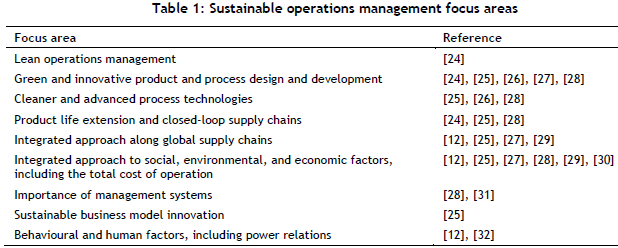
Sustainable operations management (SOM) also does not have an agreed definition, and needs further research [22], especially in the context of NPOs [23]. In the literature, SOM is defined in respect of different focus areas for organisations to become more sustainable, as summarised in Table 1. By applying an integrated definition of sustainability, as proposed by De Haan [18], the different focus areas in Table 1 could be incorporated into an integrated definition of SOM. The present study therefore defines SOM as the management of human, natural, physical, financial, and social resources and of the processes involved in satisfying the self-defined needs of an organisation and in building its resilience over the long term.
Power relations are acknowledged as a focus area of SOM, as shown in Table 1, but also require further research [33]. In the context of NPOs, the power relations in hybrid organisations, and specifically the power of managers, must be investigated further [34]. In an emerging economy such as South Africa, the government has considerable power over NPOs [35], as do donors, generally speaking [34]. Board chairs have informational and referent power over board members, while board members have expert and referent power over board chairs. Boards have legitimate power over managers, while managers have informational power over boards. In hybrid organisations, boards often do not exercise their legitimate power over managers, but submit to the power of managers. Beneficiaries often are regarded as powerless [36]. However, the power of stakeholders depends not only on structural and contextual factors but also on the stakeholders' ability to exercise the power available to them [34]. To make sense of and address power relations in the context of SOM, Glover [37] applies ethnography grounded in critical theory to a dairy food supply chain; Williams and Radnor [32] refine the SERVICE framework [38], based on public management theory, in healthcare; and Chung et al. [39] conduct a series of in-depth empirical case studies in four small and medium-sized enterprises.
This paper supplements previous work to make sense of and address power relations in the context of SOM, and specifically in NPOs, using an action design research (ADR) methodology and modelling in the Cynefin framework. To this end, a model was defined as a meta-theoretical framework to develop understanding, facilitate communication, propose improvements, and bring underlying assumptions to the surface [40-42].
3. METHODOLOGY
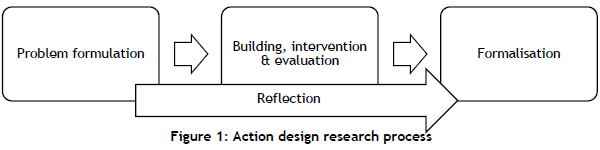
An ADR approach was appropriate to develop models that an NPO in the South African education and research sector could use to improve its SOM, and that could contribute at the same time to a theory of how other organisations could apply similar models to improve their SOM [43]. The research process is summarised in Figure 1 .To begin with, a research problem was formulated as a case study representing a class of research problems, based on its expected information content [44]. The participating NPO was a typical representative of South African NPOs; it had a footprint throughout South Africa, and had been in operation for almost 15 years. It also represented the extreme case of NPOs in general: it had previously had a substantial impact, but had become severely stressed. In addition, it represented an extreme case of organisations in general with their varied, complex, and often conflicting objectives and complex operations performance evaluations; with the complex nature of their products and services; with their uncertain environment; and with their having to cooperate with multiple stakeholders in government, business, and society. Finally, the participating NPO typified an increasing number of hybrid organisations [45] that had started out as social enterprises and were later registered as private companies with limited liability.
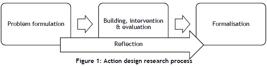
Through the building, intervention, and evaluation cycles shown in Figure 1, models were developed until the NPO understood sufficiently the complexities at the interface between its sustainability and its operations. The research process was continually reflected upon. Based on these reflections, a theory was formalised of how other organisations could improve their SOM by applying similar models.
The building, intervention, and evaluation cycles started by contextualising models in the NPO in respect of the key focus areas of SOM in NPOs, as identified through a summative content analysis of the literature [46]. The needs of the NPO were identified through this contextualisation. The development of models started from these defined needs and from an evaluation of the current sustainability of the NPO, which established a baseline to evaluate goal achievement [43]. The sustainability of the NPO was evaluated on the basis of the civil society organisation sustainability index [1]. Next, different organisational models for sustainability and systems thinking approaches were considered, since an integrated organisational perspective of modelling was required in the context of an NPO [47]. Furthermore, the applied definition of SOM implied an organised complex problem that required descriptive and explanatory content-rich models [48]. Discordant pluralism was applied to provide an enriched understanding of sOm in NPOs by supplementing and challenging different approaches with one another without fusing them into a single algorithm [49].
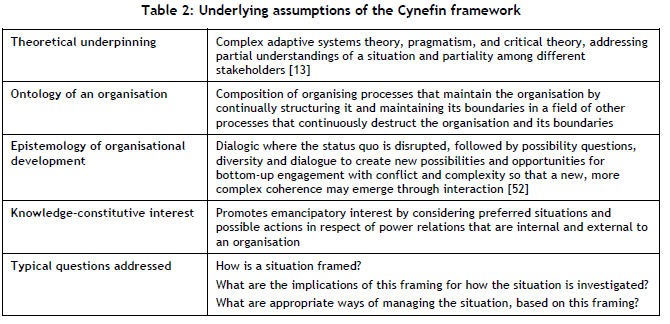
Systems thinking approaches applied in the context of operations management, sustainability, and NPOs in an international development were considered, supplemented by additional approaches to address identified gaps. The underlying assumptions of the approaches were explored, not to establish a pluralist framework, but to indicate how discordant pluralism could provide an enriched understanding of the research problem. This was done in respect of the theoretical underpinnings, typical questions that were addressed [50], knowledge-constitutive interests as defined by Habermas [51], and the ontology of organisations and the epistemology of organisational development [52]. The systems thinking approaches to address the research problem were biomatrix model [53], viable system modelling [54], system dynamics [55], a soft systems methodology [56], the Cynefin framework [13], and dynamic equilibrium modelling [57]. This paper focuses on the Cynefin framework, which supplemented and challenged other approaches to explore and reconcile power relations, as indicated in Table 2.
It is acknowledged that many other systems thinking approaches could have been applied. The study also considered, for example, social network analysis [58], structural equation modelling [59], complex adaptive systems modelling [60], Weickian modelling [61], scenario planning [62], and critical systems heuristics [40]. Instead of applying discordant pluralism with reference to the theoretical underpinnings, the typical questions addressed, knowledge-constitutive interests, the ontology of organisations, and the epistemology of organisational development, contingency theory could have been applied [63]. However, the characteristics of various approaches could not be usefully compared with the characteristics of the situation of the NPO beyond the context of application, especially in the emergent sustainability of the NPO. Method engineering could also have been applied where a fragment of one approach, possibly with its underlying theory, was separated and integrated with fragments from other approaches [64]. While such integration is applied in information systems development, an integration of systems thinking approaches might lead to different approaches being subsumed into the perspective of a preferred approach [49].
4. MODEL DEVELOPMENT
4.1. Sensemaking of communities
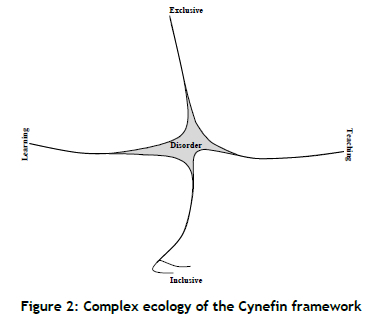
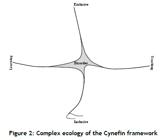
The Cynefin framework regards an organisation as a complex ecology of communities who have compatible aims but also a degree of dissonance that is necessary for organisational growth [65]. The ecology of communities involves a historical, cultural, and situational context, as shown in Figure 2. The shared history of an organisation enables it to adapt to conditions of uncertainty, but also limits its perceptions. The culture of an organisation is moulded over time, therefore, to interpret events to adapt externally and integrate internally, varying between a teaching culture and a learning culture, as indicated on the horizontal axis in Figure 2. The situational context of an organisation also is shaped by its historical context, and varies between exclusivity and inclusivity, as indicated on the vertical axis in Figure 2. In the centre of Figure 2, a space of disorder indicates situations of disagreement about how explicit knowledge or implicit meanings are shared and how sense is made of a situation [13].
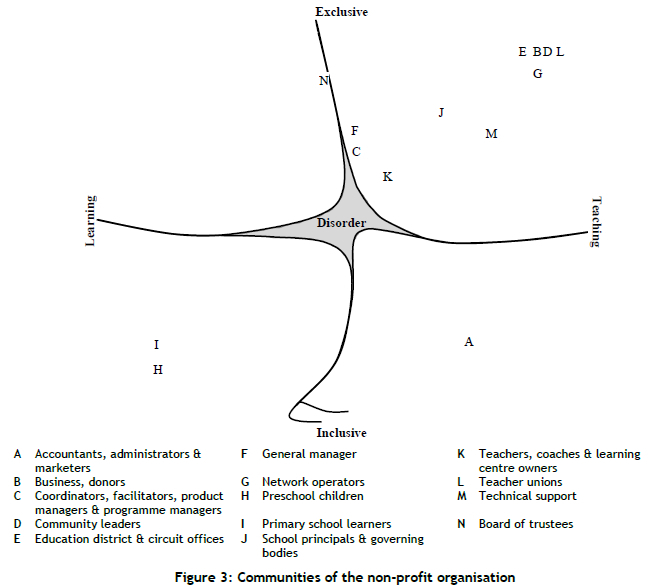
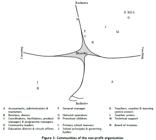
Through the building, intervention, and evaluation cycles of the applied ADR process (shown in Figure 3), the NPO identified communities with which they are involved through a biomatrix model [53]. The NPO made sense of these communities in historical, cultural, and situational contexts through the Cynefin framework. Although stakeholder influence and satisfaction were fluid and constantly changed, the communities with the consistently greatest influence are indicated in Figure 3. The NPO regarded the board of trustees who registered the NPO as a voluntary community using private symbolic language and associated stories to learn what to do in uncertain situations. Coordinators, facilitators, a product manager, a programme manager, a general manager, coaches, and learning centre owners were regarded as professional communities using expert language and associated skill sets to transfer certainty and explicit knowledge - including technology - through training programmes. Accountants, administrators, and marketers were regarded as a bureaucratic community using the language of the dominant culture of the NPO to transfer certainty and explicit knowledge in structured feedback.
4.2. Sensemaking of boundaries
The domains indicated in Figure 2 are used to frame the situations of an organisation [66]. The teaching-inclusive domain implies a clear situation in which a simple problem involves a limited number of variables. The teaching-exclusive domain also implies a complicated situation in which a disorganised and complex problem involves a very large number of variables. The learning-exclusive domain implies a complex situation in which an organised and complex problem involves a significant number of interrelated factors. The learning-inclusive domain also implies a chaotic situation in which an organised and complex problem also involves a significant number of interrelated factors.
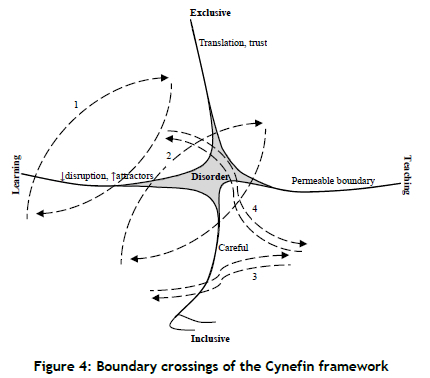
The boundaries between the domains involve gradual transitions that are open for interpretation, so that negotiations are required on what they mean and where they are placed [13]. The boundaries might indicate partiality among the communities of an organisation, and partial understandings based on the framing of situations. They can be crossed, as shown in Figure 4. Through the building, intervention, and evaluation cycles of the applied ADR process (Figure 1), awareness was raised of when the NPO crossed boundaries and how they responded to it. They were also sensitised about how to prepare to cross boundaries purposefully or how to avoid doing so.
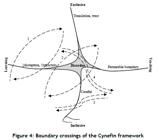
The boundary between clear and complicated situations in Figure 4 is fluid, and is often crossed in both directions. It involves diagnostic organisational development, in which a reinforcing cycle of planning dictates a controllable process of projectable change [52]. A technical interest is promoted, therefore. For the NPO, business and education district and circuit offices in particular used expert language and the associated skill sets in complicated situations, and crossed the boundary into clear situations to demand efficiency, best practices, and predictable results over a short time period. On the other hand, accountants, administrators, and marketers used the language of the dominant culture of the NPO in clear situations, but crossed the boundary into complicated situations to make sense of the situation through expert language and acquired skill sets, so that their views dominated.
The boundary between complicated and complex situations in Figure 4 is not as permeable as the boundary between clear and complicated situations, since translations are required between expert languages and the associated skill sets on the one hand, and private symbolic languages and the associated stories on the other. Crossing the boundary, however, can complement transitions between clear and complicated situations through dialogical organisational development. This involves an adaptive process in which planning evolves over time so that a technical interest is supplemented with a practical interest - if communities trust one another. NPO managers, coordinators, facilitators, and coaches regularly crossed the boundary from complicated to complex situations and back again to explore possible actions and preferred situations, as indicated through viable system modelling in respect of value content and assisting those with less power. However, value content was not tabled in actual discussions about possible actions and preferred situations between the board of trustees and the general manager; and, in reality, those with less power were not assisted. The board of trustees also did not offer knowledge to the NPO by crossing the boundary, nor discuss value content, and those with less power were not assisted in deliberations about possible actions and preferred situations with business and education district and circuit offices, so that crossing the boundary remained sterile.
The boundary between complex and chaotic situations is fluid and difficult to delineate. It might be crossed through dialogical organisational development that involves the careful disruption of complex situations to become chaotic in order to instil innovation and adaptability for sustainability (1 in Figure 4). The boundary is crossed back again by creating multiple attractors to enable patterns to emerge; and, by repeating the cycle, a rich variety of patterns are created through which to make sense of situations. An emancipatory interest is promoted by considering possible actions and preferred situations in respect of power relations. The boundary between complicated and chaotic situations also might be crossed through dialogical organisational development involving the careful disruption of complicated situations (2 in Figure 4). Situations initially become disordered and then chaotic. The same process as above can then be used to cycle between chaotic and complex situations and eventually back to complicated situations. No evidence was found that the NPO used these boundary crossings.
The boundary between clear and chaotic situations is the strongest and most dangerous, and must be treated with respect. It too might be crossed through dialogical organisational development involving very careful disruption of clear situations, and back again to stimulate reflection without destabilising the organisation (3 in Figure 4). An emancipatory interest is promoted by considering possible actions and preferred situations in respect of power relations. The boundary might also be crossed through imposing order in chaos. This might happen when complex situations or complicated situations are disrupted to become chaotic; but the boundary to complex situations is not crossed by creating multiple attractors. The NPO crossed the boundary from chaotic to clear situations by imposing order in chaos in order to address unsustainable situations, such as when they ran out of funds. The stakeholders accepted the imposed order, since it was well-aligned with their needs and brought savings and stability. However, over time the new order became rigid and broke down to become chaotic again.
The boundary between clear and complex situations might be crossed through a process of giving up control (4 in Figure 4). Situations initially become disordered and then complex, from which point boundaries can be crossed to complicated and eventually back to clear situations. No evidence was found that the NPO used this boundary crossing.
5. DISCUSSION
5.1.
Power relations in communitiesThrough a reflection on the contextualisation of models in the NPO as part of the ADR process (Figure 1), it was realised that the board of trustees who registered the NPO originally had a social enterprise orientation. However, later the board of trustees applied to be approved as a public benefit organisation and registered their programme as an NPO. Still later, the board of trustees registered a private company with limited liability, which was in line again with their original social enterprise orientation. As a social enterprise, the board of trustees were responsible to explore issues of social responsibility and to use emerging opportunities based on their organisational and external knowledge [65, 66]. However, the NPO also took on social responsibility on behalf of business [25]. The board of trustees should guard against falling into chaos or fact-based management by fast-tracking problem resolution or opportunity exploitation instead of allowing time for reflection and encouraging interaction for patterns to emerge. This included urgent information received from the general manager through an algedonic signal about organisational communities, as indicated through viable system modelling.
Reflection on applying viable system modelling indicated that the managers, coordinators, facilitators, coaches, and learning centre owners had a responsibility to monitor changes and to produce organisational responses. However, instead of over-analysis of a situation or overconfidence in the efficacy of past solutions, they should have continued to seek feedback from external and internal stakeholders and to experiment in order to stimulate innovation, as suggested by organisational models for sustainability. This would have included resource bargaining through meetings and reporting, inter-operational management through meetings and reporting, and strategy development, ethos, and interactions maintenance and recursive governance at management meetings.
Reflection on a biomatrix model of the NPO indicated that the accountants, administrators, and marketers had allocated responsibilities based on implicit governance in the organisational structure. However, they should guard against complacency, overreliance on best practices if the situation of the NPO changed, and oversimplification of complex issues. They should keep communication channels open and stayed connected to the situation of the NPO. Reflection on viable system modelling showed that this would have included resource bargaining in meetings where accountants, administrators, and marketers were represented by coordinators.
5.2.
Power relations implied by boundariesReflection on applying the Cynefin framework showed that the NPO did not always examine the boundaries of situations or manage boundaries and perceptions about them. These included, for example, the boundaries between a social enterprise and an NPO, the implementation of broad-based black economic empowerment (BBBEE), the development of sport in its own right and the development of sport as an educational aid, and cooperation with different stakeholders. Most NPOs struggle to manage their boundaries with business and government. Business and government typically regard some societal needs as beyond their boundaries because they cannot be addressed profitably or do not have sufficient statutory basis or public support [67]. NPOs question and cross these boundaries, and internalise the needs not being addressed. However, nPOs increasingly use business management practices to improve their operations and to enhance their financial performance, so that they compete against business while losing the support of society [45]. NPOs also often involve the government as the main funder so that they become agents of the government [67]. NPOs therefore must question their own boundaries to internalise societal issues, as revealed by the boundary critique of business and government, through reflexive self-regulation. A boundary then is established by effectively creating human, natural, physical, financial, and social resources from an outside-in organisational perspective to contribute to the common good [68].
Another boundary not managed well by the participating NPO was the end-of-life of their resources, as indicated through a biomatrix model, such that the discharge of resources was stipulated only after numerous attempts. They also did not manage exit strategies well, as indicated by their self-defined needs to address incentives for and the tenure of trustees [69]. Since funding is limited for any project, they also required project exit strategies. The NPO could address the power relations at play between them and the trustees, and them and their donors, through contracts [70], including clear exit strategies [71]. Other operational management principles also could be included in contracts such as project goals, measurable benchmarks to assess progress towards goals, action steps, roles and responsibilities, a timeline, potential problems such as funding shortfalls, the transition of ownership to other stakeholders, legal and ethical issues, stakeholder support, and the transfer of resources. However, it should be clearly indicated which resources were not transferable and the transition of ownership should be managed carefully [72]. Furthermore, power relations could be addressed by maximising autonomy to minimise uncertainty and dependence, which again would imply exit strategies [73]. The NPO attempted to extend alliances formed during projects and to influence the Department of Basic Education through regular project reports, including donor feedback. However, as part of their exit strategies they could report on their contributions in various forums, which required these types of interventions such as the Mining Charter [74].
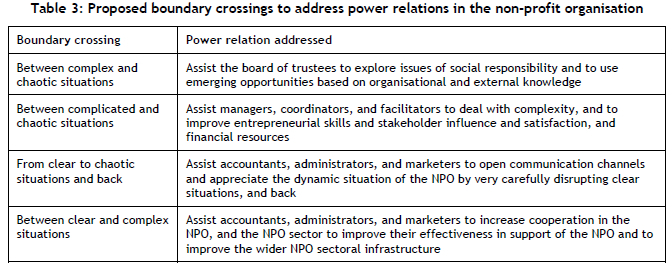
Through a reflection on applying the Cynefin framework, it was realised that the NPO did not use the boundary crossings indicated in Figure 4 between complex and chaotic situations, between complicated and chaotic situations, from clear to chaotic situations and back, or between clear and complex situations, to promote an emancipatory interest. Additional boundary crossings therefore were proposed to address the power relations. These proposed boundary crossings are summarised in Table 3.
5.3. Strategy to address power relations
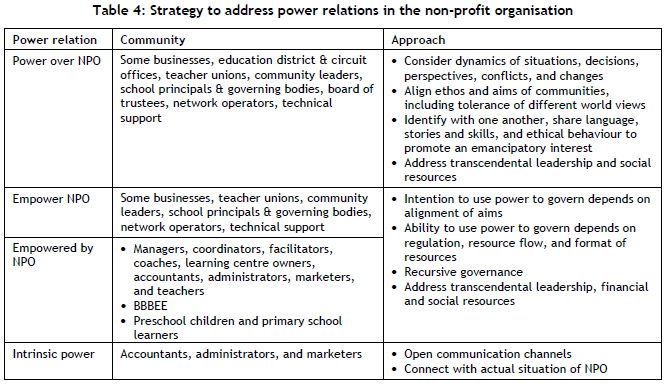
Reflection on a biomatrix model of the NPO raised awareness of the power relations among the communities in Figure 3 in respect of communities having power over the NPO, communities empowering the NPO, communities empowered by the NPO, and the intrinsic power of the NPO [53]. These relations correspond to those in the literature, but are enhanced. The NPO developed a strategy to address these power relations through the Cynefin framework by considering the dynamics of situations, decisions, perspectives, conflicts, and changes, summarised in Table 4.
Power over the NPO surfaced by reflecting not only on a biomatrix model of the NPO, but also on the application of causal loop diagrams, which indicated vicious feedback loops acting as a success to the successful archetype [75]. As indicated in Table 4, power was exerted over the NPO by some businesses, education district and circuit offices, teacher unions, community leaders, school principals and governing bodies, the board of trustees, network operators, and technical support. They could dominate the will of the NPO by, for example, withholding funding or approval if the NPO did not submit to their will. Figure 3 shows that the power over the NPO was exerted through exclusivity - a private symbolic language and associated stories used by the board of trustees, and expert language and associated skill sets used by business, some donors, education district and circuit offices, and school principals and governing bodies. More empowering relations could be developed when communities identify with one another, share language, stories and skills, and behave ethically to promote an emancipatory interest [76]. The process could be started from the alignment of the ethos and aims of the communities, including tolerance of different world views [77].
The NPO was empowered by some businesses, teacher unions, community leaders, school principals and governing bodies, network operators, and technical support, as shown in Table 4.
Empowerment involves the transfer of power to govern according to a biomatrix model [53]. The intention to use the power to govern depends on the alignment of aims, while the ability to use the power to govern depends on regulation, resource flow, and the format of resources. Empowerment also entails recursive governance, as set out through viable system modelling, where each community governs itself in the context of the NPO [78]. Recursive governance furthermore links the governance of the NPO to global governance through adherence to and promotion of national legislation and regulations, and power delegation from the government [79]. By reflecting on the application of viable system modelling, the NPO became aware of leadership issues with reference to the co-evolution of the NPO with its environment, global governance, and contextual sustainability. This involved the board of trustees, who were regarded as a voluntary community in Figure 3. Reflection on a biomatrix model, viable system modelling, and a sustainable organisational model for mature organisations [80] indicated that the board of trustees were responsible for environmental effectiveness. They had to learn what to do in ambiguous and uncertain situations regarding human, natural, physical, financial, and social opportunities and threats in the contextual environment of the NPO. However, reflecting on system dynamics and soft systems methodology showed that the board of trustees first had to address cultural entropy [77], but lacked the required transcendental leadership and social resources [81]. Managers, coordinators, facilitators, coaches, learning centre owners, and teachers also had a responsibility to monitor changes and produce organisational responses. Although they continued to seek feedback from external and internal stakeholders and experimented to stimulate innovation, they too lacked transcendental leadership, and experienced difficulties with financial and social resources.
Table 4 indicates further that the NPO empowered managers, coordinators, facilitators, coaches, learning centre owners, accountants, administrators, marketers, and teachers. Recursive governance in adhering to and promoting national legislation and regulations included BBBEE. Here, the NPO transferred the power to govern specifically to black coaches, learning centre owners, teachers, and employees. The overall aim of the NPO also involved the empowerment of learners, with a focus on preschool children and primary school learners. In this case the transfer of power to govern entailed self-governance with reference to viable system modelling, which is an important skill and character trait required for the 21st century [82].
Relations of intrinsic power were surfaced by supplementing a biomatrix model with the Cynefin framework, as indicated in Table 4.
Such relations entail implicit governance through organisational structures, which might surface as organisational turbulence when the status quo is disrupted. The bureaucratic community formed by the accountants, administrators, and marketers of the NPO maintained the status quo by using the language of its dominant culture. Reflection on viable system modelling and system dynamics indicated that they had allocated responsibilities based on implicit governance in the organisational structure; but it seemed that communication channels were not open, and there was a disconnect with the situation of the NPO.
6. CONCLUSION
As part of the formalisation phase of the ADR process shown in Figure 1, this study has presented a case study to improve the sustainability of NPOs through operations management. The Cynefin framework was applied as an operations management tool to assist an NPO in the South African education and research sector to make sense of power relations at the interface between their sustainability and their operations. It also supported the NPO in their decision-making to address these power relations. The Cynefin framework supplemented other systems thinking approaches to provide an integrated organisational perspective on the NPO, to approach SOM as an organised complex problem, and to provide an enriched understanding of SOM in the NPO through discordant pluralism. The NPO portrayed itself as a complex ecology of communities in a historical, cultural, and situational context. Power relations among these communities were explored, and plausible paths were identified to address these power relations. The NPO also became aware of how they frame situations by setting boundaries. Power relations were considered in setting and crossing boundaries. Through the Cynefin framework, the NPO developed a strategy to address the power relations involved in communities having power over the NPO, communities empowering the NPO, communities being empowered by the NPO, and intrinsic power of the NPO, summarised in Table 4.
The originality of the study involves the use of the Cynefin framework to address power relations in the context of SOM in an NPO through an ADR methodology. In the literature, power relations are made sense of and addressed in the context of SOM through ethnography, the SERVICE framework, and a series of in-depth empirical case studies. Previous studies considered a dairy food supply chain, healthcare, and small and medium-sized enterprises.
Implications are provided for NPO managers in general of how to apply the Cynefin framework to address power relations to improve SOM. This is done through an ADR methodology that involved the formulation of a case study representing a class of research problems with reference to its expected information content. The participating NPO represents a typical case of South African NPOs, and an extreme case of NPOs in general. Furthermore, the application of the Cynefin framework has implications for operations managers in general, since an NPO represents an extreme case of organisations in general, and a typical case of hybrid organisations.
The limitations of the Cynefin framework to make sense of and address power relations to improve SOM in an NPO concern intrinsic power relations that might surface as organisational turbulence when the status quo is disrupted. Sense was made of intrinsic power relations through the Cynefin framework, and decision-making was supported to address these power relations. Although the Cynefin framework indicates how the tensions identified through other systems thinking approaches constantly pull an organisation in opposite directions [13], supplementary approaches were required to make sense of and address organisational turbulence. Furthermore, although a theory is presented for how other organisations could apply the Cynefin framework to make sense of and address power relations in the context of SOM, the theory must be tested and refined in practice.
Opportunities for future research would involve, first, applying the Cynefin framework in other NPOs to test and refine the sensemaking of power relations at the interface between their sustainability and their operations. Closely linked to this, the Cynefin framework should be applied in other NPOs to refine decision-making to address these power relations. The application of the Cynefin framework should involve representative cases of an increasing number of hybrid organisations. Next, making sense of and addressing power relations in the context of SOM by means of the Cynefin framework should be tested and refined in public organisations and private organisations. Additional opportunities for future research might involve systems thinking approaches other than those applied in this study to supplement the Cynefin framework in order to make sense of and address power relations at the interface between organisational sustainability and operations. For example, in this study, a biomatrix model supplemented the Cynefin framework to examine different scales of space and time across which the NPO operated. Viable system modelling further explored different scales of space and system dynamics elaborated on different scales of time. Dynamic equilibrium modelling was applied to discover adaptive cycles. Panarchy, as defined by [83], could be applied to emphasise the cross-scale linkages that influence the overall dynamics of an NPO.
REFERENCES
2. LITERATURE REVIEW
- [1] United States Agency for International Development [USAID], 2021 civil society organization sustainability index for sub-Saharan Africa. Washington, DC: USAID, Dec. 2022.
-
[2] J. Cotterill, "South Africa's economy suffers worst quarterly slide in decades," Financial Times, Sept. 8, 2020. [Online] Available: https://www.ft.com/content/fe84438b-acf3-4adc-b1f7-73884b89f424 [Accessed Nov. 25, 2024].
» https://www.ft.com/content/fe84438b-acf3-4adc-b1f7-73884b89f424 - [3] H. Abrahams, ed., The impact of COVID-19 on non-profit organisations: Findings from a snap survey of non-profit organisations undertaken in May-June 2020. Parktown: Tshikululu, 2020.
- [4] M. Mutiara, M. Dachyar, and R. Nurcahyo, "Design of organization strategy and business process improvement using business model canvas for non-profit organization in Indonesia," in Proceedings of the International Conference on Industrial Engineering and Operations Management, 2022, pp. 697-708.
- [5] H. K. Anheier, Nonprofit organizations: Theory, management, policy. London: Routledge, 2005.
-
[6] H. K. Anheier, "Civil society challenged: Towards an enabling policy environment," Economics, vol. 11, no. 1, pp. 2017-29, 2017. doi: 10.5018/economics-ejournal.ja.2017-29
» https://doi.org/10.5018/economics-ejournal.ja.2017-29 -
[7] M. Kaviyani-Charati, M. Ameli, F. H. Souraki, and A. Jabbarzadeh, "Sustainable network design for a non-profit food bank supply chain with a heterogeneous fleet under uncertainty," Computers & Industrial Engineering, vol. 171, 108442, 2022. doi: 10.1016/j.cie.2022.108442
» https://doi.org/10.1016/j.cie.2022.108442 -
[8] G. Berenguer and Z.-J. M. Shen, "Challenges and strategies in managing nonprofit operations: An operations management perspective," Manufacturing & Service Operations Management, vol. 22, no. 5, pp. 888-905, 2020. doi: 10.1287/msom.2018.0758
» https://doi.org/10.1287/msom.2018.0758 - [9] Q. Feng and J. G. Shanthikumar, "Not-for-profit operations management," in The Routledge companion to production and operations management, M. K. Starr and S. K. Gupta, eds., New York, NY: Routledge, 2017, pp. 510-526.
-
[10] P. P. Potlaki and S. Naidoo, "The influence of operations management on service delivery: The case of a South African municipality," South African Journal of Industrial Engineering, vol. 35, no. 4, pp. 116-131, 2024. https://doi.org/10.7166/35-4-3016
» https://doi.org/10.7166/35-4-3016 -
[11] X.-X. Zheng, C.-T. Chang, D.-F. Li, Z. Liu, and B. Lev, "Designing an incentive scheme for producer responsibility organization of waste tires: A MCGP cooperative game approach," Computers & Industrial Engineering, vol. 167, 108009, 2022. doi: 10.1016/j.cie.2022.108009
» https://doi.org/10.1016/j.cie.2022.108009 -
[12] H. Walker, S. Seuring, J. Sarkis, and R. Klassen, "Sustainable operations management: Recent trends and future directions," International Journal of Operations & Production Management, vol. 34, no. 5, 2014. doi: 10.1108/IJOPM-12-2013-0557
» https://doi.org/10.1108/IJOPM-12-2013-0557 -
[13] C. F. Kurtz and D. J. Snowden, "The new dynamics of strategy: Sense-making in a complex and complicated world," IBM Systems Journal, vol. 42, no. 3, pp. 462-483, 2003. doi: 10.1147/sj.423.0462
» https://doi.org/10.1147/sj.423.0462 - [14] J. Suzman, Affluence without abundance: The disappearing world of the bushmen. London: Bloomsbury, 2017.
- [15] A. Wallace-Hadrill, "Pliny the Elder and man's unnatural history," Greece & Rome, vol. 37, no. 1, pp. 80-96, 1990.
- [16] U. Grober, "Deep roots: A conceptual history of 'sustainable development' (Nachhaltigkeit)," Wissenschaftszentrum Berlin für Sozialforschung, Berlin, WZB Discussion Paper P 2007-002, Feb. 2007.
- [17] World Commission on Environment and Development [WCED], Our common future (the Brundtland report). Oxford: United Nations, A/42/427, 4 Aug. 1987.
-
[18] L. J. de Haan, "Globalization, localization and sustainable livelihood," Sociologia Ruralis, vol. 40, no. 3, pp. 339-365, 2000. doi: 10.1111/1467-9523.00152
» https://doi.org/10.1111/1467-9523.00152 - [19] J. Elkington, "Enter the triple bottom line," in The triple bottom line: Does it all add up? A. Henriques and J. Richardson, eds., London: Earthscan, 2004, pp. 1-16.
-
[20] J. Emerson, "The blended value proposition: Integrating social and financial returns," California Management Review, vol. 45, no. 4, pp. 35-51, 2003. doi: 10.2307/41166187
» https://doi.org/10.2307/41166187 - [21] M. E. Porter and M. R. Kramer, "Creating shared value: How to reinvent capitalism and unleash a wave of innovation and growth," Harvard Business Review, vol. 89, no. 1/2, pp. 62-77, January-February 2011.
-
[22] S. Garrido, J. Muniz Jr, and V. B. Ribeiro, "Operations management, sustainability & Industry 5.0: A critical analysis and future agenda," Cleaner Logistics and Supply Chain, vol. 10, 100141, 2024. doi: 10.1016/j.clscn.2024.100141
» https://doi.org/10.1016/j.clscn.2024.100141 -
[23] G. Berenguer, P. Keskinocak, J. G. Shanthikumar, J. Swaminathan, and L. N. van Wassenhove, "A prologue to the special issue on not-for-profit operations management," Production and Operations Management, vol. 26, no. 6, pp. 973-975, 2017. doi: 10.1111/poms.12730
» https://doi.org/10.1111/poms.12730 - [24] P. R. Kleindorfer, K. Singhal, and L. N. van Wassenhove, "Sustainable operations management," Production and Operations Management, vol. 14, no. 4, pp. 482-492, 2005.
-
[25] A. Atasu, C. J. Corbett, X. N. Huang, and L. B. Toktay, "Sustainable operations management through the perspective of manufacturing & service operations management," Manufacturing & Service Operations Management, vol. 22, no. 1, pp. 146-157, 2020. doi: 10.1287/msom.2019.0804
» https://doi.org/10.1287/msom.2019.0804 -
[26] D. F. Drake and S. Spinler, "OM forum - sustainable operations management: An enduring stream or a passing fancy," Manufacturing & Service Operations Management, vol. 15, no. 4, pp. 689-700, 2013. doi: 10.1287/msom.2013.0456
» https://doi.org/10.1287/msom.2013.0456 - [27] J. Heizer, B. Render, and C. Munson, Operations management: Sustainability and supply chain management, 12th ed. Harlow: Pearson Education, 2016.
-
[28] J. D. Linton, R. Klassen, and V. Jayaraman, "Sustainable supply chains: An introduction," Journal of Operations Management, vol. 25, no. 6, pp. 1075-1082, 2007. doi: 10.1016/j.jom.2007.01.012
» https://doi.org/10.1016/j.jom.2007.01.012 - [29] P. H. Andersen, "Sustainable operations management (SOM) strategy and management: An introduction to part I," in Operations Management and Sustainability: New Research Perspectives, L. de Boer and P. H. Andersen, eds. Cham: Palgrave Macmillan, 2019, pp. 15-25.
- [30] K. B. Kassa, M. Ensermu, and B. Temesgen, "Sustainable operations management: A systematic review and future research agenda," Journal of Supply Chain Management Systems, vol. 12, no. 1, pp. 38-58, 2023.
- [31] J. Ruedig and A. Baldwin Metzger, Managing organizational sustainability: The business case for sustainability professionals in the workplace. Washington, DC: United States Green Building Council, 2013.
-
[32] S. J. Williams and Z. J. Radnor, "Moving from service to sustainable services: A healthcare case study," International Journal of Productivity and Performance Management, vol. 71, no. 4, pp. 1126-1148, 2022. doi: 10.1108/IJPPM-12-2019-0583
» https://doi.org/10.1108/IJPPM-12-2019-0583 -
[33] F. S. Flores, I. Gavronski, V. Nardi, and R. Haag, "The influence of triple bottom line on international operations management," Journal of Operations and Supply Chain Management, vol. 10, no. 2, pp. 85-99, 2017. doi: 10.12660/joscmv10n2p85-99
» https://doi.org/10.12660/joscmv10n2p85-99 -
[34] V. Bruni-Bossio and M. Kaczur, "The power-structure model of non-profit governance," Corporate Governance: An International Review, vol. 30, pp. 442-460, 2022. doi: 10.1111/corg.12417
» https://doi.org/10.1111/corg.12417 -
[35] J. Casey, "Comparing nonprofit sectors around the world," Journal of Nonprofit Education and Leadership, vol. 6, no. 3, pp. 187-223, 2016. doi: 10.18666/JNEL-2016-V6-I3-7583
» https://doi.org/10.18666/JNEL-2016-V6-I3-7583 -
[36] S. Yasmin and C. Ghafran, "Accountability and legitimacy of non-profit organisations: Challenging the current status quo and identifying avenues for future research," Financial Accountability & Management, vol. 37, no. 4, pp. 399-418, 2021. doi: 10.1111/faam.12280
» https://doi.org/10.1111/faam.12280 -
[37] J. Glover, "The dark side of sustainable dairy supply chains," International Journal of Operations & Production Management, vol. 40, no. 12, pp. 1801-1827, 2020. doi: 10.1108/IJOPM-05-2019-0394
» https://doi.org/10.1108/IJOPM-05-2019-0394 -
[38] S. P. Osborne, Z. J. Radnor, T. Kinder, and I. Vidal, "The SERVICE framework: A public servicedominant approach to sustainable public services," British Journal of Management, vol. 26, no. 3, pp. 424-438, 2015. doi: 10.1111/1467-8551.12094
» https://doi.org/10.1111/1467-8551.12094 -
[39] L. Chung, K. H. Tan, and O. Yoshie, "Sustainable circular economy: Unpacking the unintended consequences of digital transformation in Japanese SMEs," Technological Forecasting and Social Change, vol. 221, 124335, 2025. doi: 10.1016/j.techfore.2025.124335
» https://doi.org/10.1016/j.techfore.2025.124335 - [40] W. Ulrich and M. Reynolds, "Critical systems heuristics," in Systems approaches to managing change: A practical guide. M. Reynolds and S. Holwell, eds. London: Springer, 2010, pp. 243-292.
-
[41] S. A. Harwood, "A question of interpretation: The viable system model (VSM)," European Journal of Operational Research, vol. 274, pp. 1198-1201, 2019. doi: 10.1016/j.ejor.2018.10.054
» https://doi.org/10.1016/j.ejor.2018.10.054 -
[42] P. Checkland, "From optimizing to learning: A development of systems thinking for the 1990s," Journal of the Operational Research Society, vol. 36, no. 9, pp. 757-767, 1985. doi: 10.1057/jors.1985.141
» https://doi.org/10.1057/jors.1985.141 -
[43] M. K. Sein, O. Henfridsson, S. Purao, M. Rossi, and R. Lindgren, "Action design research," Management Information Systems Quarterly, vol. 35, no. 1, pp. 37-56, 2011. doi: 10.2307/23043488
» https://doi.org/10.2307/23043488 -
[44] B. Flyvbjerg, "Five misunderstandings about case-study research," Qualitative Inquiry, vol. 12, no. 2, pp. 219-245, 2006. doi: 10.1177/1077800405284363
» https://doi.org/10.1177/1077800405284363 - [45] A. Malhotra, "Three schools of nonprofit thought: Evolution of the field and implications for leadership," in Transformational leadership and not for profits and social enterprises. K. Wiltshire, A. Malhotra, and M. Axelsen, eds., New York, NY: Routledge, 2018, pp. 33-51.
-
[46] H.-F. Hsieh and S. E. Shannon, "Three approaches to qualitative content analysis," Qualitative Health Research, vol. 15, no. 9, pp. 1277-1288, 2005. doi: 10.1177/1049732305276687
» https://doi.org/10.1177/1049732305276687 - [47] M. L. Pomerantz, "Evolutionary social entrepreneurship," In Proceedings of the Annual Conference of the United States Association for Small Business and Entrepreneurship, 2019, pp. 165-175.
- [48] W. Weaver, "Science and complexity," in General systems theory, cybernetics and complexity. Vol. I in the four-volume set Systems thinking, G. Midgley, ed., London: SAGE Publications, 2003, pp. 377-385.
- [49] W. J. Gregory, "Discordant pluralism: A new strategy for critical systems thinking," in Critical systems thinking and systemic perspectives on ethics, power and pluralism. Vol. IV in the four-volume set Systems thinking, G. Midgley, ed., London: SAGE Publications, 2003, pp. 123-142.
- [50] B. Williams, "Systems thinking and capacity development in the international arena," in Beyond logframe: Using systems concepts in evaluation. N. Fujita, ed., in Issues and prospects of evaluations for international development, no. IV. Tokyo: Foundation for Advanced Studies on International Development, 2010, pp. 35-53.
- [51] R. Roderick, Habermas and the foundations of critical theory. London: Macmillan Publishers, 1986.
-
[52] A. H. van de Ven and M. S. Poole, "Alternative approaches for studying organizational change," Organization Studies, vol. 26, no. 9, pp. 1377-1404, 2005. doi: 10.1177/0170840605056907
» https://doi.org/10.1177/0170840605056907 - [53] E. Dostal, A. Cloete, and G. G. Jaros, Biomatrix: A systems approach to organisational and societal change, 3rd ed. Cape Town: Elisabeth Dostal, 2005.
-
[54] S. Beer, "The viable system model: Its provenance, development, methodology and pathology," Journal of the Operational Research Society, vol. 35, no. 1, pp. 7-25, 1984. doi: 10.1057/jors.1984.2
» https://doi.org/10.1057/jors.1984.2 -
[55] J. W. Forrester, "System dynamics, systems thinking, and soft OR," System Dynamics Review, vol. 10, no. 2/3, pp. 245-256, 1994. doi: 10.1002/sdr.4260100211
» https://doi.org/10.1002/sdr.4260100211 - [56] P. Checkland and J. Poulter, "Soft systems methodology," in Systems approaches to managing change: A practical guide. M. Reynolds and S. Holwell, eds., London: Open University Press, 2010, pp. 191-242.
-
[57] W. K. Smith and M. W. Lewis, "Toward a theory of paradox: A dynamic equilibrium model of organizing," Academy of Management Review, vol. 36, no. 2, pp. 381-403, 2011. doi: 10.5465/AMR.2011.59330958
» https://doi.org/10.5465/AMR.2011.59330958 -
[58] S. P. Borgatti, A. Mehra, D. J. Brass, and G. Labianca, "Network analysis in the social sciences," Science, vol. 323, no. 5916, pp. 892-895, 2009. doi: 10.1126/science.1165821
» https://doi.org/10.1126/science.1165821 -
[59] Y. Fan et al., "Applications of structural equation modeling (SEM) in ecological studies: An updated review," Ecological Processes, vol. 5, no. 19, p. 12, 2016. doi: 10.1186/s13717-016-0063-3
» https://doi.org/10.1186/s13717-016-0063-3 -
[60] M. W. Chaffee and M. M. McNeill, "A model of nursing as a complex adaptive system," Nursing Outlook, vol. 55, no. 5, pp. 232-241, 2007. doi: 10.1016/j.outlook.2007.04.003
» https://doi.org/10.1016/j.outlook.2007.04.003 -
[61] K. E. Weick, K. M. Sutcliffe, and D. Obstfeld, "Organizing and the process of sensemaking," Organization Science, vol. 16, no. 4, pp. 409-421, 2005. doi: 10.1287/orsc.1050.0133
» https://doi.org/10.1287/orsc.1050.0133 -
[62] P. J. H. Schoemaker, "Scenario planning: A tool for strategic thinking," MIT Sloan Management Revue, vol. 36, no. 2, pp. 25-40, 1995. doi: 10.1016/0024-6301(95)91604-0
» https://doi.org/10.1016/0024-6301(95)91604-0 - [63] L. Donaldson, The contingency theory of organizations. Thousand Oaks, CA: Sage, 2001.
-
[64] J. Pries-Heje and R. Baskerville, "The design theory nexus," MIS Quarterly, vol. 32, no. 4, pp. 731 - 755, 2008. doi: 10.2307/25148870
» https://doi.org/10.2307/25148870 - [65] D. Snowden, "The social ecology of knowledge management," in Knowledge horizons: The present and the promise of knowledge management. C. Despres and D. Chauvel, eds., Boston, MA: Butterworth-Heinemann, 2000, pp. 237-265.
-
[66] D. J. Snowden, "Complex acts of knowing: Paradox and descriptive self-awareness," Journal of Knowledge Management, vol. 6, no. 2, pp. 100-111, 2002. doi: 10.1108/13673270210424639
» https://doi.org/10.1108/13673270210424639 -
[67] V. Valentinov, "Toward a critical systems perspective on the nonprofit sector," Systemic Practice and Action Research, vol. 25, no. 4, pp. 355-364, 2012. doi: 10.1007/s11213-011-9224-6
» https://doi.org/10.1007/s11213-011-9224-6 -
[68] T. Dyllick and K. Muff, "Clarifying the meaning of sustainable business: Introducing a typology from business-as-usual to true business sustainability," Organization & Environment, vol. 29, no. 2, pp. 156-174, 2016. doi: 10.1177/1086026615575176
» https://doi.org/10.1177/1086026615575176 - [69] The Bertha Centre for Social Innovation and Entrepreneurship, A guide to legal forms for social enterprises in South Africa. Cape Town: University of Cape Town, February 2016.
-
[70] J. L. Miller-Millesen, "Understanding the behavior of nonprofit boards of directors: A theory-based approach," Nonprofit and Voluntary Sector Quarterly, vol. 32, no. 4, pp. 521-547, 2003. doi: 10.1177/0899764003257463
» https://doi.org/10.1177/0899764003257463 -
[71] C. R. Ruiz-Miranda, L. I. Vilchis, and R. R. Swaisgood, "Exit strategies for wildlife conservation: Why they are rare and why every institution needs one," Frontiers in Ecology and the Environment, vol. 18, no. 4, pp. 203-210, 2020. doi: 10.1002/fee.2163
» https://doi.org/10.1002/fee.2163 - [72] A. T. K. Nuer, "Exit strategies for social venture entrepreneurs," PhD thesis, Wageningen University, Wageningen, Netherlands, 2015.
- [73] G. F. Davis and J. A. Cobb, "Resource dependence theory: Past and future," in Stanford's organization theory renaissance, 1970-2000, vol. 28. C. Bird Schoonhoven and F. Dobbin, eds., in Research in the sociology of organizations, Bingley, UK: Emerald Publishing, 2010, pp. 21-42.
-
[74] D. Woo, "Exit strategies in interorganizational collaboration: Setting the stage for re-entry," Communication Research, vol. 48, no. 6, pp. 845-873, 2021. doi: 10.1177/0093650219851418
» https://doi.org/10.1177/0093650219851418 - [75] P. M. Senge, The fifth discipline: The art and practice of the learning organization. New York, NY: Doubleday, 1990.
- [76] O. Eikeland, "Phrónêsis, Aristotle, and action research," International Journal of Action Research, vol. 2, no. 1, pp. 5-53, 2006.
- [77] R. Barrett, Building a values-driven organization: A whole system approach to cultural transformation. Amsterdam: Elsevier, 2006.
-
[78] D. Lowe, A. Espinosa, and M. Yearworth, "Constitutive rules for guiding the use of the viable system model: Reflections on practice," European Journal of Operational Research, vol. 287, no. 3, pp. 1014-1035, 2020. doi: 10.1016/j.ejor.2020.05.030
» https://doi.org/10.1016/j.ejor.2020.05.030 -
[79] A. Espinosa and J. Walker, "Complexity management in practice: A viable system model intervention in an Irish eco-community," European Journal of Operational Research, vol. 225, no. 1, pp. 118-129, 2013. doi: 10.1016/j.ejor.2012.09.015
» https://doi.org/10.1016/j.ejor.2012.09.015 -
[80] A. Jablonski and M. Jablonski, "Research on business models in their life cycle," Sustainability, vol. 8, no. 5, pp. 430-467, 2016. doi: 10.3390/su8050430
» https://doi.org/10.3390/su8050430 - [81] R. D. Putnam, R. Leonardi, and R. Y. Nonetti, Making democracy work: Civic traditions in modern Italy. Princeton, NJ: Princeton University Press, 1993.
- [82] J. Voogt and N. P. Roblin, 21st century skills. Enschede, Netherlands: Kennisnet, 2010.
-
[83] C. S. Holling, "Understanding the complexity of economic, ecological, and social systems," Ecosystems, vol. 4, no. 5, pp. 390-405, 2001. doi: 10.1007/s10021-00 -0101-5
» https://doi.org/10.1007/s10021-00 -0101-5
ORCID® identifiers
M.F.P. Harmse
https://orcid.org/0000-0002-3366-3076
W.L. Bean
https://orcid.org/0000-0003-1965-0081