A Conceptual Framework for Timber Adoption in the Construction Industry
Abstract
This study explored the key human behavioural factors influencing the adoption of timber and engineered wood products in the construction industry by integrating the key constructs of the theory of planned behaviour and the unified theory of acceptance and use of technology. The study identified relationships between attitude towards behaviour and performance expectancy, subjective norm and social influence, perceived behavioural control and facilitating conditions, and effort expectancy in the context of timber adoption. The proposed framework provides a theoretical foundation for further research on the adoption of timber in the construction industry.
Abstract
Hierdie studie het die belangrikste menslike gedragsfaktore wat die aanvaarding van hout en vervaardigde houtprodukte in die konstruksiebedryf beïnvloed, ondersoek deur die sleutelkonstrukte van die teorie van beplande gedrag en die verenigde teorie van aanvaarding en gebruik van tegnologie te integreer. Die studie het die verwantskappe tussen houding teenoor gedrag en prestasieverwagting, subjektiewe norm en sosiale invloed, waargenome gedragsbeheer en fasiliteringsomstandighede, en verwagte poging in die konteks van houtaanvaarding geïdentifiseer. Die voorgestelde raamwerk bied 'n teoretiese fondament vir verdere navorsing oor die aanvaarding van hout in die konstruksiebedryf.
1. INTRODUCTION
The Fourth Industrial Revolution (4IR) has ushered in a new era of technological and digital advancements. These advancements have become increasingly relevant for researchers and scholars who strive to enhance innovation and performance in order to gain a competitive edge [1], [2]. As globalisation and the emergence of new technologies intensify competition at an unprecedented rate [3], they amplify the external pressures that are placed on our environment [4], [5]. In response to these challenges, emphasis is being placed on sustainable methods of value creation, with many industries investigating so-called green solutions [6]. This shift highlights the increasing importance of environmental and social objectives and economic considerations as companies set long-term targets [7], [8]. More than half of all raw materials extracted globally are used in construction, leading to 30%-45% of all carbon dioxide-related emissions [9], [10], [11]. Around the world, authorities are enacting and enforcing regulations to promote sustainable construction practices [12], and it is widely recognised that, as a matter of urgency, the construction industry must develop strategies to limit its emissions output [13]. An effective strategy for mitigating embodied emissions is through interventions at the material level, whether through material efficiency or material substitution [10]. One such approach is the return to traditional and environmentally friendly wood-based construction [14].
The effects of reintroducing timber back into the construction industry offer substantial potential to advance sustainability and to contribute positively to sustainable construction [15]. Wood's inherent ability to absorb and store carbon dioxide during its natural growth, and to continue to store this carbon after being processed until it decomposes, contributes significantly to reducing emissions [16]. Although additional resources are required to process wood, it remains largely renewable and is thus a sustainable alternative to competing materials, which require considerable mining [17]. Moreover, wood-based construction can lead to a net reduction in emissions, as the carbon absorbed during the material's lifecycle often exceeds the emissions generated from construction, operation, and eventual disposal [18]. Innovative developments in wood technologies have led to the development of composite materials that are commonly referred to as engineered wood products (EWP) and engineered wood systems (EWS) [10], [19]. However, despite significant consensus on the need for sustainability and the well-documented benefits of using EWP in construction [20], [21], their adoption in the construction industry remains limited [22].
Transforming the construction sector to prioritise environmental and social sustainability, as well as resilience, ultimately depends on changes in human behaviour in processes, business models, and decision-making [9]. Engineering managers and industrial engineers are key stakeholders in this process [23], and can be either enablers of or barriers to innovation [24]. Several studies have already identified the slow adoption of key industrial engineering principles such as lean methods [25], value management [26], robotics and automation [27], radio frequency identification [28], and the like in the construction industry [29]. Just as with EWP, while these principles have been validated, their adoption in the construction industry has been largely uncertain, necessitating strategies to explore increased uptake and implementation. One way to improve the development and implementation of innovation in organisations is to use conceptual frameworks as a foundation for stakeholder involvement [30]. They help stakeholders to structure problems, define solutions, and design effective strategies for implementing innovation while considering various constraints [31]. In this vein, this study proposes a conceptual framework that provides comprehensive insight into how human behavioural factors influence the intention to use timber and EWP in the construction industry.
There have been only a few previous attempts to develop a conceptual framework for timber adoption in the construction industry. Barrane [32] extended the unified theory of acceptance and use of technology (UTAUT) framework by including resistance to change and limited availability as independent variables that have an impact on the intention to use timber in non-residential construction, while Hassan [33] combined the theory of planned behaviour (TPB) and the diffusion of innovation theory (DOI) to develop a conceptual framework for the adoption of EWP in the construction industry. These suggest that researchers are beginning to tackle conceptually the challenge of timber adoption in the construction industry. This study undertakes a systematic literature review (SLR) of both the TPB and the UTAUT frameworks, identifying and integrating insights from both theories to provide a holistic understanding of the key factors that influence decision-making. This study contributes to ongoing research that investigates the factors that inhibit the adoption of sustainable innovations in the construction industry.
2. MATERIALS AND METHODS
When conducted correctly and with minimal error, an SLR produces reliable insights that may help researchers to take appropriate action [34]. A key approach to achieving accurate results involves adhering to a pre-defined protocol that addresses a specific question: this avoids the introduction of bias, as the protocol ensures that all critical decisions have been made before any results are revealed and that unambiguous and systematic procedures have been used [34], [35], [36]. For this study, the chosen SLR approach used the updated and most recent preferred reporting items for systematic reviews and meta-analyses (PRISMA) 2020 statement [37], combined with the protocol-search-appraisal-synthesis-analysis-report (PSALSAR) methodology [34]. This methodology defines the research scope, develops the search string and chooses the databases, defines the inclusion, exclusion, and quality assessment criteria, extracts and categorises the retrieved data, analyses the data, and reports the conclusions. The aim of undertaking the SLR following these guidelines is to identify and appraise critically all relevant primary research, both published and unpublished, in different regions and languages; to consolidate systematically the findings; and to map the key concepts that underpin the proposed research question [35], [38].
In keeping with the PSALSAR framework, the research question was conceived as:
Which key human behavioural factors affect the intention to adopt timber and EWP in the construction industry?
Following the definition of the research question, the Web of Science (WoS) database was preferred for the literature search, given that it is one of the oldest and most expansive databases [39]. It is also relevant for SLRs, as it provides access to specialised and multidisciplinary subject indexes using a similar data structure, search system, and navigation setup, allowing for a detailed search of various resources [39].
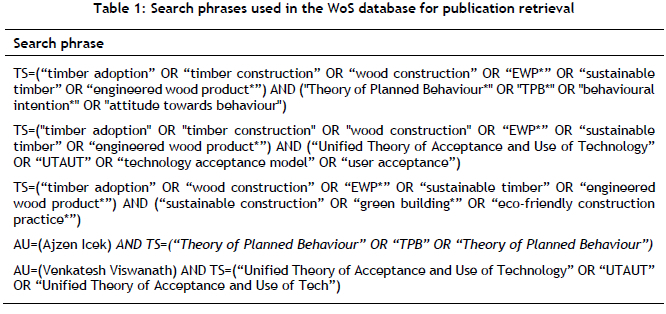
Search phrases were crafted to encompass key concepts that underpin the focus of this SLR, and were used in conjunction with a combination of "AND" and "OR" Boolean operators to search on WoS. The truncation symbol (*) was also used to account for variations in word endings. When searching the WoS database, the topic search function (TS) was used interchangeably with the topic function (TI) to locate relevant publications. Before conducting the actual review research, a pilot search was conducted to refine search keywords that ensured that the targeted study objectives were covered [34]. Some of the targeted search phrases used for publication retrieval following this pilot search are outlined in Table 1.
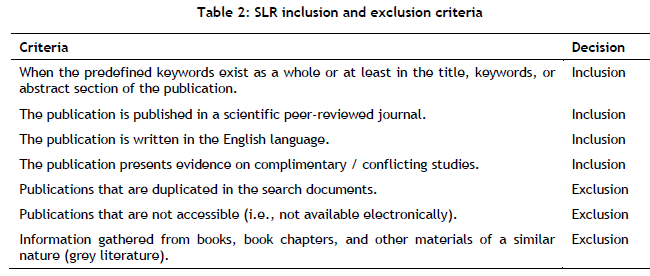
Following the search, identified research publications were refined and discarded where deemed necessary by considering the inclusion and exclusion criteria stipulated in Table 2. No limitation was imposed on a specific time or date of publication, given the limited number of publications that were noted from the initial pilot search. However, the review prioritised findings that were relevant to and current in modern-day society and operations.
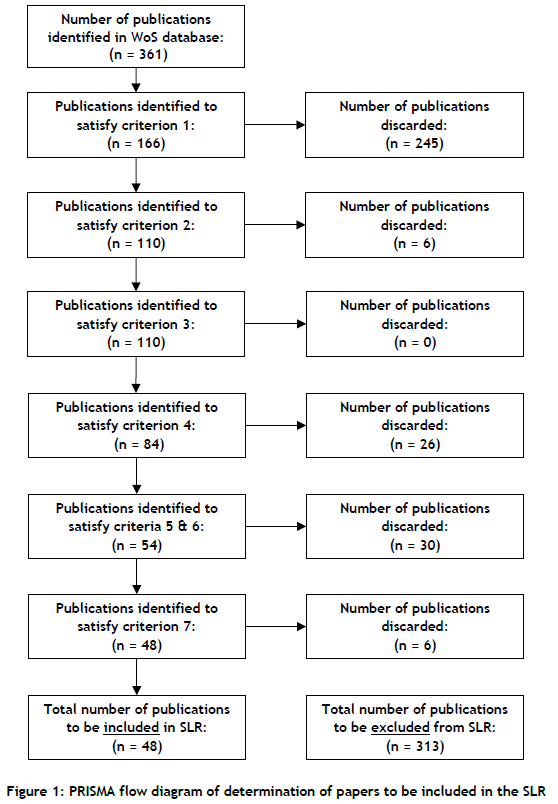
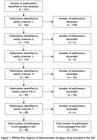
The screening involved a two-stage selection process. The first step was to review titles, abstracts, and keywords to identify potentially relevant studies. The second step was an in-depth full-text review of publications that passed the initial screening but that did not either clearly satisfy or fail the eligibility criteria. Once screened, the selected articles that adhered to the stipulated criteria, that demonstrated clear relevance to the research topic, and that aligned with the objectives of this study were retrieved. In addition to these selected articles, the references cited in them were reviewed to identify potential additional sources. It should be noted that the search terms were not intended to be exhaustive or conclusive, but rather were used to provide access to a large pool of relevant studies. The screening of data from the SLR was visualised using a PRISMA flow diagramas shown in Figure 1. A total of 361 papers were identified when searching the WoS database using the various combinations of search strings outlined in Table 1. However, following the initial high-level review of titles, abstracts, and keywords to identify studies that were relevant to the research question at hand, this was reduced to a total of 116 papers. Following the in-depth full-text review of publications that passed the initial screening against the chosen criteria, a total of 48 articles were eventually selected for this study.
Analysis of the selected articles used predefined 'codes' that focused on identifying thematic and conceptual similarities, and categorised the studies under key themes such as the TPB, UTAUT, or barriers to and enablers of timber adoption. For this analysis, the web-based research tool Elicit AI was used to extract and analyse relevant information and data from the articles. Matrices for authors and for concepts were created, facilitating efficient data collation and the identification of patterns, trends, and relationships in the extracted data.
3. THEORETICAL FOUNDATION
Innovation in the construction industry is the process of developing, distributing, and applying technologies and knowledge to improve productivity or to meet customer requirements, whether through new or improved products, processes, or services [40]. The underlying notion of innovation is about value creation and continuous improvement. However, the construction industry is known to be conservative, relying on established, conventional skills and processes [14]. Many studies have focused on sustainable construction, primarily considering three key facets: sustainability, sustainability performance, and sustainability-related technological difficulties. However, little emphasis has been placed on the social dimension of human behaviour, such as the behavioural factors that influence the adoption of timber and EWP in the construction industry [41]. This lack of attention to the social dimension is paradoxical, given that the decisions to implement sustainable construction techniques and practices are ultimately made by individuals and are influenced by factors that have been largely overlooked in the main body of the sustainable construction literature [42]. Several theoretical frameworks, such as the diffusion of innovations (DOI) [43], the motivational model (MM) [44], and the value-belief-norm (VBN) theory [45], explore the factors that influence human behaviour towards adoption in various contexts. This study, however, is focused on TPB and UTAUT, and contributes to the literature by developing a conceptual framework for understanding timber adoption in the construction industry by combining elements from TPB and UTAUT.
3.1. Theory of planned behaviour
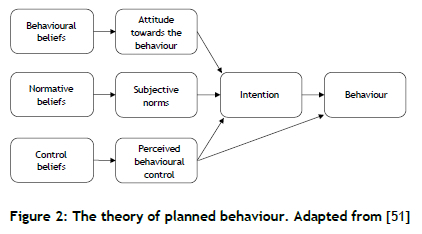
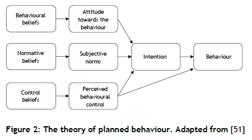
The origins of TPB stem from an earlier theorem by Ajzen and Fishbein [46], the theory of reasoned action (TRA). TRA proposed that human behaviour was primarily governed by two key constructs: attitude towards behaviour and subjective norms. TRA was developed to predict intentions to take reasoned action in ordinary situations, making it effective in explaining the psychological and cognitive processes used to comprehend contextual decision-making, while its core principle concerned the consumer's or individual's intention to engage in a particular behaviour [47]. However, TRA focused solely on behaviours that an individual could control voluntarily, but failed to address whether they had the necessary resources or opportunities to act on those behaviours [48]. This understanding - that acknowledging non-volitional control factors could improve the theory's predictive capability - led to Ajzen's extension of TRA into what is now commonly known as TPB [49]. Ajzen extended TRA by introducing a third construct - perceived behavioural control - to account for instances beyond an individual's voluntary control [50]. Factors that may have an impact on a person's perceived behavioural control include their confidence or ability to perform a behaviour, or their access to the resources needed to perform an action [51], [52]. According to [46], the three constructs of TPB are formed through learned beliefs, observation, and personal inferences that are based on an individual's background and experiences. Attitudes are a direct result of the expected consequences of engaging in a particular action; subjective norms are shaped by societal expectations; and perceived behavioural control arises from perceptions about an individual's ability to perform the behaviour [51], [52]. Figure 2 illustrates TPB as proposed by Ajzen.
Since TPB was proposed, it has been widely applied by researchers in studying human behaviours in various contexts [54]. The theory can be used in environmental and sustainability research because the core construct of TPB is the intention to perform an action. By fostering favourable attitudes toward environmental behaviours, individuals can be influenced to take action, which is a key premise of TPB. Based on this premise, we argue that TPB is an appropriate theory for this study [55].
3.2. Unified theory of acceptance and use of technology
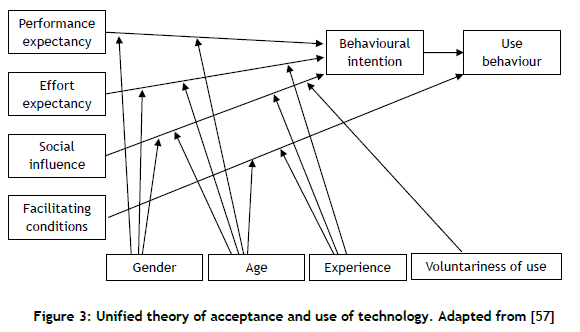
Human behaviour is a well-researched topic, and several theoretical frameworks have been proposed to identify and understand its underlying motivations. However, the plethora of frameworks can sometimes prove a disadvantage, as researchers may be unsure which constructs to select when investigating human behaviour [56]. It is this difficulty that UTAUT sought to tackle. In developing UTAUT, [57] combined and tested several elements of the TRA, the technology acceptance model (TAM), the motivational model (MM), the theory of planned behaviour (TPB), combined TAM and TPB (C-TAM-TPB), the model of PC utilization (MPCU), innovation diffusion theory (IDT), and social cognitive theory (SCT). Like TPB, UTAUT explores the core constructs that are direct determinants of behavioural intention; the theory suggests that there are four key constructs rather than the TPB's three [57]. These four primary constructs, which have a direct effect on behavioural intention and usage behaviour in UTAUT, are performance expectancy, effort expectancy, social influence, and facilitating conditions. These individual determinants are further moderated by gender, age, experience, and voluntariness of use [57]. UTAUT can serve as a construct that affects the consumer-perceived value of new technology adoption, and enables users to share and seek ideas, engage in diverse opinions, and make recommendations to others [58]. Despite the recognition that no single theory offers a final and definitive model for the adoption of technology [59], [60], UTAUT is widely accepted as the most comprehensive model for describing technology adoption [61], providing a comprehensive framework for understanding user acceptance and the adoption of innovations [62], [63]. Figure 3 illustrates the conceptual framework of UTAUT.
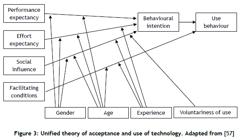
According to [41], examining the presence of each construct of a theoretical framework in a real-world environment enables the assessment of an individual's intention to use a specific technology, ultimately allowing for the identification of key influences on acceptance in any given context. Moreover, UTAUT has been used in various contexts, especially in green building studies [32], [60], [62], [64]. Thus, UTAUT is deemed an appropriate theory for this study.
4. CONCEPTUAL FRAMEWORK AND PROPOSITION DEVELOPMENT
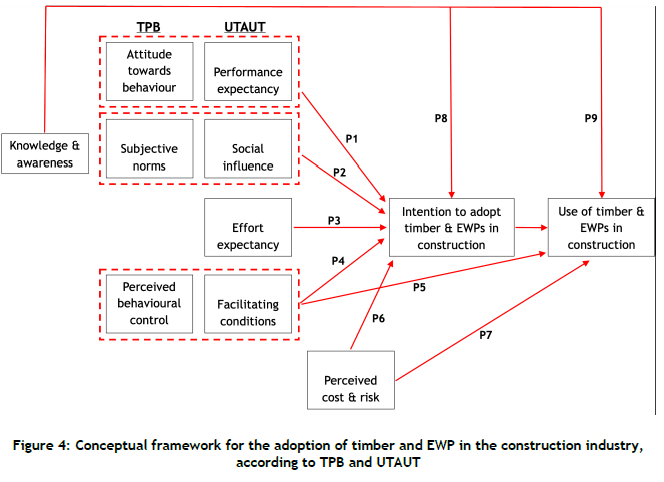
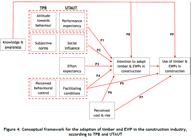
Since its publication, UTAUT has often been blended with constructs from other theories to offer a more robust explanation of human behaviour [65]. In a later revision of UTAUT, [66] acknowledged that several studies have added constructs to the core constructs to predict intentions towards technology adoption, and that researchers must continue to find ways to improve and refine existing predictive models. In developing a conceptual framework to predict the possible adoption of timber and EWP, this study integrated the key constructs of TPB with the established constructs of UTAUT in order to discover the theoretical relationships between them. This integration seeks to provide a foundation that is based on existing frameworks in order to identify perceptions that shape the adoption of timber and EWP in construction. Figure 4 presents the conceptual framework that was developed as part of this study.
4.1. Attitude towards behaviour and performance expectancy
According to [51], attitude is behaviour arising from an individual's favourable or unfavourable assessment of performing a specific behaviour, stemming from their beliefs, which account for the consequences of that behaviour. Similarly, [43] emphasised that the specific attitude towards an innovation has a significant impact on its adoption in an individual's decision-making process. On the other hand, [57] defined performance expectancy as "the degree to which an individual believes that using the system will help him or her to attain gains in job performance", and regarded it as the most significant predictor of the intention to adopt new technology, regardless of whether it is for voluntary or mandatory use. Conceptually, attitude towards behaviour and performance expectancy are similar: both assess expected outcomes, focusing on the perceived benefits or drawbacks of performing a specific behaviour, and ultimately influencing the likelihood of an individual adopting a behaviour that is based on their perceived expectation or overall attitude. This proposition is also supported in the timber adoption literature.
In one study, [67] found that Swedish architects have a positive attitude towards timber and EWP adoption, primarily because of its beneficial environmental performance. Similarly, [53] found that the viewpoint of Finnish civil servants about the implementation of wooden multistorey buildings included the perception that they have positive environmental qualities. In addition to environmental attitudes, several professionals believe that some of the other positive attributes of using timber and EWP in construction are energy efficiency, positive technical and performance properties, construction speed, and adaptability to industrial applications [68], [69], [70]. These professionals have also shown a willingness to use wood in the future, and most believe that its use in construction will increase [71], [72]. Moreover, [73] argued that end-users are often willing to use wood-based products, based on their expected performance. These results are evidence that stakeholders' positive attitudes towards wood-based construction and the adoption of timber and EWP could significantly influence the future behaviour of both professionals and end-users [74]. As a result, these two constructs have been grouped together in the proposed conceptual framework, as they perform a similar function in the adoption decision-making process. This leads to the first proposition.
Proposition 1 (P1): Positive attitudes towards timber and EWP, along with the belief that using them will improve job performance, will increase stakeholders' intention to adopt these materials in construction.
4.2.
Subjective norms and social influenceAccording to [51], individuals develop beliefs about what is expected of them through direct communication, by interpreting the preferences of significant others, or by observing and drawing conclusions from the actions of influential social figures. 'Subjective norms', therefore, broadly refers to the belief that an important person or group of people approve of and support a particular behaviour [51]. Subjective norms are determined by an individual's perception of social pressure from important referents, based on their perceived approval or disapproval of the behaviour and the individual's motivation to comply with their evaluations [67]. The intention to perform a behaviour strengthens as subjective norms become more favourable. According to [57], social influence is the extent to which a person feels that significant others expect them to adopt and use a new system. It is the process through which individuals who are important to a person persuade them to use, or discourage them from using, a specific application or technology [66]. In technology acceptance, social influence has a complex role, being shaped by conditional influences that affect individual behaviour through three mechanisms: compliance, internalisation, and identification [75]. Notably, while the second and third mechanisms alter an individual's belief structure or motivations for social status, the first mechanism, compliance, specifically results in behavioural change driven by social pressure, which is influenced further by the moderating effects of voluntary use.
Conceptually, subjective norms (TPB) and social influence (UTAUT) share similarities in that both assess expected outcomes and emphasise the perceived social pressure or support associated with performing a specific behaviour. In the context of timber and EWP, subjective norms have not been explicitly linked. However, previous uses of both constructs provide an argument for a possible relationship. Professionals in the construction industry have admitted to seeking the recommendations of colleagues about unfamiliar products, suggesting that the influence of peers is a predictive factor in the intention to adopt new behaviours in the construction industry [33], [67]. Similarly, [32] concluded that social influence was significant in shaping perceptions about the suitability of wood products for construction. Furthermore, opinion leaders - persons who have the ability to engage and influence people in a network [76] - are often regarded as early adopters, and could help to mitigate the perceived barriers or negative perceptions associated with timber and EWP adoption. However, the reluctance to embrace timber, and the perception that timber adoption is complex, may stem from low self-efficacy, which increases susceptibility to social pressures and hinders professionals from adopting innovative practices owing to concerns about their competence and about potential peer evaluations [77], [78], [79]. This leads to the second proposition.
Proposition 2 (P2): Positive perceptions of social influence, along with the belief that important referents support the use of timber and EWP, will increase stakeholders' intention to adopt timber and EWP materials in construction.
4.3.
Effort expectancy'Effort expectancy' is the perceived ease of use of a system, and is comparable with the concept of ease or complexity of use in TAM, which has a significant impact on the intention to use a technology, regardless of whether the use is voluntary or mandatory [57]. The construct is most influential during the early stages of the technology adoption process, and, as users gain experience in using the technology, the construct has less of an impact on their intention to use the technology [57]. This suggests that early perception of ease of use plays a critical role in initial adoption decision-making processes; however, as time passes and individuals become more familiar with the technology, the other three constructs of UTAUT are more prominent in shaping continued usage intentions. According to [32], three major factors have an impact on the adoption of timber in the construction industry. These are the perceived complexity of timber construction processes, a lack of skilled labour in timber construction, and the scarcity of suppliers and manufacturers. When combined, these factors contribute to the low adoption of wood products in construction [32]. Even with the existence of various material options, construction professionals are reluctant to try unfamiliar products and processes [80], preferring instead to use established solutions with proven track records. The tendency to default to established materials and methods contributes to the slow adoption of new materials [68], [69]. This leads to the third proposition.
Proposition 3 (P3): Positive perceptions of effort expectancy, characterised by the belief that timber and EWP are easy to use and are supported by adequate resources, will positively influence stakeholder intentions to adopt these materials in construction.
4.4. Perceived behavioural control and facilitating conditions
'Perceived behavioural control' is the third construct of TPB, and is linked to an individual's control beliefs and the perceived presence of factors that could influence their ability to perform the behaviour [51]. When the concerning behaviour is outside the individual's voluntary control, TPB emphasises the importance of perceived behavioural control in predicting intent and subsequent behaviours [81]. Recognised as a fundamental element in forecasting behavioural intentions and actions, perceived behavioural control has been widely applied in various contexts, including the adoption of green building practices and technologies [47], [82]. In UTAUT, [57] proposed a similarity between perceived behavioural control from TPB, facilitating conditions from C-TAM-TPB, and compatibility from IDT. As a result, the construct 'facilitating conditions' was defined as "the degree to which an individual believes that an organisational and technical infrastructure exists to support the use of the system". In the timber adoption context, perceived behavioural control has been described as the perception that potential adopters may have of their ability to build with timber [68]. [68] and [83] independently used stakeholders' perceived control over material selection as an indicator of perceived behavioural control. Factors such as stakeholders' knowledge and experience with timber construction and opportunities to practice their timber construction skills contributed to their perceived control. According to [84], stakeholder experience significantly affects choice, ultimately suggesting that, to increase the use of EWP, architects need more influence over the material selection process. Moreover, restrictive building regulations have been found to limit timber and EWP adoption among stakeholders [53], [70], [85]. A general lack of awareness of the advantages of using timber in construction is another barrier to timber and EWP adoption [86]. Similarly, a lack of knowledge and expertise about the use of wood in construction may dissuade construction professionals from adopting the product. In effect, if an individual feels that the facilitating conditions are favourable, or that they have a high level of perceived behavioural control, behavioural intention and usage behaviour are likely to increase [32]. This results in the fourth and fifth propositions.
Proposition 4 (P4): Higher levels of perceived behavioural control and positive facilitating conditions will positively influence stakeholders' intentions to adopt timber and EWP in construction.
Proposition 5 (P5): Favourable facilitating conditions, combined with high perceived behavioural control, will positively and directly affect the actual usage behaviour of timber and EWP in construction.
4.5. Perceived risk and cost
The construction industry is inherently risk-averse and resistant to innovation, traditionally favouring non-wood materials such as concrete and steel [85]. Despite the numerous advantages of timber, including its environmental benefits, aesthetic appeal, improved living comfort, and perception as a healthy material [15], [53], [87], perceived barriers to adoption persist. Concerns about the flammability of timber, its acoustic abilities, its durability and resistance to moisture and decay, its stability, and other doubts about its structural performance are just some of these perceived barriers to the use of timber in construction [68], [74], [88], [89]. During the material decision process, these perceived barriers manifest as perceived risks to the building project, having a further negative impact on the potential for adoption. Perceived risks of use may manifest in financial premiums on timber construction. The perceived cost of fire prevention facilities and maintenance costs of timber structures to ensure durability are some cost-related reasons that hinder the adoption of timber and EWP [53], [86]. Insurance premiums may also be higher for timber buildings than for other building types because of perceived fire risks [33]. Previous studies have observed that price could be a sticking point in the adoption of EWP if the costs are higher than the benefits [32], [74]. It is important, therefore, to recognise these factors in the conceptual framework for timber and EWP adoption in the construction industry in order better to capture and predict behavioural intentions and usage behaviour in the timber adoption decision-making process. This leads to the sixth and seventh propositions:
Proposition 6 (P6): Positive perceptions of perceived risk and cost will positively influence stakeholders' intention to adopt timber and EWP in construction.
Proposition 7 (P7): A low number of perceived risks and insignificant/minimal costs can directly increase stakeholders' intention to use timber and EWP, even when initial intentions may exist.
4.6.
Knowledge and awarenessAlthough knowledge and awareness could arguably be grouped under the constructs of perceived behavioural control and facilitating conditions, studies such as [90] have shown a strong correlation between awareness and knowledge of environmental issues and pro-environmental behaviour. This correlation underscores the critical role that knowledge and effective communication play in encouraging sustainable decisions such as timber and EWP adoption. Some studies have found knowledge of timber to correlate with positive attitudes towards its adoption [83], [91]. One study argued that effective communication about timber construction should integrate both its benefits for sustainability and its technical aspects, such as the benefits of EWP, emphasising that eco-friendliness and high performance are complementary, not contradictory [76]. Another study suggested that communication about the technical properties of timber should be improved, especially since it has huge potential for the proponents of a circular bioeconomy. Young people especially should be targeted for these kinds of promotion because of their interest in sustainability [74], [76]. This leads to the eighth and ninth propositions.
Proposition 8 (P8): Knowledge and awareness of the benefits and capabilities of timber and EWP positively influence stakeholders' intention to adopt them in construction.
Proposition 9 (P9): Knowledge and awareness of the benefits and capabilities of timber and EWP can directly drive stakeholders' usage behaviour, increasing their adoption and use in the construction industry.
4.7.
Intention to adopt timber and engineered wood productsThe changes needed to transform the construction sector are ultimately changes in human behaviour [9]. Psychology and behavioural science research have proven that behavioural intention directly affects usage behaviour, and that the latter can be predicted and explained by behavioural intention [92]. Thus, the dependent variable of this conceptual framework is the intention to adopt timber and EWP and the subsequent prediction of use behaviour.
5. CONCLUSION
This study provided a critical analysis, using TPB and UTAUT, of the barriers and enablers that have an impact on the adoption of timber and EWP. In doing so, the study identified relationships between elements of the frameworks, and developed a conceptual framework to explain the behavioural factors that influence timber adoption in the construction industry. The framework also identified two constructs to extend TPB and UTAUT in the context of the adoption of EWP. The framework is based on nine propositions: five from the combined TPB and UTAUT constructs, and four from the extensions identified in this study - knowledge and awareness, and perceived risk and cost. For engineering managers and industrial engineers who may look to put this framework into practice, we suggest the following: demonstrate the advantages of EWP through pilot projects to improve attitudes to timber; reduce perceived effort expectancy by providing technical trainings for staff; and engage early adopters in the timber construction communities to share their experiences with team members. Providing more information about the benefits of EWP could improve their intention to use it, and also change perceptions of the risks associated with timber construction.
For academics, we recommend testing the conceptual framework to determine its predictive ability and to validate the proposed relationships. This could be done by undertaking a longitudinal study of industries or specific organisations that adopt timber and EWP. Furthermore, investigation of the barriers and enablers of timber and EWP use in the construction industry would be advised, as this study is limited by the paucity of available research that investigates these factors using a theoretical lens. It is important to remain cognisant of the fact that other human behavioural prediction models and frameworks exist that have not been incorporated into this study. Last, the study's reliance on secondary data from the literature may have introduced biases. For instance, by limiting the included studies to English-language papers and peer-reviewed articles, insights from foreign language studies and other sources about timber adoption are not represented in this article. This limits the ability to generalise the concepts discussed in the study. However, beyond these limitations, the results of this research may provide valuable insights to academic researchers who are attempting to explore the adoption of timber through a human behavioural lens, as well as industry practitioners who are attempting to encourage the use of timber and EWP or who are trying to adopt more green and sustainable building practices.
REFERENCES
-
[1] S. Si, J. Hall, R. Suddaby, D. Ahlstrom, and J. Wei, "Technology, entrepreneurship, innovation and social change in digital economics," Technovation, vol. 119, 102484, Jan. 2023. doi: 10.1016/j.technovation.2022.102484
» https://doi.org/10.1016/j.technovation.2022.102484 -
[2] M. M. Mariani, I. Machado, V. Magrelli, and Y. K. Dwivedi, "Artificial intelligence in innovation research: A systematic review, conceptual framework, and future research directions," Technovation, vol. 122, 102623, Apr. 2023. doi: 10.1016/j.technovation.2022.102623
» https://doi.org/10.1016/j.technovation.2022.102623 -
[3] R. Aggarwal, "Developing a global mindset: Integrating demographics, sustainability, technology, and globalization," Journal of Teaching in International Business, vol. 22, no. 1, pp. 51-69, Jan. 2011. doi: 10.1080/08975930.2011.585920
» https://doi.org/10.1080/08975930.2011.585920 -
[4] O. A. Aluko, E. E. Osei Opoku, and M. Ibrahim, "Investigating the environmental effect of globalization: Insights from selected industrialized countries," Journal of Environmental Management, vol. 281, 111892, Mar. 2021. doi: 10.1016/j.jenvman.2020.111892
» https://doi.org/10.1016/j.jenvman.2020.111892 -
[5] C. E. W. Yameogo, J. A. Omojolaibi, and R. O. S. Dauda, "Economic globalisation, institutions and environmental quality in sub-Saharan Africa," Research in Globalization, vol. 3, 100035, Dec. 2021. doi: 10.1016/j.resglo.2020.100035
» https://doi.org/10.1016/j.resglo.2020.100035 -
[6] F. Hermundsdottir and A. Aspelund, "Sustainability innovations and firm competitiveness: A review," Journal of Cleaner Production, vol. 280, 124715, Jan. 2021. doi: 10.1016/j.jclepro.2020.124715
» https://doi.org/10.1016/j.jclepro.2020.124715 -
[7] M. Vacchi, C. Siligardi, F. Demaria, E. I. Cedillo-González, R. González-Sánchez, and D. Settembre-Blundo, "Technological sustainability or sustainable technology? A multidimensional vision of sustainability in manufacturing," Sustainability, vol. 13, no. 17, 9942, Sep. 2021. doi: 10.3390/su13179942
» https://doi.org/10.3390/su13179942 -
[8] M. Al-Emran and C. Griffy-Brown, "The role of technology adoption in sustainable development: Overview, opportunities, challenges, and future research agendas," Technology in Society, vol. 73, 102240, May 2023. doi: 10.1016/j.techsoc.2023.102240
» https://doi.org/10.1016/j.techsoc.2023.102240 -
[9] N. Murtagh, L. Scott, and J. Fan, "Sustainable and resilient construction: Current status and future challenges," Journal of Cleaner Production, vol. 268, 122264, Sep. 2020. doi: 10.1016/j.jclepro.2020.122264
» https://doi.org/10.1016/j.jclepro.2020.122264 -
[10] F. Pomponi, J. Hart, J. H. Arehart, and B. D'Amico, "Buildings as a global carbon sink? A reality check on feasibility limits," One Earth, vol. 3, no. 2, pp. 157-161, Aug. 2020. doi: 10.1016/j.oneear.2020.07.018
» https://doi.org/10.1016/j.oneear.2020.07.018 -
[11] A. Ruuska and T. Häkkinen, "Material efficiency of building construction," Buildings, vol. 4, no. 3, pp. 266-294, Jul. 2014. doi: 10.3390/buildings4030266
» https://doi.org/10.3390/buildings4030266 -
[12] M. Van Nguyen, "Drivers of innovation towards sustainable construction: A study in a developing country," Journal of Building Engineering, vol. 80, 107970, Dec. 2023. doi: 10.1016/j.jobe.2023.107970
» https://doi.org/10.1016/j.jobe.2023.107970 -
[13] S. A. Miller and F. C. Moore, "Climate and health damages from global concrete production," Nature Climate Change, vol. 10, no. 5, pp. 439-443, May 2020. doi: 10.1038/s41558-020-0733-0
» https://doi.org/10.1038/s41558-020-0733-0 -
[14] J. Svajlenka and T. Posiváková, "Innovation potential of wood constructions in the context of sustainability and efficiency of the construction industry," Journal of Cleaner Production, vol. 411, 137209, Jul. 2023. doi: 10.1016/j.jclepro.2023.137209
» https://doi.org/10.1016/j.jclepro.2023.137209 -
[15] S. Gold and F. Rubik, "Consumer attitudes towards timber as a construction material and towards timber frame houses: Selected findings of a representative survey among the German population," Journal of Cleaner Production, vol. 17, no. 2, pp. 303-309, Jan. 2009. doi: 10.1016/J.JCLEPRO.2008.07.001
» https://doi.org/10.1016/J.JCLEPRO.2008.07.001 -
[16] H. W. Kua, C. Pedapati, R. V. Lee, and S. Kawi, "Effect of indoor contamination on carbon dioxide adsorption of wood-based biochar: Lessons for direct air capture," Journal of Cleaner Production, vol. 210, pp. 860-871, Feb. 2019. doi: 10.1016/j.jclepro.2018.10.206
» https://doi.org/10.1016/j.jclepro.2018.10.206 - [17] H. R. Milner and A. C. Woodard, "Sustainability of engineered wood products," in Sustainability of construction materials, 2nd ed. J. M. Khatib, ed., Woodhead Publishing, 2016, ch. 8, pp. 159-180. doi: 10.1016/B978-0-08-100370-1.00008-1
-
[18] C. Kayo and R. Noda, "Climate change mitigation potential of wood use in civil engineering in Japan based on life-cycle assessment," Sustainability, vol. 10, no. 2, 561, Feb. 2018. doi: 10.3390/su10020561
» https://doi.org/10.3390/su10020561 -
[19] G. Marfella and K. Winson-Geideman, "Timber and multi-storey buildings: Industry perceptions of adoption in Australia," Buildings, vol. 11, no. 12, 653, Dec. 2021. doi: 10.3390/buildings11120653
» https://doi.org/10.3390/buildings11120653 - [20] J. Van Acker, "Opportunities and challenges for hardwood based engineered wood products," 9th Hardwood Proceedings - Part II, An underutilized resource: Hardwood oriented research, pp. 5-14, 2021.
- [21] Y. Ranjana and K. Jitendra, "Engineered wood products as a sustainable construction material: A review," in Engineered wood products for construction. M. Gong, ed., Rijeka, Croatia: IntechOpen, 2021, ch. 2. doi: 10.5772/intechopen.99597
-
[22] D. C. Evison, P. D. Kremer, and J. Guiver, "Mass timber construction in Australia and New Zealand: Status, and economic and environmental influences on adoption," Wood and Fiber Science, vol. 50, pp. 128-138, Aug. 2018. doi: 10.22382/wfs-2018-046
» https://doi.org/10.22382/wfs-2018-046 -
[23] F. Damanpour and D. Aravind, "Managerial innovation: Conceptions, processes and antecedents," Management and Organization Review, vol. 8, no. 2, pp. 423-454, Jul. 2012. doi: 10.1111/j.1740-8784.2011.00233.x
» https://doi.org/10.1111/j.1740-8784.2011.00233.x - [24] F. Pries and R. Vrijhoef, "Innovation and sectoral change in construction: The role of the industry paradigm and industry leaders," in Building for the Future: The 16th CIB World Building Congress 2004, Toronto, Canada, May 2004, pp. 1-10. Accessed: Mar. 06, 2025. [Online]. Available: https://resolver.tno.nl/uuid:5eab5840-1b3b-47e3-8999-93d565b2b41a
-
[25] M. Ikuabe, C. Aigbavboa, D. Aghimien, and P. Ramaru, "Bolstering measures for adopting lean construction in the South African construction industry," International Journal of Productivity and Quality Management, vol. 36, no. 4, pp. 589-603, Aug. 2022. doi: 10.1504/IJPQM.2022.124901
» https://doi.org/10.1504/IJPQM.2022.124901 -
[26] D. Aghimien et al., "Barriers to digital technology deployment in value management practice," Buildings, vol. 12, no. 6, 731, May 2022. doi: 10.3390/buildings12060731
» https://doi.org/10.3390/buildings12060731 -
[27] D. Aghimien, M. Ikuabe, L. M. Aghimien, C. Aigbavboa, N. Ngcobo, and J. Yankah, "PLS-SEM assessment of the impediments of robotics and automation deployment for effective construction health and safety," Journal of Facilities Management, vol. 22, no. 3, pp. 458-478, May 2024. doi: 10.1108/JFM-04-2022-0037
» https://doi.org/10.1108/JFM-04-2022-0037 - [28] T. O. Osunsanmi, A. E. Oke, and C. O. Aigbavboa, "Barriers for the adoption of incorporating RFID with mobile technology for improved safety of construction professionals," in The construction industry in the Fourth Industrial Revolution. C. Aigbavboa and W. Thwala, eds., Cham: Springer International Publishing, 2020, pp. 297-304. doi: 10.1007/978-3-030-26528-1_29
- [29] L. H. Forbes, "Industrial engineering applications in the construction industry," in Handbook of industrial and systems engineering, 2nd ed. Boca Raton, FL: CRC Press, 2013, pp. 99-143. doi: 10.1201/b15964
-
[30] P. A. Deverka et al., "Stakeholder participation in comparative effectiveness research: Defining a framework for effective engagement," Journal of Comparitive Effectiveness Research, vol. 1, no. 2, pp. 181-194, Mar. 2012. doi: 10.2217/cer.12.7
» https://doi.org/10.2217/cer.12.7 - [31] S. Onggo, "Methods for conceptual model representation," in Conceptual modeling for discrete-event simulation. S. Robinson, R. Brooks, K. Kotiadis, and D.-J. van der Zee, eds., Boca Raton, FL: CRC Press, 2010, pp. 337-354. doi: 10.1201/9781439810385-c13
-
[32] F. Z. Barrane, G. E. Karuranga, and D. Poulin, "Technology adoption and diffusion: A new application of the UTAUT model," International Journal of Innovation and Technology Management, vol. 15, no. 6, 1950004, 2018. doi: 10.1142/S0219877019500044
» https://doi.org/10.1142/S0219877019500044 -
[33] F. S. Hassan and S. Grobbelaar, "Adoption of engineered wood products in the building construction industry: A conceptual model," in Association of Schools of Construction of Southern Africa, 2023. Accessed: Mar. 20, 2024. [Online]. Available: https://asocsa.org/wp-content/uploads/2024/01/Conference-Proceedings-17thBEC-NOV2023.pdf#page=236
» https://asocsa.org/wp-content/uploads/2024/01/Conference-Proceedings-17thBEC-NOV2023.pdf#page=236 -
[34] W. Mengist, T. Soromessa, and G. Legese, "Method for conducting systematic literature review and meta-analysis for environmental science research," MethodsX, vol. 7, 100777, 2020. doi: 10.1016/j. mex.2019.100777
» https://doi.org/10.1016/j. mex.2019.100777 -
[35] A. Pollock and E. Berge, "How to do a systematic review," International Journal of Stroke, vol. 13, no. 2, pp. 138-156, Feb. 2018. doi: 10.1177/1747493017743796
» https://doi.org/10.1177/1747493017743796 -
[36] A. Nightingale, "A guide to systematic literature reviews," Surgery (Oxford), vol. 27, no. 9, pp. 381384, Sep. 2009. doi: 10.1016/j.mpsur.2009.07.005
» https://doi.org/10.1016/j.mpsur.2009.07.005 -
[37] M. J. Page et al., "The PRISMA 2020 statement: An updated guideline for reporting systematic reviews," Systematic Reviews, vol. 10, no. 1, 89, Dec. 2021. doi: 10.1186/s13643-021-01626-4
» https://doi.org/10.1186/s13643-021-01626-4 -
[38] H. Arksey and L. O'Malley, "Scoping studies: Towards a methodological framework," International Journal of Social Research Methodology, vol. 8, pp. 19-32, 2005. doi: 10.1080/1364557032000119616
» https://doi.org/10.1080/1364557032000119616 -
[39] C. Birkle, D. A. Pendlebury, J. Schnell, and J. Adams, "Web of Science as a data source for research on scientific and scholarly activity," Quantitative Science Studies, vol. 1, no. 1, pp. 363376, Feb. 2020. doi: 10.1162/qss_a_00018
» https://doi.org/10.1162/qss_a_00018 - [40] E. L. C. van Egmond - de Wilde de Ligny, and F. J. M. Scheublin, "Succesful industrialization, innovation and prefabrication in construction," in 11th CIB International Symposium: Combining Forces - Advancing Facilities Mangement and Construction through Innovation, RIL, VTT, Helsinki, Finland, 2005, pp. 415-426.
- [41] N. Mahat, J. H. M. Tah, and C. Vidalakis, "Adoption of sustainable construction in the Malaysian residential construction sector: A conceptual framework," in Proceedings of the International Conference on Civil, Architecture and Sustainable Development (CASD-2016), London, Dec. 2016.
-
[42] N. Z. Abidin, N. Yusof, and N. D. Afandi, "Exploring developers' expectation on green construction," Advances in Environmental Biology, vol. 9, no. 3, pp. 75-78, 2015. [Online]. Available: https://link.gale.com/apps/doc/A417570345/AONE?u=nysl_ca_arg&sid=googleScholar&xid=82a6699d
» https://link.gale.com/apps/doc/A417570345/AONE?u=nysl_ca_arg&sid=googleScholar&xid=82a6699d - [43] E. M. Rogers, Diffusion of innovations, 4th ed. Simon and Schuster, 2010.
- [44] R. J. Vallerand, "Toward a hierarchical model of intrinsic and extrinsic motivation," in Advances in experimental social psychology, M. P. Zanna, ed., Academic Press, 1997, vol. 29, pp. 271-360. doi: 10.1016/S0065-2601(08)60019-2
-
[45] P. C. Stern, T. Dietz, T. Abel, G. A. Guagnano, and L. Kalof, "A value-belief-norm theory of support for social movements: The case of environmentalism," Human Ecology Review, vol. 6, no. 2, pp. 81 - 97, 1999. [Online]. Available: http://www.jstor.org/stable/24707060
» http://www.jstor.org/stable/24707060 - [46] I. Ajzen and M. Fishbein, Understanding attitudes and predicting social behavior. Englewood Hills, NJ: Prentice-Hall, 1980.
-
[47] J. Paul, A. Modi, and J. Patel, "Predicting green product consumption using theory of planned behavior and reasoned action," Journal of Retailing and Consumer Services, vol. 29, pp. 123-134, Mar. 2016. doi: 10.1016/j.jretconser.2015.11.006
» https://doi.org/10.1016/j.jretconser.2015.11.006 -
[48] T. J. Madden, P. S. Ellen, and I. Ajzen, "A comparison of the theory of planned behavior and the theory of reasoned action," Personality and Social Psychology Bulletin, vol. 18, no. 1, pp. 3-9, Feb. 1992. doi: 10.1177/0146167292181001
» https://doi.org/10.1177/0146167292181001 -
[49] C. J. Armitage and M. Conner, "Efficacy of the theory of planned behaviour: A meta-analytic review," British Journal of Social Psychology, vol. 40, no. 4, pp. 471-499, Dec. 2001. doi: 10.1348/014466601164939
» https://doi.org/10.1348/014466601164939 -
[50] L. F. Anzagira, D. Duah, and E. Badu, "A conceptual framework for the uptake of the green building concept in Ghana," Scientific African, vol. 6, Nov. 2019. doi: 10.1016/j.sciaf.2019.e00191
» https://doi.org/10.1016/j.sciaf.2019.e00191 -
[51] I. Ajzen, "The theory of planned behavior," Organizational Behavior and Human Decision Processes, vol. 50, no. 2, pp. 179-211, Dec. 1991. doi: 10.1016/0749-5978(91)90020-T
» https://doi.org/10.1016/0749-5978(91)90020-T - [52] I. Ajzen, "From intentions to actions: A theory of planned behavior," in Action control: From cognition to behavior, J. Kuhl, and J. Beckman, eds. Heidelberg: Springer, 1985, Ch. 2, pp. 11-39. doi: 10.1007/978-3-642-69746-3_2
-
[53] F. Franzini, S. Berghãll, A. Toppinen, and R. Toivonen, "Comparing wood versus concrete: An explorative study of municipal civil servants' beliefs about multistory building materials in Finland," Forest Products Journal, vol. 71, no. 1, pp. 65-76, Mar. 2021. doi: 10.13073/FPJ-D-20-00038
» https://doi.org/10.13073/FPJ-D-20-00038 -
[54] I. Botetzagias, A.-F. Dima, and C. Malesios, "Extending the theory of planned behavior in the context of recycling: The role of moral norms and of demographic predictors," Resources, Conservation and Recycling, vol. 95, pp. 58-67, Feb. 2015. doi: 10.1016/j.resconrec.2014.12.004
» https://doi.org/10.1016/j.resconrec.2014.12.004 -
[55] A. Maqsoom, M. Zulqarnain, M. Irfan, F. Ullah, F. K. Alqahtani, and K. I. A. Khan, "Drivers of, and barriers to, the adoption of mixed reality in the construction industry of developing countries," Buildings, vol. 13, no. 4, 872, Mar. 2023. doi: 10.3390/buildings13040872
» https://doi.org/10.3390/buildings13040872 -
[56] L. Xue, A. M. Rashid, and S. Ouyang, "The unified theory of acceptance and use of technology (UTAUT) in higher education: A systematic review," Sage Open, vol. 14, no. 1, Jan. 2024. doi: 10.1177/21582440241229570
» https://doi.org/10.1177/21582440241229570 -
[57] V. Venkatesh, M. G. Morris, G. B. Davis, and F. D. Davis, "User acceptance of information technology: Toward a unified view," MIS Quarterly, vol. 27, no. 3, pp. 425-478, Sept. 2003. doi: 10.2307/30036540
» https://doi.org/10.2307/30036540 -
[58] G. Assaker, R. Hallak, and R. El-Haddad, "Consumer usage of online travel reviews: Expanding the unified theory of acceptance and use of technology 2 model," Journal of Vacation Marketing, vol. 26, no. 2, pp. 149-165, Apr. 2020. doi: 10.1177/1356766719867386
» https://doi.org/10.1177/1356766719867386 -
[59] L. Halawi and R. McCarthy, "Which theory applies: An analysis of information systems research," Issues in Information Systems, vol. 7, no. 2, pp. 252-256, 2006. Accessed: Nov. 17, 2024. [Online]. Available: https://commons.erau.edu/cgi7viewcontent.cgi?article=1360&context=publication
» https://commons.erau.edu/cgi7viewcontent.cgi?article=1360&context=publication -
[60] A. Malkani and M. Starik, "The green building technology model: An approach to understanding the adoption of green office buildings," Journal of Sustainable Real Estate, vol. 5, no. 1, pp. 131-148, Jan. 2013. doi: 10.1080/10835547.2014.12091855
» https://doi.org/10.1080/10835547.2014.12091855 -
[61] K. Al-Saedi, M. Al-Emran, T. Ramayah, and E. Abusham, "Developing a general extended UTAUT model for M-payment adoption," Technology in Society, vol. 62, 101293, Aug. 2020. doi: 10.1016/j.techsoc.2020.101293
» https://doi.org/10.1016/j.techsoc.2020.101293 -
[62] E. K. Simpeh and J. J. Smallwood, "An integrated model for predicting the probability of adoption of green building in South Africa," Journal of Engineering, Design and Technology, vol. 18, no. 6, pp. 1927-1950, May 2020. doi: 10.1108/JEDT-09-2019-0244
» https://doi.org/10.1108/JEDT-09-2019-0244 -
[63] C. Nnaji, I. Okpala, I. Awolusi, and J. Gambatese, "A systematic review of technology acceptance models and theories in construction research," Journal of Information Technology in Construction, vol. 28, pp. 39-69, Feb. 2023. doi: 10.36680/j.itcon.2023.003
» https://doi.org/10.36680/j.itcon.2023.003 - [64] K. Batool, G. Ali, K. Ullah Khan, M. Asif Kamran, and N. Yan, "Integrating role of green buildings in achieving carbon neutrality in an era of climate emergency," Sustainable Development, Aug. 2024. doi: 10.1002/sd.2883
-
[65] M. D. Williams, N. P. Rana, and Y. K. Dwivedi, "The unified theory of acceptance and use of technology (UTAUT): A literature review," Journal of Enterprise Information Management, vol. 28, no. 3, pp. 443-488, Apr. 2015. doi: 10.1108/JEIM-09-2014-0088
» https://doi.org/10.1108/JEIM-09-2014-0088 -
[66] V. Venkatesh, J. Y. L. Thong, and X. Xu, "Consumer acceptance and use of information technology: Extending the unified theory of acceptance and use of technology," MIS Quarterly, vol. 36, no. 1, pp. 157-178, Mar. 2012. doi: 10.2307/41410412
» https://doi.org/10.2307/41410412 -
[67] K. Bysheim and A. Q. Nyrud, "Architects' perceptions of structural timber in urban construction," in Conference COST E, Delft, The Netherlands, 29-30 October, 2008, pp. 75-86. Accessed: Nov. 17, 2024. [Online]. Available: https://d1wqtxts1xzle7.cloudfront.net/70668496/COSTE53-Conference_Delft_Bysheim_Nyrud-libre.pdf?1632989776=&response-content-disposition=inline%3B+filename%3DArchitects_perceptions_of_structural_tim.pdf&Expires=1731848646&Signature=DKQaEI2faCd2Mwo1paHAowwRCvZSFk40TcZTrL3MxtwubRqho7KNPUaGGoCLHg7WcOpI5L5zYID-pX7bV67m946WrMXczP3wJbALeM7cED6rQ5C4XMtYF25fuNIiKFrbUo5s6NorSGpfoFqJnD3Dj0TlWYkD4-Fn93jbbANdN-4KxnmKG3-1WdBx-g-bFdG-lybJ3Tc5VI-8Oby6ANsa4P-Wi5lke4j-E1jXbaUGTkBVU8X9UZG-TCPDsPNMm1YpV7YkZ71HfiP5BgVmVnm7lhhm-Y-0-zl3wLLwat3WrTPDTeWxOfgyHNtIPtwinqLhJ9zDR1LttfOxMMLBU4qbg_&Key-Pair-Id=APKAJLOHF5GGSLRBV4ZA
» https://d1wqtxts1xzle7.cloudfront.net/70668496/COSTE53-Conference_Delft_Bysheim_Nyrud-libre.pdf?1632989776=&response-content-disposition=inline%3B+filename%3DArchitects_perceptions_of_structural_tim.pdf&Expires=1731848646&Signature=DKQaEI2faCd2Mwo1paHAowwRCvZSFk40TcZTrL3MxtwubRqho7KNPUaGGoCLHg7WcOpI5L5zYID-pX7bV67m946WrMXczP3wJbALeM7cED6rQ5C4XMtYF25fuNIiKFrbUo5s6NorSGpfoFqJnD3Dj0TlWYkD4-Fn93jbbANdN-4KxnmKG3-1WdBx-g-bFdG-lybJ3Tc5VI-8Oby6ANsa4P-Wi5lke4j-E1jXbaUGTkBVU8X9UZG-TCPDsPNMm1YpV7YkZ71HfiP5BgVmVnm7lhhm-Y-0-zl3wLLwat3WrTPDTeWxOfgyHNtIPtwinqLhJ9zDR1LttfOxMMLBU4qbg_&Key-Pair-Id=APKAJLOHF5GGSLRBV4ZA - [68] A. Roos, L. Woxblom, and D. McCluskey, "The influence of architects and structural engineers on timber in construction: Perceptions and roles," Silva Fennica, vol. 44, no. 5, pp. 871-884, Jan. 2010.
-
[69] K. Hemström, K. Mahapatra, and L. Gustavsson, "Perceptions, attitudes and interest of Swedish architects towards the use of wood frames in multi-storey buildings," Resources, Conservation and Recycling, vol. 55, no. 11, pp. 1013-1021, Sep. 2011. doi: 10.1016/J.RESCONREC.2011.05.012
» https://doi.org/10.1016/J.RESCONREC.2011.05.012 -
[70] A. Gosselin, P. Blanchet, N. Lehoux, and Y. Cimon, "Main motivations and barriers for using wood in multi-story and non-residential construction projects," BioResources, vol. 12, no. 1, pp. 546-570, 2017. doi: 10.15376/biores.12.1.546-570
» https://doi.org/10.15376/biores.12.1.546-570 -
[71] M. Kitek Kuzman, S. Klarić, A. Pirc Barčić, R. P. Vlosky, M. M. Janakieska, and P. Grošelj, "Architect perceptions of engineered wood products: An exploratory study of selected countries in central and southeast Europe," Construction and Building Materials, vol. 179, pp. 360-370, Aug. 2018. doi: 10.1016/J.CONBUILDMAT.2018.05.164
» https://doi.org/10.1016/J.CONBUILDMAT.2018.05.164 - [72] A. Toppinen, M. Sauru, S. Pätäri, K. Lähtinen, and A. Tuppura, "Internal and external factors of competitiveness shaping the future of wooden multistory construction in Finland and Sweden," Construction Management and Economics, vol. 37, no. 4, pp. 201-216, 2019.
-
[73] Z. Cai and F. X. Aguilar, "Consumer stated purchasing preferences and corporate social responsibility in the wood products industry: A conjoint analysis in the U.S. and China," Ecological Economics, vol. 95, pp. 118-127, Nov. 2013. doi: 10.1016/j.ecolecon.2013.08.017
» https://doi.org/10.1016/j.ecolecon.2013.08.017 -
[74] V. Wallius, J. Kunttu, P. Leskinen, J. Van Brusselen, and A. Näyhä, "Stakeholder perceptions of wood-based products in the built environment: A literature review," European Journal of Wood and Wood Products, vol. 81, no. 2, pp. 287-299, 2023. doi: 10.1007/s00107-022-01905-4
» https://doi.org/10.1007/s00107-022-01905-4 - [75] M. Ahmad, "Unified theory of acceptance and use of technology (UTAUT): A decade of validation and development," in Proceedings of Fourth International Conference on ICT in our Lives, Alexandria, Egypt, Dec. 2014.
-
[76] M. Petruch and D. Walcher, "Timber for future? Attitudes towards timber construction by young millennials in Austria: Marketing implications from a representative study," Journal of Cleaner Production, vol. 294, 126324, Apr. 2021. doi: 10.1016/j.jclepro.2021.126324
» https://doi.org/10.1016/j.jclepro.2021.126324 -
[77] G. R. Jones, "Socialization tactics, self-efficacy, and newcomers' adjustments to organizations," Academy of Management Journal, vol. 29, no. 2, pp. 262-279, Jun. 1986. doi: 10.5465/256188
» https://doi.org/10.5465/256188 -
[78] M. Hill, L. Mann, and A. J. Wearing, "The effects of attitude, subjective norm and self-efficacy on intention to benchmark: A comparison between managers with experience and no experience in benchmarking," Journal of Organizational Behavior, vol. 17, no. 4, pp. 313-327, Jul. 1996. doi: https://doi.org/10.1002/(SICI)1099-1379(199607)17:4<313::AID-JOB753>3.0.CO;2-XF.
» https://doi.org/10.1002/(SICI)1099-1379(199607)17:4<313::AID-JOB753>3.0.CO;2-XF -
[79] La Barbera and I. Ajzen, "Control interactions in the theory of planned behavior: Rethinking the role of subjective norm," Europe's Journal of Psychology, vol. 16, no. 3, pp. 401-417, Aug. 2020. doi: 10.5964/ejop.v16i3.2056
» https://doi.org/10.5964/ejop.v16i3.2056 -
[80] K. Jones, J. Stegemann, J. Sykes, and P. Winslow, "Adoption of unconventional approaches in construction: The case of cross-laminated timber," Construction and Building Materials, vol. 125, pp. 690-702, 2016. doi: 10.1016/j.conbuildmat.2016.08.088
» https://doi.org/10.1016/j.conbuildmat.2016.08.088 -
[81] I. M. Shaharul, S. A. Bakar, N. M. Saad, U. M. Hossain Uzir, and S. S. Alam, "A conceptual model for the adoption of green building technology in the construction industry," Journal of Sustainability Science Management, vol. 19, no. 2, pp. 228-241, Feb. 2024. doi: 10.46754/jssm.2024.02.012
» https://doi.org/10.46754/jssm.2024.02.012 -
[82] R. M. Saleh and A. Al-Swidi, "The adoption of green building practices in construction projects in Qatar: A preliminary study," Management of Environmental Quality: An International Journal, vol. 30, no. 6, pp. 1238-1255, Sep. 2019. doi: 10.1108/MEQ-12-2018-0208
» https://doi.org/10.1108/MEQ-12-2018-0208 - [83] K. Bysheim and A. Q. Nyrud, "Using a predictive model to analyze architects' intentions of using wood in urban construction," Forest Products Journal, vol. 59, no 7/8, 2009.
-
[84] E. Markström, M. K. Kuzman, A. Bystedt, D. Sandberg, and M. Fredriksson, "Swedish architects view of engineered wood products in buildings," Journal of Cleaner Production, vol. 181, pp. 33-41, 2018. doi: 10.1016/j.jclepro.2018.01.216
» https://doi.org/10.1016/j.jclepro.2018.01.216 -
[85] M. F. Laguarda Mallo and O. Espinoza, "Awareness, perceptions and willingness to adopt cross-laminated timber by the architecture community in the United States," Journal of Cleaner Production, vol. 94, pp. 198-210, 2015. doi: 10.1016/j.jclepro.2015.01.090
» https://doi.org/10.1016/j.jclepro.2015.01.090 -
[86] S. Ahmed and I. Arocho, "Feasibility assessment of mass timber as a mainstream building material in the US construction industry: Level of involvement, existing challenges, and recommendations," Practice Periodical on Structural Design and Construction, vol. 26, no. 2, May 2021. doi: 10.1061/(ASCE)SC.1943-5576.0000574
» https://doi.org/10.1061/(ASCE)SC.1943-5576.0000574 -
[87] K. Strobel, A. Q. Nyrud, and K. Bysheim, "Interior wood use: Linking user perceptions to physical properties," Scandinavian Journal of Forest Research, vol. 32, no. 8, pp. 798-806, Nov. 2017. doi: 10.1080/02827581.2017.1287299
» https://doi.org/10.1080/02827581.2017.1287299 - [88] J. O'Connor, R. Kozak, C. Gaston, and D. Fell, "Wood use in nonresidential buildings: Opportunities and barriers," Forest Production Journal, vol. 54, no. 3, 2004.
- [89] M. Riala and L. Ilola, "Multi-storey timber construction and bioeconomy: Barriers and opportunities," Scandinavian Journal of Forest Research, vol. 29, no. 4, pp. 367-377, 2014.
-
[90] D. Li, L. Zhao, S. Ma, S. Shao, and L. Zhang, "What influences an individual's pro-environmental behavior? A literature review," Resources, Conservation and Recycling, vol. 146, pp. 28-34, Jul. 2019. doi: 10.1016/j.resconrec.2019.03.024
» https://doi.org/10.1016/j.resconrec.2019.03.024 -
[91] P. Larasatie, J. E. Guerrero, K. Conroy, T. E. Hall, E. Hansen, and M. D. Needham, "What does the public believe about tall wood buildings? An exploratory study in the US Pacific Northwest," Journal of Forestry, vol. 116, no. 5, pp. 429-436, Sep. 2018. doi: 10.1093/jofore/fvy025
» https://doi.org/10.1093/jofore/fvy025 -
[92] W. Zhang, J. Li, and Z. Liang, "Barriers to building information modeling from an individual perspective in the Chinese construction industry: An extended unified theory of acceptance and use of technology," Buildings, vol. 13, no. 7, 1881, 2023. doi: 10.3390/buildings13071881
» https://doi.org/10.3390/buildings13071881
Accepted for publication 26 May 2025
Available online 29 Aug 2025
ORCID® identifiers
B.Verhage: https://orcid.org/0009-0003-0841-9260
F.S. Hassan: https://orcid.org/0009-0005-2171-1332
S. Grobbelaar: https://orcid.org/0000-0001-8148-2440