Impact of quality 4.0 implementation in industries: a systematic literature review
Abstract
The Fourth Industrial Revolution requires that the personalisation of processes for mass production evolve towards flexible, interconnected cloud production with greater automation in machines and operations. Despite its being one of the popular strategies for continuous improvement, many plants are struggling to turn Industry 4.0 into a success. This study focuses on the impact of Quality 4.0 implementation in industries. This paper reviews the published literature from 2014 to 2024. It involved a review of papers related to the impact of Quality 4.0 implementation in industries using a search of databases such as Google Scholar, Scopus Library, and Springer Link. The literature review contains the results from a variety of different perspectives, including the distributions by country, year of publication, and number of publishers. The results reveal an increasing interest in Quality 4.0 implementation in industries with a positive impact on process improvement; however, suggestions are made for the continuous refinement of the newly implemented concept.
Abstract
Die Vierde Industriële Revolusie vereis dat die verpersoonliking van prosesse vir massaproduksie ontwikkel na buigsame, onderling gekoppelde wolkproduksie met groter outomatisering in masjiene en bedrywighede. Ten spyte daarvan dat dit een van die gewilde strategieë vir voortdurende verbetering is, sukkel baie aanlegte om Industry 4.0 in 'n sukses te omskep. Hierdie studie fokus op die impak van Kwaliteit 4.0-implementering in nywerhede. Hierdie artikel hersien die gepubliseerde literatuur van 2014 tot 2024. Dit het 'n hersiening van artikels behels wat verband hou met die impak van Quality 4.0-implementering in nywerhede deur 'n soektog na databasisse soos Google Scholar, Scopus Library en Springer Link te gebruik. Die literatuuroorsig bevat die resultate vanuit 'n verskeidenheid verskillende perspektiewe, insluitend die verspreidings per land, jaar van publikasie en aantal uitgewers. Die resultate toon 'n toenemende belangstelling in Kwaliteit 4.0-implementering in nywerhede met 'n positiewe impak op prosesverbetering; voorstelle word egter gemaak vir die voortdurende verfyning van die nuut geïmplementeerde konsep.
1. INTRODUCTION
This study reports on the findings of a systematic literature review of publications published between 2014 and 2024 that aimed to investigate the literature related to the benefits and challenges in implementing Quality 4.0 in industries, and the research gaps that emerge.
The term '14.0', often known as 'digital transformation' or 'The Fourth Industrial Revolution', refers to the idea of using technology, data sharing, and cyber systems to their fullest potential [1]. The 14.0 concept aims to integrate complex machinery, various devices, and sensors, as well as advanced software, into a manufacturing process through networks for continuous improvement. These technology categories are used for the prediction, control, maintenance, and integration of manufacturing processes. Thus the term 'Quality 4.0' refers to the integration of Fourth Industrial Revolution technologies into total quality management [2].
The literature reveals that Industry 4.0 (14.0) technologies can be integrated into quality management and continuous improvement strategies [3] [4]. The application of 14.0 has become prevalent in all industries, including the quality management space. Interest has arisen in the application of 4IR technologies to quality management strategies and the investigation of the effectiveness of the technology integration. [5] [2] [6] agree that quality management has evolved over the past decades from the inspection of quality to business excellence.
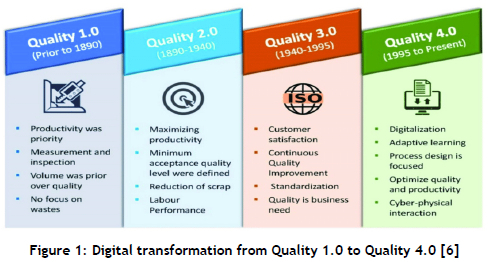
Figure 1 illustrates the transformation of quality management. According to [7], In the Quality 1.0 era of industrialisation, the emphasis was on productivity with increased quantities, meaning that quality was focused mostly on measurements and inspections. Quality 2.0 saw a shift in emphasis towards minimising scrap and waste while maintaining the highest levels of labour productivity, while customer satisfaction and standardisation were completely embraced in Quality 3.0. Concepts of ongoing quality improvement were established, and it became clear that every organisation needed quality to satisfy customers and grow. This evolution led into the Quality 4.0 era, with the focus for creating autonomous systems in digitisation and the use of smart strategies to achieve the best possible trade-off between quality and productivity [8].
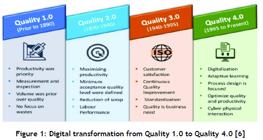
[5] has reiterated that, as in older quality management approaches, a commitment from management is imperative for successful Quality 4.0 implementation. A commitment to technology and innovation is required from management for organisations to achieve smart quality systems. A big driver for Quality 4.0 is smart factories that pushes quality systems to be smart [9].
The development of a Quality 4.0 system can be complex, as it requires the integration of fragmented data sources, the application of advanced machine learning techniques, and the implementation of configurable digital twins [10]. However, in an empirical study, [10] developed and implemented a framework that delivered a positive performance; while [5] concurred that Quality 4.0 is still in its infancy stage, as a standardised Quality 4.0 framework is yet to be formalised.
[11] confirmed the scarcity of research on the impact of Quality 4.0 on organisational performance. The maturity index of a Quality 4.0 model can be measured by taking into account seven characteristics that are required for ongoing quality improvement: a management commitment to technology; innovation-driven operations; a customer focus that enhances the voice of the customer; employee involvement and empowerment; the integration and management of processes and systems; a root cause analysis of operational disturbances and sustainable solutions; and knowledge for decision-making and future prediction and for benchmarking the operating environment [5].
The structure of the paper is as follows: section 2 covers the objectives, section 3 is the literature review, and the methodology is presented in section 4. The results of the review study are discussed in section 5, section 6 covers the conclusions of the study, and future research is discussed in section 7.
2. OBJECTIVES
The objective of the study was to review the literature related to the impact of Quality 4.0 implementation on industries, using different databases, with the goals of focusing on the contribution of implementing Quality 4.0 in industries and on shortfalls in the literature, in order to encourage more industries to implement Quality 4.0 in the 14.0 era. The research question was: What impact does Quality 4.0 have on organisational performance, productivity, and efficiency in different sectors?
3.1. Quality 4.0
[12] said that the quality revolution predicted the ideas that make up Quality 4.0 (Q4.0) more than 20 years ago, and cited the increasing accessibility of telecommunications technology, the internet, personal computing, networks, and thought machines that could automate quality functions and analysis. In a context that is always evolving, in which quality specialists must adapt to the environment of high technology and innovation, quality has gained a larger role than originally thought 20 years ago. This suggests that competent professionals should concentrate on anticipating change and incorporating new concepts into company plans. Q4.0 is a crucial component of 14.0, and is defined as the digitisation of TQM and its effects on high-quality products, services, and personnel [13]. Another way to describe it is that it is the application of ten Fourth Industrial Revolution technologies to quality, including digitalisation and artificial intelligence [14]. According to [13], TQM has become a crucial component of organisational innovation as a result of transitions from a customer-centric approach to co-creating with consumers and other stakeholders. Disruptive and radical innovations are what pave the way for significant changes to the concept of quality.
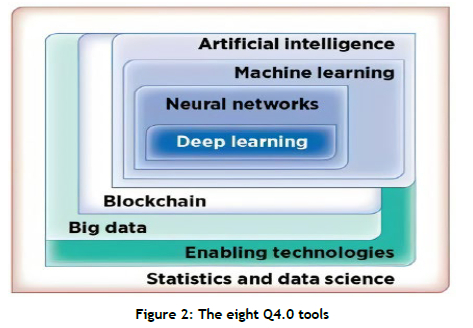
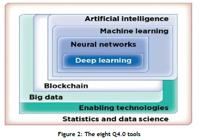
Quality should be viewed in the perspective of 14.0 as the augmentation and enhancement of human intelligence in order to find data sources, root causes, and insights about products and organisations [14]. [15] argue that the Fourth Industrial Revolution provided seven tools and technologies that can be used to improve quality:
• Data science and statistics: Make forecasts, identify patterns, and produce workable models and solutions to add value. Create knowledge for problem-solving by identifying causal and non-causal links using data aggregation, data classification, real-time pipelines, and dynamic modelling.
• Enabling technologies: Continually connected to the most recent advancements in connection, including sensors, mobile devices, networks, the Internet of Things (IoT), the Industrial Internet of Things (IIoT), integrated systems, virtual reality, and cloud computing. Associated with managing documentation as well.
• Big data: Regarding the infrastructure for managing and analysing huge data sets that arrive quickly, in many forms, with significant variance in data quality, from several stakeholders, and when there may be limitations to its use.
• Blockchain: Continuous monitoring ensures that transactions are only permitted when quality goals are met; ensures data quality, builds trust, and fosters a culture of quality.
• Artificial intelligence (AI): using robotics, chatbots, and computer vision to make complicated judgements.
• Machine learning (ML): Heuristics are useful in forecasting, information filtering, and recommendation systems, as well as for making decisions. Finds levers inside the processes that can assure consistency and alignment throughout the entire business, which improves the performance of a corporation.
• Neural networks and deep learning: Forecasting and complicated pattern recognition are two applications for this technology. It includes layers with unique functionalities.
[16] states that the relationship between these tools is also crucial to evaluate, based on the predicted value that is provided when intelligence and automation are added into a process, as represented in Figure 2.
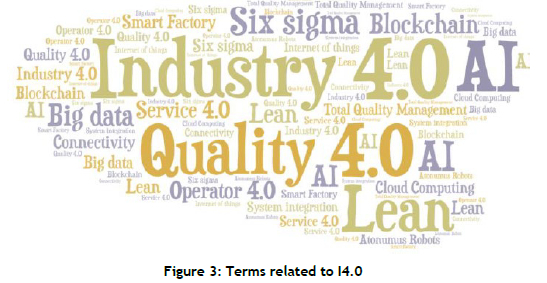
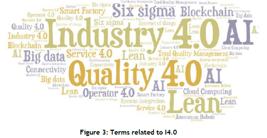
It is clear that the term 14.0 involves many other concepts, some of which are presented in 14.0 [9].
3.2. 14.0
Figure 3 presents the 14.0 technologies:
3.3.
Rationale for Quality 4.0Quality 4.0 is viewed as a more comprehensive approach to quality management that combines new technology with tried-and-true quality methodologies (QC, QA, and tQm) in order to increase the breadth of quality management and the effectiveness of quality operations [5]. The core idea of Quality 4.0 is to align quality assurance with 14.0's new capabilities and to assist businesses in achieving organisational excellence [17]. Quality control digitisation is unquestionably necessary for Quality 4.0; so it is crucial to consider the digitalisation of quality infrastructure, processes, and people [18]. The following practices, among others, are the associated major enablers of Quality 4.0 for the manufacturing environment: the idea of blockchain, condition monitoring, cybersecurity facts, experimenting with industrial robotics on the ground, product control and solution enablers. Error reduction is automated with Quality 4.0, saving money, time, and resources. Maintenance teams use these technologies to reduce time and to eliminate conjecture in preventative maintenance plans, potential issues, and system history. Businesses' management should work to establish an atmosphere that will facilitate the successful implementation of Quality 4.0 [5].
3.4.
BenefitsThe numerous advantages of Quality 4.0 for quality management include improved speed and transparency, improved adaptation to novel circumstances, ongoing company improvement, and improved awareness, abilities, and intelligence [19]. Quality 4.0 emphasises the important details, lowers the cost of low quality, and tracks quality outcomes. According to [5], Quality 4.0 offers benefits such as improved speed, increased adaptability, transparency, and continual improvement to organisations. Smart quality systems improve efficiency and business performance, and increase customer satisfaction [8]. [11] agrees that, by implementing Quality 4.0, it would be possible to increase the product's quality and dependability while also cutting costs, thus achieving a common goal. That is, Quality 4.0 aids in industrial change and directly influences customer service, satisfaction, or the ability to customise products or services [6].
Quality 4.0 provides quality control professionals with vast volumes of data in real time and concurrently from many sources; and this information can be used to allow quick, tactical decision-making. Quality 4.0 integrates data and technologies and uses them to promote creativity and enhance overall quality [10]. Improved quality products and zero defect diagnostics are some of the benefits of 14.0 [2].
3.5.
ChallengesThe system continuously transmits relevant information and acknowledgements after the implementation of Quality 4.0. A careful balancing act of digital confidence is thus needed to ensure data protection and prevent identities from being revealed [20]. According to [21], 80%-87% of projects fail to produce a sustainable solution that is suitable for production; and many leaders lack a clear understanding of how to apply Quality 4.0 techniques.
4. RESEARCH METHODOLOGY
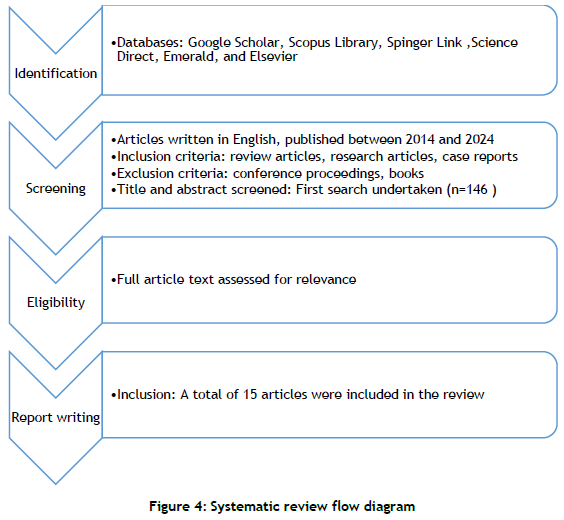
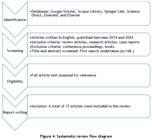
The research study reviewed peer-reviewed papers from Google Scholar, Scopus Library, Spinger Link ,Science Direct, Emerald, and Elsevier that were published between 2014 and 2024. The search was carried out using the following keywords: "Industry 4.0", "Continuous improvement", and "Quality 4.0". As shown in Figure 4, this study began with the initial collection as the first of four steps.
5. RESULTS AND DISCUSSION
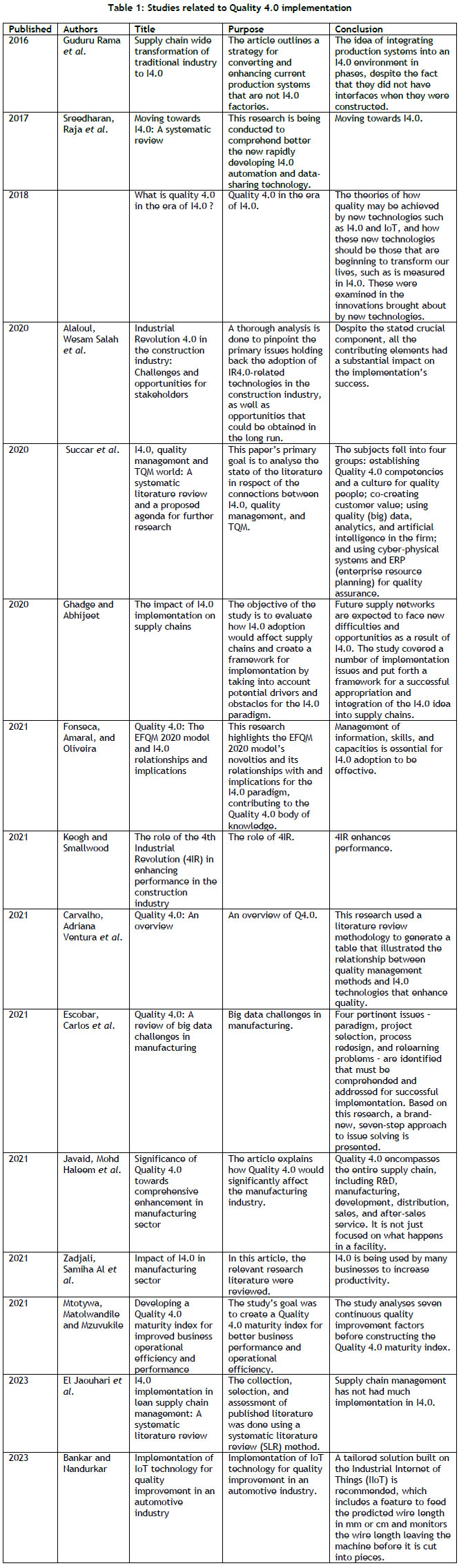
The researchers reported their findings related to the impact of Quality 4.0 implementation in industries. The findings of the literature research indicated that there is a growing body of knowledge on the subject of Quality 4.0 implementation in industries. The studies that were reviewed are listed below.
5.1. Distribution of articles based on year of publication
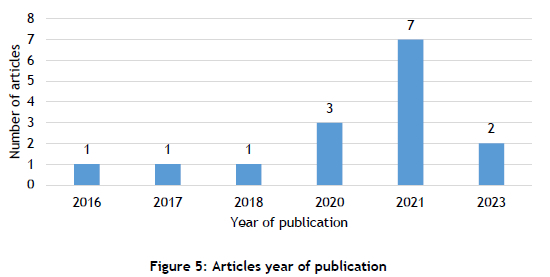
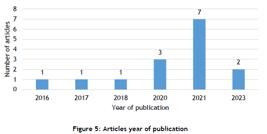
The number of articles on the implementation of Quality 4.0 that were published from 2014 to 2024 is presented in Figure 5. Although the number of articles is low, it demonstrates an aggregate trend from one in 2014 to a maximum of seven in 2021. This trend shows the increasing amount of attention given by researchers to the field of Quality 4.0 implementation.
5.2. Distribution of articles based on industrial area of research
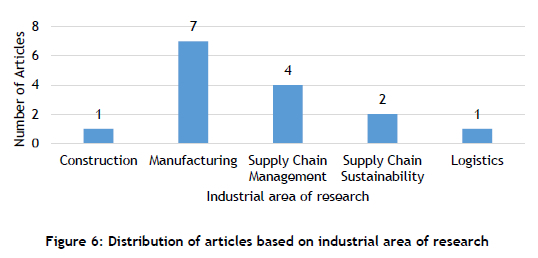
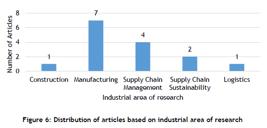
Among the articles looked at (see Figure 6), seven were mostly about Quality 4.0's implementation in manufacturing firms; four research paper studied Quality 4.0's implementation in supply chain management companies; and two discussed the application of Quality 4.0 in supply chain sustainability. There was still a gap in research done in other industries such as logistics and construction.
5.3. Distribution of publications from different countries
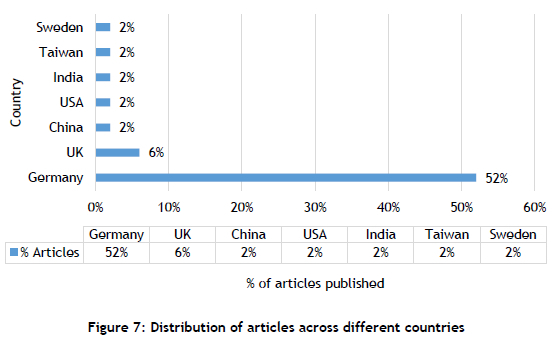
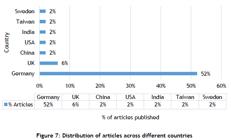
Of the publications, 52% were contributed by Germany, which topped the list; it is a leader in engineering and manufacturing. The UK contributed 6% of the publications, and the remaining countries (the USA, China, India, Taiwan, and Sweden) contributed 2% each.
6. CONCLUSION
This paper gathers multiple definitions of 14.0 as well as a variety of articles that are based on 14.0. Germany is the global innovator and pioneer of 14.0. The author has identified gaps in the articles, based on the review. They are listed below.
• 14.0 must be implemented in several sectors, including manufacturing and IT, in order to examine how improvements affect business results.
• Manufacturing industries are reported to have the highest levels of automation in respect of 14.0. Most industries, including those in food, agriculture, and construction, need a robust framework to meet the demanding requirements in their operations.
• One of the most important problems is that there is not a universal methodology for implementing 14.0 across most industries. As a result, there are no defined tool usages across the various 14.0 implementation phases.
Numerous nations, including the UK, the USA, Poland, Portugal, the Czech Republic, India, Greece, and Taiwan, have published papers, thus demonstrating the global nature of 14.0 research. The majority of the publications emphasise the theoretical approach, showing that it is the foundation of 14.0; however, they lack a data-driven approach. 14.0's success depends on a variety of variables and aspects.
Quality 4.0 is mostly implemented in the manufacturing industry. Research trends indicate a growing interest among researchers in the subject of implementing Quality 4.0. The systematic review revealed that the implementation of a Quality 4.0 framework resulted in positive organisational performance. However, the studies have also indicated that Quality 4.0 is still in its early stages, and have confirmed the scarcity of research on the impact of Quality 4.0 on organisational performance.
7. FUTURE RESEARCH
Further research on the application of Quality 4.0 would be required to support these conclusions. It could take into account a more thorough investigation based on empirical studies, and should address the challenges that were raised in respect of Quality 4.0 implementation across industries.
REFERENCES
3. LITERATURE REVIEW
-
[1] A. Chiarini, "14.0, quality management and TQM world: A systematic literature review and a proposed agenda for further research," TQM J., vol. 32, no. 4, pp. 603-616, 2020. doi: 10.1108/TQM-04-2020-0082
» https://doi.org/10.1108/TQM-04-2020-0082 -
[2] L. Fonseca, A. Amaral, and J. Oliveira, "Quality 4.0: The EFQM 2020 model and 14.0 relationships and implications," Sustain., vol. 13, no. 6, 3107, 2021. doi: 10.3390/su13063107
» https://doi.org/10.3390/su13063107 -
[3] S. Al Zadjali and A. Ullah, "Impact of 14.0 in manufacturing sector," Int. J. Manag. Sci. Bus. Adm., vol. 7, no. 6, pp. 25-33, 2021. doi: 10.18775/ijmsba.1849-5664-5419.2014.76.1003
» https://doi.org/10.18775/ijmsba.1849-5664-5419.2014.76.1003 - [4] V. R. Sreedharan and A. Unnikrishnan, "Moving towards 14.0: A systematic review," Int. J. Pure Appl. Math., vol. 117, no. 20, pp. 929-936, 2017.
-
[5] M. M. Mtotywa, "Developing a Quality 4.0 maturity index for improved business operational efficiency and performance," Qual. Innov. Prosper., vol. 26, no. 2, pp. 101-127, 2022. doi: 10.12776/QIP.V26I2.1718
» https://doi.org/10.12776/QIP.V26I2.1718 - [6] A. Fundin, J. Lilja, Y. Lagrosen, and B. Bergquist, "Quality 2030: Quality management for the future," Total Qual. Manag. Bus. Excell., 2020. doi: 10.1080/14783363.2020.1863778
-
[7] S. S. Kamble, A. Gunasekaran, and S. A. Gawankar, "Sustainable 14.0 framework: A systematic literature review identifying the current trends and future perspectives," Process Saf. Environ. Prot., vol. 117, pp. 408-425, 2018. doi: 10.1016/j.psep.2018.05.009
» https://doi.org/10.1016/j.psep.2018.05.009 -
[8] M. Keogh and J. J. Smallwood, "The role of the 4th Industrial Revolution (4IR) in enhancing performance within the construction industry," IOP Conf. Ser. Earth Environ. Sci., vol. 654, no. 1, 2021. doi: 10.1088/1755-1315/654/1/012021
» https://doi.org/10.1088/1755-1315/654/1/012021 -
[9] A. El Jaouhari, S. Fellaki, M. Amejwal, and J. Arif, "14.0 implementation in lean supply chain management: A systematic literature review," Stat. Optim. Inf. Comput., vol. 11, no. 1, pp. 178185, 2023. doi: 10.19139/soic-2310-5070-1539
» https://doi.org/10.19139/soic-2310-5070-1539 -
[10] I. T. Christou, N. Kefalakis, J. K. Soldatos, and A. M. Despotopoulou, "End-to-end industrial IoT platform for Quality 4.0 applications," Comput. Ind., vol. 137, 103591, 2022. doi: 10.1016/j.compind.2021.103591
» https://doi.org/10.1016/j.compind.2021.103591 -
[11] J. Antony, M. Sony, S. Furterer, O. McDermott, and M. Pepper, "Quality 4.0 and its impact on organizational performance: An integrative viewpoint," TQM J., vol. 34, no. 6, pp. 2069-2084, 2022. doi: 10.1108/TQM-08-2021-0242
» https://doi.org/10.1108/TQM-08-2021-0242 -
[12] D. V. Forero and R. Sisodia, "Quality 4.0 - How to handle quality in the Industry 4.0 revolution," Master's thesis in Quality and Operations Management, Chalmers University Of Technology, Gothenburg, Sweden, 2020. [Online]. Available: https://odr.chalmers.se/bitstream/20.500.12380/300650/1/E2019_128.pdf
» https://odr.chalmers.se/bitstream/20.500.12380/300650/1/E2019_128.pdf -
[13] M. C. Aldag and B. Eker, "What is Quality 4.0 in the era of 14.0 ?" Int. Conf. Qual. Life, no. November, pp. 31-34, 2018. [Online]. Available: https://www.researchgate.net/publication/329442755_WHAT_IS_QUALITY_40_IN_THE_ERA_OF_INDUSTRY_40
» https://www.researchgate.net/publication/329442755_WHAT_IS_QUALITY_40_IN_THE_ERA_OF_INDUSTRY_40 -
[14] W. S. Alaloul, M. S. Liew, N. A. W. A. Zawawi, and I. B. Kennedy, "Industrial Revolution 4.0 in the construction industry: Challenges and opportunities for stakeholders," Ain Shams Eng. J., vol. 11, no. 1, pp. 225-230, 2020. doi: 10.1016/j.asej.2019.08.010
» https://doi.org/10.1016/j.asej.2019.08.010 -
[15] A. V. Carvalho, D. V. Enrique, A. Chouchene, and F. Charrua-Santos, "Quality 4.0: An overview," Procedia Comput. Sci., vol. 181, no. 2019, pp. 341-346, 2021. doi: 10.1016/j.procs.2021.01.176
» https://doi.org/10.1016/j.procs.2021.01.176 - [16] G. R. K. Reddy, H. Singh, and S. Hariharan, "Supply chain wide transformation of traditional industry to 14.0," ARPN J. Eng. Appl. Sci., vol. 11, no. 18, pp. 11089-11097, 2016.
-
[17] A. Ghadge, M. Er Kara, H. Moradlou, and M. Goswami, "The impact of 14.0 implementation on supply chains," J. Manuf. Technol. Manag., vol. 31, no. 4, pp. 669-686, 2020. doi: 10.1108/JMTM-10-2019-0368
» https://doi.org/10.1108/JMTM-10-2019-0368 -
[18] M. Javaid, A. Haleem, R. Pratap Singh, and R. Suman, "Significance of Quality 4.0 towards comprehensive enhancement in manufacturing sector," Sensors Int., vol. 2, no. June, 100109, 2021. doi: 10.1016/j.sintl.2021.100109
» https://doi.org/10.1016/j.sintl.2021.100109 - [19] V. Rajaram Bankar and K. Nilkanth Nandurkar, "Implementation of IoT technology for quality improvement in an automotive industry," Mater. Today Proc. [In press], 2023. doi: 10.1016/j.matpr.2023.03.485
-
[20] C. A. Escobar, M. E. McGovern, and R. Morales-Menendez, "Quality 4.0: A review of big data challenges in manufacturing," J. Intell. Manuf., vol. 32, no. 8, pp. 2319-2334, 2021/ doi: 10.1007/s10845-021-01765-4
» https://doi.org/10.1007/s10845-021-01765-4 -
[21] C. A. Escobar, D. Chakraborty, M. McGovern, D. Macias, and R. Morales-Menendez, "Quality 4.0 - Green, black and master black belt curricula," Procedia Manuf., vol. 53, pp. 748-759, 2021. doi: 10.1016/j.promfg.2021.06.085
» https://doi.org/10.1016/j.promfg.2021.06.085
ORCID® identifiers
A.Y. Magodi: https://orcid.org/0000-0003-0820-9661
T. Mashamba: https://orcid.org/0000-0002-8074-1532
K. Mokgohloa: https://orcid.org/0000-0002-3087-1582