Prioritisation of Barriers to Bioenergy Industry Development: A Weight-Based Assessment to Inform Policy Design
Abstract
Bioenergy advances Indonesia's net zero emission targets by using biomass from agricultural, forestry, and livestock residues; however, progress is limited by political, economic, social, technological, environmental, and legal barriers. This study combines the analytical hierarchy process, stakeholder clustering, and the '5 Whys' root-cause analysis to prioritise barriers, to compare the perceptions of governments, financial institutions, and private companies, and to identify structural drivers. The most significant investment barriers are high capital costs, complex permitting, inconsistent policies, feedstock price fluctuations, and limited financing. Through developing a policy-to-barriers influence matrix, policy packages recommend long-term agreements with transparent tariffs, the designation of national strategic projects, and the reform of fossil-fuel subsidies.
Abstract
Bio-energie bevorder Indonesië se netto-nul-emissieteikens deur biomassa uit landbou-, bosbou- en veeteeltreste te benut. Vordering word egter beperk deur politieke, ekonomiese, sosiale, tegnologiese, omgewings- en regsversperrings. Hierdie studie kombineer die analitiese hiërargieproses (AHP), groepering van belanghebbendes en die '5 Whys'-worteloorsaakontleding om versperrings te prioritiseer, persepsies van die regering, finansiële instellings en private ondernemings te vergelyk, en strukturele drywers te identifiseer. Die belangrikste beleggings-versperrings is hoë kapitaalkoste, ingewikkelde permitprosesse, inkonsekwente beleid, wisselende biomassa-grondstofpryse en beperkte finansiering. 'n Beleids-tot-versperringsinvloedmatriks ondersteun beleidspakkette met langtermynooreenkomste met deursigtige tariewe, nasionale strategiese projekte en hervorming van fossielbrandstof-subsidies.
1. INTRODUCTION
A worldwide transition to renewable energy is vital for climate change mitigation, energy security, and sustainability. Achieving net zero emissions requires a global shift to renewables, with bioenergy being central to this change [1, 2]. Bioenergy from organic waste, such as residues and animal waste, offers a sustainable, dispatchable alternative to fossil fuels, enhancing energy security and reducing greenhouse gas emissions [1-3]. The bioenergy industry is increasingly vital to the global shift to cleaner, resilient energy, especially in developing countries with rising energy demand and persistent regional disparities [3-5].
Addressing regional disparities calls for innovative strategies to expand access to reliable energy and to ensure sustainability. Developing the bioenergy industry offers a pathway to diversify the energy mix, cut dependence on fossil fuels, and create economic opportunities. It could boost local value chains and rural economies with abundant biomass, fostering inclusive growth and narrowing energy gaps [2, 3]. Therefore, unlocking bioenergy investment is not merely an environmental imperative but also a multifaceted challenge that requires a comprehensive understanding of its inhibiting factors [1-3].
Indonesia, as the world's fourth most populous country and a G20 economy, faces the dual challenge of meeting increasing energy demand and reducing its dependence on fossil fuels, especially coal [6-10]. The country has vast and varied bioenergy resources, such as palm oil, rice husk, municipal waste, and biogas from manure, with estimated theoretical potentials far exceeding current use [1, 7]. Despite ambitious national targets to boost the share of renewable energy in its electricity mix by 2025 and to reach net zero by 2060, the implementation of renewable energy, including bioenergy, has been notably slow [6, 7, 11]. This disparity between potential and progress highlights the urgent need to identify and systematically address the underlying barriers that impede bioenergy investment and development in the Indonesian context [1, 6, 11].
In many developing countries, efforts to expand RE deployment have been constrained not only by technical feasibility but also by fragmented policy coordination, inconsistent regulations, and limited institutional capacity [12]. Studies from Iran and India have shown that political instability, financial insecurity, and the lack of research and development infrastructure are significant barriers to renewable energy adoption [13, 14]. In Rwanda, the most critical factors hindering biogas dissemination are the high upfront capital costs and the absence of robust financial mechanisms [3].
Scholars increasingly use multi-criteria decision-making tools such as analytic hierarchy process (AHP), fuzzy AHP, the technique for order preference by similarity to ideal solution (TOPSIS), and VlseKriterijumska Optimizacija I Kompromisno Resenje (VIKOR), meaning multi-criteria optimisation and compromise solution to prioritise renewable energy barriers and to inform policy. AHP can structure and quantify complex decision-making problems by assigning relative weights to renewable energy barriers, thereby supporting policy prioritisation and investment analysis. AHP can structure and quantify aid policy and investment analysis [12, 15, 16]. For example, in Nepal, AHP identified political instability and poor coordination as major hurdles [17]. In Rwanda, financial problems, especially capital and credit shortages, were critical [3]. In India, technological complexity, high costs, and weak institutional capacity remain obstacles [15, 16]. Iran's fuzzy AHP-TOPSIS pointed to economic uncertainty and bureaucratic inefficiency as barriers, while Turkey's hybrid models emphasised financial instability and inconsistent policy issues [18]. Recent studies have expanded these frameworks to other settings, such as hybrid fuzzy Delphi-AHP for solar and wind [14], fuzzy AHP-TOPSIS for biogas in China [4], and combined multi-criteria decision-making (MCDM)-Delphi methods for energy strategies in developing countries [19], demonstrating AHP's flexibility in identifying policy and investment barriers. In Africa, studies have revealed financial constraints, dependence on donors, and institutional fragmentation, all of which slow renewable energy deployment [5].
In Indonesia, previous qualitative studies and policy reviews have reported similar structural issues, such as overlapping regulations, fragmented institutional mandates, limited fiscal incentives, and insufficient public awareness, as persistent impediments to bioenergy development. However, despite these insights, few empirical studies have systematically quantified how experts prioritise these barriers or connected such prioritisation with actionable policy frameworks.
Although numerous studies have applied the AHP framework to analyse renewable energy barriers, such as in Rwanda [3], Nepal [17], India [15, 16], Malawi [5], Iran [13], Turkey [18], and Myanmar [12], most studies remain descriptive, mainly ranking barriers without turning findings into policy actions. Some extend the framework using hybrid methods such as AHP-G-TOPSIS, modified Delphi-AHP, or clustering [14, 15, 12], thereby enhancing analytical robustness by assessing solution preferences and stakeholder tendencies. Recent studies use fuzzy and Delphi methods to strengthen expert consensus and to reduce subjectivity [4,14]. Despite improvements, the literature has gaps: few studies include multi-actor perspectives on investment risks among stakeholders (government, financial institutions, private investors), and even fewer connect barriers with their causes or policy solutions.
This study advances the research by combining AHP, clustering, and root-cause analysis to link barrier prioritisation with policy development. It measures the importance of bioenergy barriers, and reveals their institutional and political roots, enabling focused, actor-specific policies. Focusing on Indonesia's bioenergy sector - characterised by regulatory fragmentation, coordination problems, and financial uncertainty - it offers a comprehensive, evidence-based, stakeholder-informed approach that connects prioritisation with policy design, providing practical insights to strengthen Indonesia's bioenergy transition.
This integrated approach ensures that policies target the key barriers, based on data and expert consensus. However, the lack of a framework linking barrier prioritisation with strategic policy planning hinders bioenergy growth. A panel of 14 experts from government, academia, and industry compared six barrier categories - political, economic, social, technological, environmental, and legal - each with five sub-barriers. The most critical barriers are identified through geometric aggregation and consistency checks, offering an empirical basis for investment policies.
This study's novelty lies in its innovative methodological framework and its relevance to current policy initiatives. Using expert-driven AHP prioritisation enhances understanding and practical application in the sustainable bioenergy transition. It aligns policy tools with real-world problems, ensuring that practical realities shape effective policies. The findings help policymakers, investors, and agencies to target resources, overcome barriers, and unlock Indonesia's bioenergy potential.
The remainder of this paper is organised as follows. Section 2 reviews the relevant literature on renewable energy barriers, MCDM, and root-cause analysis approaches. Section 3 describes the research methodology, including the AHP framework, clustering analysis, and root-cause analysis used in this study. Section 4 presents the empirical results, and discusses the prioritisation of bioenergy investment barriers. Section 5 discusses the policy implications of the findings, and Section 6 concludes the paper with key insights and recommendations for future research.
2.1.
Bioenergy industry development barriersThis study uses a structured categorisation framework, such as political, economic, social, technological, legal, and environmental (PESTLE), to analyse development barriers in the bioenergy sector. This systematic classification helps to understand how external and internal factors hinder renewable energy deployment. By categorising the barriers, researchers and policymakers could identify root causes and develop targeted solutions, moving beyond surface-level understanding to supporting sustainable energy transitions [3, 12].
Previous studies in Iran, Pakistan, Rwanda, Nepal, and Ghana have highlighted key barriers to renewable and bioenergy development that are also relevant to Indonesia [13, 16, 21, 15, 29]. Financial barriers, such as high capital costs, limited funding mechanisms, and insufficient subsidies, frequently rank among the top concerns [4, 22]. Political and regulatory problems, such as policy inconsistency, instability, bureaucracy, lack of support, and lengthy permit processes, pose significant obstacles [13, 23]. Technical barriers, such as a lack of research and development capacity, technological complexity, inadequate infrastructure, and difficulties with energy storage and grid integration, are significant hurdles [16, 21, 22]. Moreover, social and cultural barriers, such as low public awareness and acceptance, and governance issues such as coordination gaps and land ownership complexities, are major obstacles [18, 24]. In Indonesia specifically, issues such as fossil-fuel lock-in, the complexities of the electricity subsidy system that affect Indonesia's state-owned electricity utility or Perusahaan Listrik Negara (PLN)'s finances, and multi-level governance problems are especially relevant to bioenergy development [6, 25].
2.2.
Multi-criteria decision-making and the '5 Whys' in barrier analysisMCDM methods provide systematic approaches to evaluating complex decision problems involving multiple, often conflicting, criteria [2, 17, 26]. In the field of renewable energy and barrier analysis, various MCDM tools have been widely used, such as AHP, fuzzy AHP, TOPSIS, fuzzy TOPSIS, and VIKOR [12, 14, 27]. The AHP, developed by Saaty, is popular for breaking down complex problems into a hierarchy, allowing decision-makers to make pairwise comparisons based on expert judgements, in order to identify criterion weights and rank alternatives. These methods are crucial for identifying barriers and evaluating solutions in various energy contexts worldwide [16, 28].
A substantial body of literature has applied the AHP and related MCDM approaches systematically to identify and prioritise the barriers to renewable energy development. These methods categorise barriers hierarchically, and translate expert judgements into quantitative weights, enabling policymakers to determine which constraints most urgently require intervention. Empirical studies from different contexts reveal consistent findings. In Rwanda, AHP analysis has shown that financial barriers dominate, particularly high capital costs and limited access to financing mechanisms, indicating that affordability is a primary determinant of technology adoption [3]. In India, policy and political barriers have been ranked highest, with corruption, regulatory uncertainty, and lack of skilled personnel identified as critical obstacles to renewable energy expansion [16]. Similarly, research in Malawi using an integrated AHP-fuzzy TOPSIS framework has highlighted economic constraints, especially a lack of funding and high investment costs, followed by governance-related barriers such as weak political commitment [5].
Evidence from other countries reinforces these patterns. Studies in Nepal have identified policy and political constraints as the most influential barriers, while research in Iran using fuzzy AHP-TOPSIS has highlighted economic instability and bureaucratic inefficiencies as key impediments to solar photovoltaic (PV) development [17]. In Pakistan, integrated AHP-based analyses have similarly emphasised financial and policy barriers, whereas studies in Türkiye have indicated that policy, economic, and social problems jointly shape renewable energy transitions [22]. Collectively, these studies have revealed a consistent crosscountry pattern in which financial constraints, governance and policy weaknesses, and technical capacity limitations constitute the most critical barriers to renewable energy deployment. AHP-based approaches, therefore, provide a structured mechanism for transforming qualitative assessments into prioritised policy agendas.
However, while studies have successfully identified and ranked renewable energy barriers, most have focused on specific technologies or national contexts and have rarely linked the prioritised barriers directly with investment-oriented policy design, particularly for bioenergy development in emerging economies such as Indonesia. This gap highlights the need for a more targeted analysis that systematically prioritises the barriers to bioenergy investment and translates these priorities into actionable policy insights. Therefore, this study combines the '5 Whys' method with AHP to link the barrier symptoms with underlying policy and institutional factors.
This hybrid approach also has precedent in other fields. In operations and decision science, a study showed that structured questioning techniques, such as the '5 Whys' and the '5 Ws & H', could be integrated into MCDM to improve problem definition and criteria weighting, thereby strengthening the early stages of decision analysis [30]. In quality management and manufacturing, Pacana and Siwiec combined the Ishikawa diagram with fuzzy AhP to prioritise the causes of product defects [31]. They explicitly suggested adding the '5 Whys' as a follow-up step to isolate the root causes of the most highly weighted problems. Likewise, in industrial process improvement, a study integrated the '5 Whys' with failure mode and effects analysis (FMEA) in order to identify the underlying causes of equipment and production failures [32]. In contrast, another study applied the related 5W1H framework with quality tools to diagnose process inconsistencies [33]. Together, these studies indicate that question-based root-cause techniques have been successfully combined with structured evaluation frameworks in multiple fields, providing a clear academic basis for integrating the '5 Whys' with AHP in the analysis of bioenergy investment barriers.
3. RESEARCH FRAMEWORK AND METHODOLOGY
3.1. Data collection and conceptual frameworks
The study used a questionnaire to assess barriers and policy options for bioenergy adoption in Indonesia, combining the AHP with open-ended qualitative analysis. First, experts evaluated the relative importance of one another's barriers to bioenergy investment. Then, they provided qualitative assessments of proposed policy solutions to overcome these barriers.
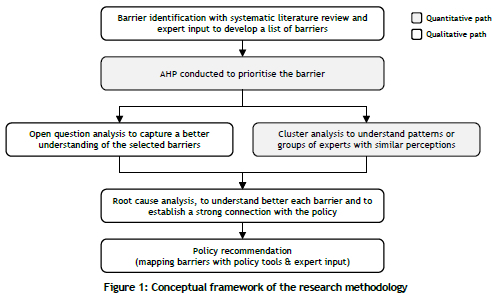
Fourteen experts from the government, the private sector, finance, academia, and NGOs participated. The researcher used their feedback to identify, categorise, and weigh the main and sub-barriers to bioenergy adoption in Indonesia. Figure 1 shows the evaluation process, and discusses the policy implications for promoting bioenergy.
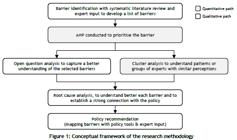
The methodological framework of this study combines both quantitative and qualitative methods systematically to identify, prioritise, and overcome barriers to bioenergy investment. The process consists of six main stages, as illustrated in Figure 1.
The process started with a thorough review of the relevant literature and policy documents to identify potential barriers to the bioenergy industry. Consultations with experts from government agencies, state-owned enterprises, the private sector, academia, NGOs, and financial institutions were conducted to categorise these barriers for research purposes. The goal was to create a list of barriers that reflected the specific context-driven difficulties faced by the Indonesian bioenergy sector.
This barrier list was reviewed by the experts and prioritised using the AHP. The experts compared each criterion and its sub-criteria pairwise to assess the importance of each barrier. This process converted expert judgements into numerical weights, enabling the ranking of the barriers based on their influence on the bioenergy industry.
To complement the quantitative assessment, we gathered experts' insights qualitatively through open-ended questions. This step helped to explain the results of barrier prioritisation captured in the AHP survey, providing a deeper understanding of the context and reasoning behind each barrier. It also confirmed the final obstacles that were to be analysed further in the methodology.
The weighted AHP results were then analysed using K-means clustering and principal component analysis (PCA) visualisation to identify patterns or groups of experts with similar perceptions. This clustering helped to reveal stakeholder-specific alignment tendencies, including differences in how government, state-owned companies, the private sector, NGOs, financial institutions, and academia prioritise barriers.
After identifying the main barriers and recognising five clusters with distinct perspectives, we conducted a root-cause analysis to reveal the systemic issues, and used the '5 Whys' method to understand each barrier better. This approach helped us to trace each top-priority barrier back to its core causes, linking technical or financial symptoms to underlying policy and institutional factors.
The final stage combined the quantitative results from the AHP and cluster analysis with qualitative insights from open-ended responses and the root-cause analysis. Each key barrier was matched with appropriate policy tools and expert recommendations, creating a clear list of policy actions. Connecting the AHP barriers to the root-cause analysis ensured that the suggested policies addressed the most critical barriers, backed by both the data and expert agreement.
3.2. Methodological approach
The AHP is a widely used MCDM method for complex decision problems. It streamlines the evaluation process by breaking down complicated problems into a hierarchical structure of goals, criteria, and sub-criteria [31]. Through pairwise comparisons, AHP quantifies expert judgements to determine the relative importance (weights) of each criterion using a systematic mathematical framework.
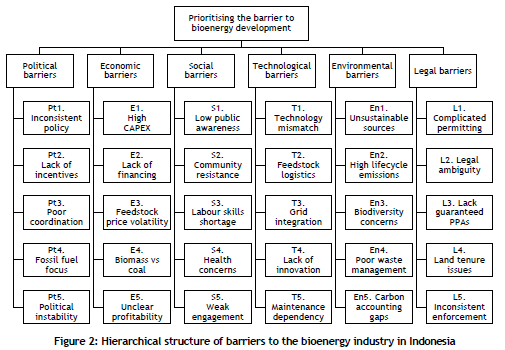
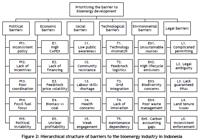
We examined the literature and policy documents extensively to identify barriers, which were grouped into six main categories with multiple sub-barriers. A total of 30 sub-barriers to promoting bioenergy in Indonesia were identified and structured hierarchically, as illustrated in Figure 2.
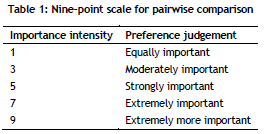
We developed a pairwise comparison questionnaire to elicit expert opinions on the relative importance of each criterion, using Saaty's nine-point scale [26], as shown in Table 1. The experts were a diverse group of decision-makers from government agencies, state-owned enterprises, private companies, NGOs, academia, and financial institutions, ensuring a well-rounded and multi-actor perspective. Each participant held at least a bachelor's degree and had at least 10 years' professional experience in the bioenergy industry or the renewable energy sector.
Based on the survey responses, the researcher developed pairwise comparison matrices for both the main criteria and their sub-criteria. Each matrix shows the relative preference of one criterion over another using the Saaty scale, which helped to calculate their respective weights. The eigenvalue method determined the relative weights for the main and sub- barriers, expressed as:

where A is the pairwise comparison matrix of size n χ n for n criteria, w is the priority vector (the derived weights), and λmax is the maximum eigenvalue. To ensure the logical consistency of expert judgements, the analysis calculated the consistency index (CI) and the consistency ratio (CR) as follows:

where n denotes the number of criteria and RI represents the random index value. Table 2 presents standard RI values for up to ten criteria. The acceptable consistency threshold is CR < 0.1, while CR = 0 indicates perfect consistency [22].
Barriers for AHP were categorised into six main areas - political, economic, technological, social, environmental, and legal - each with five sub-barriers, revealing complex challenges to the bioenergy industry growth. Figure 2 shows the barrier hierarchy. These categories and 30 sub-barriers underpinned the AHP weighting and prioritisation, discussed next.
4. RESULTS AND ANALYSIS
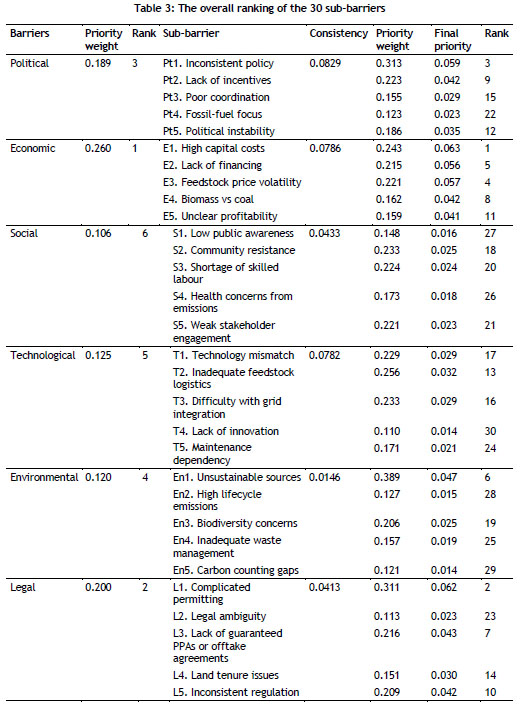
The first step of this study, shown in Table 3, indicated that the overall ranking of barrier categories showed that the economic barrier was the most critical and disruptive, followed by the legal, political, technological, environmental, and, finally, social barriers.
The two highest-ranked sub-barriers were high capital costs and complicated permitting, stemming respectively from the economic and legal categories. The third, fourth, and fifth sub-barriers were inconsistent government policy on biomass, feedstock price volatility, and lack of explicit financing instruments. The first fell under the political category, while the last two were in the economic category.
When comparing the sub-barriers in each category, inconsistent government policy on biomass ranked highest in the political category, while high capital costs ranked highest in the economic category; community resistance or conflict ranked highest in the social category; and inadequate feedstock logistics ranked highest in the technological category. Under the environmental category, unsustainable feedstock sources had the highest weight, whereas complicated permitting ranked highest under the legal category.
The dominance of economic, political, and legal factors in the top five of the priority list indicates that Indonesia's bioenergy development challenges are more about institutional alignment and financial structures than about technical readiness. The concentrated emphasis in the economic category further suggests that policy efforts should not address individual constraints alone but should instead focus on the interconnections among capital cost structures, financing options, and market pricing mechanisms.
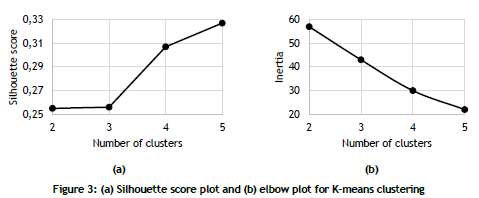
We then moved to the next step of the study by clustering, using K-means based on these AHP results. The weighted AHP results were then analysed with K-means clustering and PCA visualisation to identify patterns or groups of experts with similar perceptions. To identify the best number of clusters for grouping experts based on their AHP-derived priority weights, the analysis used two evaluation metrics: the silhouette score and the elbow method.
This clustering process used AHP results from 14 expert respondents from six stakeholder groups: government, the private sector, SOEs, NGOs, academia, and financial institutions. Its goal was to identify relational proximity among the respondents - that is, to identify which experts showed similar judgement patterns and perceptions of priority about the bioenergy industry's barriers.
The silhouette score plot (Figure 3a) measured cluster cohesion and separation. The score rose from k=2 (=0.26) to k=5 (=0.33), showing that the experts were more similar in clusters. As k increased, clusters became more distinct, with the highest silhouette at k = 5 indicating an optimal division of expert opinions.
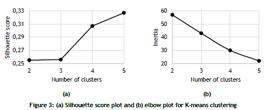
The elbow plot for K-means (Figure 3b) showed total within-cluster variance (inertia) for various k values. The curve dropped sharply from k=2 to k=4, then slowed, forming an 'elbow' at k=4, indicating a balance between simplicity and explanatory power. But, since the silhouette score improved up to k=5, the analysis favoured the five-cluster setup.
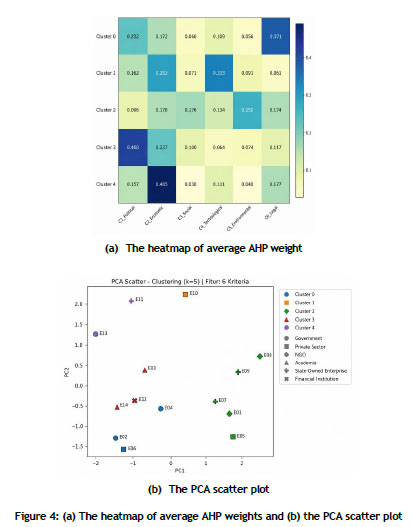
The K-means clustering analysis using the final AHP weights grouped the experts into five clusters, each reflecting a pattern of perceptions about barriers to the bioenergy industry in Indonesia. Five clusters balanced diversity and similarity in AHP behaviours. The cluster interpretation (Figure 4) revealed cross-sectoral alignments and differences, illustrating how institutional actors viewed the barriers. The heatmap (Figure 4a) and PCA scatter plot (Figure 4b) clearly distinguished the expert groups by institutional background and strategies.
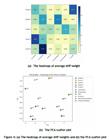
Cluster 0 highlighted legal and political issues, with experts from government and the private sector citing complex permitting (L1), unguaranteed offtake agreements (L3), and inconsistent enforcement (L5). Cluster 1, mainly from the private sector, emphasised the technological and economic problems, such as poor feedstock logistics (T2) and high capital costs (E1). Cluster 2 valued the environmental, economic, social, and legal factors, pointing to unsustainable feedstock (En1 ), waste management problems (En4), and complex permitting (L1 ). Cluster 3, led by political concerns, included financial and academic experts who cited inconsistent policies (Pt1), instability (Pt5), and unclear incentives (Pt2). Cluster 4, focused on economics, involved SOE and government experts who stressed unclear investment returns (E5).
The results showed diverse expert perceptions. The government groups (Clusters 0 & 4) highlighted legal and economic barriers; the SOEs (Clusters 2 & 4) focused on technological and economic barriers; academia and the financial institutions (Cluster 3) highlighted political barriers; the private sector and NGOs (Clusters 0, 1 & 2) identified legal, technological, and environmental barriers. These findings underscored the need for multi-actor policy coordination to enhance Indonesia's bioenergy transition into financial viability, regulation, technology, and the environment.
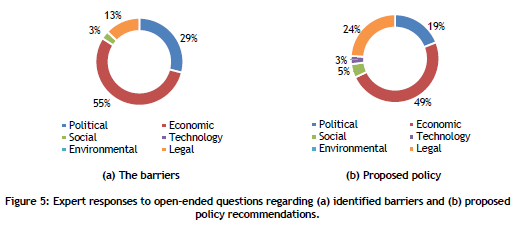
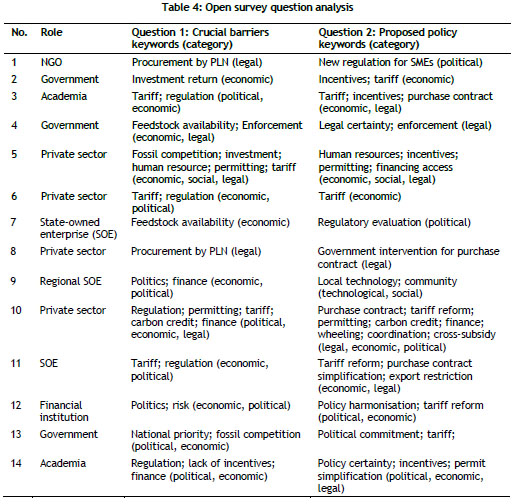
Along with the K-means clustering analysis, we also examined an open survey question based on the AHP results to expand on the findings. We then analysed and coded the open-ended responses, identifying thematic keywords and grouping them into six main categories.
The analysis showed that economic barriers accounted for the largest share of the responses (54.84%), mainly because of tariffs and financing. Political barriers (29.03%) were second to regulatory issues. Legal barriers linked to PLN's permitting accounted for 12.9%. Social, technological, and environmental factors were less significant.
The second survey question explored policy recommendations to address the barriers. Most of the responses (49%) focused on the economic category, with keywords such as incentives, tariff adjustments, and reforms. Legal policies accounted for 24%, highlighting simplified permitting, transparent PPAs, and legal certainty. Political measures made up 19%, emphasising inter-agency coordination, commitment, and policy consistency. Social (5%) and technological (3%) areas were less often mentioned, and no one cited environmental policies.
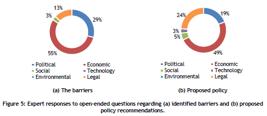
The respondents identified economic, legal, and political barriers as the main obstacles to the bioenergy industry in Indonesia. Economic issues included high capital costs, tariffs, and limited funding. Legal challenges involved permitting delays and PPA uncertainties. Political barriers arose from policy inconsistencies and poor inter-agency coordination.
Building on the clustering analysis and survey results, we conducted a root-cause analysis to identify the most effective policy recommendations for overcoming the identified barriers. The findings showed that the quantitative approach (AHP-clustering) and the qualitative method (open-ended responses) complemented each other: both indicated that expanding Indonesia's bioenergy industry would depend on policies that aligned economic incentives, ensured policy stability, and established legal certainty through transparent, streamlined regulatory processes.
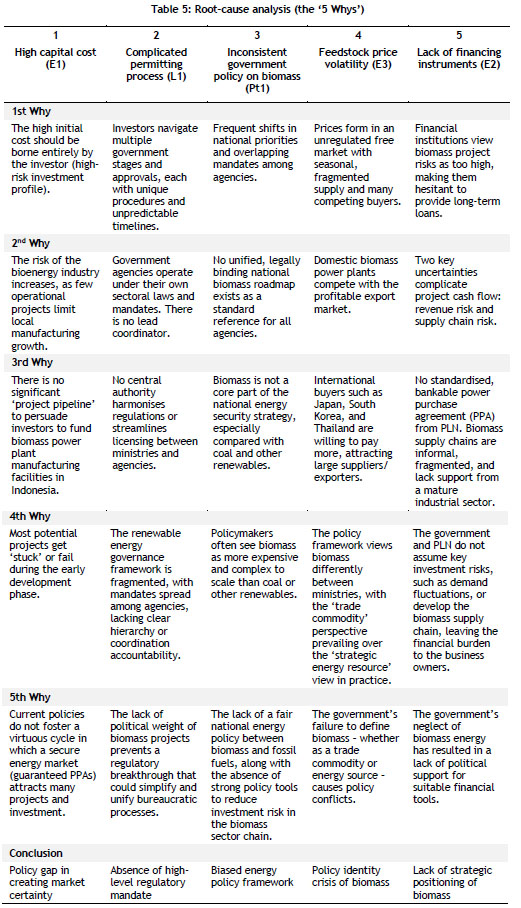
The study used the '5 Whys' method for root-cause analysis to trace the underlying causes of barriers in Indonesia's bioenergy governance, based on the AHP results. The aim was to identify the systemic root causes that needed targeted policy reforms, turning the AHP findings into actionable insights for intervention, as shown in Table 5.
The analysis identifies five root causes: a policy gap linking guaranteed markets to project pipelines; a lack of a regulatory mandate to simplify bureaucratic processes; a biased energy policy that favours fossil fuels; an unclear biomass definition, leading to fragmented governance; and weak strategic prioritisation of biomass in Indonesia's energy strategy. These systemic issues highlight the need for comprehensive policy reforms to address governance failures and to unlock bioenergy potential.
5. POLICY IMPLICATIONS AND RECOMMENDATIONS
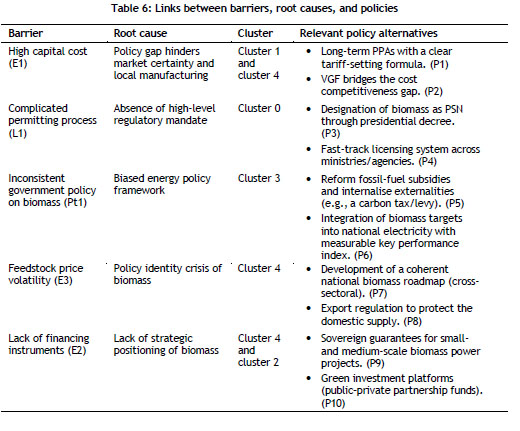
This study links the root causes identified through the '5 Whys' analysis to policy options in order to address the structural issues that hinder the bioenergy industry in Indonesia. Table 6 shows the connection between barriers, root causes, affected actor groups, and policy responses. Each policy is assigned a code (P1-P10), indicating its priority and sequence.
The findings reveal complex root causes in institutional, regulatory, financial, and strategic areas, necessitating a comprehensive policy approach rather than isolated measures. Including actor clusters should offer insight into stakeholder perspectives, enabling better policy coordination.
The high capital cost barrier mainly stems from a policy gap that affects market certainty and local manufacturing, especially in Clusters 1 and 4, which face financial and operational risks from biomass projects. This gap highlights the need for a policy framework that links long-term PPAs to industrial growth and cost reduction. Proposed policies include establishing long-term PPAs with clear tariffs, viability gap funding (VGF) schemes, and incentives for biomass R&D and local manufacturing to mitigate risks, strengthen supply chains, and lower capital costs.
The complex permitting process (L1) stems from the lack of a high-level regulatory mandate, leaving biomass projects without enough political authority to bypass bureaucratic delays. Cluster 0 (government actors) sees fragmented authority and poor inter-agency coordination as key barriers. To address this, high-level policies are needed: designating biomass as a national strategic project (PSN) via presidential decree (P3); creating a fast-track licensing system (P4); and forming a cross-ministerial task force with a binding coordination mandate. These actions would formalise coordination and reduce project lead times.
The barrier to consistent biomass policy (Pt1 ) is a biased energy framework that favours fossil fuels and ignores externalities. Cluster 3 highlights the gap between renewable energy goals and implementation. Reforms should remove fossil-fuel subsidies, implement carbon taxes or levies (P5), and include biomass goals in the National Energy General Plan and Electricity Supply Business Plan with clear key performance indices (P6). A biomass risk guarantee fund could boost investor confidence and reduce financial risks.
Feedstock price volatility (E3) stems from a policy identity crisis over biomass, caused by a lack of a unified, legally binding definition between ministries. This leads to conflicting policies between the trade and energy sectors. Cluster 4 (SOEs and utilities), which depend on stable feedstock supplies for long-term agreements, is most affected. To fix this, actions include creating a national biomass roadmap (P7), establishing export controls such as quotas, bans, or domestic market obligations (P8), and harmonising regulations between ministries. These measures aim to ensure a consistent supply of feedstock and to stabilise prices in the long term.
The lack of financing (E2) stems from biomass's limited role in national energy planning; clusters 4 (SOEs) and 2 (various actors) involved in bioenergy financing underscored this.
Biomass lacks political and institutional support for funding because it is not a national priority. The government should issue a presidential instruction to prioritise biomass, direct financial institutions such as PT Sarana Multi Infrastruktur, Lembaga Pembiayaan Ekspor Indonesia, and Pusat Investasi Pemerintah to create specialised biomass funding, and to establish green investment platforms and sovereign guarantees. Carbon pricing revenues could also fund biomass projects and reduce risks.
These ten policy options (P1-P10) form a framework that connects actor perceptions, systemic causes, and reforms. They highlight political commitment, cross-sectoral coordination, and financial innovation to advance bioenergy and integrate biomass into Indonesia's energy transition toward net zero emission 2060.
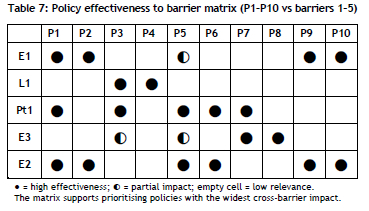
Based on the policy mapping derived from the earlier root-cause analysis, the study has identified ten priority policy measures (P1-P10). The subsequent policy effectiveness assessment evaluates how each measure addresses the main barriers, as summarised in the policy-barrier effectiveness matrix (P1-P10 vs the five priority barriers) in Table 7.
By examining the distribution of these symbols across the policy columns (P1-P10), it becomes evident that P1 (long-term PPAs with explicit tariff-setting formulas), P5 (fossil-fuel subsidy reform and internalisation of externalities), and P3 (designation of biomass as a national strategic project [PSN]) exhibit the broadest cross-barrier coverage. These three interventions address multiple significant barriers simultaneously, and demonstrate both strong (•) and partial (€) impacts across several rows, making them the top-priority policy measures that could cover all barriers. The prioritisation rationale may be summarised as follows:
1. P1 functions as a market certainty, directly enhancing project bankability through long-term revenue certainty and tariff transparency.
2. P5 strengthens price signals by correcting energy price distortions caused by fossil-fuel subsidies and by internalising environmental externalities, thereby improving the economic competitiveness of biomass.
3. P3 establishes a government commitment by reinforcing inter-ministerial coordination, streamlining licensing procedures, and ensuring priority access to the grid and to fiscal support.
Collectively, these three policies constitute the policy package of entry points for accelerating the bioenergy industry and implementation in Indonesia. Through such comparative learning, policymakers could extract evidence-based lessons to verify underlying assumptions, adopt proven best practices, and foresee implementation risks, thus ultimately developing the most relevant, feasible, and effective bioenergy policy package for Indonesia.
6. DISCUSSION AND CONCLUSIONS
This study combines AHP with clustering analysis to develop a stakeholder-informed framework for prioritising barriers to the bioenergy industry in Indonesia and linking them to appropriate policy interventions. Based on the aggregated AHP results from 14 experts, the most critical barrier categories are economic (0.260), legal (0.200), and political (0.189), while technological (0.125), environmental (0.120), and social (0.106) barriers are considered less influential. Among the 30 sub-barriers that were evaluated, the top three are high capital costs (economic), complicated permitting processes (legal), and inconsistent government policy on biomass (political).
The cluster analysis reveals a structural dilemma among key actors that constrains bioenergy development in Indonesia. Each stakeholder group faces distinct yet interdependent problems. Financial institutions perceive policy inconsistency and regulatory uncertainty as significant risks in project financing, and therefore expect the government to ensure policy continuity and long-term contractual stability to enable bioenergy projects to meet bankability standards. The government, however, faces its own internal dilemma: while recognising the importance of policy consistency, it has limited control over high-level political dynamics - such as parliamentary and inter-ministerial coordination - that determine the direction of the national energy agenda. Meanwhile, private companies and SOEs view the sector's current investment attractiveness as limited compared with other industries. As a result, many investors adopt a wait-and-see approach until stronger guarantees of stability and clearer incentive structures are in place. This actor-based approach provides a valuable foundation for designing targeted policy packages that align with the interests, responsibilities, and constraints of each stakeholder group, thereby facilitating a more coordinated and credible investment environment for Indonesia's bioenergy development.
The integration of open-ended expert responses and root-cause analysis (the '5 Whys') further strengthened the link between barriers and policies, ensuring that the chosen policy tools targeted the fundamental causes of investment obstacles rather than their surface symptoms. This qualitative enhancement complements the AHP's quantitative findings by revealing the causal paths behind each major barrier and aligning policy actions with the true sources of institutional and market inefficiencies.
The proposed policy package - comprising P1 (long-term PPAs with transparent tariff mechanisms), P3 (designation of bioenergy as a national strategic project), and P5 (fossil-fuel subsidy reform and internalisation of externalities) - offers a coherent response to this interdependent problem. P1 directly reduces financial uncertainty and enhances the credibility of investment contracts, addressing the concerns of financial institutions and investors. P3 provides political weight and regulatory integration by elevating bioenergy to national strategic status, enabling the government to align inter-ministerial mandates and to accelerate decision-making. P5 corrects economic distortions in the energy market, improving the relative competitiveness of bioenergy and thereby enhancing its commercial viability. Together, these policies would transform the existing stalemate into a mutually reinforcing framework that fosters a credible, coordinated investment ecosystem for Indonesia's bioenergy transition.
Taken together, the integrated AHP-clustering root-cause framework offers a repeatable model for future policy identification and assessment, enabling policymakers not only to rank barrier-specific interventions but also to customise implementation pathways based on institutional roles and stakeholder expectations. By applying this multi-actor analytical approach, Indonesia's bioenergy roadmap could evolve into a more coordinated, evidence- based, and inclusive policy ecosystem, thereby enhancing the feasibility and legitimacy of the bioenergy transition.
REFERENCES
2. LITERATURE REVIEW
-
[1] E. I. Rhofita, R. Rachmat, M. Meyer, and L. Montastruc, "Mapping analysis of biomass residue valorization as the future green energy generation in Indonesia," Journal of Cleaner Production, vol. 354, 131667, 2022. doi: https://doi.org/10.1016/j.jclepro.2022.131667
» https://doi.org/10.1016/j.jclepro.2022.131667 -
[2] D. Abdul, J. Wenqi, and A. Tanveer, "Prioritization of renewable energy source for electricity generation through AHP-VIKOR integrated methodology," Renewable Energy, vol. 184, pp. 1018-1032, 2022. doi: https://doi.org/10.1016/j.renene.2021.10.082
» https://doi.org/10.1016/j.renene.2021.10.082 -
[3] M. C. Mukeshimana, Z.-Y. Zhao, M. Ahmad, and M. Irfan, "Analysis on barriers to biogas dissemination in Rwanda: AHP approach," Renewable Energy, vol. 163, pp. 1127-1137, 2021. doi: https://doi.org/10.1016/j.renene.2020.09.051
» https://doi.org/10.1016/j.renene.2020.09.051 -
[4] Y. Feng, M. Shoaib, R. Akram, I. Alnafrah, F. Ai, and M. Irfan, "Assessing and prioritizing biogas energy barriers: A sustainable roadmap for energy security," Renewable Energy, vol. 223, 120053, 2024. doi: https://doi.org/10.1016/j.renene.2024.120053
» https://doi.org/10.1016/j.renene.2024.120053 -
[5] S. W. Chisale and H. S. Lee, "Evaluation of barriers and solutions to renewable energy acceleration in Malawi, Africa, using AHP and fuzzy TOPSIS approach," Energy for Sustainable Development, vol. 76, 101272, 2023. doi: https://doi.org/10.1016/j.esd.2023.101272
» https://doi.org/10.1016/j.esd.2023.101272 -
[6] P. J. Burke, J. Widnyana, Z. Anjum, E. Aisbett, B. Resosudarmo, and K. G. H. Baldwin, "Overcoming barriers to solar and wind energy adoption in two Asian giants: India and Indonesia," Energy Policy, vol. 132, pp. 1216-1228, 2019. doi: https://doi.org/10.1016/j.enpol.2019.05.055
» https://doi.org/10.1016/j.enpol.2019.05.055 -
[7] J. Langer, J. Quist, and K. Blok, "Review of renewable energy potentials in Indonesia and their contribution to a 100% renewable electricity system," Energies, vol. 14, no. 21, 7033. doi: https://doi.org/10.3390/en14217033
» https://doi.org/10.3390/en14217033 -
[8] J. Marquardt, "A struggle of multi-level governance: Promoting renewable energy in Indonesia," Energy Procedia, vol. 58, pp. 87-94, 2014. doi: https://doi.org/10.1016/j.egypro.2014.10.413
» https://doi.org/10.1016/j.egypro.2014.10.413 -
[9] A. Halimatussadiah, W. Kruger, F. Wagner, F. A. R. Afifi, R. E. G. Lufti, and L. Kitzing, "The country of perpetual potential: Why is it so difficult to procure renewable energy in Indonesia?" Renewable and Sustainable Energy Reviews, vol. 201, 114627, 2024. doi: https://doi.org/10.1016/j.rser.2024.114627
» https://doi.org/10.1016/j.rser.2024.114627 -
[10] D. R. C. Pratama and A. D. Setiawan, "A conceptual system dynamics model of green hydrogen development in Indonesia's energy transition," The South African Journal of Industrial Engineering, vol. 36, no. 4, pp. 60-72, 2025. doi: https://doi.org/10.7166/36-4-3239.
» https://doi.org/10.7166/36-4-3239 -
[11] M. Maulidia, P. Dargusch, P. Ashworth, and F. Ardiansyah, "Rethinking renewable energy targets and electricity sector reform in Indonesia: A private sector perspective," Renewable and Sustainable Energy Reviews, vol. 101, pp. 231-247, 2019. doi: https://doi.org/10.1016/j.rser.2018.11.005
» https://doi.org/10.1016/j.rser.2018.11.005 -
[12] M. Numata, M. Sugiyama, and G. Mogi, "Barrier analysis for the deployment of renewable-based mini-grids in Myanmar using the analytic hierarchy process (AHP)," Energies, vol. 13, no. 6, 1400. doi: https://doi.org/10.3390/en13061400
» https://doi.org/10.3390/en13061400 -
[13] S. Ali Sadat, M. Vakilalroaya Fini, H. Hashemi-Dezaki, and M. Nazififard, "Barrier analysis of solar PV energy development in the context of Iran using fuzzy AHP- TOPSIS method," Sustainable Energy Technologies and Assessments, vol. 47, 101549, 2021. doi: https://doi.org/10.1016/j.seta.2021.101549
» https://doi.org/10.1016/j.seta.2021.101549 -
[14] H. Puppala, S. K Jha, A. P. Singh, R. Madurai Elavarasan, and P. Elia Campana, "Identification and analysis of barriers for harnessing geothermal energy in India," Renewable Energy, vol. 186, pp. 327-340, 2022. doi: https://doi.org/10.1016/j.renene.2022.01.002
» https://doi.org/10.1016/j.renene.2022.01.002 -
[15] S. K. Pathak, V. Sharma, S. S. Chougule, and V. Goel, "Prioritization of barriers to the development of renewable energy technologies in India using integrated modified Delphi and AHP method," Sustainable Energy Technologies and Assessments, vol. 50, 101818, 2022. doi: https://doi.org/10.1016/j.seta.2021.101818
» https://doi.org/10.1016/j.seta.2021.101818 -
[16] M. Irfan, R. M. Elavarasan, M. Ahmad, M. Mohsin, V. Dagar, and Y. Hao, "Prioritizing and overcoming biomass energy barriers: Application of AHP and G-TOPSIS approaches," Technological Forecasting and Social Change, vol. 177, 121524, 2022. doi: https://doi.org/10.1016/j.techfore.2022.121524
» https://doi.org/10.1016/j.techfore.2022.121524 -
[17] L. P. Ghimire and Y. Kim, "An analysis on barriers to renewable energy development in the context of Nepal using AHP," Renewable Energy, vol. 129, pp. 446-456, 2018. doi: https://doi.org/10.1016/j.renene.2018.06.011
» https://doi.org/10.1016/j.renene.2018.06.011 -
[18] E. Akusta, A. Ari, and R. Cergibozan, "Barriers to renewable energy investments in Turkiye: A fuzzy AHP approach," Renewable Energy, vol. 240, 122161, 2025. doi: https://doi.org/10.1016/j.renene.2024.122161
» https://doi.org/10.1016/j.renene.2024.122161 -
[19] M. Nuriyev, A. Nuriyev, and J. Mammadov, "Renewable energy transition task solution for the oil countries using scenario-driven fuzzy multiple-criteria decision- making models: The case of Azerbaijan," Energies, vol. 16, no. 24, 8068, 2023. [Online]. Available: https://www.mdpi.com/1996-1073/16/24/8068.
» https://www.mdpi.com/1996-1073/16/24/8068 -
[20] S. Tahseen and B. Karney, "Opportunities for increased hydropower diversion at Niagara: An sSWOT analysis," Renewable Energy, vol. 101, pp. 757-770, 2017. doi: https://doi.org/10.1016/j.renene.2016.09.041
» https://doi.org/10.1016/j.renene.2016.09.041 -
[21] D. Asante et al., "Prioritizing strategies to eliminate barriers to renewable energy adoption and development in Ghana: A CRITIC-fuzzy TOPSIS approach," Renewable Energy, vol. 195, pp. 47-65, 2022. doi: https://doi.org/10.1016/j.renene.2022.06.040
» https://doi.org/10.1016/j.renene.2022.06.040 -
[22] Y. A. Solangi, C. Longsheng, and S. A. A. Shah, "Assessing and overcoming the renewable energy barriers for sustainable development in Pakistan: An integrated AHP and fuzzy TOPSIS approach," Renewable Energy, vol. 173, pp. 209-222, 2021. doi: https://doi.org/10.1016/j.renene.2021.03.141
» https://doi.org/10.1016/j.renene.2021.03.141 -
[23] S. Zhou and P. Yang, "Risk management in distributed wind energy implementing analytic hierarchy process," Renewable Energy, vol. 150, pp. 616-623, 2020. doi: https://doi.org/10.1016/j.renene.2019.12.125
» https://doi.org/10.1016/j.renene.2019.12.125 -
[24] M. T. Sambodo et al., "Breaking barriers to low-carbon development in Indonesia: Deployment of renewable energy," Heliyon, vol. 8, no. 4, e09304, 2022. doi: https://doi.org/10.1016/j.heliyon.2022.e09304
» https://doi.org/10.1016/j.heliyon.2022.e09304 -
[25] Z. Ullah, M. R. Elkadeem, K. M. Kotb, I. B. M. Taha, and S. Wang, "Multi-criteria decision-making model for optimal planning of on/off grid hybrid solar, wind, hydro, biomass clean electricity supply," Renewable Energy, vol. 179, pp. 885-910, 2021. doi: https://doi.org/10.1016/j.renene.2021.07.063
» https://doi.org/10.1016/j.renene.2021.07.063 -
[26] R. Alyamani, Y. A. Solangi, D. Almakhles, and H. H. Alyami, "Analysis of solution strategies for the transition to renewable energy in Saudi Arabia," Renewable Energy, vol. 235, 121400, 2024. doi: https://doi.org/10.1016Zj.renene.2024.121400
» https://doi.org/10.1016Zj.renene.2024.121400 -
[27] B. G. Urosevic and B. Marinovic, "Ranking construction of small hydro power plants using multi-criteria decision analysis," Renewable Energy, vol. 172, pp. 1174-1183, 2021. doi: https://doi.org/10.1016/j.renene.2021.03.115
» https://doi.org/10.1016/j.renene.2021.03.115 -
[28] B. Oryani, Y. Koo, S. Rezania, and A. Shafiee, "Barriers to renewable energy technologies penetration: Perspective in Iran," Renewable Energy, vol. 174, pp. 971- 983, 2021. doi: https://doi.org/10.1016/j.renene.2021.04.052
» https://doi.org/10.1016/j.renene.2021.04.052 -
[29] K. Batool, Z. Y. Zhao, N. Nureen, and M. Irfan, "Assessing and prioritizing biogas barriers to alleviate energy poverty in Pakistan: An integrated AHP and G-TOPSIS model," Environmental Science and Pollution Research, vol. 30, no. 41, pp. 94669-94693, 2023. doi: https://doi.org/10.1007/s11356-023-28767-4
» https://doi.org/10.1007/s11356-023-28767-4 -
[30] V. Cancer, "Criteria weighting by using the 5Ws & H technique," Business Systems Research, vol. 3, no. 2, pp. 41-48, 2012. doi: https://doi.org/10.2478/v10305-012-0011-3
» https://doi.org/10.2478/v10305-012-0011-3 -
[31] A. Pacana and D. Siwiec, "Improving the process of analysing the causes of problem by integrating the Ishikawa diagram and FAHP method," Scientific Papers of Silesian University of Technology: Organization and Management Series, no. 143, pp.247-257, 2020. doi:https://doi.org/10.29119/1641-3466.2020.143.20
» https://doi.org/10.29119/1641-3466.2020.143.20 -
[32] S. H. Ding, N. A. Muhammad, N. H. Zulkurnaini, A. N. Khaider, and S. Kamaruddin, "Production system improvement by integration of FMEA with 5-Whys analysis," Advanced Materials Research, vol. 748, pp. 1203-1207, 2013. https://doi.org/10.4028/www.scientific.net/amr.748.1203
» https://doi.org/10.4028/www.scientific.net/amr.748.1203 -
[33] K. Knop and K. Mielczarek, "Using 5W-1H and 4M methods to analyse and solve the problem with the visual inspection process - Case study," MATEC Web of Conferences, vol. 183, 03006, 2018. doi: https://doi.org/10.1051/matecconf/201818303006
» https://doi.org/10.1051/matecconf/201818303006
Accepted for publication 28 Apr 2026
Available online 31 Aug 2026
ORCID® identifiers
F. Yuliani https://orcid.org/0009-0002-8679-2899
A. Hidayatno https://orcid.org/0000-0002-3837-8039
A.D. Setiawan https://orcid.org/0000-0002-7453-190X