Advancing Improvements to Enterprise Systems with a Participatory System Dynamics Method Using Figma
Abstract
System dynamics (SD) offers a whole-system perspective to model complex, non-linear behaviour and to assess the impact of interventions in multiple performance areas. To address the difficulties of ill-defined SD concepts, a meta model for enterprise systems dynamics (MMESD) was previously developed and refined, resulting in the e1MMESD. This study applied the e1MMESD in a participatory system dynamics method (PSDM), enabling stakeholders collaboratively to build knowledge, manage uncertainty, and identify leverage points for system improvement. The PSDM, developed as a design science research artefact, is structured in four phases, and developed using the Figma modelling tool to support online collaboration. A single application of the PSDM resulted in both causal loop diagrams (CLDs) and causal loop stock and flow diagrams (CLSFDs) as final deliverables. The diagrams were tested and refined in workshops with five projects in agriculture, healthcare, manufacturing, and industrial services. The findings indicate that the proposed participatory method offers a flexible, replicable approach to improving an enterprise system, while providing valuable insights into how participatory practices could foster system understanding and the effect of suggested interventions.
Abstract
Stelseldinamika (SD) bied 'n geheelstelselperspektief om komplekse, nie-lineêre gedrag te modelleer en die impak van intervensies in verskeie prestasiegebiede te assesseer. Om die probleme van swak gedefinieerde SD-konsepte aan te spreek, is daar 'n metamodel vir ondernemingstelseldinamika (eMMESD) voorheen ontwikkel en verfyn, wat gelei het tot die e1MMESD. Hierdie studie het die e1MMESD toegepas in 'n deelnemende stelseldinamika-metode (PSDM), wat belanghebbendes in staat stel om saam kennis op te bou, onsekerheid te bestuur en hefboompunte vir stelselverbetering te identifiseer. Die PSDM, ontwikkel as 'n ontwerpwetenskapnavorsingsartefak, is in vier fases gestruktureer en ontwikkel met behulp van die Figma-modelleringsinstrument om aanlyn samewerking te ondersteun. 'n Enkele toepassing van die PSDM het gelei tot beide oorsaaklike lusdiagramme (CLD's) en oorsaaklike lusvoorraad- en vloeidiagramme (CLSFD's) as finale lewerbare produkte. Die diagramme is getoets en verfyn in werkswinkels met vyf projekte in verskillende ondernemingsoorte: landbou (verbeterings van olyfplaasprosesse), gesondheidsorg (vermindering van wagtye en voedselvermorsing in mediese fasiliteite), vervaardiging (doeltreffendheid en afvalbestuur in baksteenproduksie), en industriële dienste (voorraadbestuur in 'n klep-opknappingsonderneming). Die bevindinge dui daarop dat die voorgestelde deelnemende metode 'n buigsame, herhaalbare benadering bied tot die verbetering van 'n ondernemingstelsel, terwyl dit waardevolle insigte bied in hoe deelnemende praktyke stelselbegrip en die effek van voorgestelde intervensies kan bevorder.
1. INTRODUCTION
Enterprise engineering (EE) as a discipline furthers the creation of scientific rigour in developing and testing theories, and so it contributes to a holistic and evolving body of knowledge for designing and improving enterprises [1]. System dynamics (SD), with its focus on understanding complex systems over time, complements EE by offering tools to model, analyse, and simulate the complex interactions in enterprises, supporting better design and decision-making [2, 3]. Recognising this synergy, De Vries and Dietz [4] proposed using SD to inform decision-making in EE. Through a design science research (DSR) approach, De Vries and Dietz [4] developed a novel artefact, namely a meta model for enterprise system dynamics (MMESD) using the general ontology specification language (GOSL), aimed at enhancing clarity and guiding users in constructing comprehensive causal loop stock and flow diagrams (CLSFDs). These CLSFDs serve as an intermediate step between causal loop diagrams (CLDs) and stock and flow diagrams (SFDs), enabling users to identify points of intervention and to understand the implications of their decisions better.
The initial MMESD was developed on the basis of foundational knowledge, including the seminal work of Sterman [3], applying the concepts to a prior car-industry case using the Vensim software tool [4]. Building on the work of De Vries and Dietz [4], a subsequent study by Hussain and De Vries [5] extended these concepts. Hussain and De Vries [5] compared the use of SD concepts in various software tools, highlighting the differences in the use of symbolic formalisms, and proposed an extended model, the eMMESD. The eMMESD was demonstrated with a simple teacher faculty case [6] to construct a CLSFD in Vensim, which, while easy to understand, did not fully illustrate all the MMESD types. The study highlighted the need for a more complex case to validate the eMMESD. Recognising that other common SD software tools such as GoldSim and Simile exist [7], Hussain and De Vries [8] refined the eMMESD, creating the e1MMESD. Using a DSR approach [9, 10], this new iteration was developed by extracting concepts from a broader selection of SD modelling tools. The e1MMESD was then validated with a more complex education for sustainable development (ESD) case, presented by [11], addressing the limitations of the previous, simpler case. An application of the MMESD concepts to the ESD case also assisted with minor refinements to produce the e1'MMESD.
Further validation of the e1'MMESD was necessary through practical application. While MMESD concepts have been applied to literature-derived cases [4, 5, 8], a real-world case would assess the usability and practical value of the e1 'MMESD. The study presented in this article, therefore, proposes a new artefact, namely a participatory system dynamics method (PSDM) to evaluate and refine the e1'MMESD. The idea of using a participatory modelling (PM) approach to understand and model a complex system is not new. Sterman [3] and Kotir et al. [12] encourage PM practices. The application of a PM in an enterprise directly enhances model quality, fosters co-creation, improves stakeholder acceptance of results, and, in turn, strengthens decision-making, organisational learning, and system understanding [13-16]. Yet, our contribution directly supports the use of MMESD concepts that have been developed and refined via multiple cycles of DSR.
Operational excellence (OE) in enterprises is a multifaceted approach aimed at enhancing efficiency, quality, and overall performance through continuous improvement and strategic methodologies [17]. OE encompasses various frameworks and technologies that facilitate process optimisation, ultimately leading to a competitive advantage. A range of concepts and tools exist to guide enterprises towards achieving OE, such as lean manufacturing, six sigma, and total quality management [17]. Systems thinking does not only drive OE, but also considers multiple other facets that contribute to a sustainable enterprise [18]. By applying the e1'MMESD in a real-world, participatory setting, this study contributes to the participatory modelling (PM) body of knowledge and system dynamics, to guide enterprises towards this state of sustained value.
PM approaches, using system dynamics, have been widely used to analyse complex systems in a range of fields in order to facilitate policy planning and decision-making, such as urban systems [19], agriculture and food systems [12, 20-22], youth suicide prevention problems [23], animal conservation projects [24], humanitarian logistics [25], and flood systems [26]. Furthermore, researchers have highlighted the potential of this approach and its associated systems-thinking tools to support sustainable development [27]. SD tools allow for causal interactions between system sectors, enabling the relationships between model components to be quantified, thereby supporting sustainability-oriented decision-making [27]. Accordingly, Di Lucia et al. [28] highlight SD as especially well-suited for analysing sustainable development goal (SDG) interactions from both developer and decision-maker perspectives.
While there are established guidelines for documenting and replicating SD models, a coherent set of guidelines for stakeholder involvement in the modelling process is lacking [12]. Most past efforts have prioritised the development of the model and its outputs, with insufficient attention paid to the crucial interactions between stakeholders and the model itself, and the specific factors that contribute to the success or failure of the process. For instance, the language and concepts used by industry practitioners in the enterprise differ from those of the professionals who designed or manage the model. Therefore, there is a need to apply and refine participatory methods to co-produce knowledge effectively [12, 19].
Whereas the e1'MMESD clearly distinguishes between different aspects in an enterprise, both qualitative and quantitative, our new method artefact, the PSDM, encourages participative modelling, using well-distinguished concepts, to foster understanding of an enterprise system and of the secondary effects of interventions on multiple aspects in an enterprise. This paper's main contribution is thus the synthesised use of a practical method for participatory system dynamics modelling, based on sound concepts represented by the e1'MMESD, supported by a detailed account of stakeholder engagement, the problems encountered, and the lessons learnt. This study applies the e1'MMESD in a newly-developed PSDm, using the online tool Figma to develop CLDs and CLSFDs collaboratively with stakeholders in five different projects: (1) olive farm process improvements; (2) reducing patient waiting times at a hospital; (3) reducing food waste at a medical facility; (4) efficiency and waste management in a brick production facility; and (5) inventory management in a valve reconditioning enterprise. The resulting models and co-produced knowledge enabled stakeholders to identify potential interventions for overall system improvement and to evaluate the systems impact on SDG targets. By integrating the e1 'MMESD with collaborative online tools, our findings provide a set of practical guidelines for researchers and practitioners, ultimately facilitating more inclusive and effective model-based decision-making in order to improve an enterprise system. The paper begins with Section 2 by detailing the research methodology and the DSR cycles. Section 3 provides background on the e1'MMESD and reviews related work on participatory enterprise modelling and collaborative software tools. Section 4 presents the results of integrating the e1'MMESD into a PSDM, and the application of this PSDM in five distinct projects. Section 5 provides an evaluation of the PSDM, drawing on feedback from users. Section 6 concludes the paper with a discussion of the study's limitations and recommendations for future work.
2. RESEARCH METHODOLOGY
According to Peffers et al. [9], the design science research (DSR) methodology consists of the following six steps: (1) problem identification and motivation; (2) objectives of a solution; (3) design and development; (4) demonstration; (5) evaluation; and (6) communication. In the initial steps of the DSR approach, the focus is on identifying a problem that has practical relevance, serving as a solid and significant foundation for the subsequent research process [29]. The first step, (1), involves identifying a problem, as explained by Peffers et al. [9]. The problem should be in the domain of information systems research and should be of interest to multiple entities, such as companies or government organisations. In the next two steps, (2) and (3), the focus is on designing a solution that involves: (i) artefact design, and (ii) a literature research. For the artefact design step, general approaches have been published in the literature, such as those outlined in the manual by Eder and Hosnedl [30], and the guidelines by Simon [31]. Following this, step (3) involves conducting a literature search to find relevant scientific publications that support the research and confirm its relevance and validity.
In the final steps of the DSR methodology, (4) and (5), demonstration and an evaluation are key activities to provide feedback for further development, ensuring the rigour of the research [32]. The evaluation is achieved using various methods, such as conducting a case demonstration, applying the artefact to a real-world problem, conducting a broad expert survey, performing laboratory experiments, or even running simulations [9]. By analysing the outcomes of this step, it is possible to iterate back to the design or problem identification steps if necessary. In a previous study, Hussain and De Vries [8] developed and validated the e1MMESD artifact using a complex case of education for sustainable development. Through the outcome of the evaluation of the e1'MMESD, the present study advances the e1MMESD through another iterative cycle of the design step of the DSR approach. Based on guidance by Peffers et al. [9], this study presents the design and development of the e1'MMESD in a PSDM in Section 4. The focus of this article is on developing a method artefact, the PSDM, embedding the e1'MMESD in the PSDM. This extended artifact is then demonstrated by applying it in real-world projects through workshops, followed by a final evaluation to assess its usability and overall effectiveness in a practical context in Section 5.
3. BACKGROUND AND RELATED WORK
The background and related work section reviews the literature and previous studies that are relevant to the e1 'MMESD and the PSDM. It identifies gaps in the current research and positions the present study in the broader context.
3.1. The elMMESD
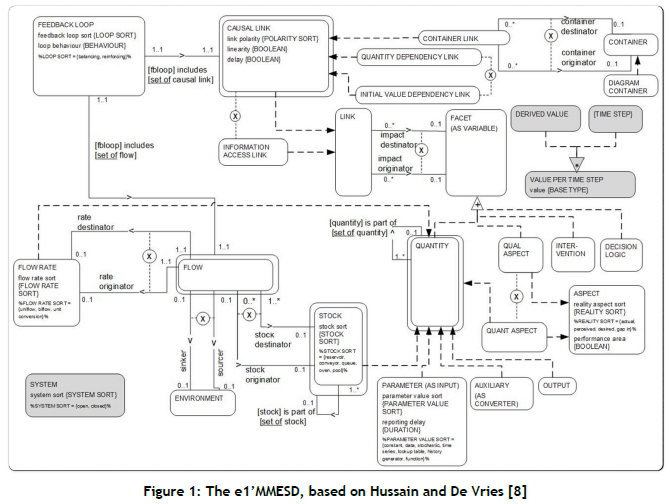
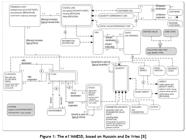
Building on the premise that enterprise engineering (EE) can be enhanced by system dynamics (SD) to support strategic decision-making and redesign [2], De Vries and Dietz [4] developed the meta model for enterprise system dynamics (MMESD). To provide conceptual clarity, they used GOSL [8], a first-order logic language used by the EE community to define a system's state and transition spaces. The MMESD offers a set of guidelines to help users create comprehensive causal loop stock and flow diagrams (CLSFD). This paper uses the graphical formalism of GOSL to express the e1 'MMESD, as shown in Figure 1, while its textual formalism is specified using Peano Russell notation.
Using the initial MMESD by De Vries and Dietz [4], Hussain [33] surveyed 30 practitioners to evaluate its usability. The survey assessed whether the MMESD, expressed in GOSL and supported by guidelines, was easy for a practitioner to understand and use when creating a CLSFD. The results of the survey prompted a review of how specialisations, subtypes, and attributes are used in the meta model. In a subsequent publication, Hussain and De Vries [5] used a DSR approach to address these identified limitations, resulting in the development of an extended version, the eMMESD.
This extension was built by comparing how SD concepts are represented in five of the most common SD software tools identified by the System Dynamics Society [7]: Vensim, PowerSim, STELLA, NetLogo, and AnyLogic. The comparative evaluation by Hussain and De Vries [5] revealed two key areas for refining the initial MMESD artefact. First, the comparison identified new conceptual elements that were not present in the initial model, such as the DECISION LOGIC concept, represented by a diamond in the software Stella. Second, it highlighted discrepancies in how existing MMESD elements, such as QUANTITY, STOCK, and LINK, are represented in the different software tools. Following these improvements, Hussain and De Vries [5] demonstrated the eMMESD by building a CLSFD for a teacher education faculty (TF) case study in Croatia [6].
The TF case highlighted the need for more complex demonstration cases to illustrate and validate eMMESD concepts. According to the System Dynamics Society [7], there are other common SD software tools such as GoldSim and Simile. However, the eMMESD was not validated on all the common tools. Hussain and De Vries [8] shortlisted 13 of the most widely used core software tools according to the System Dynamics Society. From this list, GoldSim, iMODELER Desktop, Insight Maker, Simile, and Ventity were selected for a detailed comparison. This analysis focused on how these tools represent core system dynamics elements such as STOCKS, FLOWS, LINKS, and QUANTITIES. The comparison not only validated additions to the initial MMESD [5], but also identified new gaps, leading to the development of the more refined e1MMESD artifact [8].
The elMMESD was extended to include a new pool STOCK type, which can handle multiple inflows and outflows, reflecting the "ageing chains" concept from Sterman [3]. The comparison also validated the existing "conveyor" STOCK sort and led to the addition of a reporting delay attribute for the PARAMETER concept. To improve model readability and to manage complexity, object-oriented concepts were incorporated, introducing a CONTAINER type to support modular model building [34]. The diverse terminology for QUANTITIES in the different tools also highlighted the need for potential standardisation.
Hussain and De Vries [8] validated the e1MMESD by applying it to a more complex case study in a higher education context [11]. Following a similar approach to the validation of the initial MMESD and eMMESD artifacts [5], Hussain and De Vries [8] used secondary data from an education for sustainable development (ESD) case to build a CLSFD. The complexity of this case allowed for the instantiation of all e1MMESD types except for OUTPUT, including elements not demonstrated in previous work, such as DECISION LOGIC, RESPONSE LINK, and INFORMATION LINK. The case demonstration also led to a process of further reflection on and refinement of the e1MMESD, which led to the version called e1'MMESD, illustrated in Figure 1. The main artefact of this study, the PSDM, guides a participant via a sequence of steps and videos towards an understanding of the concepts included in Figure 1. As an example, Figure 1 indicates that a FEEDBACK LOOP instance includes a set of CAUSAL LINK instances.
3.2. Co-production of knowledge through participatory system dynamics modelling
Stave [35] and Voinov et al. [36] define participatory modelling (PM) as a purposeful learning process for action that engages the implicit and explicit knowledge of stakeholders to create formalised and shared representations of reality. During the modelling process, stakeholders are actively involved in helping to define problems, identify how system components relate to one another, and evaluate potential solutions to guide decision-making [12, 36]. Király and Miskolczi [37] describe three major participatory methods under the umbrella of sD: (1) group model building (GMB); (2) participatory system dynamics (PSD) modelling; and (3) community-based system dynamics (CBSD). Kotir et al. [12] discuss companion modelling, mediated modelling, and collaborative modelling as further PM approaches to model-based systems analysis.
PM operates on the principle that stakeholders - those who directly engage with and are affected by a system - have valuable insights into its processes and dynamics. Their lived experiences, needs, and perspectives often reveal critical aspects that may be missed by external researchers or scientists [12]. During PM, individual mental models combine to form shared organisational mental models, altering perceptions and transforming values and paradigms. In turn, this modifies the environment of the individuals and affects their own mental models [38]. The primary results of PM can include a range of system models, ranging from qualitative visual maps, which include CLDs, to quantitative simulation models that incorporate spatial and temporal data [12]. General PM principles can also be combined with the SD approach, resulting in a PSD method, which incorporates various perspectives, mental models, and understandings [3, 39-41]. This process could develop stakeholders' understanding of future decisions and enable a structured exploration of interdependencies.
The PSDM, the method artefact discussed in this paper, combines general PM principles with MMESD guidelines, as presented in De Vries and Dietz [4], Hussain and De Vries [5], and Hussain and De Vries [8]. The approach aims to co-produce qualitative SD models, including CLDs and CLSFDs, to serve as learning tools that enable technical modellers and stakeholders to integrate diverse knowledge and to promote systems thinking [12, 42]. PSD modelling practices include an iterative process in which the end-users of PSD models are engaged in co-creating models and in testing and refining them. Stakeholders develop a testable local theory of the system by developing an initial qualitative understanding of the system, followed by a more rigorous mathematical evaluation of system behaviour [43]. The PSD projects usually follow a six-phase cycle: (1) participate, (2) calibrate, (3) simulate, (4) translate (implement), (5) evaluate, and (6) iterate. The iterate phase is crucial, as it allows participants to loop back to any previous step, ensuring continuous refinement throughout the process [43-45].
In a recent paper, Kotir et al. [12] present a PSD modelling approach that is consistent with PM practices [36, 46] and SD modelling processes [3], following a six-stage iterative process. It begins with pre-workshop activities (Stage 1) to define the problem and scope through stakeholder engagement. Next, in problem definition (Stage 2), key problems and the mental models of stakeholders are identified. This leads to model conceptualisation (Stage 3), where the system's underlying drivers and feedback loops are mapped out using CLDs. During simulation model formulation (Stage 4), the conceptual model is translated into a quantitative form using stock and flow diagrams. The model is then rigorously checked and validated in model testing and verification (Stage 5) to ensure that it is reliable. Finally, in policy design and evaluation (Stage 6), stakeholders use the validated model to design and test different policy scenarios, facilitating decision-making and strategic planning. The entire process is underpinned by ongoing stakeholder engagement and feedback loops, allowing for constant iteration and refinement.
This study adopts a PSD modelling workflow, based on the guidance provided by Voinov et al. [36] and Kotir et al. [12]. Stages 4, 5, and 6 of the PSD modelling approach from Kotir et al. [12], which include simulation model formulation, model testing and verification, and policy design and evaluation, have been simplified in our approach. This study aims to provide a method to produce qualitative models, such as CLDs and CLSFDs, to facilitate stakeholder understanding and knowledge co-production, as opposed to developing a quantitative simulation model. The current work in the SD literature focuses on participation as a way to elicit knowledge for modelling purposes rather than as a way to co-produce knowledge [19, 46-49]. The e1'MMESD integrated with the PSDM, as detailed in this study, provides a method that prioritises stakeholder engagement and knowledge co-production, using a clear definition and distinction of system concepts.
3.2.1. Participatory modelling for sustainable development goals
The Sustainable Development Goals (SDGs), as part of the United Nations 2030 Agenda, provide a comprehensive framework for global sustainability. Covering 17 goals and 169 targets in the economic, social, and environmental domains, this framework embodies a highly interconnected system with a complex set of interactions [27, 50]. Modelling offers a valuable way to explore these interactions, enabling local communities to navigate trade-offs and harness synergies better [27]. In particular, SD modelling is well suited for this purpose, as it can incorporate feedback and capture complex systems processes [51, 52]. Di Lucia et al. [28] highlight that SD is especially effective for examining SDG interactions from both developer and decision-maker perspectives. Building on this approach, Bandari et al. [27] designed a participatory SD model, the local environmental and socio-economic model (LESEM), to simulate the local environmental and socio-economic dimensions of sustainability and their interactions. Following this precedent, the SD models developed in this study aim to be aligned with the SDG targets to make it easier to understand the complex interactions between system interventions and SDG targets that drive local impact.
3.2.2. Tools for online participatory modelling
Online tools that make collaborative modelling easier have become increasingly prominent, especially after the need to work remotely during the COVID-19 pandemic. These platforms allow geographically dispersed participants to work together in real time. A wide range of online platforms, including MURAL, Miro, Lucidspark, FigJam, Draw.io, and Google Drawings, now support this type of distributed collaboration [53, 54]. These tools offer digital whiteboards and modelling environments in which teams can co-create and edit content simultaneously [55]. Their features, such as sticky notes, diagramming capabilities, and templates, make them highly effective for co-design and collaborative model-building activities [53-62].
In a study of human-computer interaction, Gutschmidt et al. [63] identified several key patterns for participatory modelling. While these patterns were initially developed for a physical multi-touch table, they are also highly applicable to designing and selecting online modelling tools. These patterns include features such as hovering to reveal information and to conserve screen space, zooming to enhance visual accessibility, and identifying users to ensure equal participation [56]. Gutschmidt [64] later applied these ideas in an experiment using two free tools, Draw.io and Google Drawings. The study used the technology acceptance model (TAM) to evaluate user perception of these tools, based on five criteria: (1) perceived usefulness; (2) perceived ease-of-use; (3) perceived enjoyment; (4) acceptance; and (5) awareness of others' changes. The findings showed that Draw.io scored better than Google Drawings for most of these criteria.
Other studies have also evaluated online participatory modelling tools. A subsequent study by De Vries [65] also recommended Draw.io for a story card method (SCM), but noted a latency issue with the platform. In a follow-up paper for an extended story card method (eSCM), De Vries and Opperman [66] compared MURAL and Miro, with MURAL receiving particular attention for its use in participatory enterprise modelling. The experimental process used to evaluate these tools involved three phases: feature exploration, entry requirement identification, and tool evaluation. The features identified by De Vries and Opperman [66], which were specifically tailored for remote, real-time, cloud-based participatory modelling, led to the selection of MURAL as a candidate for a participatory approach to enterprise modelling with the eSCM.
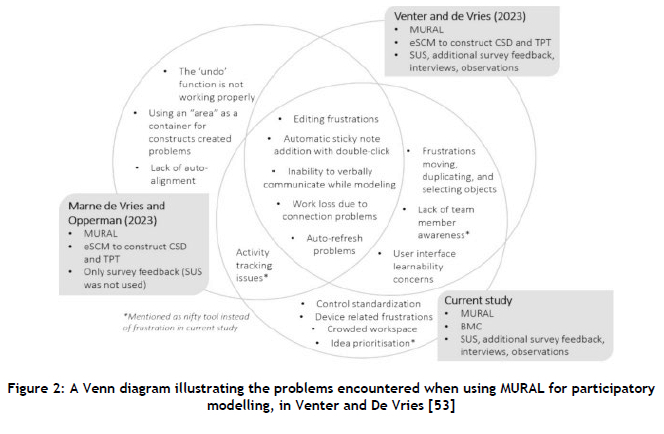
While research by De Vries and Opperman [66] assessed MURAL for creating specific diagrams in the organisation domain of EE, Venter and De Vries [53] expanded their evaluation to include business model canvas (BMC) construction, a cross-domain enterprise modelling exercise. They identified several frustrations with MURAL, as shown in Figure 2.
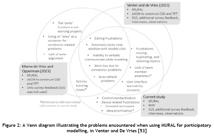
Drawing on the work of De Vries and Opperman [66] and Venter and De Vries [53], we evaluated the Figma platform, which is free when available through an education plan, against the entry requirements identified as necessary to host the PSDM as the main method artefact of this study. Figma and MURAL share many core features, including interactive modelling with real-time updates, board access control with restricted editing rights for guests, role distinction between facilitators and participants, support for exporting boards in multiple formats, intuitive panning and zooming, and the integration of guidance through sticky notes, comments, annotations, and prototypes [57, 60]. However, our comparison revealed that Figma offered several advantages that are not available in MURAL. These included a full version history with the ability to restore past versions, and the ability to use Figma to create, customise, and centrally manage reusable component libraries. The inclusion of such features, particularly version control and component customisation, led us to select Figma over MURAL for this study.
4. USING THE E1 'MMESD IN A PARTICIPATORY SYSTEM DYNAMIC METHOD IN FIGMA
The main objective of the PSDM is to integrate stakeholder knowledge and encourage collaborative learning by having participants co-create two types of diagram - a CLD and a CLSFD - using concepts that are defined via the e1 'MMESD.
4.1.
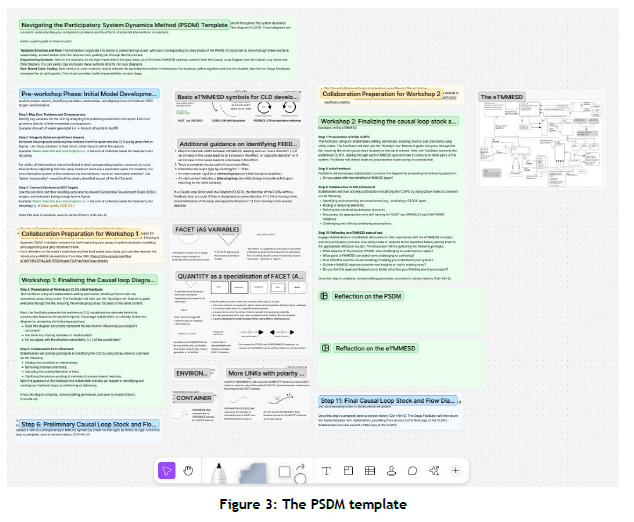
The content of the participatory system dynamics methodThe PSDM, as shown in Figure 3, follows a structured 11-step process implemented in Figma. This process is divided into three main phases: (1) a pre-workshop phase; (2) two distinct workshops; and (3) a post-workshop phase. Additional sections are included to provide guidance on workshop preparation and identifying feedback loops as reinforcing and balancing. To help to organise the process and to clarify roles, each phase is colour-coded to distinguish between the responsibilities of the stakeholders and those of the group facilitator (GF). This method was specifically designed for participants with no prior experience in systems thinking. The collaborative sessions enable participants to share their first-hand knowledge, leading to a deeper understanding of the issues. The method aims to help stakeholders to evaluate the potential outcomes of interventions and to assess their effects on SDG targets.
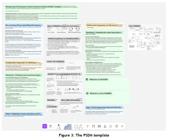
The PSDM was demonstrated using five case studies. The process began with the GF creating an initial CLD from project reports (Steps 1-3). Participants then finalised this CLD during an online workshop (Steps 45). Following this, the GF developed a preliminary CLSFD from the completed CLD (Step 6). The CLSFD was then finalised with the participants in a second in-person workshop (Steps 7-10), with the facilitator creating the final diagram (Step 11). These workshops were conducted, as guided by the ethical clearance conditions, with volunteer final-year industrial engineering students and their study leaders at a research-intensive South African university. Each student collaborated directly with enterprise stakeholders, who provided constant feedback and mentorship. The five projects spanned different enterprise types: agriculture (olive farm process improvements), healthcare (reducing waiting times and food waste in medical facilities), manufacturing (efficiency and waste management in brick production), and industrial services (inventory management in a valve reconditioning enterprise). A key objective of this study was to validate the PSDM that incorporated the e1 'MMESD in order to ensure its applicability in various types of enterprise.
4.2.
The PSDM implementation in FigmaFigure 3 illustrates the PSDM template designed for participants. The top green block in the template introduces its objectives. Below this, Figure 3 outlines the pre-workshop phase and offers guidance for both preparing for and conducting Workshop 1, including the finalisation of the CLD in Step 6. In the centre, the template provides basic e1'MMESD symbols for building a CLD, such as causal links and their polarity. It also includes guidance, based on feedback from Hussain [33], on how to identify feedback loops as balancing or reinforcing. The centre section concludes with all the e1 'MMESD symbols needed to construct a CLSFD. The right side of the template (large green blocks) contains the collaboration preparation for Workshop 2, guidance for the workshop itself, and sections for providing feedback on the PSDM and e1 'MMESD. It also includes the finalisation of the CLSFD in Step 11. The far right side of the template provides a detailed reference to the e1'MMESD itself, as presented in Figure 1 and Section 3.1.
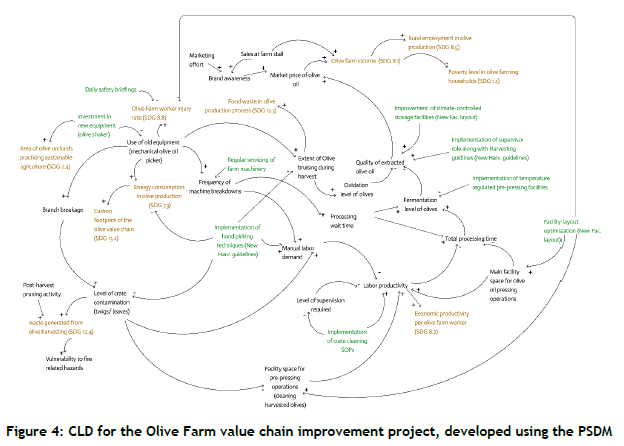
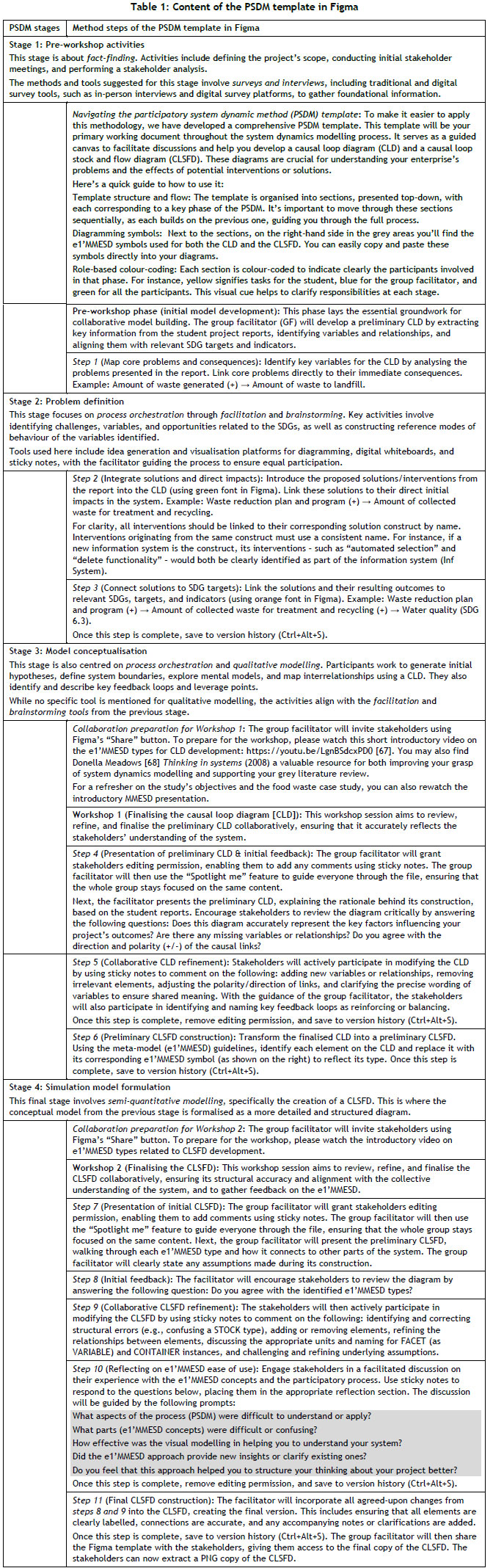
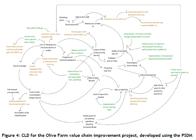
As outlined in Section 3.2 and Table 1, the Figma and PSDM template incorporates a PSDM and PM workflow, guided by the research of Voinov et al. [36] and Kotir et al. [12]. Our approach did not include the final two stages of traditional PSD modelling; that is, it excluded model testing and verification (Stage 5), and policy design and evaluation (Stage 6), as our study did not produce a quantitative stock and flow diagram to simulate, validate, and evaluate the model. Nonetheless, the final CLDs and CLSFDs produced in this study were validated by stakeholders to ensure their accuracy. Applying the steps from Table 1 yielded a set of four outputs for each of the five case studies: (1) a preliminary CLD (Steps 1-3); (2) a finalised CLD (Steps 4-5); (3) a preliminary CLSFD (Step 6); and (4) a finalised CLSFD (Steps 7-11). The first project, an olive farm process improvement, focused on enhancing the olive value chain at a farm in Western Cape, South Africa. This included the harvesting and oil extraction through to the sale of the final products.
Because of space restrictions, we provide here only the CLD for this project, shown in Figure 4, and include the other CLDs in the appendix.
5. EVALUATION RESULTS
To evaluate the effectiveness of the PSDM, we engaged with all 10 participants who took part in the five CLSFD instantiations. Feedback was collected using the questions and probes outlined in Step 10 of the PSDM, as detailed in Table 1, and also grey-shaded. To address directly a methodological limitation identified in a previous empirical study involving postgraduate students [33], in-person interviews were conducted to gather feedback. Earlier work indicated that, without direct in-person feedback, researchers were unable to comprehend fully the underlying reasons that participants experienced difficulty with certain concepts [33].
The questions were thus used as structural codes, in accordance with the guidelines provided by Guest et al. [69]. We did not record the workshops. Rather, the facilitator (the first author of this article) and the participant observer (the second author of this article) captured the participants' feedback, using electronic sticky notes pasted into the dedicated feedback areas included in the PSDM workspace for each project. A student and their study leader had editing access to the shared workspace for their project, and could thus immediately validate the feedback notes. They also had the opportunity to add more comments or feedback using electronic sticky notes. The facilitator consolidated the feedback from the five project workspaces into a separate electronic workspace, manually sorting the sticky notes into the four modelling phases of the PSDM. In addition, the facilitator performed an inductive analysis to identify emerging themes that did not necessarily relate to a particular PSDM modelling phase. The themes were validated by the participant observer for further triangulation.
The evaluation questions focused on three primary evaluation areas: (1) The effectiveness of Figma as a tool for fostering participative modelling; (2) the generalisability of the PSDM template for diverse enterprise types; and (3) the overall usability and clarity of the eI'MMESD concepts. The gathered insights were particularly valuable, as the participant group consisted of industrial engineering students and study leaders with varying levels of experience, and most were new to systems-thinking principles and to the Figma platform.
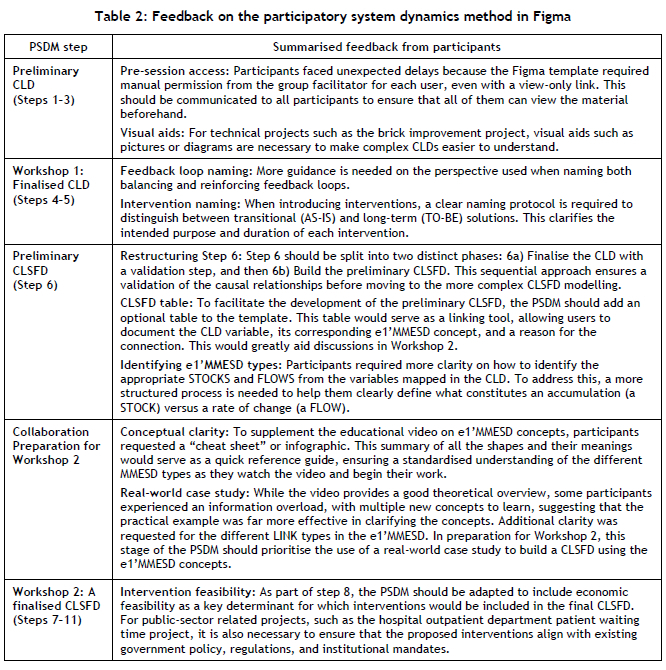
Feedback on the PSDM is summarised in Table 2, which is organised according to the four modelling phases of the PSDM - i.e., a Preliminary CLD, a Finalised CLD, a Preliminary CLSFD, and a Finalised CLSFD.
The overall experience with the use of the PSDM in Figma was positive, with a number of themes emerging from the feedback.
Ease of use. Most participants indicated that the method was easy to follow and was valuable for understanding system relationships and prioritising interventions. Educational videos were provided to the participants in the modelling process to introduce basic SD knowledge and e1 'MMESD concepts. The training material helped to build confidence and expertise in order to participate actively throughout the modelling process. Our experience aligned with the recent positive observations by Kotir et al. [12]. One participant with a background in the general ontology specification language (GOSL) noted that the non-technical language made the eI'MMESD concepts easier to understand and use than their GOSL representation. On the technical side, Figma's collaborative cursor and zoom features were highly appreciated, although a recurring issue was that stamps would occasionally disappear when copied and pasted between files.
Independent application of the PSDM. Based on participant feedback, it was observed that, while individuals were comfortable expanding on existing diagrams, they lacked the confidence to construct a CLSFD independently from the initial stages without the guidance of a group facilitator. This highlights the value of a participatory approach in the development of systems-thinking models. The participatory process also led to a more efficient validation process, as the experience involved minimal time spent on explaining the model, and only minor adjustments based on participant feedback.
Stakeholder perspective is unclear. An important concern raised by participants from different projects was the need for clearer guidance on the stakeholders' perspective during diagram development, as evidenced by the divergence in identified performance areas between the farm manager and the farmer in the olive farm case. Kotir et al. [12] highlight that conflicting policy interests among stakeholders from diverse backgrounds and areas of expertise can pose a significant problem in PM [70, 71]. Consequently, the PSDM should be revised to include a protocol for either reconciling these differing perspectives or explicitly designating a guiding viewpoint for the model.
Using the diagrams for external engagement. Feedback distinguished between the utility of the two diagram types for external engagement. A participant found the CLD useful for engaging in informal validation with an external stakeholder, while other participants pointed out that the complexity of the CLSFD would require a facilitator to communicate its content effectively to external stakeholders.
6. CONCLUSIONS, LIMITATIONS, AND RECOMMENDATIONS
This paper presents the development and evaluation of a participatory system dynamics method (PSDM) that integrates the eI'MMESD into a collaborative modelling tool. The study aimed to create a set of practical guidelines for researchers and practitioners, ultimately enabling more inclusive and effective decision-making for enterprise system improvement via interventions. The paper presents the benefits and difficulties of actively engaging stakeholders in the full modelling process, from developing a causal loop diagram (CLD) to a causal loop and stock flow diagram (CLSFD).
The findings show that the method successfully fostered a shared understanding among the participants, many of whom had limited prior experience in systems thinking. The modelling process was found to be effective with a range of enterprises in helping stakeholders to identify key system relationships, to prioritise interventions, and to find gaps in their current systems. The collaborative features of Figma were particularly instrumental in this process, highlighting the importance of digital tools in supporting collaborative model development. We acknowledge that the current PSDM is very much facilitator-driven, and so also creates some limitations to our study, in which the facilitator had a strong influence on guiding the participants through the PSDM and the eI'MMESD concepts. In addition, final-year students and their study leaders already had some knowledge of industrial engineering techniques, which affected their ease of grasping the e1 'MMESD concepts. The rigour of the PSDM could be enhanced in future by adding projects of a larger scale and involving stakeholders with more diverse backgrounds.
While the participatory approach was effective, participants requested more structured guidance on transitioning from a CLD to a CLSFD and building new models independently. We also identified a critical need for clearer instructions on addressing differing stakeholder perspectives, as such differences could significantly influence model outputs and identified performance areas. Furthermore, our findings on external stakeholder engagement revealed a distinction between the diagrams: that is, whereas the CLD was useful for informal validation, the complexity of the CLSFD required a facilitator to communicate its contents effectively to those not involved in the workshop.
While this study is rooted in the specific context of five projects, the lessons and insights hold broader significance for the modelling community. The principles of enhancing conceptual clarity, providing structured guidance for key modelling steps, and systematically addressing stakeholder perspectives are applicable to various participatory modelling initiatives. Building on the insights from this study, future work should focus on developing a new iteration of the PSDM that directly addresses the challenges identified in this research. A key objective for this new iteration would be to facilitate deeper stakeholder involvement, moving beyond mere participation to enabling genuine consensus-based decisions. Validation of the new iteration should also extend to demonstrating its applicability to multi-enterprise contexts. In addition, the CLSFDs developed through this process could be advanced into quantitative models and evaluated using simulation tools, further expanding their utility for decision-making.
ACKNOWLEDGEMENTS
This work is based on research supported in part by the National Research Foundation (NRF) of South Africa through Unique Grant No. RA22112375851.
REFERENCES
- [1] J. L. Dietz et al., "The discipline of enterprise engineering," International Journal of Organisational Design and Engineering, vol. 3, no. 1, pp. 86-114, 2013.
- [2] H. Hussain and M. de Vries, "System dynamics applied in enterprise engineering: A systematic literature review," Journal of Modelling in Management, vol. 20, no. 1, pp. 1-29, 2025.
- [3] J. D. Sterman, Business dynamics: Systems thinking and modeling for a complex world. MacGraw-Hill Company, 2000.
- [4] M. de Vries and J. L. Dietz, "A meta model for enterprise systems dynamics: Reducing model ambiguity," presented at the Industrial Engineering, Systems Engineering and Engineering Management (ISEM) Conference, Cape Town, 2023.
- [5] H. Hussain and M. de Vries, "Extending the meta model for enterprise systems dynamics from a software tooling perspective," in Proceedings of the 15th International Joint Conference on Knowledge Discovery, Knowledge Engineering and Knowledge Management - KEOD, 2023, pp. 5061.
- [6] K. Tomljenovic, M. H. Dlab, and V. Zovko, "Using system dynamics approach to development of enrollment policies in higher education: A case of teacher education faculties in Croatia," TEM Journal, vol. 11, no. 2, pp. 908-913, 2022.
-
[7] System Dynamics Society, "Core system dynamics modeling software," Core Software, System Dynamics Society. Accessed 01 June, 2023. Available https://systemdynamics.org/tools/core-software/
» https://systemdynamics.org/tools/core-software/ - [8] H. Hussain and M. de Vries, "Towards a comprehensive meta model for enterprise system dynamics," in 34th Southern African Institute for Industrial Engineering Conference 2024 (SAIIE34), 2024.
- [9] K. Peffers, T. Tuunanen, M. A. Rothenberger, and S. Chatterjee, "A design science research methodology for information systems research," Journal of Management Information Systems, vol. 24, no. 3, pp. 45-77, 2007.
- [10] K. Peffers, T. Tuunanen, and B. Niehaves, "Design science research genres: Introduction to the special issue on exemplars and criteria for applicable design science research," vol. 27, no. 2, pp. 129-139, 2018.
- [11] E. Faham, A. Rezvanfar, S. H. M. Mohammadi, and M. R. Nohooji, "Using system dynamics to develop education for sustainable development in higher education with the emphasis on the sustainability competencies of students," Technological Forecasting and Social Change, vol. 123, pp. 307-326, 2017.
- [12] J. H. Kotir et al., "Field experiences and lessons learned from applying participatory system dynamics modelling to sustainable water and agri-food systems," Journal of Cleaner Production, vol. 434, 140042, 2024.
- [13] J. Barjis, "Collaborative, participative and interactive enterprise modeling," in International Conference on Enterprise Information Systems, 2009, pp. 651-662.
- [14] J. Krogstie, Model-based development and evolution of information systems: A quality approach. Springer Science & Business Media, 2012.
- [15] K. Sandkuhl and U. Seigerroth, "Participative or conventional enterprise modelling? Multiple-case analysis on decision criteria," in 28th European Conference on Information Systems (ECIS), An Online AIS Conference, June 15-17, 2020.
- [16] N. Videira, P. Antunes, and R. Santos, "Engaging stakeholders in environmental and sustainability decisions with participatory system dynamics modeling," in Environmental modeling with stakeholders: Theory, methods, and applications. Springer, 2016, pp. 241-265.
- [17] S. Chandran, "Operational excellence: Process optimization for competitive edge," International Journal for Multidimensional Research Perspectives, vol. 2, no. 10, pp. 1-15, 2024.
- [18] R. de Angelis and G. Ianulardo, "Circular economy principles as a basis for a sustainability management theory: A systems thinking and moral imagination approach," Business Strategy and the Environment, vol. 33, no. 5, pp. 4861 -4870, 2024.
- [19] I. Pluchinotta et al., "Co-producing knowledge on the use of urban natural space: Participatory system dynamics modelling to understand a complex urban system," Journal of Environmental Management, vol. 353, 120110, 2024.
- [20] J. Malard et al., "Use of participatory system dynamics modelling to assess the sustainability of smallholder agriculture," in 2015 ASABE Annual International Meeting, 2015.
- [21] J. Malard-Adam, J. Adamowski, H. Tuy, and H. Melgar-Quiñonez, "Modelling Indigenous small-scale agriculture and food systems in Guatemala - Hybrid Bayesian inference for data-poor regions," Agricultural Systems, vol. 221, no. 104102, 2024.
- [22] Y. Nyam, J. Kotir, A. Jordaan, and A. Ogundeji, "Developing a conceptual model for sustainable water resource management and agricultural development: The case of the Breede River catchment area, South Africa," Environmental Management, vol. 67, no. 4, pp. 632-647, 2021.
- [23] M. Michail et al., "An evaluation of the feasibility, value and impact of using participatory modelling to inform the development of a regional system dynamics model for youth suicide prevention," Health Research Policy and Systems, vol. 23, no. 1, 88, 2025.
- [24] E. Rieder, L. R. Larson, M. 't Sas-Rolfes, and B. Kopainsky, "Using participatory system dynamics modeling to address complex conservation problems: Tiger farming as a case study," Frontiers in Conservation Science, vol. 2, 696615, 2021.
- [25] X. Guo and N. Kapucu, "Engaging stakeholders for collaborative decision making in humanitarian logistics using system dynamics," Journal of Homeland Security and Emergency Management, vol. 17, no. 1, 20180061, 2020.
- [26] L. S. Awah, J. A. Belle, Y. S. Nyam, and I. R. Orimoloye, "A participatory systems dynamic modelling approach to understanding flood systems in a coastal community in Cameroon," International Journal of Disaster Risk Reduction, vol. 101, 104236, 2024.
- [27] R. Bandari et al., "Participatory modeling for analyzing interactions between high-priority sustainable development goals to promote local sustainability," Earth's Future, vol. 11, no. 12, e2023EF003948, 2023.
- [28] L. di Lucia, R. Slade, and J. Khan, "Decision-making fitness of methods to understand sustainable development goal interactions," Nature Sustainability, vol. 5, no. 2, pp. 131-138, 2022.
- [29] I. Benbasat and R. W. Zmud, "Empirical research in information systems: The practice of relevance," MIS Quarterly, vol. 23, no.1, pp. 3-16, 1999.
- [30] W. E. Eder and S. Hosnedl, Design engineering: A manual for enhanced creativity. CRC Press, 2007.
- [31] H. A. Simon, The sciences of the artificial. Cambridge, MA: MIT Press, p. 31, 1969.
- [32] J. Venable, J. Pries-Heje, and R. Baskerville, "FEDS: A framework for evaluation in design science research," European Journal of Information Systems, vol. 25, no. 1, pp. 77-89, 2016.
- [33] H. Hussain, "Investigating the status of co-developing systems dynamics and enterprise engineering: Extending a meta model for systems dynamics," Master's thesis, Department of Industrial and Systems Engineering, University of Pretoria, Pretoria, 2023.
- [34] W. Tignor and M. Myrtveit, "Object oriented design patterns and system dynamics components," Proceedings of the International System Dynamics Society, pp. 155-156, 2000.
- [35] K. Stave, "Participatory system dynamics modeling for sustainable environmental management: Observations from four cases," Sustainability, vol. 2, no. 9, pp. 2762-2784, 2010.
- [36] A. Voinov et al., "Tools and methods in participatory modeling: Selecting the right tool for the job," Environmental Modelling & Software, vol. 109, pp. 232-255, 2018.
- [37] G. Király and P. Miskolczi, "Dynamics of participation: System dynamics and participation - An empirical review," Systems Research and Behavioral Science, vol. 36, no. 2, pp. 199-210, 2019.
- [38] W. Daré et al., "Learning about interdependencies and dynamics," in Companion modelling: A participatory approach to support sustainable development. Springer, 2013, pp. 233-262.
- [39] I. Pluchinotta, A. O. Kazakçi, R. Giordano, and A. Tsoukiàs, "Design theory for generating alternatives in public decision making processes," Group Decision and Negotiation, vol. 28, no. 2, pp. 341-375, 2019.
- [40] I. Pluchinotta, G. Salvia, and N. Zimmermann, "The importance of eliciting stakeholders' system boundary perceptions for problem structuring and decision-making," European Journal of Operational Research, vol. 302, no. 1, pp. 280-293, 2022.
- [41] I. Pluchinotta et al., "A participatory system dynamics model to investigate sustainable urban water management in Ebbsfleet Garden City," Sustainable Cities and Society, vol. 67, 102709, 2021.
- [42] R. A. Kelly et al., "Selecting among five common modelling approaches for integrated environmental assessment and management," Environmental Modelling & Software, vol. 47, pp. 159-181, 2013.
- [43] J. D. Sterman, "Learning in and about complex systems," System Dynamics Review, vol. 10, no. 23, pp. 291-330, 1994.
- [44] S. Peck, "Group model building: Facilitating team learning using system dynamics," Journal of the Operational Research Society, vol. 49, no. 7, pp. 766-767, 1998.
- [45] L. Zimmerman, D. W. Lounsbury, C. S. Rosen, R. Kimerling, J. A. Trafton, and S. E. Lindley, "Participatory system dynamics modeling: Increasing stakeholder engagement and precision to improve implementation planning in systems," Administration and Policy in Mental Health and Mental Health Services Research, vol. 43, no. 6, pp. 834-849, 2016.
- [46] A. Beall King and M. Thornton, "Staying the course: Collaborative modeling to support adaptive and resilient water resource governance in the Inland Northwest," Water, vol. 8, no. 6, 232, 2016.
- [47] B. Hedelin et al., "What's left before participatory modeling can fully support real-world environmental planning processes: A case study review," Environmental Modelling & Software, vol. 143, 105073, 2021.
- [48] R. Jordan et al., "Twelve questions for the participatory modeling community," Earth's Future, vol. 6, no. 8, pp. 1046-1057, 2018.
- [49] R. Manellanga and I. David, "Participatory and collaborative modeling of sustainable systems: A systematic review," in Proceedings of the ACM/IEEE 27th International Conference on Model Driven Engineering Languages and Systems, 2024, pp. 645-654.
- [50] United Nations Department of Economic and Social Affairs, "Transforming our world: The 2030 agenda for sustainable development," United Nations, 2015.
- [51] T. Coupé, "Replicating 'Predicting the present with Google Trends' by Hyunyoung Choi and Hal Varian (The Economic Record, 2012)," Economics, vol. 12, no. 1, 20180034, 2018.
- [52] M. Pedercini, S. Arquitt, and D. Chan, "Integrated simulation for the 2030 agenda," System Dynamics Review, vol. 36, no. 3, pp. 333-357, 2020.
- [53] A. Venter and M. de Vries, "Usability of virtual tools for participatory enterprise modelling," South African Journal of Industrial Engineering, vol. 34, no. 3, pp. 1-12, 2023.
- [54] B. A. Navarro, A. Mengual-Recuerda, D. Juárez-Varón, and M. de la Torre Martínez, "The role of visual collaboration applications in web seminars for university education," in INTED2025 Proceedings, 2025, pp. 2489-2500.
- [55] V. Jackson, A. van der Hoek, R. Prikladnicki, and C. Ebert, "Collaboration tools for developers," IEEE Software, vol. 39, no. 2, pp. 7-15, 2022.
- [56] P. Opperman and M. de Vries, "Evaluating the usefulness of an online participative modelling tool when post-graduate engineers co-model enterprise operations," in 2022 IEEE IFEES World Engineering Education Forum - Global Engineering Deans Council (WEEF-GEDC), 2022, pp. 1 -5.
-
[57] MURAL, "Features: Visual collaboration made easy." Accessed 03 September, 2025. Available https://www.mural.co/features
» https://www.mural.co/features -
[58] Miro, "Miro: The innovation workspace." Accessed 03 September, 2025. Available https://miro.com/
» https://miro.com/ -
[59] Lucidspark, "The virtual whiteboard where ideas ignite." Accessed 03 September, 2025. Available https://lucid.co/lucidspark
» https://lucid.co/lucidspark -
[60] FigJam, "FigJam." Accessed 03 September, 2025. Available https://www.figma.com/figjam/
» https://www.figma.com/figjam/ -
[61] Draw.io, "Features of draw.io." Accessed 03 September, 2025. Available https://www.drawio.com/features
» https://www.drawio.com/features -
[62] Google Workspace, "Learn how to use drawings & markups." Accessed 03 September, 2025. Available https://support.google.com/docs/answer/179740?hl=en&co=GENIE.Platform%3DDesktop
» https://support.google.com/docs/answer/179740?hl=en&co=GENIE.Platform%3DDesktop - [63] A. Gutschmidt, V. Sauer, K. Sandkuhl, and A. Kashevnik, "Identifying HCI patterns for the support of participatory enterprise modeling on multi-touch tables," in IFIP Working Conference on The Practice of Enterprise Modeling, 2019, Springer, pp. 118-133.
- [64] A. Gutschmidt, "An exploratory comparison of tools for remote collaborative and participatory enterprise modeling," in ECIS 2021 Research-in-Progress Papers, 57, 2021.
- [65] M. de Vries, "Adapting and evaluating the story-card-method," in Enterprise Engineering Working Conference, 2021, Springer, pp. 74-94.
- [66] M. de Vries and P. Opperman, "Improving active participation during enterprise operations modeling with an extended story-card-method and participative modeling software," Software and Systems Modeling, vol. 22, no. 4, pp. 1341-1368, 2023.
-
[67] D. Gurule, Loma Linda University, YouTube. "Systems thinking: Causal loop diagrams." (04 January). Accessed 05 September, 2025. Available: https://www.youtube.com/watch?v=LgnBSdcxPD0
» https://www.youtube.com/watch?v=LgnBSdcxPD0 - [68] D. Meadows, Thinking in systems. Chelsea Green Publishing, 2008.
- [69] G. Guest, K. M. MacQueen, and E. E. Namey, Applied thematic analysis. Sage Publications, 2011.
- [70] J. H. Kotir, C. Smith, G. Brown, N. Marshall, and R. Johnstone, "A system dynamics simulation model for sustainable water resources management and agricultural development in the Volta River Basin, Ghana," Science of the Total Environment, vol. 573, pp. 444-457, 2016.
- [71] J. H. Kotir, G. Brown, N. Marshall, and R. Johnstone, "Systemic feedback modelling for sustainable water resources management and agricultural development: An application of participatory modelling approach in the Volta River Basin," Environmental Modelling & Software, vol. 88, pp. 106-118, 2017.
ORCID® identifiers
H. Hussain
https://orcid.org/0009-0006-2404-9636
M. de Vries
https://orcid.org/0000-0002-1715-0430
APPENDIX
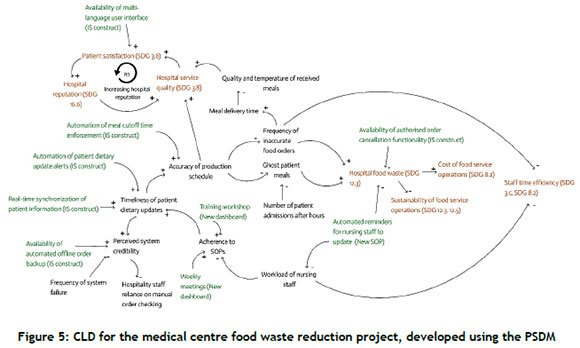
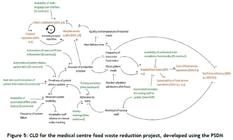
The second project addressed reducing food waste in a medical facility by improving the flow of information between two in-house systems - that is, one for food ordering (Anita) and another for patient admissions and billing (Trimmed). The final CLD is illustrated in Figure 5.
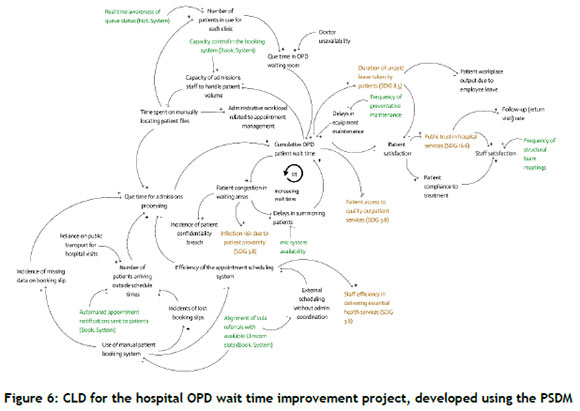
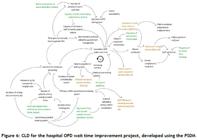
The third project was aimed at mitigating prolonged wait times at a hospital's outpatient department (OPD), which was having a negative impact on both patients and staff. Figure 6 shows the finalised CLD for this case.
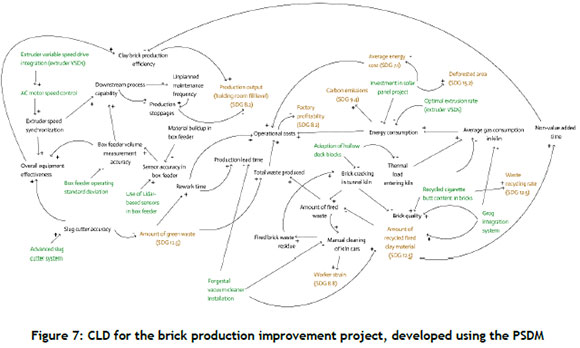
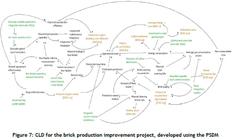
The fourth project concentrated on efficiency and waste management in brick production at a clay brick manufacturing facih'ty. The finah'sed CLD is presented in Figure 7.
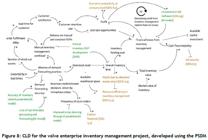
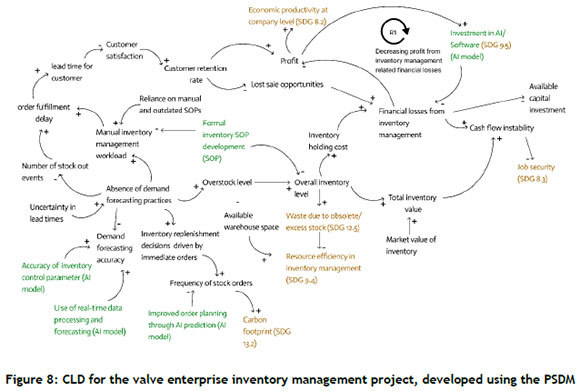
Finally, the fifth project focused on improving inventory management in a valve reconditioning enterprise. The goal was to determine the optimal economic order quantity, reorder point, and safety stock levels. The final CLD for this case is provided in Figure 8.