Fundamental Principles and Characteristics of Technology Roadmapping for Multiple Emerging Technologies in the South African Mining Industry
Abstract
This study uses a three-round Delphi method to establish a consensus framework for technology roadmapping in the South African mining industry. With 22 experts, it validates five core principles - strategic alignment, needs-driven processes, collaboration, strategic questioning, and risk management - and essential characteristics, including defined milestones and local context tailoring. The identified priority technologies are automation, artificial intelligence, and sustainable energy. The framework integrates Environmental, Social and Governance factors and dual maturity assessments. This research provides a validated, context-specific tool for mining companies to de-risk technology investment and enhance sustainable competitiveness.
Abstract
Hierdie studie gebruik 'n drie-ronde Delphi-metode om 'n konsensusraamwerk vir tegnologiepadkaartontwikkeling in die Suid-Afrikaanse mynbedryf te vestig. Op grond van insette van 22 kundiges valideer die studie vyf kernbeginsels: strategiese belyning, behoeftegedrewe prosesse, samewerking, strategiese vraagstelling en risikobestuur, asook noodsaaklike eienskappe, insluitend gedefinieerde mylpale en aanpassing by die plaaslike konteks. Die geïdentifiseerde prioriteitstegnologieë is outomatisering, kunsmatige intelligensie en volhoubare energie. Die raamwerk integreer omgewings-, maatskaplike en bestuursfaktore, asook tweeledige volwassenheidsassesserings. Hierdie navorsing bied 'n gevalideerde, konteksspesifieke instrument vir mynmaatskappye om die risiko van tegnologiebeleggings te verminder en volhoubare mededingendheid te verbeter.
1. INTRODUCTION
In the contemporary environment, technology evolves at an exponential rate, requiring companies to plan and adapt not only for competitiveness but also for survival. Technology roadmapping (TRM) serves as a structured process that helps organisations to plan for future technology needs and to make informed investment decisions. TRM identifies, selects, and develops technologies that address specific product or process needs, ensuring that technology investments align strategically with business objectives. TRMs thus serve as a strategic tool to manage technology development, align it with business objectives [1], and enable the adoption of multiple emerging technologies [2].
The application of TRM originated in technology-focused organisations, such as NASA, Boeing, and the US Department of Energy in the 1960s [3,4]. Since then, TRMs have evolved significantly from simple visual representations of technology projections to comprehensive frameworks that consider market dynamics, product strategies and stakeholder needs. Pioneering efforts by Motorola, Philips, and the Semiconductor Industry Association significantly shaped the modern TRM, advocating a structured approach that is aligned with market needs and product development. More recently, there has been a shift towards model-based TRM, which uses numerical models and tools to enhance the roadmapping process and to enrich its outcomes.
TRM has a rich history of application in diverse industries, extending beyond its initial association with technology-intensive sectors. Notable examples include:
1. Semiconductor industry and telecommunications: The International Technology Roadmap for Semiconductors facilitated coordination among manufacturers, suppliers, and researchers to foster a shared vision of future technological advancements, enabling informed investment decisions and sustained growth [3]. Companies such as Motorola, Lucent Technologies, and Philips used TRM to guide product development and to anticipate market shifts.
2. Aerospace and defence: Early application in organisations such as NASA and Boeing provided a structured framework for aligning technological advancements with mission objectives, managing risks associated with long development cycles, and coordinating efforts among multiple stakeholders in complex long-term projects [3].
3. Energy and manufacturing: TRM was crucial in shaping the energy landscape [5], particularly for renewable energy and sustainable solutions such as hydrogen energy and electric mobility. In manufacturing, TRM supported process optimisation and fostered innovation in materials and production techniques in industries such as aluminium, wood, paper, and magnesium casting [6].
4. Social innovation: TRM's adaptability even extends to addressing societal problems, such as applying TRM to dementia care by identifying relevant technologies, engaging stakeholders, and mapping pathways for technology implementation [7].
Mining is one of the oldest industries globally, with modern mining in South Africa dating back to the 18th century following the discovery of diamonds and gold. Today, the mining industry is a major contributor to South Africa's economy, accounting for an estimated 8% of the country's gross domestic product and potentially exceeding 4o%, when considering dependent industries such as energy production and steel manufacturing.
The global mining industry, including the South African mining industry (SAMI), faces turbulent times owing to factors such as the geopolitical climate, declining commodity prices, and declining demand for certain commodities [8]. Specific to South Africa, problems include a lack of financing because of the withdrawal of foreign investors, increasingly difficult mining conditions, and more stringent regulatory requirements. The combination of declining ore grades and the need to mine deeper and in more difficult areas results in reduced profitability and increased operational costs, threatening the industry's sustainability. Mining deeper introduces greater risks, such as increased rock pressure, heat, dust, and ventilation requirements, which exacerbate operational complexity and safety concerns.
Traditionally, the mining industry has concentrated on making incremental advances on known and proven technologies to address problems [9]. However, this strategy has proven inadequate for the increasingly complex issues faced today. The historical context highlights the absolute need for a paradigm shift, a move towards a more proactive, collaborative, and innovation-driven approach. The industry must now view technology as a strategic enabler for other sectors to incorporate technology roadmaps.
In spite of the acknowledged value of TRM in other complex industries, a limited literature addresses its application and adoption in mining. Technology planning and forecasting, particularly the use of the roadmapping approach, is not a culture that is common to mining companies, indicating that TRM is still in its early stages of adoption in the industry. This research aims to address this critical gap.
Unlike in other industries, owing to a lack of understanding and limited literature, research, and application, the mining industry has yet to experience the full benefits of TRM. By providing a structured and adaptable framework for strategic technology planning, TRM should enable organisations to navigate the complexities of technological advancement, anticipate market changes, foster innovation, and achieve long-term success.
The objective of this study is to identify the fundamental principles and characteristics of technology roadmapping to develop an effective roadmap that addresses the difficulties faced by the SAMI.
The research questions addressed by this study are the following:
a) What are the fundamental principles for developing an effective technology roadmap for emerging technologies?
b) What are the characteristics of an effective technology roadmap that could be applied to address the problems faced by the SAMI today?
The mining industry is at a transformative point, where emerging technologies are essential to tackle current operational, environmental, and social problems. TRM provides the necessary structured framework to represent visually a plan spanning technology, product, and market layers over time. Given the high complexity and risk in the mining industry and the need to implement multiple technologies throughout the value chain, identifying the fundamental principles and characteristics of effective TRM would be crucial.
The expected outcomes of this research are:
1. A set of fundamental principles for effective technology roadmapping for emerging technologies in the SAMI.
2. A clear understanding of the key characteristics of a technology roadmap that is suitable for the South African mining context.
3. A validated framework that guides the application of TRM to the SAMI, addressing its unique challenges.
4. Insights into how TRM could be used to support innovation in the SAMI.
By pivoting from the traditional approach and adopting a structured TRM-driven approach, mining companies could improve productivity, reduce costs, and improve safety. Furthermore, a more efficient and sustainable mining industry would stand to benefit the South African economy as a whole.
The rest of the paper is structured as follows: Section 2 reviews the literature on technology roadmapping and its application in mining. Section 3 describes the Delphi methodology that was used. Section 4 presents the results from each round. Section 5 discusses the findings and presents a roadmapping framework for the South African mining context. Section 6 concludes the paper by outlining its contributions and limitations, and future research directions.
2.1.
IntroductionThe literature review focuses on the fundamental principles and characteristics of technology roadmapping, concluding with a review of technology roadmapping for emerging technologies in the SAMI. This literature review focuses on establishing the theoretical foundation of TRM and contextualising the need for it in the SAMI.
2.2.
Defining technology roadmapping and roadmapsWhile the terms are often used interchangeably, it is important to distinguish between 'roadmapping' (the process) and 'roadmap' (the output). Roadmapping is defined as a structured process that produces a technology roadmap [10]. Garcia and Bray [1] described the process as a "needs-driven technology planning process to help identify, select, and develop technology alternatives to satisfy a set of product needs". This process involves identifying and selecting the technologies needed to meet future product or service requirements, ensuring that research and development (R&D) investments are strategically aligned with business objectives [2].
Converging perspectives highlight TRM's core role in planning and communication, serving as an approach to aligning technological resources with strategic objectives and providing a structured way to explore relationships between markets, products, and technologies over time [2]. A crucial distinction is the emphasis on a needs-driven approach, in which TRM starts with a clear understanding of the need or product the roadmap will address, rather than beginning with a pre-defined solution. Kerr and Phaal [4] argue that the real value lies not only in the tangible roadmap artefact but in applying the framework as a strategic lens, encouraging structured thinking and strategic dialogue.
A technology roadmap is a tangible output of this process, providing a visual, time-based representation of the chosen strategy. Pearson et al. [11] define it as a "multi-layered time-based chart on which the evolution of a particular industry, market, product or technology is plotted". The purpose of the technology roadmap is to address the six fundamental questions, often referred to as the six W's, which are essential for comprehensive technology planning:
• Why - Related to internal/external trends, drivers and demands (e.g., the need to improve safety or reduce environmental impact in mining).
• What - Defines the specific objectives and deliverables (products, services, or capabilities) that the roadmap aims to achieve over time.
• When - Establishes the timeframe and key milestones, setting specific deadlines for achieving objectives.
• How - Encompasses the resources (skills, competencies, physical and financial assets) required for successful implementation.
• Who - Identifies the key stakeholders, their roles, and their responsibilities in development and execution (including internal teams and external bodies such as customers and regulatory bodies).
• Where - addresses the geographical or operational scope of the roadmap (embedded in the content of the roadmap itself).
Focusing only on the 'What' results in a weaker structure [4]; addressing all six questions helps to ensure that the roadmap is comprehensive, well-defined, and actionable. TRM has evolved from product development to applications in strategic planning, innovation management and national R&D planning. This evolution has led to various types of TRM, such as product technology roadmaps, emerging technology roadmaps, and sociotechnical transition technology roadmaps [12].
Extending this evolution, recent research has emphasised the need for TRM to address systemic sociotechnical transitions, particularly in developing countries. Letaba and Pretorius [13] proposed a framework for sociotechnical transition technology roadmaps that integrates transition management theory and complex systems theory, recognising that large-scale projects in developing countries require a balance between incumbent stakeholders and niche innovators. Similarly, Manotungvorapun and Gerdsri [14] demonstrated a national-level TRM for sustainable tourism in Thailand, customising the roadmap structure to align external drivers, strategic targets, and technology readiness levels (TRLs) with R&D programmes and infrastructure needs. These developments underscore that TRM is no longer confined to product-technology planning, but is increasingly applied to national and societal challenges.
2.3. The fundamental principles of technology roadmapping
Based on the literature, several fundamental principles underpin effective TRM:
• Needs-driven process: TRM is a planning process that is driven by needs, aiming to identify, select, and develop technology alternatives to satisfy a set of product or service needs [2]. This process facilitates making appropriate technology investment decisions and leveraging those investments [1].
• Strategic alignment: TRM is a strategic process that is used to ensure that an organisation's technological resources align with its strategic objectives [2]. This process often involves a multi-layered, time-based chart that visually represents the evolution of an industry, market, product, or technology [11,15].
• Structured framework: Technology roadmaps use a structured framework to explore and communicate relationships between evolving markets, products, and technologies over time [2,4]. This structure is provided by comprehensively addressing the six fundamental questions (why, what, how, when, who, and where).
• Collaborative and multi-disciplinary: Successful roadmapping relies on multi-disciplinary and cross-functional collaboration, which is crucial for gathering comprehensive information and fostering a shared understanding of the strategic vision [6]. This is exemplified in mining, where input is needed from geotechnical planning, hazard management, and production planning experts.
• Visual representation: Roadmaps often use graphical representations to provide a visual overview of complex relationships, facilitating stakeholder communication and understanding [10].
• Iterative and adaptive: TRMs are not static documents; they must be iteratively reviewed and updated to accommodate changing circumstances and new information [1]. This adaptive approach ensures that the roadmap remains relevant and effective.
• Time-based perspective: Roadmaps incorporate a time dimension to illustrate the anticipated development and deployment of technologies over a defined period [16,10], helping stakeholders to understand the timing of key milestones and anticipated future trends.
Beyond these foundational principles, the dynamic capabilities literature offers a complementary lens. Ostadi et al. [17] applied dynamic capabilities theory (sensing, seizing, and reconfiguration) to Industry 4.0 implementation, identifying 26 dynamic capabilities that enable organisations to adapt to rapidly changing technological environments. Their roadmap model prioritises capabilities hierarchically, starting with sensing emerging technologies (e.g., identifying relevant Industry 4.0 technologies), then seizing opportunities (e.g., establishing connectivity between system components), and finally reconfiguring resources (e.g., developing digitisation strategies). This capability-based perspective is particularly relevant to the SAMI, where firms must continually sense and respond to shifts in commodity prices, regulatory pressures, and technological discontinuities.
Furthermore, to address uncertainty and complexity, researchers have integrated scenario planning and system dynamics into TRM. Tansurat and Gerdsri [18] proposed a framework that combines system dynamics (SD) with scenario-based roadmapping, enabling quantitative simulation of multiple future conditions (e.g., optimistic and pessimistic scenarios) to generate alternative roadmaps. Their four-step approach -developing a baseline roadmap, building an SD model, simulating scenarios, and generating scenario-based roadmaps - provides a replicable methodology for industries facing high environmental volatility. For the SAMI, in which factors such as global commodity demand, energy prices, and regulatory changes are deeply uncertain, such dynamic scenario approaches could significantly enhance roadmap robustness and strategic agility.
2.4. TRMs for emerging technologies in mining
The mining industry grapples with pressures such as depleting ore grades, stringent environmental regulations, and the imperative to improve safety and productivity [8,2]. TRMs provide the structured framework necessary to make it easier to identify critical needs, forecast technological developments, and plan technology investments systematically. Historically, mining has often relied on ad hoc technology planning driven by short-term production targets; however, a strategic shift guided by TRMs is needed to overcome resistance and barriers to emerging technology adoption.
TRMs are evolving to serve the dynamic needs of the mining industry better by integrating with other strategic planning approaches, such as scenario planning, business modelling, and sustainability frameworks [15]. Furthermore, the incorporation of data-driven approaches such as big data analytics, and quantitative methods such as TRLs' systems readiness levels, enhance the objectivity and accuracy of TRMs.
The integration of dynamic capability roadmaps, as proposed by Ostadi et al. [17], suggests that mining firms should first prioritise sensing capabilities, such as scanning for relevant automation, artificial intelligence (AI), and sustainable energy technologies, before investing heavily in seizing and reconfiguration activities. This sequenced approach could help to de-risk technology adoption in capital-intensive mining environments where failure costs are high. Moreover, scenario-based TRM [18] could help SAMI companies to prepare for alternative futures, such as accelerated energy transition or prolonged commodity price depression, by developing flexible roadmaps that adjust milestone timing and technology portfolios in response to changing external conditions.
Emerging technologies that are critical to the mining industry include:
• Digital technologies: Big data analytics, AI, machine learning, the Internet of Things (IoT), and automation offer enhanced resource knowledge and optimised processes.
• Advanced material and manufacturing techniques: Innovation such as additive manufacturing (3D printing) for infrastructure and equipment design.
• Renewable energy and energy efficiency solutions: Solutions to transition to a low-carbon economy and minimise the environmental impact.
The successful adoption of these technologies depends on well-defined roadmaps that are tailored to each company's context, needs, and capabilities. TRMs provide the strategic foresight, structured planning, and collaborative framework that are needed for innovation and to ensure a sustainable future.
3. RESEARCH METHODOLOGY
3.1.
IntroductionThis research adopted a qualitative research paradigm, using a descriptive and exploratory approach to investigate the fundamental principles and characteristics of TRM for multiple emerging technologies in the SAMI. An interpretive research philosophy was adopted, emphasising the understanding of the perspectives of individuals involved in technology adoption and roadmapping in the SAMI context.
The Delphi method was adopted as the primary data collection and research approach. This method is suitable for complex issues with high uncertainty, where a variety of perspectives are required to synthesise expert opinions without readily available empirical data [19]. It is particularly useful for establishing the direction of technological development and prioritising resources.
3.2.
Delphi study designThis research entailed three iterations of the Delphi questionnaire, designed to consolidate participants' expert opinions to reach a consensus.
3.2.1. Expert panel and sampling
The expert panel consisted of individuals with significant knowledge and experience in the SAMI, technology management, and TRM. The population of knowledgeable individuals was difficult to identify, given the limited application of TRM in mining. The snowball sampling method, a valuable non-probability sampling method, was used to identify experts from various backgrounds. This included mining engineers, technology managers, R&D researchers, academic researchers, and technology consultants.
3.2.2. The three-round process
Round 1: Semi-structured and open-ended questionnaire - The first round gathered initial opinions on the top five fundamental principles and characteristics and on the significantly important emerging technologies relevant to the SAMI. Participants were asked to identify and describe these elements from their perspectives.
Round 2: Feedback and refinement - The responses from Round 1 were subjected to thematic analysis. On identifying themes and core ideas, the findings were summarised and returned to the experts alongside the constructed questionnaire that contained the identified themes. In the questionnaire, experts were invited to score the relevance of each principle and the characteristic associated with a five-point Likert scale (from 1=extremely not important/unrelated to 5=extremely important), and to elaborate in additional comments.
Round 3: Iteration and consensus - The responses from Round 2 were summarised to highlight areas of agreement and disagreement. The experts received this feedback, allowing them to re-evaluate their previous responses and to clarify or change their views. The purpose of Round Three was to validate the consensus from Round Two.
3.3.
Data analysis methodsFor the data analysis, both qualitative and quantitative methods were used. Open-ended question responses (Round 1 and comments from the additional rounds) were subjected to qualitative data analysis through thematic analysis to recognise patterns and to determine the major themes and insights pertaining to TRM. The organised stages of the process were: familiarisation, coding, generating themes, reviewing themes, defining and naming themes, and synthesis and interpretation.
For the quantitative data (ratings on the Likert scale) summary, statistical methods were used. The measures and thresholds below were used to determine the strength of agreement.
For an agreement calculation, at least 50% of the respondents had to have selected one of the two highest options on the Likert scale.
For a median target, a median of 4 must be reached, which shows that a central opinion lies in the 'important' range. For strong consensus, both agreement of at least 80% of responses and an interquartile range (IQR) of 1 or less need to be satisfied. For consensus, at least 70% of responses must agree and the median must be 4 or more (even if the IQR > 1). For no consensus, agreement is less than 70% and/or median is less than 4.
4. RESULTS
The Delphi study attracted a varied panel of subject matter experts, with 22 participants consenting to take part. Of them, 90% had a minimum of five years' industry experience, and 75% of them had a minimum of ten years.
4.1. Round One findings: Prioritisation and thematic analysis
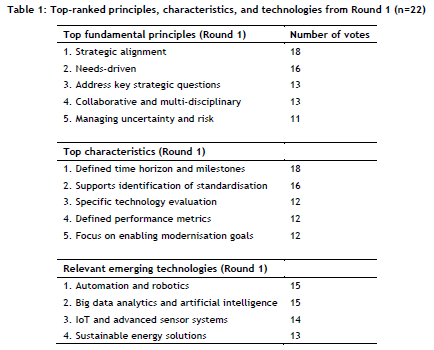
Round 1 identified the initial top-rated elements through expert selection. Table 1 shows the voting rating that was achieved during the first round of the Delphi three-round method that was used to prioritise the fundamental principles, characteristics, and emerging technologies.
4.1.1. Insights from open-ended questions
The thematic analysis of the open-ended questions showed 12 main themes that would be important to contextualising the TRM in the SAMI. The themes were grouped into the six groups shown below:
1. Operational integration & bottom-up participation: Most TRMs are developed in a top-down way, which results in disengagement at the operational level. Buy-in from frontline staff (operators and supervisors) should be sought, because it is critical. Implication: Roadmaps must be developed in partnership with operational personnel, and should be sensitive to site-level issues.
2. Strategic alignment & leadership deficiencies: Leadership in some sectors is characterised by fear and inertia when technology decisions need to be strategic. Implication: Leadership in the relevant sectors would need to be upskilled and strategically consolidated.
3. Technology & site readiness (dual maturity): A dual approach is recommended by assessing both the TRL and site readiness (SRL), which incorporates skills, infrastructure, data, and governance. Implication: Assess viability using the TRL x SRL matrices.
4. Socio-economic and ESG integration: The social objectives of TRM must include socially relevant goals, such as the development of local suppliers and job creation. Implication: Socio-economic development and ESG compliance should be integral to the TRM goals.
5. Governance and execution models: Most mining houses conflate TRM with ordinary project management, and there is a lack of formal governance structures. Implication: TRM should be formalised as a strategic business discipline.
6. At times, regulators lead organisations to 'blindly adopt' technology, resulting in a failed IT adoption chasm. Implication: Incorporate TRM principles in the execution strategy to guarantee successful diffusion.
4.2. Rounds Two and Three: Building consensus
In Rounds 2 and 3, a strong statistical consensus was sought on the priority themes identified in Round 1, using the Likert scale ratings while also using the consensus thresholds.
4.2.1. Consensus on fundamental principles
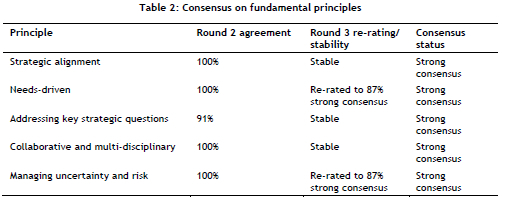
Table 2 outlines five core principles, showing strong consensus throughout Round 2 (agreement >80% and IQR <1 ); and consensus was maintained in Round 3, reinforcing the validity of these principles.
The re-rating of the needs-driven principle in Round 3 led to a strong consensus of 87%. In the same way, managing uncertainty and risk received 100% agreement in Round 2 and, after re-rating, had an 87% agreement score, maintaining strong consensus.
4.2.2. Consensus on key characteristics
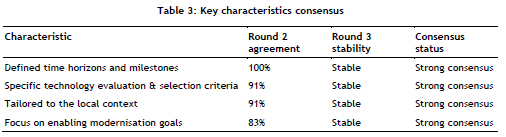
Table 3 below outlines the key characteristics with a strong consensus, highlighting the need for structured planning and contextual relevance. The table shows four characteristics that achieved above 80% consensus in Round 2 and remained stable in Round 3, retaining their status even after the validation round.
4.2.3. Consensus on emerging technologies
Table 4 outlines the strong consensus that was achieved for the two most critical emerging technologies. The technologies below achieved a consensus above 80% in Round 2, and were either retained in the validation round or improved.
5. PROPOSED ROADMAPPING FRAMEWORK FOR THE MINING INDUSTRY
This study set out to identify the fundamental principles and characteristics of technology roadmapping for emerging technologies in the SAMI. The findings from the Delphi study provide a consensus-driven framework that addresses this aim. This section discusses the implications of these findings, situates them in the literature, and presents a consolidated framework for TRM in the SAMI.
5.1.
Strategic alignment and needs-driven planningThe 100% consensus achieved for strategic alignment in multiple rounds underscores its non-negotiable status in the mining context. This finding strongly reinforces the definition of TRM as a strategic planning tool [2, 4], but it also extends it. In an industry characterised by high capital intensity and long asset lifecycles, the experts confirmed that technology adoption for its own sake is untenable. Every technology investment must be explicitly and quantitatively linked to core business objectives such as cost-per-tonne reduction, safety incident reduction, or productivity improvement. This is particularly pertinent, given the declining ore grades and increasing operational complexity facing the SAMI [8].
Closely related is the validation of the needs-driven principle (87% consensus). While Garcia and Bray [1] positioned TRM as a 'needs-driven' process, this study's findings reveal a specific pitfall in the mining industry: the tendency towards solution-led thinking, often driven by vendor pressure or regulatory directives. The experts cautioned against 'blind adoption', emphasising that the roadmap must originate from a clearly articulated operational or business need. This would ensure that the substantial investments required for mining technologies are justified by pressing requirements, rather than being shaped by pre-existing solutions in search of a problem.
5.2.
Characteristics as enablersThe strong consensus on roadmap characteristics provides the practical 'how' to complement the strategic 'why'. The highest-ranked characteristic, defined time horizons and milestones, aligns directly with the time-based perspective that is fundamental to TRM [6]. For mining projects, which often span decades, this characteristic is critical for sequencing investments, managing cash flow, and aligning technology deployment with mine plans.
Notably, the validation of tailored to the local context (91% agreement) introduces a dimension that is often underemphasised in the generic TRM literature. This finding explicitly acknowledges that the unique geological, regulatory, and socio-economic landscape of South Africa cannot be ignored. A roadmap developed for a Canadian or Australian operation is not transferable. This contextual sensitivity is a key contribution of this research, reinforcing the need for frameworks that are adaptable to developing-country contexts.
Furthermore, the qualitative finding regarding dual maturity assessment (TRL x SRL) emerged as a critical refinement of the specific technology evaluation characteristic. The experts argued that assessing only the technology's readiness (TRL) would be insufficient. The site's readiness - encompassing infrastructure, data governance, and, critically, workforce skills - must be evaluated in parallel. This dual-lens approach provides a more realistic assessment of adoption risk, and directly addresses the 'technology adoption chasm' identified in the study.
5.3.
Priority technologies and the innovation imperativeThe strong consensus on automation and robotics (92%) and big data analytics and AI (86%) as priority technologies confirms the industry's recognition that a paradigm shift from incremental improvement is necessary [9]. These technologies are viewed not as optional enhancements, but as strategic imperatives for surviving deeper mining conditions and tighter margins. However, the findings temper this technological optimism with pragmatism. The emphasis on operational integration and bottom-up participation suggests that the primary barriers to adoption are organisational and cultural, rather than technical. TRM, therefore, must function as a change management tool, fostering buy-in from the workforce and ensuring that technology implementation plans are co-developed with those who will operate and maintain the systems.
5.4.
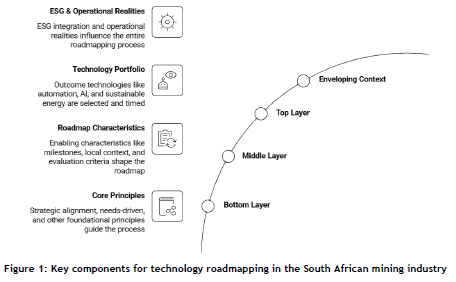
A consolidated framework for technology roadmapping in the South African mining industrySynthesising the validated principles and characteristics yields a consolidated framework for TRM in the SAMI, as illustrated in Figure 1.
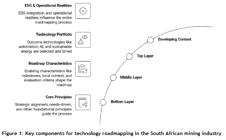
The framework operates as follows:
- Foundation (principles): The roadmap must be built on the five core principles. Strategic alignment and a needs-driven approach define the 'why'. Collaborative, multi-disciplinary engagement and addressing key strategic questions define the 'how' of the process. Managing uncertainty and risk provides the necessary governance overlay.
- Structure (characteristics): These principles inform the roadmap's structural characteristics. It must have defined time horizons and milestones (the 'when') and be tailored to the local context (the 'where'). It should enable modernisation goals by incorporating specific technology evaluation and selection criteria, including the dual assessment of TRL and SRL.
- Outcome (technology portfolio): This structured process guides the selection, development, and deployment of priority emerging technologies, such as automation and robotics, AI, and big data analytics, in a way that is strategically aligned and operationally feasible.
- Enveloping context: The entire process is enveloped by the need for ESG integration and a focus on overcoming operational integration problems, ensuring that the roadmap delivers not only economic value but also social and environmental sustainability.
6. CONCLUSION
This study used a three-round Delphi method to establish a consensus framework for technology roadmapping in the SAMI. The findings validate five fundamental principles - strategic alignment, needs-driven processes, collaboration, strategic questioning, and risk management - and four key characteristics, including defined milestones, local context tailoring, and specific evaluation criteria incorporating dual maturity assessments (TRL/SRL). Automation and robotics, alongside big data analytics and AI, emerged as priority technologies that require structured roadmapping to address the industry's sustainability challenges.
For generalisability, if this framework were applied to other South African industries, it would accelerate technology adoption by addressing local skills shortages and regulatory realities through its dual maturity assessment and ESG integration. Applied to mining in other countries, its core principles would transfer readily, although local geological, labour, and regulatory contexts would require systematic adaptation rather than direct replication.
The validated framework contributes both theoretically and practically: it extends the TRM literature by providing an empirically grounded model that is sensitive to developing-country contexts, while offering mining practitioners a structured tool for de-risking technology investment and aligning innovation with strategic objectives. Although the Delphi method's reliance on expert opinion and the study's South African focus limit its generalisability, future research should operationalise this framework through longitudinal case studies and investigate its applicability in other resource-based industries that face similar sustainability pressures. Ultimately, this research confirms that TRM provides the strategic discipline that is needed for the SAMI to navigate technological complexity and secure a competitive, sustainable future.
REFERENCES
2. LITERATURE REVIEW
-
[1] Garcia, M.L. and Bray, O.H. 1997. Fundamentals of technology roadmapping. Sandia National Laboratories, Albuquerque, New Mexico, and Livermore, California. https://doi.org/10.2172/471364
» https://doi.org/10.2172/471364 -
[2] Amadi-Echendu, J., Lephauphau, O., Maswanganyi, M. and Mkhize, M. 2011. Case studies of technology roadmapping in mining. Journal of Engineering and Technology Management, 28(1-2), pp 23-32. https://doi.org/10.1016/j.jengtecman.2010.12.002
» https://doi.org/10.1016/j.jengtecman.2010.12.002 -
[3] Kerr, C. and Phaal, R. 2020. Technology roadmapping: Industrial roots, forgotten history and unknown origins. Technological Forecasting and Social Change, 155, 119967. https://doi.org/10.1016/j.techfore.2020.119967
» https://doi.org/10.1016/j.techfore.2020.119967 -
[4] Kerr, C. and Phaal, R. 2022. Roadmapping and roadmaps: Definition and underpinning concepts. IEEE Transactions on Engineering Management, 69(1), pp 6-16. https://doi.org/10.1109/TEM.2021.3096012
» https://doi.org/10.1109/TEM.2021.3096012 -
[5] Sauer, A., Thielmann, A. and Isenmann, R. 2017. Modularity in roadmapping - Integrated foresight of technologies, products, applications, markets and society: The case of "Lithium Ion Battery LIB 2015." Technological Forecasting and Social Change, 125, pp 321-333. https://doi.org/10.1016/j.techfore.2016.08.017
» https://doi.org/10.1016/j.techfore.2016.08.017 -
[6] Kostoff, R.N. and Schaller, R.R. 2001. Science and technology roadmaps. IEEE Transactions on Engineering Management, 48(2), pp 132-143. https://doi.org/10.1109/17.922473
» https://doi.org/10.1109/17.922473 -
[7] Igarashi, Y. and Okada, M. 2015. Social innovation through a dementia project using innovation architecture. Technological Forecasting and Social Change, 97, pp 193-204. https://doi.org/10.1016/j.techfore.2015.01.001
» https://doi.org/10.1016/j.techfore.2015.01.001 -
[8] Dayo-Olupona, O., Genc, B. and Onifade, M. 2020. Technology adoption in mining: A multi-criteria method to select emerging technology in surface mines. Resources Policy, 69, 101879. https://doi.org/10.1016/j.resourpol.2020.101879
» https://doi.org/10.1016/j.resourpol.2020.101879 - [9] Jacobs, J. 2016. Creating a technology map to facilitate the process of modernisation throughout the mining cycle. Master's dissertation, Department of Mining Engineering, University of Pretoria.
-
[10] Yuskevich, I., Hein, A.M., Amokrane-Ferka, K., Doufene, A. and Jankovic, M. 2021. A metamodel of an informational structure for model-based technology roadmapping. Technological Forecasting and Social Change, 173, 121103. https://doi.org/10.1016Zj.techfore.2021.121103
» https://doi.org/10.1016Zj.techfore.2021.121103 -
[11] Pearson, R.J., Costley, A.E., Phaal, R. and Nuttall, W.J. 2020. Technology roadmapping for mission-led agile hardware development: A case study of a commercial fusion energy start-up. Technological Forecasting and Social Change, 158, 120064. https://doi.org/10.1016/j.techfore.2020.120064
» https://doi.org/10.1016/j.techfore.2020.120064 -
[12] Letaba, P., Pretorius, M.W. and Pretorius, L. 2015. Analysis of the intellectual structure and evolution of technology roadmapping literature. In 2015 Portland International Conference on Management of Engineering and Technology (PICMET), pp 2248-2254, IEEE. https://doi.org/10.1109/PICMET.2015.7273147
» https://doi.org/10.1109/PICMET.2015.7273147 -
[13] Letaba, P.T. and Pretorius, M.W. 2022. Toward sociotechnical transition technology roadmaps: A proposed framework for large-scale projects in developing countries. IEEE Transactions on Engineering Management, 69(1), pp 195-208. https://doi.org/10.1109/TEM.2021.3050812
» https://doi.org/10.1109/TEM.2021.3050812 -
[14] Manotungvorapun, N. and Gerdsri, N. 2025. Roadmap toward sustainable tourism development: An evidence- and knowledge-based approach from Thailand. Sustainability, 17(13), 6028. https://doi.org/10.3390/su17136028
» https://doi.org/10.3390/su17136028 -
[15] Letaba, P. and Pretorius, M.W. 2021. Sociotechnical transition technology roadmap for emerging technologies: Conceptual framework. In Proceedings of International Association for Management of Technology, Cairo, Egypt, 19-23 September 2021, pp 464-473. https://doi.org/10.52202/060557-0034
» https://doi.org/10.52202/060557-0034 -
[16] Cobra, R., Sanvezzo, P., Branciforti, M. and Mascarenhas, J. 2021. Circular technology roadmapping (TRM): Fostering sustainable material development. Sustainability, 13(13), 7036. https://doi.org/10.3390/su13137036
» https://doi.org/10.3390/su13137036 -
[17] Ostadi, B., Barrani, L. and Aghdasi, M. 2024. Developing a strategic roadmap towards integration in Industry 4.0: A dynamic capabilities theory perspective. Technological Forecasting and Social Change, 208, 123679. https://doi.org/10.1016/j.techfore.2024.123679
» https://doi.org/10.1016/j.techfore.2024.123679 -
[18] Tansurat, P. and Gerdsri, N. 2026. Applying system dynamics to enhance scenario-based technology roadmapping: Analysis framework and case demonstration. IEEE Transactions on Engineering Management, 73, pp 1872-1888. https://doi.org/10.1109/TEM.2026.3662723
» https://doi.org/10.1109/TEM.2026.3662723 -
[19] Shim, H., Kim, T. and Choi, G. 2019. Technology roadmap for eco-friendly building materials industry. Energies, 12(5), 0804. https://doi.org/10.3390/en12050804
» https://doi.org/10.3390/en12050804
Accepted for publication 8 May 2026
Available online 31 Aug 2026
ORCID® identifiers
K. Diole https://orcid.org/0009-0007-0252-4034
T.P. Letaba https://orcid.org/0000-0001-5799-6679