The cost benefit analysis of reduced wear bandsaws
Abstract
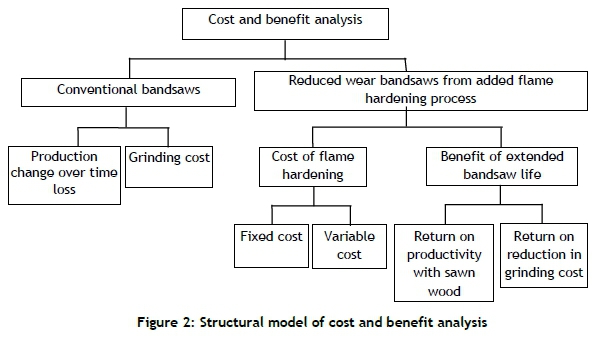
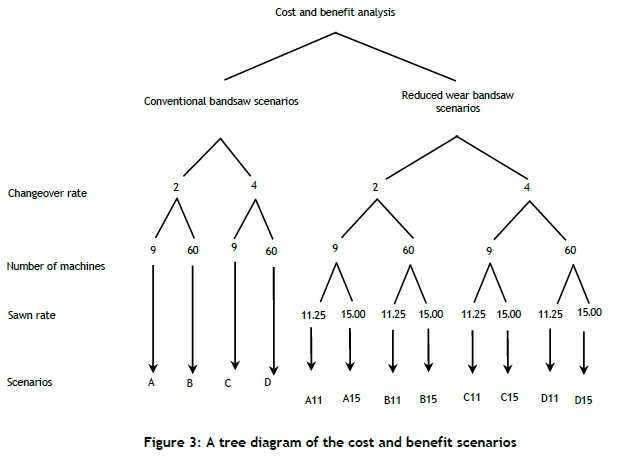
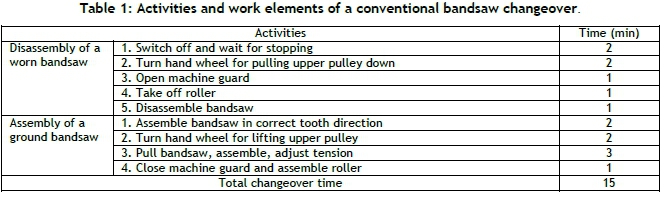
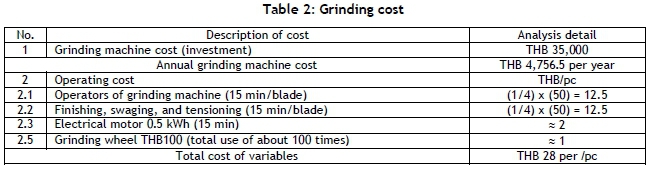
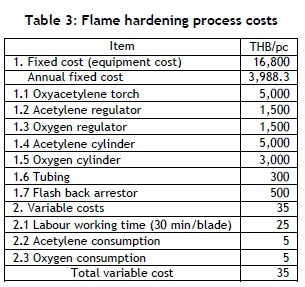
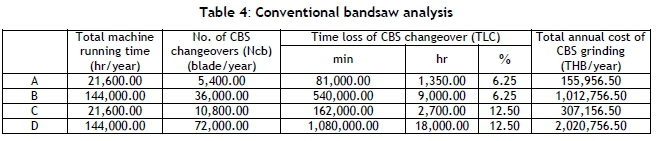
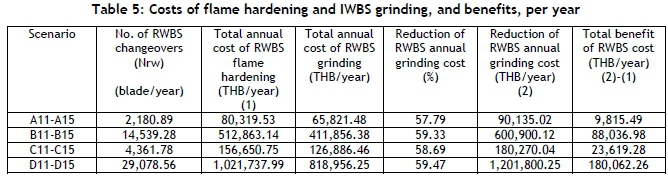
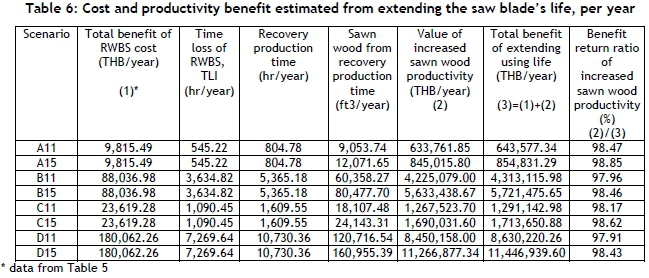
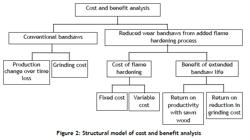
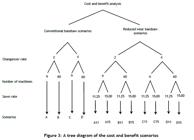
The objective of this work was to analyse the cost and the benefit of extending the useful life of bandsaws by improving their wear resistance in a parawood saw mill. Changeover of worn bandsaw causes downtime 15 minutes. Saw blade change frequency is two to four times per shift, at a sawn rate of 90-120 cubic feet per day. Reduced wear bandsaws can be accomplished by flame hardening, which would reduce grinding cost and losses from changeover downtime. This article therefore analyses scenarios of rubber wood processing plants in Thailand with between nine and sixty sawmills per plant and 300 working days per year. The annual scenarios analysis, based on saw blade grinding and additional flame hardening cost, has an annual fixed cost and variables cost. Implementing the flame hardening increases the costs by THB 80 319.53 to 1 021 737.99 per year. The benefits in this study indicate that reduced wear on bandsaws by implementing a flame hardening process in rubber parawood factories is economical, with benefits in the range of THB 643 577.34 to 11 446 939.60 per year.
 Thumbnail
 Thumbnail