The implications of integrating artificial intelligence into data-driven decision-making
Abstract
Integrating artificial intelligence (AI) into data-driven decision-making offers advantages like increased performance, reduced costs and improved organisational efficiency; however, there are associated risks. The study employs a PRISMA protocol to systematically review academic articles from Scopus, ScienceDirect, and Web of Science databases to determine whether the risks AI pose are worth the rewards they offer. Literature trends reveal a growing interest in AI-driven decision-making, with significant research gaps in African contexts. The study indicates that AI is highly utilized for decision-making to foster competitiveness in manufacturing, finance, healthcare, education, and transport. Identified risks include bias, discrimination, privacy issues, and cybersecurity threats. It is highlighted that businesses need to address concerns about privacy, fairness, and transparency. Policymakers must develop ethical and legal standards besides regular monitoring and auditing of AI uses to mitigate risks.
Abstract
Die integrasie van kunsmatige intelligensie (KI) in data-gedrewe besluitneming bied voordele soos verhoogde werkverrigting, verlaagde koste en verbeterde organisatoriese doeltreffendheid; daar is egter gepaardgaande risiko's. Die studie gebruik 'n PRISMA-protokol stelselmatig om akademiese artikels van die Scopus-, ScienceDirect- en Web of Science-databasisse te hersien om te bepaal of die risiko's wat KI inhou die belonings werd is wat dit bied. Die literatuurtendense toon 'n groeiende belangstelling in KI-gedrewe besluitneming, maar met aansienlike navorsingsgapings in Afrika-kontekste. Die studie dui aan dat KI baie gebruik word vir besluitneming om mededingendheid in vervaardiging, finansies, gesondheidsorg, onderwys en vervoer te bevorder. Geïdentifiseerde risiko's sluit in vooroordeel, diskriminasie, privaatheidskwessies en kuberveiligheidsbedreigings. Die studie beklemtoon dat besighede bekommernisse oor privaatheid, regverdigheid en deursigtigheid moet aanspreek. Beleidmakers moet etiese en wetlike standaarde ontwikkel, benewens die gereelde monitering en ouditering van KI-gebruike om risiko's te versag.
1. INTRODUCTION
In today's era, marked by Industry 4.0 and characterised by a combination of digital technologies with physical systems, the basis of and driving force behind growth and change is incorporating artificial intelligence into data-driven decision-making [1]. Indeed, significant progress in cyber-physical systems, the Internet of Things, and cloud computing are at the root of fundamentally changing the dynamics of how businesses operate, how governments function, and how humans interact with technology [2], [3]. At its core, AI is a revolutionary machine - a machine that can quickly process vast quantities of data to unlock critical insights and drive highly informed decision-making processes with previously unseen efficiency and accuracy [4].
For example, predictive maintenance algorithms in manufacturing show the efficiency of AI in enhancing operational efficiency and improving manufacturing processes. Besides, predictive analytics performed with AI is capable of helping companies to predict and fix failures in their equipment, thus saving on downtime, resource allocations, and maintenance costs [5], [6]. In the health sector, AI-driven diagnostic tools are changing the dimension of medical imaging, since they enable timely disease detection, quality patient outcomes, and organised treatment procedures [7], [8].
AI algorithms also help to analyse critically the financial sector markets and forecast consumer behaviour to let financial institutions make the most appropriate investment decisions and personalise their services to clients [9], [10]. Another advantage of AI solutions is that they increase the delivery of public services in many domains, such as traffic management and disaster response [11], [12]. Last, apart from industry, AI has affected society in several ways, such as optimised traffic management, improved environmental monitoring, and improved educational conditions [13], [14], [15].
Despite AI's advantages, several ethical issues arise from its acceptance in society, including the biases it causes and the transparency deficit it carries [16], [17]. For instance, a lack of clarity might arise when making data-driven decisions, whereby there is a need to question who to hold responsible for any untrustworthiness [8]. Other ethical problems and biases may also come through in decision-making, leading to discriminatory decisions [17]. Last, broader risks threaten society, such as AI-infected viruses and a lack of human autonomy. As a result, it is essential to implement strategies for using AI [18], [19].
Because of the risks that are posed by using AI for data-driven decision-making, an essential question is: "Is the use of AI for competitive advantage worth the associated risks it poses?"
To answer this question, this study intends to analyse the implication of integrating AI into data-driven decision-making with the help of the following research questions:
RQ1 : What are the benefits of using AI in data-driven decision-making?
RQ2: What are the risks of using AI in data-driven decision-making?
RQ3: Which sectors mainly use AI for decision-making?
RQ4: What strategies do organisations use to address issues when using AI for data-driven decision-making?
Thus this paper should give clear insight into AI's multifaceted economic, environmental, and social impacts on decision-making and, ultimately, offer strategies for future research endeavours.
2. METHODOLOGY
2.1. Introduction
This section presents an amended version of the methodologies used by [20] and [21] to analyse the literature and to extract its main findings. This methodology first outlines the strategy to narrow the literature search, then screens the literature and extracts and analyses the relevant data. The methodology is carried out this way to ensure clarity and comprehensiveness.
2.2. Search Strategy
As this research paper aimed to determine the implications of integrating AI into decision-making, an in-depth examination of 'artificial intelligence for data-driven decision-making to gain a competitive advantage' was initially conducted to lay the foundation for formulating the literature review questions.
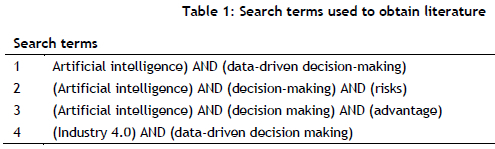
Once the review questions had been formulated, they were broken down into distinct keywords to create the search terms illustrated in Table 1. This involved using Boolean operators, since these would ensure that the retrieved literature consisted only of articles containing one or both search terms in order to explore the relevant sources comprehensively [22].
The search terms were then run through three search engines - Scopus, ScienceDirect, and Web of Science - since those databases are compatible with Boolean operators and have been considered to be of a high standard [23]. Apart from the abovementioned platforms, the search terms were run through Google Scholar to broaden the search and to ensure that no scholarly works were left unexamined.
2.3. Study selection
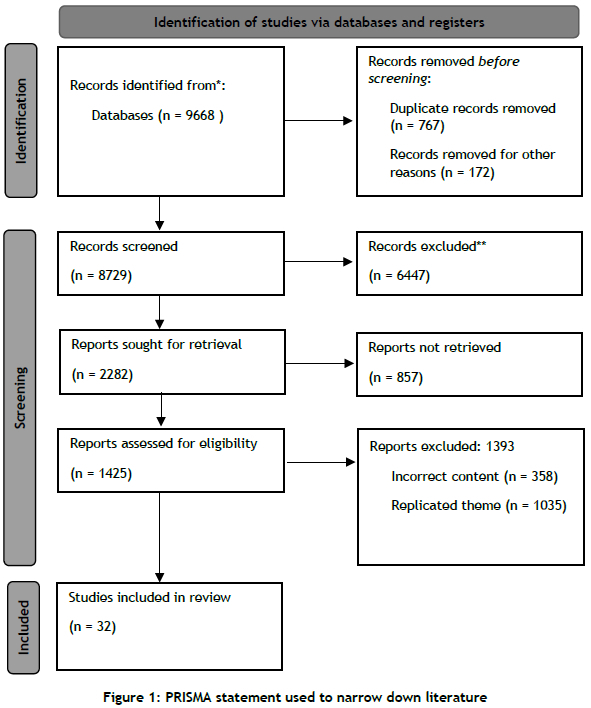
After the literature retrieval, a thorough screening and selection process followed the steps according to the preferred reporting of items for systematic reviews and meta-analyses (PRISMA) statement, as shown in Figure 1. According to the statements proposed by [24] and [25], the PRISMA statement outlines the steps used to limit the initial set of studies into a final set and, in so doing, to make the review sound by increasing its methodological quality.
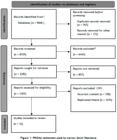
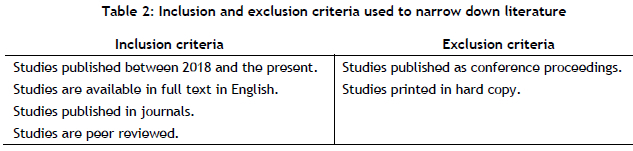
As described by the PRISMA statement, the retrieved literature was subjected to strict screening against the pre-defined inclusion and exclusion criteria shown in Table 2, during which we examined the relevance of each study to the research objective. The specific inclusion and exclusion criteria were chosen to ensure that only recent articles of a high academic quality were included, as the research questions required credible information on the latest implications of AI. According to [26], the PRISMA screening process is used, as it includes only the most relevant studies for analysis so that the literature that is obtained is as fine-tuned as possible.
2.4. Data collection
Once the literature had been refined using the PRISMA statement, the qualitative data from the selected studies was extracted and presented using an author matrix. This was used to compare the primary findings and limitations across the reviewed literature to ensure thoroughness and accuracy.
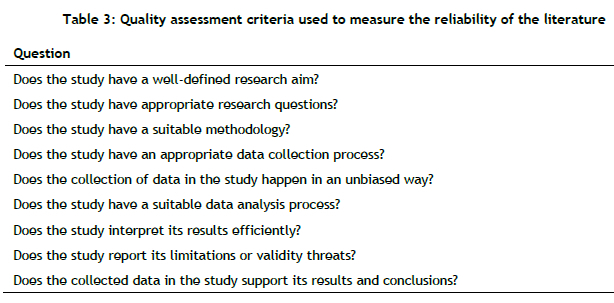
Following the data extraction, a quality assessment, as summarised in Table 3, was carried out to ascertain the reliability and relevance of the literature. This quality assessment used a set of criteria from [27] and [28] to assess the quality of every study, including having a well-defined research aim, a suitable methodology, and reporting its limitations.
The quality assessment also examined each study's strengths and limitations to evaluate the credibility of the extracted data and thereby enhance the overall reliability of the findings.
2.5. Data analysis
After the data had been analysed, the author matrix was converted into a concept matrix by categorising the data into key concepts and themes. According to [29], a concept matrix allows an extensive comparative analysis of reviewed literature to be carried out by examining its similarities, differences, and emerging patterns. Furthermore, the matrix visualises the relationships between the main themes, providing essential implications for the findings.
3. LITERATURE REVIEW RESULTS
This section presents the results of the literature review, from which the literature trends and key findings concerning the integration of AI into data-driven decision-making are discussed.
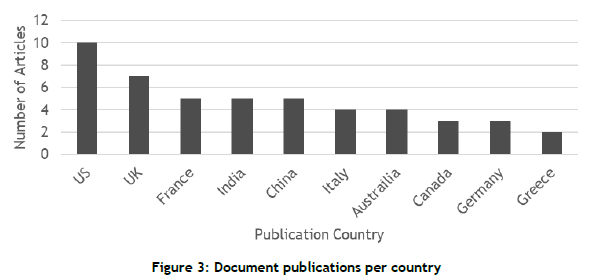
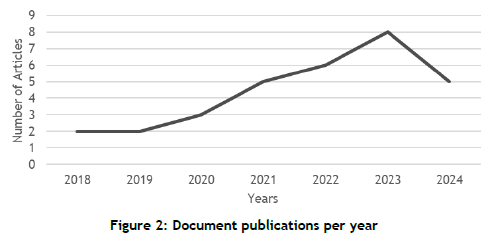
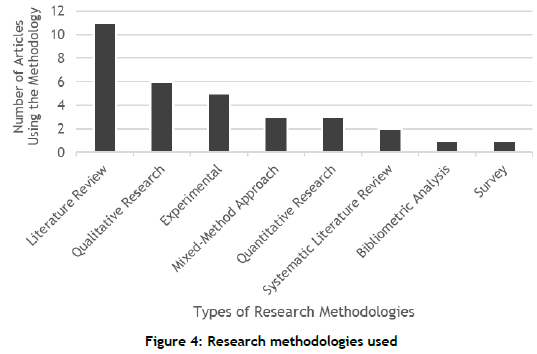
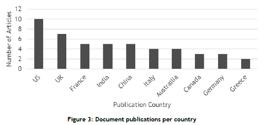
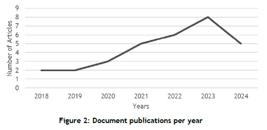
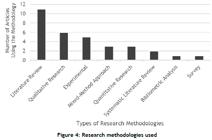
In order to analyse the chosen articles' publication patterns and to understand our findings more clearly, we examined several trends. Initially we analysed the number of studies published per year, as seen in Figure 2, which indicates a peak in publications in 2023, followed by 2021, 2022, and 2024, proving the articles to be relevant. Second, we analysed the publication country of the studies, as seen in Figure 3, with some publications occurring in more than one country. When examining Figure 3, we observed that most of the publications were in the United States and the United Kingdom, but that none were in African countries. This trend indicates the need for more research into integrating AI into decision-making in African countries. Last, we examined the different research methodologies employed by the studies, as depicted in Figure 4, which showed the literature review to be the most common methodology used. The evidence of the literature review indicates that there is an ongoing contribution to the development of knowledge about the integration of AI into data-driven decision-making.
3.2. Main findings
The primary findings obtained during the systematic examination of the literature are discussed below. We begin with an exploration of the benefits and risks of integrating AI into decision-making, followed by an identification of the sectors using AI in decision-making, and ending with the various methods that companies use to mitigate the risks posed by AI in decision-making.
3.2.1. Advantages of using artificial intelligence for data-driven decision-making
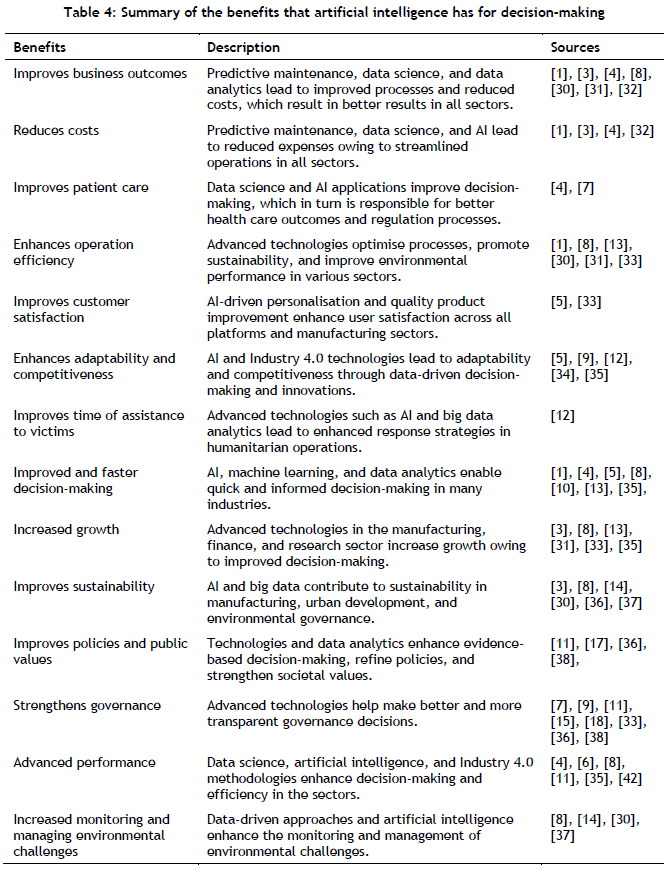
AI for decision-making offers organisations many benefits, as depicted in Table 4, and gives companies a competitive advantage by improving their efficiency and effectiveness.
3.2.2. Risks of using artificial intelligence for data-driven decision-making
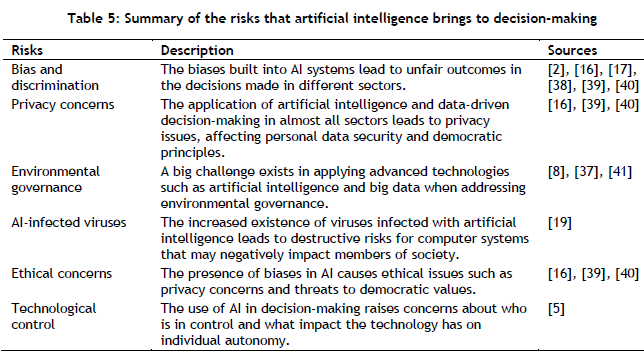
Although the areas of application of artificial intelligence are numerous, they have risks, as illustrated in Table 5. As these consequences are severe, companies must ensure that they are actively managing such risks to realise the full benefits of the technologies.
3.2.3. Sectors using artificial intelligence for decision-making
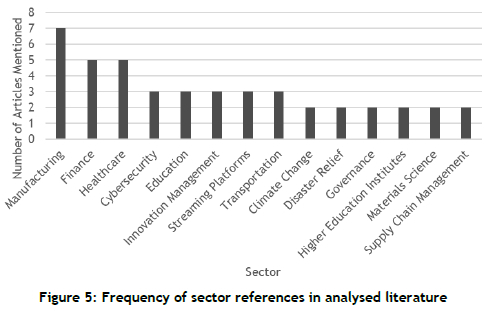
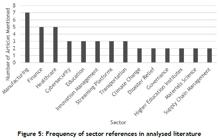
As detailed in Table 4, various companies in many sectors use AI and its associated benefits in making data-driven decisions. Given the wide adoption of AI in multiple domains, Figure 5 depicts the frequency of the various sectors mentioned in the literature, with some literature studies affecting more than one sector. As seen in Figure 5, the sectors most dependent on AI are the manufacturing, finance, and healthcare industries, proving the importance of technology globally.
3.2.4. Methods employed to address risks when incorporating Al-driven decision-making
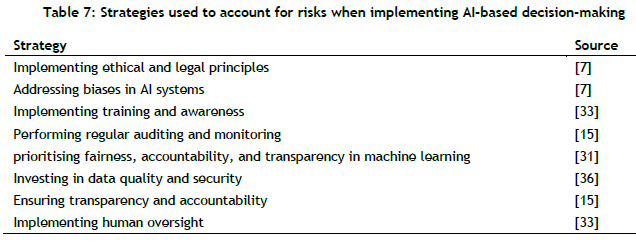
Owing to the many risks involved in using AI for decision-making, firms must devise strategies to counteract these possible effects. Some approaches that companies have already taken to minimise Al's impacts are summarised in Table 7.
4. DISCUSSION
4.1. Principal findings
This section discusses the implication of integrating AI into data-driven decision-making by analysing the literature trends described in section 3.1 and examining the research questions in section 3.2.
4.1.1. Literature trend analysis
As seen in section 3.1, literature trends can provide essential insights into the findings from the obtained literature and give helpful information for further research endeavours. Initially, as seen in Figure 2, the publication years of the literature are highly relevant, proving the findings to be reliable and credible, and reflecting a rising research interest in AI-driven decision-making in various sectors. In addition, as seen in Figure 3, the lack of articles published in African countries indicates an extreme need for more research on integrating AI into data-driven decision-making in this region.
4.1.2. Discussion of research questions
RQ1 : What are the benefits of using AI in data-driven decision-making?
AI has many advantages for various fields and sectors, as shown in Table 4. In maintenance planning and risk mitigation, AI uses predictive maintenance to optimise processes and to reduce costs in order to enhance business outcomes [1], [4], [8], [30]. In addition, in healthcare, AI improves patient care by improving diagnostic accuracy and operational efficiency [4], [7]; and in humanitarian efforts, it refines response strategies to ensure the rapid delivery of aid to disaster victims [12]. AI, too, enhances customer satisfaction by providing personalised services [5], [33], and it fosters competitiveness by using data-driven insights [5], [9], [34]. Moreover, AI encourages growth and sustainability and is pivotal in forming government policies [11], [36], [38] and in environmental monitoring. Hence, as a result, the technology can provide a more sustainable and efficient future across various sectors [8], [30].
RQ2: What are the risks of using AI in data-driven decision-making?
AI-driven decision-making processes have several risks for various sectors, as shown in Table 5. The outstanding issue with the technology is societal discrimination, because biased algorithms might lead to unfair outcomes owing to race or gender issues [16], [38], [39]. In using AI in health and finance, there is a risk of privacy being violated, causing ethical and autonomy problems [39], [40]. In environmental governance, AI leads to complexities in data and results in security problems that affect sustainability efforts [8], [41]. In addition, systems infected by 'AI viruses' are the most significant cybersecurity threat and threaten human and infrastructural safety [19]. Finally, human autonomy is substantially threatened by AI through its influence on consumer freedom [5]. Therefore, the risks that AI poses must be vigilance maintained to ensure that the technology will be safe to use.
RQ3: Which sectors mainly use AI for decision-making?
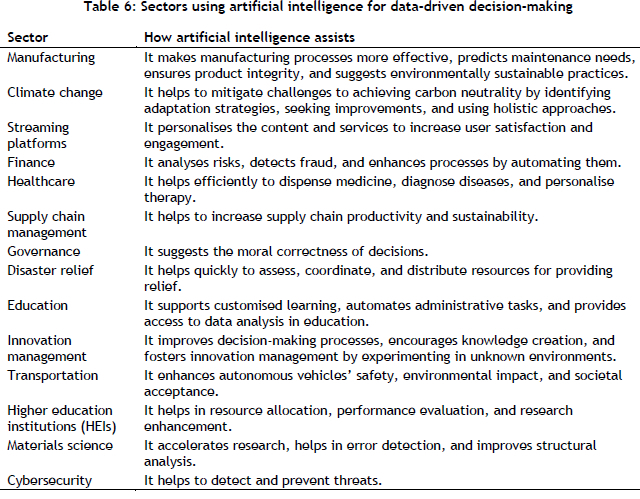
As AI offers many advantages, many sectors use the technology, as depicted in Table 6. The most prominent sector using technology for data-driven decision-making is the manufacturing sector, as seen in Figure 5; it uses AI to enhance the efficiency of manufacturing processes, predict the need for maintenance, ensure the quality of the products they produce, and encourage environmentally friendly practices [1], [8], [33], [35]. The second most prominent sectors using AI are the finance and healthcare sectors, which use AI in assessing risks, detecting fraud, improving medical diagnoses, and personalising treatment [3], [4], [7], [35]. The remaining sectors - supply chain management, governance, disaster relief, education, innovation management, transportation, higher education institutions, materials science, and cybersecurity - rely on AI for decision-making to address specific problems and to improve operational efficiency, as noted in Table 6.
RQ4: What strategies do organisations use to address issues when using AI for data-driven decision-making?
Since incorporating AI into data-driven decision-making risks having serious consequences, organisations must strategically manage these ethical concerns, biases, and privacy issues to enhance their competitive advantage, as detailed in Table 7. Some of the strategies are enforcing moral and legal standards [7], conducting training sessions to raise awareness among staff [33], performing regular audits and monitoring to ensure compliance, emphasising accountability in machine-learning processes [31], investing in data security to prevent privacy infringements [36], and ensuring human oversight in maintaining control [33]. These strategies empower an organisation to handle effectively the risks that AI poses so that it gains the benefits of the technology.
4.2. Implications
The implications from the key findings in section 4.1 highlight that AI is of great value to different sectors, since it provides them with an opportunity to achieve a competitive edge. The application of AI in decision-making processes in the manufacturing, finance, healthcare, and education sectors allows them to increase their efficiency and effectiveness [1], [4], [7], [15], [39], [40]. However, at the same time, the risks linked with AI call for mitigative strategies to ensure the responsible deployment of the technology. Thus there is a call to business leaders to harness the full potential of AI while addressing the risks related to privacy, fairness, and transparency [31]. Policymakers are urged to integrate AI into government frameworks to provide social benefits, ensuring that ethical considerations are taken care of [7]. Therefore, although AI has many transformative benefits, its risks must be researched through proactive strategies to ensure that it is used sustainably and responsibly in different sectors.
4.3. Strengths and limitations
The structured PRISMA protocol followed in this study offers reliability and methodological clarity. In addition, the study considers recently published and peer-reviewed articles (Figure 3) to capture the latest developments in the field, strengthening the relevance of the findings. Nevertheless, despite the thorough review process followed to ensure the quality of the identified articles, the study's results rely on published articles, and as a result, publication bias remains a limitation.
5. CONCLUSION
The integration of AI into data-driven decision-making in the manufacturing, finance, healthcare, education, and transport sectors has a number of advantages and risks. AI-driven decision-making can improve the performance, progress, and sustainability of various industries. However, its associated risks must be addressed with strategic measures to harness responsibly the technology's full potential and to gain a competitive advantage in the data-driven landscape.
AI contributes to business growth and sustainability by smoothing out operations, increasing efficiency, and fostering innovation. However, the risks related to bias, discrimination, privacy concerns, and AI-driven security threats require attention. Organisations could implement measures to respond to these challenges by employing ethical and legalistic norms, bias mitigation methods, and periodic monitoring and audit practices. These measures would provide accountability and transparency by reducing the risks and maximising the benefits of the AI-enabled decision-making process.
6. RECOMMENDATIONS
In future research efforts, researchers should study the effect of AI on additive manufacturing, as there is an increased research interest in AI-enabled decision-making in manufacturing industries. As this study has also recognised the need to identify articles from the African region, further studies may also focus on AI's effect on decision-making in the area. In addition, one way to demonstrate the impact of AI on decision-making in various sectors would be by comparing the outcomes of decisions using AI with those made without AI.
REFERENCES
3.1. Literature trends
- [1] A. Bousdekis, K. Lepenioti, and G. Mentzas, "A review of data-driven decision-making methods for Industry 4.0 maintenance applications," Electronics, vol. 10, no. 7, 828, 2021.
- [2] Y. Duan, J. S. Edwards, and Y. K. Dwivedi, "Artificial intelligence for decision making in the era of big data: Evolution, challenges and research agenda," International Journal of Information Management, vol. 48, pp. 63-71, 2019.
- [3] G. Soni, S. Kumar, R. V. Mahto, S. K. Mangla, M. L. Mittal, and W. M. Lim, "A decision-making framework for Industry 4.0 technology implementation: The case of FinTech and sustainable supply chain finance for SMEs," Technological Forecasting and Social Change, vol. 180, 121686, 2022.
- [4] Sarker, I. H. "Data science and analytics: An overview from data-driven smart computing, decision-making and applications perspective," SN Computer Science, vol. 2, no. 5, 377, 2021.
- [5] A. R. Gonçalves, D. C. Pinto, S. Shuqair, M. Dalmoro, and A. S. Mattila, "Artificial intelligence vs. autonomous decision-making in streaming platforms: A mixed-method approach," International Journal of Information Management, vol. 76, 102748, 2024.
- [6] E. Mahmoodi, M. Fathi, M. Tavana, M. Ghobakhloo, and A. H. C. Ng, "Data-driven simulation-based decision support system for resource allocation in Industry 4.0 and smart manufacturing," Journal of Manufacturing Systems, vol. 72, pp. 287-307, 2024.
- [7] R. Jago et al., "Use of artificial intelligence in regulatory decision-making," Journal of Nursing Regulation, vol. 12, no. 3, pp. 11-19, 2021.
- [8] C. Li, Y. Chen, and Y. Shang, "A review of industrial big data for decision making in intelligent manufacturing," Engineering Science and Technology, An International Journal, vol. 29, 101021, 2022.
- [9] D. Korayim, V. Chotia, G. Jain, S. Hassan, and F. Paolone, "How big data analytics can create competitive advantage in high-stake decision forecasting? The mediating role of organizational innovation," Technological Forecasting and Social Change, vol. 199, 123040, 2024.
- [10] M. Stone et al. "Artificial intelligence (AI) in strategic marketing decision-making: A research agenda," The Bottom Line, vol. 33, no. 2, pp. 183-200, 2020.
- [11] V. Charles, N. P. Rana, and L. Carter, "Artificial intelligence for data-driven decision-making and governance in public affairs," Government Information Quarterly, vol. 39, no. 4, 101742, 2022.
- [12] R. Dubey, D. J. Bryde, Y. K. Dwivedi, G. Graham, and C. Foropon, "Impact of artificial intelligence-driven big data analytics culture on agility and resilience in humanitarian supply chain: A practice-based view," International Journal of Production Economics, vol. 250, 108618, 2022.
- [13] S. Gaftandzhieva, S. Hussain, S. Hilcenko, R. Doneva, and K. Boykova, "Data-driven decision making in higher education institutions: State-of-play," International Journal of Advanced Computer Science and Applications, vol. 14, no. 6, 2023.
- [14] L. Fu, J. Li, and Y. Chen, "An innovative decision making method for air quality monitoring based on big data-assisted artificial intelligence technique," Journal of Innovation & Knowledge, vol. 8, no. 2, 100294, 2023.
- [15] Y. Wang, "When artificial intelligence meets educational leaders' data-informed decision-making: A cautionary tale," Studies in Educational Evaluation, vol. 69, 100872, 2021.
- [16] F. Z. Borgesius, "Discrimination, artificial intelligence, and algorithmic decision-making," Strasbourg: Directorate General of Democracy, Council of Europe, 2018.
- [17] E. Ntoutsi et al., "Bias in data-driven artificial intelligence systems - An introductory survey," WIREs Data Mining and Knowledge Discovery, vol. 10, no. 3, e1356, 2020.
- [18] M. C. Pietronudo, G. Croidieu, and F. Schiavone, "A solution looking for problems? A systematic literature review of the rationalizing influence of artificial intelligence on decision-making in innovation management," Technological Forecasting and Social Change, vol. 182, 121828, 2022.
- [19] A. Turchin and D. Denkenberger, "Classification of global catastrophic risks connected with artificial intelligence," AI and Society, vol. 35, no. 1, pp. 147-163, 2020.
- [20] K. Khan, R. Kunz, J. Kleijnen, and G. Antes, "Five steps to conducting a systematic review," Journal of the Royal Society of Medicine, vol. 96, no. 3, pp. 118-121, 2003.
- [21] R. W. Wright, R. A. Brand, W. Dunn, and K. P. Spindler, "How to write a systematic review," Clinical Orthopaedics and Related Research, vol. 455, pp. 23-29, 2007.
- [22] S. Gupta et al., "Systematic review of the literature: Best practices," Academic Radiology, vol. 25, no. 11, pp. 1481-1490, 2018.
- [23] M. Gusenbauer and N. R. Haddaway, "Which academic search systems are suitable for systematic reviews or meta-analyses? Evaluating retrieval qualities of Google Scholar, PubMed, and 26 other resources," Research Synthesis Methods, vol. 11, no. 2, pp. 181-217, 2020.
- [24] N. Panic, E. Leoncini, G. de Belvis, W. Ricciardi, and S. Boccia, "Evaluation of the endorsement of the preferred reporting items for systematic reviews and meta-analysis (PRISMA) statement on the quality of published systematic review and meta-analyses," PLoS ONE, vol. 8, no. 12, e83138, 2013.
- [25] C. Stern, Z. Jordan, and A. McArthur, "Developing the review question and inclusion criteria," American Journal of Nursing, vol. 114, no. 4, pp. 53-56, 2014.
- [26] T. Meline, "Selecting studies for systemic review: Inclusion and exclusion criteria," Contemporary Issues in Communication Science and Disorders, vol. 33, pp. 21-27, 2006.
- [27] H. Edison, X. Wang, R. Jabangwe, and P. Abrahamsson, "Innovation initiatives in large software companies: A systematic mapping study," Information and Software Technology, vol. 95, pp. 1-14, 2018.
- [28] M. Ivarsson and T. Gorschek, "A method for evaluating rigor and industrial relevance of technology evaluations," Empirical Software Engineering, vol. 16, no. 3, pp. 365-395, 2011.
- [29] R. Klopper, S. Lubbe and H. Rugbeer, "The matrix method of literature review," Alternation, vol. 14, pp. 1-17, 2007.
- [30] S. Fosso Wamba, M. M. Queiroz, and L. Trinchera, "The role of artificial intelligence-enabled dynamic capability on environmental performance: The mediation effect of a data-driven culture in France and the USA," International Journal of Production Economics, vol. 268, 109131, 2024.
- [31] Q. Li, R. Xing, L. Li, H. Yao, L. Wu, and L. Zhao, "Synchrotron radiation data-driven artificial intelligence approaches in materials discovery," Artificial Intelligence Chemistry, vol. 2, no. 1, 100045, 2024.
- [32] F. Sattari, L. Lefsrud, D. Kurian, and R. Macciotta, "A theoretical framework for data-driven artificial intelligence decision making for enhancing the asset integrity management system in the oil & gas sector," Journal of Loss Prevention in the Process Industries, vol. 74, 104648, 2022.
- [33] L. Kumar, N. U. Ibne Hossain, S. A. Fazio, A. Awasthi, R. Jaradat, and K. Babski-Reeves, "A data driven decision model for assessing the enablers of quality dimensions: Context of Industry 4.0," CIRP Journal of Manufacturing Science and Technology, vol. 35, pp. 896-910, 2021.
- [34] H. Nouinou et al., "Decision-making in the context of Industry 4.0: Evidence from the textile and clothing industry," Journal of Cleaner Production, vol. 391, 136184, 2023.
- [35] M. Schmitt, "Automated machine learning: Al-driven decision making in business analytics," Intelligent Systems with Applications, vol. 18, 200188, 2023.
- [36] L. Huang, M. Ladikas, J. Schippl, G. He, and J. Hahn, "Knowledge mapping of an artificial intelligence application scenario: A bibliometric analysis of the basic research of data-driven autonomous vehicles," Technology in Society, vol. 75, 102360, 2023.
- [37] W. Zhu, R. Gui, and R. Guo, "Unveiling the nexus and promoting integration of diverse factors: Prospects of big data-driven artificial intelligence technology in achieving carbon neutrality in Chongming District," Water-Energy Nexus, vol. 6, pp. 111-121, 2023.
- [38] V. Marda, "Artificial intelligence policy in India: A framework for engaging the limits of data-driven decision-making," Philosophical Transactions: Mathematical, Physical and Engineering Sciences, vol. 376, no. 2133, pp. 1-19, 2018.
- [39] K. Manheim and L. Kaplan, "Artificial intelligence: Risks to privacy and democracy," The Yale Journal of Law & Technology, vol. 21, pp. 106-188, 2019.
- [40] F. A. Raso, H. Hilligoss, V. Krishnamurthy, C. Bavitz, and L. Kim, "Artificial intelligence & human rights: Opportunities & risks," Berkman Klein Center Research Publication Publication No. 2018-6, 2018.
- [41] M. A. El-Brawany, D. A. Ibrahim, H. K. Elminir, H. M. Elattar, and E.A. Ramadan, "Artificial intelligence-based data-driven prognostics in industry: A survey," Computers & Industrial Engineering, vol. 184, 109605, 2023.
- [42] R. Colombari et al., "The interplay between data-driven decision-making and digitalization: A firm-level survey of the Italian and U.S. automotive industries," International Journal of Production Economics, vol. 255, 108718, 2023.
ORCID® identifiers
J. Sutherns: https://orcid.org/0009-0006-5129-7512
G.B. Fanta: https://orcid.org/0000-0002-1467-647X