Structuring Uncertainty Management for Energy Savings Calculations
Abstract
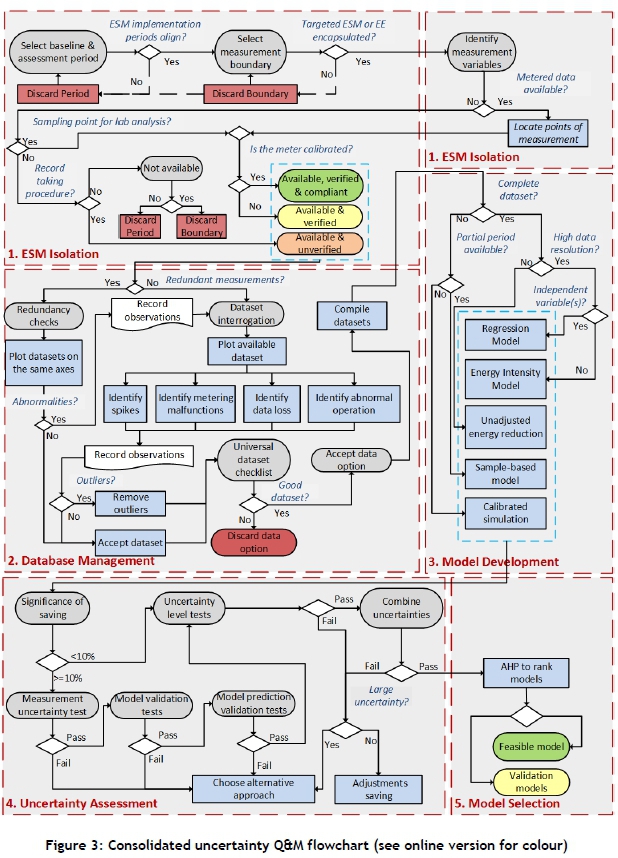
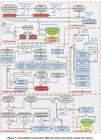
South Africa has committed itself to reducing its greenhouse gas emissions. A key strategy to minimise the greenhouse gas intensity involves using incentivised energy efficiency initiatives. In South Africa, one of these energy efficiency incentives is Section 12L of the Income Tax Act, which rewards claimants with 95c/kWh for verified energy efficiency savings linked to the reduction of greenhouse gas emissions. This verification is done using the SANS 50010 standard, which requires the management and quantification of the uncertainty associated with reported savings. The accurate quantification of energy efficiency savings is therefore critical, and highlights the need for uncertainty management to ensure accurate and fair results. Although uncertainty quantification and management methods are already available, the correct and consistent application of relevant methods for specific uncertainty contributors is important. In this study, a solution in the form of an uncertainty quantification and management flowchart was developed to quantify and manage energy efficiency savings uncertainties. This tool incorporates a five-step approach towards energy efficiency savings quantification, and was applied to three industrial energy efficiency case studies. It was found that uncertainty levels can range between two and 18 per cent, due to varying uncertainty contributors. This highlighted the need for a structured approach pro-actively to identify, quantify, and manage uncertainty contributors.
 Thumbnail
 Thumbnail
 Thumbnail
 Thumbnail
 Thumbnail