Applying The Carbon Scope Framework for Decarbonisation in a South African High Alloy Foundry
Abstract
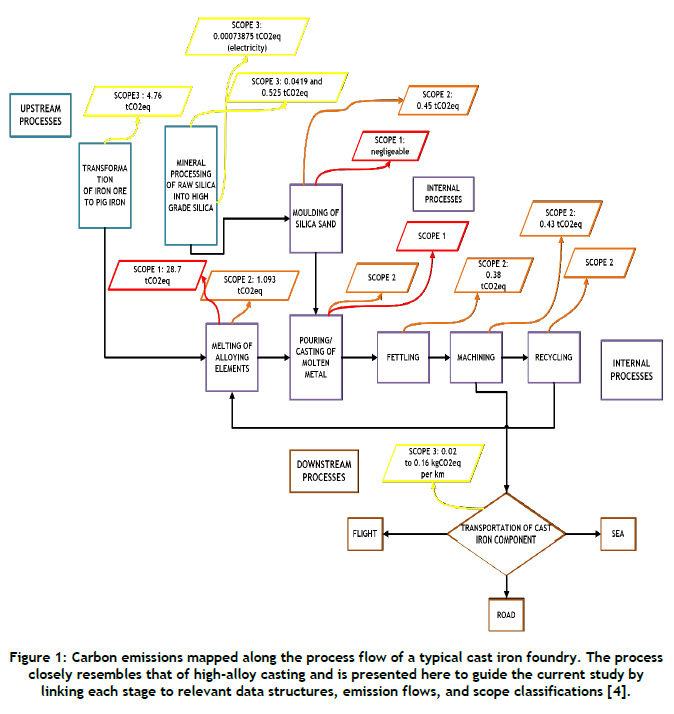
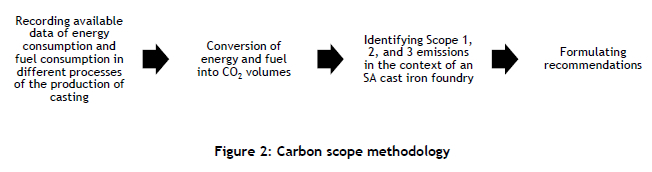
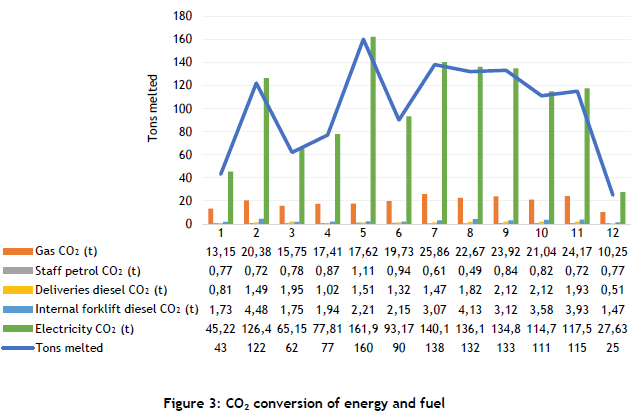
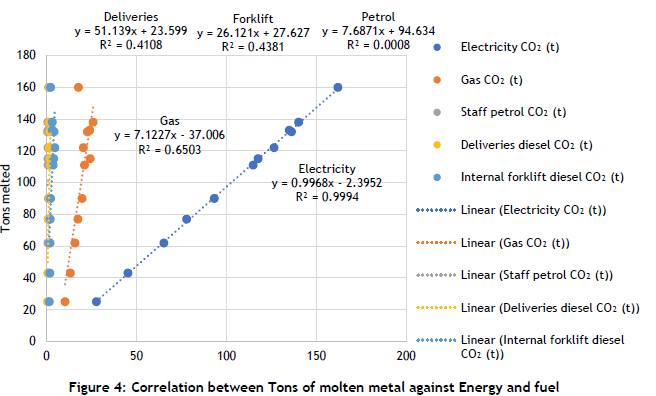
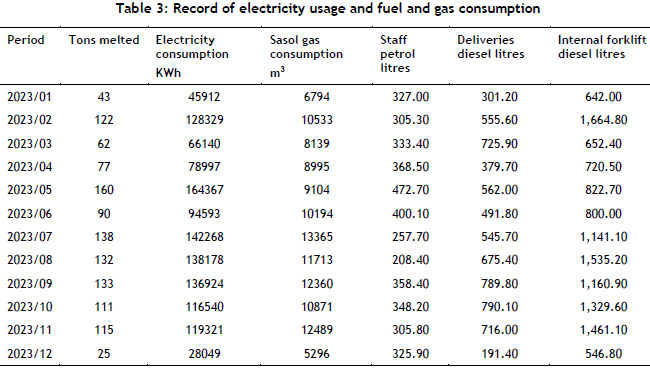
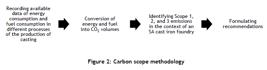
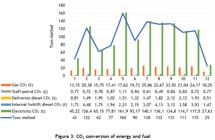
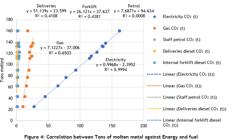
Carbon emissions constitute a growing concern for South Africa's manufacturing sector, particularly the foundry industry. Despite national commitments to achieve net-zero emissions by 2050 and the implementation of carbon tax regulations, many foundries have been slow to adopt effective decarbonisation measures. This study quantifies the carbon footprint of a high-alloy castings foundry using Scope 1, 2, and 3 methodologies, converting data from molten metal production, electricity use, logistics fuel, and staff transport into CO2-equivalent emissions. Results showed that electricity was the dominant contributor at 83.7% (27.6-161.9 tCO2), followed by gas at 13.4% (10.25-25.86 tCO2), diesel at 2.3% (0.51-4.48 tCO2), and petrol at 0.6% (<1.11 tCO2). The study recommends adopting low-carbon fuels, automating temperature controls, implementing energy-management systems, integrating renewable energy for Scope 1 and 2 reductions, and transitioning to electric vehicles with improved logistics for Scope 3. These data-driven strategies support both national and global climate goals while promoting more sustainable foundry operations.
 Thumbnail
 Thumbnail
 Thumbnail
 Thumbnail