Methods for identifying, prioritising and planning for emerging technologies in air traffic management industry
Abstract
The rapid advancement of technology in the air traffic management (ATM) industry demands effective methods to identify, prioritise, and plan for emerging technologies. This research used qualitative analysis through expert interviews to investigate these methods, highlighting the importance of structured frameworks such as technology intelligence, technology foresight, and technology roadmaps, along with industry collaboration. A framework of preferred methods was developed to guide ATM organisations in navigating technological uncertainties. The study emphasises proactive planning and early identification to enhance competitiveness and operational efficiency, thus contributing to the broader understanding of emerging technologies in the ATM industry.
Abstract
Die vinnige vooruitgang van tegnologie in die lugverkeersbestuur vereis doeltreffende metodes vir die identifikasie, prioritisering en beplanning van opkomende tegnologieë. Hierdie navorsing het kwalitatiewe analise deur middel van deskundige onderhoude gebruik om hierdie metodes te ondersoek, en het die belangrikheid van gestruktureerde raamwerke soos tegnologie-intelligensie, tegnologievoorsiening en tegnologie-roetekaart, tesame met samewerking in die bedryf, beklemtoon. 'n Raamwerk van voorkeurmetodes is ontwikkel om lugverkeersbestuur-organisasies te lei in die hantering van tegnologiese onsekerhede. Die studie beklemtoon proaktiewe beplanning en vroeë identifikasie om mededingendheid en operasionele doeltreffendheid te verbeter, en dra by tot 'n breër begrip van opkomende tegnologieë in die lugverkeersbestuur-bedryf.
1. INTRODUCTION
The implementation of new technologies offers organisations the possibility of enhancing their efficiency and effectiveness [1]. In an increasingly competitive environment, technological innovation becomes a critical driver for industries to remain relevant. However, there is still no consensus about the definition of emerging technologies ([2;3]). Emerging technologies are typically characterised by rapid growth, novelty, uncertainty, and significant impact. These technologies drive global competition, compelling organisations to formulate corporate strategies that integrate systematic approaches to technology management [2].
The term 'emerging technologies' remains ambiguous, with uncertainty about when a technology transitions from being 'emerging' to being 'traditional' [3]. Emerging technologies are often misunderstood and are not clearly defined in academic and industry contexts [4]. Srinivasan [5] explains that these innovations can either create new industries or transform existing ones; and even though there is some disagreement about what constitutes an emerging technology, it is generally agreed that these technologies are not necessarily new [3].
Despite the ambiguity surrounding the lifecycle of emerging technologies, they have significant effects on industries, driving change and creating new market opportunities [5]. For organisations to harness the potential of these technologies, it would be essential to understand their characteristics, origins, and impacts. Emerging technologies often stem from smaller organisations' innovations that gain recognition in broader markets over time [5].
The defining characteristics of emerging technologies include high uncertainty and unpredictable future impacts, which compel organisations to take risks to capitalise on technological changes [3]. These technologies can be disruptive, reshaping industries and affecting social and ethical dimensions that may not be fully understood during their early stages. Gachago et al. [4] identify the key characteristics that distinguish emerging technologies: they are not necessarily new, are evolving, are disruptive, and have the ability to empower specific groups.
Given rapid technological advancements and dynamic market environments, industries must enhance their performance by leveraging technological competence [6]. Managers and policymakers must identify emerging technologies and prioritise strategies that position their organisations competitively [7]. Failure to do so could lead to missed opportunities and competitive disadvantages in the face of changing technological landscapes.
Technology identification is a critical process that involves recognising and understanding the technological advancements that could have an impact on industries or organisations [6]. This process enables organisations to monitor technological changes and to assess potential opportunities. One challenge that organisations face is identifying when and how new technologies emerge. Methods such as technology forecasting that predict and estimate future technological developments are used to manage these challenges. However, forecasting emerging technologies is difficult owing to the lack of historical data [8]. Porter [9] suggests that technology monitoring would be a useful forecasting technique, enabling organisations to stay alert to emerging technologies and to make opportunistic decisions.
Forecasting methods are divided into qualitative and quantitative categories, depending on data availability [10]. Qualitative methods based on expert knowledge, and quantitative methods such as statistical tools and patent analysis, help organisations to assess technology trends. Technology foresighting, a qualitative technique, anticipates future trends by interpreting data and analysing technological drivers, making it particularly valuable for understanding emerging technologies.
Once emerging technologies have been identified, organisations must prioritise them in their strategic plans. Technology prioritisation is a systematic approach that determines the importance and value of technologies [11]. Accurate prioritisation can be achieved using tools such as technology roadmapping, which helps organisations to select technologies that align with market needs. Technology roadmapping is a time-dependent framework that enables organisations to evaluate and prioritise technologies for future implementation [1].
Technology planning involves setting objectives for using technology and ensuring its alignment with organisational strategies. After identification and prioritisation, organisations need to plan to implement the emerging technologies. Technology roadmaps are essential tools in this process, as they help organisations to visualise how technologies would provide competitive advantages. Scenario planning, a part of technology foresighting, allows organisations to create multiple future scenarios and to plan accordingly for the adoption of high-potential technologies.
To succeed in planning, organisations require strong technology intelligence capabilities. Technology intelligence provides the ability to capture and deliver information on emerging technologies, enabling organisations to understand technology threats and opportunities [12]. This strategic process of mining, scanning, and analysing information is crucial for effective technology planning and implementation.
The ATM industry is used as a case study. This industry is regarded as highly institutionalised [13], which normally prevents air navigation service providers (ANSPs) from exploring newer technologies in their environment. Although disruptive technologies exist in the industry, ANSPs are usually limited by global and local regulations from exploring emerging technologies, thereby creating an industry market that grows only slowly.
ANSPs are the ATM companies' main service providers. Regulations and standards are set by the International Civil Aviation Organization (ICAO), with the South African Civil Aviation Authority (SACAa) as this country's national authority. These institutions are the core influencers of the ATM industry's behaviour, whose main goal is to reduce uncertainty in the industry [13].
Therefore, it could be acknowledged that, although ANSPs may have the appetite for emerging technologies, achieving any radical and disruptive innovation in a highly institutionalised sector is difficult. Thus, it is necessary to outline methods that the industry could use to identify, prioritise, and plan for emerging technologies with a high degree of reduced uncertainty. For organisations in the ATM industry to thrive with emerging technologies, they would need to understand the usefulness, need, and ease of implementation of these technologies for adoption in the market and internally.
The objective of this study was to investigate existing methods, models, and frameworks that are used to identify, prioritise, and plan for emerging technologies in the ATM sector.
This research aimed to address that objective by investigating and proposing methodologies, best practices, and strategic approaches to the holistic monitoring of emerging technologies. By doing so, it has sought to provide organisations with actionable insights to make informed decisions, allocate resources efficiently, and capitalise on the transformative opportunities that emerging technologies offer in a competitive global landscape.
The rest of this article is structured as follows: a literature review provides an overview of the research on identifying, prioritising, and planning for emerging technologies in the ATM industry. The section on the conceptual method discusses key concepts, methodologies, and frameworks in the context of ATM operations. Following this, the research methodology section outlines the qualitative research approach, data collection, and analysis methods used in the study. The results section presents the findings from the interviews, synthesising key methods and strategies used by ATM organisations to manage emerging technologies. Finally, the conclusion summarises the key insights, their implications for industry practice, and recommendations for future research.
Identifying, prioritising, and planning for emerging technologies have become critical processes for organisations to maintain their competitiveness, especially in fast-evolving industries such as ATM. The continuous technological advancements in various sectors have made it increasingly difficult for organisations to adapt owing to the inherent inertia in their internal processes and organisational structures [14]. The growing complexity of global competition, fuelled by rapid technological changes, demands that organisations develop strategies not only to identify but also to exploit emerging technologies for economic growth and innovation [15].
The ATM industry, a highly regulated and complex sector, plays a vital role in managing the global flow of air traffic and ensuring safety and efficiency. Technologies such as space-based surveillance systems, secondary surveillance radar (SSR), automatic dependent surveillance-broadcast (ADS-B), and multilateration (MLAT) are essential in maintaining efficient airspace management [16]. Although there has been significant research on new technologies and strategic planning in ATM, a gap remains in studies that focus specifically on identifying, prioritising, and planning for emerging technologies.
2.1. Concept of emerging technology
Emerging technologies are defined as innovative technologies that have not yet fully realised their potential to transform industries but that have the capacity to disrupt competitive landscapes on their full integration [17]. According to Cozzens et al. [6], emerging technologies both offer opportunities and create difficulties for organisational technology strategies. These technologies are typically characterised by high uncertainty, rapid growth, and the potential for either significant disruption or market creation [3]. However, the lack of a formal definition of emerging technologies has made it difficult for organisations to establish clear strategies for their adoption and integration [3].
The first use of the term 'emerging technology' dates back to the 1960s, when it was broadly applied to describe technologies with unclear paths to maturity [6]. Since then, the term has been used frequently in research but remains ambiguously defined. Despite this ambiguity, it is evident that emerging technologies play a pivotal role in determining the future competitiveness of organisations. Therefore, industries must develop systematic methods to identify, prioritise, and plan for these technologies to remain competitive in the long term.
The unique characteristics of emerging technologies, such as their potential for disruption and their high levels of uncertainty, present considerable difficulties for organisations. Technologies in the early stages of development often have uncertain or unclear benefits, making it difficult for organisations to assess their full potential. Thus, systematic approaches are required to ensure that these technologies are identified and integrated into strategic planning frameworks.
2.2.
Methods to identify technologyThe ability to identify emerging technologies early in their lifecycle gives organisations a significant competitive advantage. Emerging technologies frequently originate from small firms that are specifically established to develop innovations [5]. These early-stage technologies, often referred to as 'buggy' technologies, may take years or even decades to evolve fully and to gain recognition in broader markets.
Thus, organisations need to be proactive in identifying these technologies to capitalise on the untapped opportunities they present.
One effective method for understanding the evolution of technologies is through the use of the S-curve model, which represents a technology's lifecycle from initial development through maturity to decline [18]. The S-curve helps organisations to track the growth of technologies, highlighting points where emerging technologies may surpass existing ones. As a technology matures and reaches the upper end of the S-curve, opportunities for new and disruptive technologies arise, allowing organisations to evaluate potential replacements.
The identification of emerging technologies is often guided by expert knowledge, particularly when there is a lack of historical data. Methods such as technology forecasting and trend analysis play a crucial role in identifying and predicting the impact of new technologies. Technology forecasting, using techniques such as trend extrapolation, provides a systematic approach to anticipating technological evolution. For example, organisations that closely studied the evolution of cameras from analogue to digital were able to capitalise on the shift by forecasting the growth of digital technology.
Another method used in technology identification is the Delphi technique, which relies on expert knowledge to assess emerging technologies. By gathering expert opinions, organisations can gain valuable insights into the potential of technologies that are still in the early stages of development [8]. The Delphi method allows organisations to make informed decisions about which technologies to pursue, based on expert predictions and assessments.
Patent analysis is another valuable tool for identifying emerging technologies. By analysing patent data, organisations can track the growth of specific technologies and assess their potential. Patent growth often mirrors the S-curve, with a slow initial growth phase followed by a rapid increase as the technology matures [8]. Monitoring patent trends enables organisations to identify promising technologies early, while avoiding those that may have already reached their saturation point.
2.3.
Technology prioritisation methodsOnce emerging technologies have been identified, organisations must prioritise them according to their strategic relevance and potential impact. Technology roadmapping is a widely used method for prioritising emerging technologies. It provides a structured framework that links market needs with technological strategies, allowing organisations to align their technology investments with their long-term goals [19]. A typical technology roadmap consists of three phases: expectation, current situation, and actions required to meet market demands.
Technology roadmapping enables organisations to prioritise technologies by evaluating their ability to address specific market needs. By mapping out the current state of the organisation, its future objectives, and the steps required to achieve those goals, roadmapping can provide a clear path for integrating emerging technologies. This systematic approach ensures that organisations focus on the technologies with the greatest potential for market impact, allowing them to remain competitive.
One proposed method for prioritising emerging technologies as part of the technology roadmap development is the technology development envelope (TDE). Gerdsri [20] used a combination of the Delphi method and hierarchical decision modelling as the foundation of building a TDE. This technique involves the steps of technology forecasting and assessment, technology characterisation and hierarchical modelling, and technology evaluation and formation of TDE.
In addition to technology roadmapping, scenario planning is another method used for prioritisation. Scenario planning allows organisations to simulate different future outcomes, based on possible technological developments. This technique helps organisations to assess the risks and opportunities associated with various technologies and to prioritise them, based on their alignment with the organisation's goals [20]. By simulating multiple futures, scenario planning provides a flexible and dynamic approach to technology prioritisation.
2.4.
Technology planning methodsEffective technology planning requires robust technology intelligence capabilities. Technology intelligence involves gathering, analysing, and interpreting information about both internal and external technological developments. It provides organisations with the tools to assess their technological position relative to their competitors and to the broader market [12]. Organisations could use technology intelligence to plan for the adoption of emerging technologies by evaluating their potential risks and benefits.
Scenario planning is particularly useful in technology planning, as it enables organisations to anticipate a range of possible future developments. By simulating different scenarios, organisations could assess the potential impact of emerging technologies on their strategic objectives [20]. Scenario planning techniques such as interactive cross-impact simulation, trend impact analysis, and fuzzy cognitive map-based scenario planning allow organisations to evaluate different outcomes and to make informed decisions about future technology investments.
These methods, when combined with strategic foresight, help organisations to create robust technology plans that are flexible enough to adapt to future uncertainties. Technology planning ensures that organisations are prepared to integrate emerging technologies into their operations, allowing them to remain competitive in an increasingly complex and dynamic environment.
2.5.
Keeping up with rapid technological changes in the ATM industryOrganisations across industries face increasing pressure to stay ahead of rapid technological advancements in order to maintain their competitiveness and operational efficiency. The challenge is particularly pronounced in the ATM sector, where safety, efficiency, and the complexity of operations demand the timely and seamless identification of technology. One of the primary methods that organisations use to cope with these rapid changes is through continuous monitoring and technology intelligence systems. Technology intelligence enables organisations to stay informed about the latest technological trends and innovations by systematically collecting and analysing information on emerging technologies, competitors' advancements, and shifts in market needs [12]. In the ATM industry, this process is crucial, owing to the dynamic nature of air traffic systems and the need to integrate technologies such as ADS-B and space-based surveillance systems to enhance operational capabilities [16].
3. CONCEPTUAL MODEL
In the context of ATM, emerging technologies are reshaping the sector significantly, with core developments in communication, navigation, and surveillance systems. Kahne and Frolow [21] noted the impact of technological change on the industry's ability to meet rising demands, while Baruta [13] identified disruptive innovations such as space-based surveillance systems as transformative technologies that could replace traditional radar systems. These advancements underscore the need for organisations to adopt strategic methods that align their operations with the rapid pace of technological change.
Emerging technologies in ATM not only offer the promise of improved operational efficiency but also come with inherent risks. Innovations such as Voice over the Internet Protocol systems and cyber-physical infrastructures have introduced vulnerabilities to cyber threats, emphasising the need for comprehensive planning and risk management strategies [22]. The external context in which ATM organisations operate plays a critical role in shaping their approach to technological innovation. Increased global competition and rapid technological advancements have had a significant impact on the industry, with market demands for improved air traffic management solutions growing steadily.
As Kahne and Frolow [21] highlighted, the evolving needs of airlines and airspace users have led to a surge in demand for flexible technology-driven solutions. In response, the ATM industry must continually adapt to technological shifts in order to remain competitive in an increasingly crowded marketplace.
Internally, organisations must foster a culture of innovation and leadership in order to effectively implement methods for identifying and prioritising emerging technologies. Leadership plays a pivotal role in guiding organisations through the uncertainties associated with emerging technologies, ensuring that decision-makers can harness the potential of these innovations to enhance organisational competitiveness. Capable leadership, coupled with expert knowledge, is crucial to successfully implementing strategies that anticipate and mitigate the risks associated with disruptive technologies.
The most prominent methods that are used to manage emerging technologies are technology intelligence, technology foresighting, S-curve analysis, Delphi method, patent analysis, technology roadmapping, and scenario planning. These methods provide a structured approach to navigating the complexity and uncertainty associated with new technologies. Technology intelligence is particularly useful for organisations in the ATM industry, where staying ahead of market trends and technological developments is key to maintaining a competitive edge. By leveraging comprehensive data sources, technology intelligence allows organisations to identify emerging technologies early and to capitalise on opportunities for innovation [6]. The ability to forecast and monitor technological trends ensures that organisations remain agile and responsive to external market shifts.
For prioritisation, S-curve analysis and technology foresighting are valuable tools that provide organisations with insights into the development trajectory of new technologies. These methods allow organisations to assess the maturity and potential future impact of identified technologies, making them essential for strategic decision-making. Scenario planning, a key component of technology foresighting, is particularly relevant in the ATM sector, where regulatory requirements and safety concerns often introduce significant constraints on technology implementation. Scenario planning offers flexibility in developing strategic plans while taking regulatory compliance into account, ensuring that emerging technologies can be integrated smoothly into existing operational frameworks.
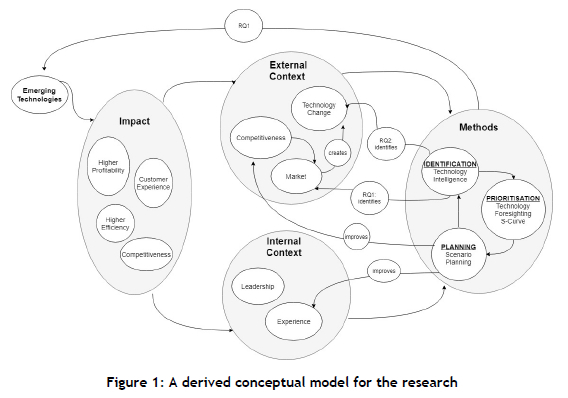
The conceptual model developed in this study seeks to integrate these methods into a cohesive model for managing emerging technologies in the ATM industry, as shown in Figure 1. The framework is built around three key phases: identification, prioritisation, and planning. The first phase focuses on the methods that organisations use to identify emerging technologies, drawing on the theoretical and practical insights gained from the literature. The second phase emphasises the importance of prioritising technologies, based on their potential impact on the organisation and the industry. Finally, the planning phase highlights the need for flexibility and foresight in developing strategies for integrating these technologies into the organisation's operations.
The following research questions were developed for the study, which form part of the conceptual model:
- Research question 1: What are the most effective methods, frameworks, and strategies for identifying, prioritising, and planning for emerging technologies in the air traffic management sector?
- Research question 2: How could the air traffic management industry keep up with the rapid changes in technological advancement while remaining competitive?
In order to address these research questions, the following propositions were developed:
- Proposition 1: Organisations that do proactive planning and develop strategic foresight on emerging technologies are better equipped to adapt to rapid technological changes and to maintain their competitiveness in the air traffic management industry.
- Proposition 2: Organisations in the air traffic management sector that use methods and frameworks for identifying emerging technologies are more likely to integrate innovative solutions successfully into their operations.
- Proposition 3: The ability of air traffic management organisations to keep pace with rapid technological changes is influenced by the methods and strategies used in the organisation to identify, prioritise, and plan for technologies.
4. RESEARCH METHODOLOGY
A qualitative research approach was used, with interviews being the primary data collection method. This allowed for in-depth exploration of how organisations in the ATM sector identify, prioritise, and plan for new technologies. The research adopted a deductive approach, testing existing theories, including technology intelligence, foresighting, the S-curve, and scenario planning, to evaluate their effectiveness in the ATM industry. Semi-structured interviews provided flexibility, capturing participants' experiences and perspectives on the methods and frameworks their organisations use.
Data collection focused on an ANSP in South Africa, engaging with key stakeholders involved in technology and strategic management. A total of 13 participants were interviewed, representing a cross-section of management levels and technical expertise. The interviews were structured on open-ended questions, enabling participants to share their insights into organisational practices and challenges related to emerging technologies. Interviews were conducted online, transcribed, and analysed for recurring themes using thematic analysis, focusing on methods of identification, prioritisation, and planning of technologies.
The data analysis involved reviewing the interview transcripts to identify recurring themes and patterns related to the research questions. Word frequencies were recorded and visualised using graphs to highlight the key methods used by the participants. These findings were then interpreted in the context of the theoretical framework and research propositions, validating the effectiveness of the discussed methods. Ethical considerations included securing consent from the participants and ensuring confidentiality throughout the study.
5. RESULTS
The study identified the key emerging technologies already adopted by the ATM industry, including ADS-B, remote towers, blockchain technology, unmanned aircraft systems, and artificial intelligence solutions. These technologies are broadly recognised for their disruptive potential, which anticipates the introduction of technologies that enhance operational efficiency, competitiveness, and profitability.
The research reinforced the notion that these technologies have a significant impact on the industry by driving innovation and addressing critical issues such as safety, efficiency, and market demand. The study supported the proposition that the adoption of emerging technologies is motivated by their potential to improve industry standards and to meet evolving market needs.
5.1.
Methods of identifying emerging technologiesSafety and security emerged as primary criteria influencing the identification of emerging technologies. This finding aligned with the industry's regulatory requirements, which prioritise technologies that enhance safety. Operational efficiency, regulatory compliance, and compatibility with existing systems were also emphasised as key considerations. The consistent focus on safety and operational benefits supports the theoretical perspective that emerging technologies must offer tangible improvements if they are to be prioritised [23]. The company's clear vision, strategy, and objectives, incorporating the above issues, could help to identify suitable emerging technologies [24].
In line with the literature, the organisations in the ATM industry were proven to rely heavily on regulatory bodies such as the ICAO and the SACAA to discover and identify emerging technologies. As a result, sources such as regulatory body regulations, conferences, and internal reports were identified as key sources for organisations to obtain information on emerging technologies. Baruta [25] identified four types of institutional pressure that ATM companies experience:
• coercive pressures (which are used by many governments and international agencies that regulate and control important aspects of the service from operations, through airport and ANSP ownership, to aircraft manufacturing and the certification of airlines);
• mimetic pressures (a small number of dominant ANSPs that are at the forefront of the technological and operational innovations have often embarked on new procedures or technologies first, with other ANSPs following and adopting their example);
• normative pressures (organisations in the ATM industry are expected to deliver their services in a certain way, to a set minimum standard, and to use proven technologies); and
• technological pressures (ANSPs tend to resist any new technologies as long as the current technological means are acceptable).
Strategically, methods such as collaborations and partnerships (e.g., with regulators and dominant ANSPs) are most frequently used to identify emerging technologies. These techniques, coupled with market analysis, internal research and development (R&D), and horizon scanning, help organisations to anticipate technological shifts. Technology intelligence was confirmed to be the core identification method for emerging technologies, along with the processes being followed by organisations in order to benchmark their competitiveness and to identify emerging technologies in their early stages.
5.2.
Methods of prioritising emerging technologiesThe study found that a combination of practical and strategic factors drives the prioritisation of emerging technologies in the ATM industry. That prioritisation reflected a balance between operational urgency and strategic foresight, with a clear emphasis on technology readiness and foresight as the preferred methods. Participants in the study consistently highlighted technology readiness as the most critical factor in prioritising new technologies. This aligns with the theoretical framework, particularly the S-curve model, which suggests that technologies must be evaluated based on their stage in the lifecycle in order to ensure their successful integration [26]. Technologies that have already been tested or successfully implemented in other contexts are typically prioritised, as this reduces uncertainty and aligns with the operational needs of the organisation. The readiness of both the company [27] and the technology ensures that the implementation process is feasible and that new technologies can integrate seamlessly into existing systems.
In addition to readiness, technology foresight emerged as a key long-term prioritisation strategy, particularly at the senior management level. Technology foresight aligns with the organisation's strategic goals, ensuring that technologies not only meet immediate operational needs but also align with the future trajectory of the industry. Participants discussed the use of foresight methods such as multi-criteria decision analysis and alignment with aviation system block upgrades (ASBU), a framework developed by the ICAO to modernise air traffic systems. Foresight methods enable organisations to evaluate the potential long-term impacts of emerging technologies on safety, performance, and regulatory compliance, helping them to prioritise technologies that will offer sustained benefits over time. This strategic alignment supports the broader goals of the ATM industry in staying competitive and adapting to future market demands.
The results also revealed several hurdles in prioritising emerging technologies, particularly the trade-offs between immediate operational needs and long-term strategic objectives. Participants mentioned budget constraints, stakeholder expectations, and regulatory compliance as significant factors that complicate the prioritisation process. Technologies that require significant resources or that pose possible safety risks are often deprioritised, even if they offer long-term benefits. Despite these problems, the emphasis on technology readiness and foresight ensures that ATM organisations prioritise technologies that are not only practical and feasible in the short term but are also strategically aligned with the industry's future direction. This approach ensures that ATM organisations can adapt to rapid technological advancements while maintaining their regulatory compliance and operational efficiency.
5.3.
Methods of planning emerging technologiesThe results of the study show that technology roadmapping and scenario planning are the most preferred methods for planning the integration of emerging technologies in the ATM industry. Technology roadmaps are essential tools that align emerging technology initiatives with organisational strategies and operational timelines. These roadmaps provide a structured and phased approach to the implementation of new technologies, ensuring a smooth transition while maintaining regulatory compliance and safety standards. The importance of aligning roadmaps with strategic objectives was noted, with a clear emphasis that this process involves collaboration with technical teams to ensure the development of practical and achievable timelines for deployment.
Scenario planning was another confirmed framework that participants used to anticipate future problems and opportunities. This method allows organisations to explore multiple possible futures by developing detailed scenarios based on various assumptions about trends, regulatory changes, and uncertainties in the industry [28]. Scenario planning is critical in the ATM sector, as it helps organisations to prepare for possible disruptions while ensuring their compliance with strict regulatory frameworks.
While technology roadmaps focus on the step-by-step integration of emerging technologies, scenario planning provides a more flexible approach, enabling organisations to adjust their strategies in response to unforeseen changes in the external environment. Both methods work together, allowing organisations to plan both strategically and adaptively.
The integration of technology foresight into both technology roadmaps and scenario planning underscores its importance in the planning process. It was noted that foresight frameworks help to align technology initiatives with long-term organisational goals and to prepare for future challenges. While foresight is commonly associated with the prioritisation of emerging technologies, it also plays a significant role in planning, feeding directly into the roadmapping process by helping organisations to assess the possible impacts and maturity of new technologies. This finding supports the theoretical framework outlined in the study, which emphasises the role of proactive planning in maintaining competitiveness. The reliance on ASBU for planning emphasises further the importance of adhering to international standards and ensuring that the planning process is aligned with global industry requirements. This alignment with ASBU blocks and regulatory roadmaps reinforces the industry's commitment to operational improvements such as increased safety and efficiency.
5.4.
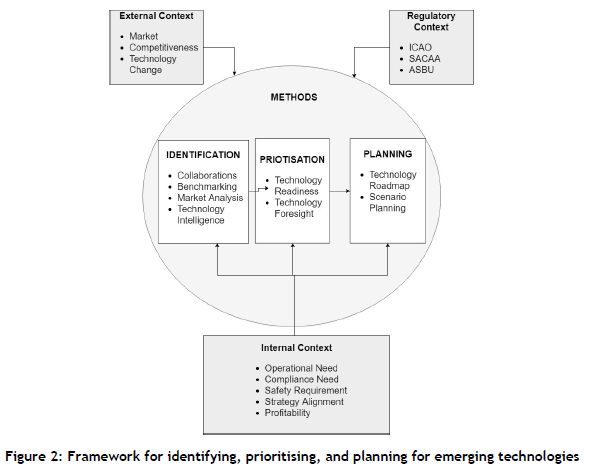
Adaptive framework for air traffic management industryFigure 2 shows an updated framework from the research results that takes into consideration all the methods of identification, prioritisation, and planning gathered from the interview sessions. The framework depicts the internal context of an organisation and all the needs that may require emerging technologies; these are triggers that require the organisation to use most of the established methods identified above in order to keep up with its external context. That context is controlled by the organisation's market, technology change, and competitiveness. However, these complexities are governed by the regulatory requirements for the industry; as the literature suggested, those regulations stipulate all requirements for technologies and the proposed roadmap for the air traffic management industry. The findings of this research support the notion that a clear understanding of the regulatory environment is crucial for technological innovation in institutionalised sectors such as ATM; these findings align with those of Gachago et al. [4], who emphasised the role of regulations in influencing technology deployment.
6. CONCLUSION
This study aimed to identify the most effective methods and frameworks for identifying, prioritising, and planning for emerging technologies in the ATM industry. Given the highly regulated nature of the industry and its exposure to rapid technological advancements, it is essential for organisations to adopt strategies that ensure operational efficiency, safety, and competitiveness. The research bridged the gap between theoretical knowledge and practical application by gathering insights from industry professionals, revealing the methods they use to navigate the complexities of emerging technologies. Through qualitative interviews, key stakeholders shared the methods currently used in the ATM industry to manage technological change.
The findings revealed that collaboration, benchmarking, market analysis, and technology intelligence are the most commonly used methods for identifying emerging technologies. Organisations in the ATM industry place significant emphasis on building relationships with technology developers and research institutions so that they can stay updated on technological trends. In addition, industry forums and R&D activities play a crucial role in maintaining this awareness. The prioritisation of technologies is driven by factors such as the readiness of the technology and the organisation, as well as its potential benefits. Regulatory alignment, particularly with frameworks set by the ICAO, was also highlighted as essential for successful technology integration.
Planning for emerging technologies involves a combination of internal and external strategies. Technology roadmaps and scenario planning were noted as crucial for anticipating future industry requirements and challenges, reinforcing the need for structured, forward-thinking approaches. The study highlighted the importance of aligning organisational strategies with regulatory roadmaps while remaining engaged with international workgroups to ensure compliance with global standards. These findings underscore the need for ATM organisations to be proactive and adaptive in managing technological change.
The theoretical framework provided a foundation for analysing the collected data and offered insights into the difficulties that organisations face in identifying and managing emerging technologies. The results confirmed that organisations in the ATM industry actively implement strategic methods to gain insights into technological trends, with partnerships, memoranda of understanding (MOUs), and regulatory frameworks being frequently mentioned in the interviews. These methods align with the theoretical concepts of technology intelligence and external collaboration, indicating that organisations are applying frameworks that are discussed in the literature but are adapting them to the specific needs of the industry. This research supported all the formulated propositions, particularly the idea that organisations using proactive planning and strategic foresight are better equipped to navigate rapid technological change.
In conclusion, while the research provided valuable insights, the limited sample size presents an opportunity for future studies to expand on these findings. The perspectives gathered were primarily from one ANSP, and increasing the sample size could yield a more comprehensive understanding of industry-wide practices. The research has significant implications for how ATM organisations could improve their processes for identifying, prioritising, and planning for emerging technologies. By enhancing technology identification, prioritising strategically, and planning effectively, ATM organisations could not only keep pace with technological change but also position themselves as pioneers, gaining the benefits of emerging technologies early in their lifecycle. This proactive approach would be essential to maintaining competitiveness in a rapidly evolving technological landscape.
The methods established in the formulated framework provide better consistency in decision-making. They also ensure that potential emerging technologies are evaluated comprehensively in advance and that their prioritisation and planning are done in alignment with organisational strategies. The rapid pace of technological advancement in the ATM industry requires an ongoing effort to stay informed about emerging technologies. Therefore, organisations need to establish frameworks that enable them to maintain their competitiveness and operational efficiency. It is recommended that organisations incorporate methods such as strategic foresight and scenario planning in their long-term processes so that they can outline future technological changes and regulatory requirements, and mitigate risks and navigate through the uncertainty brought by emerging technologies.
The proposed future research should include an examination of the effectiveness of different collaboration models that enhance the integration of emerging technologies in organisations. Participants in this study mentioned many collaborations, MOUs, and partnerships that have been intended to identify, prioritise, and plan for emerging technologies. A deeper understanding of the different types of collaboration models that could be adopted by organisations could help to streamline effective ways of integrating emerging technologies into operations through collaborations.
REFERENCES
2. LITERATURE REVIEW
- [1] Ozcan, S., Homayounfard, A., Simms, C. and Wasim, J. 2021. Technology roadmapping using text mining: A foresight study for the retail industry. IEEE Transactions on Engineering Management, 69(1), pp 228-244.
- [2] Zhao, F., Kuang, X., Hao, H. and Liu, Z. 2022. Selection of emerging technologies: A case study in technology strategies of intelligent vehicles. Engineering Management Journal, 34(1), pp 37-49.
- [3] Halaweh, M. 2013. Emerging technology: What is it? Journal of Technology Management and Innovation, 8(3), pp 108-115.
- [4] Ng'ambi, D., Gachago, D., Backhouse, J., Bozalek, V., Ivala, E. and Bosman, J.P. 2013. Towards a shared understanding of emerging technologies: Experiences in a collaborative research project in South Africa. The African Journal of Information Systems, 5(3), pp 94-105.
- [5] Srinivasan, R. 2008. Sources, characteristics and effects of emerging technologies: Research opportunities in innovation. Industrial Marketing Management, 37(6), pp 633-640.
- [6] Cozzens, S., Gatchair, S., Kang, J., Kim, K.S., Lee, H.J., Ordóñez, G. and Porter, A. 2010. Emerging technologies: Quantitative identification and measurement. Technology Analysis and Strategic Management, 22(3), pp 361-376.
- [7] Choi, J., Shin, N. and Chang, Y.S. 2021. Strategic investment decisions for emerging technology fields in the health care sector based on M&A analysis. Sustainability, 13(7), pp 1-20.
- [8] Daim, T.U., Rueda, G., Martin, H. and Gerdsri, P. 2006. Forecasting emerging technologies: Use of bibliometrics and patent analysis. Technological Forecasting and Social Change, 73(8), pp 981-1012.
- [9] Porter, A.L. 1991. Forecasting and management of technology. John Wiley & Sons, Hoboken, New Jersey.
- [10] Li, Y., Zhou, Y., Ma, X. and Zhang, Y. 2021. Forecasting the development of self-driving technology in China by multidimensional information. Journal of Advanced Transportation, 1, pp 1-12.
- [11] Ahn, H., Lee, C., Kim, M., Kim, T., Lee, D., Kwon, W. and Cho, H. 2023. Applicability of smart construction technology: Prioritization and future research directions. Automation in Construction, 153.
- [12] Mortara, L., Kerr, C.I., Phaal, R. and Probert, D.R. 2009. A toolbox of elements to build technology intelligence systems. International Journal of Technology Management, 47(4), pp 322-345.
- [13] Baruta, I. 2018. Disruptive innovation in an institutionalised environment: Space-based ADS-B in the air traffic management industry. Transportation Research Procedia, 35, pp 176-189.
- [14] Temel, S. and Durst, S. 2020. Knowledge risk prevention strategies for handling new technological innovations in small businesses. VINE Journal of Information and Knowledge Management Systems, 51(4), pp 655-673.
- [15] Bonaccorsi, A., Chiarello, F., Fantoni, G. and Kammering, H. 2020. Emerging technologies and industrial leadership: A Wikipedia-based strategic analysis of Industry 4.0. Expert Systems with Applications, 160.
- [16] Kistan, T., Gardi, A., Sabatini, R., Ramasamy, S. and Batuwangala, E. 2017. An evolutionary outlook of air traffic flow management techniques. Progress in Aerospace Sciences, 88, pp 15-42.
- [17] Hung, S.C. and Chu, Y.Y. 2006. Stimulating new industries from emerging technologies: Challenges for the public sector. Technovation, 26(1), pp 104-110.
- [18] Probert, D., Farrukh, C. and Phaal, R. 2004. Structuring a systematic approach to technology management: Processes and framework. In Durand [Ed.], T., Bringing technology and innovation into the boardroom: Strategy, innovation and competences for business value, Palgrave Macmillan, London, pp 76-91.
- [19] Phaal, R., Farrukh, C.J. and Probert, D.R. 2004. Technology roadmapping - A planning framework for evolution and revolution. Technological Forecasting and Social Change, 71(1-2), pp 5-26.
- [20] Gerdsri, N. 2007. An analytical approach to building a technology development envelope (TDE) for roadmapping of emerging technologies. International Journal of Innovation and Technology Management, 4(02), pp 121-135.
- [21] Amer, M., Daim, T.U. and Jetter, A. 2013. A review of scenario planning. Futures, 46, pp 23-40.
- [22] Kahne, S. and Frolow, I. 1996. Air traffic management: Evolution with technology. IEEE Control Systems Magazine, 16(4), pp 12-21.
- [23] Aviation cyber-physical systems. In IEEE 4th International Conference on Cyber Security and Cloud Computing (CSCloud), IEEE, New York, USA.
- [24] Day, G.S. and Schoemaker, P.J. (2000). Avoiding the pitfalls of emerging technologies. California Management Review, 42(2), pp 8-33.
- [25] Khuan, L.S. 2019. The challenges of emerging technologies: The experience of procurement professionals. In 9th International Conference on Operations and Supply Chain Management, Vietnam.
- [26] Baruta, I. 2018. Disruptive innovation in an institutionalized environment: Space-based ADS-B in the air traffic management industry. Transportation Research Procedia, 35, pp 176-189.
- [27] Jimenez, H. and Mavris, D.N. 2014. Characterization of technology integration based on technology readiness levels. Journal of Aircraft, 51(1), pp 291-302.
- [28] Ogunyemi, A.A. and Johnston, K.A. 2012. Towards an organisational readiness framework for emerging technologies: An investigation of antecedents for South African organisations' readiness for server virtualisation. The Electronic Journal of Information Systems in Developing Countries, 53(1), pp 1-30.
- [29] Jernå, A. and Larsson, F. 2022. Preparing for the uncertain future: Applying scenario planning to the European airline industry. Master's thesis, Copenhagen Business School, Denmark.
Accepted for publication 9 Apr 2025
Available online 30 May 2025
P.T. Letaba
https://orcid.org/0000-0001-5799-6679
M. Mkhize
https://orcid.org/0009-0003-9184-8751
* Corresponding author: