From Data Void to Circularity: A Multi-Level Analysis of Digital Transformation Barriers in Saudi Municipal Solid Waste Management
Abstract
Digital transformation is often framed as the key to advancing circular-economy practices in municipal solid waste management. However, most digital models assume the existence of reliable and traceable waste data. This study challenges that assumption by examining the barriers to digital adoption in Saudi Arabia's municipal solid waste management sector, where waste flows remain fragmented and partially informal. Using a triangulated mixed-methods design - municipal focus groups (Makkah, Taif, Jeddah), staff (n=53) and citizen (n=408) surveys, and regulatory input from the National Centre for Waste Management -the study identifies the constraints at household, organisational, and governance levels. Its findings reveal that the core barrier is not poor data quality but the absence of source-level material traceability, creating a structural "data void". Informal recovery, manual sorting, weak infrastructure, and legacy contracts limit digital feasibility. The study reframes digital failure as a governance and traceability problem, and proposes an integrated reform pathway that is aligned with circular-economy objectives.
Abstract
Digitale transformasie word dikwels as die sleutel tot die bevordering van sirkulêre-ekonomiepraktyke in munisipale vasteafvalbestuur beskou. Die meeste digitale modelle veronderstel egter dat betroubare en naspeurbare afvaldata beskikbaar is. Hierdie studie bevraagteken dié aanname deur die hindernisse tot digitale aanvaarding in Saoedi-Arabië se munisipale vasteafvalbestuursektor te ondersoek, waar afvalvloei steeds gefragmenteerd en gedeeltelik informeel is. Die studie gebruik 'n getrianguleerde gemengdemetode-ontwerp wat munisipale fokusgroepe in Mekka, Taif en Djedda, opnames onder personeel (n = 53) en inwoners (n = 408), asook regulatoriese insette van die Nasionale Sentrum vir Afvalbestuur insluit. Beperkings op huishoudelike, organisatoriese en bestuursvlakke word geïdentifiseer. Die bevindinge toon dat die kernprobleem nie swak datagehalte is nie, maar die afwesigheid van materiaalnaspeurbaarheid op bronvlak, wat 'n strukturele "dataleemte" skep. Informele herwinning, handmatige sortering, gebrekkige infrastruktuur en verouderde kontrakte beperk die uitvoerbaarheid van digitale oplossings. Die studie herformuleer digitale mislukking as 'n bestuurs- en naspeurbaarheidsprobleem en stel 'n geïntegreerde hervormingsroete voor wat met sirkulêre-ekonomiedoelwitte belyn is.
1. INTRODUCTION
The National Centre for Waste Management (MWAN) has set a national goal to reduce landfill disposal by 90% by 2040. This target is linked to expanding recycling to 40%, composting to 31%, and waste-to-energy processes to 16% [1]. According to official data from MWAN, the municipal solid waste recycling rate in 2025 remained limited at around 6.7%. However, national policy targets aim to increase recycling and waste diversion rates to nearly 70% by 2040.
These ambitions come at a time when municipal solid waste management (MSWM) in Saudi Arabia is under increasing pressure. Rapid urbanisation, economic expansion, and rising consumption have contributed to significant increases in waste generation throughout the Kingdom [2], [3], [4].
Traditional landfill-based practices are becoming environmentally and financially unsustainable. As a result, national strategies are moving towards circular-economy (CE) approaches that emphasise reducing waste, increasing reuse and recycling, and improving resource recovery [5], [6]. These approaches align with Saudi Arabia's Vision 2030 and with global sustainability frameworks such as the United Nations' Sustainable Development Goals [7].
Digital technologies are increasingly viewed as enablers of this shift. Tools such as artificial intelligence (AI), machine learning (ML), Internet of Things (loT) devices, and advanced data analytics can improve collection efficiency, support real-time monitoring, and enhance segregation and resource recovery [8]. International smart-city projects show that digital platforms can also strengthen citizen engagement and improve recycling performance [9].
While global studies largely examine digital transformation in data-rich mechanised waste systems, far less is known about how such technologies operate in contexts where waste flows are informal, manually handled, and poorly documented, such as in Saudi Arabia.
Despite this potential, digital adoption in Saudi Arabia's MSWM system remains limited. Studies so far have identified infrastructure gaps, financial constraints, regulatory ambiguity, and low public awareness as significant barriers [10]. Other research highlights difficulties with integrating new technologies into everyday municipal operations and limited coordination between policy ambitions and on-the-ground implementation [2], [4].
Despite growing interest in digital solutions to improve waste systems, it remains unclear how these technologies could operate in municipal environments that still rely on manual sorting, fragmented operational structures, and informal recycling flows. Much of the global evidence comes from mature, data-rich settings, leaving a gap in understanding how digital supply-chain technologies could be adopted in emerging systems such as those found in Saudi Arabia. This gap is particularly relevant as the Kingdom moves towards CE objectives and long-term waste-diversion targets under Vision 2030.
To address this gap, this study uses a mixed-methods exploratory approach to examine the barriers to the adoption of digital technology in MSWM in Saudi Arabia. By combining evidence from focus groups, municipal staff surveys, citizen surveys, and structured responses from the MWAN, the research identifies constraints at the household, organisational, and system levels. Digital transformation in MSWM depends on more than the availability of advanced tools. Many digital applications, such as analytics, routing optimisation, performance dashboards, and traceability platforms, require consistent data generation and stable material flows throughout the collection, sorting, and treatment stages. In systems where operational processes are fragmented, where separation at source is limited, or where materials move through channels outside formal municipal reporting, the basic inputs needed for digital solutions can be weak or discontinuous. This creates a practical difficulty for cities that seek to adopt digital technologies to support CE objectives: the feasibility of digital tools becomes closely tied to how waste flows are organised, recorded, and governed. Accordingly, examining barriers to digital adoption requires attention to both technical readiness and the operational and governance conditions that shape data availability and traceability.
The study attempts to answer the following question:
What are the barriers and limitations to adopting digital supply chain technologies that support circular-economy practices in municipal solid waste management in Saudi Arabia?
Modern technologies such as AI, the IoT, big data analytics, smart sensors, automated sorting systems, and integrated digital platforms are increasingly recognised as essential enablers to transform MSWM and support circular-economy (CE) practices. The global literature consistently shows that adopting these technologies could improve operational efficiency, enhance traceability, optimise resource recovery, and support data-driven planning. Despite this potential, numerous studies indicate that technology uptake remains limited by barriers in the technical, institutional, financial, and socio-cultural dimensions.
2.1.
Global barriers to technology adoption in MSWMThe global literature identifies data-related barriers as some of the most persistent obstacles. Incomplete, unreliable, and non-standardised data prevent municipalities from applying advanced analytics, machine learning models, or predictive optimisation tools [11]-[13]. Concerns about data privacy, authenticity, and cybersecurity further limit data sharing and the integration of digital platforms [7].
A second set of barriers relates to technical and infrastructure limitations. Many municipalities, especially in developing contexts, lack the IoT sensor networks, communication infrastructure, or information technology (IT) systems necessary to support real-time monitoring or automated sorting [14], [15]. Interoperability difficulties also arise from legacy systems and the lack of standardised frameworks for integrating new technologies into existing MSWM workflows [7], [11].
The literature also emphasises policy and regulatory barriers, such as weak enforcement mechanisms, fragmented institutional mandates, rigid procurement processes, and outdated contracting practices that discourage experimentation with innovative technologies [16].
Human and organisational barriers are equally prominent. Many municipalities face shortages of technically skilled personnel, resistance to change, and limited training systems [12], [13]. Low public awareness and participation remain major obstacles, especially for technologies that rely on source separation or active resident engagement [17].
Financial and economic barriers, including high upfront costs, uncertain return on investment, long payback periods, and limited access to funding, frequently hinder large-scale deployment of digital systems [18]. Finally, contextual and socio-cultural barriers emerge where technologies designed for high-income settings do not align with local waste characteristics, behavioural norms, or operational capacities [15], [19].
Taken together, these studies suggest that digital barriers are not isolated technological issues but reflect deeper governance and system-design constraints.
2.2.
Barriers in Saudi ArabiaIn the Kingdom of Saudi Arabia (KSA), similar problems are documented in the context of Vision 2030's sustainability and digital transformation goals. Studies highlight weaknesses in technical and financial infrastructure, particularly in municipalities that lack robust digital systems or specialised human resources [20]-[22]. While the national waste sector is undergoing modernisation, many localities still rely on traditional collection-transport models, with limited integration of IoT sensors or real-time monitoring systems.
Another major barrier is low public awareness and participation, particularly regarding source separation practices. Research shows that community engagement remains insufficient, reducing the effectiveness of smart bins, digital reporting tools, and recycling initiatives [23]-[25]. This mirrors global findings on the importance of behavioural and cultural factors in supporting technological interventions.
The Saudi context also reflects incomplete legislative and regulatory frameworks. Although national strategies are advancing, gaps remain in regulations governing smart waste systems, data integration, and mandatory recycling requirements [26], [27]. These gaps affect municipal readiness to adopt modern technologies or attract private-sector investment.
Operational and administrative constraints, including limited workforce skills, weak coordination among stakeholders, and the absence of comprehensive digital performance systems, further hinder progress [28]. In addition, limited sorting and recycling systems, particularly at the source, reduce the effectiveness of advanced technologies and increase operational costs [21], [25].
2.3.
Similarities and differences between global and Saudi barriersA comparison of the global literature with findings from Saudi Arabia reveals a substantial overlap in the key barriers to adopting modern technologies in MSWM, including poor data quality, limited digital infrastructure, skill shortages, financial constraints, and low public awareness. These shared problems indicate that the obstacles facing KSA reflect broader global patterns that have been observed during digital transformation efforts. However, several distinctive features characterise the Saudi context.
Regulatory frameworks for mandatory source separation and digital compliance are still emerging, which contributes to slower adoption than in high-income countries. Moreover, informal recycling markets and scavenging, both of which significantly affect data accuracy, are more prevalent in Saudi cities than in many advanced systems. The gap between municipal capacity and citizen awareness is also wider, with limited exposure to a recycling culture and to digital waste tools. Digital infrastructure also remains uneven in Saudi municipalities, with collection processes partially digitised while sorting and citizen-facing systems remain mostly manual.
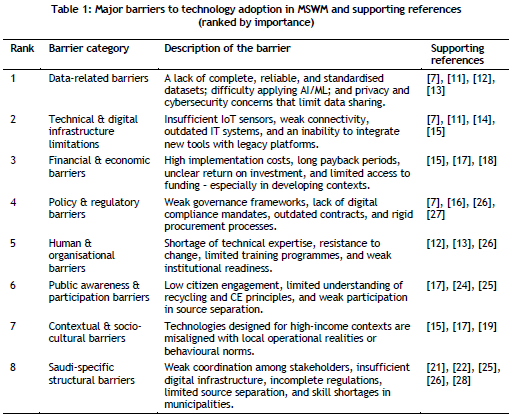
Table 1 summarises the major barriers to adopting modern digital technologies in global MSWM systems and in the Saudi context. The barriers are ranked by their prevalence and significance in the literature, with data limitations, weak digital infrastructure, and financial constraints emerging as the most critical worldwide. The table also highlights the unique structural problems observed in Saudi municipalities, such as limited source separation, incomplete regulatory frameworks, and skill shortages. The references listed under each barrier category correspond directly to the studies that have explicitly identified or analysed the respective constraints.
2.4. Research gap and study positioning
Despite growing interest in digital transformation for CE-oriented MSWM, empirical evidence from emerging systems such as those of Saudi Arabia remains limited. Studies typically identify technical, institutional, or behavioural barriers in isolation, and implicitly assume the availability of traceable waste flows and operational data. This study addresses a critical gap by empirically examining digital-transformation barriers in a context where data generation itself is structurally constrained, offering an integrated, field-based perspective on how systemic conditions shape digital adoption in municipal waste management.
Despite growing attention to digital transformation in the CE and MSWM, two important gaps remain insufficiently addressed. First, studies of digital technologies for waste management commonly examine adoption barriers such as infrastructure limitations, data quality, financial constraints, and regulatory readiness, but they often treat waste data as an existing input that can be improved, integrated, or analysed. For example, Sharma et al. [7] discuss barriers to IoT adoption in smart waste management, while Trevisan et al. [10] analyse barriers to digital technology adoption in the CE from a multi-level perspective. However, these studies do not sufficiently explain how digital transformation is constrained in MSWM systems where traceable waste-flow data is not generated at the source in the first place.
Second, Saudi Arabia-focused studies provide useful insights into waste management problems, recycling behaviour, infrastructure constraints, and CE transition, including studies of Jeddah and other Saudi contexts [2], [20]-[25]. Nevertheless, this literature remains fragmented, and has not empirically examined how household behaviour, municipal operations, informal material recovery, weak source separation, and regulatory arrangements interact to produce a structural "data void" that limits the feasibility of digital supply-chain technologies. Therefore, this study addresses a specific empirical and conceptual gap by examining digital-transformation barriers in Saudi MSWM as a problem of material traceability and data generation, rather than merely as a problem of technology adoption or data quality.
3. METHODOLOGIES
3.1.
Study designThe study adopted a mixed-methods exploratory design that combines survey analysis, focus group discussions in Makkah, Taif, and Jeddah, and direct communication with MWAN. An exploratory approach was necessary because no empirical data or prior field studies exist on barriers and limitations to adopting digital supply chain technologies that support CE practices in MSWM in Saudi Arabia. Combining local field insights with institutional feedback from MWAN allowed the study to document current practices, clarify existing gaps, and establish a baseline of evidence for future research.
The selection of Makkah, Taif, and Jeddah was purposive. These municipalities represent major urban centres with high waste generation volumes and varying operational scales, making them suitable for assessing institutional digital maturity in the context of Vision 2030's urban transformation. Remote and sparsely populated regions were not included because their limited infrastructure and smaller operational scale would introduce structural heterogeneity unrelated to digital governance capacity. Focusing on large and mid-sized urban systems ensured analytical comparability and relevance to national digital transformation priorities.
3.2.
Survey: Instrument, sampling, and quantitative processingThe research instrument consisted of a structured questionnaire designed to examine barriers to adopting digital supply-chain technologies that support circular economy practices in Saudi municipal solid waste management. The questionnaire covered key barrier dimensions identified in the literature, including technical readiness, data availability, infrastructure limitations, financial constraints, regulatory conditions, organisational capacity, and public participation.
The survey targeted municipal staff and operational stakeholders directly involved in waste-management activities. Participants were selected using purposive expert sampling because the study required respondents with practical knowledge of MSWM operations rather than a general population sample. Eligibility was limited to individuals involved in at least one of the following areas: municipal waste collection and supervision, contractor coordination, recycling or sorting activities, field monitoring, environmental services, or municipal service planning. To increase the diversity of operational perspectives, participants were recruited from different roles across Makkah, Taif, and Jeddah.
A total of 53 valid responses were received. Because the study was exploratory and descriptive rather than confirmatory, a formal statistical power calculation was not conducted. The sample was not intended to support national statistical generalisation but to identify preliminary empirical patterns, support triangulation with the focus-group findings and MWAN responses, and inform future large-scale research. The sample size was consistent with methodological guidance for exploratory and pilot studies, in which smaller purposive samples are commonly used for initial pattern identification and instrument development [29]-[31].
After data cleaning and formatting, the survey responses were analysed descriptively using frequency counts and percentages for each barrier category. Python and Excel were used for data processing, and the analysis scripts were archived to support reproducibility.
3.3.
Focus groups: Sites, participants, and proceduresThe research team conducted three focus group sessions to collect qualitative data on digital technology use, operational problems, and regulatory standards in MSWM. The sessions took place as follows:
1. Makkah on 22 May 2025
2. Taif on 24 May 2025
3. Jeddah on 28 May 2025
The research participants included waste management officials from municipalities, contractors, and representatives from recycling organisations. Each 90-minute session followed a semi-structured format and explored four main topics: current technological systems, institutional obstacles, public participation systems, and future policy requirements.
The research team recorded all sessions for audio purposes, then conducted transcription and anonymisation, and prepared the data for coding analysis.
3.4.
MWAN responsesThe responses received from MWAN added significant weight to this study. MWAN was essential as an information source, as it represents the highest regulatory authority for waste management in Saudi Arabia, and provides an official perspective that helps to contextualise municipal practices in the national system. This combination of field data and institutional input enabled the study to capture both operational realities and the broader regulatory environment shaping digital technology adoption in MSWM.
3.5.
Qualitative data processingThe authors applied a structured, rule-based qualitative method to analyse the focus-group data from Makkah, Taif, and Jeddah after transcription and anonymisation. The Python-based coding dictionary helped them to identify all mentions of digital technology in five operational categories: tracking and monitoring, optimisation, decision support, sorting and classification, identification and authentication, and citizen engagement.
The algorithm executed a process that duplicated NVivo segment retrieval and frequency-count operations to perform technology-type and city-based statement grouping. Given the rule-based and deterministic structure of the coding algorithm, traditional inter-coder reliability metrics such as Cohen's Kappa were not applicable.
The manual review of 20% of the data showed a complete match between the human and the automated coding results. The researchers used the survey data to verify how operational explanations from field observations related to the technology's adoption levels.
3.6.
Integration of quantitative and qualitative findingsThe research combined survey data with focus group discussions to address the barriers and limitations to adopting digital supply chain technologies that support circular-economy practices in MSWM in Saudi Arabia. The survey data provided numerical information on the number of users who adopted digital tools, the stage of their system development, the level of satisfaction they experienced, and the barriers and limitations to adopting digital supply chain technologies. The focus groups generated operational data that revealed why specific technologies gained popularity, demonstrated their operational mechanics in real-world environments, and highlighted the contractual and institutional barriers that hindered their widespread adoption.
4. RESULTS AND DISCUSSION
Digital transformation is increasingly recognised as a foundational pathway to modernising MSWM and advancing CE objectives. Global research highlights that technologies such as loT sensors, AI-driven routing, digital traceability, robotics, and blockchain can dramatically improve operational efficiency and resource recovery. However, the international evidence consistently shows that digital adoption is constrained by multiple interrelated barriers: technical, financial, regulatory, institutional, and behavioural.
The thematic results were generated through a structured qualitative coding process applied to the focus-group transcripts from Makkah, Taif, and Jeddah. A Python script was used to search the transcripts, extract relevant text segments, and group them according to a predefined coding dictionary covering six main barrier categories: data-related, technological, financial, regulatory, institutional, and behavioural barriers. The coding dictionary was developed from the literature-based barrier framework and refined during the transcript review to ensure alignment with the field data. Excel was then used to organise the extracted segments, to compare the recurrence of themes among the three cities, and to support integration with the survey percentages. The resulting coded themes were manually reviewed and triangulated with municipal survey findings and MWAN responses. Accordingly, the results presented below are based on a structured integration of qualitative evidence, survey results, and institutional input.
This study used a triangulated approach, combining evidence from three municipal focus groups (Makkah, Taif, Jeddah), a survey of municipal professionals (n=53), a citizen survey (n=408), and official regulatory responses from MWAN. The findings confirm that the six global barriers are present in the Saudi context, but that they manifest through mechanisms shaped by national structural conditions rather than by technology alone.
4.1. Data barriers
While the global literature frequently cites data fragmentation and inconsistent classification as primary digital hurdles, our findings reveal a more fundamental "structural data void" in the Saudi MSWM sector. Evidence from Makkah, Jeddah, and Taif suggests that the problem is not merely poor-quality data, but a total absence of data generation at the source. The qualitative insights highlight a significant "leakage" of recyclables through informal sectors and manual operations, which effectively blinds the digital systems. For instance, the disconnect between collection and sorting in Jeddah indicates that municipal datasets do not accurately reflect material flows. This is corroborated by MWAN's confirmation of a total absence of national IoT- and AI-driven monitoring. Thus, in the Saudi context, digitalisation is not hindered by data "quality" but by the lack of material traceability - a prerequisite for the adoption of AI or predictive analytics.
The participants consistently highlighted the disruptive role of informal recycling flows. In Makkah, one participant explained: "Scavengers collect most recyclables before municipal crews arrive". In Taif, the problem was similar: "A large portion of recyclables ends up in scrap yards, making accurate data almost impossible". Jeddah officials described internal fragmentation: "Collection operations are completely disconnected from sorting facilities".
These statements demonstrate that the datasets available to municipalities do not reflect real waste flows. The survey results confirm this pattern, with 35.8% of staff identifying data weakness as a major barrier, while citizen behaviour (80.6% not sorting; 79.2% lacking bins) prevents the generation of composition data.
MWAN's responses confirm the absence of structural data: no loT systems, no AI deployment, no landfill monitoring platforms, no national data architecture, and no digital integration between MWAN and municipalities. With a national recycling rate of only 6.7%, the Saudi problem goes beyond "poor-quality data": it is a systemic data void.
Compared with high-income settings where data is weak but traceable, Saudi Arabia lacks the material traceability required for AI, digital routing, or advanced analytics.
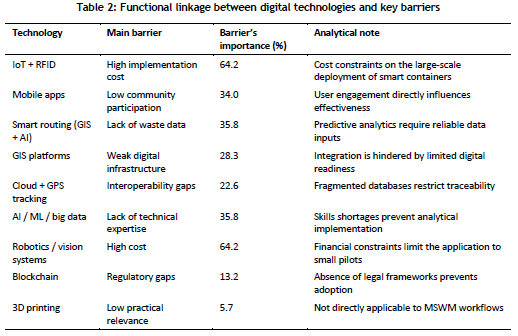
Table 2 shows that the feasibility of each technology depends not on the technology itself but on systemic constraints. Cost-intensive tools (the IoT, robotics) face financial barriers; data-dependent technologies (GIS-AI routing, machine learning) are hindered by the absence of reliable data streams; blockchain requires regulatory foundations that do not yet exist; and 3D printing has minimal operational relevance. This mapping reinforces that Saudi MSWM requires systemic readiness, not isolated technology procurement.
4.2. Technological and digital infrastructure barriers
International studies often assume a degree of existing mechanisation when discussing digital adoption. However, this study illuminates a unique infrastructure-readiness gap. The focus groups in all three cities emphasised a reliance on fully manual sorting and labour-intensive processes. The survey results (45.3% citing weak infrastructure) and citizen feedback (79.2% lacking bins) indicated that Saudi municipalities are attempting to overlay digital solutions on a non-mechanised baseline. This creates a technological mismatch in which digital tools such as Radio-Frequency Identification (RFID) or Geographic Information Systems (GIS) routing cannot function effectively without the physical infrastructure (smart bins and automated lines) that supports them. Unlike in the Global North, where digitalisation is an incremental upgrade, in Saudi Arabia it requires a simultaneous build-out of both physical and digital layers.
In all three cities, staff noted reliance on fully manual processes. From Makkah: "All sorting is fully manual; no automated lines exist". From Taif: "Sorting is entirely manual, and no systems support digitisation". From Jeddah: "Sorting remains labour-intensive, and our digital tools are extremely limited".
The survey findings reflect this structural gap, with 45.3% citing weak infrastructure as a major barrier. The citizen survey results further showed that, even if digital tools were introduced, 79.2% lack access to sorting bins, preventing participation. Yet citizens showed a strong willingness (62.3%) to use digital tools if the infrastructure were in place.
MWAN confirmed that no national digital MSWM infrastructure, whether for tracking, monitoring, or IoT, was currently in place. Thus, unlike in global contexts where digital systems must integrate with existing infrastructure, Saudi municipalities are attempting to digitise a non-mechanised baseline.
4.3. Financial barriers
The financial barriers identified (by 64.2% of the staff) transcend simple capital expenditure constraints. While global studies focus on the high cost of IoT and robotics, our findings revealed an institutional-financial misalignment. Stakeholders in Makkah and Jeddah pointed to legacy procurement models in which contracts are designed solely for transport and labour, leaving no budget for digital innovation. Furthermore, the citizen survey identified a critical missing link: the absence of financial incentives for household sorting. This suggests that the financial barrier in Saudi Arabia is systemic: it is rooted in traditional contracting frameworks that treat digital transformation as a short-term cost rather than a long-term operational investment.
In all the focus groups, the participants emphasised misaligned contract structures. From Makkah: "Current budgets do not cover digital transformation". From Taif: "High costs prevent investment in sensors or automated systems". From Jeddah: "Contracts were designed for transport, not digital transformation".
The survey results showed that 64.2% view cost as the most significant barrier, which is consistent with the global literature. Yet the citizen survey data revealed a unique behavioural dimension: financial incentives were the strongest motivator of household sorting, receiving over half of all votes. This indicates that a financial design must target both institutions and citizens.
MWAN added further context, noting that, while Saudi Arabia is targeting a 69% recycling rate by 2040, there is currently no national funding stream to support digital transformation. Thus, financial barriers in Saudi Arabia emerge from legacy procurement models and the absence of incentive mechanisms, an institutional dynamic not commonly seen in the global literature.
4.4.
Regulatory barriersUnlike in global contexts, where digital adoption is often slowed by obsolete or overlapping regulations, the Saudi regulatory landscape is characterised by emerging ambiguity. The focus groups and MWAN responses confirmed that, while Vision 2030 set ambitious targets, a unified national digital MSWM mandate did not yet exist. The lack of mandatory source-separation laws (cited by 37.7% of the staff) prevents the creation of a predictable environment for digital investment. Regulatory development here is not an incremental fix but a foundational necessity to provide the legal backbone for data-sharing protocols and digital accountability between MWAN, municipalities, and private contractors.
From the focus groups: Taif: "There is no unified national system for digital waste management". Makkah: "Regulations do not define roles for enforcing source separation".
Jeddah: "There is no consistent regulatory mandate for digital waste systems".
The survey findings showed that 37.7% of the staff view regulatory gaps as a major constraint. The citizen survey results highlighted the secondary effects: 48.3% said weak enforcement reduces motivation to sort.
MWAN validated that no national digital MSWM strategy, mandatory source-separation regulations, or data-sharing protocols currently exist. Thus, regulatory development is foundational, not incremental.
4.5.
Institutional and human capacity barriersInstitutional readiness in Saudi MSWM faces a severe expertise gap that exceeds typical global benchmarks. With 54.7% of the staff identifying a lack of technical skills, the results suggested that procurement of technology without corresponding human capital development would lead to "hollow digitalisation". The focus group discussions in Taif and Makkah emphasised that current staff are not trained for data-driven decision-making. MWAN's data confirmed the absence of national training frameworks or specialised digital units. Consequently, institutional capacity-building must precede technology adoption to ensure that digital tools are used for analytics rather than for mere reporting.
Jeddah: "Staff are not trained to operate digital systems". Makkah: "We need structured training to work with data". Taif: "There is a major gap in technical skills".
The survey results supported these observations, with 54.7% identifying a lack of expertise as a barrier. The citizens' responses indicated readiness rather than reluctance: they reported a willingness to use digital tools but a lack of enabling infrastructure and consistent municipal follow-up.
MWAN confirmed that no national training frameworks, digital transformation units, or specialised technical roles were currently in place. This suggested that institutional capacity was not merely insufficient; it must be built as a prerequisite for any digital adoption.
4.6. Public awareness and participation barriers
A significant contribution of this study is the debunking of the "low awareness" myth often cited in the emerging economy literature. Our findings reveal an infrastructure-awareness paradox: 62.3% of Saudi citizens demonstrate high digital readiness and willingness to participate, yet 80.6% are prevented from doing so by the total absence of sorting infrastructure. This shift in perspective - from behavioural resistance to systemic disenfranchisement - is critical. The preference for financial incentives (52.8%) over awareness campaigns suggests that the participation barrier is infrastructural and economic. Citizens do not need more 'awareness'; they need an enabling system that makes their participation feasible, tracked, and rewarded.
From Jeddah: "Citizens don't oppose sorting; the required tools simply don't exist". From Makkah: "People ask why they should sort if everything ends up in the same truck". From Taif: "Awareness exists, but the system is not ready".
The citizen survey results confirmed this interpretation:
• 80.6% do not sort because bins are unavailable
• 79.2% lack convenient access to sorting infrastructure
• 62.3% would use a digital sorting app if bins and incentives were provided
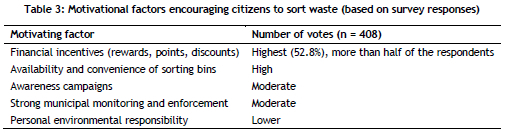
Table 3 shows that financial incentives were the strongest motivator, followed by bin availability. Awareness campaigns ranked far lower, indicating that the barrier is infrastructural and systemic rather than behavioural.
MWAN confirmed that no national incentive system, monitoring platform, or public digital engagement tool currently exists. Thus, Saudi Arabia's participation barrier stems from institutional unpreparedness, not low public awareness.
Municipal monitoring emerged as a moderate motivator, suggesting that trust is an important factor: citizens want an assurance that their effort will be recognised, tracked, and used meaningfully. This aligns with a comment from Jeddah: "Without monitoring, people do not feel their effort matters".
The combined evidence from the focus groups, municipal staff, and citizen surveys indicates that public awareness is not the primary barrier to participation. Instead, the core obstacle lies in the absence of an enabling system that supports sorting behaviour. Citizens show willingness, awareness, and interest, but lack the tools, infrastructure, incentives, and institutional transparency needed for participation to be feasible and worthwhile. Thus, strategies relying solely on awareness campaigns will not be effective. Instead, enhancing public participation in Saudi MSWM requires:
• Accessible and well-distributed sorting infrastructure;
• A national incentive-based participation system;
• Transparent municipal monitoring to rebuild trust; and
• Clear communication channels linking citizens with local authorities.
Saudi Arabia's participation barrier, therefore, reflects a misalignment between citizens' and institutional readiness, underscoring the need for municipalities to create enabling conditions before expecting widespread behavioural engagement.
4.7. Overall synthesis
The synthesis of these barriers confirms that Saudi Arabia's path to a digitally enabled CE is blocked by a "cycle of interdependence". Weak data undermines analytics; lack of infrastructure prevents data generation; and legacy contracts inhibit infrastructure investment. To break this cycle, the study proposes a "tri-axis transition" that synchronises (1) physical-digital infrastructure build-out, (2) regulatory-contractual modernisation, and (3) incentive-based citizen engagement. This integrated approach would move beyond isolated technology pilots towards a systemic transformation aligned with Vision 2030.
5. CONCLUSIONS AND RECOMMENDATIONS
5.1.
Conclusions and recommendationsThis study concludes that digital transformation in Saudi Arabia's MSWM is not a problem of procurement, but a systemic governance transition. The findings suggest that technological tools remain "hollow" without a foundational redesign of material traceability. To bridge this gap, the study proposes the following roadmap:
1. Establishing a "traceability-first" mandate: Policy efforts must transition from broad awareness to mandatory source separation and the formalisation of informal recovery channels to close the "data void".
2. Synchronised infrastructure build-out: Municipalities should move away from "isolated digital pilots" towards a dual-track strategy in which physical sorting facilities and digital IoT monitoring are deployed as a single integrated unit.
3. Contractual modernisation: Transitioning from "input-based" (labour and transport) to "data-linked performance" contracts that reward contractors based on digital transparency and material recovery rates.
4. National data architecture: MWAN should lead the development of a unified MSWM data standard to ensure interoperability between municipal operators and national oversight bodies.
5. Incentive-centric engagement: Leveraging the identified "infrastructure-awareness paradox" by deploying digital gamification and financial incentive apps to activate the already-willing citizen base.
5.2.
Contributions5.2.1. Conceptual contribution
This research introduces the concept of the "structural data void" to the digital waste management discourse. It reframes the problem of missing data not as a technical failure of sensors, but as a governance failure to capture material flows that bypass formal systems. This shifts the academic focus from "data cleaning" to "data generation" at the source.
5.2.2. Empirical contribution
The study challenges the universalist assumptions of digital maturity models. It demonstrates that, in emerging economies, digitalisation must occur alongside physical mechanisation and institutional development. This adds a new dimension to "digital readiness" theories, suggesting that readiness is a multi-layered construct involving physical, regulatory, and digital alignment.
5.2.3. Theoretical contribution
The findings challenge the universalist assumptions in digital-transformation theory by demonstrating that models developed in mature waste systems cannot be transferred directly to emerging contexts. The study shows that digitalisation in Saudi Arabia must proceed in a setting where physical, institutional, and digital infrastructures are developing simultaneously, requiring a staged and context-sensitive transformation pathway. This extends theoretical debates on how to conceptualise digital readiness in lower-maturity systems.
5.2.4. Policy and practice contribution
In practice, the study provides an evidence-based roadmap for national reform. It highlights the need to establish a unified waste-data architecture, redesign municipal contracts towards performance-based digital models, invest in integrated physical and digital infrastructure, and build incentive-driven citizen-participation systems. These recommendations offer actionable guidance for policymakers working towards a digitally enabled CE framework that is aligned with Saudi Vision 2030.
5.3.
LimitationsDespite its contributions, this study has several limitations that provide a context for its findings and suggest avenues for future inquiry.
First, the geographic scope was strategically focused on three major urban centres (Makkah, Jeddah, and Taif) to examine digital transformation in high-density infrastructure settings. While these cities are representative of advanced municipal operations in Saudi Arabia, the findings might not be directly transferable to rural areas or smaller municipalities, where waste logistics and digital connectivity operate differently.
Second, as an exploratory study, the research prioritises identifying systemic patterns and barrier archetypes rather than establishing formal causal relationships. Future research could use longitudinal or confirmatory designs to quantify the impact of specific barriers on circular-economy performance.
Third, the reliance on self-reported data from surveys and focus groups introduces potential perception bias. Although triangulation between four independent data sources was used to mitigate this, participants might still over- or under-estimate certain operational difficulties.
Fourth, the study focused on institutional and public perspectives, but did not include direct operational telemetry (e.g., IoT sensor data) from sorting facilities. Future technical studies could integrate real-time data to complement the social and organisational findings presented here.
Finally, while municipal contractors were included, the independent perspectives of private-sector technology providers and specialised recyclers remained secondary. Future inquiries should explore the market-driven incentives and economic barriers that these stakeholders face to provide a complete picture of the digital waste ecosystem.
5.4.
Future research directionsThe findings open several avenues for future research that could deepen academic and practical understanding of digital transformation in MSWM. Future studies could expand the geographic scope to include municipalities in different regions, enabling comparative analyses of digital readiness and CE practices at the national level. Researchers could also explore developing digital twin models to evaluate how digital technologies could reshape collection efficiency, routing, cost optimisation, and material recovery. Experimental research - such as pilot deployments of IoT-enabled bins, blockchain tracking tools, or AI-based sorting systems - would provide direct evidence of technological feasibility and operational impact in real-world Saudi settings. In addition, behavioural studies could investigate citizens' motivations, trust dynamics, and responsiveness to financial and non-financial incentives, offering insights for designing more effective engagement strategies. More broadly, future research could examine the evolving role of regulatory reforms and public-private partnerships in shaping the digitalisation of MSWM, as well as develop national frameworks for standardised waste-data governance. Together, these research directions could support the transition towards a more data-driven, efficient, and circular municipal waste system in Saudi Arabia.
FUNDINGThis research was funded by the Researchers Supporting Project Number (ORF-2026-2089) at King Saud University in Riyadh, Saudi Arabia.
DECLARATION OF GENERATIVE AI AND AI-ASSISTED TECHNOLOGIES
During the preparation of this work, the author(s) used generative AI (Grammarly) to assist in editing text, refining academic phrasing, and enhancing coherence. The authors did not use AI for data analysis. All outputs generated by AI were thoroughly reviewed, verified, and revised by the author(s), who take full responsibility for the content of the published article.
REFERENCES
2. LITERATURE REVIEW
-
[1] MWAN (National Center for Waste Management). 2023. National Waste Management Strategy 2040. Riyadh, Saudi Arabia. Available at: https://mwan.gov.sa/en/strategic-plan (Accessed 23 September 2025)
» https://mwan.gov.sa/en/strategic-plan - [2] Saeedi, K., Visvizi, A., Alahmadi, D. and Babour, A. 2023. Smart cities and households' recyclable waste management: The case of Jeddah. Sustainability, 15, 6776.
- [3] Hadidi, L.A., Ghaithan, A., Mohammed, A. and Al-Ofi, K. 2020. Deploying municipal solid waste management 3R-WTE framework in Saudi Arabia: Challenges and future. Sustainability, 12, 5711.
- [4] Alsaud, K., Assad, F., Patsavellas, J. and Salonitis, K. 2025. A comparative analysis of circular economy practices in Saudi Arabia. Sustainability, 17, 3281.
- [5] Sondh, S., Upadhyay, D., Patel, S. and Patel, R. 2024. Strategic approach towards sustainability by promoting circular economy-based municipal solid waste management system: A review. Sustainable Chemistry and Pharmacy, 36, 101337.
- [6] Almadhi, A., Abdelhadi, A. and Alyamani, R. 2023. Moving from linear to circular economy in Saudi Arabia: Life-cycle assessment on plastic waste management. Sustainability, 15, 10450.
- [7] Sharma, M., Joshi, S., Kannan, D., Govindan, K., Singh, R. and Purohit, H. 2020. Internet of Things (IoT) adoption barriers of smart cities' waste management: An Indian context. Journal of Cleaner Production, 270, 122047.
- [8] Aldhafeeri, Z.M. and Alhazmi, H. 2022. Sustainability assessment of municipal solid waste in Riyadh, Saudi Arabia, in the framework of circular economy transition. Sustainability, 14, 5093.
- [9] Rittl, L., Zaman, A. and De Oliveira, F. 2025. Digital transformation in waste management: Disruptive innovation and digital governance for zero-waste cities in the Global South. Sustainability, 17, 1608.
- [10] Trevisan, A.H., Lobo, A., Guzzo, D., Gomes, L.A.V. and Mascarenhas, J. 2023. Barriers to employing digital technologies for a circular economy: A multi-level perspective. Journal of Environmental Management, 332, 117437.
- [11] Bui, T., Tseng, J., Tseng, M., Wu, K. and Lim, M. 2023. Municipal solid waste management technological barriers: A hierarchical structure approach in Taiwan. Resources, Conservation and Recycling, 183, 106842.
- [12] Dawar, I., Srivastava, A., Singal, M., Dhyani, N. and Rastogi, S. 2025. A systematic literature review on municipal solid waste management using machine learning and deep learning. Artificial Intelligence Review, 58, 183.
- [13] Mounadel, A., Ech-Cheikh, H., Elhaq, S., Rachid, A., Sadik, M. and Abdellaoui, B. 2023. Application of artificial intelligence techniques in municipal solid waste management: A systematic literature review. Environmental Technology Reviews, 12, pp 316-336.
- [14] Lakhouit, A. 2025. Revolutionizing urban solid waste management with AI and IoT: A review of smart solutions for waste collection, sorting, and recycling. Results in Engineering, 25, 104018.
- [15] Prata, J., Simões, C. and Simões, R. 2025. Improvements to municipal solid waste collection systems using real-time monitoring. Sustainability, 17, 1405.
- [16] Batista, M., Caiado, R., Quelhas, O., Lima, G., Filho, W.L. and Yparraguirre, I. 2021. A framework for sustainable and integrated municipal solid waste management: Barriers and critical factors to developing countries. Journal of Cleaner Production, 312, 127516.
- [17] Li, C., Lee, T. and Lau, S. 2023. Enhancement of municipal solid waste management in Hong Kong through innovative solutions: A review. Sustainability, 15, 3310.
- [18] Singh, M., Singh, M. and Singh, S. 2024. Tackling municipal solid waste crisis in India: Insights into cutting-edge technologies and risk assessment. Science of the Total Environment, 917, 170453.
- [19] Singh, D., Dikshit, A. and Kumar, S. 2023. Smart technological options in collection and transportation of municipal solid waste in urban areas: A mini review. Waste Management & Research, 42, pp 3-15.
- [20] Alqahtani, F., Alswailem, Y., Alshabragi, A. and Sherif, M. 2022. Smart planning of waste management system in Saudi Arabia: Challenges and opportunities. In IOP Conference Series: Earth and Environmental Science, 1026, 012035.
- [21] Abdullah, N., Al-Wesabi, O., Mohammed, B., Al-Mekhlafi, Z., Alazmi, M., Alsaffar, M., Anbar, M. and Sumari, P. 2022. Integrated approach to achieve a sustainable organic waste management system in Saudi Arabia. Foods, 11, 1214.
- [22] Radwan, N., Khan, N. and Elmanfaloty, R. 2021. Optimization of solid waste collection using RSM approach and strategies delivering sustainable development goals in Jeddah, Saudi Arabia. Scientific Reports, 11, 96210.
- [23] Alhowaish, A.K. and Alkubur, F.S. 2025. Unlocking the potential of the circular economy at municipal levels: A study of expert perceptions in the Dammam metropolitan area. Sustainability, 17, 4323.
- [24] Al-Rashed, W. 2025. Assessing public perception and parametric analysis of municipal solid waste management solutions in Tabuk City, Saudi Arabia. Scientific Reports, 15, 94525.
- [25] Alghuson, M.K. and Alghuried, A. 2025. A survey and partial dependency analysis to assess residential solid waste recycling awareness in Saudi Arabia. Scientific Reports, 15, 7952.
- [26] Alshehrei, F. and Ameen, F. 2021. Vermicomposting: A management tool to mitigate solid waste. Saudi Journal of Biological Sciences, 28, pp 3284-3293.
- [27] Mir, M. and Chang, S. 2024. Saudi Arabia e-waste management strategies, challenges and opportunities, and effects on health and environment: A strategic review. Emerging Contaminants, 10, 100357.
- [28] Alaboodi, A.S. and Alsnaie, K.A. 2025. Advancing sustainability: An automated framework for managing domestic waste in Riyadh. In Proceedings of the 2025 International Conference on Control, Automation and Diagnosis (ICCAD), IEEE, pp 1-7.
- [29] Browne, R.H. 1995. On the use of a pilot sample for sample size determination. Statistics in Medicine, 14(17), pp 1933-1940.
- [30] Julious, S.A. 2005. Sample size of 12 per group: A rule of thumb for a pilot study. Pharmaceutical Statistics, 4(4), pp 287-291.
- [31] Vasileiou, K., Barnett, J., Thorpe, S. and Young, T. 2018. Characterising and justifying sample size sufficiency in qualitative health research. BMC Medical Research Methodology, 18, 148.
Accepted for publication 15 Jun 2026
Available online 31 Aug 2026
ORCID® identifiers
B. Aljabri https://orcid.org/0009-0009-7226-9782
M. Alkhatani https://orcid.org/0000-0001-7343-9098
W.A.M. Al-Garadi https://orcid.org/0000-0002-2154-3341