Barriers to Digitalising Circular Economy Practices in Municipal Waste Management: A Comparative Study of Saudi Arabia and Global Trends
Abstract
The circular economy (CE) enables revolutionary waste management of municipal solid waste (MSW) through various technologies, including IoT, AI, and blockchain. The technologies allow real-time monitoring, predictive analysis, data-driven decision-making, and enhanced traceability to implement effective and sustainable CE practices in urban waste systems. Implementing digital supply chain technologies in CE practices encounters complex barriers that prevent adoption. This study systematically examines the barriers preventing the adoption of digital supply chain technology for CE strategies in municipal solid waste management (MSWM) globally, with a focus on Saudi Arabia. The analysis of 58 peer-reviewed studies through qualitative content analysis reveals seven main categories of barriers: technological, legal, financial, data-related, regulatory, institutional, and behavioural. The analysis shows that Saudi municipalities face unique difficulties because of their fragmented infrastructure, limited public engagement, underdeveloped regulatory frameworks, and insufficient legal protections. An analysis of the local literature demonstrates that insufficient attention to digital skills development and data governance problems creates additional obstacles to implementation. The research shows that successful implementation requires regulatory bodies to work with digital infrastructure developers to engage the public and to establish sustained support for smart technology systems. The study uses its findings to develop policy recommendations to help Saudi municipalities to implement digital CE practices. The recommendations aim to support Vision 2030's national objectives while participating in worldwide discussions about sustainable digital waste management systems.
Abstract
Die sirkulêre ekonomie (SE) maak ingrypende afvalbestuur van munisipale vaste afval moontlik deur verskeie tegnologieë, insluitend die Internet van Dinge, kunsmatige intelligensie en blokketting. Hierdie tegnologieë maak intydse monitering, voorspellende analise, datagedrewe besluitneming en verbeterde naspeurbaarheid moontlik om doeltreffende en volhoubare SE-praktyke in stedelike afvalstelsels te implementeer. Die implementering van digitale voorsieningsketting-tegnologieë in SE-praktyke kom voor komplekse hindernisse te staan wat aanvaarding belemmer. Hierdie studie ondersoek sistematies die hindernisse wat die aanvaarding van digitale voorsieningsketting-tegnologie vir SE-strategieë in munisipale vasteafvalbestuur wêreldwyd belemmer, met 'n fokus op Saoedi-Arabië. Die ontleding van 58 eweknie-geëvalueerde studies deur middel van kwalitatiewe inhoudsontleding toon sewe hoofkategorieë hindernisse: tegnologiese, regs-, finansiële, dataverwante, regulatoriese, institusionele en gedragsverwante hindernisse. Die ontleding toon dat Saoedi-munisipaliteite unieke probleme ondervind weens hul gefragmenteerde infrastruktuur, beperkte openbare betrokkenheid, onderontwikkelde regulatoriese raamwerke en onvoldoende regsbeskerming. 'n Ontleding van die plaaslike literatuur toon dat onvoldoende aandag aan die ontwikkeling van digitale vaardighede en probleme met databeheer verdere struikelblokke vir implementering skep. Die navorsing toon dat suksesvolle implementering vereis dat regulatoriese liggame met ontwikkelaars van digitale infrastruktuur saamwerk, die publiek betrek en volgehoue ondersteuning vir slimtegnologiestelsels vestig. Die bevindinge van die studie word gebruik om beleidsaanbevelings te ontwikkel wat Saoedi-munisipaliteite kan help om digitale SE-praktyke te implementeer. Die aanbevelings is daarop gemik om Visie 2030 se nasionale doelwitte te ondersteun en terselfdertyd by te dra tot wêreldwye gesprekke oor volhoubare digitale afvalbestuurstelsels.
1. INTRODUCTION
The global generation of waste is expected to increase to 3.40 billion tonnes by 2050, compared with 2.01 billion tonnes in 2016, according to World Bank estimates [1]. This growth will put increasing pressure on cities worldwide to re-engineer their supply chain models to tackle increasing environmental problems and to address the rising demands of their population [2]. The CE, as a concept that is grounded in the '3Rs' (reduce, reuse, and recycle), has merit as an alternative to linear practices in respect of economic, social, and environmental value, in parallel with environmental, social, and governance (ESG) concerns [3]. ESG frameworks especially serve as critical perspectives to evaluate the strengths and weaknesses behind the CEs of carbon reduction, efficient resource use, and inclusive economic growth [3].
However, in classic municipal supply chains, recycling is performed poorly, and limited resource recovery often results in highly inefficient and environmentally degrading practices [4]. Concerns such as sustainability, regulatory standards, and consumer demands worldwide have led to the increasing acceptance of CE [5]. Digital supply chain technologies (e.g., the Internet of Things [IoT], AI, blockchain, and big data) are key circularity enablers, providing transparency and traceability, and offering operational efficiency.
CE concepts are integrated into Vision 2030 in Saudi Arabia, which targets the diversification of the economy, minimises reliance on oil, and creates sustainability in the long term [6]. The Kingdom has also undertaken a massive recycling campaign to recycle up to 90% of its waste through national waste recycling, worth SAR 120 billion (USD 32 billion) to the GDP and creating more than 100,000 jobs [7]. These include ambitious targets of streaming 90% of waste from landfills by 2040, in which 40% will be recycled, 31% composted, and 16% converted into energy [8].
Vision 2030 and ESG Vision 2030 have highlighted ESG as a cornerstone of national and corporate strategy, leading to sustainability, energy transition, and economic sustainability [9]. Despite this increasing impetus, the shift from linear supply chains in developing countries such as Saudi Arabia to circular supply chains is constrained by infrastructure, regulation enforcement, and data systems fragmentation [10]. Recent studies with autoregressive distributed lag (ARDL) models show that some critical variables influencing Saudi Arabia's CO2 emission rate are GDP growth, services, agriculture, and oil-related production, revealing the environmental risks of postponing reform [11].
The Kingdom also generates more than 10 to 14 million tonnes of municipal waste annually, while per capita waste is 1.4 to 1.8 kg daily [12]; [13]. Most waste is disposed of in landfills or openly burned, with little or no material/energy recovery. Recycling schemes currently cover only 10% to 15% of the waste streams (mainly metals, cardboard, and plastics) despite growing interest in recycling programmes [14]. The pressure is exacerbated by population growth, rural-to-urban migration, and an anticipated rise in tourist arrivals. This would increase Saudi Arabia's urban population to 30 million by 2025 and drive annual waste generation to 30 million tonnes by 2033 [15].
From 2010 to 2018, per capita daily waste rose from 1.15 to 2.04 kg before levelling off slightly to 1.72 kg; the curve follows population growth and places stress on municipal services [15]. Even though CE ideas were launched as long ago as the 1990s [16], the concept has developed, and the 3Rs are the most important concept for reducing waste and making the best use of resources [17]; [18]; [19].
CE models try to close material loops and lower dependence on virgin resources, making CE interesting for sustainable supply chain development [20]. Specifically, information transparency (e.g., data transparency, visibility, reverse logistics, and regulatory compliance) is largely supported by digital technologies, such as radio-frequency identification (RFID), blockchain, and digital product passports, which are crucial enablers of ESG performance [21]. Technologies such as AI and blockchain are already enhancing eco-efficiency in industries such as food processing [22].
The implementation of digital technologies to support circular economy practices in municipal solid waste systems remains restricted, especially in developing regions. This research provides an original analysis of digital supply chain technology barriers that hinder improved CE performance in municipal waste management, focusing on Saudi Arabia. The research analyses 58 peer-reviewed studies through qualitative content analysis to identify and categorise implementation barriers while comparing Saudi Arabian practices with global standards. The research adds new empirical knowledge through thematic barrier synthesis, revealing governance and infrastructure gaps and shortcomings in institutional readiness that are specific to the region. The authors attempt to solve the following research questions:
RQ1: What are the constraints and limitations in adopting digital supply chain technologies to support circular economy practices in municipal solid waste management in Saudi Arabia?
RQ2: What are municipalities' global difficulties and barriers in deploying digital supply chain solutions to advance circular economy applications in solid waste systems?
2. METHODOLOGY
This study applies structured content analysis methods to investigate the barriers to the adoption of digital supply chain technology for circular economy practices in MSWM systems, comparing Saudi Arabia with global trends. The research carries out an empirical study of the published literature to extract and classify implementation barriers through structured coding techniques.
2.1. Data collection and source selection
A Web of Science (WoS) Core Collection database search was performed on 15 January 2025. The literature search examined peer-reviewed articles published between 2016 and 2024. The search was performed only on research articles and reviews in specific source types (journals) and in one language (English). The query targeted publications that discussed CE in the context of MSWM and digital technologies. The following search string was applied to the "Topic" field: ("circular economy" AND ("municipal solid waste" OR "household waste" OR "urban waste" OR "solid waste" OR "waste management" OR "municipal waste")) and ("technology*" OR "deep learning" OR "artificial intelligence" OR "AI" OR "GIS" OR "big data" OR "blockchain" OR " RFID" OR " sensor*" OR "machine learning" OR "Industry 4.0" OR "IOT" OR "robotics" OR "cloud") and ("barrier*" OR "challenge*" OR "obstacles" OR "opportunit*" OR "inhibitors" OR "enabler*" OR "implications"). This search yielded 850 documents. After screening the titles and abstracts, 327 articles were selected for full-text review. Finally, 58 articles met the inclusion criteria by directly addressing the barriers to implementing digital technologies in CE-based MSWM systems.
2.2. Content classification framework
The 58 selected articles underwent manual review to identify the barriers to the adoption of digital supply chain technology for circular economy practices in MSWM. The research team analysed each article, using three essential categories: (1) the barriers reported in the context of technology adoption in MSW; (2) the barriers' characteristics; and (3) digital technology types, such as artificial intelligence, IoT, and blockchain. The research team organised the identified barriers into seven thematic categories: technological, legal, financial, data-related, regulatory, institutional, and behavioural barriers. The research focused on Saudi Arabian articles to conduct a comparative evaluation of regional versus global obstacles.
The research incorporated two essential levels of analysis. The first part of the analysis provided a descriptive overview of worldwide barriers that impede the adoption of digital systems. The second part of the analysis focused on a structured comparison between global barriers and the Saudi Arabian context. This comparative step enabled the identification of context-specific constraints that differentiate emerging MSWM systems from mature international cases.
2.3. Bibliometric contextualization
The Bibliometrix R package (v4.3) supported the assessment of the publication landscape and ensured that the chosen studies met the requirements through bibliometric analysis. Barriers to implementing digital CE technology in the field of MSWM underwent analysis through keyword co-occurrence mapping, which revealed their temporal evolution patterns. The results of the bibliometric analysis contributed to thematic classification, but were not part of the final analytical results. The combined research methodology established an empirical framework to examine digital CE barriers in Saudi Arabia while comparing them with international standards. It also added new knowledge to the field of waste management digital transformation studies.
3. RESULTS AND DISCUSSION
The research presents structured content analysis findings that extend previous studies by developing systematic categories for digital supply chain technology barriers in MSWM and in circular economy practices. This research goes beyond previous studies by analysing 58 peer-reviewed articles to identify patterns and gaps while comparing Saudi Arabian results with global findings. The study combines bibliometric mapping with thematic classification to provide original empirical evidence of the most common problems with implementation; and the research focuses on disparities between countries and the institutional barriers affecting digital CE adoption in Saudi municipalities.
3.1. Research landscape and publication trends
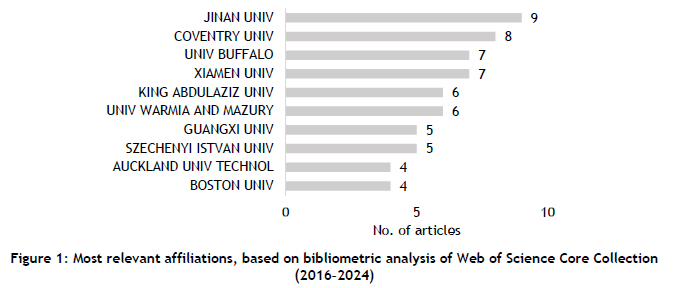
Figure 1 shows the top universities that have published research on the barriers to digital supply chain technologies in MSWM. Jinan University leads with nine articles, followed by Coventry University (8) and the University at Buffalo and Xiamen University with seven each. King Abdulaziz University from Saudi Arabia is among the top contributors with six publications, demonstrating their strong regional involvement in this field. The remaining institutions show smaller but notable contributions, reflecting global interest in the research topic.
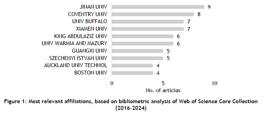
The Figure shows a widespread area of interest both geographically and in the institutions involved, which is a clear signal that the theme of CE and digitalisation in the waste management sector is an international one, and is being actively explored by institutions in Asia, Europe, and North America.
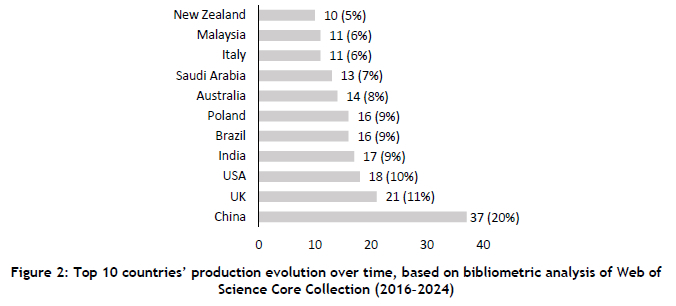
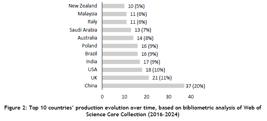
Figure 2 indicates the number of publications in the top 10 countries on the barriers and difficulties in implementing digital supply chain (DSC) technologies in CE and municipal solid waste (MSW). The graph shows the distribution of research activity worldwide, and demonstrates the geographical spread of contributions to the field. China has the highest number of such publications (37). The rankings continue with the United Kingdom (21 articles), the United States (18 articles), and India (17 articles). Brazil and Poland are also strong players, contributing 16 documents each, and Australia contributes 14 papers. Saudi Arabia (13), Malaysia (10), and New Zealand (9) are close behind. Saudi Arabia's presence in the list indicates its increasing academic contribution to sustainability and smart waste management research, which applies to the national reformation objectives under Vision 2030. The geographic distribution shows worldwide interest in using digital technologies for circular economy practices while showing how academic work in this multidisciplinary field requires collaboration.
3.2. Barriers, categories, and difficulties
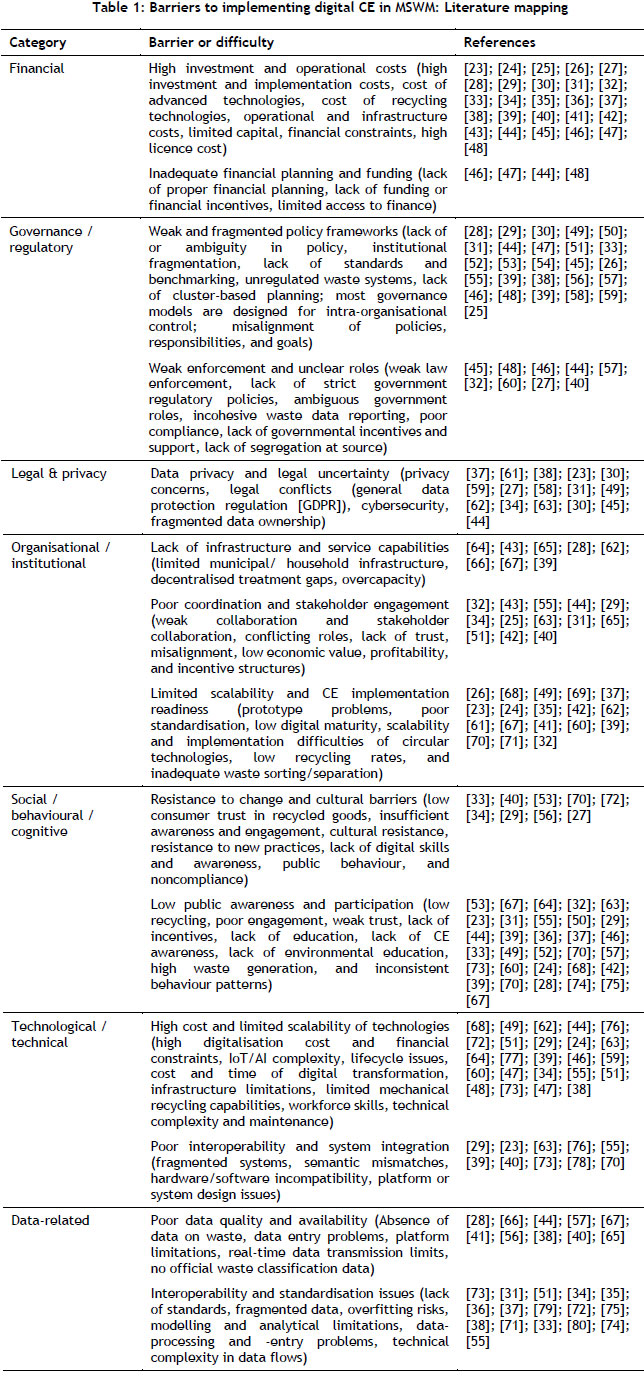
The results shown in Table 1 reveal a complex combination of obstacles that prevent the spread of advanced and digitalised waste management systems that incorporate CE practices in MSWM. Table 1 categorises the barriers to implementing digital CE in MSWM.
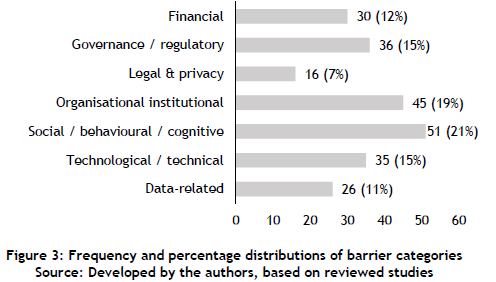
Analysis of Figure 3 reveals important patterns in the barriers to digital supply chain technology for CE practices in MSWM globally. It presents both the frequency and the percentage distributions of the barrier categories.
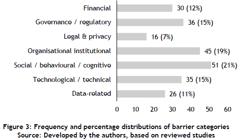
The analysis shows that social and behavioural barriers are the leading problem, as they are mentioned 51 times and account for 21% of the findings. The study shows that CE implementation faces significant obstacles because of poor public understanding, citizen resistance to change, and insufficient community involvement. Organisational and institutional barriers rank second with 45 mentions (19%), reflecting internal limitations such as weak coordination, inadequate infrastructure, and low readiness for digital transformation.
The governance-related and technical barriers are the third most common category, making up 15% of the total, with 36 and 35 citations respectively. The findings indicate three main issues: ambiguous regulatory requirements, inconsistent policies, difficulties with system expansion and system complexity. The financial barriers remain substantial, representing 12% of the total (30 mentions) because of expensive technology investments and restricted funding options. Data-related barriers represent 11% of the findings because 26% of the findings focus on data quality, availability, and system integration difficulties. Legal and privacy concerns appear least frequently (16 mentions, 7%) because of the growing need for digitalisation and regulatory compliance requirements.
These findings demonstrate that human and institutional factors, including citizen behaviour and organisational fragmentation, create the most frequent and complex barriers to digital CE implementation in MSWM contexts despite the significance of technological and regulatory issues.
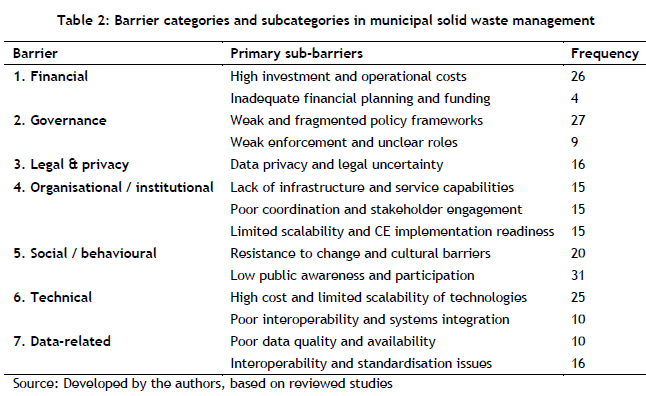
Table 2 identifies seven major obstacles to implementing digital supply chain technologies for CE practices in MSWM, while the literature review revealed multiple sub-barriers in each category, which the researchers examined.
The financial category comprises two primary sub-barriers. The financial cost of implementing advanced technologies such as IoT and AI represented the most significant barrier, with 26 references throughout the literature. The investigation found 'inadequate financial planning and funding' only four times in the literature review. The financial obstacles received 30 mentions in the research findings.
Weak and fragmented policy frameworks emerged as the dominant governance-related barrier, with 27 citations demonstrating regulatory ambiguities or inconsistencies. The research documented 'weak enforcement and unclear roles' nine times because institutions failed to establish clear responsibilities and lacked proper monitoring systems. Governance issues received 36 citations.
The legal and privacy category contained only "Data privacy and legal uncertainty", which received 16 citations that demonstrated concerns about cybersecurity, data ownership, and regulatory compliance.
Organisational and institutional barriers were reported 45 times, and mainly reflected structural and managerial limitations in waste management institutions. These barriers were evenly distributed between three dimensions: insufficient infrastructure and service capabilities (15 references), weak coordination and stakeholder engagement (15 references), and limited scalability and readiness for CE implementation (15 references).
Social and behavioural barriers were the most frequently identified, with 51 occurrences. Resistance to change and cultural barriers accounted for 20 references, while low public awareness and weak participation were cited 31 times. These findings indicate that the success of digital CE implementation is strongly influenced by public behaviour, cultural readiness, and community engagement.
Technical barriers were cited 35 times, and were primarily associated with the high cost and limited scalability of advanced technologies (25 references), and with system integration and interoperability challenges (10 references). Data-related barriers appeared less frequently but remained significant, with poor data quality and availability reported 10 times, and interoperability and standardisation issues identified in 16 references.
The analysis reveals ongoing problems with data integrity and technical standardisation problems, totalling 26 mentions.
Although such barriers are global, their manifestations vary. High-income areas are primarily concerned with data security and precise regulations, but low- and middle-income nations face problems with insufficient infrastructure and limited budgets [60]; [48]. European research focuses on legal ambiguities and trust frameworks, while Asian and Latin American studies investigate informal sector exclusion and infrastructure gaps [76]; [42]. The findings indicate that digital MSWM solutions require customisation that is based on national requirements rather than on worldwide implementation.
3.3. Saudi Arabian context
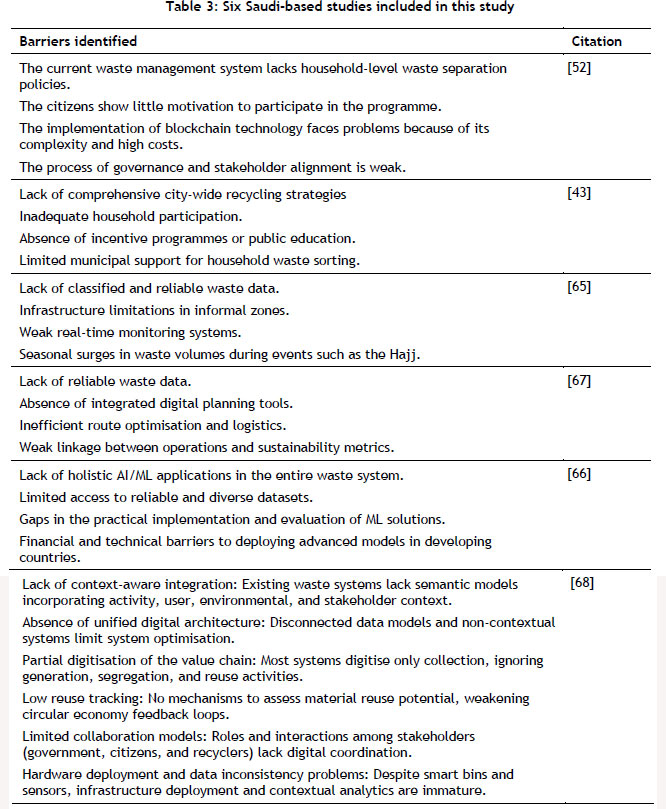
The digital transformation of the circular economy in Saudi Arabia stands out because of its rapid urbanisation, Vision 2030 goals, and the continuous transformation of its civil waste sector. Certain obstacles stop the successful implementation of advanced supply chain technology in this domain. Six Saudi-focused think tanks identified different yet concentrated obstacles to digitalising the circular economy through their research on strong civil waste management. The review of Saudi-focused publications demonstrates a robust framework of problems that block the effective digital transformation of the CE, focusing on MSWM. A major barrier to the successful implementation of smart and computerised frameworks is the lack of a national policy system that directs household-level waste isolation [52]. The city of Jeddah shows interest in smart and advanced city transformation; yet family participation remains low, which demands organised education campaigns and metropolitan incentives for development [43]. The combination of behavioural and organisational obstacles and innovative and infrastructural limitations stemming from deficiencies in waste information classification results in intensified problems in casual or underserved urban zones such as Mecca [65]. Implementing computerised planning tools in Jeddah's operations has led to unsustainable collection methods and weak planning strategies that compromise sustainability markers, reducing CE interventions' overall success [67].
Advanced technologies, including AI and machine learning, remain limited because of restricted access to quality datasets, specialised usage difficulties, and high implementation costs that mainly affect regions with limited budgets [66]. The main problem of fragmented computerised engineering requires a unified semantic framework to handle context-aware information throughout the entire waste management value chain [68]. The lack of coordinated operations results in sub-optimal waste stream management and back fabric recycling, an essential component of CE standards. The impact of smart canisters and IoT devices remains restricted because of insufficient integration between systems, limited partner coordination, and inadequate real-time analytics foundations [68].
The research findings show that a full local strategy must be implemented to manage innovation enablers and their management components. The process requires the establishment of particular regulations for source waste sorting, the creation of data management systems that maintain consistency and integration, and the development of incentive systems that use behavioural incentives and advanced technologies.
The bibliometric analysis shows that Saudi Arabia published 13 studies about the barriers and challenges to digitalising circular economy practices in MSWM. However, content analysis reveals that only six studies focus on the Saudi context (Table 3). The six papers deliver empirical data, case studies, and implementation frameworks that focus on Saudi municipalities. The remaining publications that study institutional affiliations, regional comparisons, and keyword tagging might make passing references to Saudi Arabia without conducting an in-depth analysis of the country's systems.
The research gap demonstrates a need for studies to understand Saudi Arabia's distinctive operational, regulatory, and social difficulties. Such studies support evidence-based policymaking and advance Vision 2030's goal.
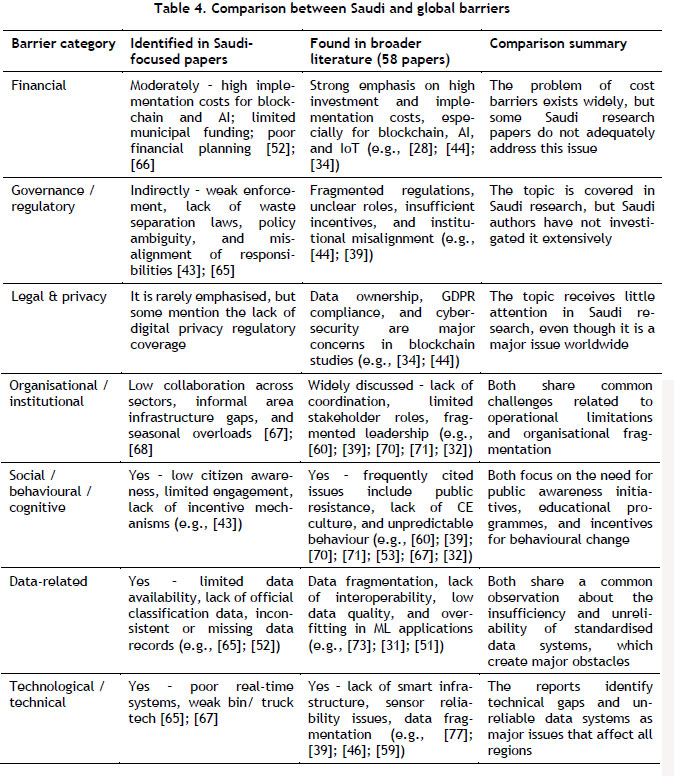
The six Saudi-based studies reveal common worldwide barriers and distinctive local problems that exist more intensely or specifically in the Kingdom. The worldwide literature identifies technological immaturity, financial constraints, fragmented governance, and public disengagement as common barriers (e.g., [28]; [39]). The Saudi context shows identical barriers through high implementation expenses for blockchain and AI systems [66] and low public motivation owing to the lack of reward systems and recycling requirements [43]. Table 4 shows a comparison between Saudi and global barriers.
Multiple explicit requirements exist for this analysis:
The common digitalisation difficulties that Saudi districts face, such as financial barriers, administrative obstacles, and the need for real-time systems, show that Saudi districts encounter the same barriers as are experienced worldwide. However, the Kingdom faces distinctive problems that differ from the obstacles experienced elsewhere. The lack of instructions about household waste reuse prevents the advancement of new digital systems in administrative systems. The requirement for top-down smart city strategies in Saudi Arabia, combined with the absence of innovative technologies such as blockchain and with fake data, creates a knowledge gap that remains theoretical, since it stops at experimental field testing.
Research in Saudi Arabia has focused on understanding behavioural transformations while promoting public engagement. The fundamental approach to sustainable development in international research involves analysing current practices for improvement through input analysis. Saudi research emphasises the importance of building value-based systems that integrate gamification with blockchain payment mechanisms to motivate widespread public participation in reuse activities. The implemented behavioural approaches lack clear definitions in the broader scientific literature.
The global research examines how online systems interact and how legal data management issues affect information consistency under GDPR and similar universal standards. The Saudi Arabian research documents extensive studies in key areas such as data protection, ownership management, and advanced liability issues that might indicate a noticeable research and methodological gap in CE development.
According to current research, the Saudi environment requires specific interventions to overcome the identified organisational and behavioural problems, together with the development of a digital framework. Future research will need to bridge this gap by translating global frameworks into local implementation strategies and expanding empirical evidence to move beyond theoretical models towards practical implementation.
The authors will need to present their results and analyse their study's findings, based on previous research and the theoretical framework. The paper will need to present its main findings and their implications at the highest level of generality. Future research directions may also be highlighted.
4. CONCLUSIONS
This research examined key barriers hindering the implementation of digital supply chain technologies for CE practices in MSWM, with a comparative focus on Saudi Arabia and global contexts. By analysing 58 peer-reviewed studies, the study identified seven core barriers: technological, legal, financial, data-related, regulatory, institutional, and behavioural. While the global literature emphasises financial constraints and regulatory gaps, Saudi studies highlight limitations in public awareness, institutional readiness, and infrastructure fragmentation. The research shows that MSWM digital transformation needs more than technology updates because it requires clear regulations, unified institutional systems, dependable data management, and active public involvement. The success of CE efforts in Saudi Arabia to achieve Vision 2030 requires solving digital competency gaps while improving governance systems and encouraging public participation. The current research proposes a solution that unites policy enforcement with infrastructure investment and social outreach to achieve these goals.
The study recommends an integrated approach that combines policy enforcement, infrastructure investment, and social outreach to advance these goals. Municipalities should receive clear mandates to adopt CE strategies, supported by consistent national-to-local implementation. Financial investment needs to prioritise sensor networks, data platforms, and training programmes to build digital capacity in municipal systems. It is recommended that governments contract with professional and specialised entities to develop citizen engagement campaigns and incentive programmes, which would be essential to promoting recycling participation and supporting behavioural change among citizens. Municipalities should first test digital solutions for continuing education through pilot programmes in controlled environments. These trials could provide evidence-based feedback, allowing for policy refinement and replicable success in all regions.
Future research should investigate live implementations, evaluate the economic impacts of digital CE tools, and design governance models that link local operations with national sustainability objectives.
CONFLICTS OF INTERESTThe authors declare no conflicts of interest.
ACKNOWLEDGEMENTS
This research project is supported by a grant from King Abdulaziz City for Science and Technology (KACST), represented by the Science, Technology and Innovation Unit at King Saud University (STU-KSU), Riyadh, Saudi Arabia (Grant No. STU-58).
REFERENCES
- [1] Kaza, S., Shrikanth, S., Chaudhary, S. and Lalitha, H., 2023. What a waste: A global review of solid waste management. 2nd ed. Washington, DC: World Bank Group.
-
[2] Bocken, N.M.P., Olivetti, E.A., Cullen, J.M., Potting, J. and Lifset, R., 2017. Taking the circularity to the next level: A special issue on the circular economy. Journal of Industrial Ecology, 21(3), pp.476-482. https://doi.org/10.1111/jiec.12606
» https://doi.org/10.1111/jiec.12606 -
[3] Khan, T., 2024. Circular-ESG model for regenerative transition. Sustainability, 16(17), 7549. https://doi.org/10.3390/su16177549
» https://doi.org/10.3390/su16177549 -
[4] Kirchherr, J., Reike, D. and Hekkert, M., 2017. Conceptualizing the circular economy: An analysis of 114 definitions. Resources, Conservation and Recycling, 127, pp.221-232. https://doi.org/10.1016/j.resconrec.2017.09.005
» https://doi.org/10.1016/j.resconrec.2017.09.005 -
[5] Ellen MacArthur Foundation, 2024. The circular economy: A 'triple play' solution for achieving China's climate objectives. Available at: https://www.ellenmacarthurfoundation.org/ [Accessed 15 March 2025].
» https://www.ellenmacarthurfoundation.org/ -
[6] Saudi Vision 2030, 2016. Vision 2030: Saudi Arabia's national transformation program. Available at: https://www.vision2030.gov.sa/ [Accessed 31 April 2025].
» https://www.vision2030.gov.sa/ -
[7] Saudi Press Agency, 2024. Environment ministry: A plan to develop waste sector in the Kingdom to support GDP by more than SAR120 Billion. Available at: https://www.spa.gov.sa/w2028886 [Accessed 30 March 2025].
» https://www.spa.gov.sa/w2028886 -
[8] National Center for Waste Management (MWAN), 2025. Strategic plan. Available at: https://mwan.gov.sa/en/strategic-plan [Accessed 31 May 2025].
» https://mwan.gov.sa/en/strategic-plan -
[9] Samargandi, N., Islam, M. and Sohag, K., 2024. Towards realizing Vision 2030: Input demand for renewable energy production in Saudi Arabia. Gondwana Research, 127, pp.47-64. https://doi.org/10.1016/j.gr.2023.05.019.
» https://doi.org/10.1016/j.gr.2023.05.019 - [10] Ranta, V., Aarikka-Stenroos, L. and Mäkinen, S.J., 2021. Circular economy: Sustainable business models for the digital era. Business Strategy and the Environment, 30(1), pp.1-15.
-
[11] Altouma, A., Bashir, B., Ata, B., Ocwa, A., Alsalman, A., Harsányi, E. and Mohammed, S., 2024. An environmental impact assessment of Saudi Arabia's Vision 2030 for sustainable urban development: A policy perspective on greenhouse gas emissions. Environmental and Sustainability Indicators, 21, 100323. https://doi.org/10.1016/j.indic.2023.100323
» https://doi.org/10.1016/j.indic.2023.100323 -
[12] Arshad, M., Hasan, M.A., Almesfer, M., Al Alwan, B., Qureshi, M.R. and Aldrdery, M., 2023. Sustainable landfill sites selection using geospatial information and AHP-GDM approach: A case study of Abha-Khamis in Saudi Arabia. Heliyon, 9(8), e16432. https://doi.org/10.1016/j.heliyon.2023.e16432
» https://doi.org/10.1016/j.heliyon.2023.e16432 -
[13] Rabeiy, R., Almutairi, S., Birima, A., Kassem, L. and Nafady, A., 2023. A cross-sectional study of knowledge, practice, and management of solid waste segregation in higher educational institutes: A case study in KSA. Sustainability, 15(6), 5516. https://doi.org/10.3390/su15065516
» https://doi.org/10.3390/su15065516 -
[14] Pattnaik, S. and Reddy, M.V., 2010. Assessment of municipal solid waste management in Puducherry (Pondicherry), India. Resources, Conservation and Recycling, 54(8), pp.512-520. https://doi.org/10.1016/j.resconrec.2009.10.00
» https://doi.org/10.1016/j.resconrec.2009.10.00 -
[15] General Authority for Statistics, 2018. Per capita daily waste collection in Saudi Arabia during 2010-2018. Available at: https://www.stats.gov.sa/sites/default/files/per_capita_daily_waste_collection_in_saudi_arabia_during_the_period_2010-2018_0.pdf [Accessed 31 April 2025].
» https://www.stats.gov.sa/sites/default/files/per_capita_daily_waste_collection_in_saudi_arabia_during_the_period_2010-2018_0.pdf - [16] Kirchherr, J., Urbinati, A. and Hartley, K., 2023. Circular economy: A new research field? Journal of Industrial Ecology, 27(5), pp.1239-1251
-
[17] Vogiantzi, C. and Tserpes, K., 2023. On the definition, assessment, and enhancement of circular economy across various industrial sectors: A literature review and recent findings. Sustainability, 15(23), 16532. https://doi.org/10.3390/su152316532
» https://doi.org/10.3390/su152316532 -
[18] Mansilla-Obando, K., Jeldes-Delgado, F. and Guiñez-Cabrera, N., 2022. Circular economy strategies with social implications: Findings from a case study. Sustainability, 14(20), 13658. https://doi.org/10.3390/su142013658
» https://doi.org/10.3390/su142013658 -
[19] Mocanu, A.A., Brătucu, G., Ciobanu, E., Chițu, I.B. and Szakal, A.C., 2024. Can the circular economy unlock sustainable business growth? Insights from qualitative research with specialists in Romania. Sustainability, 16(5), 2031. https://doi.org/10.3390/su16052031
» https://doi.org/10.3390/su16052031 -
[20] Uhrenholt, J.N., Kristensen, J.H., Rincón, M.C., Jensen, S.F. and Waehrens, B.V., 2022. Circular economy: Factors affecting the financial performance of product take-back systems. Journal of Cleaner Production, 335, 130319. https://doi.org/10.1016/j.jclepro.2021.130319
» https://doi.org/10.1016/j.jclepro.2021.130319 - [21] Kumar, P., Singh, R.K. and Jain, S., 2022. Blockchain and digital product passports in circular economy: A path to resilient supply chains. International Journal of Production Economics, 248, 108456
-
[22] Neri, A., Negri, M., Cagno, E., Franzò, S., Kumar, V., Lampertico, T. and Bassani, C., 2023. The role of digital technologies in supporting the implementation of circular economy practices by industrial small and medium enterprises. Business Strategy and the Environment, 32(10), pp.4693-4718. https://doi.org/10.1002/bse.3388
» https://doi.org/10.1002/bse.3388 -
[23] Alnuaimi, E., Alsafi, M., Alshehhi, M., Debe, M., Salah, K., Yaqoob, I., Zemerly, M.J. and Jayaraman, R., 2023. Blockchain-based system for tracking and rewarding recyclable plastic waste. Peer-to-Peer Networking and Applications, 16(2), pp.328-346. https://doi.org/10.1007/s12083-022-01413-5
» https://doi.org/10.1007/s12083-022-01413-5 -
[24] Ellahi, R.M., Wood, L.C. and Bekhit, A.E.-D.A., 2024. Blockchain-driven food supply chains: A systematic review for unexplored opportunities. Applied Sciences, 14(18), 8944. https://doi.org/10.3390/app14198944
» https://doi.org/10.3390/app14198944 -
[25] Rejeb, A. and Zailani, S., 2023. Blockchain technology and the circular economy: A systematic literature review. Journal of Sustainable Development of Energy, Water and Environment Systems, 11(1), 1100436. https://doi.org/10.1016/j.sdewes.d10.0436
» https://doi.org/10.1016/j.sdewes.d10.0436 -
[26] Szpilko, D., De la Torre Gallegos, A., Jimenez Naharro, F., Rzepka, A. and Remiszewska, A., 2023. Waste management in the smart city: Current practices and future directions. Resources, 12(10), 115. https://doi.org/10.3390/resources12100115
» https://doi.org/10.3390/resources12100115 -
[27] Wang, B., Farooque, M., Zhong, R.Y., Zhang, A. and Liu, Y., 2021. IoT-enabled accountability in source separation of household waste for a circular economy in China. Journal of Cleaner Production, 300, 126773. https://doi.org/10.1016/j.jclepro.2021.126773
» https://doi.org/10.1016/j.jclepro.2021.126773 -
[28] Ajwani-Ramchandani, R. and Bhattacharya, S., 2022. Moving towards a circular economy model through Industry 4.0 to accomplish the Sustainable Development Goals. Cleaner and Responsible Consumption, 7, 100084. https://doi.org/10.1016/j.clrc.2022.100084
» https://doi.org/10.1016/j.clrc.2022.100084 -
[29] Alaghemandi, M., 2024. Sustainable solutions through innovative plastic waste recycling technologies. Sustainability, 16(23), 10401. https://doi.org/10.3390/su162310401
» https://doi.org/10.3390/su162310401 -
[30] Baralla, G., Pinna, A., Tonelli, R. and Marchesi, M., 2023. Waste management: A comprehensive state of the art about the rise of blockchain technology. Computers in Industry, 143, 103812. https://doi.org/10.1016/j.compind.2022.103812
» https://doi.org/10.1016/j.compind.2022.103812 -
[31] Esmaeilian, B., Wang, B., Lewis, K., Duarte, F., Ratti, C. and Behdad, S., 2018. The future of waste management in smart and sustainable cities: A review and concept paper. Waste Management, 81, pp.177-195. https://doi.org/10.1016/j.wasman.2018.09.047
» https://doi.org/10.1016/j.wasman.2018.09.047 -
[32] Fatimah, Y.A., Govindan, K., Murniningsih, R. and Setiawan, A., 2020. Industry 4.0-based sustainable circular economy approach for smart waste management system to achieve Sustainable Development Goals: A case study of Indonesia. Journal of Cleaner Production, 269, 122263. https://doi.org/10.1016/j.jclepro.2020.122263
» https://doi.org/10.1016/j.jclepro.2020.122263 -
[33] Menezes, J., Hemachandra, N. and Isidro, K., 2024. Role of big data analytics and hyper-spectral imaging in waste management for circular economy. Discover Sustainability, 5, 298. https://doi.org/10.1007/s43621-024-00483-0
» https://doi.org/10.1007/s43621-024-00483-0 -
[34] Rejeb, A., Zailani, S., Rejeb, K., Seuring, S. and Treiblmaier, H., 2022. The Internet of Things and the circular economy: A systematic literature review and research agenda. Journal of Cleaner Production, 350, 131439. https://doi.org/10.1016/j.jclepro.2022.131439
» https://doi.org/10.1016/j.jclepro.2022.131439 -
[35] Rejeb, A., Rejeb, K., Keogh, J.G. and Zailani, S., 2022. Barriers to blockchain adoption in the circular economy: A fuzzy Delphi and best-worst approach. Sustainability, 14(6), 3611. https://doi.org/10.3390/su14063611
» https://doi.org/10.3390/su14063611 -
[36] Tavera Romero, C.A., Castro, D.F., Ortiz, J.H., Khalaf, O.I. and Vargas, M.A., 2021. Synergy between circular economy and Industry 4.0: A literature review. Sustainability, 13(8), 4331. https://doi.org/10.3390/su13084331
» https://doi.org/10.3390/su13084331 -
[37] Schmidt, J.L., Sehnem, S. and Spuldaro, J.D., 2023. Blockchain and the transition to the circular economy: A literature review. Corporate Social Responsibility and Environmental Management, 30(4), pp.1056-1076. https://doi.org/10.1002/csr.2674
» https://doi.org/10.1002/csr.2674 -
[38] Zaman, A., 2022. Waste management 4.0: An application of a machine learning model to identify and measure household waste contamination - A case study in Australia. Sustainability, 14(5), 3061. https://doi.org/10.3390/su14053061
» https://doi.org/10.3390/su14053061 -
[39] Zhang, A., Venkatesh, V.G., Liu, Y., Wan, M., Qu, T. and Huisingh, D., 2019. Barriers to smart waste management for a circular economy in China. Journal of Cleaner Production, 240, 118198. https://doi.org/10.1016/j.jclepro.2019.118198.
» https://doi.org/10.1016/j.jclepro.2019.118198 -
[40] Zhang, A., Zhong, R.Y., Farooque, M., Kang, K. and Venkatesh, V.G., 2020. Blockchain-based life cycle assessment: An implementation framework and system architecture. Resources, Conservation and Recycling, 152, 104512. https://doi.org/10.1016/j.resconrec.2019.104512
» https://doi.org/10.1016/j.resconrec.2019.104512 -
[41] Zoumpoulis, P., Konstantinidis, F.K., Tsimiklis, G. and Amditis, A., 2024. Smart bins for enhanced resource recovery and sustainable urban waste practices in smart cities: A systematic literature review. Cities, 152, 105150. https://doi.org/10.1016/j.cities.2024.105150
» https://doi.org/10.1016/j.cities.2024.105150 -
[42] Bernat, K., 2023. Post-consumer plastic waste management: From collection and sortation to mechanical recycling. Energies, 16(8), 3504. https://doi.org/10.3390/en16083504
» https://doi.org/10.3390/en16083504 -
[43] Saeedi, K., Visvizi, A., Alahmadi, D. and Babour, A., 2023. Smart cities and households' recyclable waste management: The case of Jeddah. Sustainability, 15(8), 6776. https://doi.org/10.3390/su15086776
» https://doi.org/10.3390/su15086776 -
[44] Gallego-Schmid, A., López-Eccher, C., Muñoz, E., Salvador, R., Cano-Londoño, N.A., Barros, M.V., Choconta Bernal, D., Mendoza, J.M.F., Nadal, A. and Guerrero, A.B., 2024. Circular economy in Latin America and the Caribbean: Drivers, opportunities, barriers and strategies. Sustainable Production and Consumption, 51, pp.118-136. https://doi.org/10.1016/j.spc.2024.09.006
» https://doi.org/10.1016/j.spc.2024.09.006 -
[45] Steenmans, K., Taylor, P. and Steenmans, I., 2021. Blockchain technology for governance of plastic waste management: Where are we? Social Sciences, 10(11), 434. https://doi.org/10.3390/socsci10110434
» https://doi.org/10.3390/socsci10110434 -
[46] Yadav, H., Soni, U. and Kumar, G., 2021. Analysing challenges to smart waste management for a sustainable circular economy in developing countries: A fuzzy DEMATEL study. Smart and Sustainable Built Environment, 11(5), pp.1027-1051. https://doi.org/10.1108/SASBE-06-2021-0097
» https://doi.org/10.1108/SASBE-06-2021-0097 -
[47] Gong, Y., Xie, S., Arunachalam, D., Duan, J. and Luo, J., 2022. Blockchain-based recycling and its impact on recycling performance: A network theory perspective. Business Strategy and the Environment, 31(1), pp.10-27. https://doi.org/10.1002/bse.3028
» https://doi.org/10.1002/bse.3028 -
[48] Papagiannis, F., Gazzola, P., Burak, O. and Pokutsa, I., 2021. A European household waste management approach: Intelligently clean Ukraine. Journal of Environmental Management, 294, 113015. https://doi.org/10.1016/j.jenvman.2021.113015
» https://doi.org/10.1016/j.jenvman.2021.113015 -
[49] Bułkowska, K., Zielińska, M. and Bułkowski, M., 2024. Blockchain-based management of recyclable plastic waste. Energies, 17(12), 2937. https://doi.org/10.3390/en17122937
» https://doi.org/10.3390/en17122937 -
[50] Dantas, T.E.T., De-Souza, E.D., Destro, I.R., Hammes, G., Rodriguez, C.M.T. and Soares, S.R., 2021. How the combination of circular economy and Industry 4.0 can contribute towards achieving the Sustainable Development Goals. Sustainable Production and Consumption, 26, pp.213-227. https://doi.org/10.1016/j.spc.2020.10.005
» https://doi.org/10.1016/j.spc.2020.10.005 -
[51] Islam, M.T., Iyer-Raniga, U. and Trewick, S., 2022. Recycling perspectives of circular business models: A review. Recycling, 7(5), 79. https://doi.org/10.3390/recycling7050079
» https://doi.org/10.3390/recycling7050079 -
[52] Saeedi, K., 2024. Promoting sustainable household engagement in recycling via blockchain-based loyalty program. Sustainability, 16(21), 9191. https://doi.org/10.3390/su16219191
» https://doi.org/10.3390/su16219191 -
[53] Sandhi, A. and Rosenlund, J., 2024. Municipal solid waste management in Scandinavia and key factors for improved waste segregation: A review. Cleaner Waste Systems, 8, 100144. https://doi.org/10.1016/j.clwas.2024.100144
» https://doi.org/10.1016/j.clwas.2024.100144 -
[54] Silva, T.H.H. and Sehnem, S., 2022. Industry 4.0 and the circular economy: Integration opportunities generated by startups. Logistics, 6(1), 14. https://doi.org/10.3390/logistics6010014.
» https://doi.org/10.3390/logistics6010014 -
[55] Wang, B., Luo, W., Zhang, A., Tian, Z. and Li, Z., 2020. Blockchain-enabled circular supply chain management: A system architecture for fast fashion. Computers in Industry, 123, 103324. https://doi.org/10.1016/j.compind.2020.103324
» https://doi.org/10.1016/j.compind.2020.103324 -
[56] Berg, H., Bendix, P., Jansen, M., Le Blévennec, K., Bottermann, P., Magnus-Melgar, M., Pohjalainen, E. and Wahlström, M., 2021. Unlocking the potential of Industry 4.0 to reduce the environmental impact of production. Eionet Report ETC/WMGE, 5. Available at: https://www.researchgate.net/publication/373165965. [Accessed 15 March 2025].
» https://www.researchgate.net/publication/373165965 -
[57] Kurniawan, T.A., Lo, W., Singh, D., Othman, M.H.D., Avtar, R., Hwang, G.H., Albadarin, A.B., Kern, A.O. and Shirazian, S., 2021. A societal transition of MSW management in Xiamen (China) toward a circular economy through integrated waste recycling and technological digitization. Environmental Pollution, 277, 116741. https://doi.org/10.1016/j.envpol.2021.116741
» https://doi.org/10.1016/j.envpol.2021.116741 -
[58] Taylor, P., Steenmans, K. and Steenmans, I., 2020. Blockchain technology for sustainable waste management. Frontiers in Political Science, 2, 590923. https://doi.org/10.3390/fpos.2020.590923
» https://doi.org/10.3390/fpos.2020.590923 -
[59] Wilts, H., Garcia, B.R., Garlito, R.G., Gómez, L.S. and Prieto, E.G., 2021. Artificial intelligence in the sorting of municipal waste as an enabler of the circular economy. Resources, 10(4), 28. https://doi.org/10.3390/resources10040028
» https://doi.org/10.3390/resources10040028 -
[60] Velvizhi, G., Shanthakumar, S., Das, B., Pugazhendhi, A., Priya, T.S., Ashok, B., Nanthagopal, K., Vignesh, R. and Karthick, C., 2020. Biodegradable and non-biodegradable fraction of municipal solid waste for multifaceted applications through a closed loop integrated refinery platform: Paving a path towards circular economy. Science of the Total Environment, 731, 138049. https://doi.org/10.1016/j.scitotenv.2020.138049
» https://doi.org/10.1016/j.scitotenv.2020.138049 -
[61] Kurniawan, T.A., Liang, X., O'Callaghan, E., Goh, H., Othman, M.H.D., Avtar, R. and Kusworo, T.D., 2022. Transformation of solid waste management in China: Moving towards sustainability through digitalization-based circular economy. Sustainability, 14(4), 2374. https://doi.org/10.3390/su14042374
» https://doi.org/10.3390/su14042374 -
[62] Czekała, W., Drozdowski, J. and Łabiak, P., 2023. Modern technologies for waste management: A review. Applied Sciences, 13(15), 8847. https://doi.org/10.3390/app13158847
» https://doi.org/10.3390/app13158847 -
[63] Franchina, L., Calabrese, A., Inzerilli, G., Scatto, E., Brutti, G. and Bonanni, M.V.A., 2021. Thinking green: The role of smart technologies in transforming cities' waste and supply chain's flow. Cleaner Engineering and Technology, 2, 100077. https://doi.org/10.1016/j.clet.2021.100077
» https://doi.org/10.1016/j.clet.2021.100077 -
[64] Ganesh, S.V., Suresh, V. and Barnabas, S.G., 2024. Innovative solid waste management strategies for smart cities in Tamil Nadu: Challenges, technological solutions, and sustainable prospects. Discover Applied Sciences, 6, 660. https://doi.org/10.1007/s42452-024-06404-0
» https://doi.org/10.1007/s42452-024-06404-0 -
[65] Abdullah, N., Al-Wesabi, O.A., Mohammed, B.A., Al-Mekhlafi, Z.G., Alazmi, M., Alsaffar, M., Baklizi, M. and Sumari, P., 2022. IoT-based waste management system in formal and informal public areas in Mecca. International Journal of Environmental Research and Public Health, 19(20), 13066. https://doi.org/10.3390/ijerph192013066
» https://doi.org/10.3390/ijerph192013066 -
[66] Alsabt, R., Alkhaldi, W., Adenle, Y.A. and Alshuwaikhat, H.M., 2024. Optimizing waste management strategies through artificial intelligence and machine learning - An economic and environmental impact study. Cleaner Waste Systems, 8, 100158. https://doi.org/10.1016/j.clwas.2024.100158
» https://doi.org/10.1016/j.clwas.2024.100158 -
[67] Radwan, N., Khan, N.A. and Elmanfaloty, R.A.G., 2021. Optimization of solid waste collection using RSM approach and strategies delivering Sustainable Development Goals (SDGs) in Jeddah, Saudi Arabia. Scientific Reports, 11, 16612. https://doi.org/10.1038/s41598-021-96210-0
» https://doi.org/10.1038/s41598-021-96210-0 -
[68] Aloui, N., Almukadi, W. and Belghith, A., 2023. Towards an IoT approach for smart waste management based on context ontology: A case study. Engineering, Technology and Applied Science Research, 13(6), pp.10186-10191. https://doi.org/10.48084/etasr.5530
» https://doi.org/10.48084/etasr.5530 -
[69] Kurniawan, T.A., Othman, M.H.D., Hwang, G.H. and Gikas, P., 2022. Unlocking digital technologies for waste recycling in Industry 4.0 era: A transformation towards a digitalization-based circular economy in Indonesia. Journal of Cleaner Production, 357, 131911. https://doi.org/10.1016/j.jclepro.2022.131911
» https://doi.org/10.1016/j.jclepro.2022.131911 -
[70] Oroski, F.A. and Da Silva, J.M., 2023. Understanding food waste-reducing platforms: A mini review. Waste Management and Research, 41(6), pp.816-827. https://doi.org/10.1177/0734242X221135248
» https://doi.org/10.1177/0734242X221135248 -
[71] Gursch, H., Schlager, E., Thaler, F., Waltner, G., Ganster, H., Rinnhofer, A., Jaschik, M., Oberwinkler, C., Meisenbichler, R., Bischof, H. and Kern, R., 2024. Image capturing, segmentation and data analysis of shredded refuse streams. Waste Management and Research, 42(9), pp.738-746. https://doi.org/10.1177/0734242X241259661
» https://doi.org/10.1177/0734242X241259661 -
[72] Ertz, M. and Gasteau, F., 2023. Role of smart technologies for implementing Industry 4.0 environment in product lifetime extension towards circular economy: A qualitative research. Heliyon, 9(9), e16762. https://doi.org/10.1016/j.heliyon.2023.e16762
» https://doi.org/10.1016/j.heliyon.2023.e16762 -
[73] Cohen, J. and Gil, J., 2021. An entity-relationship model of the flow of waste and resources in city regions: Improving knowledge management for the circular economy. Resources, Conservation and Recycling Advances, 12, 200058. https://doi.org/10.1016/j.rcradv.2021.200058
» https://doi.org/10.1016/j.rcradv.2021.200058 -
[74] Fasano, F., Addante, A.S., Valenzano, B. and Scannicchio, G., 2021. Variables influencing per capita production, separate collection, and costs of municipal solid waste in the Apulia Region (Italy): An experience of deep learning. International Journal of Environmental Research and Public Health, 18(2), 752. https://doi.org/10.3390/ijerph18020752
» https://doi.org/10.3390/ijerph18020752 -
[75] Magazzino, C., Mele, M., Schneider, N. and Sarkodie, S.A., 2021. Waste generation, wealth and GHG emissions from the waste sector: Is Denmark on the path towards circular economy? Science of the Total Environment, 755, 142510. https://doi.org/10.1016/j.scitotenv.2020.142510
» https://doi.org/10.1016/j.scitotenv.2020.142510 -
[76] Kurniawan, T.A., Maiurova, A., Kustikova, M., Bykovskaia, E., Othman, M.H.D. and Goh, H.H., 2022. Accelerating sustainability transition in St. Petersburg (Russia) through digitalization-based circular economy in waste recycling industry: A strategy to promote carbon neutrality in era of Industry 4.0. Journal of Cleaner Production, 363, 132452. https://doi.org/10.1016/j.jclepro.2022.132452
» https://doi.org/10.1016/j.jclepro.2022.132452 -
[77] Lubongo, C. and Alexandridis, P., 2022. Assessment of performance and challenges in use of commercial automated sorting technology for plastic waste. Recycling, 7(2), 11. https://doi.org/10.3390/recycling7020011
» https://doi.org/10.3390/recycling7020011 -
[78] Delbari, S.A. and Hof, L.A., 2024. Glass waste circular economy - Advancing to high-value glass sheets recovery using Industry 4.0 and 5.0 technologies. Journal of Cleaner Production, 462, 142629. https://doi.org/10.1016/j.jclepro.2024.142629
» https://doi.org/10.1016/j.jclepro.2024.142629 -
[79] Jiang, P., Zhang, L., You, S., Fan, Y.V., Tan, R.R., Klemeš, J.J. and You, F., 2023. Blockchain technology applications in waste management: Overview, challenges and opportunities. Journal of Cleaner Production, 405, 138466. https://doi.org/10.1016/j.jclepro.2023.138466
» https://doi.org/10.1016/j.jclepro.2023.138466 -
[80] Zhang, A., Venkatesh, V.G., Wang, J.X., Mani, V., Wan, M. and Qu, T., 2021. Drivers of Industry 4.0-enabled smart waste management in supply chain operations: A circular economy perspective in China. Production Planning and Control, 34(10), pp.870-886. https://doi.org/10.1080/09537287.2021.1980909
» https://doi.org/10.1080/09537287.2021.1980909
Accepted for publication: 16 Jan 2026
Available online: 22 May 2026
ORCID® identifiers
B. Al-Jabri: https://orcid.org/0009-0009-7226-9782
M. Alkahtani: https://orcid.org/0000-0001-7343-9098