Strategy to identify and mitigate hazards in deep-level mine ventilation systems using a calibrated digital twin
Abstract
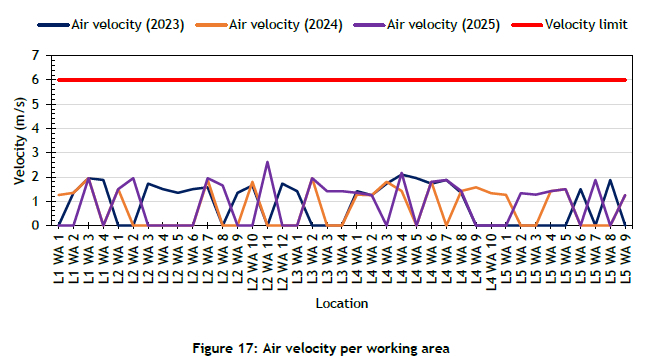
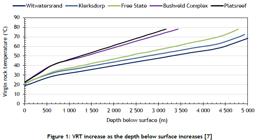
Deep-level mines have complex and dynamic ventilation systems to ensure that sufficient air is provided to underground workers. Certain changes to the ventilation systems are continually implemented to enable the deepening of these mines. The three main hazards in ventilation systems are high temperatures, dust pick-up, and gas buildup. This means that avoiding hazards in these systems is important for the health and safety of workers. New technologies, such as digital twinning, can be used to simulate and plan the entire deep-level mine ventilation network with ease. In this study, a digital twin is used to identify high-risk areas in a deep-level mine that are susceptible to high temperatures, dust-pick-up, and gas build-up. The identified hazards can now be avoided by implementing various changes to help mitigate the possibility of their occurrence. This enables the mining industry to plan proactively and to manage the ventilation system for the entire life-of-mine (LOM).
 Thumbnail
 Thumbnail
 Thumbnail
 Thumbnail
 Thumbnail
 Thumbnail
 Thumbnail
 Thumbnail
 Thumbnail
 Thumbnail
 Thumbnail
 Thumbnail
 Thumbnail
 Thumbnail
 Thumbnail
 Thumbnail
 Thumbnail