Using machine learning and agent-based simulation to predict learner progress for the South African high school education system
Abstract
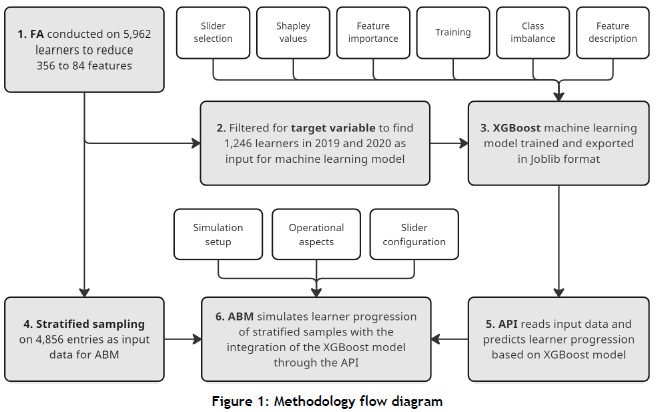
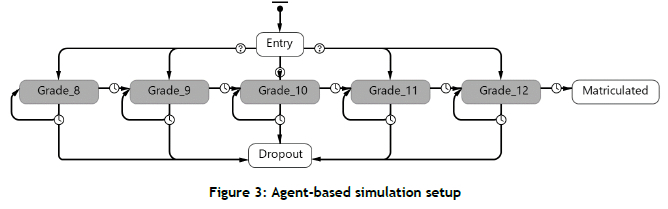
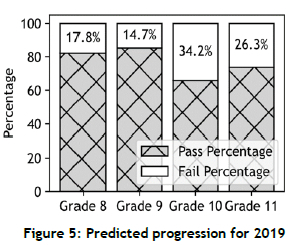
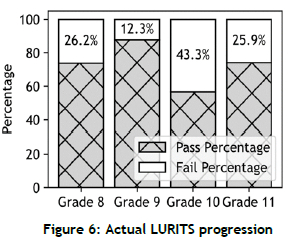
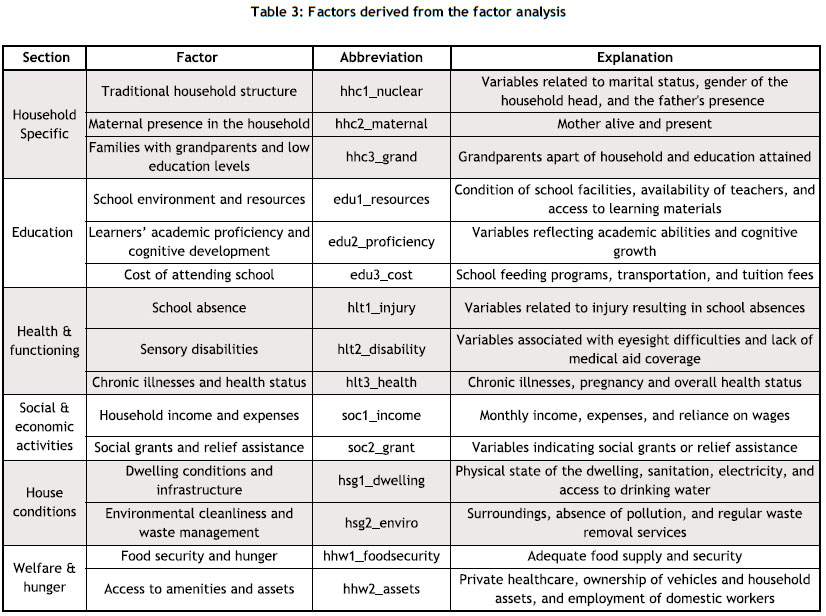
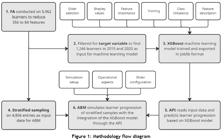
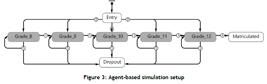
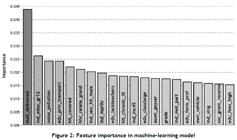
The South African high school education system faces numerous challenges, including high dropout rates and unequal educational outcomes, which call for innovative methods to analyse and address these problems. This study uses an integrated approach that merges machine learning and agent-based modelling to simulate learner progression in public high schools, illuminating the critical factors that influence educational outcomes. Using data from the 2019 General Household Survey in South Africa, factor analysis is first conducted to identify and quantify the principal characteristics that define learners. These identified features then train an XGBoost machine-learning model, which is integrated with an agent-based framework to simulate learner progression from Grades 8 to Grade 12. Validating the model against the learner unit record information and tracking system dataset results in a root square error of 2.94%, which is indicative of the model's ability to predict learner progression. As a result, the simulation model functions as a strategic platform for evaluating and refining educational interventions.
 Thumbnail
 Thumbnail
 Thumbnail
 Thumbnail
 Thumbnail
 Thumbnail