Retention of Young Skilled Graduates in Manufacturing Industries in South Africa
Abstract
Although the manufacturing sector is crucial to the South African economy, it faces problems with attracting and retaining young professionals. This study investigated the factors affecting retention, such as satisfying and dissatisfying factors, the considerations that attract qualified youth to a career in manufacturing, and why they leave. A survey of 99 conveniently sampled young engineering graduates, technicians, artisans, and students in the engineering field was carried out. Important enablers of and difficulties with job retention were identified. The top three factors affecting retention were the availability of career growth opportunities, competitive salary and benefits, and promotion of a work-life balance. The study also found the emerging factors that young graduates seeking initial employment consider, including its alignment with their personal interests and their long-term goals, diversity and inclusion, and the company's reputation. These may become more important in the future. Despite its limitations, the study has implications for educators, economic planners, employers in manufacturing firms, policy-makers, and engineering associations.
Abstract
Alhoewel die vervaardigingsektor van kritieke belang is vir die Suid-Afrikaanse ekonomie, ondervind dit probleme met die aantrek en behoud van jong professionele persone. Hierdie studie het die faktore ondersoek wat behoud beïnvloed, soos bevredigende en ontevrede-stellende faktore, die oorwegings wat gekwalifiseerde jongmense na 'n loopbaan in vervaardiging lok, en waarom hulle dit verlaat. 'n Opname van 99 geselekteerde jong ingenieursgraduandi, tegnici, ambagslui en studente in die ingenieurswese-veld is uitgevoer. Belangrike bevorderaars van en probleme met werkbehoud is geïdentifiseer. Die top drie faktore wat behoud beïnvloed, was die beskikbaarheid van loopbaangroei-geleenthede, mededingende salaris en voordele, en die bevordering van 'n balans tussen werk en lewe. Die studie het ook die opkomende faktore gevind wat jong gegradueerdes wat aanvanklike indiensneming soek, oorweeg, insluitend die belyning daarvan met hul persoonlike belangstellings en hul langtermyndoelwitte, diversiteit en insluiting, en die maatskappy se reputasie. Hierdie kan in die toekoms belangriker word. Ten spyte van die beperkings daarvan, het die studie implikasies vir opvoeders, ekonomiese beplanners, werkgewers in vervaardigingsfirmas, beleidmakers en ingenieursverenigings.
1. INTRODUCTION
1.1.
Research backgroundSouth Africa's manufacturing industry, once a cornerstone of industrial growth, is currently under strain as a result of global competition, technological change, and an ageing workforce. Despite policy frameworks such as the National Development Plan (NDP) and the Department of Higher Education and Training (DHET)'s skills strategies, gaps in their execution remain, and retaining young talent remains a major concern [1].
Reports from MerSETA [2] and the Swiss-South African Cooperation Initiative (SSACI) [3] show that, although graduate numbers are rising, many young engineers and artisans exit the sector early. Reasons cited include limited career progression, outdated facilities, and workplace cultures that are misaligned with those of younger generations [3]. These difficulties, if left unaddressed, would intensify skills shortages and weaken industrial competitiveness.
1.2.
Problem statementRetaining young skills is not only a human resource issue but also a critical concern for industrial engineering. High turnover disrupts production continuity, increases training costs, and hampers the sector's ability to adopt advanced manufacturing and Industry 4.0 systems. Understanding the factors that influence retention would therefore be essential for workforce planning, productivity optimisation, and sustainable competitiveness.
1.3.
Research aim and objectiveThe aim of this study was to identify the factors influencing the retention of young engineering talent in South Africa's manufacturing sector, with the primary objective of determining the key drivers and barriers that influence retention, and to develop recommendations for stakeholders that link retention to manufacturing productivity and competitiveness.
2.1.
International practicesGlobal studies show that retention is closely linked to how industries integrate education and work. Germany's dual education model combines academic study with hands-on training, reducing onboarding time and increasing loyalty [4]. In Germany, they have embedded retention in their national industrial policies through structured mentorship, career progression systems, and continuous skills upgrading [5]. These examples show that retention cannot be left to firms alone, but requires a systemic alignment between policy, education, and industry.
2.2.
The South African contextIn South Africa, policy frameworks such as the National Development Plan (NDP) and the Department of Higher Education and Technology (DHET)'s skills strategies recognise the need for a stable supply of engineers and artisans. However, problems with implementation remain. MerSETA [2] highlights that many graduates leave manufacturing because of limited career prospects, outdated facilities, and slow promotion systems. Similarly, the Swiss-South African Cooperation Initiative (SSACI) [3] notes that exposure to new technologies and stronger mentorship structures are critical, but are often absent in local firms. It is stressed that, without targeted interventions, the sector risks deepening its skills shortages [6]. Technological adaptation is a critical aspect. As manufacturing adopts more advanced digital and automation technologies, the literature warns of a growing digital divide. Without proper upskilling and exposure, young talent - especially from disadvantaged backgrounds - will find it harder to be integrated into high-tech workplaces [7]. Therefore, workforce development strategies must incorporate continuous learning, digital literacy, and equitable access to career progression [8].
2.3.
Generational expectationsGenerational shifts add another layer of complexity. Millennials and Generation Z value a work-life balance, flexibility, and meaningful engagement over traditional notions of stability [9]. Deloitte's 2020 Global Millennial Survey revealed that younger professionals prioritise career growth, inclusivity, and societal impact in their career choices [4]. The World Economic Forum [9] adds that organisational reputation and alignment with personal values are now central to retaining young talent. Companies that fail to respond to these generational expectations risk losing high-potential talent to more progressive sectors or to international opportunities [3]. Furthermore, employers' attitudes to young talent influence retention. Studies argue that management style, organisational structure, and feedback mechanisms greatly affect early-career satisfaction. Environments that encourage learning from failure, reward creativity, and include young voices in decision-making outperform those that operate with rigid hierarchies and limited growth room [10].
2.4.
Organisational culture and inclusionWorkplace culture has become a decisive factor in whether young professionals remain in manufacturing. Research stresses the importance of inclusive leadership, structured mentorship, and fair recognition practices [6]. Firms that fail to modernise workplace environments risk losing younger professionals to more dynamic sectors such as technology, finance, and consulting. The Manufacturing Institute [3] found that culture and innovation adoption are as important as financial incentives to retain younger employees. The importance of employer branding, organisational purpose, and societal impact are also indicated in the literature. According to the Manufacturing Institute, younger professionals are more loyal to companies that communicate a broader purpose beyond profit [3]. In South Africa, this is especially relevant owing to social inequality, youth unemployment, and historical injustice. Companies in the manufacturing sector are increasingly expected to show a commitment to community upliftment, environmental responsibility, and ethical governance. A failure to do so may result in reputational damage and difficulties attracting or retaining young talent who seek meaning and the opportunity to contribute to society through their work [8].
2.5.
Identified gapWhile retention problems are documented in the human resources and policy literature, limited research explicitly links the retention of young professionals in South African manufacturing to industrial engineering concerns such as workforce system design, productivity, and sustainable manufacturing performance. This paper addresses this gap by combining survey and interview evidence to provide both descriptive data and analytical insights that connect retention to industrial competitiveness.
3. METHODOLOGY
A mixed-methods research design was used to capture both breadth (quantitative trends) and depth (qualitative insights), using a survey and interviews. For the survey, a structured questionnaire captured demographic profiles, career preferences, and retention factors from 99 respondents, consisting of graduate engineers, artisans, technicians, and engineering students. Semi-structured interviews were held with senior engineers, human resources managers, and final-year students. These complemented the survey by exploring cultural and organisational issues influencing retention. The survey data were analysed using descriptive statistics and cross-tabulation to identify patterns in the drivers of retention. The interview transcripts were analysed thematically, allowing an interpretation of underlying motivations and barriers. This dual approach ensured that the findings extended beyond surface-level descriptions to deeper system-level insights. Before collecting the data, relevant institutional processes were followed, and it was ensured that participation was voluntary and that anonymity was guaranteed, among other ethical considerations.
4. RESULTS
4.1. Demographics
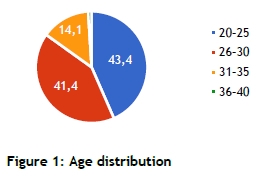
A total of 99 respondents participated in the survey. The distribution of age categories is shown in Figure 1 below.
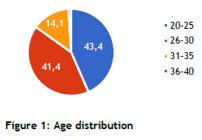
Most of the respondents, 43.4%, fell in the 20-25 years age group, followed closely by 41.4% in the 26-30 years category. A smaller percentage, 14.1%, belonged to the 31-35 years age group, while only 1% of the respondents were in the 36-40 years range. This age distribution highlights that most of the participants were young professionals or recent graduates.
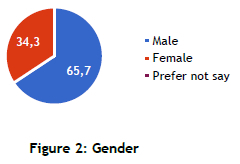
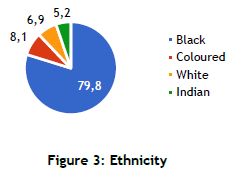
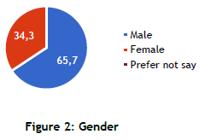
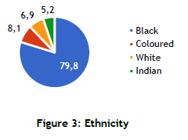
Most of the 99 respondents were male, accounting for 65.7% of the total sample, while females made up 34.3%. Regarding ethnicity, most of the respondents identified as black (79.8%), followed by coloured (8.1%), white (6.9%), and Indian (5.2%).
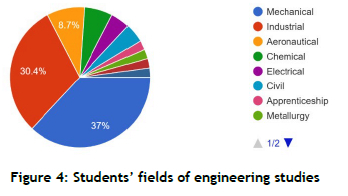
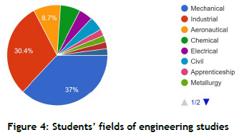
Forty-seven current students participated in the survey; their engineering degree specialisations are shown in Figure 4 below. The largest group of students, 37%, were pursuing a mechanical engineering degree, followed by 30.4% who were studying industrial engineering. Other fields represented were aeronautical engineering (8.7%), chemical engineering, electrical engineering, civil engineering, and metallurgy, each consisting of a smaller proportion of the respondents. In addition, a few students were engaged in apprenticeship programmes. This distribution highlights the diverse range of engineering disciplines being pursued by the students, with a strong emphasis on mechanical and industrial engineering.
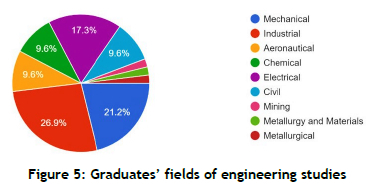
Fifty-two graduate engineers responded to the survey; their majors in engineering are shown in Figure 5 below. The most common field of study among the graduates was industrial engineering, with 26.9% of the respondents having majored in this discipline. This was followed by mechanical engineering at 21.2%. Other notable fields were metallurgy and materials engineering (17.3%), aeronautical engineering (9.6%), chemical engineering (9.6%), and mining engineering (9.6%). Smaller proportions of graduates majored in electrical, civil, and metallurgical engineering. This data highlights a strong representation of industrial and mechanical engineering among graduate engineers, reflecting the prevalent focus areas in the broader engineering sector.
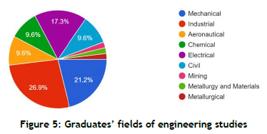
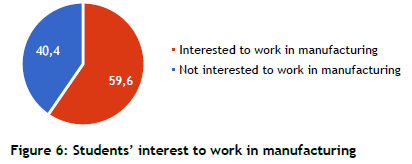
Figure 6 below presents the perspectives of current students on whether they were considering seeking work in the manufacturing sector after graduation. Of the 47 respondents, 59.6% expressed an interest in pursuing a career in manufacturing, whereas 40.4% indicated that they were not considering this sector.
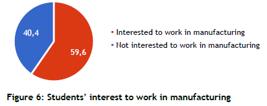
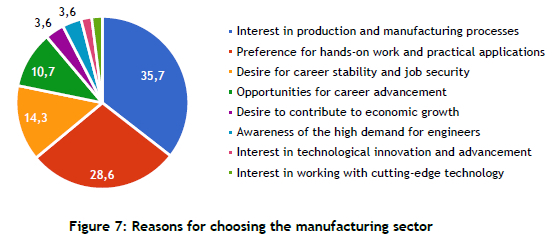
Figure 7 details the reasons why 28 respondents were interested in working in the manufacturing sector. The primary reason, cited by 35.7% of the respondents, was an interest in production and manufacturing processes. Following this, 28.6% of the respondents were drawn by the appeal of hands-on work and practical applications. Career stability and job security were motivating factors for 14.3% of the respondents, while 10.7% noted opportunities for career advancement and the chance to work with cutting-edge technology as key motivators. Other factors influencing their interest were contributing to economic growth, the high demand for engineers, and the drive for technological innovation, although these were selected by smaller numbers.
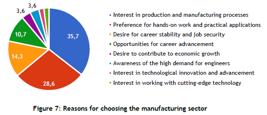
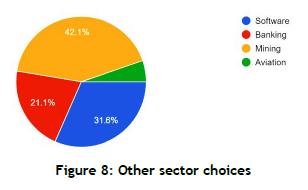
Figure 8 displays the sectors preferred by the 19 respondents who were not considering working in the manufacturing sector. The majority, 42.1%, were interested in the mining sector, followed by 31.6% who considered working in the software sector, while 21.1% were inclined to choose banking. The smallest proportion, 5.3%, expressed interest in the aviation sector.
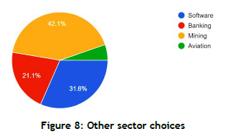
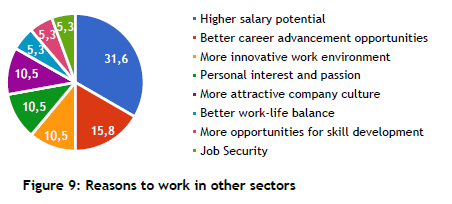
Figure 9 shows the reasons why the 19 respondents referred to preferred to work in sectors other than manufacturing. The highest percentage, 31.6%, indicated a preference for the potential of a higher salary. Better career advancement opportunities were chosen by 15.8% of respondents, while two groups of 10.5% each chose reasons such as a more innovative work environment, personal interest and passion, and a more attractive company culture. Better work-life balance, more opportunities for skill development, and job security were each chosen by 5.3% of the respondents.
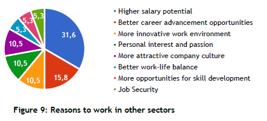
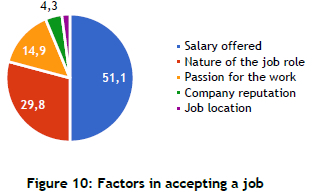
Figure 10 illustrates the factors influencing respondents' decisions to accept their first job. The most significant factor, selected by 51.1% of the 47 student respondents, was salary. Job role was the second most influential factor, chosen by 29.8% of the respondents. Passion was considered a key factor by 14.9% of the respondents, while company reputation and location were the least influential, with 4.3% and 2.1% of the responses respectively.
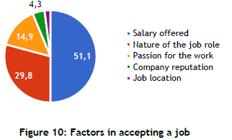
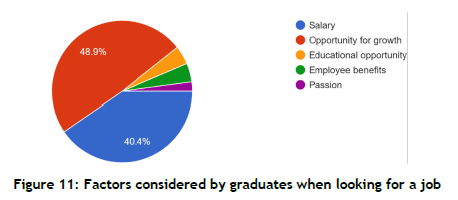
Figure 11 shows the most important factors considered by the graduate respondents when looking for a job after graduation. The leading factor, selected by 48.9% of the 52 respondents, was the opportunity for growth. Salary was the second most significant factor, with 40.4% of the responses. Educational opportunity was chosen by 6.4% of the respondents, while employee benefits and passion were the least considered factors, each chosen by 2.1% of the respondents.
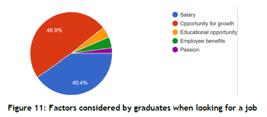
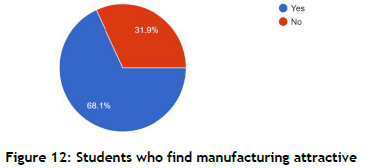
Figure 12 indicates that 68.1% of the 47 student respondents considered the manufacturing sector to be an attractive career option, while 31.9% did not find it appealing.
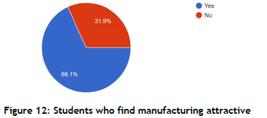
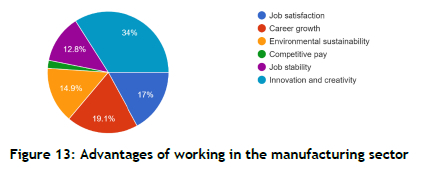
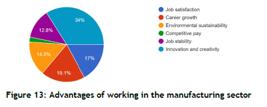
Figure 13 shows the respondents' perceptions of the main advantages of working in the manufacturing sector. The most frequently cited advantage was job satisfaction, selected by 34% of the respondents. Career growth followed, noted by 19.1% of the participants. Innovation and creativity were identified by 17% of the respondents as a key advantage. Environmental sustainability and competitive pay were each noted by 14.9% of the respondents. Last, job stability was considered an advantage by 12.8% of the respondents.
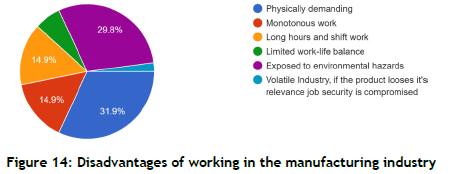
The main disadvantage of working in the manufacturing industry, as indicated by the respondents in Figure 14, was physically demanding work, which was noted by 31.9% of the participants as the top concern. Monotonous work was also highlighted, with 29.8% of the respondents indicating that this was a major drawback. Long hours and shift work were identified by 14.9% of the respondents. Limited work-life balance and exposure to environmental hazards were each cited by 14.9% of the respondents, pointing to concerns about health, safety, and personal well-being. Volatile industry was noted by 14.9% of the respondents; if the product loses its relevance, job security is compromised.
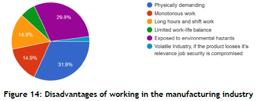
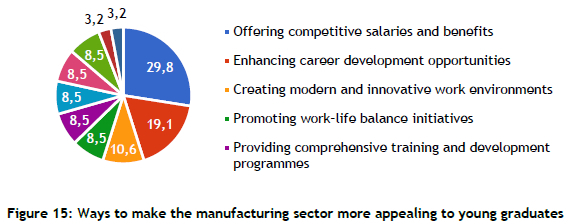
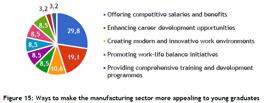
Figure 15 shows that 29.8% of the respondents believed that competitive salaries and benefits would make the manufacturing sector more appealing to young graduates. Enhanced career development opportunities were noted by 19.1%, while 10.6% highlighted the need for modern and innovative work environments. Work-life balance initiatives, comprehensive training and development, a positive company culture, mentorship and guidance, and a focus on technology and innovation each accounted for 8.5% of the responses.
4.2. Graduates
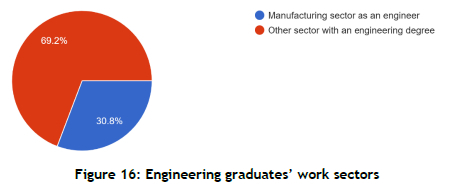
Figure 16 illustrates the current employment sectors of the graduate engineers who participated in the survey. Of the 52 graduate respondents, only 30.8% were working in the manufacturing sector as engineers, while the majority, 69.2%, were employed in other sectors, using their engineering degrees.
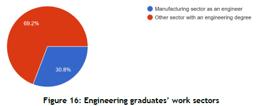
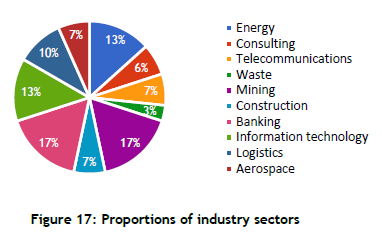
Figure 17 shows the distribution of the employment sectors into which the graduate engineers had ventured. The energy and construction sectors each attracted the highest proportion of graduates, with 17% of the respondents working in these fields. The consulting and mining sectors also held significant appeal, each employing 13% of the respondents. The banking and waste management sectors attracted 10% and 7% the of graduates respectively. Other sectors were telecommunications (6%), information technology (7%), logistics (7%), and aerospace (3%).
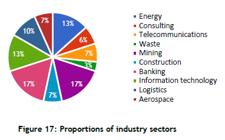
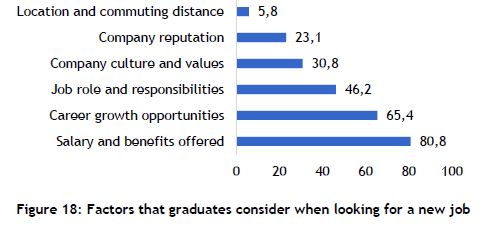
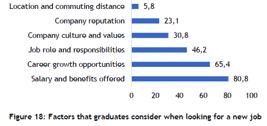
Figure 18 provides insights into the most important factors the respondents would consider when they were looking for a new job; the survey allowed them to choose up to three options. Salary and benefits were the top priority, chosen by 80.8% of the respondents, and reflecting the significant weight of compensation in career decisions. Career growth opportunities remained highly influential, chosen by 65.4% of the participants, while job role and responsibilities was also a key factor, cited by 46.2%. Other important considerations were company culture and values (30.8%), company reputation (23.1%), and location and commute (5.8%).
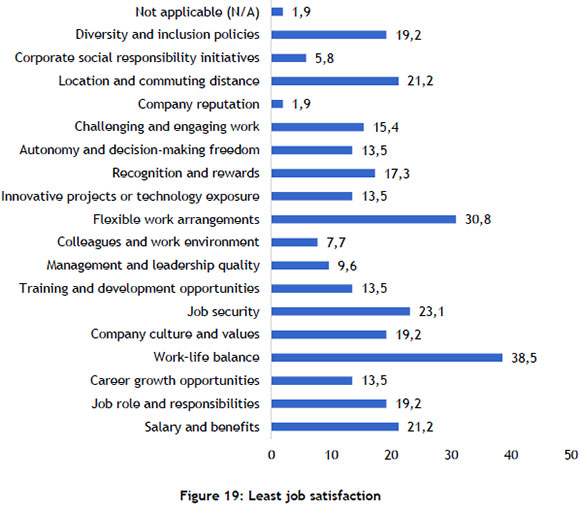
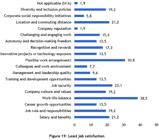
The work-life balance emerged as the least satisfying aspect, with 38.5% of the respondents highlighting this as a concern. This indicates a significant area for improvement, as many engineers struggle to achieve a balance between their professional and personal lives, reflecting a potential gap in current workplace policies.
5. DISCUSSION
Age distribution
The survey primarily reflected a younger demographic, which differs significantly from national employment trends. Nationally, the workforce is more evenly distributed among age groups, but the survey under-represented professionals aged 35 and above. This under-representation may stem from lower engagement among older professionals because of factors such as time constraints or lack of perceived relevance. Future studies should implement targeted outreach strategies to represent all age groups better, thus ensuring a more comprehensive view of the manufacturing workforce.
Gender and ethnicity
Most of the respondents were male (65.7%) and black (79.8%), highlighting existing gender imbalances in the engineering and manufacturing sectors. While the high proportion of black respondents aligns with broader employment trends in entry and mid-level roles, other ethnic groups remain under-represented in senior positions. This supports the ongoing need for diversity and inclusion strategies to enhance retention and equity in the sector.
Industry sector preferences
The findings revealed a noticeable shift away from manufacturing, with many graduate engineers currently employed in sectors such as consulting, banking, information technology, and renewable energy. The students expressed preferences for industries such as software, mining, aviation, and banking, being attracted by better compensation, global career opportunities, and engagement with cutting-edge technologies. This signals a need for the manufacturing sector to modernise its image and workplace practices to stay competitive in attracting young professionals.
Factors influencing sector choice
• Key factors influencing students' career decisions were these:
• Higher salary potential (31.6%): Many students prioritise financial compensation, often seeking rapid income growth to manage student debt and achieve financial independence.
• Innovative work environments (15.8%): Young professionals are drawn to dynamic industries that embrace rapid technological advancement, creativity, and modern work cultures.
• Work-life balance (10.5%): The appeal of flexible work arrangements, remote work, and wellness initiatives in non-manufacturing sectors significantly influences preferences.
• Personal interest and passion (10.5%): Many students pursue careers aligned with their values and long-term goals, indicating a shift from purely financial motivations.
• Company culture (10.5%): A strong, inclusive, and growth-oriented work culture plays a major role in attracting talent.
• Opportunities for skill development (5.3%): Industries offering mentorship, training, and professional growth are highly valued.
• Job security: Although mentioned less frequently, stable employment in future-proof sectors such as tech and energy remains a factor in decision-making.
In conclusion, while manufacturing retains some traditional strengths, it is losing ground to industries that are seen as more innovative, flexible, and financially attractive. To retain young talent, the sector must adopt more progressive practices, enhance workplace culture, and provide clear growth trajectories.
6. RECOMMENDATIONS
To enhance the manufacturing sector's appeal and to improve retention rates among young professionals, several strategic recommendations are proposed:
• Increase compensation and financial incentives: The most frequently cited problem in the survey and interview data was low compensation. To compete with industries such as information technology, consulting, and finance, manufacturing companies should consider offering more competitive salary packages, performance-based bonuses, and additional financial incentives such as stock options or profit-sharing schemes. Addressing compensation issues would be crucial to making the sector a more attractive option for young professionals.
• Enhance career development and growth opportunities: The lack of clear career progression paths is a major deterrent for young professionals in manufacturing. Companies should invest in structured career development programmes that include regular performance evaluations, transparent promotion criteria, and personalised career planning. Offering rotational programmes, cross-functional training, and opportunities to work on high-impact projects could also enhance career growth and engagement.
• Promote work-life balance and flexible work arrangements: Addressing work-life balance concerns is essential to retaining young talent. Manufacturing companies should explore flexible work arrangements where feasible, such as flexible hours, compressed workweeks, or remote work options for roles that do not require a constant on-site presence. Implementing wellness programmes and mental health support could also improve the overall work environment and employee satisfaction.
• Foster a culture of innovation and modernisation: The perception of the sector as outdated and rigid must be addressed through a focus on modernisation and innovation. Investing in advanced technologies, embracing digital transformation, and promoting an innovative culture could help to reposition manufacturing as a forward-thinking and dynamic field. Highlighting success stories of technological integration and innovation in the sector could also help to shift perceptions among young professionals.
• Strengthen mentorship and retention programmes: While mentorship is valued, it needs to be part of a broader, integrated retention strategy. Companies should enhance their mentorship programmes by pairing young professionals with experienced leaders who could provide guidance, support, and career advice. Retention programmes should also include ongoing training, professional development opportunities, and recognition of achievements to foster a sense of belonging and engagement.
• Improve sector branding and communication: To attract young talent, the manufacturing sector must actively communicate its strengths and opportunities. Marketing efforts should emphasise the sector's role in driving economic growth, innovation, and sustainability. Collaborating with universities and professional associations to showcase the potential career paths and achievements in manufacturing could also help to reshape perceptions.
• Engage with educational institutions: Strengthening partnerships with educational institutions could help to bridge the gap between academic preparation and industry needs. By offering internships, coop programmes, and industry projects, manufacturing companies could engage students early in their careers, providing them with valuable experience and exposure to the sector.
• Targeted outreach to under-represented groups: To address demographic imbalances, manufacturing companies should develop targeted outreach strategies to attract under-represented groups, including women and older professionals. Initiatives such as diversity hiring programmes, scholarships, and industry-specific networking events could help to broaden the talent pool and create a more inclusive workforce.
7. CONCLUSION
The manufacturing sector faces difficulties in attracting and retaining young engineering talent, with a significant divergence between current students' career aspirations and graduates' experiences. Many students and graduates are drawn to non-manufacturing industries such as information technology, consulting, and finance, which offer higher salaries, innovative work environments, and better work-life balance. This trend aligns with the evolving priorities of young professionals, who value flexibility, professional growth, and competitive compensation. Key barriers to attracting and retaining young talent include low compensation, limited career growth, and rigid work-life balance. Despite manufacturing's advantages, such as job stability and innovation opportunities, the sector's inability to adapt to modern work expectations and competitive compensation standards diminishes its appeal. Mentorship and professional development programmes are recognised as valuable but insufficient to address retention issues. Students and professionals are seeking more comprehensive retention strategies that address compensation, career advancement, and work-life integration. The convergence of survey and interview data highlights the urgent need for the manufacturing sector to reassess and realign its strategies to attract and retain top engineering talent.
REFERENCES
2. LITERATURE REVIEW
- [1] Department of Higher Education and Training (DHET), "Department of Higher Education and Training ANNUAL REPORT 2022/23," Pretoria, South Africa: DHET, 2022.
- [2] Manufacturing, Engineering and Related Services Sector Education and Training Authority (MerSETA), "sector skills plan update 2017/18-2021/22," Johannesburg, South Africa: MerSETA, 2017.
-
[3] Swiss-South African Cooperation Initiative (SSACI) and Department of Higher Education and Training (DHET), Identification of Skills Gaps in South Africa: A Popular Research Report, Pretoria, South Africa, 2024. [Online]. Available: https://lmi-research.org.za. [Accessed: 12 Nov. 2025]
» https://lmi-research.org.za -
[4] Deloitte and Council on Competitiveness, "Global manufacturing competitiveness index," Deloitte Touche Tohmatsu and U.S. Council on Competitiveness, 2013. [Online]. Available: https://www.nist.gov/system/files/documents/2017/05/09/dttl_2013-Global-Manufacturing-Competitiveness-Index_11_15_12.pdf. [Accessed: 12 Nov. 2025].
» https://www.nist.gov/system/files/documents/2017/05/09/dttl_2013-Global-Manufacturing-Competitiveness-Index_11_15_12.pdf -
[5] S. Annen, "The success of Germany's dual vocational training system," WorldSkills International, 2022. [Online]. Available: https://worldskills.org/news/the-success-of-germanys-dual-vocational-training-system/. [Accessed: 12 Nov. 2025].
» https://worldskills.org/news/the-success-of-germanys-dual-vocational-training-system/ -
[6] M. Thasi and F. Van Der Walt, "Work stress of employees affected by skills shortages in the South African mining industry," Journal of the Southern African Institute of Mining and Metallurgy, vol. 120, no. 3, Jan. 2020, doi: 10.17159/2411-9717/666/2020.
» https://doi.org/10.17159/2411-9717/666/2020 - [7] A.O. Ayandibu, "Strategies for equipping South African youth for a dynamic workforce: A literature review", International Journal of Development and Sustainability, Vol. 14 No. 6, pp. 380-401, 2025
-
[8] N. Pierce and L. Freixe, "5 ways in which the workplace could serve young people better," World Economic Forum, Feb. 2, 2023. [Online]. Available: https://www.weforum.org/stories/2023/02/youth-workplace-future-davos2023/.
» https://www.weforum.org/stories/2023/02/youth-workplace-future-davos2023/ -
[9] World Economic Forum, "The future of jobs report 2020," Geneva, Switzerland: WEF, 2020. [Online]. Available: https://www3.weforum.org/docs/WEF_Future_of_Jobs_2020.pdf. [Accessed: 12 Nov. 2025]
» https://www3.weforum.org/docs/WEF_Future_of_Jobs_2020.pdf -
[10] Jyoti and F. Mohsin, "Beyond Paychecks: Investigating the Role of Purpose, Flexibility, and Culture in Millennial Job Satisfaction and Retention," Journal of Marketing & Social Research, vol. 2, no. 5, pp. 501-509, Jul. 2025. Available: https://jmsr-online.com/article/beyond-pay-checks-investigating-the-role-of-purpose-flexibility-and-culture-in-millennial-job-satisfaction-and-retention-300/
» https://jmsr-online.com/article/beyond-pay-checks-investigating-the-role-of-purpose-flexibility-and-culture-in-millennial-job-satisfaction-and-retention-300/
ORCID® identifiers
K. Mogorosi
https://orcid.org/0009-0004-8079-0571
B. Emwanu
https://orcid.org/0000-0001-9906-7245