Factors Influencing the Implementation of Project Risk Management in the South African Construction Industry
Abstract
Effective project risk management is crucial for successful construction projects. However, the construction industry continues to face problems in implementing project risk management practices. This study investigates the barriers to and enablers of implementing project risk management in the South African construction industry. Semi-structured interviews of experienced industry professionals on a case study project were conducted to answer the research questions. The findings reveal that inadequate knowledge, communication breakdowns, financial constraints, and resistant attitudes are significant barriers to implementing project risk management. Conversely, leadership support, clear policies, and proactive engagement emerge as key enablers. A framework is proposed to address the barriers and to leverage the enablers, thus enhancing project risk management practices in the construction industry. This study contributes to the body of knowledge by providing actionable insights for construction organisations, policymakers, and stakeholders seeking to improve project outcomes through effective risk management.
Abstract
Doeltreffende projekrisikobestuur is van kardinale belang vir suksesvolle konstruksieprojekte. Die konstruksiebedryf ondervind egter steeds probleme met die implementering van projekrisikobestuurspraktyke. Hierdie studie ondersoek die hindernisse tot en fasiliteerders van die implementering van projekrisikobestuur in die Suid-Afrikaanse konstruksiebedryf. Semi-gestruktureerde onderhoude met ervare bedryfsprofessionele persone oor 'n gevallestudieprojek is gevoer om die navorsingsvrae te beantwoord. Die bevindinge toon dat onvoldoende kennis, kommunikasieprobleme, finansiële beperkings en weerstandige houdings beduidende hindernisse is vir die implementering van projekrisikobestuur. Omgekeerd kom leierskapsondersteuning, duidelike beleide en proaktiewe betrokkenheid na vore as sleutelfasiliteerders. 'n Raamwerk word voorgestel om die hindernisse aan te spreek en die fasiliteerders te benut, en sodoende projekrisikobestuurspraktyke in die konstruksiebedryf te verbeter. Hierdie studie dra by tot die kennisbasis deur bruikbare insigte te verskaf vir konstruksie-organisasies, beleidmakers en belanghebbendes wat projekuitkomste deur effektiewe risikobestuur wil verbeter.
1. INTRODUCTION
The construction industry is inherently risky, with complex projects, tight deadlines, and significant financial investments [1]. Effective project risk management (PRM) is crucial for mitigating these risks and ensuring successful project outcomes [2]. However, the construction industry continues to face problems in implementing PRM practices, resulting in cost overruns, delays, and quality issues. In South Africa, the construction industry plays a vital role in the country's economic development [3], but it is also plagued by these problems. For instance, the industry has been consistently plagued by reports of cost overruns, delayed completion, safety lapses, and other persistent problems, many of which stem from inadequate risk planning and implementation [4], [5]. This is exacerbated by the fact that the industry consists largely of small and medium-sized enterprises (SMEs) that typically lack the skills required to implement risk management effectively [4].
Effective project risk management is crucial in the construction industry, where uncertainty and risk are inherent. The Project Management Institute (PMI) defines PRM as a comprehensive process encompassing risk planning, identification, analysis, response planning, implementation, and monitoring. The primary objective of PRM is to minimise the likelihood and impact of threats while maximising the probability and benefits of opportunities [1]. The importance of effective PRM in construction cannot be overstated. It enables organisations to identify, assess, and mitigate risks, ensuring that projects are completed on time, within budget, and to the required quality standards [6]. This enables projects to optimise their chances of success, which is intrinsically linked to the effectiveness of PRM [7]. Moreover, effective PRM can help organisations to capitalise on opportunities, improve stakeholder satisfaction, and enhance their reputation [8].
Studies on risk management in the South African construction industry have tended to examine particular practices or specific components of the risk management process. For instance, Tambwe [9] examined the benefits of data risk management in the South African construction industry, while Renault [4] investigated the organisational risk factors affecting project outcomes among SMEs. Similarly, research has been conducted on risk management in occupational health and safety systems [5] and risk assessment modelling and perspectives in the South African construction industry [10]. These studies make important contributions in their specific categories, but do not provide a broad overview of PRM perceptions in the industry. Therefore, this study aimed to explore perceptions about PRM by investigating the barriers and enablers of PRM implementation in the South African construction industry. Specifically, the objectives of this study were:
1. To identify the barriers to PRM implementation in the South African construction industry.
2. To identify the enablers of PRM implementation in the South African construction industry.
The study offers insights that may inform more structured approaches to PRM implementation and support broader efforts to enhance project outcomes in the South African construction sector. The rest of this study is as follows. First, the results of a literature survey on PRM in the construction industry are outlined. Then the methodology for the study is provided; the findings are discussed; and the study is bookended with the final insights it has generated.
2.1. Risk management in the construction industry
Risk management (RM) is a critical aspect of the construction industry owing to the complex and dynamic nature of construction projects [1]. These projects often involve numerous stakeholders, substantial investments, and various external factors, making them inherently risky [11]. Effective RM in construction involves systematically identifying, assessing, and mitigating risks throughout the project lifecycle to ensure successful project delivery [2]. The implementation of RM practices is essential for minimising potential negative outcomes, optimising the use of resources, and achieving project objectives [12]. Several critical success factors (CSFs) or enablers have been identified as pivotal elements that contribute to the success of RM processes in construction projects [13]. These factors are key drivers that facilitate the successful implementation of RM by ensuring that risks are effectively managed, thereby enhancing project performance and minimising the likelihood of project failures [14].
2.2. The case of South Africa
The South African construction industry plays a crucial role in socio-economic development, acting as a significant employment generator and contributor to the country's gross domestic product (GDP) [3]. In 2019, the construction industry contributed R104 billion to South Africa's economy, making up about 3.3% of total GDP [15]. By 2021, over 1.2 million people were employed in the industry, contributing about R111 billion to the GDP [3]. By 2023, its share stood at ZAR 109.5 billion, and projections have suggested that it would reach ZAR 160.65 billion by 2024, with a compound annual growth rate (CAGR) of 1.8% from 2024 to 2028 [3]. By 2028, the industry's output is expected to grow to ZAR 188.76 billion [3].
The construction industry faces persistent RM difficulties despite its critical importance. Research reveals that over half of South African organisations lack formal RM policies [10]. This gap is compounded by inadequate scope management, skills shortages, and a lack of focus on RM during project initiation [12], [16], [17].
Risk decisions in the industry often rely on intuition rather than on structured processes [18]. As a result, prominent risks include resource shortages, poor project risk management, and exposure to government-related risks [12], [19], [20]. Additional problems include labour shortages, compliance failures, time management issues, and political factors.
These problems underscore the need for enhanced RM practices, emphasising the role of project teams and their attitudes towards risk management [18], [21]. Addressing these issues requires not only better RM frameworks but also an understanding of the psychological factors that influence how risk is managed [21], [22].
To mitigate these risks effectively, the industry must adopt robust RM frameworks, improve skills and training, and implement structured decision-making processes [6], [8]. By doing so, construction organisations could manage risks better and ensure successful project outcomes [2].
The theory of planned behaviour (TPB) provides a theoretical lens through which to examine how attitudes, social pressures, and perceived control shape RM behaviours in construction projects.
2.3. The theory of planned behaviour
The theory of planned behaviour (TPB), developed by [21], provides a robust theoretical framework for understanding how individuals form intentions to engage in specific behaviours, including the adoption of RM practices in the construction industry. According to TPB, an individual's intention to perform a behaviour is influenced by three key factors: attitudes towards the behaviour, subjective norms, and perceived behavioural control [23]. In the context of RM in construction, "attitudes towards" RM practices are shaped by the perceived usefulness and benefits of implementing RM, such as improved project outcomes and reduced risks [12]. "Subjective norms" refers to the social pressures or expectations of others, such as management, colleagues, and clients, that can influence an individual's decision to adopt RM practices [14]. "Perceived behavioural control" relates to the ease or difficulty of implementing RM practices, which is influenced by factors such as available resources, knowledge, and organisational support [13]. TPB suggests that, when individuals perceive RM practices as beneficial, as supported by social norms, and as easy to implement, they are more likely to form a strong intention to adopt these practices [1]. This theory highlights the importance of addressing these psychological and social factors to encourage the adoption of RM practices in the construction industry [8].
TPB also aligns with the concept of perceived ease of use, which stems from the technology acceptance model (TAM) [23]. Perceived behavioural control, a key element of TPB, mirrors the influence of perceived ease of use, as both focus on how an individual's perception of the complexity or simplicity of a process affects their willingness to engage with it [13], [21]. In the case of RM in construction, if RM practices are perceived as easy to implement and manage, individuals are more likely to adopt them [12]. This connection underscores how TPB and TAM together reinforce the understanding that simplifying RM processes, providing the necessary resources, and fostering positive attitudes could significantly enhance RM adoption in construction projects [16], [24].
2.4. Perceived ease of use
Perceived ease of use plays a vital role in the adoption of new technologies and practices, including RM, in the construction industry. It refers to the degree to which an individual believes that using a system or practice would require minimal effort [23]. In RM, the perception that RM processes and tools are user-friendly, easily integrated, and simple to manage can significantly increase their adoption [13]. This aligns closely with the theory of planned behaviour [21], as the ease of use can shape positive attitudes towards RM, increasing the likelihood of its implementation [12]. Simplifying RM processes and ensuring adequate training not only enhances perceived ease of use, but also mitigates resistance, which is crucial in a construction environment known for its complexity and time constraints [24]. As the ease of use increases, organisations are more likely to adopt RM practices, leading to more efficient project management and risk mitigation [16].
2.5. Barriers to successful risk management in construction
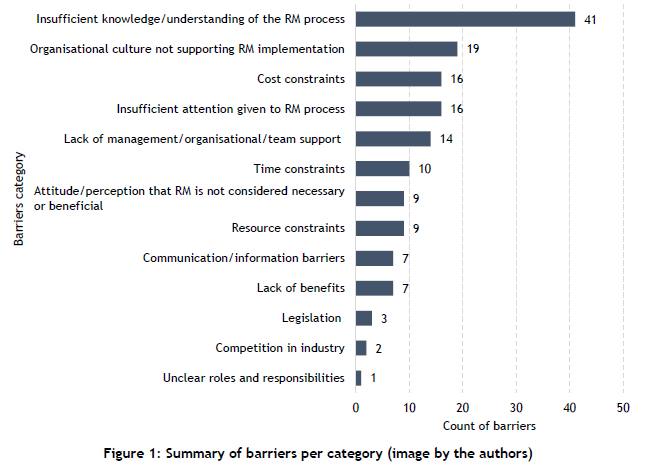
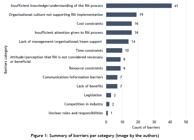
While concepts such as perceived ease of use and the TPB approach provide valuable frameworks for improving RM adoption in the construction industry, several barriers continue to impede its successful implementation. Despite the potential for RM practices to enhance project outcomes and mitigate risks, many construction professionals face difficulties such as a lack of sufficient knowledge and understanding of RM processes [25]. This knowledge gap often results in poor risk identification, assessment, and mitigation, leading to suboptimal project outcomes [24]. In addition, an organisational culture that does not support RM creates a major difficulty [14]. In many construction firms, there is a lack of emphasis on RM, and it is often viewed as an administrative burden rather than as a strategic necessity [12]. This cultural resistance is compounded by inadequate attention being given to RM during project planning and execution [26]. Another key barrier is the lack of management support, which is critical for driving RM initiatives and ensuring that adequate resources are allocated to RM activities [18]. Cost constraints also play a significant role in hindering RM implementation, especially in developing countries where financial resources are limited [20]. In such contexts, RM is often deprioritised in favour of immediate cost-saving measures, which can lead to increased risks and project failures in the long run [27]. Addressing these barriers requires a holistic approach that includes enhancing RM education, fostering a risk-aware culture, securing management buy-in, and ensuring adequate resource allocation to RM activities [28]. A total of 13 barrier categories emerged from the literature review, as shown in Figure 1. The frequency of each barrier is indicated, reflecting its relative priority.
2.6. Enablers of successful risk management in construction
While various barriers hinder the successful implementation of RM in the construction industry, several critical enablers facilitate its effective adoption. These enablers, often referred to as CSFs, play a pivotal role in ensuring that RM practices not only are adopted but also lead to positive project outcomes [18]. These factors are critical to ensuring that risks are managed effectively and that projects are delivered successfully [14].
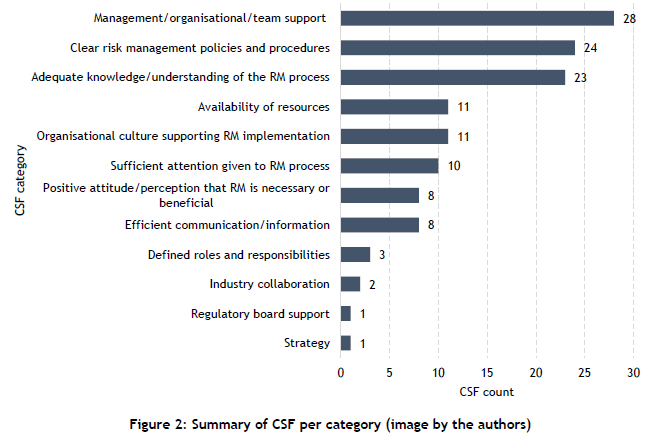
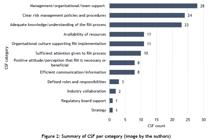
Strong leadership and commitment from management are among the most important enablers, as they set the tone for organisational priorities and foster a culture that supports RM [28]. When organisational leaders prioritise RM and demonstrate a commitment to its implementation, it sets a positive tone throughout the organisation, encouraging all stakeholders to engage in RM practices [12]. Another crucial enabler is the presence of clear and well-defined RM policies and procedures [29]. These provide a structured approach to RM, and ensure that all team members understand their roles and responsibilities in managing risks [25]. Adequate knowledge and understanding of RM processes among employees and stakeholders is also vital [16]. This could be achieved through regular training and development programmes that equip individuals with the necessary skills to identify, assess, and mitigate risks effectively [26]. In addition, the availability of sufficient resources, including financial, human, and technological resources, is essential for supporting RM activities [20]. Finally, fostering an organisational culture that supports and encourages RM is crucial. A risk-aware culture promotes proactive risk identification and management, leading to better project outcomes [18]. By focusing on these CSFs, construction organisations could overcome the barriers to RM and enhance their ability to manage risks effectively, ultimately leading to more successful projects [14], [18], [28]. Further analysis of the research findings led to the identification of 12 critical success factors, categorised in Figure 2.
The literature review highlights the critical role of RM in the construction industry, emphasising the need for systematic RM practices to address the risks that are inherent in construction projects. The review identifies both barriers and enablers that have an impact on the effectiveness of RM, such as skills shortages, inadequate resources, and the importance of leadership and clear policies. Theoretical models such as TPB and the concept of perceived ease of use provide insight into the psychological and behavioural aspects influencing RM adoption.
3. RESEARCH METHOD OR APPROACH
3.1. Methodology
A qualitative research approach was adopted for this study to investigate the barriers to and enablers of effective PRM. Construction experts working on a five-year, R300-million energy infrastructure and environmental remediation project were purposively selected for this study. This convenience-based approach was useful not only because the participants were accessible [30], but also because their direct involvement in such a complex, large-scale project offered practical insights into how risk management is implemented in project conditions. The data collection process involved interviews with ten stakeholders occupying diverse roles in the project. Participants were conveniently selected on the basis of their expertise and experience in construction, with the majority having 15 to 20 years of experience. I n addition, participants' roles varied, from project management to engineering, environmental compliance, contracts administration, and health and safety oversight. This balanced selection allowed the study to capture varied perceptions and practices related to risk management at different levels of seniority and experience.
The interview guide featured open-ended questions, encouraging participants to share their insights and experiences without constraints. Key areas of discussion were:
• Risk perception and management in the construction industry';
• Barriers to implementing risk management strategies;
• Drivers of greater adoption of risk-based approaches;
• Recommendations for stakeholders in the construction industry or similar projects; and
• Lessons learned from the case study.
The semi-structured format enabled real-time probing, allowing the researcher to explore the responses more deeply and to obtain a thorough understanding of the problems and opportunities related to risk management in South African construction projects [30].
Thematic analysis was used to identify patterns and themes in the data, providing insights into the risk management practices and strategies that were used. According to [31], thematic analysis is a rigorous technique used to uncover, explore, and analyse themes in data and to present these findings in a clear and structured way. The analysis was conducted on ATLAS.ti, which helped to manage and organise the coding process. The transcripts were first read several times to gain a clear understanding of the content. Next, open coding was used to label key parts of the data based on the research questions, and these codes were grouped together to form themes. Selective coding was then used to identify the most common themes, which were refined and interpreted in relation to the research questions and supported by the literature. An ethical framework guided the study, ensuring participant trust and openness. Informed consent and confidentiality measures were upheld throughout, enabling interviewees to share candid insights into PRM without fear of repercussions. Such ethical considerations are vital in any research process, particularly when dealing with industry professionals whose careers may be implicated by their statements.
4. RESULTS
The study involved ten participants occupying diverse professional roles in the construction sector, each bringing substantial experience to their respective fields. These included a consultant project manager with over 25 years of experience; a client project manager with more than 15 years in construction project management; a client contracts manager with 16 years of industry experience; and an environmental compliance manager who had served over 16 years in the field. The study also included a permit issuer with 18 years of construction experience, a mechanical specialist with 18 years in energy transportation and six to seven years in construction, and a mechanical engineer with over 20 years in engineering, mining design, and construction. A mechanical engineer in training, with five years of combined design and site supervision experience, contributed insights from a junior professional's perspective. Completing the group were a construction project manager with 22 years of industry experience and a construction manager with more than 10 years in the field. This diverse pool of participants ensured that the study captured perspectives from varying roles, levels of seniority, and areas of specialisation, thereby enriching the findings on risk management in construction projects.
The findings of this study offer valuable insights into the problems and opportunities of RM implementation in the South African construction industry. Through the semi-structured interviews, the participants shared practical experiences that revealed a range of obstacles to and enablers of effective RM, many of which aligned with the literature, while others diverged. The sections that follow present the perceptions, key barriers, and potential enablers identified by the interview respondents. These real-world perspectives not only highlight the complexity of RM in construction projects, but also provide actionable insights for addressing common problems and for improving RM practices.
Building on these findings, it became evident that the way in which professionals perceive, engage with, and implement risk management has undergone significant change over time. This shift is reflected not only in the practical problems and enablers of RM but also in the evolving attitudes and behaviours of those responsible for managing risks in construction projects. To understand this evolution better, the next section explores the transformation of professionals' perceptions of, behaviours in, and attitudes towards risk management, illustrating how these elements have matured and adapted to the complexities of modern project environments.
4.1.
Risk management: Perceptions, behaviours, attitudesThis study explored the transformative journey of professionals' perceptions of, behaviours in, and attitudes towards risk management, revealing a significant evolution in their understanding and application of risk management principles [21]. Initially, risk management was perceived as a mere compliance requirement, a checkbox to be ticked off in the project planning process [1]. As one professional noted, "Initially, I saw risk management as a compliance requirement, just a tick box to check off and move on". However, as professionals gained experience and exposure to real-world project difficulties, their perception of risk management shifted dramatically. They began to recognise the strategic value of risk management in driving project success, acknowledging its role in identifying and mitigating potential risks that could have an impact on project timelines, budgets, and quality [32]. As another professional reflected, "^y experience taught me that risk management was not a one-time activity, but rather an ongoing process that required continuous monitoring and adaptation."
A change in behaviour accompanied this shift in perception as professionals moved from reactive to proactive approaches to risk management [33]. They began to embed risk management in the early stages of project planning and execution, recognising that proactive risk management helps to identify potential risks before they occur [23]. As one professional highlighted, "I learned that, when you identify a risk, you must also come up with a solution". Collaboration and communication became essential tools in the risk management process, with professionals recognising that risk management cannot be done in isolation: it requires input from multiple stakeholders [34]. As another professional noted, "Risk management is a collaborative effort; the more perspectives we bring in, the better we understand the risks".
Attitudes towards risk management also underwent a significant transformation, evolving from scepticism to buy-in [35]. Professionals who once viewed risk management as a theoretical concept or a distraction from core technical tasks began to appreciate its practical applications in saving time, reducing costs, and enhancing project success. They recognised that risk management is not just a nice-to-have but an essential component of project management [29]. As one professional shared, "Over time, I have come to recognise that risk management is not just theory; it helps avoid costly surprises and ensures we meet deadlines". The adoption of holistic risk management approaches became more widespread, with professionals treating risk management as an ongoing, integrated process that spans the entire project lifecycle.
This approach emphasises continuous risk identification, monitoring, and mitigation, ensuring that projects are better equipped to handle uncertainty and ambiguity [1]. As another professional noted, "Hindsight is a crystal ball, but risk management helped me prepare for possibilities". This evolution in perceptions of, behaviours in, and attitudes towards risk management reflects a broader trend in project management, underscoring the importance of early risk identification, continuous monitoring, collaboration, and proactive mitigation. By fostering an organisational culture that values risk management and encourages collaboration, future projects could achieve greater resilience and success.
4.2.
Perceived barriers to risk management adoption in South Africa's construction industryDespite the positive evolution in perceptions of, behaviours in, and attitudes towards risk management, several barriers continue to hinder its effective implementation. These obstacles prevent risk management from being fully integrated into the construction industry and limit its potential benefits.
Participants revealed a range of obstacles, including a lack of understanding among team members and difficulties in managing risks beyond the project's control. Internal problems involved technical team members' reluctance to engage in RM, as they tended to focus solely on technical aspects without recognising RM's value. Furthermore, the differentiation between manageable risks and those beyond the project's influence - such as political and economic risks - posed some difficulties. Time constraints compounded these issues, fostering reluctance among team members to participate in RM activities.
Insufficient departmental representation and inadequate training were also prominent barriers, weakening the effectiveness of risk assessments and the overall implementation of RM. These insights offer a real-world perspective on RM difficulties that sometimes contrast with the typical barriers that are discussed in the literature.
One of the key issues identified by the technical engineering team was the lack of formal RM knowledge and training, which significantly impaired their ability to identify, assess, and mitigate risks effectively. As one respondent noted, "Wot having formal training in risk management impacted our effectiveness. We learned on the fly, but formal training would have made us more effective and potentially saved time and money". Another echoed this sentiment, saying, "I think my limited knowledge of risk management impacted my ability to apply it during projects because I did not know what I did not know". This absence of formal training and the resulting knowledge gaps hindered the effective execution of RM practices - a problem highlighted by [36], who emphasised the critical role of RM education in achieving successful project outcomes. These quotes reflect a clear disparity in the approach to risk management between the project management and technical teams.
The project management team reported a related obstacle: a lack of understanding and engagement among team members. One respondent remarked, "There was a lack of understanding from team members about the benefits of risk management. Some technical team members were hesitant to participate, as they preferred to focus solely on technical aspects and did not see the value in risk management". This lack of engagement led to insufficient participation in RM activities, further exacerbating the difficulty of managing risks effectively. Another respondent noted, "There was a lack of understanding about what risk management entails... Insufficient participation from team members in risk management activities was also a significant issue". These observations align with those of [35], who emphasised the critical role of team engagement and communication in the successful implementation of RM practices.
Together, these insights highlight both a knowledge gap in the technical team and a broader issue of disengagement, illustrating the need for improved training and clearer communication to bridge the divide between technical and project management teams in risk management.
Knowledge gaps and complacency in teams also impeded RM's effectiveness. One respondent pointed out, "Knowledge and skill gaps in risk management impacted the project, particularly on the client side, where the project had limited risk management expertise". Another noted that reliance on a specialised risk department could lead to complacency: "Having a risk department can lead to complacency, thinking they will handle everything...This knowledge gap can be a significant issue, especially when dealing with complex technicalities". These insights reflect how knowledge gaps and an over-reliance on specialised departments can create vulnerabilities in RM processes, as suggested by [4]. To mitigate this, a proactive stance in RM, as advocated by [1], is essential.
Resource constraints were frequently cited as a major barrier to effective RM. One respondent stated, "Limited technical resources to dedicate to risk management, insufficient time for team members to participate due to competing priorities, and a limited budget for risk management training". Another elaborated on these problems, noting, "Despite having a sufficient budget, we encountered limitations... limited access to specialised tools, such as Primavera or quantitative risk analysis software, ... and personnel constraints, including a lack of consistent expertise input throughout the project... While experts were available during initial workshops, their availability was not sustained throughout the project duration, leaving us without the necessary support". These resource constraints - particularly limited budgets, insufficient personnel, and inadequate access to specialised tools - are commonly documented in the literature as substantial hurdles to RM implementation [4]. In addition, one respondent highlighted that "the biggest constraint when implementing risk management is financial, particularly in a tender environment where being the cheapest bidder is crucial, leading to pressure on resources and potentially inadequate financial resources for staffing, equipment, and time to manage risks effectively^ In the South African context, the tender process and associated irregularities further exacerbate financial constraints and related risks".
Regulatory and legislative hurdles also complicate RM implementation. Respondents cited difficulties arising from changes in legislation and conflicting regulations. One participant stated, "We also faced challenges due to changes in legislation and regulations, which imposed new requirements outside of our governance structure". These regulatory issues often add layers of complexity, making it difficult for project teams to comply while effectively managing risks. This is consistent with the findings of [19], who illustrated how regulatory challenges can obstruct effective RM.
Last, the absence of proper frameworks and procedures in organisations emerged as another significant barrier. One respondent commented, "Our culture's weakness is that one person often holds critical information without a proper framework or procedure in place. If that person leaves, it can be a problem for the new person to pick up where they left off". This lack of structured frameworks and consistent procedures leads to gaps in RM practices, as corroborated by [37], who emphasised the importance of clear and consistent policies for effective RM.
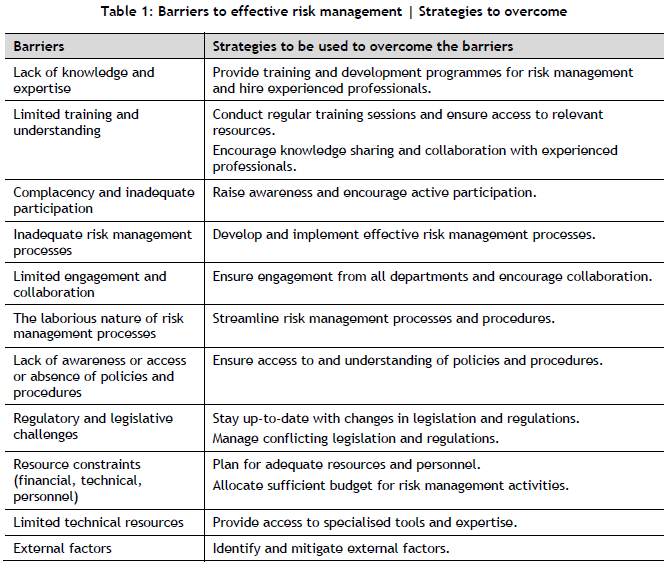
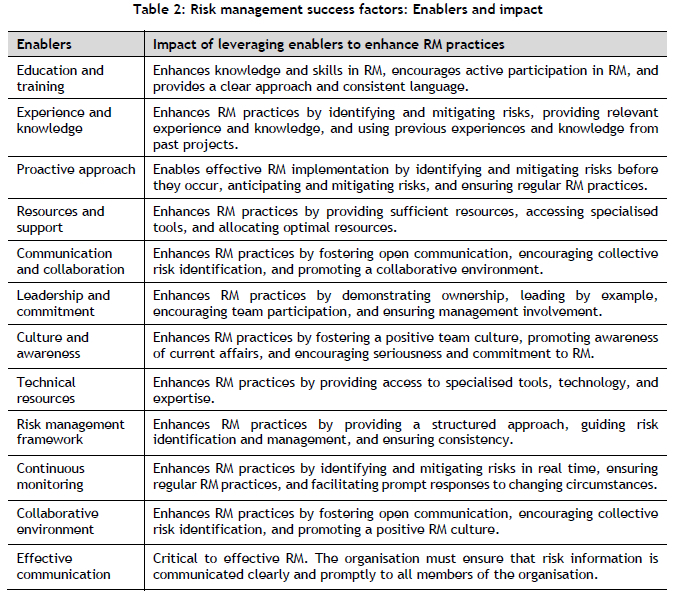
In summary, these barriers - detailed in Table 1 - range from insufficient training and engagement to resource and regulatory hurdles and financial pressures in a tender-driven environment. They highlight the critical areas that need to be addressed to improve RM practices in the South African construction industry. Conversely, leveraging the enablers outlined in Table 2 could facilitate effective RM implementation. By addressing these obstacles and capitalising on key enablers, organisations could better equip their project teams to manage risks effectively, thus enhancing the likelihood of successful project outcomes.
4.3. Potential enablers of risk management adoption in South Africa's construction industry
While barriers pose significant difficulties, key enablers could also facilitate the successful implementation of risk management (RM) in construction projects. These enablers help organisations to overcome obstacles and to integrate RM practices more effectively into their project management processes.
The responses revealed several enablers: training and experience in risk management, stakeholder understanding and engagement, effective communication and collaboration, the presence of skilled and knowledgeable teams, proactive risk management practices, sufficient resource allocation, and leadership commitment. These factors were subsequently validated through follow-up questions, which confirmed their alignment with the literature and highlighted their unique contributions in the South African context.
Together, these enablers demonstrate how RM practices could be effectively supported and implemented, overcoming common barriers and leading to successful project outcomes.
Training and experience in RM emerged as one of the most significant enablers. One participant stated, "I have completed ISO courses and short courses for certification in risk management", illustrating the role of formal training and certification in equipping professionals with the necessary skills. This finding aligns with [38], who argued that structured training programmes enhance the competencies of project teams, enabling them to make informed decisions. Another participant emphasised, "Having experienced and knowledgeable representatives from each department can lead to valuable insights and identification of critical risks", highlighting the importance of team experience. [36] supported this, noting that past experiences significantly improve risk assessment and mitigation strategies.
The understanding and engagement of stakeholders were also identified as critical enablers of RM. One participant remarked, "Understanding risk management helped us plan better around particular risks, avoiding schedule overruns", suggesting that a deep comprehension of RM processes leads to improved planning and decision-making. This corresponds with [22], who found that engaging stakeholders in RM is essential for preventing delays and cost overruns. Another participant recommended "[p]roviding training and short courses on risk management to enhance their knowledge and encourage participation in risk management decisions" - a suggestion supported by [12], who argued that, when stakeholders understand and actively engage in RM, they are more likely to contribute positively to risk-related decisions.
The study highlighted the importance of effective communication and collaboration. One participant noted, "Effective communication, reporting risks, and transparency... Open communication played a vital role in our success", underscoring how clear communication ensures timely information sharing and swift responses to emerging risks. This finding is consistent with [24], who argued that effective communication facilitates risk reporting, enabling quicker risk mitigation. Another participant emphasised, "Our consultant and contractor were fully engaged and understood what needed to be done. They were like a family to us, and their communication was excellent", reinforcing that strong collaboration fosters trust and transparency - crucial elements for effective RM, as also highlighted by [35].
The presence of skilled and knowledgeable teams was another critical enabler. One participant noted, "Having the right people with the correct skills in risk identification, mitigation, and implementation was crucial". This observation is supported by [4], who found that a team with the right expertise significantly improves the management of risks in construction projects, while [32] noted that having the appropriate mix of skills enhances the ability to identify, assess, and manage risks effectively.
Proactive risk management practices also played a key role in RM's success. A participant mentioned, "We identified mitigations and allocated resources to manage these risks. Through continuous review and revision of our risk register and mitigations, we were able to address these regulatory and legislative issues and minimise their impact on the project". This approach aligns with the research of [37], who emphasised that a proactive stance towards RM leads to better project outcomes by addressing risks early. [1] similarly pointed out that anticipating and preparing for potential risks allows teams to mitigate their impact, ultimately contributing to project success.
The study also identified the importance of allocating sufficient resources for RM. Participants stressed that having adequate budget, personnel, and time is crucial for managing risks effectively. As one participant observed, "Sufficient resources, including time, money, and personnel, had a profoundly positive impact on risk management implementation in this project". This finding is consistent with [39], who argued that resource limitations can impede RM plans. Similarly, [33] found that optimal resource allocation ensures that resources are directed towards critical areas, enhancing RM efforts.
Finally, leadership and management commitment were highlighted as crucial enablers of RM. One participant emphasised, "Management's involvement and commitment to the risk management process played a significant role", illustrating how leadership drives RM success by embedding it in project processes. Another participant added, "Leading by example, with senior team members demonstrating the importance of risk management, can also help". This is supported by [13], who found that leadership commitment is key to embedding RM in the culture of construction projects, while [34] emphasised that leadership sets a positive example, reinforcing RM's importance throughout the project lifecycle.
In conclusion, the findings of this study identify several critical enablers that contribute to successful RM implementation in construction projects, as outlined in Table 2. These enablers - ranging from training and experience to effective communication, collaboration, proactive management, sufficient resources, and leadership commitment - are well supported by the literature. Together, they offer a roadmap for overcoming barriers and fostering a robust RM culture, particularly in the context of the South African construction industry. Table 2 provides a detailed overview of these factors and their corresponding impact on RM outcomes.
4.4. Lessons learnt
Effective RM is essential for project success. It requires a proactive approach in which risks are identified and addressed early, allowing teams to develop suitable mitigation strategies and to reduce the likelihood and impact of potential threats. This process must be tailored to the specific context and needs of the project, as generic approaches are often ineffective. Clear communication and strong collaboration are also vital, ensuring that all stakeholders are informed, engaged, and aligned throughout the process. Involving the right stakeholders helps to clarify requirements and supports meaningful progress.
Preparation and compliance play a key role in avoiding shortcuts that can lead to incidents or delays. RM is not a hindrance but a key driver of safety, timely delivery, and cost control. Balancing project goals with effective RM supports both short-term delivery and long-term sustainability. A pragmatic, context-sensitive approach is also necessary, applying the appropriate level of detail at each phase. Striking the right balance between detailed planning and high-level oversight depends on the available information and the project's complexity. Ultimately, the participants agreed that RM equips teams to navigate problems better, making it a valuable tool for delivering projects safely, on time, and within budget.
Based on these insights, this study makes the following recommendations. Embedding RM in the broader project culture is essential. This includes securing leadership buy-in and ensuring that the entire team understands and values the role of RM. A proactive approach is key, with RM positioned as an enabler of project success rather than as a compliance task. Promoting risk awareness in an approachable and non-intimidating way also helps to build engagement on every level. It is also important to make RM accessible through clear communication and targeted training, especially for those unfamiliar with the process. In addition, project teams must allocate sufficient time for thorough risk assessments to help to prevent potential issues and to contribute to overall project success. Individuals with the right skills and experience for RM roles should be placed in charge for smooth execution. Ultimately, an effective RM process should be outcome-focused, simple to understand, and capable of securing team buy-in.
5. CONCLUSION
This study set out to evaluate the adoption and implementation of RM in construction projects, focusing on identifying both the barriers and enablers that influence RM effectiveness. The first objective was to identify barriers to project RM implementation in construction projects. The study confirmed that significant problems include knowledge gaps, particularly among junior and technical personnel who lack a thorough understanding of PRM. In addition, disparities in expertise between novice and experienced professionals hinder effective implementation. Communication barriers impede the flow of crucial risk-related information among stakeholders, complicating RM integration. A lack of support from management and organisations exacerbates these challenges, as leadership buy-in is vital for successful RM implementation. Furthermore, policy and procedural inadequacies, alongside regulatory and legislative hurdles, pose significant problems. Many organisations lack formalised RM policies or struggle with regulatory compliance. Resource constraints, such as limited financial, human, and technical resources, obstruct comprehensive RM adoption further, making it difficult to allocate the necessary attention and tools for effective RM execution.
The second objective focused on investigating the enablers that facilitate PRM implementation. The study highlights that effective RM requires a solid foundation of knowledge, skills, and expertise, as well as sufficient resources. Clear organisational policies and procedures and efficient communication are essential to guide RM efforts. Management and leadership support are crucial for championing RM initiatives and fostering a culture of proactive risk awareness. Early education and engagement in RM, particularly for junior personnel, could bridge the novice-experienced gap and enhance overall project performance. Compliance with regulatory and legislative requirements would further strengthen these enablers, ensuring alignment with industry standards. Leveraging these enablers could facilitate effective PRM implementation and improve project outcomes.
This study's methodology has had several limitations that affect its generalisability. Semi-structured interviews may not capture the full spectrum of stakeholder viewpoints in the construction industry, and are therefore not generalisable. Furthermore, the reliance on industry professionals' insights may introduce subjectivity and bias.
The study thus calls for exploration in future research of several key areas in order to enhance RM practices in construction projects. One significant area is the investigation of innovative RM techniques, particularly the use of emerging technologies, which could improve risk prediction, monitoring, and mitigation. In addition, this study highlights the need to develop financial models that support RM, especially in competitive tender environments where financial constraints often hinder RM implementation. Research into the long-term impact of RM practices, including how they influence project success beyond completion, is also recommended. Furthermore, there is a growing need to investigate RM practices in small and medium-sized enterprises (SMEs), which face unique difficulties compared with larger organisations.
Comparative studies across regions and sectors are also essential for identifying context-specific barriers to and enablers of RM. Understanding the role of leadership and organisational culture in fostering effective RM practices is another area that requires further exploration. Last, this study recommends investigating the effectiveness of RM training programmes, particularly for junior personnel and technical staff, to ensure that these programmes adequately prepare individuals to manage risks in construction projects. By addressing these areas, future research could contribute significantly to improving RM practices throughout the construction industry.
REFERENCES
2. LITERATURE REVIEW
-
[1] T. Aven, "Risk assessment and risk management: Review of recent advances on their foundation," European Journal of Operational Research, vol. 253, no. 1, pp. 1-13, Aug. 16, 2016. doi: 10.1016/j.ejor.2015.12.023
» https://doi.org/10.1016/j.ejor.2015.12.023 - [2] Project Management Institute, The standard for risk management in portfolios, programs, and projects. PMI, 2019.
- [3] Construction Industry Development Board, "Annual report 2022/2023," 2023.
-
[4] B. Y. Renault, J. N. Agumba, and N. Ansary, "Establishing core factors of risk management influencing performance outcome of small and medium firm's construction projects in Gauteng," Journal of Construction in Developing Countries, vol. 25, no. 2, pp. 93-127, Dec. 2020. doi: 10.21315/jcdc2020.25.2.4
» https://doi.org/10.21315/jcdc2020.25.2.4 -
[5] R. Kunodzia, L. S. Bikitsha, and R. Haldenwang, "Perceived factors affecting the implementation of occupational health and safety management systems in the South African construction industry," Safety, vol. 10, no. 1, p. 5, Jan. 2024. doi: 10.3390/safety10010005
» https://doi.org/10.3390/safety10010005 - [6] Risk management: Guidelines, ISO 31000:2018, 2nd ed., 2018.
-
[7] I. L. Johansen and M. Rausand, "Ambiguity in risk assessment," Safety Science, vol. 80, pp. 243251, Dec. 2015. doi: 10.1016/j.ssci.2015.07.028
» https://doi.org/10.1016/j.ssci.2015.07.028 - [8] D. Hillson, The risk management handbook: A practical guide to managing the multiple dimensions of risk. London/New York: Kogan Page, 2016.
-
[9] O. T. Tambwe, C. O. Aigbavboa, and O. Akinradewo, "Benefits of construction data risks management in the construction industry," Journal of Engineering, Design and Technology, vol. 23, no. 2, pp. 458-476, Feb. 2025. doi: 10.1108/JEDT-11-2022-0577
» https://doi.org/10.1108/JEDT-11-2022-0577 - [10] K. Visser and P. Joubert, "Risk assessment modelling for the South African construction industry," in PICMET '08 - 2008 Portland International Conference on Management of Engineering & Technology, IEEE, Jul. 2008, pp. 1371-1379. doi: 10.1109/PICMET.2008.4599749
-
[11] D. Baloi and A. D. F. Price, "Modelling global risk factors affecting construction cost performance," International Journal of Project Management, vol. 21, no. 4, pp. 261-269, 2003. doi: 10.1016/S0263-7863(02)00017-0
» https://doi.org/10.1016/S0263-7863(02)00017-0 -
[12] N. Alsaadi and N. Norhayatizakuan, "The impact of risk management practices on the performance of construction projects," Estudios de Economia Aplicada, vol. 39, no. 4, 2021. doi: 10.25115/eea.v39i4.4164
» https://doi.org/10.25115/eea.v39i4.4164 -
[13] Y. C. Yong and N. E. Mustaffa, "Critical success factors for Malaysian construction projects: An investigative review," International Journal of Built Environment and Sustainability, vol. 4, no. 2, 180, May 2017. doi: 10.11113/ijbes.v4.n2.180
» https://doi.org/10.11113/ijbes.v4.n2.180 - [14] C. Chapman and S. Ward, Project risk management: Processes, techniques and insights, 2nd ed. Chichester: Wiley, 2003.
-
[15] Department: Statistics South Africa, "STATISTICAL RELEASE," 2020. [Online]. Available: www.statssa.gov.za, info@statssa.gov.za,Tel+27123108911
» www.statssa.gov.za -
[16] N. Chileshe and G. J. Kikwasi, "Critical success factors for implementation of risk assessment and management practices within the Tanzanian construction industry," Engineering, Construction and Architectural Management, vol. 21, no. 3, pp. 291-319, 2014. doi: 10.1108/ECAM-01-2013-0001
» https://doi.org/10.1108/ECAM-01-2013-0001 -
[17] A. Rostami and C. F. Oduoza, "Key risks in construction projects in Italy: Contractors' perspective," Engineering, Construction and Architectural Management, vol. 24, no. 3, pp. 451-462, 2017. doi: 10.1108/ECAM-09-2015-0142
» https://doi.org/10.1108/ECAM-09-2015-0142 -
[18] N. Yaraghi and R. G. Langhe, "Critical success factors for risk management systems," Journal of Risk Research, vol. 14, no. 5, pp. 551-581, May 2011. doi: 10.1080/13669877.2010.547253
» https://doi.org/10.1080/13669877.2010.547253 -
[19] J. Mbachu and R. Nkado, "Factors constraining successful building project implementation in South Africa," Construction Management and Economics, vol. 25, no. 1, pp. 39-54, Jan. 2007. doi: 10.1080/01446190600601297
» https://doi.org/10.1080/01446190600601297 -
[20] M. B. Zailani, M. Abubakar, and A. Muhammad, "Assessment of barriers to risk management (RM) implementation in small construction projects in Nigeria," African Journal of Built Environment Research, vol. 3, no. 1, pp. 15-28, 2019. doi: 10.33796/ajober.3.1.02
» https://doi.org/10.33796/ajober.3.1.02 - [21] I. Ajzen, "The theory of planned behavior," Organizational Behavior and Human Decision Processes, vol. 50, no. 2, pp. 179-211, 1991.
-
[22] N. Chileshe, M. Reza Hosseini, and J. Jepson, "Critical barriers to implementing risk assessment and management practices (RAMP) in the Iranian construction sector," Journal of Construction in Developing Countries, vol. 21, no. 2, pp. 81-112, 2016. doi: 10.21315/jcdc2016.21.2.5
» https://doi.org/10.21315/jcdc2016.21.2.5 - [23] F. D. Davis, "Perceived usefulness, perceived ease of use, and user acceptance of information technology," MIS Quarterly, vol. 13, no. 3, pp. 319-340, 1989.
-
[24] B. G. Hwang, X. Zhao, and L. P. Toh, "Risk management in small construction projects in Singapore: Status, barriers and impact," International Journal of Project Management, vol. 32, no. 1, pp. 116124, 2014. doi: 10.1016/j.ijproman.2013.01.007
» https://doi.org/10.1016/j.ijproman.2013.01.007 -
[25] P. X. W. Zou, G. Zhang, and J. Wang, "Understanding the key risks in construction projects in China," International Journal of Project Management, vol. 25, no. 6, pp. 601-614, Oct. 2007. doi: 10.1016/j.ijproman.2007.03.001
» https://doi.org/10.1016/j.ijproman.2007.03.001 - [26] L. Kraidi, R. K. Shah, W.M. Matipa, and F. Borthwick, "An analysis of the critical risk factors in oil and gas pipeline projects using a comprehensive risk management framework," in Proceedings of Association of Researchers in Construction Management, ARCOM, 2018, pp. 360-369.
-
[27] N. Chileshe and G. J. Kikwasi, "Risk assessment and management practices (RAMP) within the Tanzania construction industry: Implementation barriers and advocated solutions," International Journal of Construction Management, vol. 14, no. 4, pp. 239-254, 2014. doi: 10.1080/15623599.2014.967927
» https://doi.org/10.1080/15623599.2014.967927 - [28] N. N. Taleb, Antifragile: Things that gain from disorder. New York, NY: Random House Trade, 2016.
-
[29] X. Zhao, B. G. Hwang, and S. P. Low, "Critical success factors for enterprise risk management in Chinese construction companies," Construction Management and Economics, vol. 31, no. 12, pp. 1199-1214, Dec. 2013. doi: 10.1080/01446193.2013.867521
» https://doi.org/10.1080/01446193.2013.867521 - [30] M. Easterby-Smith, L. J. Jaspersen, R. Thorpe, and D. Valizade, Management and business research. Sage, United Kingdom, 2021.
-
[31] G. Konstantinos, "Review of Thematic analysis: A practical guide," European Journal of Psychotherapy and Counselling, vol. 26, no. 3-4, pp. 461-464, Oct. 2024. doi: 10.1080/13642537.2024.2391666
» https://doi.org/10.1080/13642537.2024.2391666 -
[32] M. Masár, M. Hudáková, T. Melkovic, and P. Suler, "Global survey of current barriers to project risk management and their impact on projects," Journal of Business Economics and Management, vol. 23, no. 5, pp. 1194-1210, Nov. 2022. doi: 10.3846/jbem.2022.17784
» https://doi.org/10.3846/jbem.2022.17784 - [33] P. M. Roberg, L. S. Flak, and P. Myrseth, "Unveiling barriers and enablers of risk management in interoperability efforts," in Proceedings of the Annual Hawaii International Conference on System Sciences, IEEE Computer Society, 2014, pp. 2273-2282. doi: 10.1109/HICSS.2014.286
-
[34] C. Senesi, A. Javernick-Will, and K. R. Molenaar, "Benefits and barriers to applying probabilistic risk analysis on engineering and construction projects," EMJ - Engineering Management Journal, vol. 27, no. 2, pp. 49-57, Jun. 2015. doi: 10.1080/10429247.2015.1035965
» https://doi.org/10.1080/10429247.2015.1035965 - [35] A. Carter and E. Chinyio, "Effectiveness of risk management: Barriers and solutions," International Journal of Project Organisation and Management, vol. 4, no. 4, pp. 368-378, 2012.
- [36] A. S. Bu Qammaz and R. Y. Almaian, "A critical success factors model for effective implementation of risk management process in the construction projects," Journal of Engineering Research, vol. 8, no. 3, 2020.
-
[37] A. F. Serpella, X. Ferrada, R. Howard, and L. Rubio, "Risk management in construction projects: A knowledge-based approach," Procedia - Social and Behavioral Sciences, vol. 119, pp. 653-662, Mar. 2014. doi: 10.1016/j.sbspro.2014.03.073
» https://doi.org/10.1016/j.sbspro.2014.03.073 -
[38] S. Adamtey and J. O. Kereri, "Risk management in residential projects in the United States: Implementation status, evaluation techniques and barriers," Journal of Engineering, Design and Technology, vol. 21, no. 5, pp. 1481-1500, Nov. 2023. doi: 10.1108/JEDT-05-2021-0246
» https://doi.org/10.1108/JEDT-05-2021-0246 -
[39] R. V. Dandage, S. S. Mantha, S. B. Rane, and V. Bhoola, "Analysis of interactions among barriers in project risk management," Journal of Industrial Engineering International, vol. 14, no. 1, pp. 153-169, Mar. 2018. doi: 10.1007/s40092-017-0215-9
» https://doi.org/10.1007/s40092-017-0215-9
Accepted for publication 11 Jul 2025
Available online 29 Aug 2025
ORCID® identifiers
K.B. Masea: https://orcid.org/0009-0002-2834-7447
F.S. Hassan: https://orcid.org/0009-0005-2171-1332
S. Grobbelaar: https://orcid.org/0000-0001-8148-2440