Evaluation of a State-Owned South African Oil Refinery's Maintenance Strategy Selection Process and its Performance Effectiveness
Abstract
The ageing infrastructure at a state-owned South African petroleum refinery has led to frequent equipment breakdowns and increased downtime, shifting maintenance from preventive to reactive. This study investigates the most suitable maintenance strategy for nitrogen compressors, which are essential for purging and pressurising reactor systems. Using structured questionnaires and analysing the responses through frameworks such as reliability-centred maintenance (RCM), total productive maintenance (TPM), and risk management theory, the study identifies critical maintenance needs, including functionality tests, lubrication, and vibration monitoring. The findings emphasise the value of early failure detection through daily inspections and condition monitoring to support preventive and predictive maintenance approaches. Risk management plays a vital role in strategy selection, with risk assessments guiding the prioritisation of maintenance tasks. The limited application of failure mode, effects, and criticality analysis (FMECA) suggests room for improvement. This research underscores the need for a holistic maintenance approach that integrates proactive practices and risk management, offering a foundation for future studies of advanced maintenance strategies in refineries.
Abstract
Die verouderende infrastruktuur by 'n staatsbeheerde Suid-Afrikaanse petroleumraffinadery het gelei tot gereelde toerustingonderbrekings en verhoogde stilstandtyd, wat onderhoud van voorkomend na reaktief verskuif. Hierdie studie ondersoek die mees geskikte onderhoudstrategie vir stikstofkompressors, wat noodsaaklik is vir die suiwering en druk van reaktorstelsels. Deur gebruik te maak van gestruktureerde vraelyste en die ontleding van die reaksies deur raamwerke soos betroubaarheidsgesentreerde onderhoud (RCM), totale produktiewe onderhoud (TPM) en risikobestuursteorie, identifiseer die studie kritieke onderhoudsbehoeftes, insluitend funksionaliteitstoetse, smering en vibrasiemonitering. Die bevindinge beklemtoon die waarde van vroeë mislukkingsopsporing deur daaglikse inspeksies en toestandsmonitering om voorkomende en voorspellende onderhoudsbenaderings te ondersteun. Risikobestuur speel 'n belangrike rol in strategieseleksie, met risikobepalings wat die prioritisering van onderhoudstake lei. Die beperkte toepassing van mislukkingsmodus, effekte en kritieke analise (FMECA) dui op ruimte vir verbetering. Hierdie navorsing beklemtoon die behoefte aan 'n holistiese onderhoudsbenadering wat proaktiewe praktyke en risikobestuur integreer, wat 'n fondament bied vir toekomstige studies van gevorderde onderhoudstrategieë in raffinaderye.
1. INTRODUCTION
1.1.
BackgroundMost South African oil refineries are over 30 years old and face the problem of plant and equipment degradation resulting from ageing mechanisms, including corrosion, wear and tear, and erosion. In addition to those reasons, the lack of a maintenance culture, human resources, and advanced technology are contributing factors to the inefficiency and ineffectiveness of asset and maintenance management [1].
A lack of good and effective maintenance practices is prevalent in most refineries, resulting in several undesirable effects such as frequent breakdowns, plant stoppages, production loss, injuries, reduced asset life, poor product quality, and frequent corrective maintenance [2]. The detrimental impact that these maintenance issues have on companies is inevitable, as they lead to a loss of revenue from increased overtime costs, delayed service delivery, and a disproportionate investment in spare parts [3]. Bagshaw [2] notes that the objective of maintenance is mainly to maximise the time an asset needs to perform its function, to augment the asset's operational reliability by minimising machine malfunctions and increasing machine utilisation, and to reduce the overall operational cost of production. Effective maintenance deals with functional checks, monitoring, testing, repairing, or replacing equipment to ensure that it performs its functions efficiently throughout its expected life cycle [4].
The organisation grapples with problems of equipment malfunction and lacks a maintenance strategy that aligns with its current state of business. Adopting an effective maintenance strategy is essential, as it ensures improved asset life, improved health and safety, and a reduced environmental and social impact, without which insurance premiums and government penalties could increase. This research seeks to address the approach and importance of selecting a maintenance strategy for a nitrogen compressor.
1.2.
ObjectivesFraser [4] has argued that identifying and implementing appropriate maintenance strategies help to manage premature replacement costs, maintain stable production, and prevent asset deterioration. According to Mungani and Visser [5], maintenance approaches and strategies are often used to guide the selection of a suitable maintenance approach that can be used on a physical asset. Maintenance studies suggest that some of the contributing factors to the ineffectiveness of maintenance are the result of managers being unaware of the different types of maintenance strategies and selection methods [6]. The main objective of the current study is to identify the best maintenance strategy for nitrogen compressors, one of the essential components for supplying the refinery with high-pressure nitrogen to purge equipment and lines and to pressurise the reactor system. The objective was tested by addressing the following research questions:
• What are the specific maintenance needs and requirements for nitrogen compressors in a South African state-owned oil refinery?
• How do the specific maintenance needs and requirements influence the selection of a suitable maintenance strategy?
• To what extent does the impact of the risk management process influence the selection of maintenance strategies for the nitrogen compressor?
• How could risk management processes be used to identify potential failures and to prioritise maintenance activities?
According to Murthy et al. [7], maintenance is classified into two main categories: corrective maintenance, which is conducted after a system failure; and preventive maintenance, which is performed before the failure can happen. Large-scale industries such as refineries use opportunistic maintenance, in which plant shutdowns and turnarounds are performed at predetermined intervals [8].
2.1. Maintenance management
According to Ostadi and Saifpanahi [9], maintenance management is the integration of technical, administrative, and management activities during an asset's lifecycle, by which the equipment's condition and functioning properties are improved. An effective business is made up of three levels of activity: the strategic level, the tactical level, and the operational level. Together these are meant to ensure that the correct tasks are accomplished on time and according to schedule and procedure [10].
2.2.
Asset condition managementAccording to [11], a study established that good asset management consists of condition assessment and condition monitoring, which are used to indicate equipment's failure risks and to detect and diagnose problems in the early stages of failure. Asset condition management is said to help to minimise costs, increase productivity, and extend the lifespan of the asset [12].
2.3.
Maintenance strategiesThe literature lacks a distinct definition of "maintenance strategy", with authors such as Dhingra and Velmurugan [13] stating that maintenance strategy is not a distinct phenomenon, but a systematic approach that is used to preserve and achieve maintenance objectives such as availability and equipment reliability. According to Alsyouf [14], a maintenance strategy is about the identification and illustration of failure events in order to help devise the best maintenance technique for inspection, replacement, or repair.
Types of maintenance strategy
Risk-based reliability centred maintenance
Basson [15] defines risk-based reliability centred maintenance (RCM3) as a process that focuses on identifying the risks involved and on possible failures, quantifying the risks, and then establishing the most effective and appropriate way to deal with such risks. According to Mungani and Visser [5], RCM3 is used to increase asset reliability by classifying the failure modes, especially if they are related to safety, the environment, and loss of business.
Total productive maintenance
Total productive maintenance (TPM) emanates from total quality management, introduced by Japanese manufacturing industries, and from just-in-time principles [5]. The main elements of TPM are:
• To maximise overall equipment effectiveness (OEE) by eradicating machine loss;
• To develop high-standard maintenance workers; and
• To adopt the zero defect and zero failure approach [5]
Business-centred maintenance
Mungani and Visser [5] regard business-centred maintenance (BCM) as the general approach that was established to meet the need for a more cost-effective and safety-conscious model of maintenance. Chemical process plants and power stations are more receptive to a BCM approach than are other industries.
2.4.
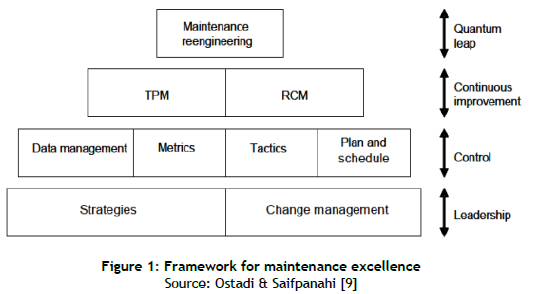
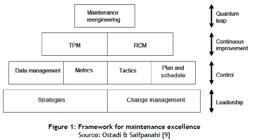
Maintenance management frameworkFigure 1 illustrates ways in which maintenance could be implemented to ensure that all maintenance management functions are carried out. The framework identifies the structure of a maintenance strategy and the aspects related to human resources, which are required for cultural change as the first step. The second step recognises the implementation of a computerised maintenance management system for the organisation to gain control. The third step recognises RCM and TPM as the best methods for continuous improvement. For sustainability, the top level recommends maintenance reengineering methods, such as process mapping techniques [9].
2.5. Strategy selection process
The strategy selection process requires an in-depth understanding of the asset function and of the risks associated with it to help to apply a suitable strategy that matches the asset demands [13]. A decision diagram is used to guide how assets should be maintained: to operate to failure, to do fixed-time maintenance, to do condition-based maintenance, and so on [16].
Labib [6] argues that the decision-making grid acts as a map on which the worst-performing machines are located according to multiple criteria. The grid guides decision-making about how the assets should be maintained: whether to run to failure, to upgrade operator skills, to adopt a fixed time basis, or to design out the causes of failures.
Factors influencing strategy selection
According to Akinyemi [16], factors such as management, inspection, planning, scheduling, execution, and improvement contribute to laying a good foundation for an effective maintenance strategy.
Determining the maintenance needs of equipment, which involves functional checks, monitoring, testing, repairing, or replacing equipment to ensure that it performs its functions diligently throughout its expected life cycle, is a crucial aspect of maintenance strategy selection [4].
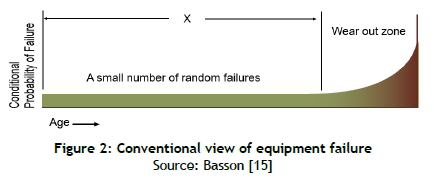
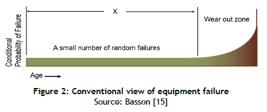
Asset characteristics, such as age (illustrated in Figure 2), assume that assets are reliable only for a certain period and that thereafter they wear out.
According to Knutsen et al. [17], an effective analysis tool for identifying the root cause of failure is the RCM process, through which risks associated with failures that do not have an impact on safety, the environment, or the business' economic activities are regarded as tolerable.
From the literature, one could conclude that the key aspects of maintenance are to remove the adverse effects of breakdown, to enhance equipment availability, to increase efficiency, and to enhance product quality and system safety at a low cost.
The literature suggests strategies that could be used to select the most cost-effective maintenance action. These strategies have different strengths and weaknesses; however, there is little in the literature to provide a guide for the type of strategy that each industry could use [14]. The application of a maintenance strategy is viewed as quite difficult for most maintenance leaders owing to a lack of understanding of the maintenance strategy [13]. The literature states that RCM is focused on asset reliability and is suitable for high-risk systems, while TPM concentrates on the human factors and the organisational culture [5].
3. PROPOSED MODEL OR CONCEPTUAL METHOD
To achieve the objective of this research, the conceptual model was developed to provide a perspective on the research questions and to illustrate the importance of choosing the right maintenance strategy. This was done by using a maintenance management framework that considers various elements and factors that influence the choice and implementation of a maintenance strategy. The design variables consisted of (1) a dependent variable: the selection of the best maintenance strategy for high-pressure nitrogen compressor equipment; and (2) the independent variables: the specific maintenance needs and requirements of the asset, the asset characteristics, the key risk factors in maintenance strategy selection, and the risk management processes. These were considered in addressing the research problem.
The conceptual model provides a framework for understanding the factors that influence the selection of maintenance strategies and the impact of risk management processes on the maintenance programme for the high-pressure nitrogen compressor.
3.1. Proposition development and practice indicators
The practice indicators linked to each proposition are outlined as follows:
P1: The specific maintenance needs and requirements have a significant influence on the selection of an appropriate maintenance strategy.
• Conduct a thorough analysis of the specific maintenance needs and requirements for the equipment by evaluating the inspection list.
P2: Asset characteristics have a substantial effect on the selection of maintenance strategies.
• Identification and classification of assets based on type, age, and operational needs.
P3: Key risk factors have a significant impact on the selection of maintenance strategies in the organisation.
• Develop a risk-based maintenance strategy that prioritises preventive and predictive maintenance activities for assets that pose operational, environmental, and safety risks, using the RCM decision diagram.
P4: Risk management processes can be used effectively to identify potential failures and to prioritise maintenance activities.
• Use risk assessments to prioritise maintenance activities, based on the likelihood and potential impact of equipment failures.
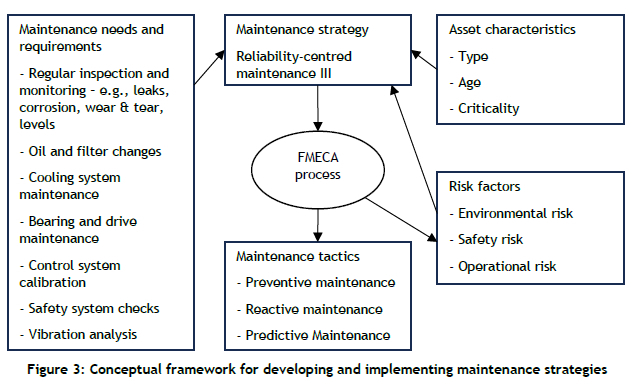
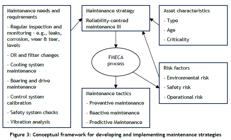
Figure 3 illustrates a conceptual framework for the organisation to consider when developing and implementing maintenance strategies. This framework suggests that the nature and criticality of an asset, including factors such as age, usage, and the potential consequences of failure, play a significant role in determining the maintenance strategy to be adopted. The framework also highlights that the choice of maintenance tactic - whether preventive maintenance, predictive maintenance, or reactive maintenance - depends on the maintenance needs and requirements, the asset characteristics, the risk of failures, and the risk consequences of the asset.
4. RESEARCH METHOD OR APPROACH
4.1.
Research paradigm, design, and approachPost-positivism was a suitable paradigm for this research study, as it seeks to highlight holism, allows the use of natural settings, and offers a practical approach to collecting data [18]. The research study used a mixed method approach in which a survey questionnaire was sent to employees at the refinery to produce the primary data by obtaining expert views and being able to reflect on past experiences. The research targeted maintenance managers, engineers, supervisors, and maintenance staff. Secondary data was used to analyse the maintenance tactics that were adopted, based on the required maintenance tasks.
4.2.
Population and sample selectionIn this study, the population comprised employees in the maintenance division of the refinery. A systematic random sampling method was applied to ensure broad representation across hierarchical levels while maintaining a focus on individuals with relevant expertise. The targeted sample consisted of maintenance managers, superintendents, engineers, supervisors, and maintenance staff.
However, within this framework, purposive emphasis was placed on respondents who were directly involved with the operation and maintenance of nitrogen compressors. This ensured that the captured data reflected both strategic perspectives (management and engineering) and operational realities (supervisors and maintenance staff).
4.3.
Data collectionPrimary data in the form of surveys was used to gain insight into the specific maintenance needs and requirements of the nitrogen compressor from maintenance employees. The surveys were structured on a standardised questionnaire and were designed to capture respondents' familiarity with the compressor, current maintenance practices (e.g., frequency of inspections, use of condition monitoring, and root cause analysis), and problems encountered (such as resource constraints or equipment complexity). These instruments followed a semi-structured protocol, ensuring consistency in the responses while allowing space for clarity-seeking questions.
To facilitate participation and minimise disruption to operations, the main data collection channels were the company's internal mail system and telephone calls. The telephone option was particularly valuable in addressing clarification queries and ensuring that respondents fully understood the intent of the questions.
Secondary data, such as maintenance task schedules that were categorised as reactive, preventive, and predictive activities, was obtained from the company's SAP database. This provided an organisational record against which survey responses could be triangulated, strengthening both the validity and the reliability of the findings.
4.4. Data analysis
For the study of the currently used maintenance tactics, descriptive statistics were used, focusing on measures of central tendency, particularly the mode, in order to summarise the responses and to highlight dominant practices and perceptions. To address the research question about risk factors, content analysis was conducted and structured on the RCM3 decision-making process, enabling a systematic categorisation of identified risks and their implications for strategy selection.
To enhance methodological rigour, explicit links were established between the raw survey data and the interpreted themes. This involved presenting frequency distributions and mode values to illustrate the prevalence of specific practices, followed by mapping these results directly on to thematic categories such as preventive, predictive, and reactive strategies. Similarly, qualitative insights derived from the surveys were aligned with the RCM3 criteria to ensure that the progression from raw data to interpreted findings was both transparent and replicable.
5. RESULTS AND DISCUSSION
Descriptive data analysis was used to provide insights into the characteristics of the data obtained from the research survey. The mode as a measure of central tendency was used to indicate the most frequently occurring value in a dataset, which helped to identify the general trend or the most common response. Furthermore, content analysis was used where the RCM3 decision process was applied, using data from the SAP system to determine how assets should be maintained, whether to operate to failure or to conduct condition-based maintenance, and so on. This analysis explored the selection of organisational maintenance strategies by evaluating factors such as specific maintenance needs, asset characteristics, risk factors, and risk management processes.
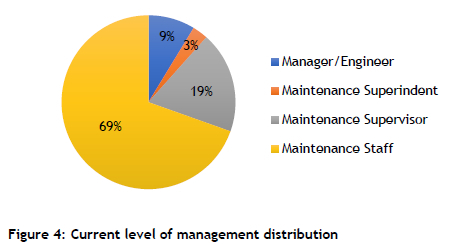
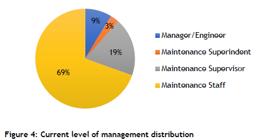
For accurate data, profiling maintenance employees about maintenance strategies was essential to ensure that the views were not biased and that perspectives were informed by the direct experiences and insights of those who performed the tasks. All organisational levels were represented, as illustrated by Figure 4, indicating that a balanced perspective was obtained from personnel who were directly involved in the daily execution and management of maintenance activities. This validated the accuracy of the gathered information.
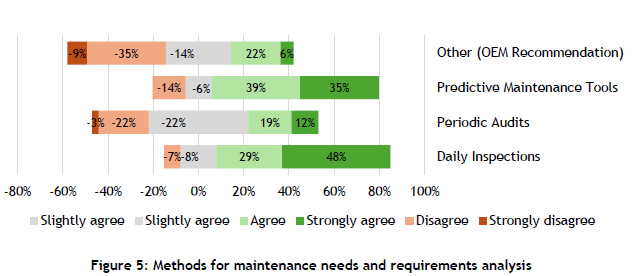
The maintenance needs for the nitrogen compressor that were identified were, among other things, the high vibration alarm, the replacement of lube oil filters, an oil leak on the compressor, cooling water leakage, and the replacement of bearings. The results from the survey indicated that a daily inspection was the most common method used to determine the maintenance needs, followed by the use of predictive maintenance tools, as illustrated by Figure 5. Daily inspections helped with the early detection of defects and provided valuable information about the condition of the equipment. The daily inspections signified the implementation of preventive maintenance, as they allowed for planned maintenance to be scheduled.
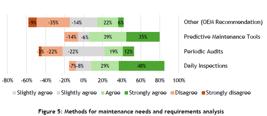
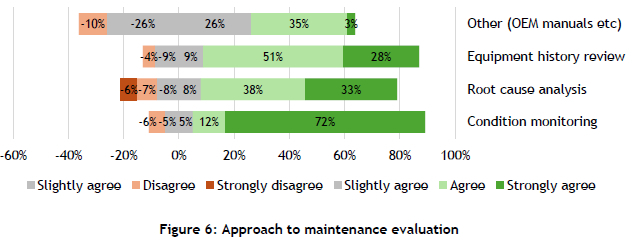
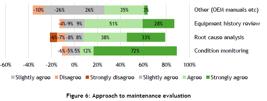
Figure 6 illustrates that condition monitoring was the preferred method for maintenance evaluations that aimed to prevent failures before they occurred. Conducting condition monitoring plays a crucial role in maintenance strategy selection by providing real-time data on the operational health of equipment, and by continuously tracking parameters such as vibration, temperature, pressure, oil quality, etc. This proactive approach supports predictive maintenance, so that maintenance is scheduled on the basis of the actual condition of equipment rather than at fixed intervals.
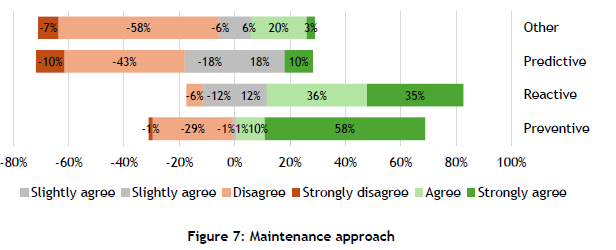
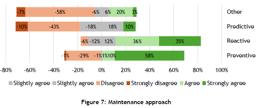
Considering the maintenance needs of the nitrogen compressor, such as the high vibration alarm, the replacement of lube oil filters, and an oil leak on the compressors, the survey results indicated that the organisation's processes mostly favoured preventive maintenance practices, as illustrated by the use of daily inspections and condition monitoring. However, reactive maintenance was also frequently incorporated, as indicated by Figure 7.
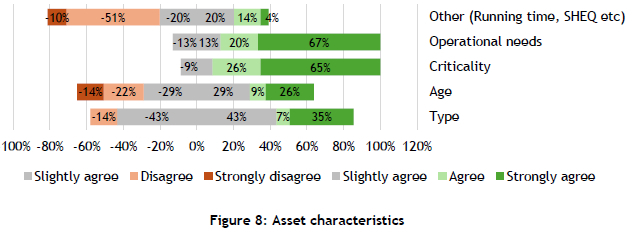
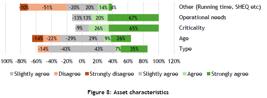
The literature shows that asset characteristics play a crucial role in a maintenance selection strategy. According to the survey, the maintenance strategy used depended significantly on the operational needs and criticality of the equipment, as illustrated by Figure 8, with the age and type of the equipment not having much significance in the process of selecting the maintenance strategy.
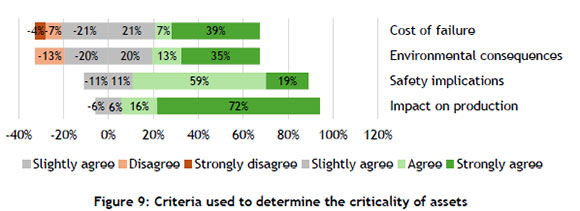
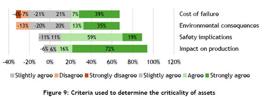
The criteria used to establish the criticality of the equipment were assessing the impact on production, the safety implications, the environmental consequences, and the cost of failure, as illustrated by Figure 9. Assessing equipment criticality helps to prioritise equipment and to do effective maintenance task scheduling.
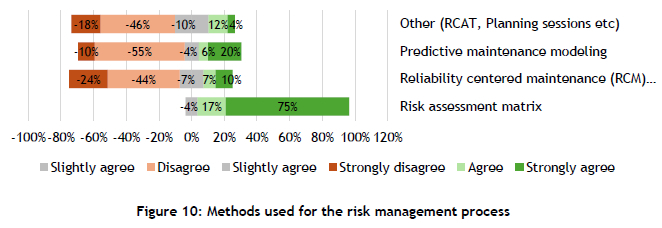
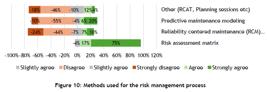
The literature argues that an effective maintenance strategy is one into which risk management is incorporated, with RCM3 being the most suitable strategy. According to the survey, during the maintenance strategy selection process, risk management was applied in the form of risk assessment: operational risk assessments were mostly used for safety and operational risks, and hazard identification and risk assessment was used to assess environmental risks. Figure 10 illustrates that RCM is not a widely used method due to a lack of trained personnel in the RCM3 process.
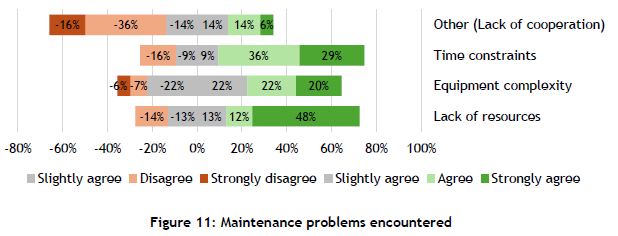
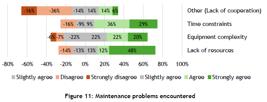
The difficulties encountered during the maintenance strategy selection process were a lack of resources, followed by time constraints, as illustrated by Figure 11. The issue of resources had a significant impact on how maintenance practices were used in the organisation.
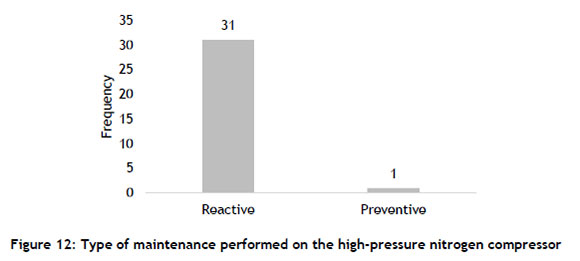
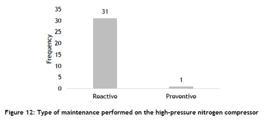
According to the data obtained from SAP, the type of maintenance used for the nitrogen compressor was reactive maintenance, as illustrated by Figure 12. The results validated the respondents' views that, although the organisation practised preventive maintenance, it also tended to adopt a reactive approach. This could be largely attributed to the problems mentioned above, such as a lack of resources, time constraints, and equipment complexity.
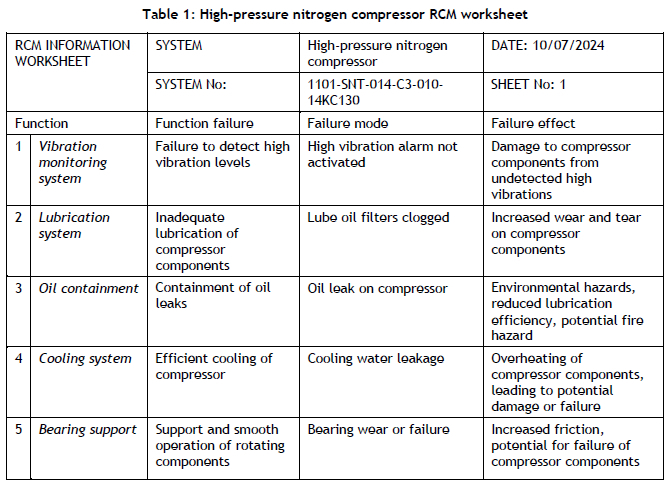
The FMECA process was adopted, and the results shown in Table 1 were used to test the proposition of selecting a suitable maintenance strategy, using the required maintenance activities, such as the high vibration alarm, the replacement of lube oil filters, the oil leak on the compressor, the cooling water leakage, and the replacement of bearings. The results suggested that, by implementing the FMECA process, a more preventive approach could be achieved that could reduce unplanned maintenance significantly. It is imperative that a routine for inspecting critical components such as vibration sensors, lube oil filters, and cooling systems is established, and that all maintenance personnel are adequately trained to identify early signs of component wear and system inefficiencies.
The decision diagram was used to establish the proposed tasks to mitigate risks. These tasks were designed to ensure the reliability, safety, and operational efficiency of the high-pressure nitrogen compressor system. The tasks were scheduled on the basis of the criticality of each failure mode and the consequence evaluation. The risk of failure was estimated, based on the risk priority number (RPN) - RPN = occurrence x severity x detection - and was done between numbers 1 to 10 [19]. An RPN that ranges between 110 and 125 is considered a very high risk that requires proper monitoring and inspection [19].
Vibration monitoring system
• Function failure: The failure to detect high vibration levels could lead to severe damage to the compressor components. The alarm not being activated meant that issues might go unnoticed until major damage occurred.
• Failure effect: Undetected vibrations could cause mechanical wear and misalignment, and eventually lead to catastrophic failure of the compressor.
• Risk evaluation: The RPN was 140, indicating a very high level of risk. Immediate intervention through scheduled condition monitoring was critical.
• Proposed task: Monthly checks and calibration of the vibration alarm were suggested. This task was assigned to a condition monitoring technician.
Lubrication system
• Function failure: Inadequate lubrication from clogged oil filters would increase friction and wear on the compressor components.
• Failure effect: This could lead to the faster degradation of parts, increasing the chances of unexpected breakdowns.
• Risk evaluation: With an RPN of 48 (high-risk level), maintaining the lubrication system was essential.
• Proposed task: Scheduled restoration by replacing lube oil filters quarterly to ensure the smooth functioning of the compressor.
Oil containment
• Function failure: Oil leaks on the compressor could lead to environmental hazards and reduced lubrication efficiency, which could escalate into a fire hazard if not addressed promptly.
• Failure effect: Besides the environmental risk, there was the danger of a significant mechanical failure because of reduced lubrication.
• Risk evaluation: The RPN was 45, indicating a high risk. The task of inspecting and repairing oil leaks monthly was proposed to reduce this risk.
• Proposed task: Mechanical fitters were to inspect and repair any oil leaks, ensuring environmental and mechanical safety.
Cooling system
• Function failure: Leakage in the cooling water system can cause overheating of the compressor, leading to possible damage or failure.
• Failure effect: This would significantly reduce the compressor's lifespan and could result in operational downtime.
• Risk evaluation: With an RPN of 60, the cooling system also posed a high level of risk.
• Proposed task: Monthly inspections of the cooling system were recommended to detect leaks and prevent overheating. This task was assigned to mechanical fitters.
Bearing support
• Function failure: Wear or failure of the bearings could result in increased friction, potentially causing the compressor to fail.
• Failure effect: This would lead to higher energy consumption and more wear on other components, accelerating overall system failure.
• Risk evaluation: The RPN was 45, indicating a high risk of bearing failure.
• Proposed task: Annual bearing replacement was recommended as a preventive measure to ensure the smooth operation of the rotating components
6. CONCLUSIONS AND RECOMMENDATIONS
6.1. Conclusion
Based on the research questions and the results that were obtained, it could be concluded that the objectives of the research were met. The study successfully identified the most suitable maintenance tasks that could be performed on the nitrogen compressor in a South African state-owned oil refinery, based on its maintenance needs, by using the RCM3 maintenance strategy. The identified maintenance tasks were inspection, calibration, and replacement. The research also effectively evaluated the impact of risk management processes on the selection of maintenance strategies, demonstrating that risk assessments and predictive maintenance tools play a crucial role in identifying potential failures and prioritising maintenance activities.
The results obtained from the survey confirmed the significant influence of specific maintenance needs, asset characteristics, key risk factors, and risk management processes on the selection of appropriate maintenance strategies in an organisation. The findings align with the research propositions, indicating that maintenance strategies are driven mainly by the criticality of assets, particularly those with high operational impact. The performance of daily inspections, condition monitoring, and risk assessments highlight that a strong organisational focus on preventive and predictive maintenance strategies would ensure that critical equipment remained functional and operational risks were mitigated.
The analysis showed that the organisation had maintenance management systems in place; however, they were fragmented and lacked coherence. This explained the underuse of fMeCA, and validated the notion that, although the organisation practised preventive maintenance, it also tended to adopt a reactive approach.
These findings are not confined to the refinery that was studied. More broadly, the evidence supports several generalisable insights. First, an indiscriminate reliance on reactive maintenance for high-consequence assets consistently results in backlogs, functional failures, and increased risks - an outcome that is likely in other industrial contexts. Second, the structured use of RCM and FMECA provides a transferable and defensible framework for matching tasks to failure modes and consequences for a wide range of critical equipment. Third, condition-based maintenance proves to be a particularly effective strategy where progressive failure mechanisms are present, while time-based interventions are most defensible only where clear wear-out patterns exist. Last, embedding performance indicators, such as availability, MTBF, emergency work percentage, and backlog age, into the maintenance cycle ensures that strategies remain coherent, risk-informed, and aligned with organisational objectives.
In conclusion, this study not only addresses the case-specific problems of a nitrogen compressor, but also offers evidence of its broader relevance: that sustainable improvements in maintenance performance require a balanced integration of technical analysis, organisational enablers, and systematic performance measurement. By adopting these principles, asset-intensive industries could move beyond fragmented practices towards resilient, risk-proportionate, and standards-aligned maintenance strategies.
6.2. Recommendations
The findings suggest that, while the organisation used preventive maintenance strategies effectively, there was a significant gap in its familiarity with the nitrogen compressor, which could hinder the accurate identification of maintenance needs and affect the maintenance strategy selection process as a result. To address this, the organisation should enhance its training programmes and increase the frequency of thorough maintenance analyses.
By increasing the use of FMECA, the organisation could enhance its ability to detect potential failures early on and to prioritise maintenance activities more effectively, leading to the improved reliability and performance of critical assets such as the nitrogen compressor. Strengthening risk management processes, fostering cross-functional collaboration, and promoting a proactive maintenance culture would also be essential steps to optimise maintenance effectiveness.
A further research study comparing the effectiveness of various maintenance strategies in multiple South African refineries is required to provide deeper insights into industry best practices and the contextual factors that influence strategy selection in different operational environments.
REFERENCES
2. LITERATURE REVIEW
-
[1] P. Okoh, P. Schjolberg, and A. Wilson, "AMMP: A new maintenance management model based on ISO 55000," Infrastructure Asset Management, vol. 3. no. 1, pp. 21-28, 2016. doi: 10.1680/jinam.14.00042
» https://doi.org/10.1680/jinam.14.00042 -
[2] K. Bagshaw, "A review and analysis of plant maintenance and replacement strategies of manufacturing firms in Nigeria," African Journal of Business Management, vol. 11, pp. 17-26, 2017. doi: 10.5897/AJBM2016.8198
» https://doi.org/10.5897/AJBM2016.8198 -
[3] I. Alsyouf, "The role of maintenance in improving companies' productivity and profitability," International Journal of Production Economics, vol. 105, pp. 70-78, 2007. doi: 10.1016/j.ijpe.2004.06.057
» https://doi.org/10.1016/j.ijpe.2004.06.057 -
[4] K. Fraser, "Facilities management: The strategic selection of a maintenance system," Journal of Facilities Management, vol. 12, pp. 18-37, 2014. doi: 10.1108/JFM-02-2013-0010
» https://doi.org/10.1108/JFM-02-2013-0010 -
[5] D. Mungani and K. Visser, "Maintenance approaches for different production methods," South African Journal of Industrial Engineering, vol. 24, pp. 1-13, 2013. doi: 10.7166/24-3-700
» https://doi.org/10.7166/24-3-700 -
[6] A. Labib, "A decision analysis model for maintenance policy selection using a CMMS," Journal of Quality in Maintenance Engineering, vol. 10, pp. 191-202, 2004. doi: 10.1108/13552510410553244
» https://doi.org/10.1108/13552510410553244 -
[7] D. N. P. Murthy, M. R. Karim, and A. Ahmadi, "Data management in maintenance outsourcing," Reliability Engineering & System Safety, vol. 142, pp. 100-110, 2015, doi: 10.1016/j.ress.2015.05.002
» https://doi.org/10.1016/j.ress.2015.05.002 -
[8] A. Hameed and F. Khan, "A framework to estimate the risk-based shutdown interval for a processing plant," Journal of Loss Prevention in the Process Industries, vol. 32, pp. 18-29, 2014. doi: 10.1016/j.jlp.2014.07.009
» https://doi.org/10.1016/j.jlp.2014.07.009 - [9] B. Ostadi and H. Saifpanahi, "A practical self-assessment framework for evaluation of maintenance management system based on RAMS model and maintenance standards," Journal of Industrial and Systems Engineering, vol. 10, pp. 125-143, 2017.
- [10] C. E. Roseline and W. Ebiwari, "Developing maintenance management supportive framework as measures for effective maintenance management practices in selected Nigerian universities," European Journal of Business and Management Research, vol. 7, no. 1, pp. 147-152, 2022.
-
[11] A. Eweda, T. Zayed, and S. Alkass, "Space-based condition assessment model for buildings: Case study of educational buildings," Journal of Performance of Constructed Facilities, vol. 29, no. 1, 04014032, 2015. doi: 10.1061/(ASCE)CF.1943-5509.0000481
» https://doi.org/10.1061/(ASCE)CF.1943-5509.0000481 - [12] J. E. Amadi-Echendu, Managing engineered assets. Springer, 2021.
-
[13] D. T. Dhingra and R. Velmurugan, "Maintenance strategy selection and its impact on maintenance function - A conceptual framework," International Journal of Operations & Production Management, vol. 35, no. 12, pp. 1622-1661, 2015. doi: 10.1108/IJOPM-01-2014-0028
» https://doi.org/10.1108/IJOPM-01-2014-0028 - [14] I. Alsyouf, "Cost effective maintenance for competitve advantages," Doctoral thesis, Vaxjö University, Sweden, 2004.
- [15] M. Basson, RCM3: Risk-based reliability centered maintenance, 3rd ed. Industrial Press, 2019.
- [16] O. Akinyemi, "Development of equipment maintenance strategy for critical equipment," Pacific Journal of Science and Technology, vol. 11, pp. 328-342, 2010.
- [17] K. E. Knutsen, G. Manno, and B. Vartdal, "Beyond condition monitoring in the maritime industry," DNV GL Strategic Research & Inovation Position Paper, 2014.
-
[18] K. A. Henderson, "Post-positivism and the pragmatics of leisure research," Leisure Sciences, vol. 33, no. 4, pp. 341-346, 2011. doi: 10.1080/01490400.2011.583166
» https://doi.org/10.1080/01490400.2011.583166 -
[19] S. Kamble and B. Rajiv, "Significance of risk priority number in machine condition monitoring," Materials Today: Proceedings, vol. 50, pp. 1930-1935, 2021. doi: 10.1016/j.matpr.2021.09.317
» https://doi.org/10.1016/j.matpr.2021.09.317
ORCID® identifiers
A. Nqandela
https://orcid.org/0009-0006-5545-5004
R.H. Peach
https://orcid.org/0000-0002-3104-4482