Developing an Enterprise Risk Management Roadmap for the Passenger Rail Agency of South Africa
Abstract
This research explored the development of an enterprise risk management (ERM) roadmap for the Passenger Rail Agency of South Africa (PRASA) amid growing business risks from global financial shifts and pandemics. It emphasised a holistic management approach to address PRASA's ERM difficulties and opportunities. It also advocated a tailor-made ERM roadmap underpinned by an action priority matrix. Given the lack of ERM literature for public enterprises, this study aimed to bridge that gap using a mixed-methods approach to identify barriers, enablers, and opportunities for ERM implementation. The findings suggested that a customised ERM roadmap would enhance PRASA's governance, efficiency, risk, and resilience, and contribute to value creation.
Abstract
Hierdie navorsing het die ontwikkeling van 'n ondernemingsrisikobestuur (ORB) padkaart vir die Passasierspooragentskap van Suid-Afrika (PRASA) ondersoek te midde van groeiende sakerisiko's as gevolg van wêreldwye finansiële verskuiwings en pandemies. Dit het 'n holistiese bestuursbenadering beklemtoon om PRASA se ORB-probleme en -geleenthede aan te spreek. Dit het ook 'n pasgemaakte ORB-padkaart bepleit, ondersteun deur 'n aksieprioriteitsmatriks. Gegewe die gebrek aan ORB-literatuur vir openbare ondernemings, het hierdie studie daarop gemik om daardie gaping te oorbrug deur 'n gemengde-metodes-benadering te gebruik om hindernisse, bevorderaars en geleenthede vir ORB-implementering te identifiseer. Die bevindinge het daarop gedui dat 'n pasgemaakte ORB-padkaart PRASA se bestuur, doeltreffendheid, risiko en veerkragtigheid sou verbeter, en tot waardeskepping sou bydra.
1. INTRODUCTION
1.1. Background
Enterprise risk management (ERM) is becoming a critical focus for organisations as they face increasingly complex risks, especially after major global events such as the 2008 financial crisis and the coronavirus pandemic [1]. Traditional risk management, which often operates in isolated silos, proves to be inadequate in addressing the full extent of risks that modern organisations encounter. ERM, on the other hand, offers a more comprehensive framework, allowing organisations to manage risks holistically and to align them with strategic goals [2]. This is especially relevant in public enterprises such as the Passenger Rail Agency of South Africa (PRASA), for which effective enterprise risk management is crucial for operational success and governance.
This research aimed to create an ERM roadmap for PRASA. The state-owned entity is a significant player in South Africa's public transport sector, providing affordable commuter rail and bus services in multiple provinces. However, despite establishing traditional and enterprise risk management policies, PRASA has encountered difficulties executing and overseeing risk mitigation strategies [3]. This study closed these gaps by presenting a detailed ERM framework that might improve PRASA's governance, operational efficiency, and ability to deliver on its mandate [2].
The research study began with a literature review to assess the progress of ERM implementation in international contexts. This was done to help to identify the key benefits, barriers, and enablers of ERM. Following this, the study used a qualitative approach through semi-structured interviews with PRASA's senior ERM members to explore how ERM has influenced decision-making, operational control, and perceptions of risk management improvements. The interviews also investigated the difficulties of bureaucracy and varied interpretations of ERM while also examining how managerial support, company size, and risk culture act as enablers of ERM.
Thereafter, a quantitative approach was conducted through surveys with ERM employees to assess perceived barriers, management's commitment, and employees' understanding of risk tolerance and appetite. Furthermore, audit findings from internal reports were reviewed to validate and support the conclusions of the interviews and surveys. The findings were used to develop a specialised ERM roadmap, providing a high-level integrated plan to guide PRASA's enterprise risk management efforts. The study also identified the potential benefits and limitations associated with implementing this roadmap.
Based on the research objectives, the following key research questions were formulated:
1. What are the expected benefits of implementing ERM at PRASA?
2. What are the potential disadvantages of implementing ERM at PRASA?
3. What are the anticipated enablers for implementing ERM at PRASA?
4. What are the potential barriers to implementing ERM at PRASA?
5. Which sequence of activities may promote the realisation of the benefits of implementing ERM at PRASA?
These research questions guided the study and provided a structured approach to exploring the complexities of ERM implementation at PRASA. By answering these questions, the research aimed to provide a comprehensive understanding of how ERM could be effectively implemented in a state-owned entity, identifying the opportunities and problems in this context.
"Risk" is defined as the effect of uncertainty on objectives, which can impact an organisation positively or negatively [4]. The key goal of risk management is to reduce variability and to enhance outcomes through structured processes such as recognition, rating, ranking, and responding to risks [5]. Effective risk management is essential for aligning business strategy with operational objectives, reducing the likelihood of adverse outcomes while optimising opportunities [6]. ERM is a comprehensive framework that is designed to help organisations identify, assess, and manage risks. Unlike traditional risk management, which focuses on isolated risks in specific business units, ERM takes a holistic approach that considers risks as interconnected and as affecting the organisation's overall objectives [7]. This allows businesses to manage uncertainties more effectively, to minimise volatility, and to make better decisions that are aligned with their strategic goals [8]. ERM's critical features address all risk areas, such as financial, operational, compliance, and governance risks, and create an interrelated risk portfolio. It also embeds risk management in decision-making processes and ensures that risks are communicated clearly throughout the organisation [8].
Implementing ERM brings various benefits, including improved organisational efficiency, enhanced risk reporting, and stronger business performance. It enables organisations to reduce losses, stabilise earnings, and enhance shareholder value [9]. Renault et al. [10] identified several key benefits, including an increased likelihood of achieving company objectives and enhanced investor assurance. ERM also leads to an improved understanding of primary risks, portfolio risk optimisation and decreased cash flow volatility [11], better norm compliance, fewer unexpected events, and enhanced responsiveness to changing business environments [12]. Additional findings from the literature emphasise ERM's role in minimising expenses and mitigating losses, improving risk reporting and communication, optimising resource allocation, and heightened management accountability [13]. In the public sector, ERM's value is particularly tied to its ability to prevent losses and to ensure compliance. The framework sharpens policymaking and enhances discussions among stakeholders [13].
ERM is perceived differently by various stakeholders, with some seeing it as a structured tool with clearly defined phases. In contrast, others view it as an overarching framework that encompasses diverse risk management techniques [5]. Arena et al. [7] suggested that ERM is an "umbrella" for various risk management approaches, leading to systematic practice variations. There is also scepticism about ERM's real impact, with critics arguing that it often serves merely as a compliance exercise or an "after-the-fact inspection" [14]. In addition, Fraser and Henry argued that identifying all risks in an organisation could create bureaucratic processes that focus more on generating evidence than on managing actual risks [15]. Internal difficulties, including corporate culture, the lack of willingness among top management to be open and collaborative, inadequate knowledge of ERM among board members, and an overcomplicated approach when implementing ERM features, also have an impact on ERM implementation [16].
Unclear timeframes for identified risks, no training or risk workshops [16], reluctance to discuss sensitive information, problems in quantifying risks, a lack of common risk language, and limited access to quality data also impede the standardisation of risk management processes [17]. Regarding organisational culture, studies revealed barriers such as resistance to change, inadequate support from the broader organisation, poor change management, insufficient training, the absence of ERM specialists, and resource constraints [18]. In addition, the absence of clear responsibilities for ERM implementation, gaps in risk management systems, and a lack of risk management tools also create roadblocks [19]. The perception that ERM introduces excessive bureaucracy and the lack of a strong business case for ERM lead to reluctance among top management to commit fully to ERM [19].
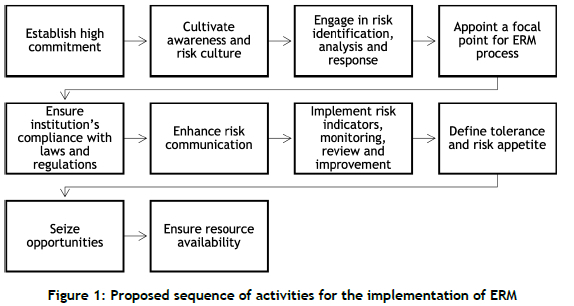
Research has shown that ERM systems are primarily driven by the company's size and by managerial support, which are often reflected in a company's corporate culture [20]. The valuation premium associated with ERM is primarily driven by its integration into strategy and planning activities by the management board [21]. Other studies suggest that ERM adoption is influenced by factors such as the regulatory environment, the ownership structure, and the firm's characteristics [22]. It was also found that larger firms with volatile cash flows and riskier stock returns were more likely to implement ERM, with the likelihood increasing based on the chief executive's incentives for risk-taking [23]. In addition, organisational culture has been shown to correlate positively with the successful establishment of ERM programmes [17]. A study of critical success factors (CSF) for ERM implementation highlighted the need to identify key factors that influence the success of ERM initiatives [24]. The study identified ten consolidated CSFs and proposed the sequence of events outlined in Figure 1.
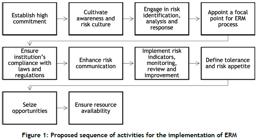
A broad and growing body of literature has explored the benefits, barriers, enablers, and success factors associated with ERM described above. However, when public sector enterprises are discussed, ERM is often framed narrowly as a compliance mechanism or audit tool rather than as a strategic value-generating system that is integrated into decision-making [13].
This paper addresses this gap by conducting an in-depth case study of PRASA, a national public entity with a critical transport mandate and a complex risk environment. Through this case, the paper examines the barriers to and enablers of ERM implementation. It proposes a context-specific roadmap that aligns risk strategy with organisational objectives, governance realities, and compliance obligations. In doing so, several propositions are made about ERM at PRASA.
The study proposes that:
• ERM at PRASA is projected to improve risk management and enhance decision-making and operational control.
• ERM's potential disadvantages include the risk of a bureaucratic approach overshadowing actual risk management and varied interpretations of ERM's role.
• The key enablers of ERM implementation are organisational size, managerial support, a risk culture, and the strategic integration of ERM processes.
• The most significant barriers to ERM implementation include an unsupportive organisational culture, insufficient resources, and a lack of clear ERM directives.
• Effective ERM may be realised through a committed management approach, establishing risk tolerance and appetite, and ensuring robust risk management processes and compliance.
3. THEORETICAL AND CONCEPTUAL FRAMEWORK
The theoretical and conceptual framework developed for this study is grounded in multivariate methods, allowing the integration of multiple variables to assess their contributions to the ERM process. Previous research has emphasised that ERM improves risk management and operational control, yet faces difficulties such as an unsupportive organisational culture, insufficient resources, and a lack of clear directives [10], [17], [18]. Various decision-making models and theoretical frameworks were reviewed and incorporated into the model to address these issues. Key models include optimisation modelling, which integrates risk minimisation into decision-making processes [25], and simulation modelling, such as Monte Carlo simulations, for assessing procurement risks [12]. In addition, the analytic hierarchy process (AHP) was reviewed as a method to prioritise risks based on both qualitative and quantitative factors [26], while a review of the integrated fuzzy decision-making model provided a method for managing uncertainty and prioritising critical factors [27].
The theoretical frameworks informing the conceptual model included the risk management standards by the International Organization for Standardization (ISO), ISO 31000, which provides guidelines for balancing risk and opportunity [9]; an ERM framework by the Committee of Sponsoring Organizations, which integrates strategy, operations, compliance, and reporting [13]; and standards by the Institute of Risk Management, which aligns risk management with strategic objectives [2]. The criteria of control framework, which promotes a risk-aware organisational culture, was also considered [6]. The conceptual model's prioritisation was developed by ranking critical success factors (CSF) and key issues/actions from the action priority matrix (APM), which helped to shape the ERM roadmap. Given each framework's diverse focuses and strengths, the best choice for the conceptual framework hinged on this study's objectives and propositions. Moreover, ISO 31000 was adopted as the conceptual framework, considering the propositions of this study, which hinged on ERM improving risk management and enhancing decision-making and operational control, which directly informs the organisational strategic objectives [4].
4. RESEARCH DESIGN AND METHODOLOGY
The research was guided by a pragmatist philosophy, focusing on practical solutions to real-world problems [28]. This philosophy allowed the research to integrate objective and subjective perspectives, making it well-suited to the mixed-methods approach. The study aimed to develop a practical ERM roadmap for PRASA by focusing on action-oriented outcomes, ensuring that the findings were both theoretically sound and practically relevant [28]. A case study design was adopted to allow for an in-depth investigation of ERM practices in PRASA [29] and to focus on the organisation's real-life setting [28]. A purposive sampling technique was employed for the study's qualitative and quantitative aspects. This method was significant for its reliance on the researcher's judgment to choose participants who could provide in-depth and informative insights relevant to the research questions and objectives. In the qualitative phase, senior and executive members from PRASA's ERM department were selected on the basis of their knowledge and experience in ERM. This was to ensure the collection of relevant and in-depth data [30]. For the quantitative phase, purposive sampling was also applied to target employees on different levels of the ERM department. This was to allow for a broader assessment of ERM implementation and for the researcher to choose individuals relevant to the research design. The strategy was also selected owing to its cost-effective nature [30].
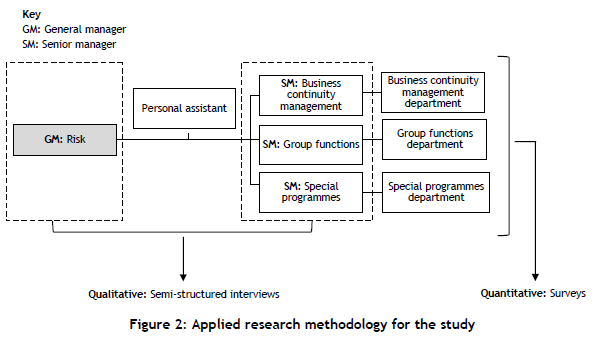
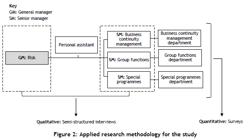
The combination of qualitative interviews and quantitative surveys facilitated the collection of rich, detailed insights [28]. The qualitative data provided in-depth insights into senior management's perspectives on ERM, while the quantitative findings from surveys allowed for the analysis of trends in a broader employee base. This integration of methods ensured a robust understanding of ERM implementation at PRASA, addressing exploratory and descriptive research needs [31]. Interviews were conducted online using the Zoom meeting platform. All four senior ERM managers identified for the interviews participated. The interviews followed a semi-structured process, with the first author asking a series of predetermined questions but also allowing space for participants to elaborate on their experiences and to raise issues they considered necessary. This flexible format enabled the interviewer to probe specific topics more deeply as they emerged while ensuring that all core themes relevant to the study were covered. During the interviews, the participants were asked to provide opinions, examples, and observations related to the benefits of ERM, its disadvantages, its enablers, and the barriers to its implementation at PRASA, as well as the perceived effectiveness of the framework. The interviews were recorded with the participants' permission and then transcribed. The text output was then uploaded into ATLAS.ti, where coding and grouping of similar ideas were conducted following a thematic analysis approach.
In addition to the focus areas established for the interview, the survey also investigated respondents' opinions of ERM processes, the allocation of resources for the implementation of ERM, perceptions of ERM in PRASA, and ERM objectives, practices, and integration. The survey was designed using AHP, and the questionnaire consisted of nine questions, each asking respondents to compare two related elements of ERM, such as proactive versus reactive risk management, strategic integration versus day-to-day implementation, compliance versus strategic advantage, and risk identification versus risk mitigation. For each question, respondents were asked to rate the relative importance of each pair using a nine-point scale, with a rating of 1 indicating equal importance and a rating of 9 showing a strong preference for one element over its alternative. Thirty ERM staff were identified to participate in this exercise, and a SurveyMonkey link to the survey was sent to all of them. However, only 21 people responded. The results of the quantitative study were compiled in Excel and analysed using a combination of descriptive and strategic tools, including boxplots to visualise data distribution, a "strengths, weaknesses, opportunities, and threats" (SWOT) analysis to identify key strengths and weaknesses, and an APM to guide decision-making and intervention planning.
The study ensured validity by incorporating multiple data sources and perspectives. This was done to strengthen the credibility of the findings [32]. Bannigan and Watson explained that "various approaches should be used in testing any index rather than relying on a single validation procedure" [33]. This underscored the use of triangulation in this study, a validation technique that helped to establish the study's quality [28]. Golafshani added that triangulation has addressed a significant methodological issue in naturalistic and qualitative approaches to control bias and to establish valid propositions; hence its adoption in this study [32]. Reliability was addressed using consistent data collection techniques from both qualitative and quantitative methods. This was to focus on the consistency and dependability of the measurements [32], [34]. The methodology is summarised in Figure 2.
This study used an APM to prioritise the tasks required to implement ERM at PRASA. The APM is a strategic tool that categorises tasks by assessing their impact and effort. It highlights "quick wins" (high impact, low effort) as priorities for immediate focus. Conversely, it discourages focusing on "thankless tasks" (low impact, high effort) that provide little value but consume significant resources [35]. APMs are widely used in various industries to improve decision-making and resource allocation. For example, Nethamba and Grobbelaar showed the application of an APM in the South African railway industry to implement machine-learning-based predictive maintenance [36]. Their study used an APM to prioritise maintenance activities by categorising them on the basis of their expected benefits and the effort required for completion. The APM was used in this study to prioritise the sequence of activities needed for the successful implementation of ERM at PRASA. The ERM roadmap, on the other hand, provided a structured approach to guide the implementation of ERM at PRASA. Lam [5] emphasised the importance of feedback loops, leadership roles, measurement of progress, and stakeholder involvement for successful implementation. The roadmap addressed leadership responsibilities, measurement of progress, and stakeholder engagement, along with identifying key activities required for ERM [2], [36]. This roadmap would be critical for phasing in ERM's implementation and addressing immediate and long-term organisational needs [37].
5. RESULTS AND DISCUSSION
The study collected data via semi-structured interviews with four participants (one general manager and three senior managers) and surveys from 21 respondents in the ERM department. Audit findings were used to validate and contextualise identified themes.
5.1. Qualitative methods
5.1.1. Semi-structured interviews
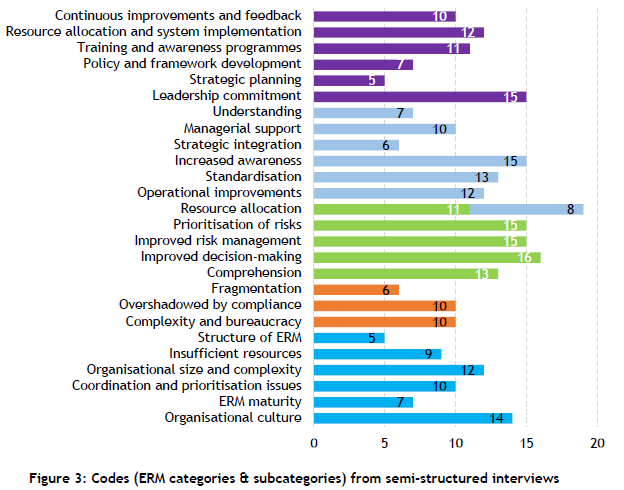
The analysis of the results was based on a qualitative research method that emphasised coding data by frequency and significance. Figure 3 captures the codes/themes that emerged from the semi-structured interviews.
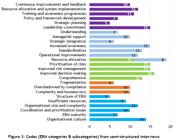
Semi-structured interviews: Discussion of results by research questions (RQs)
RQ1: What are the expected benefits of implementing ERM at PRASA?
Insights from the participants revealed that the introduction and implementation of ERM at PRASA has led to a standardised approach to risk management, fostering a common understanding on various organisational levels. It was revealed that this standardisation had been crucial in maintaining the quality of projects, especially those related to critical infrastructure aligned with strategic objectives. Participants noted that ERM had also played a vital role in early risk identification and in incorporating necessary security measures into contracts, thus improving overall project execution. Moreover, it was revealed that ERM had markedly enhanced decision-making processes by providing a structured framework for prioritising risks and guiding resource allocation. For instance, following the cancellation of security contracts in 2019, significant vandalism highlighted the importance of integrating security plans into future agreements. Although not comprehensive, the ERM framework had also aligned decision-making with organisational goals, ensuring more effective and informed decisions. Participants noted that increased staff awareness of risk management practice fostered through proactive assessments and risk management workshops had led to a deeper integration of ERM into daily operations, especially in high-risk areas. Moreover, operational improvements had been noted from integrating business continuity plans, particularly in managing third-party risks amid global challenges such as the Covid-19 pandemic and natural disasters such as the April 2022 floods in Gauteng and KwaZulu-Natal. Finally, participants emphasised that ERM had facilitated the prioritisation of risks and resources, ensuring that key threats were addressed efficiently, contributing to improved operational efficiency and risk management throughout the organisation.
RQ2: What are the potential disadvantages of implementing ERM at PRASA?
The participants revealed several difficulties associated with the implementation of ERM at PRASA, particularly complexity and bureaucracy. It was revealed that the complexity of the current ERM registers was a significant obstacle, often requiring extensive documentation and coordination that slowed down processes on a project and business mandate level. These registers were viewed as overly complicated, contributing to bureaucratic delays and hindering effective risk management. Moreover, the time-consuming nature of assembling stakeholders for risk assessments and the excessive documentation involved were identified as factors that delayed decision-making and slowed the implementation of critical risk management measures, potentially exposing the organisation to increased vulnerabilities. Furthermore, compliance pressures overshadowed comprehensive risk management, with participants noting that the focus on regulatory compliance often led to rushed documentation, a phenomenon described as "malicious compliance". This focus on compliance detracted from addressing real risks, resulting in gaps in the risk management process. Participants also pointed out the fragmentation of ERM across different regions, with varied levels of integration of the business continuity management plan. It was noted that the other areas often relied heavily on guidance from the head office, which introduced delays and coordination problems. This reliance, combined with the lack of comprehensive continuity systems and outdated contingency plans, was highlighted as a significant issue in the face of a rapidly evolving business environment. It was revealed that the inconsistent application of risk management approaches across regions further exacerbated the fragmentation, leading to difficulties in achieving a cohesive and uniform implementation of ERM throughout the organisation.
RQ3: What are the anticipated enablers for implementing ERMt at PRASA?
The participants revealed that strong managerial support was critical for the successful implementation of ERM at PRASA. This support included providing necessary resources, precise role definitions, staff training, and fostering a culture of risk awareness in the organisation. In addition, the role of leadership in prioritising risk management and driving ERM adoption across departments was considered pivotal. Establishing a common ERM framework and processes was also identified as a key enabler. Such a framework was deemed necessary to provide clear guidelines, streamline processes, and promote consistency across the PRASA regions (Gauteng, KwaZulu-Natal, Eastern Cape, and Western Cape). This standardisation was further noted as necessary because of its ability prospectively to enable PRASA to benchmark and share best practices in the industry, thereby enhancing the uniform implementation of ERM strategies. Moreover, standard processes improved risk management consistency across projects, making it easier for staff to implement ERM practices and to ensure better coordination between departments. Finally, the strategic integration of ERM into organisational planning was recognised as crucial for aligning risk management with PRASA's business goals and operational mandate. By embedding ERM into the corporate plan, a risk-aware culture could be cultivated, ensuring that risk management was considered in all strategic decisions. This alignment, in turn, could enhance decision-making and project outcomes, thereby embedding risk management in PRASA's operations and improving its effectiveness throughout the organisation.
RQ4: What are the potential barriers to implementing ERM at PRASA?
The participants revealed several barriers to the effective implementation of ERM at PRASA. A key issue that was highlighted was coordination and prioritisation, where differences between departments and regions resulted in inconsistent risk management practices and delays in mitigating critical risks. The size and complexity of PRASA further exacerbated these problems, making it difficult to implement a cohesive ERM approach throughout the organisation. Participants also pointed to the organisational culture: ERM was often seen as a bureaucratic burden, resulting in low staff engagement and minimal integration of ERM into daily operations. In addition, fragmentation and a lack of understanding of ERM among staff were identified as significant obstacles.
Furthermore, poor communication between departments and a lack of training contributed to gaps in the risk management processes, particularly at lower levels of the organisation. Participants also noted that the structure of ERM at PRASA, which was currently changing, was insufficient to support effective risk management practices fully, further intensifying fragmentation. The initial perceptions of ERM as a tick-box exercise at its inception were also noted as a barrier, with participants acknowledging that this view hindered its effectiveness and long-term adoption. Last, insufficient resources, particularly of personnel and technology, were consistently cited as a significant limitation, impeding the full implementation of ERM throughout the organisation and its regions.
RQ5: Which sequence of activities may promote the realisation of the benefits of implementing ERM at PRASA?
The participants emphasised that leadership commitment and strategic planning were critical for the successful implementation of ERM at PRASA. Strong leadership support was necessary to integrate ERM into the organisation's strategy, with buy-in from top management being essential for prioritising risk management and allocating resources. Developing a comprehensive ERM policy and framework was also highlighted as a key activity, with participants stressing the importance of outlining clear roles and responsibilities. Again, this framework was considered key in ensuring consistent implementation throughout PRASA's business functions. Training and awareness programmes were seen as crucial to embedding a risk-aware culture, with continual education needed to maintain ERM initiatives. Participants noted that such training could help staff to understand the strategic value of ERM and its role in daily operations.
In addition, resource allocation and system implementation were considered vital for realising the benefits of ERM. Adequate personnel (with relevant qualifications and experience), technology, and tools such as risk management systems and ISO certifications were identified as necessary investments for efficiency. Last, the participants underscored the importance of continuous improvement and feedback mechanisms, advocating regular reviews and updates to ERM processes, based on lessons learned. This approach was noted as critical in ensuring that PRASA adapted to emerging risks and continually optimised its risk management strategies.
Semi-structured interviews: Discussion of results by proposition
•
Proposition 1: The findings indicated that ERM could indeed improve decision-making and operational control at PRASA by standardising processes and fostering proactive risk management. Staff engagement could increase, contributing to better decision-making overall and better resource allocation.•
Proposition 2: The findings demonstrated that there is indeed a risk of ERM becoming bureaucratic, with compliance often overshadowing meaningful risk management. The findings showed that the fragmented implementation across regions and the lack of a unified business continuity management plan would weaken ERM's overall potential.•
Proposition 3: Managerial support and strategic integration were identified as essential enablers of ERM's success. Standardised processes and alignment with organisational goals would be essential enablers in ensuring a consistent and proactive approach to risk management.•
Proposition 4: Barriers to ERM did indeed include a lack of coordination, an unsupportive organisational culture, and insufficient resources.• Proposition 5: In line with the literature [2], [4], [24], it was found that a committed management approach, with clear definitions of risk tolerance and adequate resource allocation, would be necessary to ensure the success of ERM at PRASA. Without these, risk management would remain inconsistent and decision-making suboptimal.
5.2. Quantitative methods
5.2.1. Survey
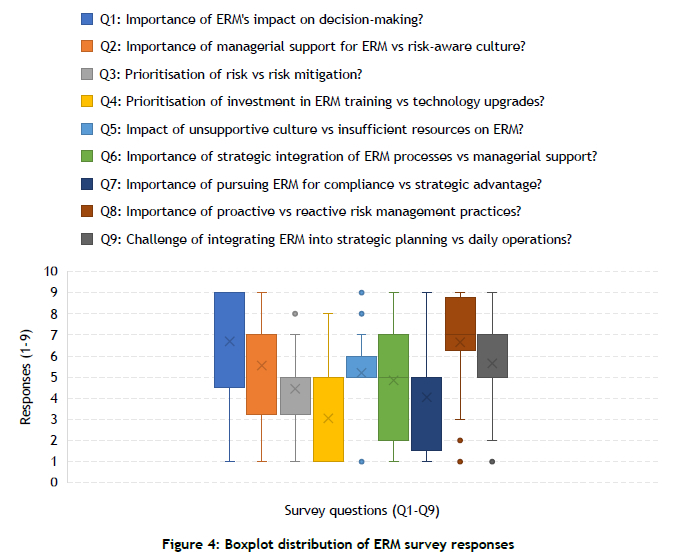
The survey results are reflected in the boxplot distribution in Figure 4. The boxplot provides a visual representation of the variability and the consensus in the respondents' perceptions of key aspects of ERM. This visualisation effectively demonstrates how employees in the ERM department viewed the importance and difficulties of ERM processes, such as integrating ERM into strategic planning, balancing risk identification and mitigation, and assessing the impact of managerial support. Each boxplot displays "X" symbols that mark the mean response for each question. This offered a critical reference point for understanding general tendencies in the respondents' views.
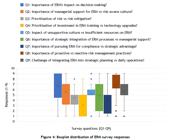
By comparing the mean with the median (the central line in each box), it became possible to assess response skewness, revealing whether extreme values influenced the average perception. The boxplot also highlighted areas of strong consensus, where most respondents shared similar views, and areas of divergence, shown by wider interquartile ranges and the presence of outliers. These outliers, representing the unique perspectives or potential points of disagreement, were vital for identifying specific problems that required focused interventions. Thus, through its detailed portrayal of central tendencies and variability, the boxplot serves as a valuable tool for understanding the spectrum of opinions on ERM in the organisation.
Insights revealed that the anticipated benefits of ERM, particularly improved decision-making and enhanced operational control, were supported by the survey data. The respondents highlighted the importance of ERM in guiding informed decisions, especially through proactive risk management practices. This stance was analysed to allow PRASA to identify and mitigate risks before they escalated, ensuring a stable operational environment. Potential disadvantages, such as the risk of bureaucratisation, were also analysed in the data. The survey results indicated difficulties with integrating ERM into strategic planning, with the respondents' data reflecting concerns about the process becoming burdensome and compliance-focused. This aligned with the proposition that ERM, if not carefully managed, risks becoming more about following procedures than driving effective risk management. Moreover, managerial support and strategic integration emerged from the survey data as key enablers of successful ERM implementation and of fostering a risk-aware culture. However, resource allocation - particularly the balance between investing in training and technology - was viewed as a potential barrier. It could, therefore, be deduced that, in order to realise fully the benefits of ERM, PRASA should focus on integrating ERM into its decision-making processes and adopting a balanced approach to risk identification and mitigation. In addition, a committed management approach, alongside clear risk tolerance and robust processes, would be essential in driving the success of ERM at PRASA. The findings underscored the importance of addressing the identified barriers and leveraging key enablers to enhance PRASA's resilience and operational success.
5.3.
Summary of findingsThe research revealed that implementing ERM at PRASA could substantially improve corporate governance and value creation (major themes of the study) - as proposed by [2] and [5], who emphasised ERM's role in embedding risk management in governance frameworks. Given PRASA's size, operational complexity, and diverse risks, integrating ERM into its strategic goals enhanced its decision-making and resource allocation, promoting accountability, transparency, and responsibility in the organisation [2], [5], [38]. The empirical evidence showed that partial ERM implementation had improved risk reporting and communication; this is consistent with [9], who argued that ERM strengthens governance through structured risk oversight. The findings showed that, where implemented, ERM had fostered a unified approach to risk management, improved risk comprehension, and helped to anticipate risks in project planning. However, the study identified problems that were consistent with the literature, including bureaucratic complexity that slows risk mitigation [15] and fragmentation, where ERM's inconsistent application across divisions limited its effectiveness [7]. Despite this, the findings revealed that ERM (where implemented) had driven cultural shifts towards proactive risk management, particularly in operational areas, observably improving resource allocation [21]. In a public entity such as PRASA, ERM contributes to value creation through enhanced operational efficiency, service delivery, and stakeholder trust [5], [8]. Nevertheless, the research highlighted gaps in organisation-wide ERM alignment, with some PRASA regions and divisions lagging behind, impeding PRASA's ability to capitalise fully on the ERM framework's benefits. These findings align with those of Arena et al., who stress the need for consistent ERM application to optimise governance and value creation fully [7].
5.4.
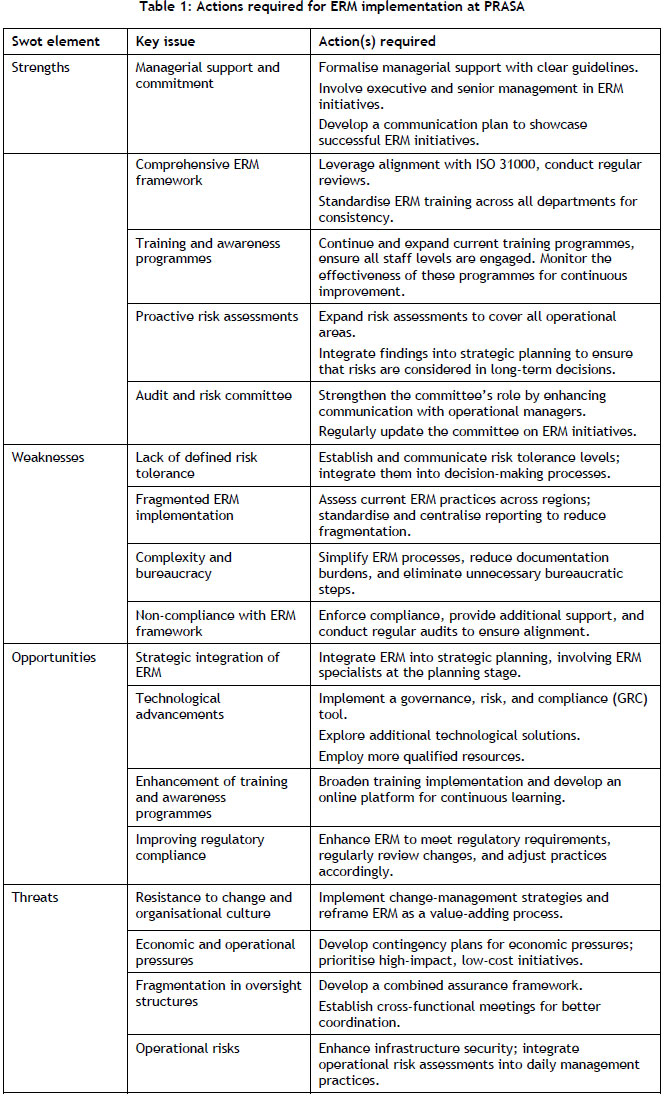
Risk identificationOne framework often used in risk management is the SWOT framework. The early application of SWOT analysis in risk identification is crucial for evaluating internal and external factors that inform decision-making [35]. Table 1 presents a SWOT analysis of the ERM implementation at PRASA, based on semi-structured interviews, surveys, and internal audit findings, which were used to validate the data further. Thoroughly understanding these factors assisted the study in prioritising risk management efforts more effectively. This prioritisation also informed the creation of an APM, and served as the foundation for a comprehensive ERM roadmap that aligned with PRASA's long-term objectives.
5.5.
Integration of SWOT analysis with quantitative and qualitative data for ERM prioritisationThis part of the study examined how the SWOT analysis was integrated with the quantitative and qualitative data to prioritise ERM actions. In alignment with modern ERM methodologies [39], this approach synthesised insights to form an APM and an ERM roadmap for PRASA. This would help the study to prioritise risk management initiatives, based on the impact and the resources required for PRASA [5]. It was also critical to note that this step was pivotal, given that, while the SWOT analysis is widely used in strategic planning, its effectiveness can be limited without data to support decisions [40]. Integrating data-driven insights helped to overcome these limitations, enabling the study to prioritise actions with measurable outcomes. Two key data sources were used for the data integration: the quantitative data (the surveys provided impact and effort scores for key ERM issues) and the qualitative data (the interviews and audit findings offered a context for the problems and the opportunities).
The integration of both data types allowed a comprehensive view of PRASA's ERM landscape, ensuring that risk prioritisation decisions were informed by both data and insights [41]. A table of key issues, with normalised impact and effort scores, formed the basis of the APM and the ERM roadmap, which would help to provide a guide for PRASA in aligning its risk management with its strategic goals.
5.6.
Prioritisation of likelihood and potential impactNormalisation was a crucial preliminary step in prioritising the likelihood and potential impact of proposed actions for the roadmap in order to ensure that different variables were compared on a common scale, thus avoiding distortion from variations in scale or magnitude. A multi-criteria decision-making approach determined the priority of key themes using a scoring system that was grounded in the qualitative coding and the risk assessment frameworks [42]. The survey data and audit findings were normalised in line with ISO 31000 guidelines, enabling comparison across various ERM categories [29]. The qualitative insights based on data frequency were also normalised to produce a composite score reflecting the importance of each criterion. By combining the impact and effort scores, a balanced perspective was achieved, ensuring that high-impact areas received appropriate focus and resources.
5.7.
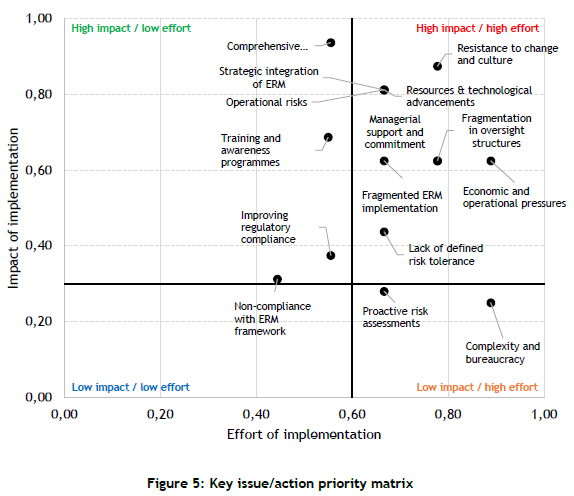
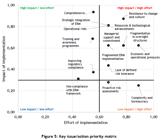
Action priority matrix development and prioritisation of the impact of actionsThe APM categorised the actions/tasks based on their impact and the effort needed for effective prioritisation, directing the focus to activities that offered the highest return on investment. Each quadrant was analysed, based on impact and effort, in the order below [36]:
1. Quick wins (high impact / low effort): These were activities that yielded significant results with minimal effort. These tasks, such as the development of a comprehensive ERM framework and training programmes, were crucial for immediate gains and efficiency.
2. Major projects (high impact / high effort): These were complex activities that had a high impact. These included addressing resistance to change, fostering a risk-aware culture, and integrating ERM into strategic planning. While these projects demanded considerable time and resources, their contribution to long-term objectives justified the effort.
3. Fill-ins (low impact / low effort): These tasks required minimal effort but offered limited benefits. No activities were categorised as "fill-ins" in this study, as the focus remained on addressing highimpact initiatives, leaving low-impact tasks deprioritised.
4. Thankless tasks (low impact / high effort): These tasks were seen as requiring significant effort but contributing less to the overall objectives. These included complexity and bureaucracy. While these tasks were a lower priority, they could still be addressed if specific organisational needs arose or circumstances changed.
The above steps served as valuable and logical input to the ERM roadmap, which this study proposed. It helped to prioritise the tasks according to the impact and effort required for each. Figure 5 shows the matrix for implementing ERM at PRASA.
5.8. Development of ERM roadmap
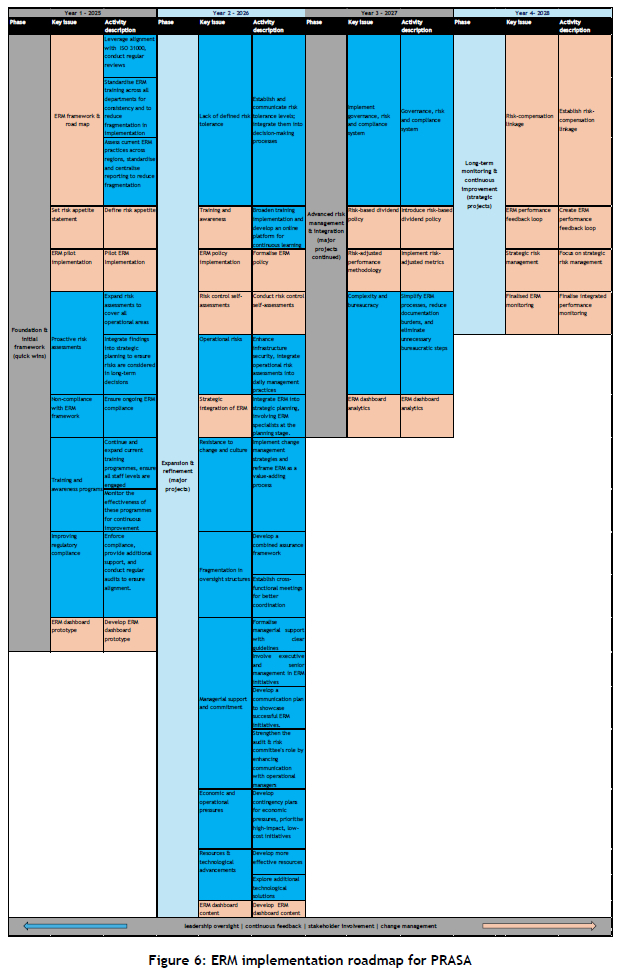
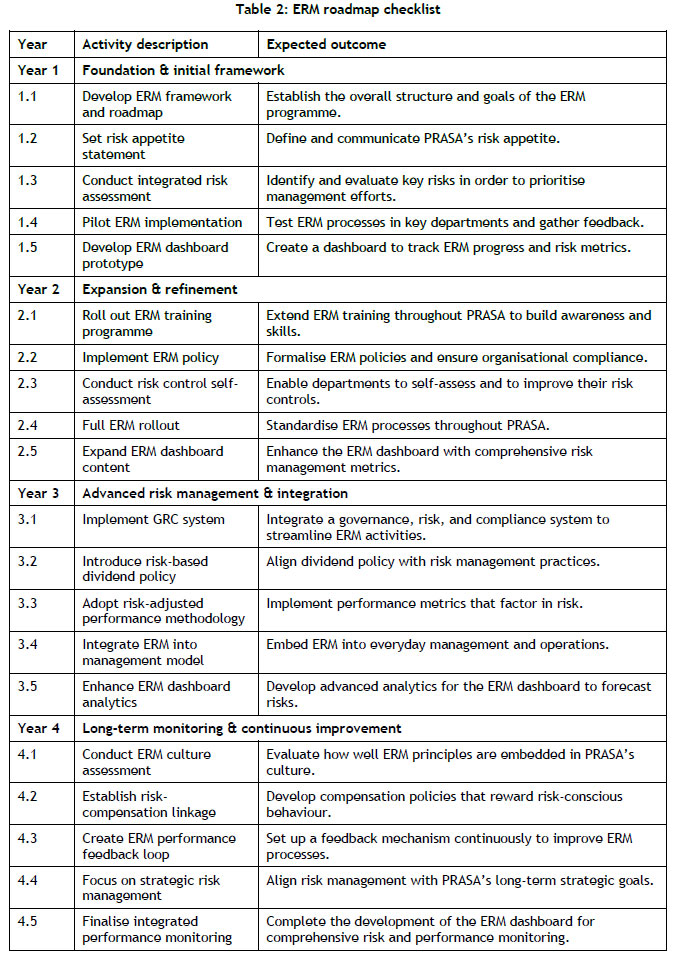
Table 2 shows the development of the ERM roadmap, which was structured using the frameworks of [5] and [37]. It moved from an initial vision and gap analysis to a mature, continuously improving system through a step-by-step approach that focused on execution.
The checklist provided a structured and phased approach to developing and implementing the ERM roadmap for PRASA. Its structure ensured that the roadmap was not merely to be established but also to be integrated into the organisation's strategic operations. It also led to the development of the roadmap in Figure 6.
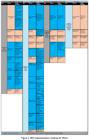
The ERM roadmap developed in Figure 6 is grounded in empirical findings and relevant literature. It outlines a phased approach for implementing ERM at the back of an APM. Phase 1 (2025) focuses on building the ERM framework by defining risk appetite, initiating pilot implementations, and developing an ERM Dashboard for real-time monitoring of critical issues such as non-compliance and fragmented ERM practices. Phase 2 (2026) aims to refine the ERM system, formalise ERM policies, expand risk control self-assessments, and promote managerial support to overcome resistance to change. Phase 3 (2027-2028) advances towards full ERM integration into decision-making processes, implementing risk-based policies, and developing ERM dashboard analytics for improved data-driven decision-making. The roadmap addresses key issues that PRASA grapples with, which are also not foreign to other public entities in South Africa.
5.9. Potential benefits and limitations associated with the implementation of this roadmap
The ERM roadmap for PRASA offers several benefits. A key advantage is its phased approach, which aims to prevent the organisation from being overwhelmed by a full-scale ERM implementation [5]. Stakeholder engagement and the promotion of a risk-aware culture is emphasised, particularly through risk workshops, which the research's participants cited as having been hard work but as essential for improving risk assessments [43]. Addressing critical risks early would allow PRASA to build a solid foundation while aligning its risk management with its operational goals [44]. Governance is strengthened in the map by aligning risk evaluation with strategic decision-making, which is intended to address concerns from the Auditor General [3]. The roadmap's iterative nature also supports adaptability to external risks, such as political and environmental changes [23]. However, there are limitations. The advanced stages, such as integrating GRC systems, require significant resources, specialised expertise, and financial investment, which may strain PRASA's capacity to secure funding and skilled personnel [7]. Cultural resistance, especially from low and middle management, could also hinder the embedding of a risk-focused mindset [2]. In addition, resource constraints, including budget and staffing, might impede successful completion [22].
6. CONCLUSION AND RECOMMENDATIONS
The conclusions and recommendations of this study serve to show the progress that PRASA has made in adopting ERM, although its efforts have remained fragmented and at an early stage. The findings underscored the need for a more structured approach to ERM in order to improve decision-making, risk management, and operational control significantly while contributing to stronger governance and long-term value creation - the major themes explored in this study. Behind this are barriers such as bureaucracy, complexity, fragmented governance, and cultural resistance, which must be addressed to achieve effective ERM implementation. The study also identified several benefits of ERM implementation, such as improved resource allocation, risk awareness, and operational performance. Disadvantages included compliance pressures, bureaucracy, and complexity, which hinder effectiveness, particularly when ERM is fragmented across departments. Enablers of success, such as managerial support, strategic integration, and training, were noted as crucial for embedding ERM in organisational operations. The study also outlined the sequence of events required for successful ERM implementation, from securing management support to creating clear policies and frameworks, ongoing training, and continuous improvement mechanisms. The theoretical contributions showed that ERM could bridge the gap between theoretical frameworks and practical applications in public entities. Future research should explore how resource limitations have an impact on the long-term sustainability of ERM frameworks. Other areas for potential research are cost-benefit analysis studies to quantify the value of ERM implementation, especially for public entities in which there is a lack of understanding of the effectiveness and value of ERM.
REFERENCES
2. LITERATURE REVIEW
-
[1] E. Pecina, D. Miloš Sprčić, and I. Dvorski Lacković, "Qualitative analysis of enterprise risk management systems in the largest European electric power companies," Energies (Basel), vol. 15, no. 15, 5328, Jul. 2022. doi: 10.3390/en15155328
» https://doi.org/10.3390/en15155328 - [2] P. Hopkin, Fundamentals of risk management: Understanding, evaluating and implementing effective risk management, 2nd ed. London, UK: Kogan Page, 2012.
-
[3] Auditor-General, "Final management report - Passenger Rail Agency of South Africa," Mar. 2022. Accessed: Apr. 11, 2025. [Online]. Available: https://groundup.org.za/media/uploads/documents/prasa_depots/prasa_mr_final_draft.pdf
» https://groundup.org.za/media/uploads/documents/prasa_depots/prasa_mr_final_draft.pdf -
[4] International Organization for Standardization (ISO), "ISO 31000:2018(en) Risk management - Guidelines," 2018, International Organization for Standardization. Accessed: Mar. 31, 2025. [Online]. Available: https://www.iso.org/obp/ui/#iso:std:iso:31000:ed-2:v1:en
» https://www.iso.org/obp/ui/#iso:std:iso:31000:ed-2:v1:en -
[5] J. Lam, Enterprise risk management: From incentives to controls, 2nd ed. Hoboken, NJ: John Wiley & Sons, 2014. Accessed: Mar. 27, 2025. [Online]. Available: https://books.google.co.za/books?hl=en&lr=&id=9E50AgAAQBAJ&oi=fnd&pg=PR13&dq=Lam,+J.+2014.+Enterprise+Risk+Management:+From+Incentives+to+Controls,+2nd+Edition.+Wiley+%26+Sons.&ots=_oxTGqKAUh&sig=RCbvem-v5qHw-9V4sMnc6-as5No&redir_esc=y#v=onepage&q=Lam%2C%
» https://books.google.co.za/books?hl=en&lr=&id=9E50AgAAQBAJ&oi=fnd&pg=PR13&dq=Lam,+J.+2014.+Enterprise+Risk+Management:+From+Incentives+to+Controls,+2nd+Edition.+Wiley+%26+Sons.&ots=_oxTGqKAUh&sig=RCbvem-v5qHw-9V4sMnc6-as5No&redir_esc=y#v=onepage&q=Lam%2C% -
[6] R. Moshesh, W. Niemann, and T. Kotze, "Enterprise risk management implementation challenges: A case study in a petrochemical supply chain," South African Journal of Industrial Engineering, vol. 29, no. 4, pp. 230-244, 2018. Accessed: Mar. 27, 2025. [Online]. Available: http://sajie.journals.ac.za/pub/article/view/1782
» http://sajie.journals.ac.za/pub/article/view/1782 -
[7] M. Arena, M. Arnaboldi, and G. Azzone, "Is enterprise risk management real?" Journal of Risk Research, vol. 14, no. 7, pp. 779-797, Aug. 2011. doi: 10.1080/13669877.2011.571775
» https://doi.org/10.1080/13669877.2011.571775 -
[8] I. D. Lacković, "Enterprise risk management: A literature survey," in 26th International Scientific Conference on Economic and Social Development - "Building Resilient Society," V. Potocan, P. Kalinic, and A. Vuletic, Eds., Zagreb: Varazdin Development and Entrepreneurship Agency, Varazdin, Croatia, Dec. 2017, pp. 364-370. Accessed: Apr. 11, 2025. [Online]. Available: https://www.esd-conference.com/upload/book_of_proceedings/Book_of_Proceedings_esdZagreb_2017_Online.pdf
» https://www.esd-conference.com/upload/book_of_proceedings/Book_of_Proceedings_esdZagreb_2017_Online.pdf -
[9] P. Bromiley, M. McShane, A. Nair, and E. Rustambekov, "Enterprise risk management: Review, critique, and research directions," Long Range Planning, vol. 48, no. 4, pp. 265-276, Aug. 2015. doi: 10.1016/j.lrp.2014.07.005
» https://doi.org/10.1016/j.lrp.2014.07.005 -
[10] B. Y. Renault, J. N. Agumba, and O. A. Balogun, "Drivers for and obstacles to enterprise risk management in construction firms: A literature review," Procedia Engineering, vol. 164, pp. 402408, 2016. doi: 10.1016/j.proeng.2016.11.637
» https://doi.org/10.1016/j.proeng.2016.11.637 -
[11] C. Verbano and K. Venturini, "Managing risks in SMEs: A literature review and research agenda," Journal of Technology Management & Innovation, vol. 8, no. 3, pp. 33-34, 2013. doi: 10.4067/S0718-27242013000400017
» https://doi.org/10.4067/S0718-27242013000400017 -
[12] Z. Hong and C. Lee, "A decision support system for procurement risk management in the presence of spot market," Decision Support Systems, vol. 55, no. 1, pp. 67-78, Apr. 2013. doi: 10.1016/j.dss.2012.12.031
» https://doi.org/10.1016/j.dss.2012.12.031 -
[13] D. L. Eckles, R. E. Hoyt, and S. M. Miller, "The impact of enterprise risk management on the marginal cost of reducing risk: Evidence from the insurance industry," Journal of Banking & Finance, vol. 43, pp. 247-261, Jun. 2014. doi: 10.1016/j.jbankfin.2014.02.007
» https://doi.org/10.1016/j.jbankfin.2014.02.007 -
[14] M. Moran, "Organized uncertainty: Designing a world of risk management - by Michael Power," Public Administration, vol. 86, no. 4, pp. 1133-1134, Dec. 2008. doi: 10.1111/j.1467-9299.2008.00756_2.x
» https://doi.org/10.1111/j.1467-9299.2008.00756_2.x -
[15] I. Fraser and W. Henry, "Embedding risk management: Structures and approaches," Managerial Auditing Journal, vol. 22, no. 4, pp. 392-409, Apr. 2007. doi: 10.1108/02686900710741955
» https://doi.org/10.1108/02686900710741955 -
[16] J. R. S. Fraser and B. J. Simkins, "The challenges of and solutions for implementing enterprise risk management," Business Horizons, vol. 59, no. 6, pp. 689-698, Nov. 2016. doi: 10.1016/j.bushor.2016.06.007
» https://doi.org/10.1016/j.bushor.2016.06.007 -
[17] R. L. Kimbrough and P. J. Componation, "The relationship between organizational culture and enterprise risk management," Engineering Management Journal, vol. 21, no. 2, pp. 18-26, Jun. 2009. doi: 10.1080/10429247.2009.11431803
» https://doi.org/10.1080/10429247.2009.11431803 -
[18] Z. Xianbo, H. Bon-Gang, and L. S. Pheng, "Implementing enterprise risk management in a Chinese construction firm based in Singapore," in World Construction Conference 2012: Global Challenges in Construction Industry, S. Senaratne and Y. G. Sandanayake, Eds., Colombo, Sri Lanka, 2012, Jun. 2012, pp. 434-444. Accessed: Mar. 27, 2025. [Online]. Available: https://www.esd-conference.com/upload/book_of_proceedings/Book_of_Proceedings_esdZagreb_2017_Online.pdf
» https://www.esd-conference.com/upload/book_of_proceedings/Book_of_Proceedings_esdZagreb_2017_Online.pdf -
[19] X. Zhao, B.-G. Hwang, S. Pheng Low, and P. Wu, "Reducing hindrances to enterprise risk management implementation in construction firms," Journal of Construction Engineering and Management, vol. 141, no. 3, Mar. 2015. doi: 10.1061/(ASCE)CO.1943-7862.0000945
» https://doi.org/10.1061/(ASCE)CO.1943-7862.0000945 -
[20] D. M. Sprcic, "Corporate risk management and value creation," Montenegrin Journal of Economics, vol. 9, no. 2, pp. 17-26, May 2013. Accessed: Mar. 27, 2025. [Online]. Available: https://www.repec.mnje.com/mje/2013/v09-n02/mje_2013_v09-n02-a12.pdf
» https://www.repec.mnje.com/mje/2013/v09-n02/mje_2013_v09-n02-a12.pdf -
[21] M. Farrell and R. Gallagher, "The valuation implications of enterprise risk management maturity," Journal of Risk and Insurance, vol. 82, no. 3, pp. 625-657, Sep. 2015. doi: 10.1111/jori.12035
» https://doi.org/10.1111/jori.12035 -
[22] L. Paape and R. F. Speklé, "The adoption and design of enterprise risk management practices: An empirical study," European Accounting Review, vol. 21, no. 3, pp. 533-564, Feb. 2012. doi: 10.1080/09638180.2012.661937
» https://doi.org/10.1080/09638180.2012.661937 -
[23] D. Pagach and R. Warr, "The characteristics of firms that hire chief risk officers," Journal of Risk and Insurance, vol. 78, no. 1, pp. 185-211, Mar. 2011. doi: 10.1111/j.1539-6975.2010.01378.x
» https://doi.org/10.1111/j.1539-6975.2010.01378.x -
[24] K. Oliveira, M. Méxas, M. Meiriño, and G. Drumond, "Critical success factors associated with the implementation of enterprise risk management," Journal of Risk Research, vol. 22, no. 8, pp. 10041019, Aug. 2019. doi: 10.1080/13669877.2018.1437061
» https://doi.org/10.1080/13669877.2018.1437061 -
[25] A. H. Ansaripoor, F. S. Oliveira, and A. Liret, "A risk management system for sustainable fleet replacement," European Journal of Operational Research, vol. 237, no. 2, pp. 701-712, Sep. 2014. doi: 10.1016/j.ejor.2014.02.006
» https://doi.org/10.1016/j.ejor.2014.02.006 -
[26] T. Schoenherr, V. M. Rao Tummala, and T. P. Harrison, "Assessing supply chain risks with the analytic hierarchy process: Providing decision support for the offshoring decision by a US manufacturing company," Journal of Purchasing and Supply Management, vol. 14, no. 2, pp. 100111, Jun. 2008. doi: 10.1016/j.pursup.2008.01.008
» https://doi.org/10.1016/j.pursup.2008.01.008 -
[27] D. Zhu, Z. Li, and A. R. Mishra, "Evaluation of the critical success factors of dynamic enterprise risk management in manufacturing SMEs using an integrated fuzzy decision-making model," Technological Forecasting and Social Change, vol. 186, 122137, Jan. 2023. doi: 10.1016/j.techfore.2022.122137
» https://doi.org/10.1016/j.techfore.2022.122137 - [28] M. Saunders, P. Lewis, and A. Thornhill, Research methods for business students, 5th ed. Prentice Hall, 2009.
-
[29] J. W. Creswell and C. N. Poth, Qualitative inquiry and research design: Choosing among five approaches, 4th ed. Sage Publications, India, 2017. [Online]. Available: https://books.google.co.za/books?id=Pz5RvgAACAAJ
» https://books.google.co.za/books?id=Pz5RvgAACAAJ - [30] M. Easterby-Smith, L. J. Jaspersen, R. Thorpe, and D. Valizade, Management and business research, 7th ed. Sage Publications, United Kingdoms, 2021.
-
[31] J. W. Creswell, Educational research: Planning, conducting, and evaluating quantitative and qualitative research, 4th ed. Pearson, United Kingdoms, 2012. [Online]. Available: https://books.google.co.za/books?id=4PywcQAACAAJ
» https://books.google.co.za/books?id=4PywcQAACAAJ -
[32] N. Golafshani, "Understanding reliability and validity in qualitative research," The Qualitative Report, vol. 8, no. 4, pp. 597-607, Dec. 2003. Accessed: Mar. 27, 2025. [Online]. Available: https://www.brown.uk.com/teaching/HEST5001/golafshani.pdf
» https://www.brown.uk.com/teaching/HEST5001/golafshani.pdf -
[33] K. Bannigan and R. Watson, "Reliability and validity in a nutshell," Journal of Clinical Nursing, vol. 18, no. 23, pp. 3237-3243, Dec. 2009. doi: 10.1111/j.1365-2702.2009.02939.x
» https://doi.org/10.1111/j.1365-2702.2009.02939.x -
[34] K. T. Aung, R. A. Razak, and N. N. M. Nazry, "Establishing validity and reliability of semi-structured interview questionnaire in developing risk communication module: A pilot study," Edunesia: Jurnal Ilmiah Pendidikan, vol. 2, no. 3, pp. 600-606, Jun. 2021. doi: 10.51276/edu.v2i3.177
» https://doi.org/10.51276/edu.v2i3.177 -
[35] G. Ingram, Time management: A step by step guide to planning your day for extreme productivity (How to plan your week, stay productive and motivated the entire time). 2020. Accessed: Apr. 11, 2025. [Online]. Available: https://books.google.co.za/books/about/Time_Management_A_Step_by_Step_Guide_to.html?id=7XvPDwAAQBAJ&redir_esc=y
» https://books.google.co.za/books/about/Time_Management_A_Step_by_Step_Guide_to.html?id=7XvPDwAAQBAJ&redir_esc=y -
[36] L. Nethamba and S. Grobbelaar, "The development of an action priority matrix and technology roadmap for the implementation of data-driven and machine-learning-based predictive maintenance in the South African railway industry," South African Journal of Industrial Engineering, vol. 34, no. 3, 2023. doi: 10.7166/34-3-2958
» https://doi.org/10.7166/34-3-2958 - [37] Z. Erdogan, "Technology roadmap for Kuveyt Turk mobile banking," Master's thesis, T.C. Dogus University, Istanbul, 2014.
-
[38] J. Ugoani, "Corporate governance perspective on enterprise risk management and organizational sustainability," Independent Journal of Management & Production (IJM&P), vol. 12, no. 5, 2021. Accessed: Mar. 27, 2025. [Online]. Available: https://papers.ssrn.com/sol3/papers.cfm?abstract_id=3945541
» https://papers.ssrn.com/sol3/papers.cfm?abstract_id=3945541 -
[39] M. L. Frigo and R. J. Anderson, "Strategic risk management: A foundation for improving enterprise risk management and governance," Journal of Corporate Accounting & Finance, vol. 22, no. 3, pp. 81-88, Mar. 2011. doi: 10.1002/jcaf.20677
» https://doi.org/10.1002/jcaf.20677 -
[40] M. M. Helms and J. Nixon, "Exploring SWOT analysis: Where are we now?" Journal of Strategy and Management, vol. 3, no. 3, pp. 215-251, Aug. 2010. doi: 10.1108/17554251011064837
» https://doi.org/10.1108/17554251011064837 -
[41] S. G. Anton and A. E. A. Nucu, "Enterprise risk management: A literature review and agenda for future research," Journal of Risk and Financial Management, vol. 13, no. 11, 281, Nov. 2020. doi: 10.3390/jrfm13110281
» https://doi.org/10.3390/jrfm13110281 - [42] S. Greco, J. Figueira, and M. Ehrgott, eds, Multiple criteria decision analysis: State of the art surveys, 2nd ed. New York: Springer, 2016.
-
[43] C. Harten, M. Meyer, and L. Bellora-Bienengräber, "Talking about the likelihood of risks: An agent-based simulation of discussion processes in risk workshops," Journal of Accounting & Organizational Change, vol. 18, no. 1, pp. 153-173, Jan. 2022. doi: 10.1108/JAOC-11-2020-0197
» https://doi.org/10.1108/JAOC-11-2020-0197 -
[44] J. Kujala, S. Sachs, H. Leinonen, A. Heikkinen, and D. Laude, "Stakeholder engagement: Past, present, and future," Business & Society, vol. 61, no. 5, pp. 1136-1196, May 2022. doi: 10.1177/00076503211066595
» https://doi.org/10.1177/00076503211066595
Accepted for publication 16 Jul 2025
Available online 29 Aug 2025
ORCID® identifiers
T.Mangcu: https://orcid.org/0009-0004-4235-8585
F.S. Hassan: https://orcid.org/0009-0005-2171-1332
S. Grobbelaar: https://orcid.org/0000-0001-8148-2440