A Brainwave Controller for Exoskeleton Gait Rehabilitation
Abstract
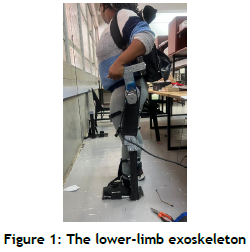
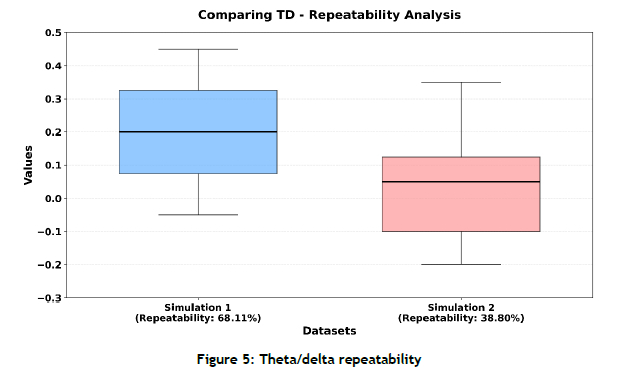
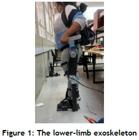
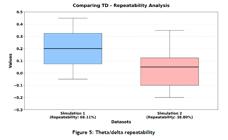
This paper presents a brainwave-controlled lower-limb exoskeleton system for gait rehabilitation, which integrates non-invasive scalp electroencephalography (EEG) signals with an adaptive control framework. A semi-supervised brain-computer interface (BCI) training scheme is used, combining advanced EEG signal processing, namely active electrode amplification and adaptive filtering, with a precise actuation system in the exoskeleton. The proposed controller translates user motor intent from EEG in real time, achieving an information transfer rate of about 0.8 bits/min and over 60% signal repeatability. Experimental results show that distinct neural biomarkers, such as the theta/delta power ratio, differ significantly between mental states (e.g., 0.12 under low stimulation vs 0.44 under high stimulation), enabling reliable state classification. The exoskeleton responds rapidly to detected brain signals, providing timely gait assistance. By linking refined neural signal features to a genetic algorithm-optimised exoskeleton control, the system improves user control precision and responsiveness. This work demonstrates a novel integration of EEG-based BCI with rehabilitative robotics, highlighting its potential to enhance mobility for individuals with gait impairments.
 Thumbnail
 Thumbnail
 Thumbnail
 Thumbnail
 Thumbnail