The efficacy of the inherent strain method in determining residual stress in in 718 SLM specimens
Abstract
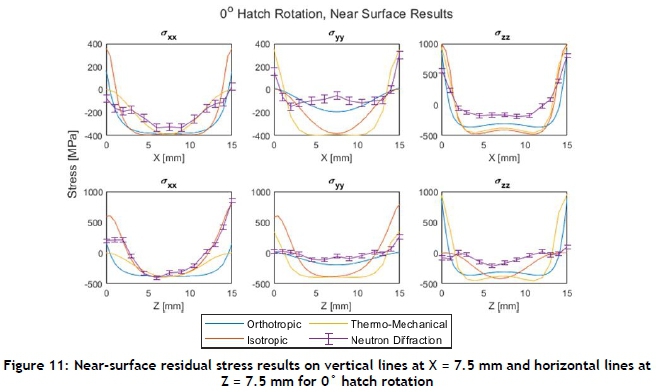
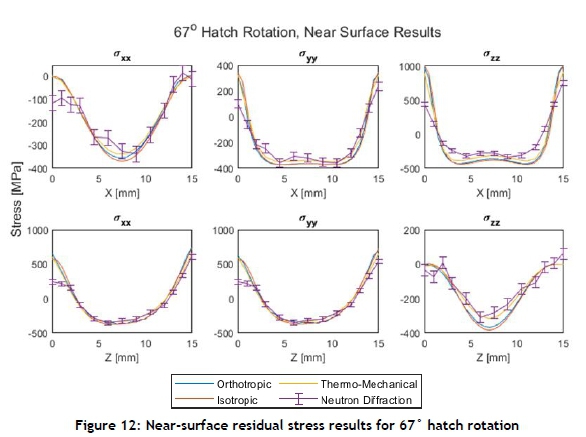
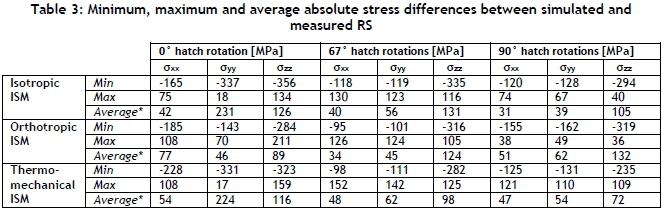
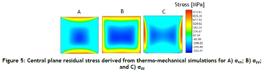
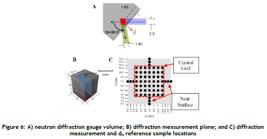
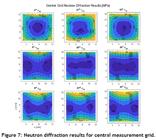
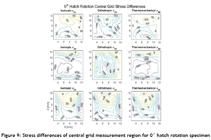
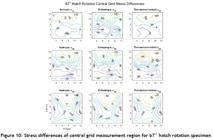
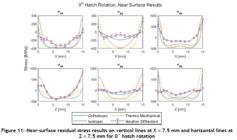
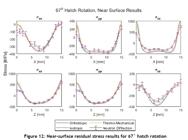
This paper presents a study showing the efficacy of the inherent strain method and modifications thereof to predict residual stresses within selective laser melted components. Cubic specimens with variations in hatch rotations were produced, and the residual stress state was simulated and measured by employing the neutron diffraction technique. Variances in the simulated and observed values of stress in the samples were investigated to show the efficacy of the isotropic, orthotropic, and thermo-mechanical simulation methods. The simulations indicated a suitable prediction of the residual stress with the incorporation of hatch rotation, but as being less adept at resolving the residual stress of the components with no hatch rotation. The most accurate simulation results in the horizontal stress directions were seen for the 90° hatch rotation specimen, for which the average difference between the measured and simulated values were below 65 MPa for all simulation types. The simulations largely over-predicted Z direction compressive stresses; however, the thermo-mechanical simulation type predicted this stress with an average difference of 116, 98, and 72 MPA for the 0°, 67°, and 90° hatch rotations respectively.
 Thumbnail
 Thumbnail
 Thumbnail
 Thumbnail
 Thumbnail
 Thumbnail
 Thumbnail
 Thumbnail
 Thumbnail
 Thumbnail